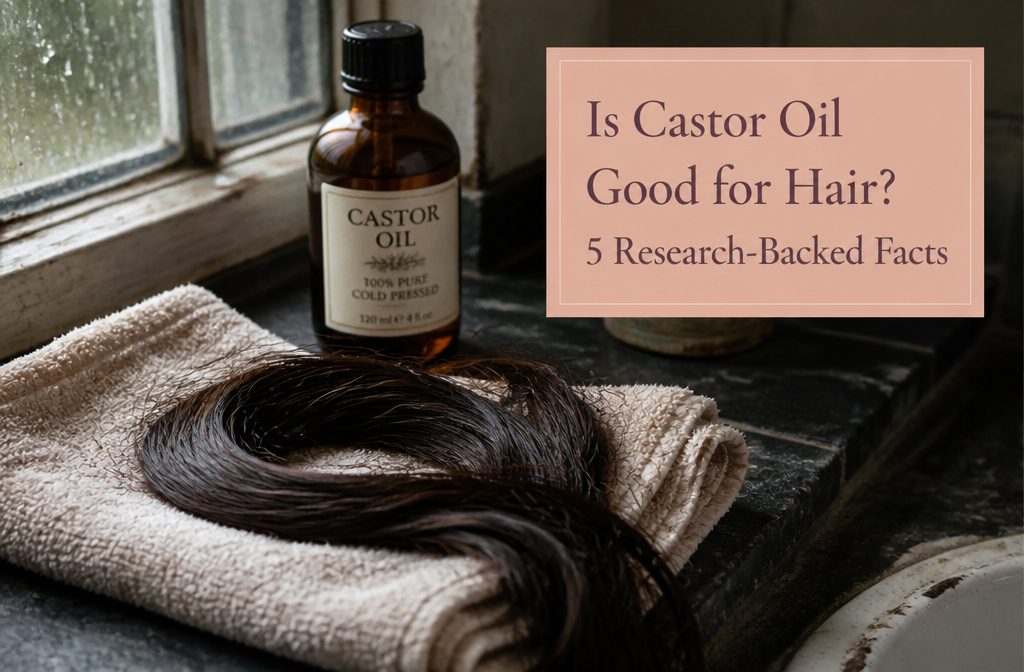
Castor oil conditions hair and may reduce breakage by keeping strands flexible, but no scientific evidence shows it stimulates new growth in humans.
The effect people mistake for growth is actually length retention: well-moisturized hair breaks less at weak points, so you keep what you already grew.
Around 85 to 90% of castor oil is ricinoleic acid, a thick fatty acid that coats each strand and locks in moisture.
Castor Oil Conditions and May Reduce Breakage, but Does Not Prove Hair Growth
Castor Oil Conditions and May Reduce Breakage, but Does Not Prove Hair Growth
Castor oil moisturizes hair and may help reduce breakage by making strands more flexible, but no scientific evidence shows it stimulates human hair growth.
The confusion comes from mixing up two effects: conditioning the hair you already have versus triggering new growth from the follicle.
There is mixed evidence for the benefits of castor oil for hair. One 2022 research review looking at the benefits of oils such as coconut, castor, and argan oil for hair found weak evidence that castor oil may improve hair growth or quality.
What castor oil does do is coat and lubricate the hair shaft, which helps prevent breakage at weak points and keeps hair from becoming brittle.
A 2008 study found that a lotion with 35% castor oil increased length, thickness, and softness of rabbit hair, though human studies are still missing.
The visual effect of thicker-looking hair is real, but it comes from improved moisture retention rather than a change to the hair strand itself or faster growth at the root.
What Castor Oil Does for Hair and Scalp

Castor oil’s reputation as a conditioning treatment is backed by its fatty acid profile. Around 85 to 90% of the oil is ricinoleic acid, a thick monounsaturated omega-9 fatty acid that forms a coating around each strand and locks in moisture.
Hair that retains more water stays flexible, breaks less during brushing or heat styling, and looks smoother and shinier. The remaining fatty acids—oleic and linolenic—add to that nourishing effect.
Ricinoleic acid also brings anti-inflammatory and antimicrobial properties to the scalp. Applied directly, it can calm irritation, reduce flaking, and create a healthier base for hair to grow from.
If your scalp feels dry or tight, castor oil addresses that directly. The oil also contains vitamin E, an antioxidant that helps protect against oxidative stress and adds a protective layer to the hair cuticle for extra shine.
These are conditioning benefits. Castor oil improves the hair you already have by reducing breakage and supporting scalp health, but it does not stimulate new growth or reverse hair loss.
Does It Cause New Growth or Reverse Hair Loss
There is no strong human evidence that castor oil stimulates new growth or reverses hair loss.
A systematic review examining coconut, castor, and argan oil found weak evidence that castor oil may improve hair luster and no strong support for growth claims. No clinical trials demonstrate that it triggers follicle activity or reverses miniaturization.
What castor oil does offer is a healthier scalp environment and better moisture retention, which can help you keep the length you grow. Well-hydrated hair breaks less at fragile points, so strands stay intact longer.
That is length retention, not growth stimulation. The difference matters: retaining what already grew is not the same as producing new hair from the follicle.
If thinning or density loss is your concern, castor oil alone will not solve it. You need ingredients with stronger clinical backing for that goal.
Risks: Irritation, Buildup, and Hair Matting
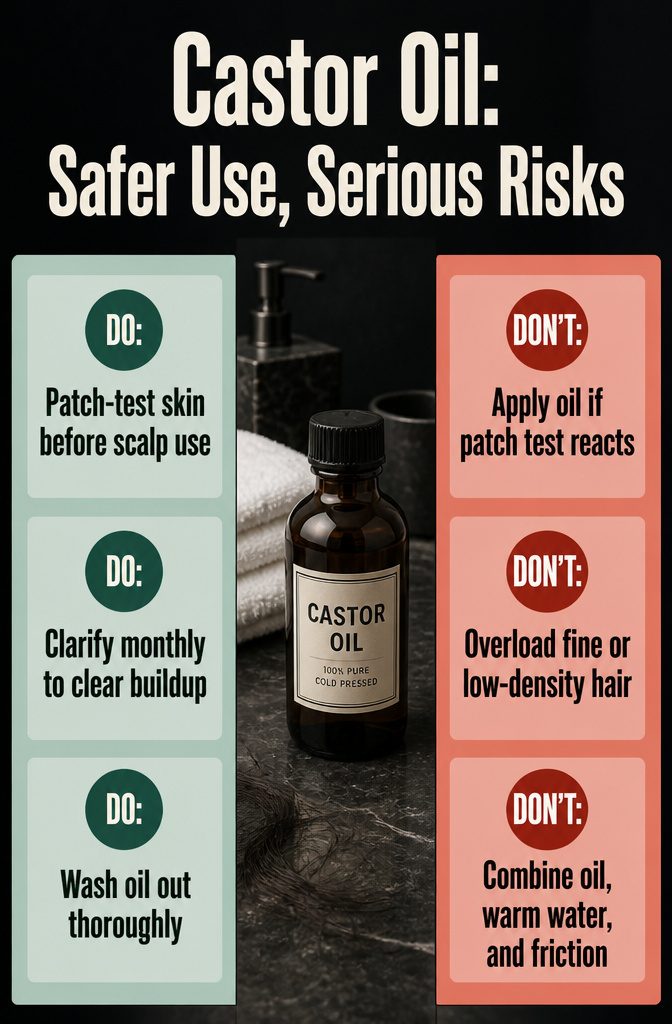
Castor oil is generally safe, but a few risks deserve attention before you use it.
- Irritation or allergy. Castic oil can trigger allergic contact dermatitis in some people. A patch test on a small area of skin before applying it to your scalp is the sensible move.
- Buildup and clogged pores. The oil is extremely thick. If you use too much or don’t wash it out thoroughly, it leaves heavy residue on your scalp and can clog follicles. Fine or low-density hair feels weighed down fast. A clarifying shampoo once a month helps clear buildup.
- Acute hair felting. This is rare but serious. Hair becomes irreversibly matted into a hard, tangled mass that cannot be combed out and must be cut off. Published case reports identified castor oil as the direct cause, with the oil’s high viscosity combining with warm water and friction during washing to produce felting. Long hair contributed to the disorder in reported cases.
How to Apply and Remove It
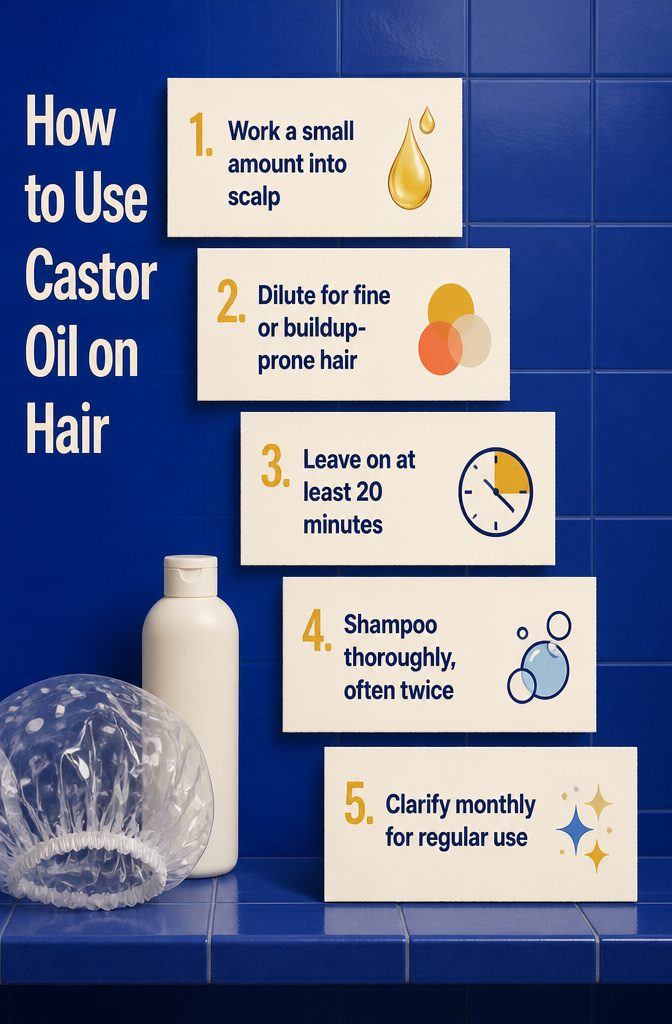
- Start with a small amount—a pea-sized dollop for short hair, more for longer lengths—and work it into the scalp with your fingertips, moving in sections. Castor oil is thick, and overloading means multiple shampoos later.
- Dilute it with a lighter oil if your hair is fine, low-porosity, or prone to buildup. Mix castor oil with coconut, argan, or almond oil in a 1:5 ratio to cut the weight while keeping the conditioning benefit.
- Let it sit for at least 20 minutes, or leave it overnight under a shower cap to protect your pillow. Wet or dry hair both work—dry for a scalp treatment you rinse out, damp to lock in moisture.
- Shampoo thoroughly, often twice, to remove the oil. Users on Reddit report needing two rounds even after short applications, and one mentioned scalp itching after 30 minutes.
- Use a clarifying shampoo once a month if castor oil is part of your regular routine. It strips away buildup that regular shampoo leaves behind, especially important for fine or wavy hair that flattens easily.
Cold-Pressed or Jamaican Black: Which Type to Choose
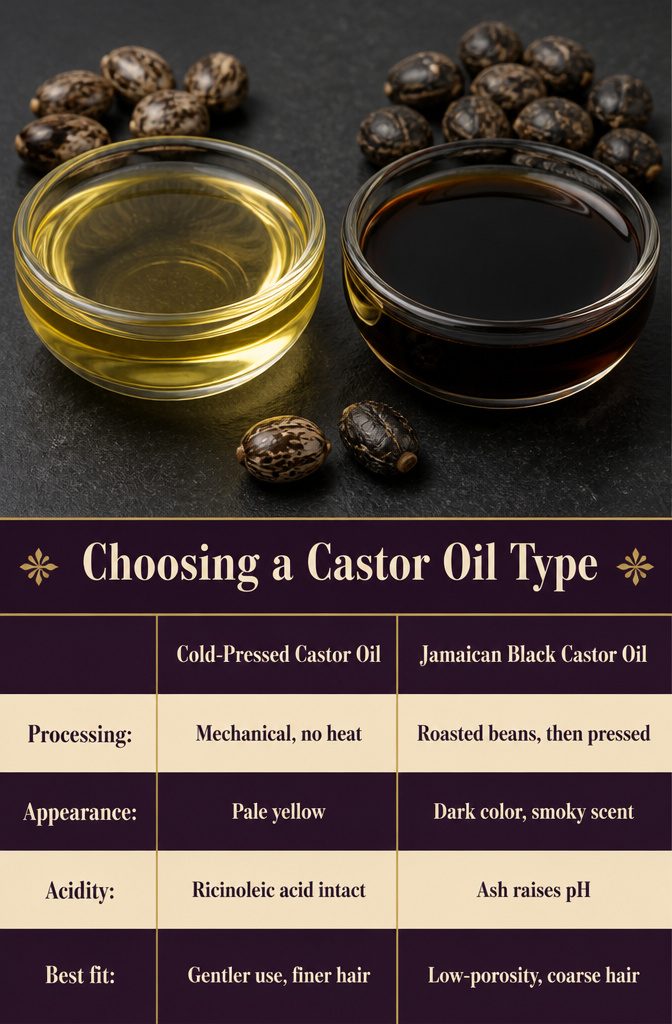
The two types you’ll see most often are cold-pressed castor oil and Jamaican black castor oil, and recommendations split on which one to reach for.
Cold-pressed is extracted mechanically without heat, which keeps the full ricinoleic acid content intact. It’s pale yellow, thick, and the closest to what comes out of the bean.
Jamaican black is made by roasting the beans before pressing, which creates ash that raises the pH and gives the oil its dark color and smoky scent.
Some sources say that higher pH helps the oil penetrate the hair shaft better, particularly for low porosity or thick, coarse hair. Others recommend cold-pressed for gentler all-over use or finer hair types.
One point where guidance lines up: avoid hydrogenated or heavily refined castor oil.
Chemical extraction with hexane and bleaching strips out much of the ricinoleic acid, leaving you with a clear, odorless version that lacks most of the conditioning and antimicrobial properties you’re buying castor oil for in the first place.
Castor Oil Compared with Rosemary Oil and Minoxidil
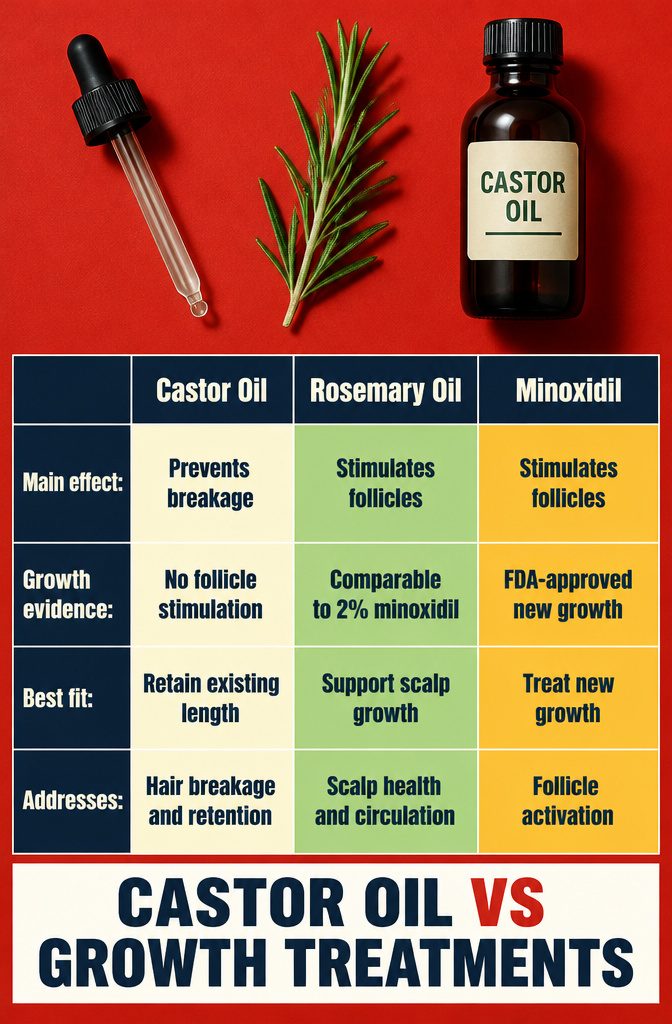
When people ask whether castor oil grows hair, the comparison that matters is with treatments that actually stimulate the follicle. Minoxidil is the only topical ingredient FDA-approved for new growth.
Rosemary oil has shown comparable results to 2% minoxidil in a six-month trial measuring hair count improvement, and its active compound, carnosic acid, stimulates blood circulation to follicles. Castor oil does neither of those things.
What castor oil does is prevent breakage, which lets you keep the length you’re already growing. That matters if your problem is retention rather than growth at the scalp.
Most people who think they have slow growth are actually losing hair to breakage at the same rate they add it at the root. Castor oil addresses that side of the equation.
Rosemary oil and minoxidil address the other. They’re not competing; they’re solving different problems.
Guidance by Hair Type: Fine, Coarse, and High Porosity
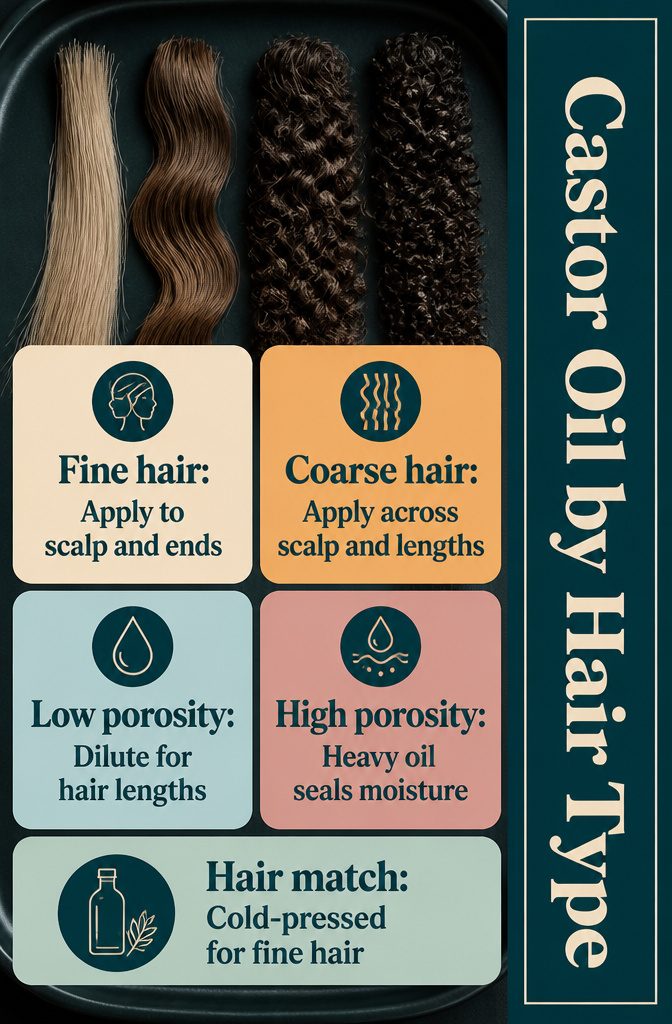
Recommendations split by texture and porosity, though the advice doesn’t line up across every source.
- Fine or thin hair: Castor oil weighs down the strand if you run it root to tip. Apply only to the scalp and ends.
- Medium to coarse hair: You can apply freely to scalp, shaft, and ends. Coarse or ultra-dry types can leave it in overnight or smooth it over ends as a leave-in.
- Low porosity hair: Pure castor oil often sits on top instead of absorbing. Jamaican black castor oil works better on the scalp because its higher pH helps open the cuticle. For length, dilute castor oil with a lighter carrier.
- High porosity hair: Castor oil’s heavier weight seals the open cuticle and locks moisture in, making it ideal for this type.
Fine or oily hair does better with regular cold-pressed castor oil; thick, coarse, or dry hair responds better to Jamaican black.
Frequently Asked Questions
Is castor oil good for your hair?
Castor oil conditions hair and may reduce breakage by keeping strands flexible, but there’s no scientific evidence it stimulates new growth.
It moisturizes the scalp, locks in hydration, and helps you retain the length you’re already growing. The benefit is real, just not the one most people expect.
Does castor oil help with hair growth?
No strong human evidence shows castor oil stimulates growth or reverses hair loss.
What it does is improve scalp health and reduce breakage, so you keep more of the length you grow. That’s length retention, not follicle stimulation.
What type of castor oil is best for hair?
Cold-pressed castor oil is pale yellow and keeps the full ricinoleic acid content intact, while Jamaican black is made by roasting the beans first, raising the pH for better penetration on low-porosity or thick hair.
Avoid hydrogenated or refined versions that strip out the conditioning properties.
Can I use castor oil every day?
Daily use is not recommended because castor oil is extremely thick and can cause buildup that clogs pores and weighs hair down.
Fine or low-density hair shows the problem fastest, and even regular use calls for a clarifying shampoo once a month.
How long should I leave castor oil in my hair?
Leave it in for at least 20 minutes for a quick treatment, or overnight under a shower cap for deeper conditioning.
Coarse or ultra-dry hair can handle longer applications, while fine hair should stick to shorter windows to avoid weighing strands down.
How do I get castor oil out of hair?
Shampoo thoroughly, usually twice, because the oil is thick and clings to the scalp and shaft. A clarifying shampoo once a month strips away buildup that regular shampoo leaves behind, especially if castor oil is part of your routine.
Can castor oil cause scalp problems?
Castor oil can trigger allergic contact dermatitis in some people, and using too much can clog pores or leave heavy buildup.
Patch test on a small area of skin before applying it to your scalp, and shampoo it out completely after each use.
Does castor oil thicken hair?
Castor oil makes hair appear thicker by coating the shaft and improving moisture retention, which adds volume and shine.
There’s no clinical evidence it increases the actual thickness of individual strands or stimulates new growth, so the effect is visual rather than structural.
Is castor oil or rosemary oil better for hair growth?
Rosemary oil has better evidence for growth, with a clinical trial showing results comparable to 2% minoxidil over 6 months.
Castor oil conditions and prevents breakage but has no equivalent studies for follicle stimulation. They solve different problems and work well together.
Can you put castor oil directly on hair?
You can apply castor oil directly to hair, but diluting it with a lighter oil like coconut or argan cuts the weight and makes it easier to spread and rinse out.
Fine or low-porosity hair types should dilute it or apply only to the scalp and ends to avoid buildup.
What are the disadvantages of castor oil on hair?
Castor oil can cause allergic reactions, clog pores if not washed out completely, and weigh fine hair down with heavy buildup.
In rare cases it has triggered acute hair felting, where long hair becomes irreversibly matted and must be cut off.





