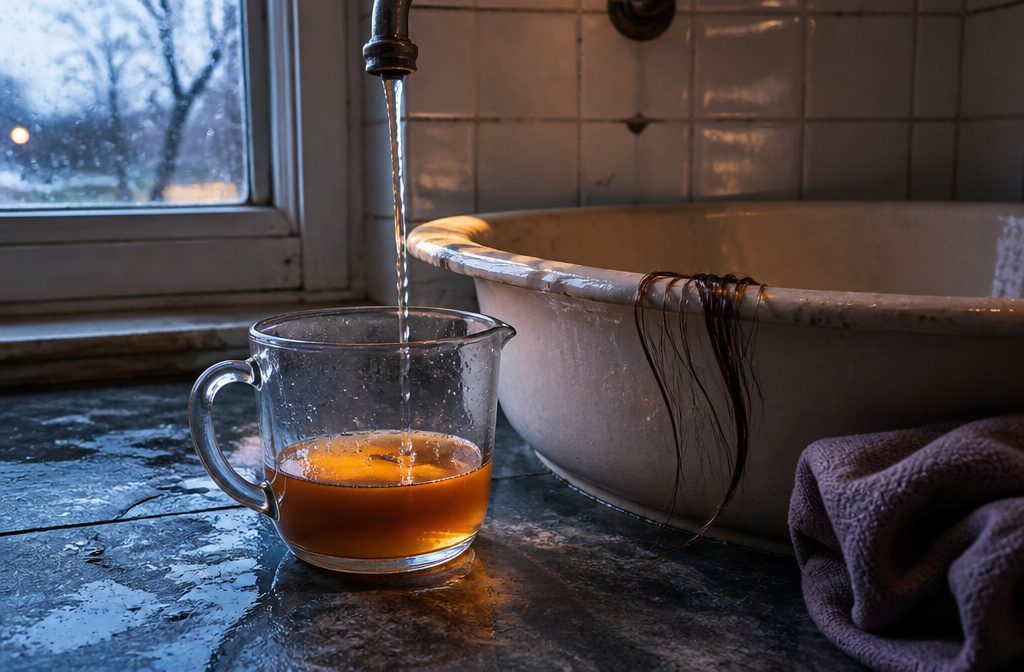
Apple cider vinegar for hair works by lowering pH to smooth the cuticle, remove buildup and restore shine, but the acidity that makes it clarifying can also strip color, dry out damaged ends or burn sensitive scalps if you skip dilution.
Most advice lands between once a month and twice a week depending on hair type, and a 2015 case report documented scarring after undiluted application.
What ACV Is and How It Works on Hair
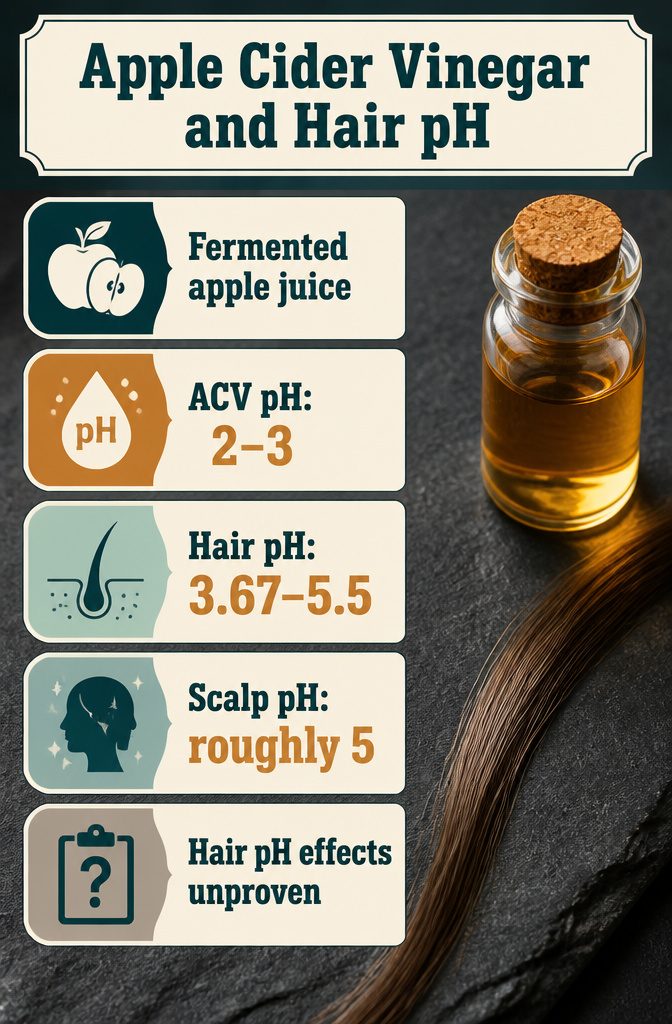
Apple cider vinegar is fermented apple juice that ends up with a pH between 2 and 3, lower than both your hair’s natural 3.67–5.5 and your scalp’s roughly 5. That acidity is the reason people reach for it.
Hair that looks dull, brittle or frizzy tends to skew more alkaline, and using something acidic may help lower the pH back into the range where the cuticle lies smooth, shine returns and strands feel stronger.
The proposed benefits center on that pH shift: smoother cuticle, less buildup, better balance.
But no study has directly examined whether ACV actually regulates hair pH or delivers the changes people claim. The evidence is limited and mixed, so what you read about ACV sits somewhere between anecdotal and possible rather than proven.
Shine and Smoothness
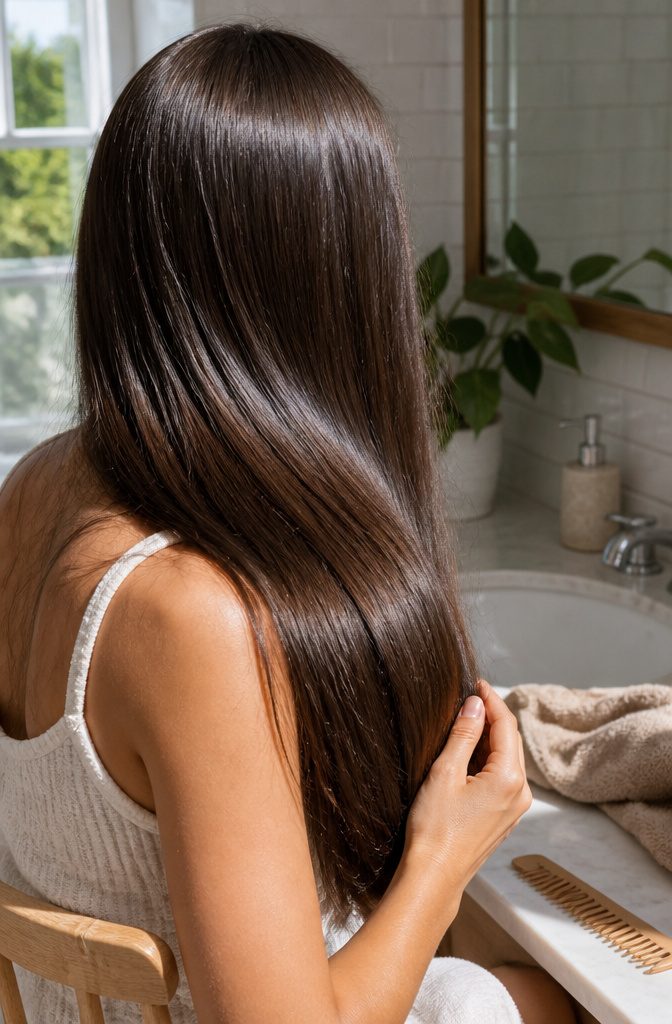
ACV’s acidity may smooth the hair cuticle and boost shine, though the evidence is indirect.
Hair sits naturally at a pH between 3.67 and 5.5, slightly acidic. Most shampoos run alkaline, which lifts the cuticle during cleansing.
ACV, with a pH of 2 to 3, is acidic enough to flatten that cuticle again once you rinse with it. A flat cuticle reflects more light, so hair looks shinier and feels smoother.
The same mechanism may reduce frizz.
When the cuticle lifts, moisture enters and swells the hair shaft, causing frizz. Lowering pH helps keep the cuticle closed, which limits that swelling and makes detangling easier.
Sources link acidity to frizz control and easier combing, but no direct research has tested ACV against frizz specifically. The logic holds, the measurements are there, the clinical proof is not.
Buildup Removal and Clarifying

ACV works by dissolving residue from styling products, hard water minerals, dirt, and oil that sits on the surface of the hair.
That buildup is the reason hair feels heavy or looks dull even after washing. Gels, creams, sprays, silicones, and the calcium deposits from hard water all layer up over time, and regular shampoo doesn’t always strip them completely.
The acidity in apple cider vinegar breaks those deposits down without the harshness you get from a clarifying shampoo, so the hair feels clean and light again but not stripped.
It lifts styling residue, environmental pollutants, and excess sebum without pulling away the natural oil that keeps hair from drying out.
That clearing effect also lets conditioners and masks actually penetrate the hair shaft instead of sitting on top of a film.
This rinse works especially well for hair that looks flat, coated, or rough, and it helps oily scalps reset between deep clarifying washes.
Scalp Comfort, Oiliness and Dandruff
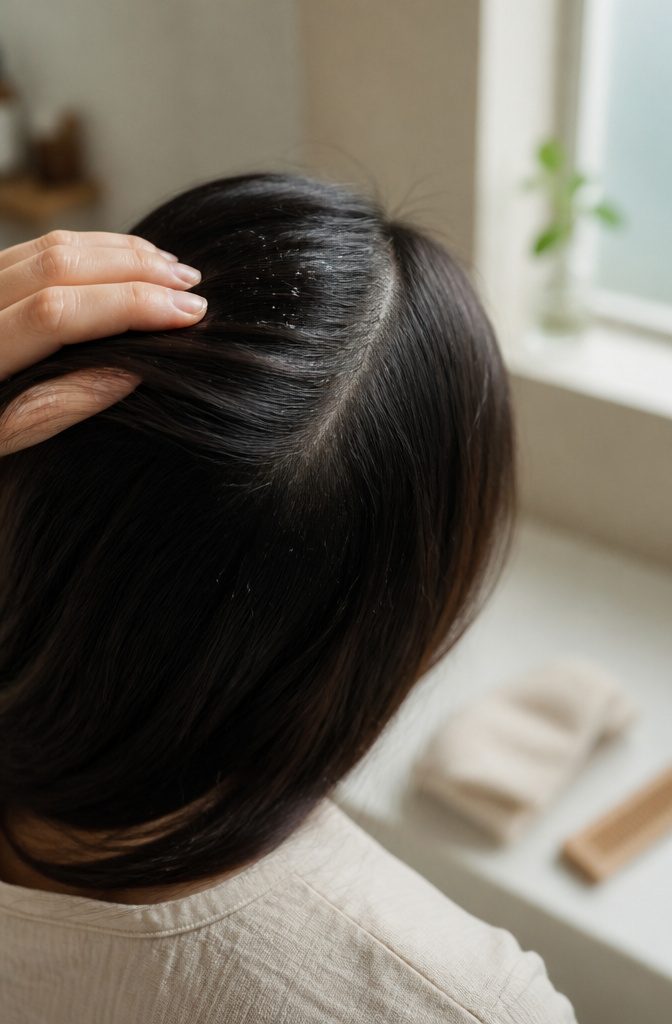
The acetic acid in apple cider vinegar has antimicrobial properties that can address yeast and bacteria on the scalp, and the pH of around 3 helps remove dead skin cells and reduce flaking.
Scalps that feel congested or itchy from product buildup or oiliness often respond well to a diluted rinse, which restores a fresher, more balanced feeling.
The link to dandruff treatment, though, is far weaker than most DIY guides suggest.
There is very limited scientific proof that ACV treats dandruff, and it should not be relied on as a medical solution for persistent flaking or scalp conditions.
If you are dealing with true dandruff rather than occasional dryness or product residue, a medicated shampoo is a better starting point.
Undiluted ACV can cause itching, redness and even burns on sensitive skin, especially if you have eczema or psoriasis. A patch test on the inner forearm or behind the ear before applying the rinse to your scalp is not optional.
Color, Breakage and Growth Claims
Color-treated hair sits in the middle of the debate. Some sources call ACV safe for all hair types and say it keeps the cuticle sealed, which protects color from fading better than harsh clarifying shampoos.
Others warn that the acidity can loosen dye molecules and speed up fading, especially on fresh color. If you just left the salon, waiting a few washes before using an ACV rinse gives the color time to settle.
Breakage and growth claims appear often but rest on thin ground.
The theory is that a balanced scalp pH and clean follicles let hair grow without interference, and smoother cuticles mean less snapping when you detangle. The pH of ACV is around 3, acidic enough to close the cuticle and add slip.
But direct research linking ACV rinses to measurably stronger hair or faster growth is limited or absent. The benefits you can count on are the clarifying and smoothing ones, not a transformation in growth rate.
Who Should Use It and Who Should Be Cautious
Who Should Use It and Who Should Be Cautious
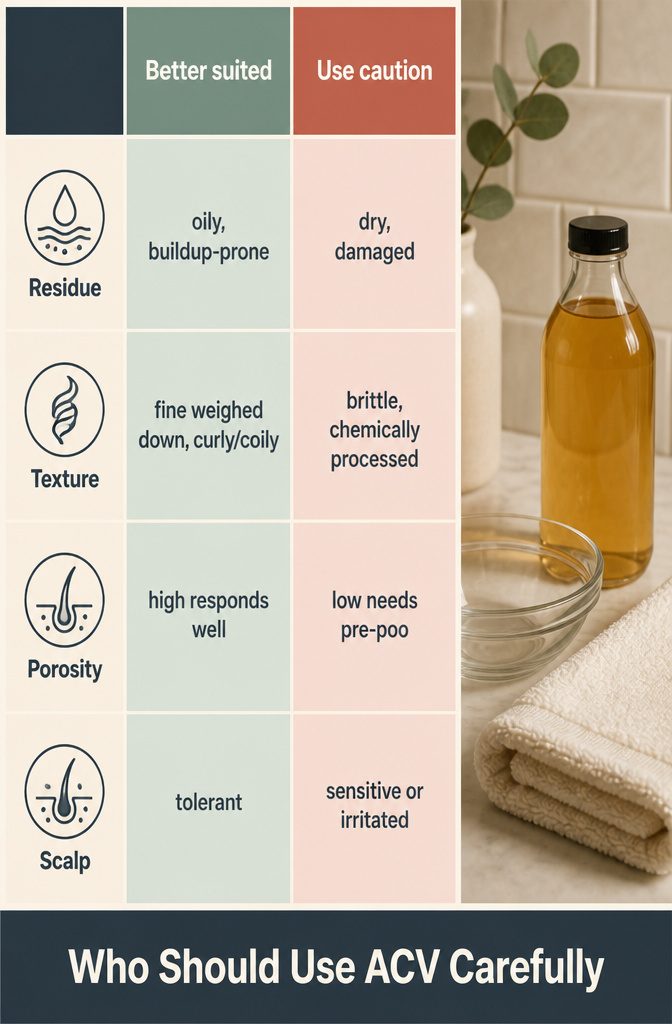
ACV tends to help hair that holds onto oil, buildup or hard water deposits.
Oily scalps, fine hair weighed down by product, and curly or coily textures that go days between washes can all benefit from a clarifying rinse that cuts through residue without stripping moisture completely.
High-porosity hair often responds well because the acidity seals cuticles and traps hydration that would otherwise escape quickly.
Since ACV is acidic, it can be a bit too strong for anyone who has mechanical damage—say from bleaching, excess sun exposure or overusing hot tools—very fine hair that’s naturally brittle or anyone who has difficulty growing their mane.
— ELLE
That matters most if your ends are breaking off.
You can apply diluted ACV at the roots and skip the lengths entirely. Dry, damaged, chemically processed or color-treated hair needs caution, and a sensitive scalp or any open irritation means you dilute heavily or skip ACV altogether.
Advice varies across stylists and dermatologists, so start with a weaker mix or choose a ready-made ACV product if your hair leans dry.
Curlsmith recommends a pre-poo treatment for low-porosity hair, any method for medium porosity, and a final rinse or leave-in for high porosity to lock in moisture. A strand test settles the question faster than guessing.
How to Mix and Apply a DIY Rinse
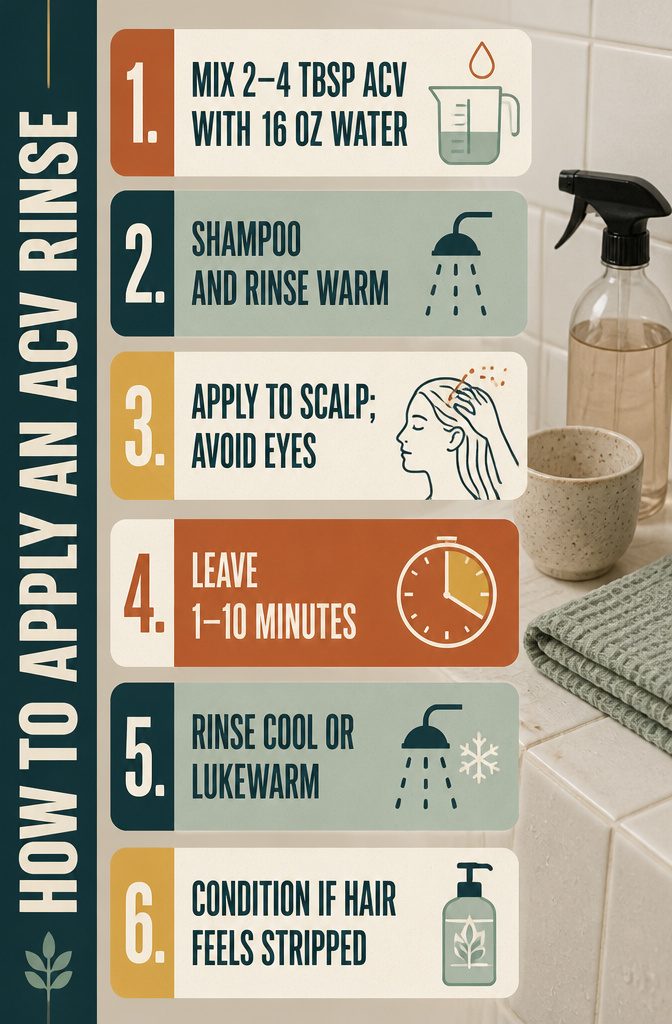
- Mix 2–4 tablespoons of ACV with 16 ounces of water in a spray bottle or cup. Some sources go lighter at 1 part ACV to 5 parts water (roughly ¼ cup ACV per liter), others suggest 1 part ACV to 2 parts water, or even 1 tablespoon ACV per 3 tablespoons water for a stronger treatment. Start mild and adjust if your scalp tolerates more.
- Shampoo your hair as usual and rinse with warm water.
- Pour or spray the diluted ACV over your hair, working it into your scalp with your fingertips. Keep your head tilted back to avoid contact with your eyes.
- Let it sit for 1–10 minutes depending on how much time you have. Most sources land around 2–5 minutes.
- Rinse thoroughly with cool or lukewarm water. Cool water helps close the cuticle and lock in shine.
- Condition afterward if your hair feels stripped. Some hair can skip this step, but finer or drier textures usually want the moisture back.
A few sources mention variations: ELLE recommends applying the rinse to towel-dried hair after conditioning and leaving it on for just a few minutes, while Curlsmith describes an overnight leave-in at 1 tablespoon ACV per liter of water, rinsed the next morning.
Most agree that rinsing is the safer route.
How Often to Use It
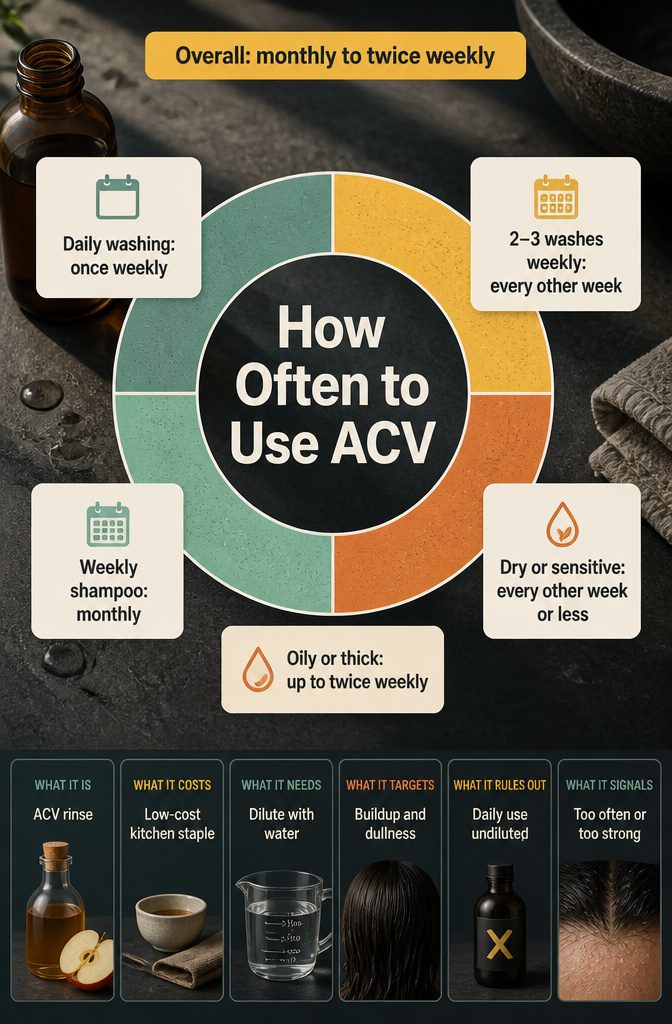
Most advice lands somewhere between once a month and twice a week, depending on how often you wash, how oily your scalp runs, and how dry your hair is.
If you wash daily, use an ACV rinse once a week. For those washing two or three times a week, every other week works.
Monthly is enough if you only shampoo once a week. Treat it like a clarifying round rather than a daily step.
Oily or thick hair can take twice weekly application. Dry or dehydrated hair needs spacing closer to every other week or less, since the acidity can pull moisture.
If your scalp is sensitive, start with twice a month and watch how it responds. Stinging, extra dryness, or itchiness means you either diluted too little or used it too often.
ACV Hair Products as an Alternative to DIY
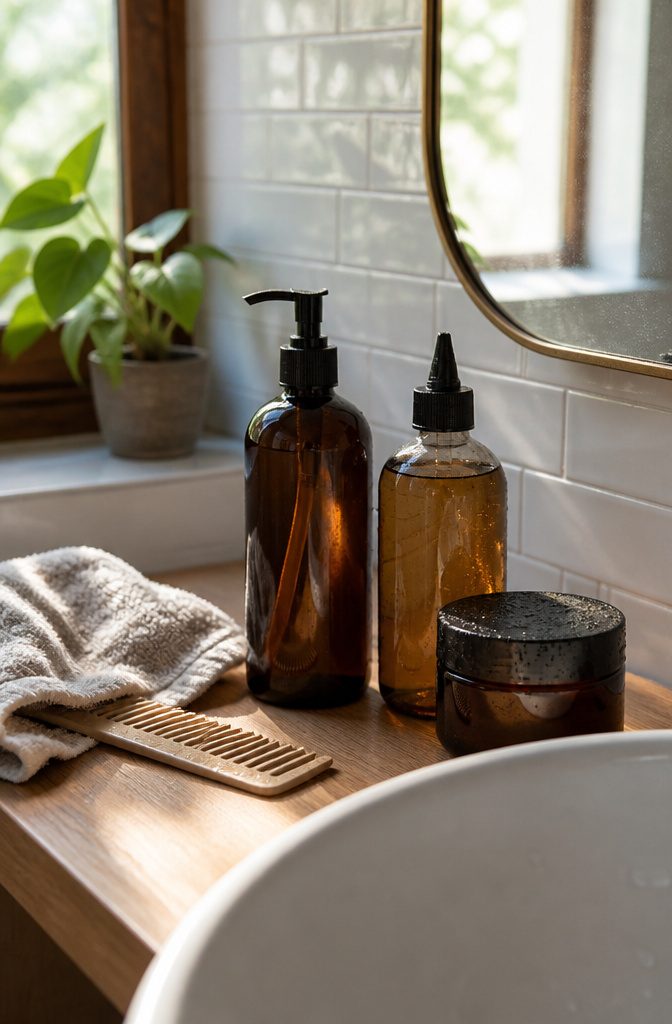
If raw DIY rinses sound too fiddly or risky, formulated ACV products solve most of the guesswork.
Shampoos, rinses and scalp scrubs are pH-controlled, which means they’re less likely to strip color or irritate skin. R+Co Lost Treasure Apple Cider Vinegar Shampoo runs $29, Rootist ACV Scalp Serum $32, and Ouai Detox Shampoo $16.
Budget picks include Renpure and SheaMoisture, both around $11. For deeper scalp work, dpHUE’s ACV scrub is $42, and Curlsmith and Hairlust Scalp Delight come in at €33,95.
ELLE and Curlsmith both suggest that a clarifying shampoo may be safer than mixing your own rinse at home.
You skip the acid measurement, and the formula already includes buffers and conditioners to keep hair from drying out. If you want the buildup removal without the kitchen experiment, a bottled product does the work for you.
Risks, Overuse and When to Patch Test
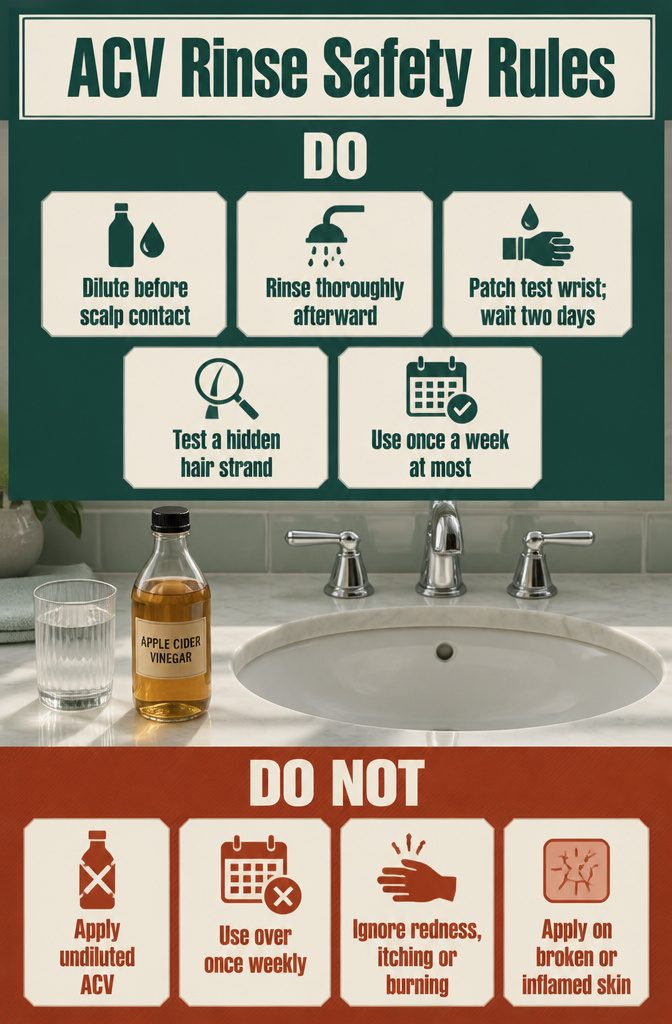
The caustic acids in ACV can irritate or burn skin if you skip dilution, and a 2015 case report documented scarring after undiluted application.
Always mix your rinse with water before it touches your scalp, and rinse thoroughly afterward. Overuse dries hair out even when properly diluted—stick to once a week at most, twice if your hair is especially oily.
A patch test catches reactions before they spread. Apply a small amount of diluted ACV to the inside of your wrist and wait two days.
Watch for redness, itching or burning. If any show up, rinse and stop.
A strand test works the same way: test on a hidden section of hair first to see how yours reacts before covering your whole head. Anyone with eczema, psoriasis or broken skin should be especially careful.
Frequently Asked Questions
How do I use apple cider vinegar on my hair?
Mix 2–4 tablespoons of ACV with 16 ounces of water, then pour or spray it over your hair after shampooing.
Work it into your scalp, leave it for 1–10 minutes, and rinse thoroughly with cool water. Condition afterward if your hair feels dry.
What are the benefits of apple cider vinegar for hair?
ACV may smooth the cuticle for more shine, dissolve buildup from products and hard water, reduce frizz, and help balance scalp pH.
The acidity flattens the cuticle so hair reflects more light and feels softer. Direct research is limited, so these benefits sit between anecdotal and possible rather than proven.
How often should you use an apple cider vinegar hair rinse?
Use it once a week if you wash daily, every other week if you wash 2–3 times weekly, or monthly if you shampoo once a week.
Oily or thick hair can handle twice weekly, while dry or sensitive hair needs every other week or less to avoid pulling moisture.
Can apple cider vinegar damage your hair?
Undiluted ACV or overuse can cause dryness, irritation, or burns.
Always dilute it with water and stick to once a week at most. A 2015 case report documented scarring after undiluted application, so mixing and rinsing thoroughly are not optional.
Do I use apple cider vinegar before or after shampoo?
Apply it after shampooing.
Most guides recommend washing your hair first, then pouring the diluted ACV rinse over clean hair and rinsing it out. Some sources describe a pre-poo method for low-porosity hair, but the standard approach is post-shampoo.
Is apple cider vinegar good for colored hair?
Diluted ACV may help maintain shine and remove buildup, but it can also speed up fading if used on fresh color.
Wait a few washes after leaving the salon to let the dye settle. Test on a hidden section first to see how your hair reacts.
Does apple cider vinegar help with dandruff?
ACV may refresh the scalp and reduce flaking for some people, but there is very limited scientific proof that it treats dandruff.
It should not be relied on as a medical solution. If you have persistent flaking, use a medicated shampoo instead.
Can I leave apple cider vinegar in my hair?
No, rinse it out after 1–10 minutes. Leaving ACV in long-term may cause dryness or irritation because of its acidity.
Can we directly apply apple cider vinegar on hair?
Never apply undiluted ACV directly to your hair or scalp.
It can cause burns, irritation, and scarring. Always dilute it with water first, starting with 2–4 tablespoons per 16 ounces of water, and test on a small area before covering your whole head.
How long to soak hair in apple cider vinegar?
Leave the diluted rinse on for 1–10 minutes depending on your schedule and hair type.
Most sources land around 2–5 minutes. There is no official duration, so start with a shorter time and adjust based on how your hair responds.
Is apple cider vinegar good for frizzy hair?
It may help by lowering pH and closing the cuticle, which limits moisture swelling and reduces frizz. The logic holds and sources link acidity to frizz control, but no direct research has tested ACV against frizz specifically.