Full protective styles hold for 6 to 8 weeks when you wrap at night and oil your scalp weekly, while a few accent braids loosen in days.
If your edges are fragile or your scalp is tender, knotless braids spread tension better than styles that knot extension hair at the root.
Each style on this list sits tight to the scalp at some point, whether the braid runs the full length or feeds into loose ends, locs or a high ponytail.
1. Cornrows
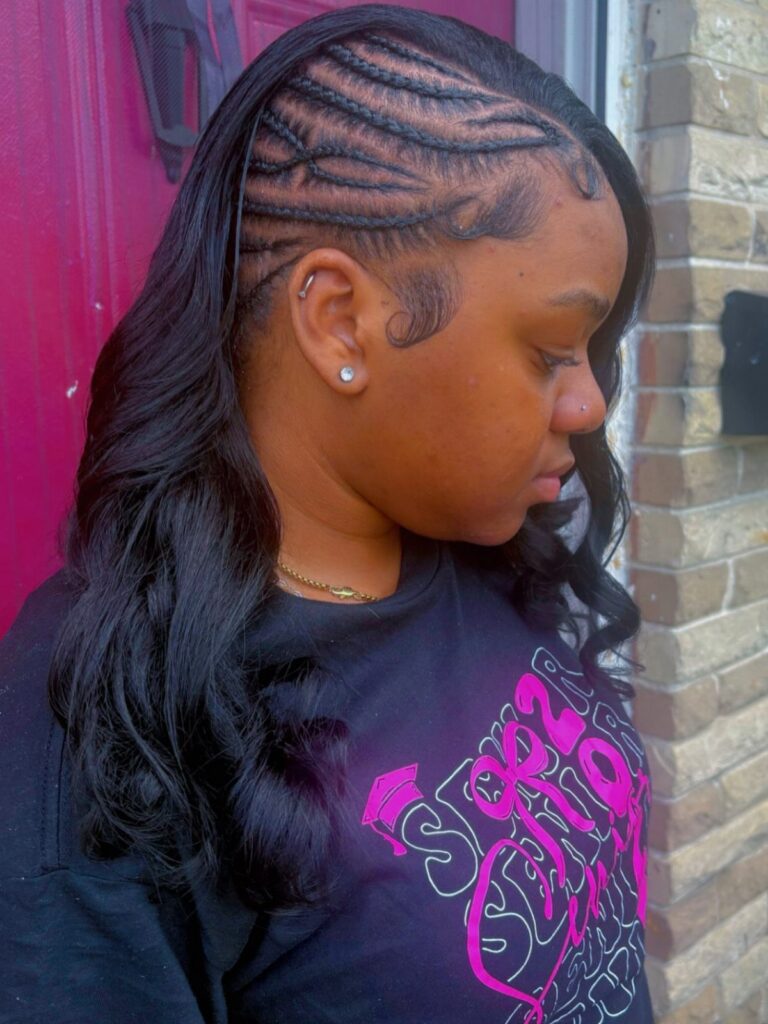
Each braid sits flat against the scalp and follows a line, straight or curved, in whatever pattern you choose.
A basic set with straight rows goes faster; add curves or geometry and the chair time increases, but the pattern becomes yours.
The braids hold their shape as long as you keep the scalp moisturized and smooth down the edges when they lift.
Box braids and other extensions can start from a cornrow base, or you can wear the rows alone for a low-profile protective style that shows off the pattern.
2. Knotless Braids
Extension hair is fed gradually into each braid instead of knotted at the root, so the base sits lighter and flatter.
The install takes longer than standard box braids because extension hair is fed in gradually, but my scalp thanks me for it.
Roots hold up better through sleep and workouts, and the braids last 6 to 8 weeks with nightly wrapping. If you have a tender scalp or want a natural-looking hairline, this method gives you both without sacrificing hold.
3. Braided Ponytail
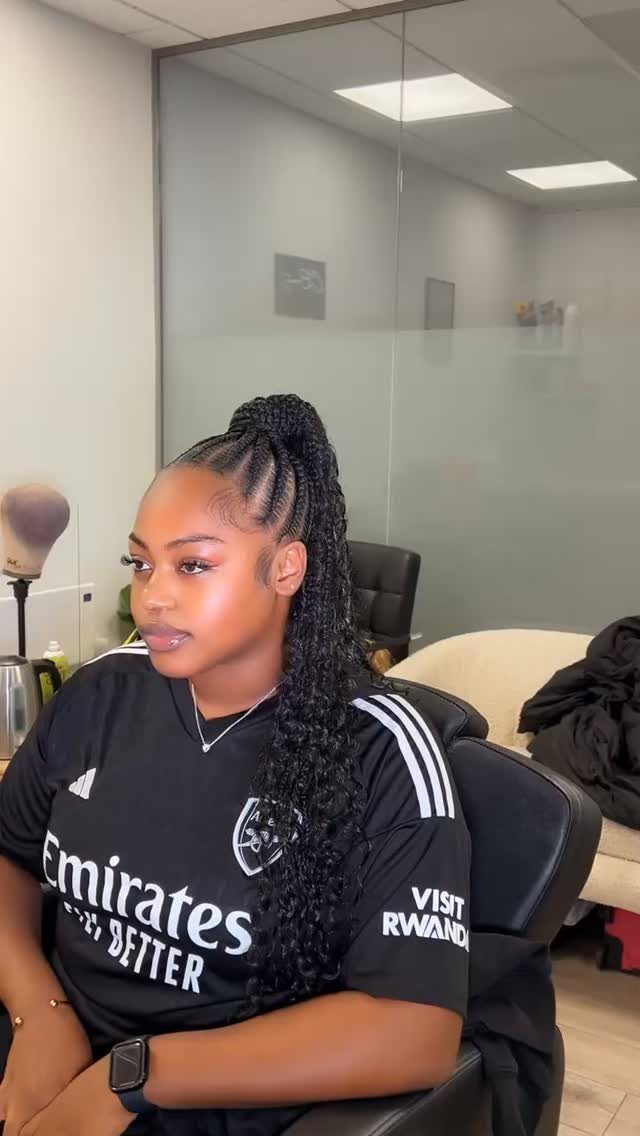
Cornrows or box braids run straight back and gather into a ponytail at the crown or nape. A high placement gives lift and shows the full braid pattern; a low ponytail keeps the style office-ready and easier to sleep in.
The gathered section can be wrapped with a matching extension or left loose. The ponytail holds as long as the braids do, and once it’s in I don’t touch it again until takedown.
4. Fulani Braids
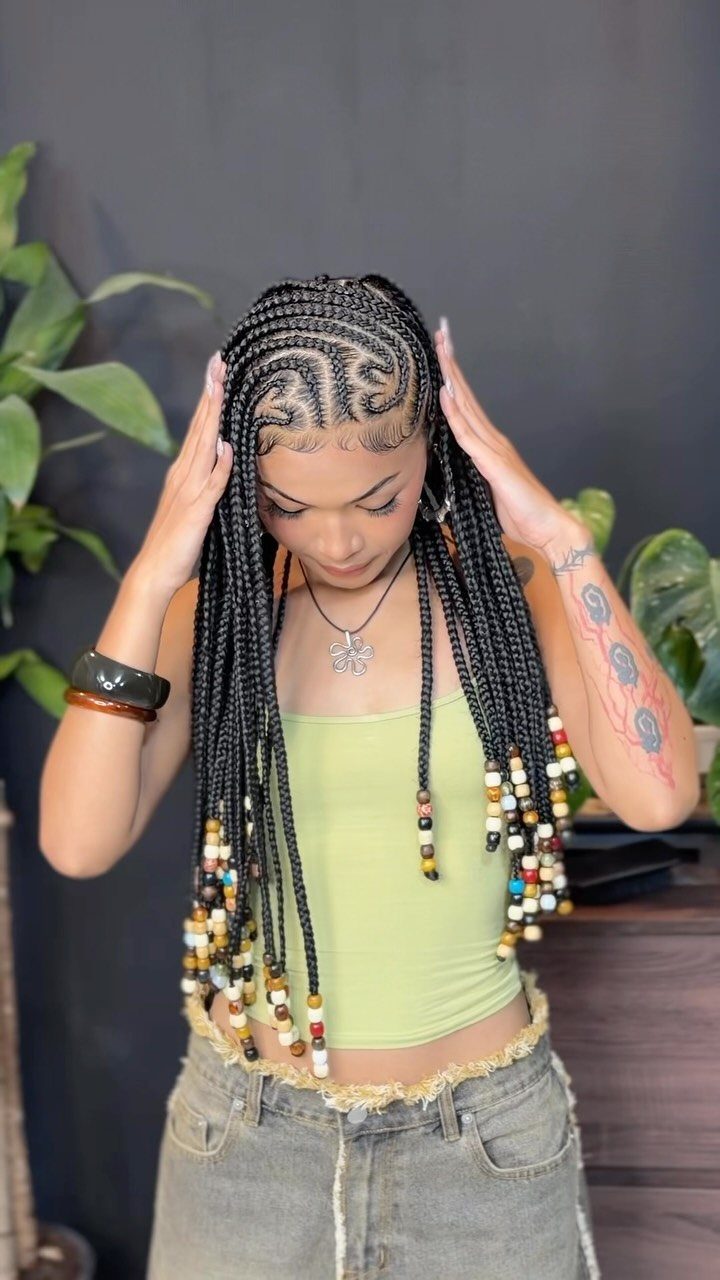
Cornrows run along the front and sides of the scalp, while the back hangs in individual braids that often carry beads or cowrie shells.
The front rows frame the face and keep hair off the forehead, and the loose braids in back let you gather, twist or wear them down.
Bead placement adds weight, so if your edges are fragile, limit the decorations to mid-lengths and ends rather than clustering them near the scalp.
5. Box Braids
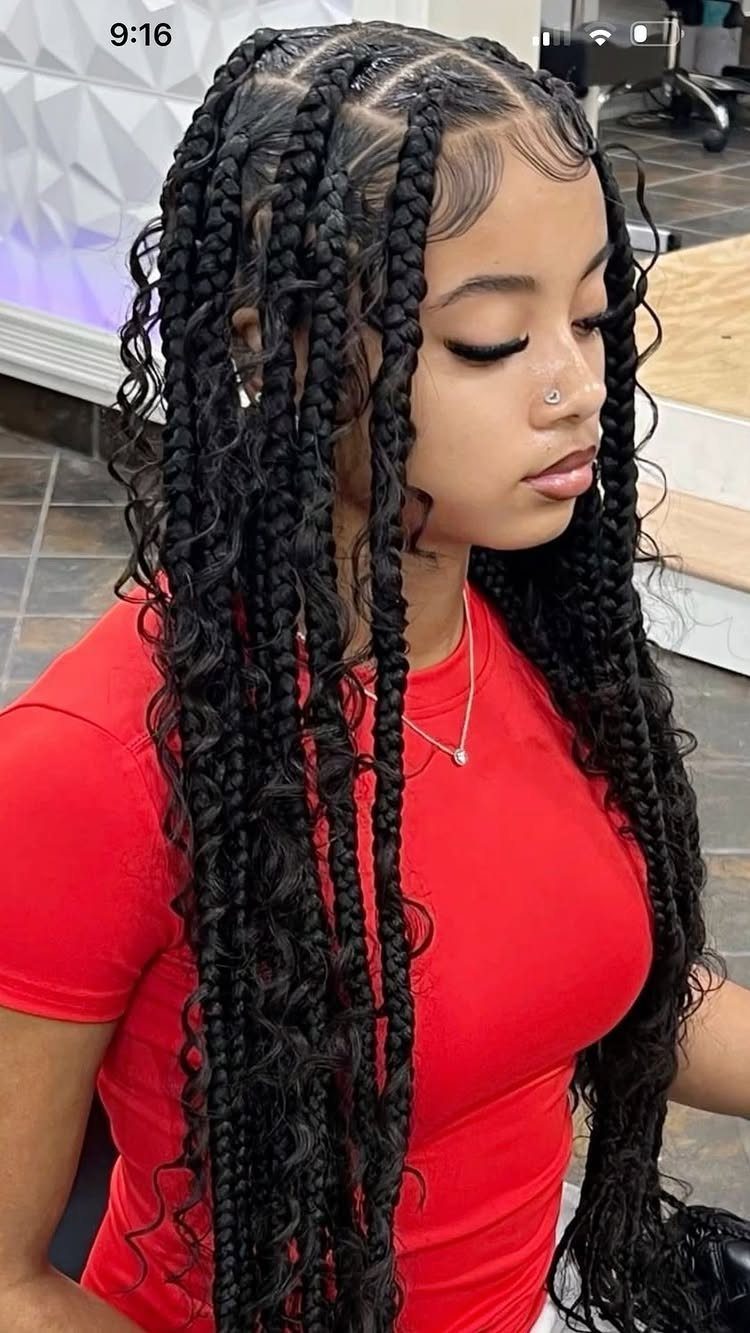
Each braid starts from a square section of scalp, giving the style its name. The sections create a clean grid that stays visible even when the braids are long, and the uniform size makes the style easier to maintain.
Medium-width braids balance install time with longevity; jumbo versions go faster but loosen sooner. The style lasts 6 to 8 weeks with nightly wrapping and weekly scalp oiling, and you can curl, twist or pin the ends without disrupting the base.
6. Lemonade Braids
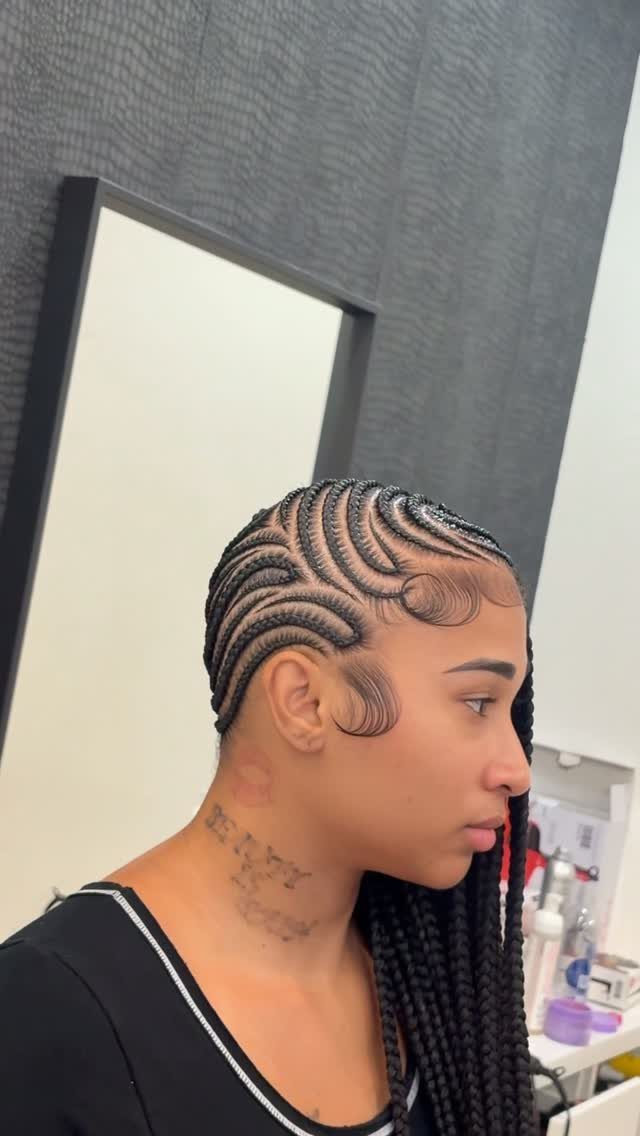
Cornrows sweep diagonally from one side of the head to the other, falling over one shoulder. The side-swept direction keeps hair off the face and shows the full curve of each row.
If you sleep on the side the braids fall toward, wrap them in a silk scarf or bonnet to prevent frizz along the exposed edges.
The asymmetry suits oval and heart-shaped faces best, and you can adjust the angle to sit higher or lower depending on where you part.
7. Crochet Braids
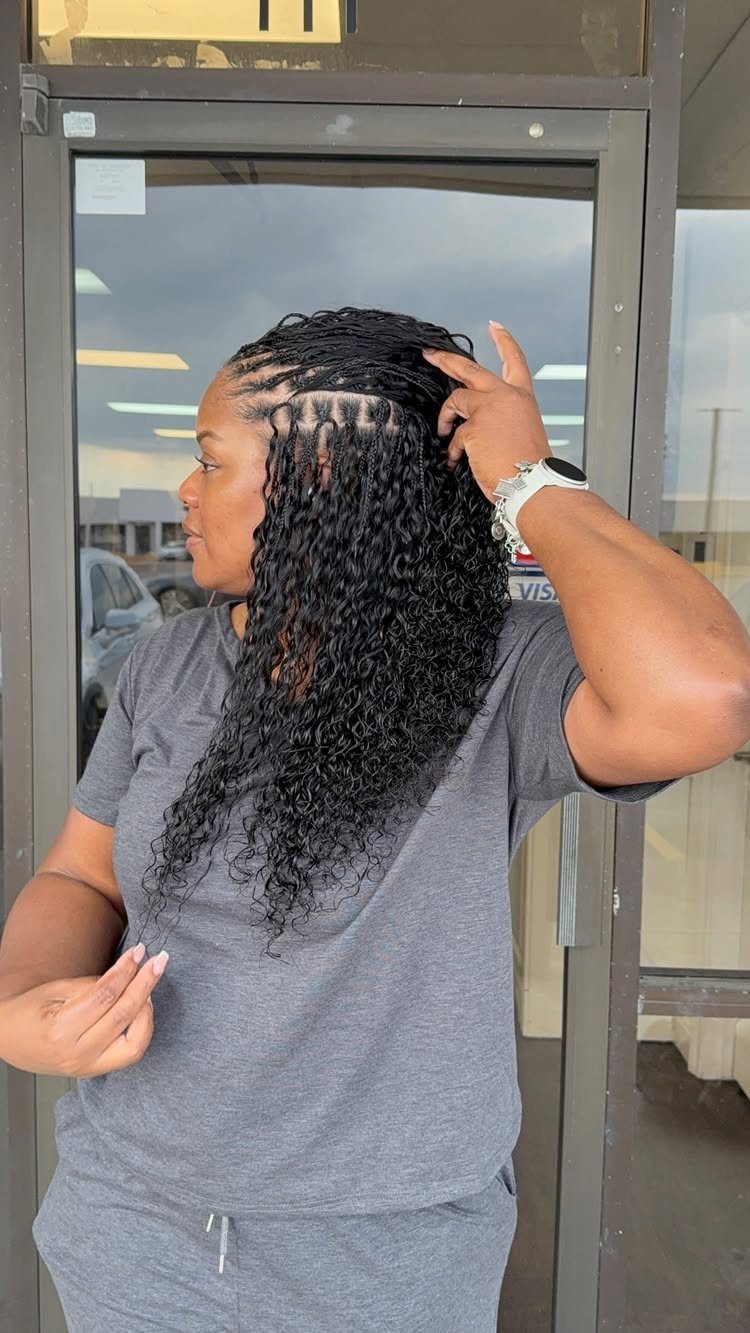
A cornrow base lies flat against the scalp, and extension hair is looped through each braid with a crochet hook. The install goes faster than individual braids because you’re attaching pre-made extensions rather than braiding from root to tip.
The scalp base can follow any pattern you choose, straight or curved, and the extensions hang loose or curly depending on the texture you buy.
If you want volume without the weight of thick individual braids, this method gives you both.
8. Micro Braids
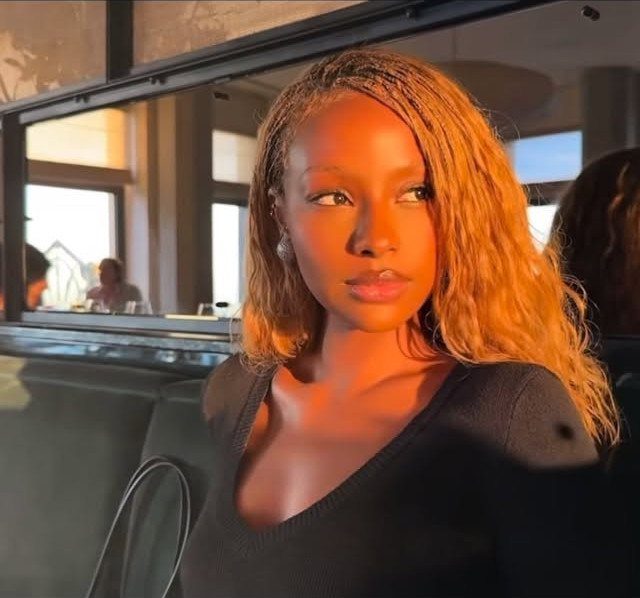
Braids this fine take hours to install, but the result moves like loose hair.
Each braid sits thin enough that you can gather them into a ponytail or bun without bulk, and the delicate size reads as texture rather than structure.
The install takes longer with more length and density, and the braids last with careful wrapping at night.
If your edges are fragile, ask your stylist to leave the perimeter slightly looser or stop the braids an inch back from the hairline.
9. Stitch Braids
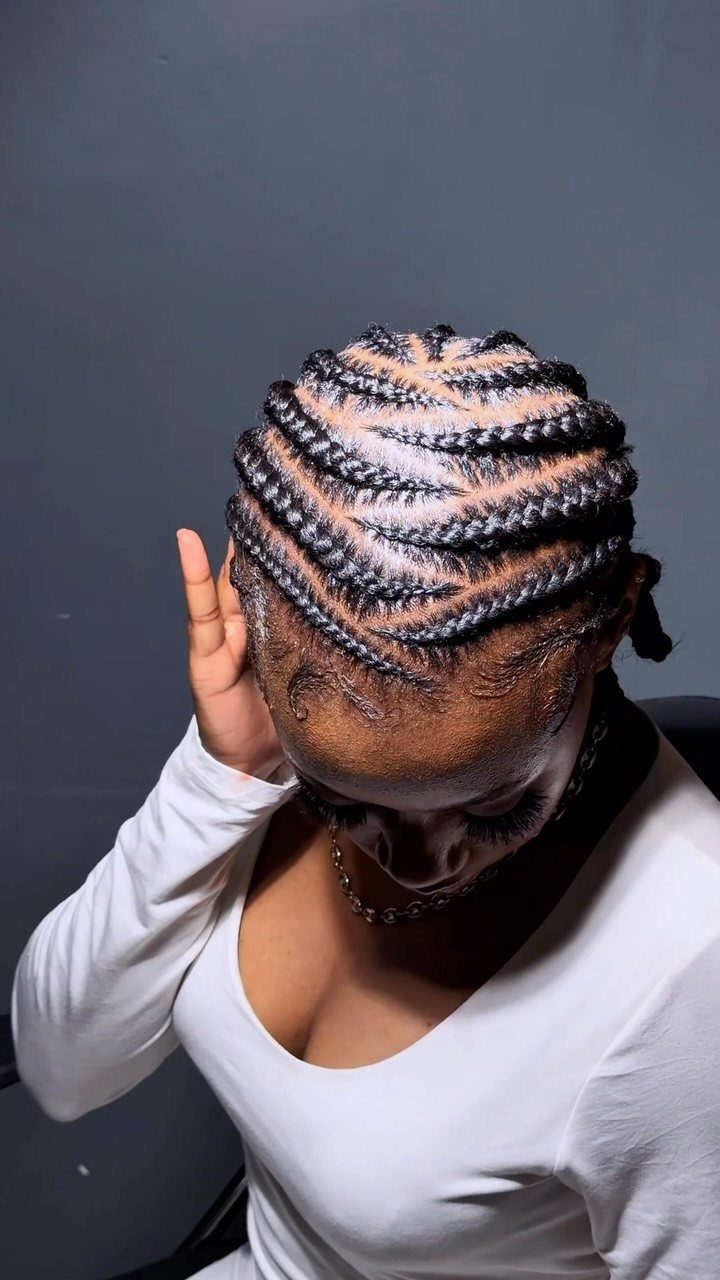
The parting makes this style. Each section is carved with a rattail comb to create a crisp, horizontal line that runs parallel to the last.
The braids themselves follow the usual cornrow technique, but the precision of the parts gives the whole style its clean, graphic look.
If your stylist rushes the parting, the effect disappears, so budget extra time for the sectioning. The sharper the parts, the longer the style holds its shape between touch-ups.
10. Zigzag Stitch Braids
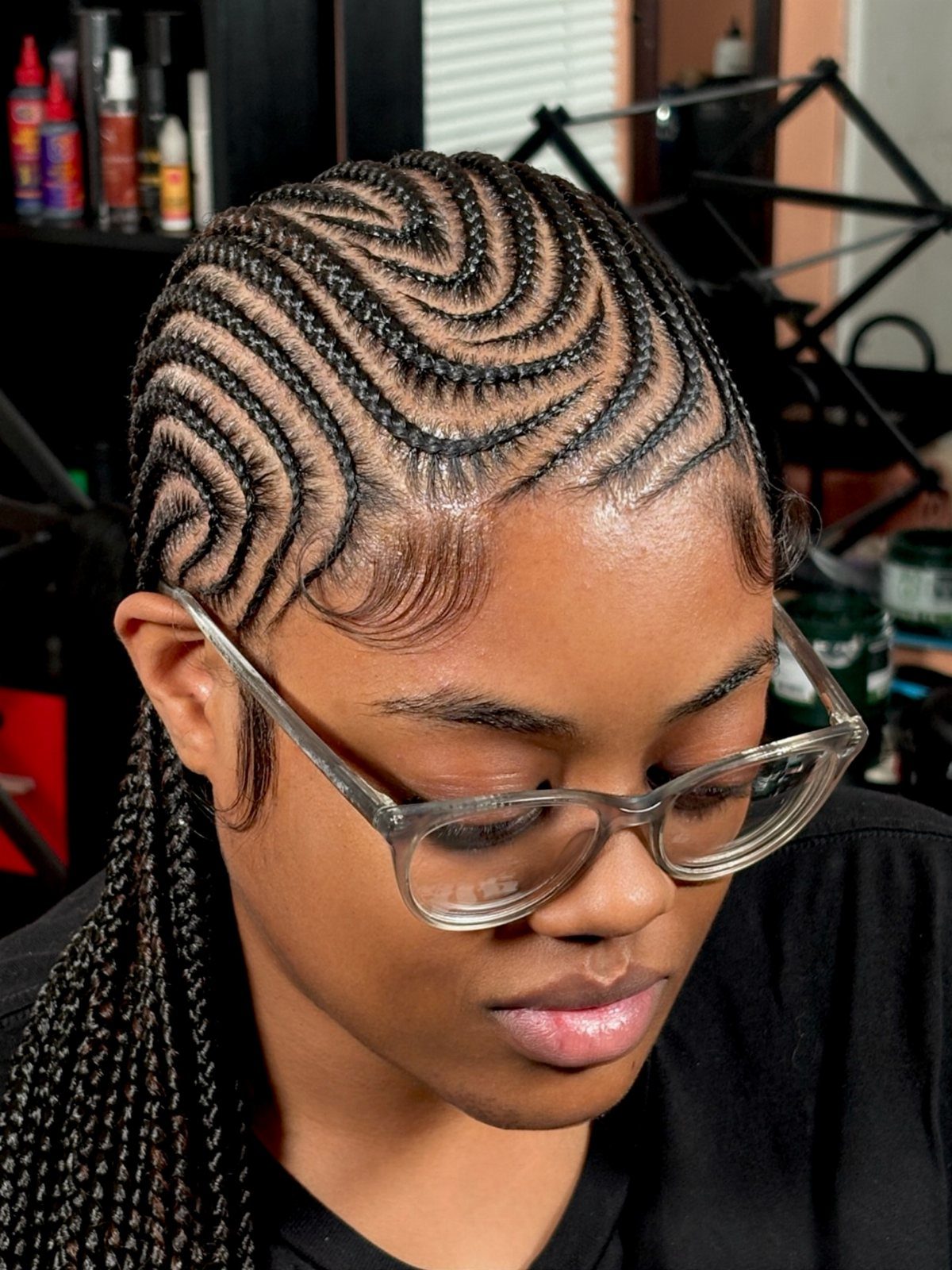
Instead of straight lines, the parting follows a sharp zigzag down each row. The braids themselves sit flat like any cornrow, but the angled sections create a pattern that reads even when the braids are styled up or pulled back.
The zigzag takes longer to section than straight stitch braids, so plan for extra time at your appointment.
If you want the graphic effect without the extra time, ask for zigzags on just the front or side sections and keep the back straight.
11. Crown Braids
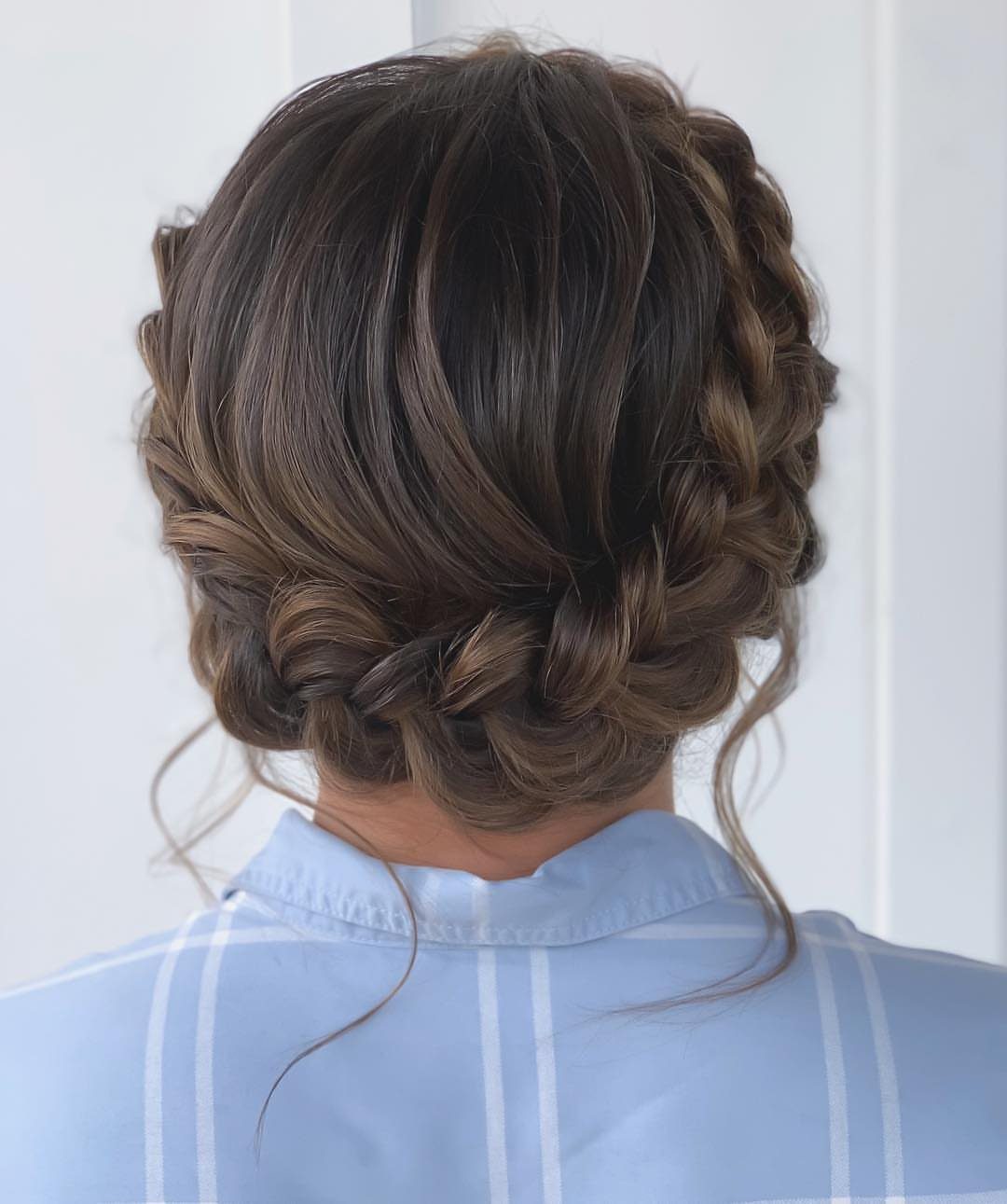
One braid circles the head at the hairline, holding everything back and away from the face. The rest of the hair can hang loose, twist into a bun, or braid separately, depending on length.
The crown sits secure enough for a full day without pins, and it works on fine hair that won’t hold a complicated updo.
If your hair is layered, shorter pieces will slip out near the nape, so pin them flat or leave them as soft framing.
12. Jumbo Braids
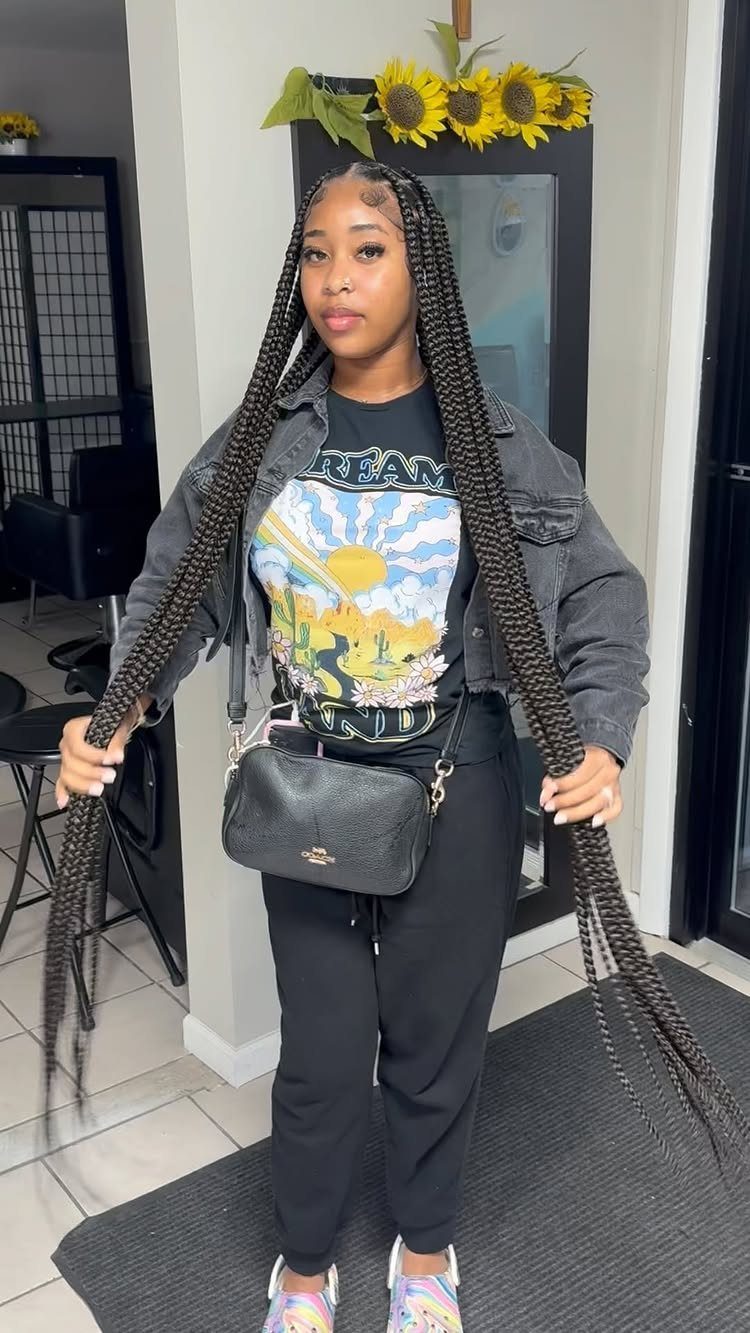
Thick sections mean fewer braids and a faster install.
Each braid runs wide enough that the style finishes faster than medium box braids take. The trade is durability: jumbo braids loosen faster because each one carries more weight.
If you want a bold look for a short window or you’re testing protective styling for the first time, this size gets you there without the full commitment.
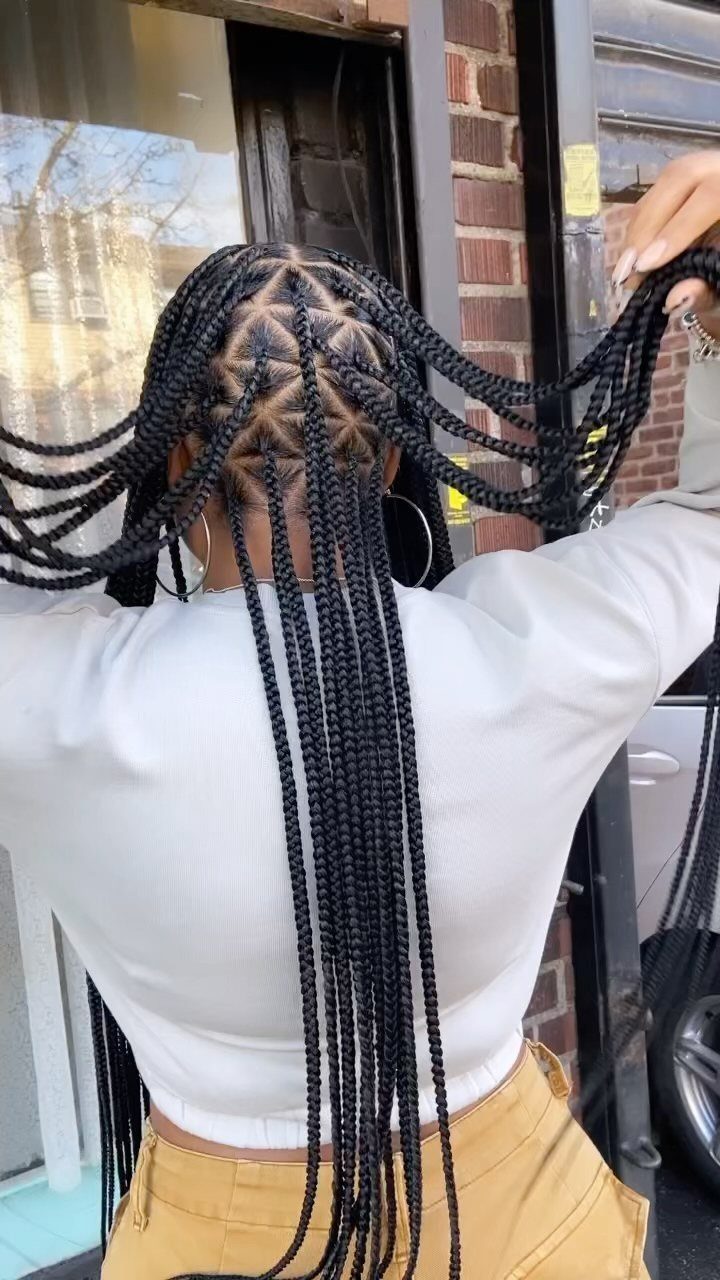
13. Triangle Part Braids
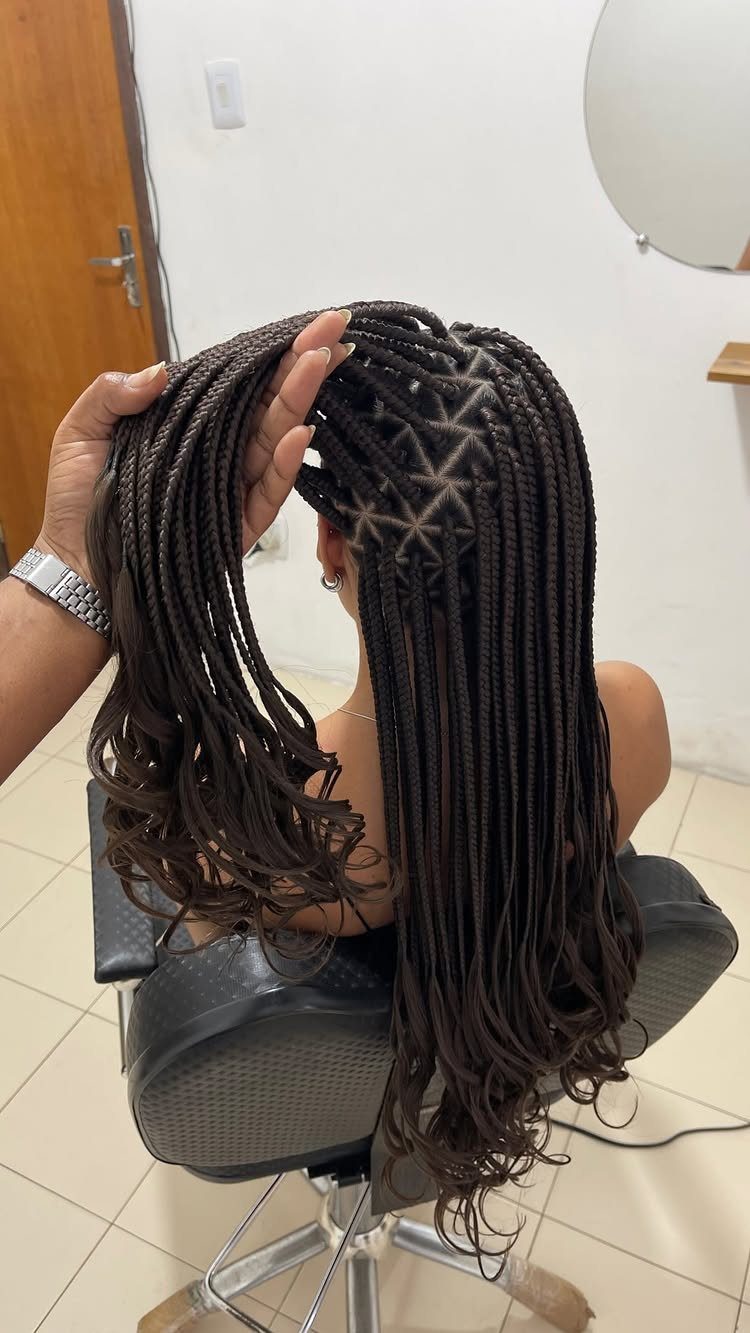
The sections angle into triangles instead of squares, and the points meet to form a geometric grid across the scalp.
The shape takes slightly longer to section than standard box braids, but the pattern stays visible whether the braids hang loose or gather into a ponytail.
If your stylist is comfortable with precision parting, the triangle layout adds visual interest without changing how the braids themselves are done or how long they last.
14. Braided Half-Up Afro Curls
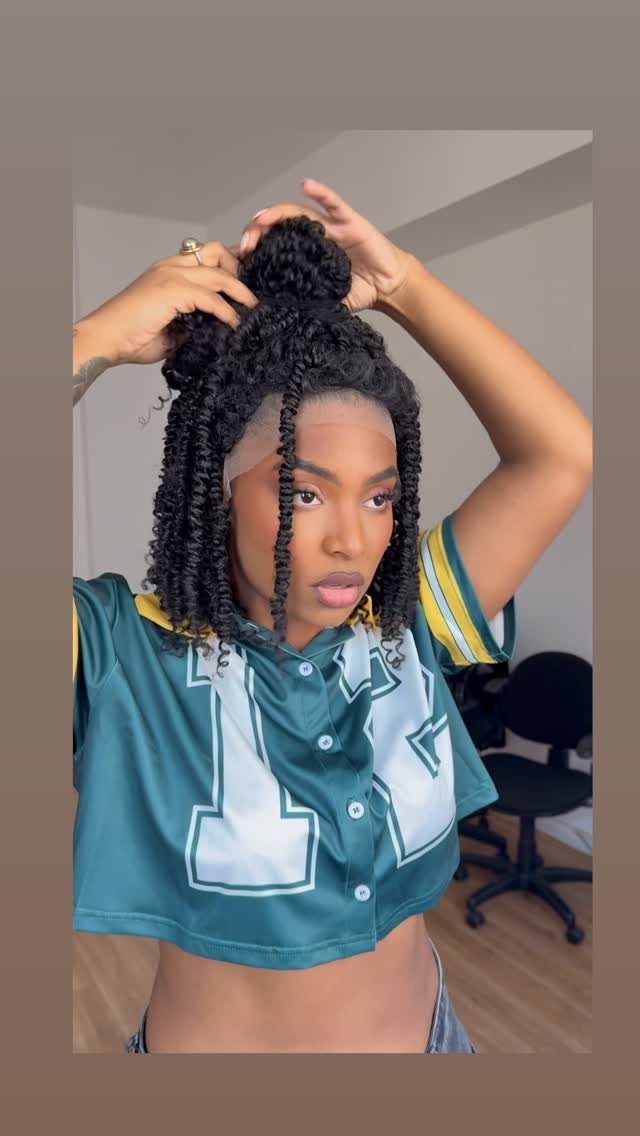
Cornrows or flat braids pull the front and sides back, while the rest of the hair stays loose and curly.
The braids keep curls off the face without flattening volume at the crown, and the style works on natural texture or a wash-and-go.
Pin or tie the braids at the back to hold them, and refresh the loose curls with water or leave-in between wash days. The combination gives structure where you need it and movement everywhere else.
15. Goddess Locs
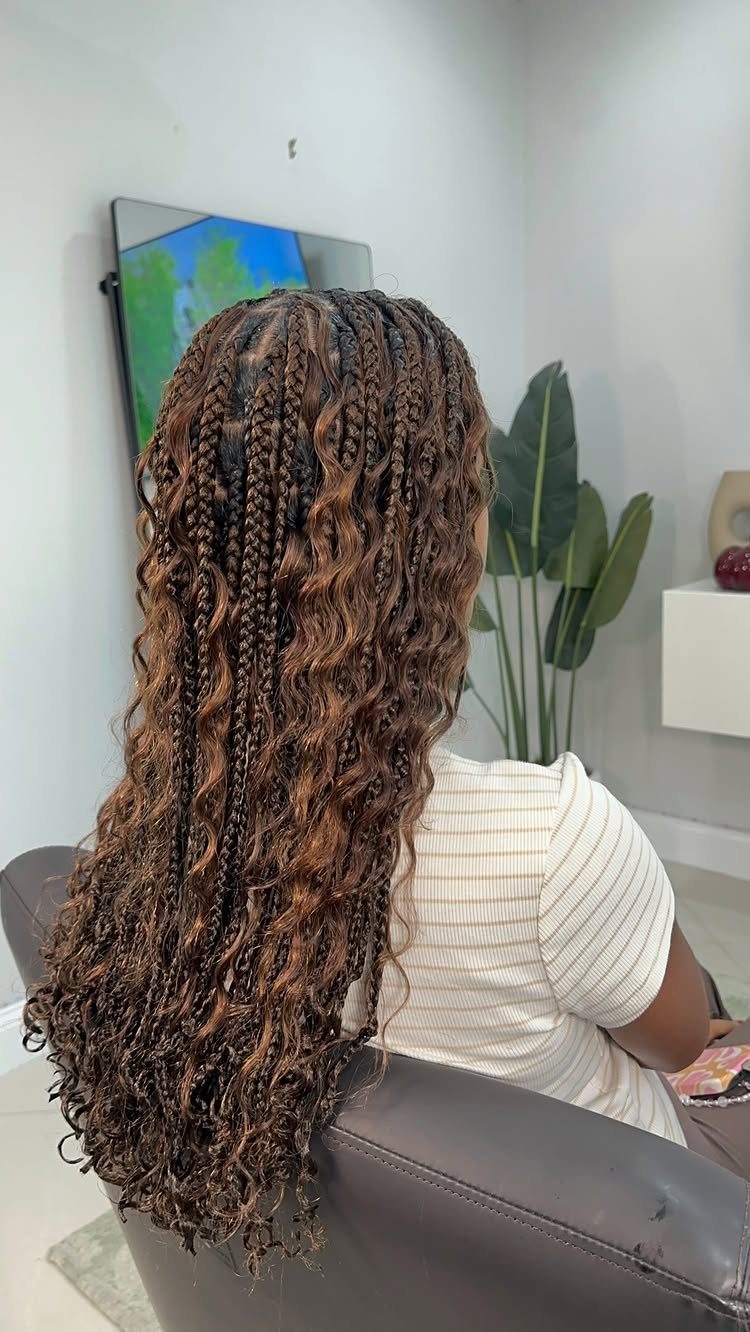
Crochet locs loop through a cornrow base, and the ends finish with loose curls instead of sealing into a point.
The texture reads softer than traditional faux locs, and the curly ends move more naturally. The thick sections loosen faster than finer braids, so don’t expect the same longevity you’d get from smaller box braids.
If you want the look of locs without committing to the starter phase, this gives you the shape and the length in one appointment.
16. Afro Braided Updo
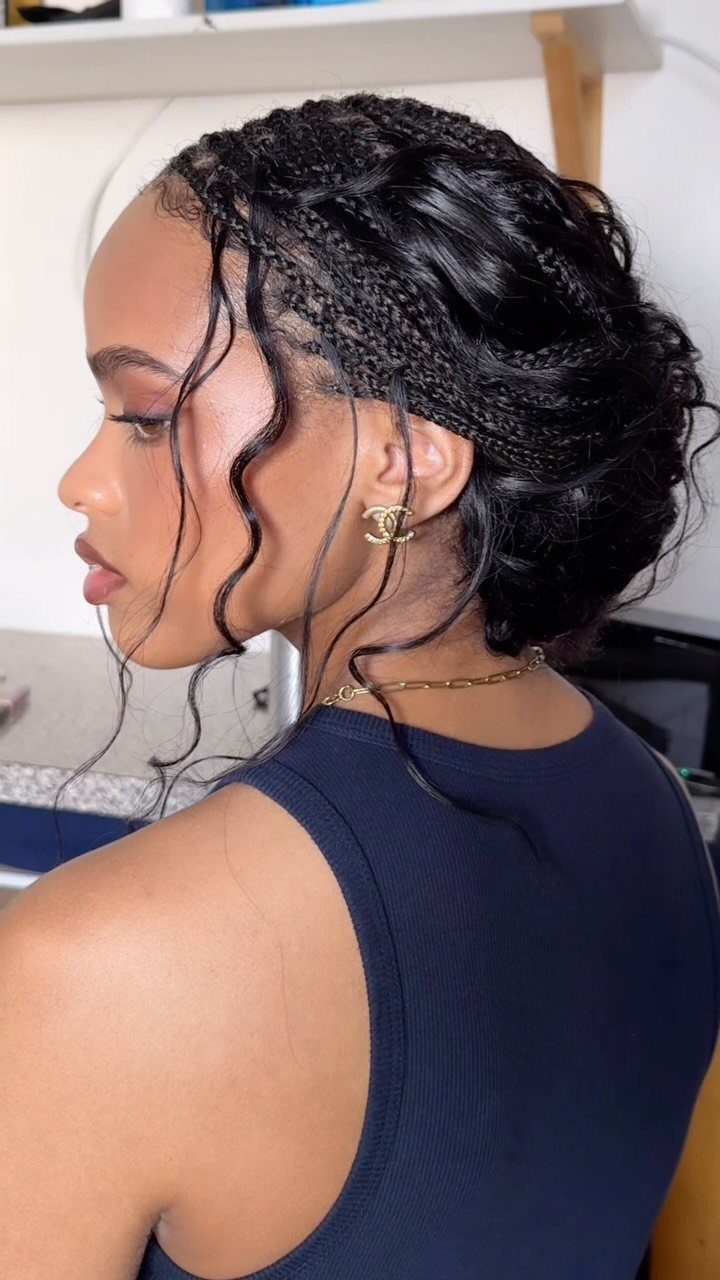
Flat braids sit close to the scalp and gather at the crown, where curls pile into a textured bun or puff. The braided base keeps the style secure, and the curly section adds height without pins slipping out.
If your hair is naturally curly, you can use your own texture for the top; if not, a curly drawstring ponytail or puff attaches at the gather point.
The updo holds through a full day, and the curls stay defined as long as you don’t comb through them.
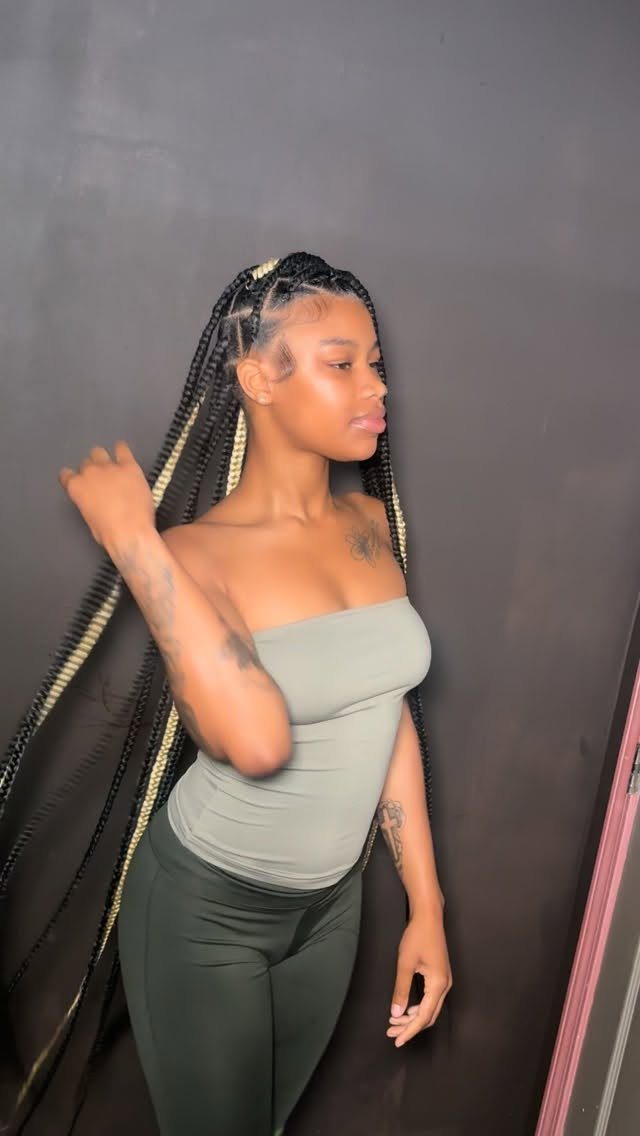
17. Chunky Two-toned Box Braids
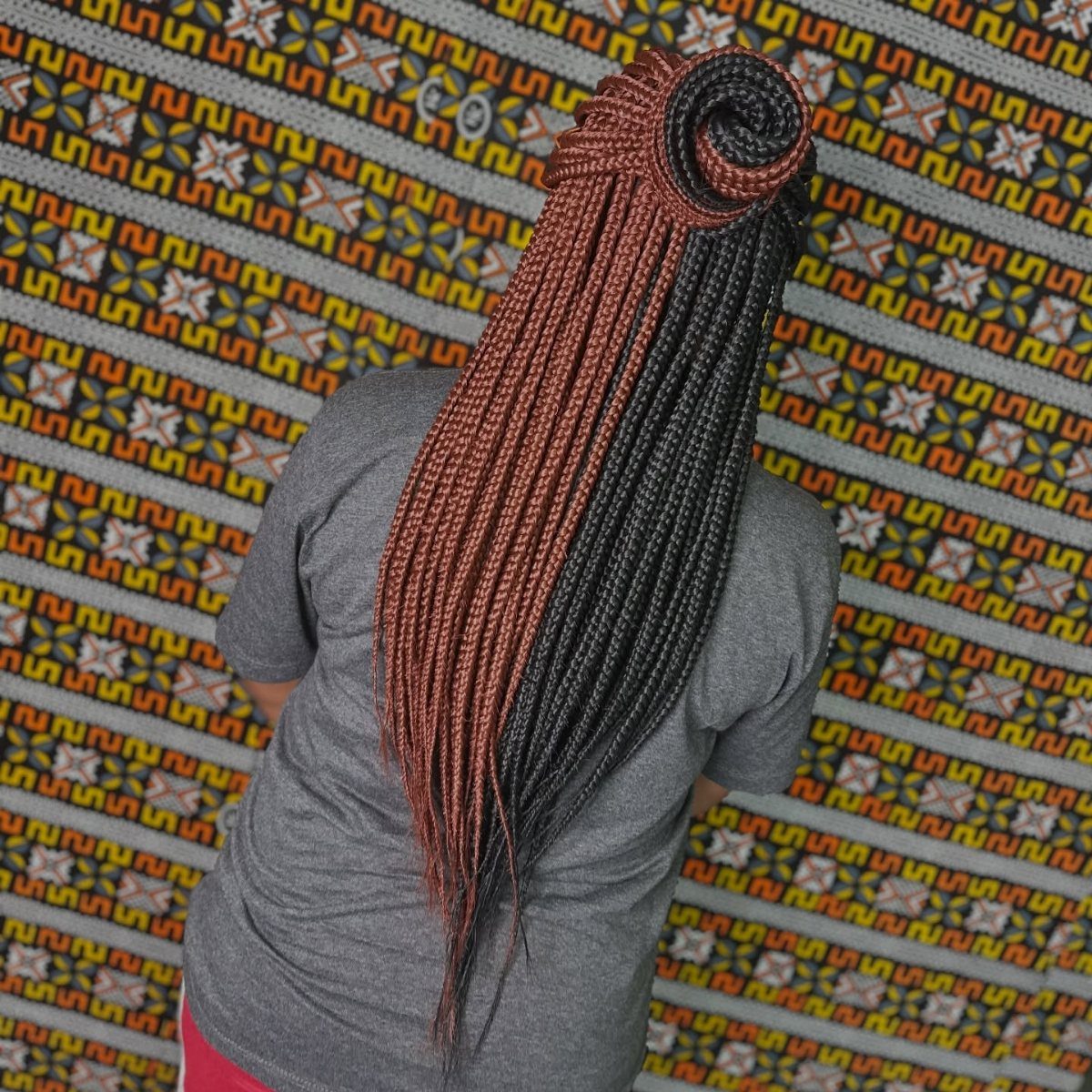
2 colors of extension hair braid together into each section, giving the braids a blended or striped look depending on how the colors twist.
The chunky width shortens install time compared to medium box braids, and the color contrast makes the braid pattern more visible.
If you want dimension without dyeing your natural hair, this method adds it at the extension stage. The thick sections loosen faster than finer braids, which shortens how long the style holds.
18. Braids with Headscarf
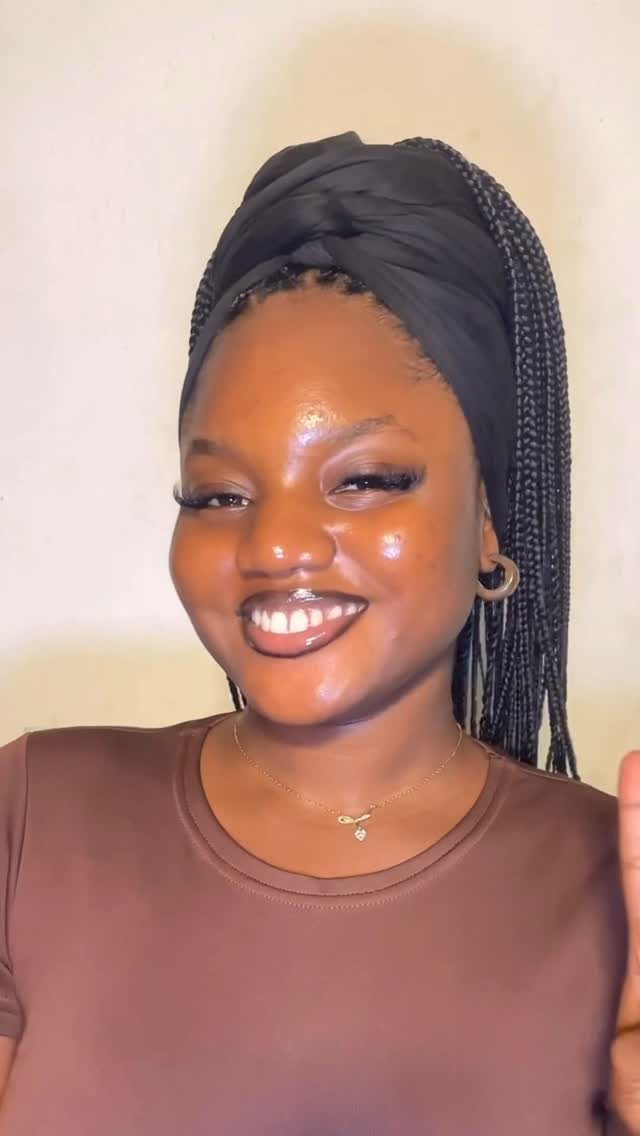
A scarf wraps around the hairline or ties at the crown, pulling the braids back and adding color or pattern to the style.
The fabric holds box braids, cornrows or locs off the face, and you can adjust the knot or bow placement to change the look daily.
Silk or satin scarves slip less than cotton and protect edges from friction. If the braids are heavy, tie the scarf lower at the nape to avoid tension at the hairline.
19. Tribal Braids Sew-In
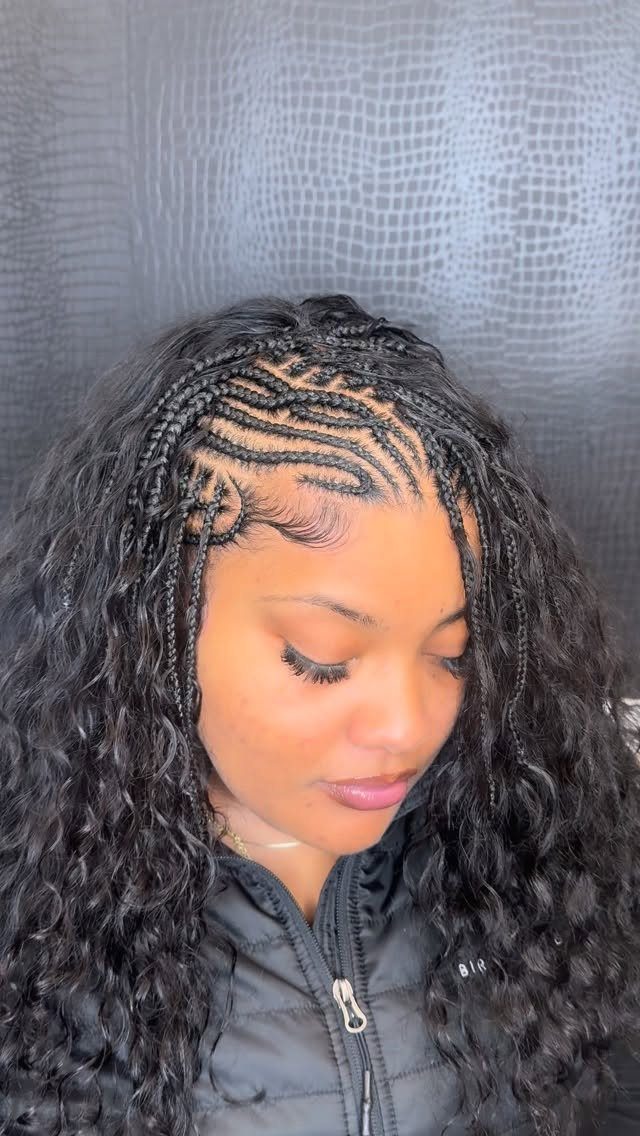
Cornrows sit flat across the top and sides, and a weft of loose hair attaches at the back for length and volume.
The braided front keeps edges smooth and protected while the loose section moves like natural hair. Installation takes less time than individual braids because the back is sewn rather than braided strand by strand.
The weft can be curly, wavy or straight depending on the texture you choose, and you can gather it into a ponytail or wear it down.
The stylist braids a base onto your scalp, then sews in a weft of loose hair at the back.
20. Dutch Braids
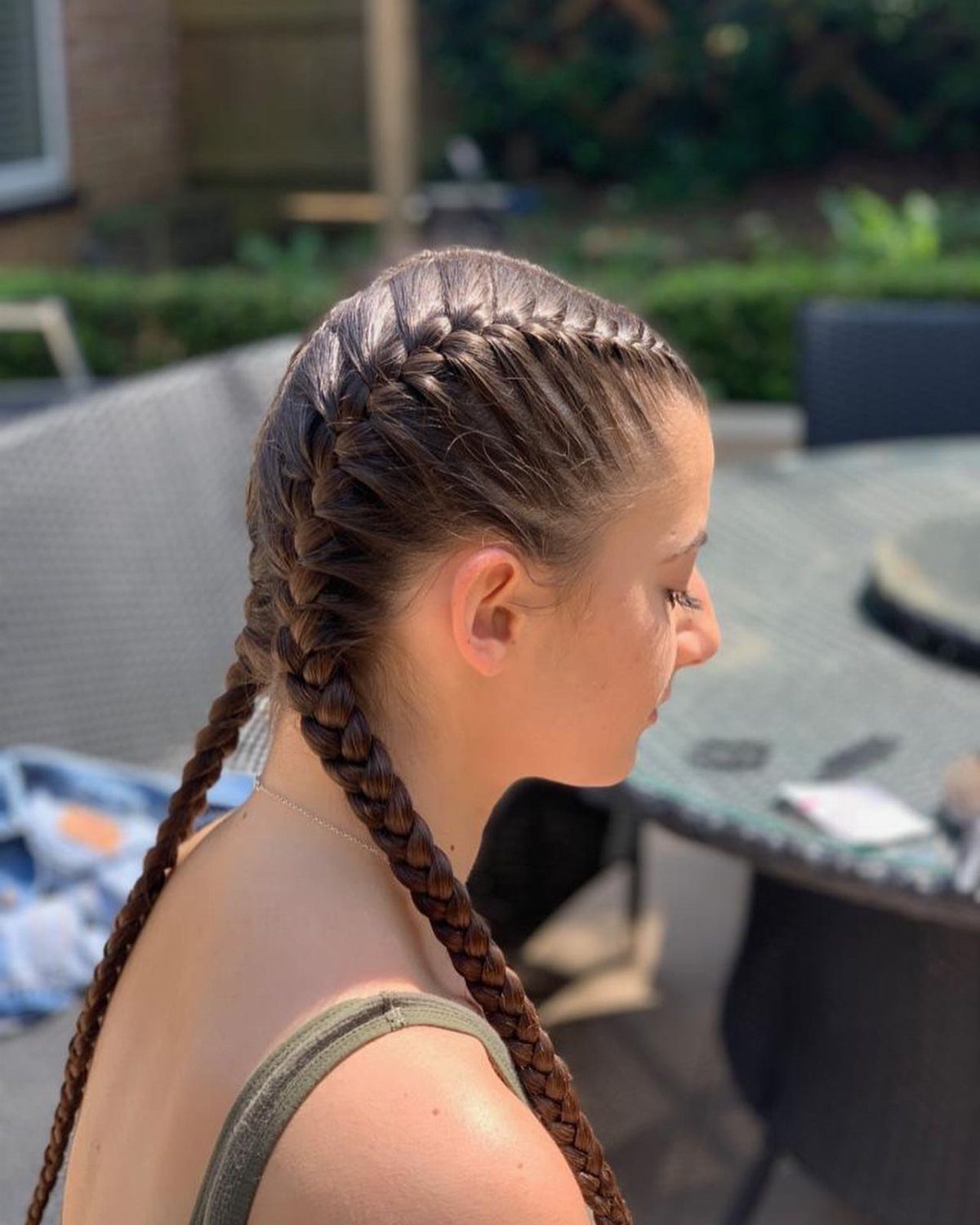
Strands cross under instead of over, so the braid sits raised on top of the scalp rather than sinking into it.
The technique works on any texture, and the braids hold tighter through workouts and sleep than a standard three-strand braid.
You can wear them as a pair or braid a single plait straight back from the hairline. The raised shape shows best on medium to thick hair; fine hair can look sparse between the sections.
21. Scalp Braids with Curly Ends
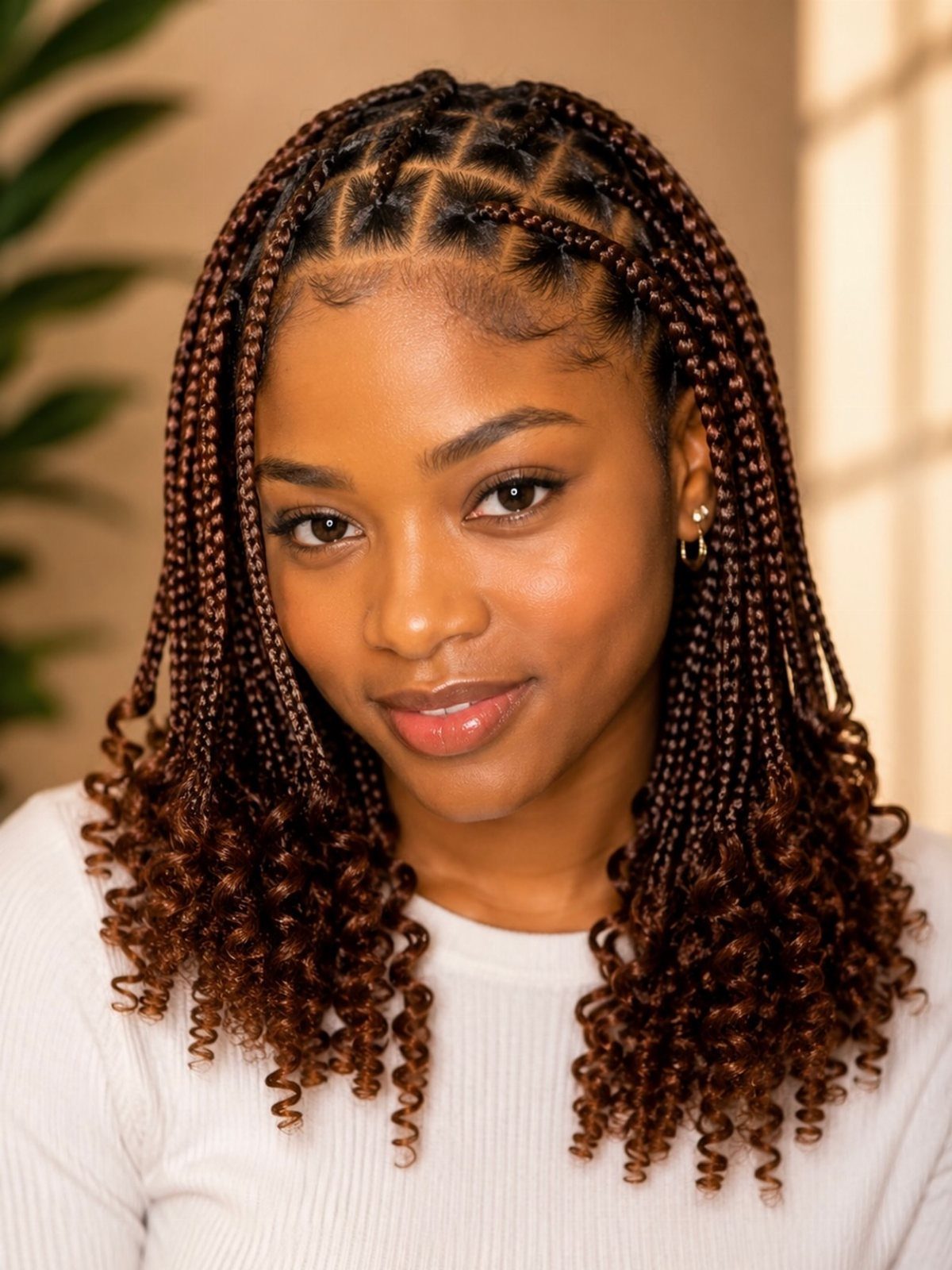
Flat braids run close to the scalp and stop mid-length, leaving the ends loose and curly.
The braided portion holds the style in place, and the curls add movement without the weight of fully braided extensions. Curly texture at the ends works whether it matches your own hair or comes from extension fiber.
The curls require nightly wrapping to keep their shape, and the braided base lasts as long as you maintain the scalp. Sleeping on a satin pillowcase helps both sections hold up between touch-ups.
22. Side Accent Scalp Braid
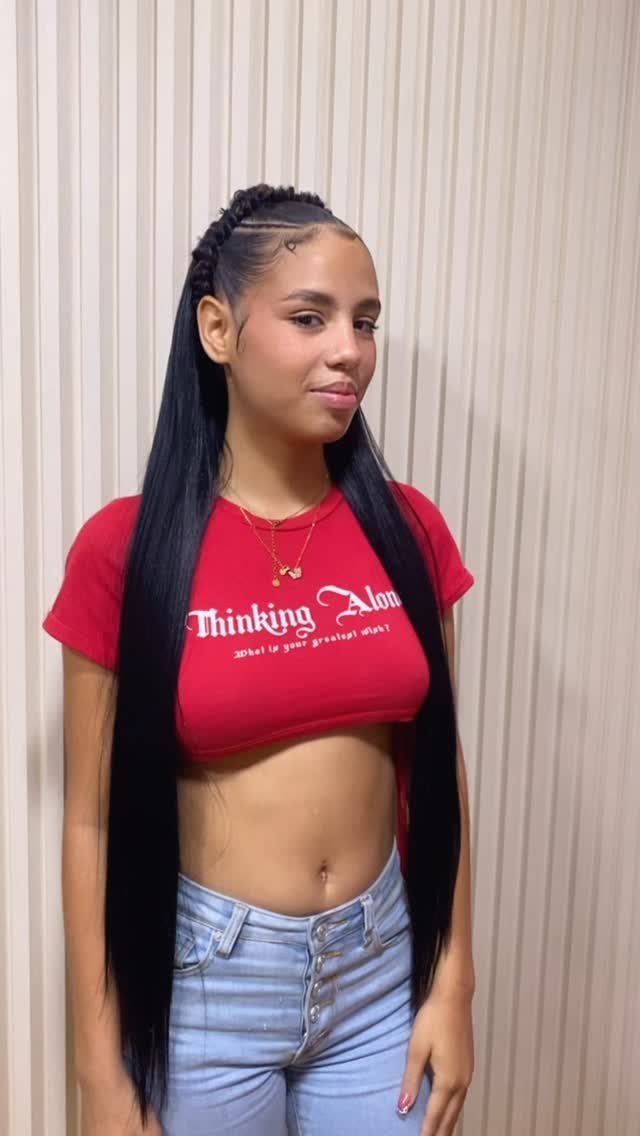
A single braid runs tight against the scalp along one side, while the rest of the hair hangs loose and straight.
The braid keeps hair off the face and adds a defined line without committing to a full braided style. If your hair is naturally straight, the braid holds better with a light styling cream before sectioning.
The accent braid lasts a few days before it loosens, and you can pin it or let it blend back into the loose hair when it does. The asymmetry works best on oval and oblong faces.
23. Curved Swirl Scalp Braids
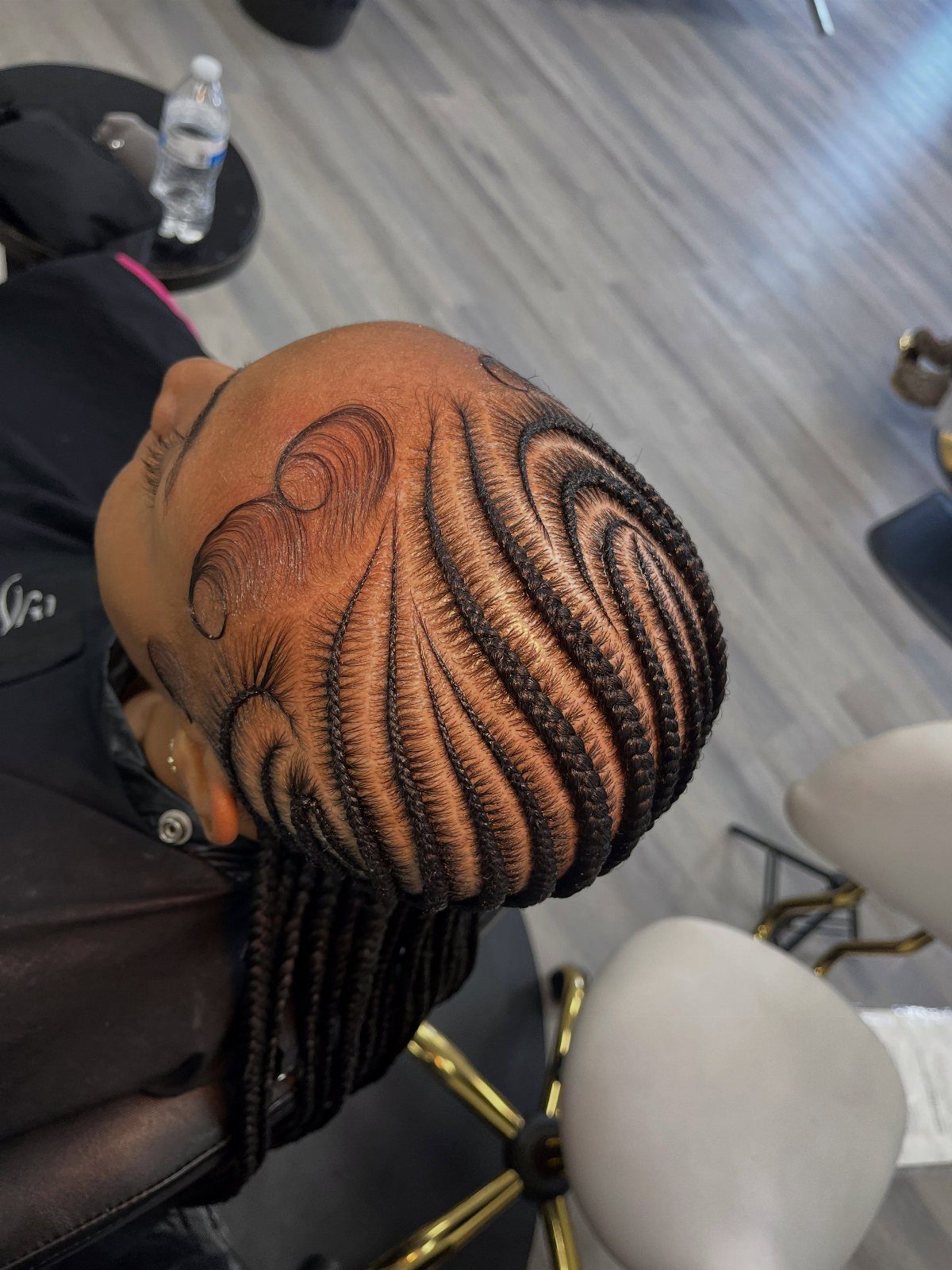
Cornrows follow curved, swirling paths across the scalp instead of running in straight lines.
The pattern takes longer to section and braid because each row curves into the next, and precision matters more than speed. If your stylist is comfortable with freehand parting, the swirls can follow any design you agree on.
The braids themselves last as long as straight cornrows, but the pattern shows best when the scalp stays moisturized and the edges stay smooth. Budget extra chair time for the design work.
24. Fishtail Scalp Braid
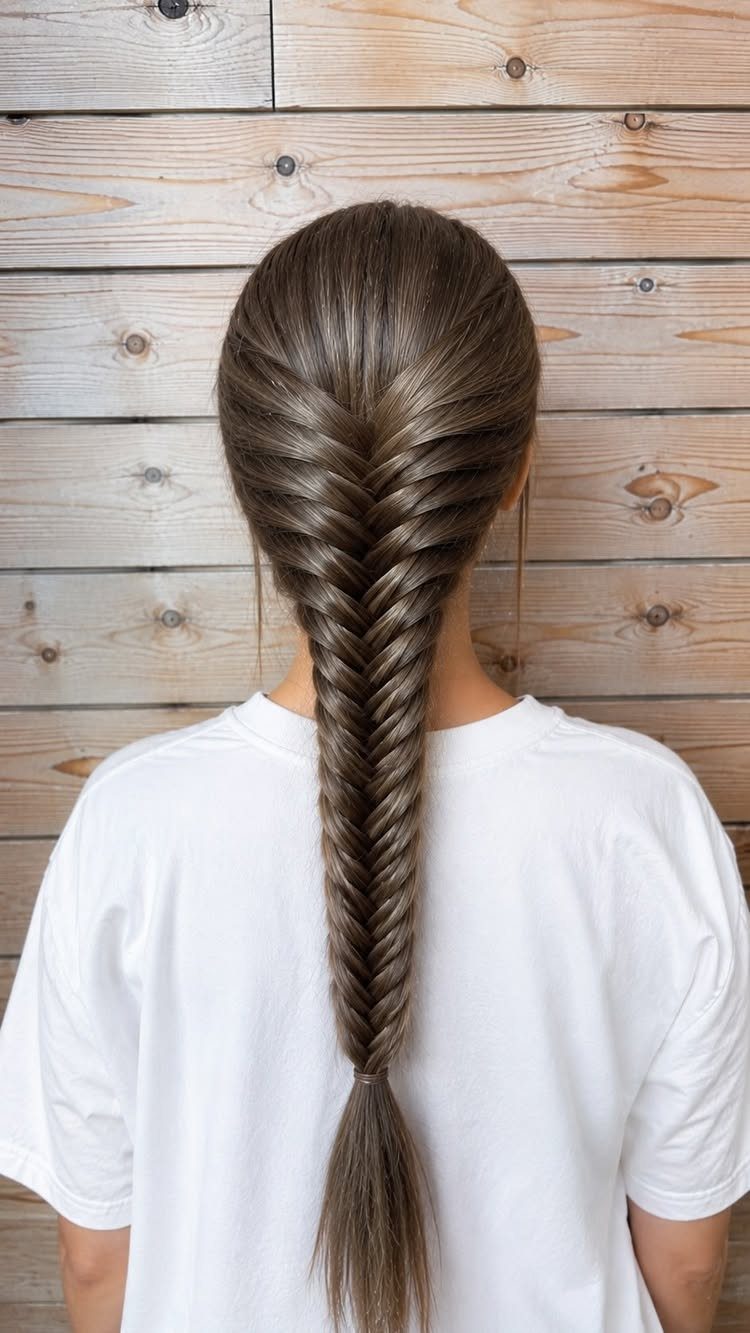
Small sections pull from each side and cross into the center, creating a herringbone pattern that sits tight against the scalp.
The technique takes longer than a standard three-strand braid because you’re working with thinner pieces, but the result holds better through movement.
Layered hair will shed shorter pieces around the nape; pin them flat or let them soften the outline. The braid reads most clearly on one color; highlights or balayage can blur the pattern.
25. Scalp Braids Into Curly Low Bun
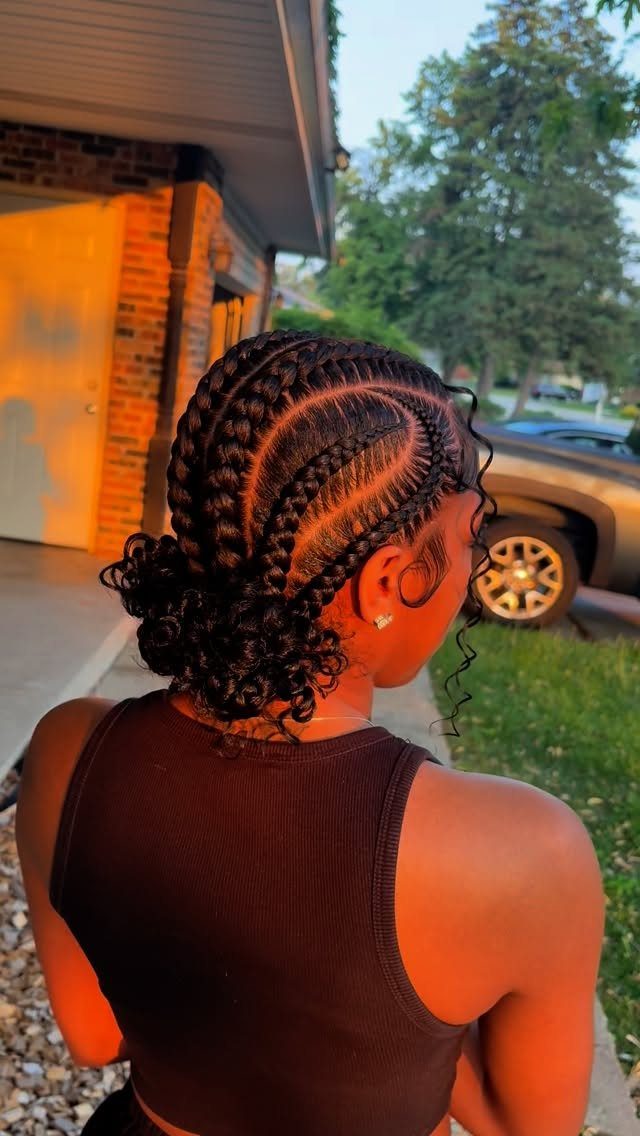
The cornrows run down to the nape, where they anchor a low curly bun. If your curls are naturally tight, the bun will sit smaller; looser curls or a curly drawstring piece give more width.
The low placement keeps weight off the crown, which suits fine hair that won’t support a high bun. Wrap the curls at night to keep their shape between wash days.
26. Scalp Braids with Wavy Ponytail
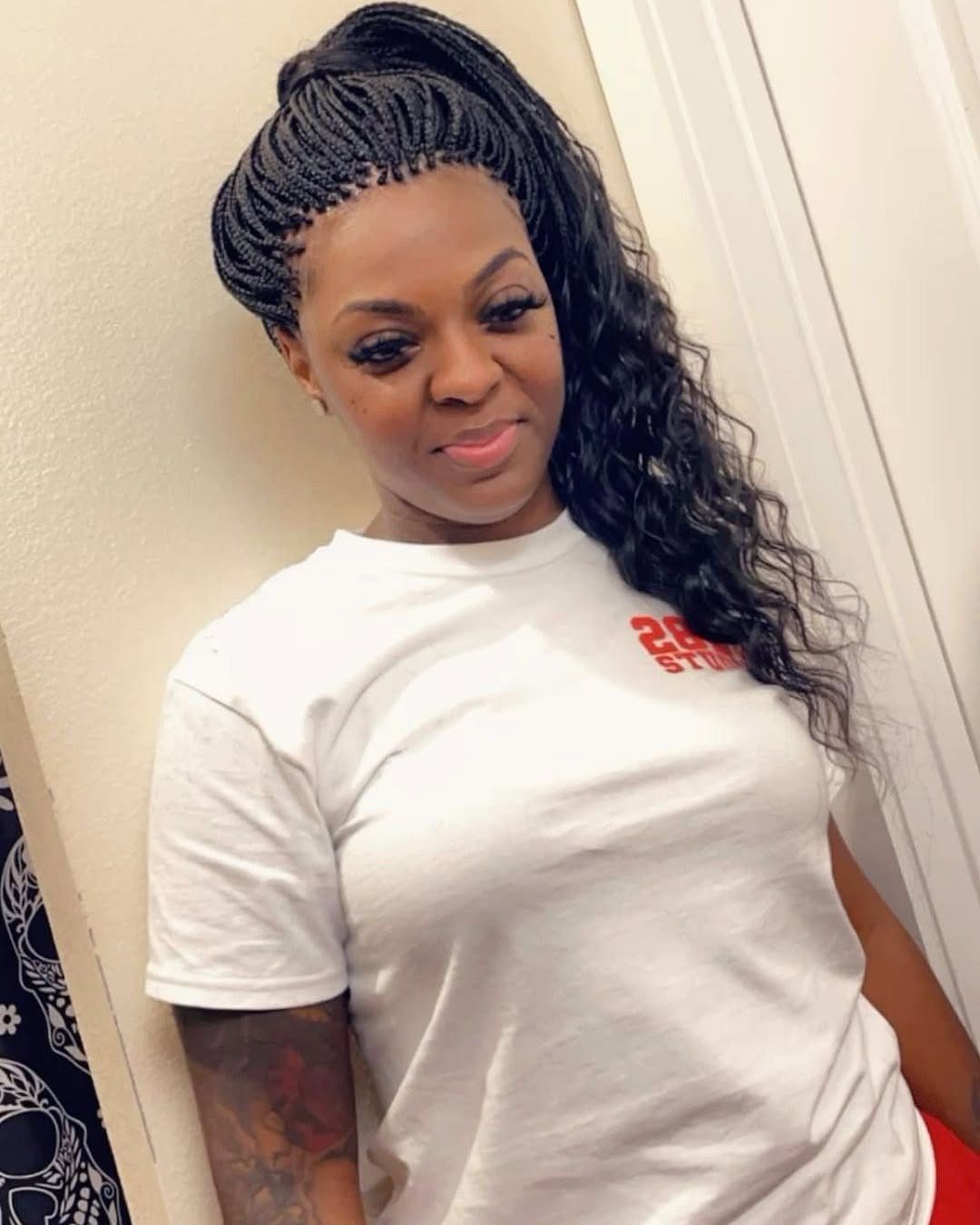
Flat braids start at the hairline and feed into a ponytail that hangs long and wavy. The wavy texture softens the look compared to straight extensions, and the length stays manageable if you wrap it before bed.
If you want more volume at the ponytail base, ask your stylist to braid slightly looser where the sections gather. The waves hold better with a light mousse applied before air-drying.
Scalp Comfort and Tension
A root pulled too tight can weaken follicles and thin your edges over weeks, not hours.
If a section hurts while your stylist works, say so immediately. Pain signals tension your scalp should not carry.
The technique takes longer, but roots sit lighter and edges hold up better. Fragile hairlines and tender scalps benefit most from the slower method.
Tell your braider to work with your density, not the picture. A style that works on thick hair can overload fine strands, and copying a look without adapting it to your scalp invites breakage.
Braids cut down on combing and styling when they sit right, but they do not grow hair or fix damage.
Cleaning and Sleeping Care
Cotton pillowcases rough up braid surfaces overnight, so a silk bonnet, satin scarf or silk pillowcase cuts frizz by morning.
Mix shampoo with water in a bottle before you work it into your scalp. Work it through gently, rinse without tugging, and run a light conditioner down the lengths.
Pat braids dry with a towel instead of rubbing, and let them air-dry completely before wrapping them for sleep. Damp braids mildew if you cover them too soon.
Light oil or scalp spray, applied 2 to 3 times a week, keeps skin under the braids from drying out and itching.
Coconut, jojoba or olive oil softens hair at the root and reduces irritation. Avoid heavy product buildup, which attracts lint and weighs the braids down.
Shedding up to 100 strands daily is normal, but you do not see that hair fall when it is braided, so expect accumulated shedding at takedown.
Choosing and Maintaining Braids
Before you book, answer 3 things: how long and textured is your hair, how much time can you give to install and upkeep, and where are you wearing it?
Thinner braids let you restyle them later, thicker ones sit tighter and stay in place.
Knotless braids, box braids and cornrows offer weeks of low upkeep. Crown braids and low buns hold all night, so I reach for them at weddings.
Fine edges and tender scalps handle knotless braids better, because the feed-in method spreads tension instead of loading it at the root.
If a section hurts while your braider works, say something right then, because root pain means damage starting and that piece needs to be loosened or redone.
Remove braids on time to avoid breakage.
In terms of ease, the simpler, the better. Pigtail and fishtail braids—or any style braided on the ends, not the roots—shouldn’t take too long (10 minutes or less).
Frequently Asked Questions
What hair types can have braids?
Braids work on straight, wavy, curly, coily and afro textures, and styles adapt to both long and short hair.
Cornrows, box braids and knotless braids suit nearly any texture, while styles like Dutch braids and fishtail braids hold better on medium to thick hair.
Fine hair can wear most braid patterns, though raised styles like Dutch braids may look sparse between sections.
How to section hair while braiding?
Clean, detangled hair and a rattail comb for clean parts give you the foundation before you start braiding.
For box braids, divide the scalp into a grid of square sections; for stitch braids, part horizontal lines parallel to each other; for triangle part braids, angle the sections into triangles that meet at their points.
The precision of the parting decides how long the pattern holds.
What are the easiest braids to do?
Simple straight-back cornrows take under 2 hours for 2, 4 or 6 rows, and styles like fishtail braids or a single Dutch braid take 10 minutes or less.
What are the most popular braided hairstyles?
Knotless box braids with curly ends added, lemonade braids that sweep diagonally over one shoulder, and stitch braids with crisp horizontal parting stay in demand.
Designed cornrow patterns with curves or geometric layouts also rank high, especially when the scalp stays moisturized enough to show the full design.
Can I braid my own hair?
Yes, as long as your hair is washed, detangled and divided into sections that match in size.
Take 3 strands, bring the right one over the center, then the left over the new center, and keep that pattern going until you reach the ends.
A single braid straight back or a pair of braids takes practice but holds through the day once you learn the rhythm.
Can braids help your hair grow?
Braids protect length by keeping hair tucked away from brushes and heat tools, so you lose less to breakage while it grows at its normal rate.
The style holds moisture better than loose hair does, so your length stays healthier while it grows. If the braids pull too tight or stay in too long, the opposite happens.
Do braids cause hair breakage?
Braids installed with proper tension and maintained well reduce breakage by protecting hair from daily manipulation.
Braids that pull too tight, sit too heavy or stay in past 8 weeks can weaken follicles and thin edges, so pain during installation signals tension your scalp should not carry.