Castor oil coats hair and holds moisture in, which reduces breakage and makes strands look shinier.
It will not make hair grow faster on its own, though dermatologists report that patients with inflammatory hair loss often see regrowth after consistent use.
The oil’s main component, ricinoleic acid, shares a structure with prostaglandin compounds that regulate the hair growth cycle.
1. What Castor Oil May Do for Hair
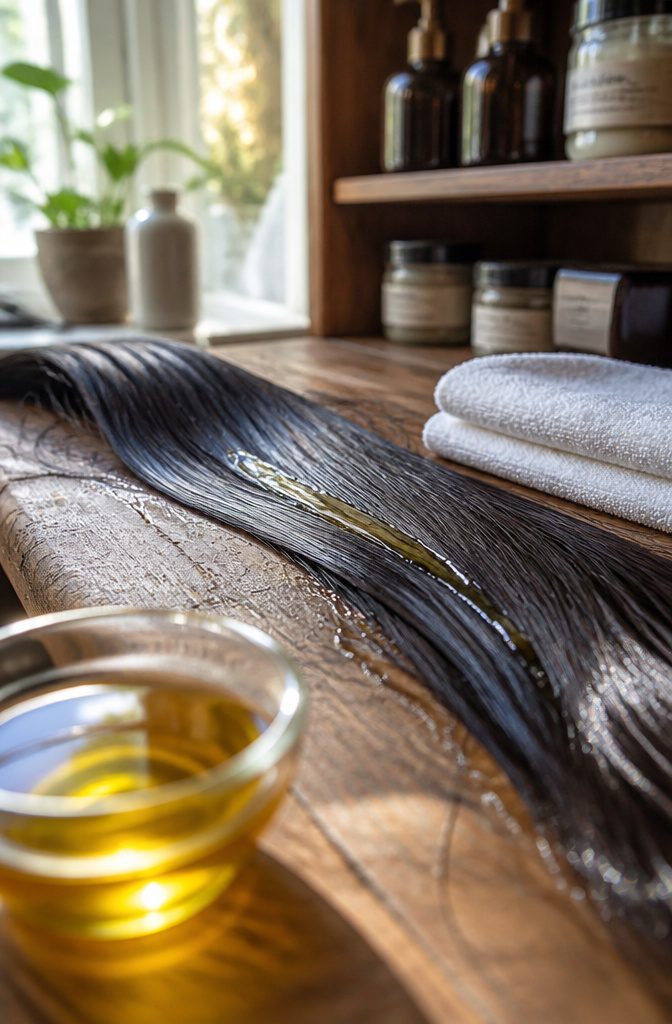
Castor oil’s reputation for moisture has a simple basis: ricinoleic acid, the fatty acid that makes up most of the oil, acts as a humectant, pulling moisture from the air into the hair and then sealing it in.
The oil coats each strand, creating a barrier that keeps hydration from escaping. That barrier also smooths the cuticle, which is why hair treated with castor oil tends to look shinier and feel softer than it did before.
The same coating that holds moisture in also cuts down on breakage. When hair shafts are dry or brittle, they snap more easily.
Castor oil’s thickness protects them from mechanical damage and helps prevent split ends from working their way up the strand. It will not fix a break that already exists, but it can keep new ones from starting.
When added to leave-in conditioners or pre-shampoo hair treatments, castor oil can help to smooth the outer protective hair cuticle and add shine.
The oil’s antimicrobial and anti-inflammatory properties make it useful on the scalp, too. Ricinoleic acid can calm irritation and reduce the bacteria or fungus that contribute to dandruff and flaking.
For that reason, castor oil shows up in pre-shampoo treatments meant to soothe a dry or reactive scalp. Some find it absorbs dirt as well, which is less expected but occasionally handy.
None of this is the same as making hair grow. Castor oil helps hair retain what it has, not produce what it does not.
2. Whether Castor Oil Helps Hair Grow
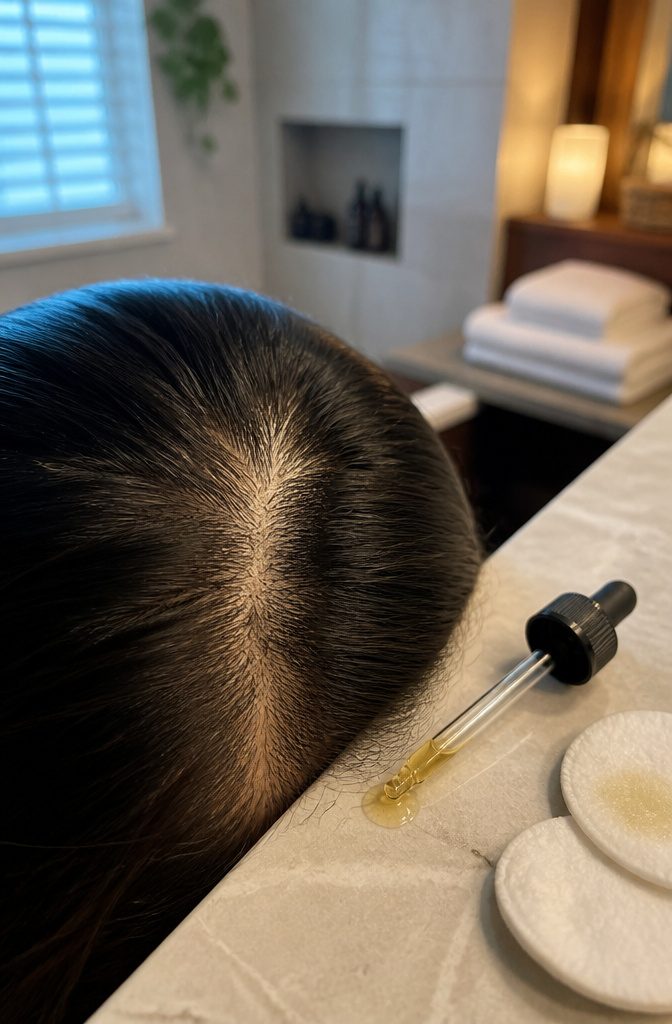
Most studies report limited clinical evidence that castor oil directly causes hair to grow faster, though dermatologists note patients often see improvement.
The explanation usually centers on ricinoleic acid, the main fatty acid in the oil. It shares a structure with prostaglandin compounds, which regulate the hair growth cycle and play a role in alopecia.
One computer simulation suggested ricinoleic acid might act like prostaglandin analogues used to treat hair loss, but that test never moved to actual humans or animals.
The indirect support is easier to trace. Castor oil contains vitamin E and omega-6 fatty acids, both antioxidants that protect cells from oxidative stress.
Vitamin E may also increase blood flow to the scalp, delivering more oxygen and nutrients to follicles. The oil’s anti-inflammatory and antimicrobial properties improve overall scalp health, which can reduce breakage and create better conditions for growth.
For inflammatory hair loss, consistent use often helps hair grow back. For pattern baldness or nutritional deficiency, it does far less.
3. How to Use Castor Oil on Hair
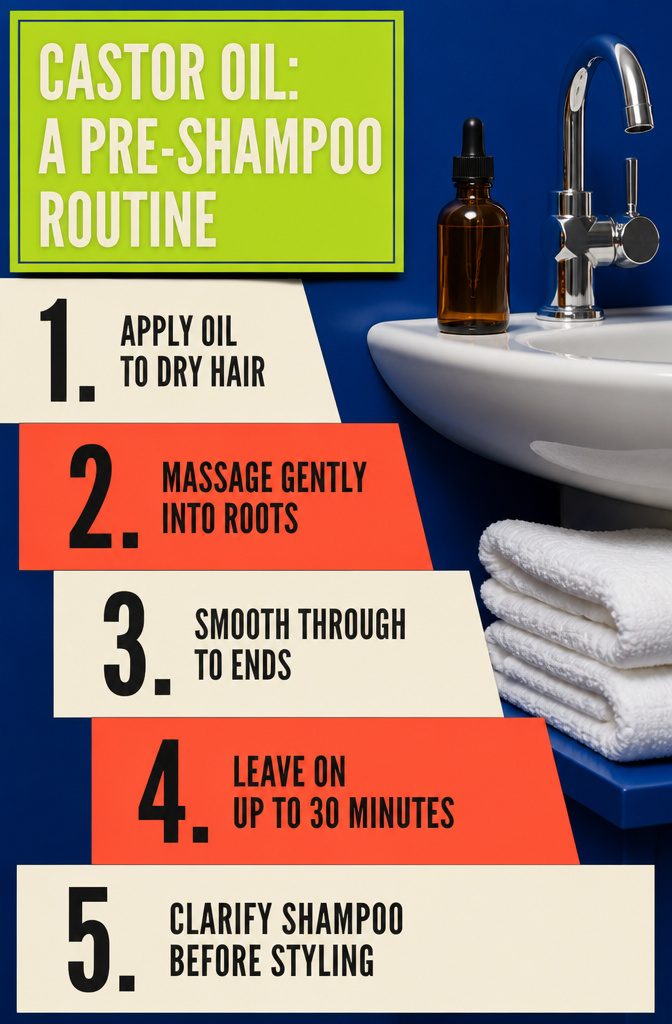
Castor oil goes on dry hair before you shampoo.
The thickness that makes it work as a seal also makes it stubborn to wash out, so most approaches leave it on for 15 to 30 minutes, then follow with a clarifying shampoo to cut through the residue.
For a scalp treatment, warm a small amount in your hands and massage it into your roots, then smooth it down to the ends.
If your hair is fine or medium and prone to greasiness, keep the oil on mid-lengths to ends and rinse after 10 minutes.
Medium to thick hair can handle root-to-tip application and a longer sit, up to 30 minutes under a steamer if you want deeper penetration.
Dilution helps. Castor oil mixed equal parts with coconut oil spreads more easily and rinses cleaner.
Another option blends 1/4 ounce castor oil with 3/4 ounces coconut oil for a lighter mask. For scent and circulation, add 7 drops rosemary oil and 5 drops peppermint per ounce of castor oil before massaging it in.
Use it once or twice a week at most. Daily application leaves hair greasy and weighed down, and weekly is enough to see whether it does anything for you after a couple of months.
4. Who Should Use or Avoid Castor Oil
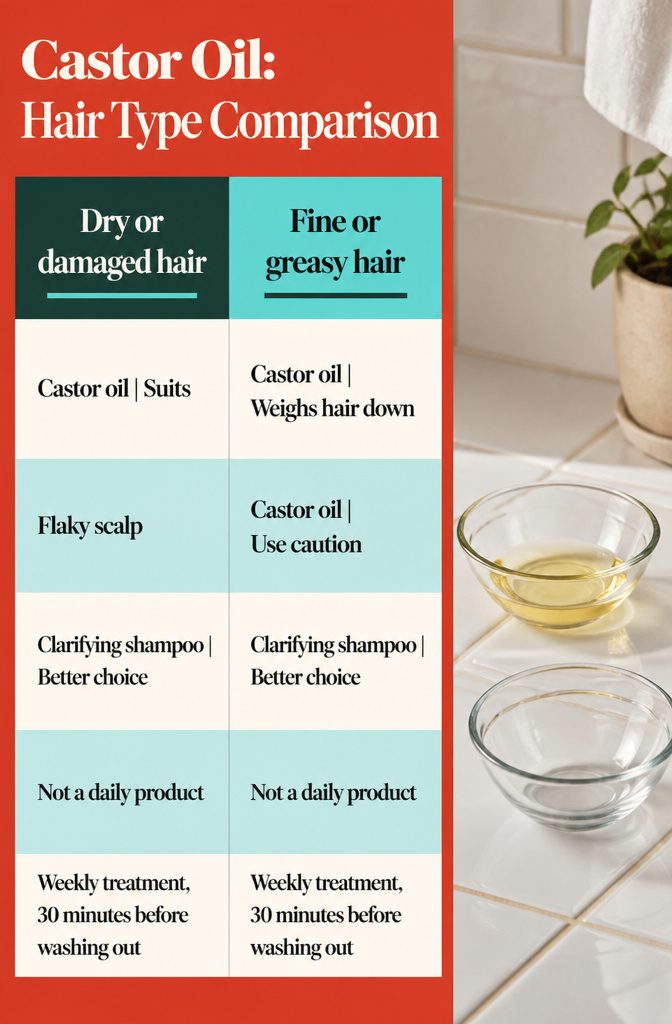
Castor oil suits dry, brittle, damaged, or frizzy hair.
The oil’s thick texture adds moisture where strands need it. Fine hair and greasy hair are a different story.
The weight can leave those strands looking flat and oily instead of conditioned. If your hair already leans greasy, a clarifying shampoo will serve you better than any oil treatment.
A flaky scalp calls for caution.
Castor oil’s thickness can make dandruff worse, especially when fungus is behind the flaking. The same texture that helps dry ends can trap debris and oil on the scalp.
Castor oil is not a daily product. I use it as a weekly treatment, applied for thirty minutes before washing it out, and that cadence keeps it helpful rather than heavy.
5. Risks and Precautions
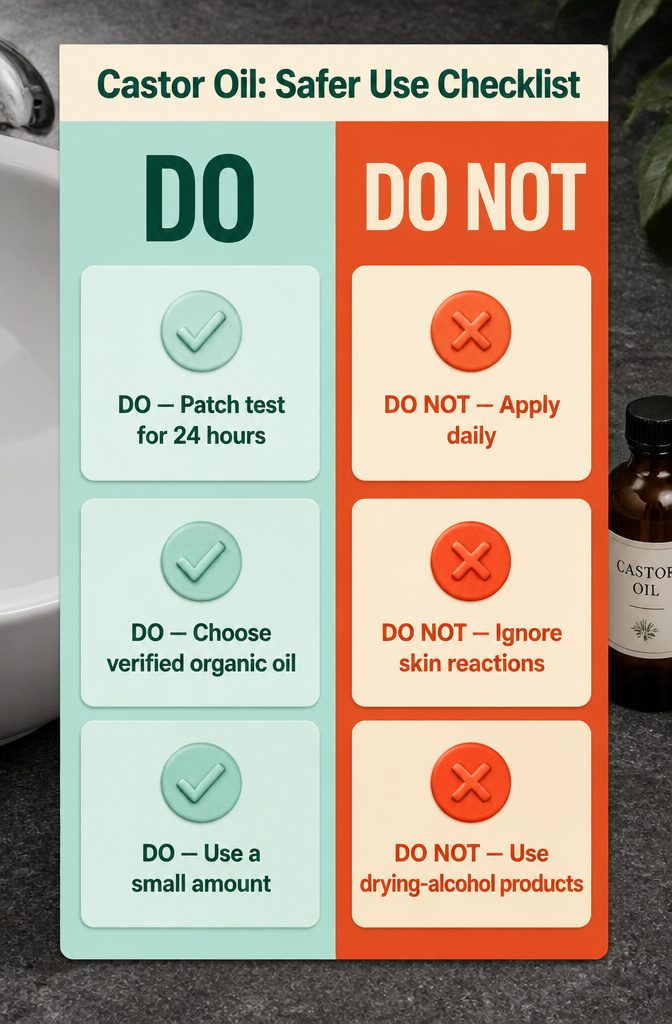
Risks and Precautions
Castor oil is thick enough to cause problems if you use too much. Buildup on the scalp and strands is the most common complaint, and that same thickness can clog pores and lead to irritation, itching, or dandruff.
The oil is difficult to wash out even with multiple shampoos, so less matters more here.
Allergic reactions can happen, including contact dermatitis and irritation to skin, eyes, or airways.
I recommend a patch test before you commit: apply a small amount to the inside of your forearm or the back of your neck, leave it on for 24 hours, and check for any reaction.
One rare but serious risk is acute hair felting, a sudden matting that can only be resolved by cutting the hair out.
The oil’s high viscosity makes it the likely culprit, though only one documented case links it directly to castor oil.
To reduce exposure to pesticides, choose verified organic castor oil, and avoid products that list drying alcohols in the ingredient list.
Castor Oil for Eyebrows and Eyelashes
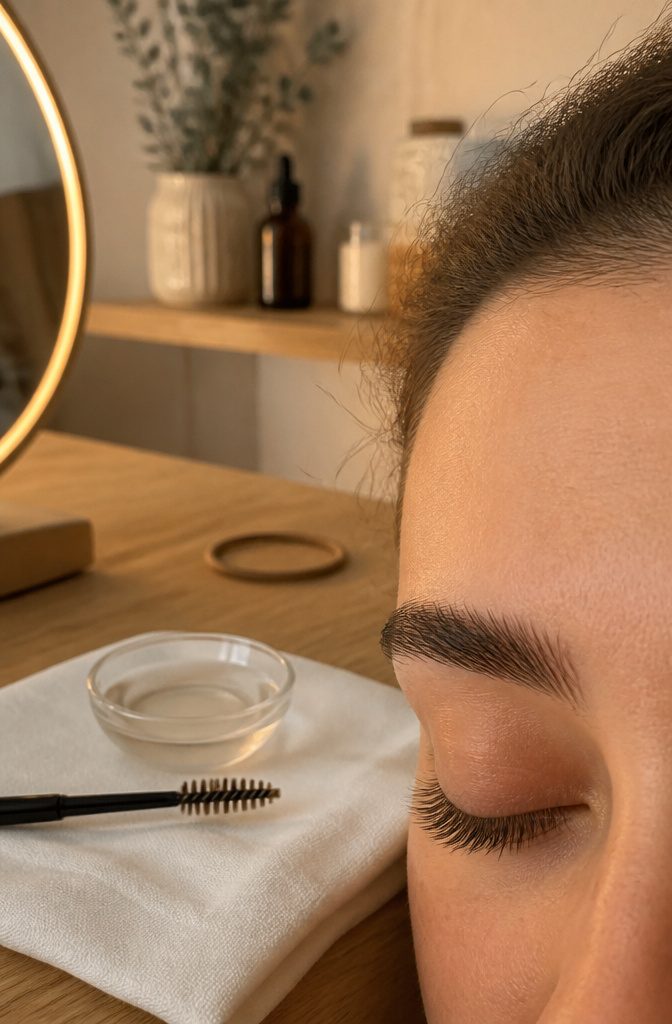
Most advice on applying castor oil to brows and lashes treats the practice as settled routine, but the evidence for growth is almost entirely anecdotal.
No controlled studies confirm that castor oil makes lash or brow hair grow faster or thicker. The oil does condition the hair that is already there, which can reduce breakage and make sparse brows look slightly fuller.
If you decide to try it, the application matters more than the oil itself. A small amount before bed, worked through brows or along the lash line with a clean spoolie or disposable mascara wand, stays put without migrating.
Direct application carries real risk of eye irritation, especially if the oil gets into the eye itself or if you are sensitive to ricinoleic acid.
Formulated brow and lash serums tend to handle better and come with applicators designed to keep product out of the eye.
Types of Castor Oil and What the Processing Changes
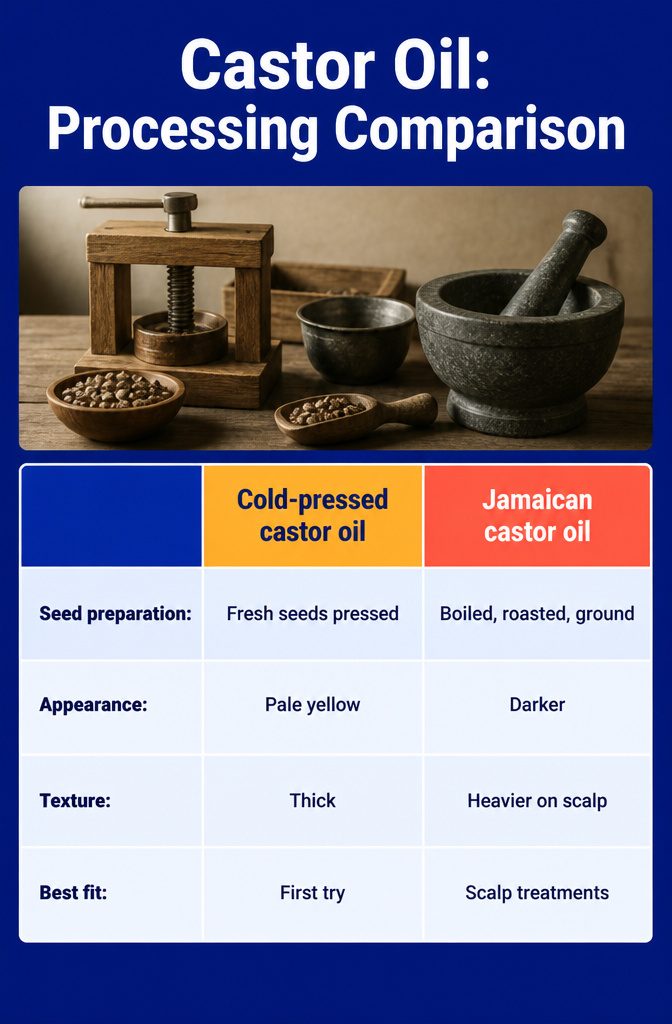
Cold-pressed castor oil comes from fresh seeds pressed under intense pressure.
The result is thick, pale yellow and packed with fatty acids that hold moisture against the hair shaft. It is what most bottles on a pharmacy shelf contain, and the kind I would pick for a first try.
Black castor oil starts with cooked and roasted seeds before pressing. The roasting darkens the oil and shifts its texture slightly, though both versions share the same core benefit: they coat hair and slow water loss.
Jamaican castor oil follows a different path. Seeds are boiled in water, then roasted and ground by hand with a mortar and pestle.
The extra heat and the water bath change the color and give the oil a heavier feel on the scalp. Some people prefer it for pre-shampoo treatments or scalp work, where thickness matters more than spreadability.
Products Named in the Sources
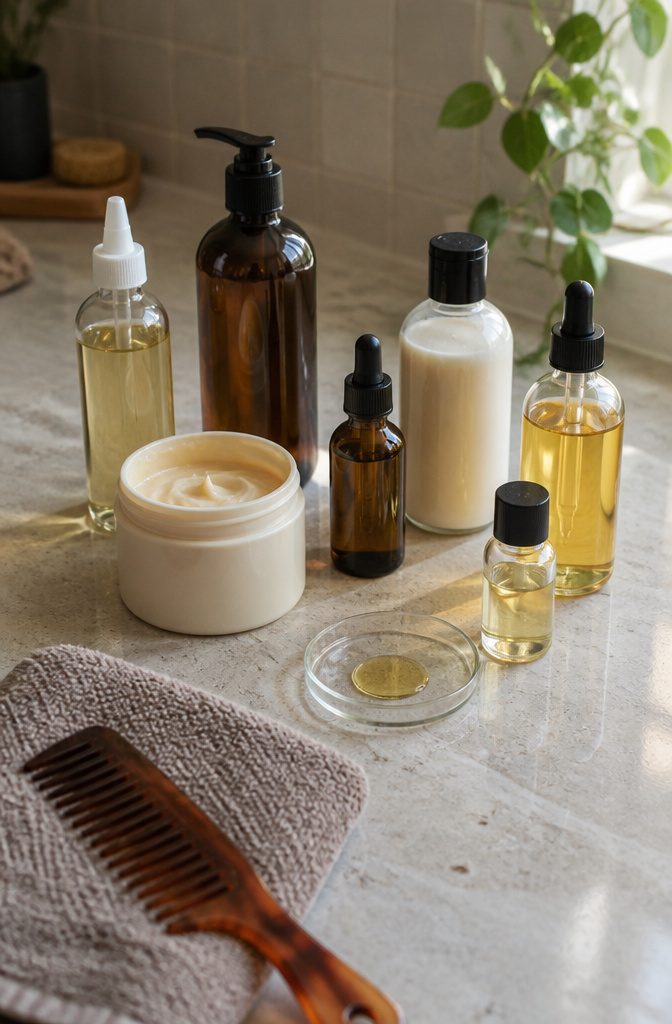
- Kate Blanc Cosmetics Castor Oil (2 oz)
- Briogeo B. Well Organic + Cold-Pressed 100% Castor Oil
- SheaMoisture Strengthen and Restore Shampoo for Damaged Hair 100% Pure Jamaican Black Castor Oil
- SheaMoisture 100% Pure Jamaican Black Castor Oil
- Philip Kingsley Elasticizer (a blend of castor and olive oil)
- Philip Kingsley Elasticizer Deep-Conditioning Hair Mask Repair Treatment
- Nioxin Night Density Rescue Treatment
- Suave Professionals Castor & Mango Butter Scalp and Hair Oil
Before you buy, check the ingredient list for anything you react to.
Avoid formulas with drying alcohols if your hair is already dry or coarse. If you want pure oil, look for verified organic castor oil with no fillers.
Frequently Asked Questions
Does castor oil help hair grow?
Most studies report limited clinical evidence that castor oil directly causes hair to grow faster. The oil’s indirect benefits come from ricinoleic acid, vitamin E, and omega-6 fatty acids, which protect follicles from oxidative stress and improve scalp health.
For inflammatory hair loss, consistent use often helps hair grow back, but it does far less for pattern baldness or nutritional deficiency.
What are the benefits of castor oil for hair?
Ricinoleic acid acts as a humectant, pulling moisture from the air into hair and sealing it in.
The oil coats each strand to reduce breakage and smooth the cuticle, making hair look shinier and feel softer. Its antimicrobial and anti-inflammatory properties calm scalp irritation and reduce the bacteria or fungus that contribute to dandruff.
How long should you leave castor oil in hair?
Most approaches leave castor oil on for 15 to 30 minutes before shampooing.
If your hair is fine or medium and prone to greasiness, rinse after 10 minutes. Medium to thick hair can handle a longer sit, up to 30 minutes under a steamer if you want deeper penetration.
What are the side effects of using castor oil for hair?
Buildup on the scalp and strands is the most common complaint.
The oil’s thickness can clog pores and lead to irritation, itching, or dandruff. Allergic reactions can happen, including contact dermatitis and irritation to skin, eyes, or airways, and one rare case of acute hair felting has been documented.
What hair types is castor oil best for?
Castor oil suits dry, brittle, damaged, or frizzy hair, where the oil’s thick texture adds moisture where strands need it.
Fine hair and greasy hair are a different story, since the weight can leave those strands looking flat and oily instead of conditioned. A flaky scalp calls for caution, as the thickness can make dandruff worse.
Can you use castor oil on eyelashes and eyebrows?
No controlled studies confirm that castor oil makes lash or brow hair grow faster or thicker. The oil does condition the hair that is already there, which can reduce breakage and make sparse brows look slightly fuller.
Direct application carries real risk of eye irritation, especially if the oil gets into the eye itself or if you are sensitive to ricinoleic acid.
Which is better, coconut oil or castor oil for hair?
They serve different functions. Coconut oil is easily absorbed into the hair, making it better for hydration and shine.
Castor oil’s thickness makes it better for creating a protective barrier that reduces breakage and supports overall scalp health, though there is little scientific research that it actually helps hair grow.
How often should you use castor oil on hair?
Use it once or twice a week at most.
Daily application leaves hair greasy and weighed down. Weekly is enough to see whether it does anything for you after a couple of months, applied for 15 to 30 minutes before washing it out with clarifying shampoo.