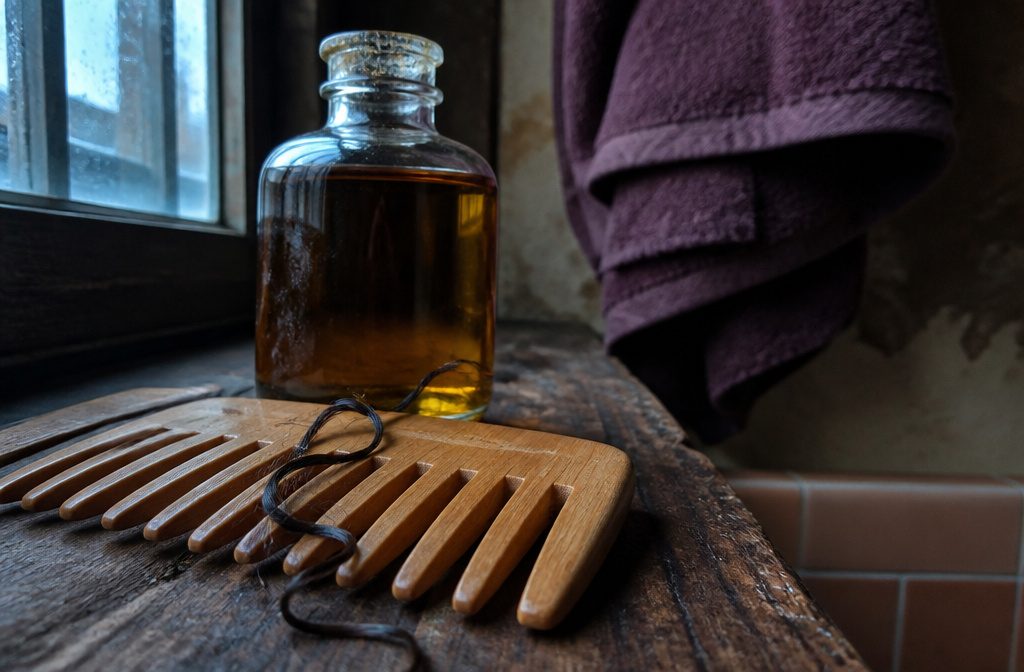
Castor oil is a thick, viscous oil pressed from the seeds of Ricinus communis, used on hair mainly to reduce breakage and seal in moisture. It does not stimulate new growth or wake dormant follicles, though that claim circulates widely.
The oil’s composition is 85 to 95 percent ricinoleic acid, which coats each strand, smooths the cuticle, and slows water loss enough that hair survives to greater length over time.
What Castor Oil Does for Hair
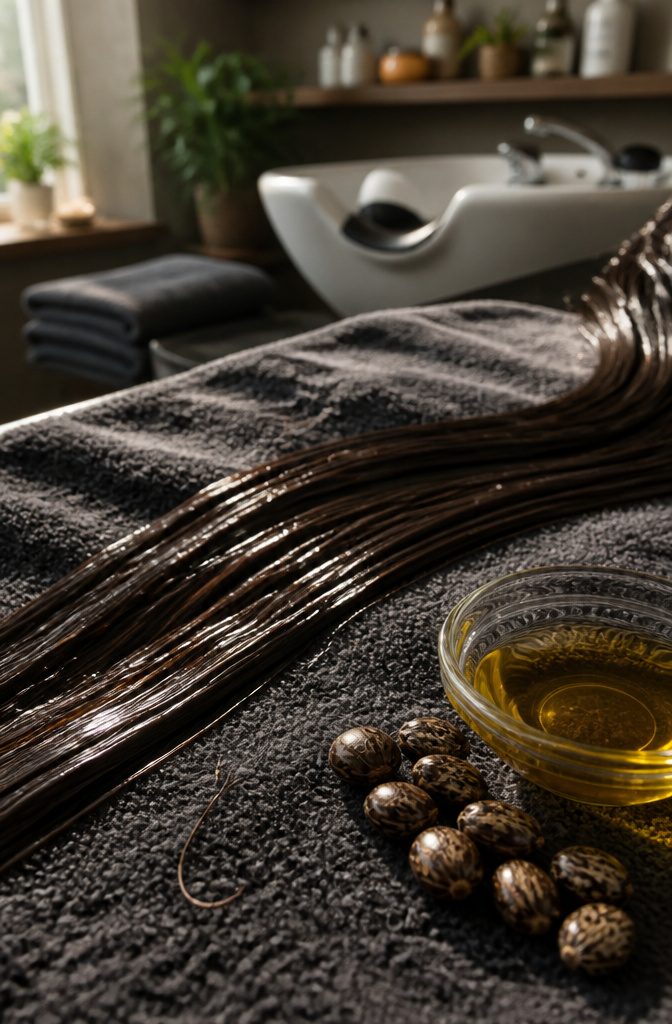
Castor oil comes from the seeds of Ricinus communis, a plant grown across tropical and subtropical regions.
What makes it useful for hair is its fatty acid profile: ricinoleic acid accounts for roughly 85 to 95 percent of the oil’s composition, with another seventeen fatty acids making up the remainder.
That concentration of a single compound gives the oil its thick, viscous texture and its ability to coat individual strands.
When you apply it, the oil forms a barrier that slows moisture loss from the hair shaft. That coating also smooths the cuticle, which reflects light more evenly and gives hair a shinier, softer appearance.
The oil does not change follicle count or force new hairs to grow, but it can reduce breakage along the length of existing strands.
Less breakage means better length retention over time, and hair that breaks less frequently looks fuller and healthier without any increase in the number of follicles producing it.
Why the Growth Claims Are Overstated
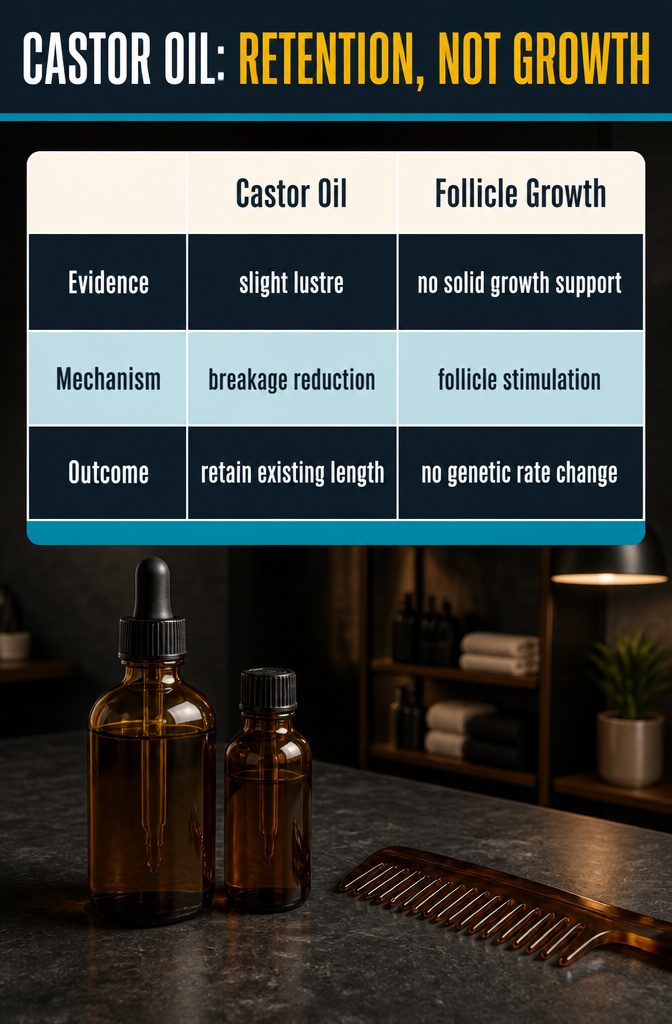
No strong clinical evidence shows that castor oil directly stimulates hair follicles or speeds up growth. Several systematic reviews have examined the published research and found no solid evidence to support the claim.
One review examining castor oil, coconut oil, and argan oil concluded that castor oil may slightly improve hair lustre but offered no solid backing for growth stimulation.
Another states plainly that topical oils cannot alter the genetic rate at which follicles divide.
The confusion happens because conditioning effects look like growth. When castor oil reduces breakage and seals moisture, hair survives long enough to reach visible length.
That retention is different from producing new strands or waking dormant follicles. A healthier scalp and less snapping at the ends will let you keep what you already grow, but that is not the same mechanism as follicle stimulation.
If thinning or density loss is the real concern, castor oil plays a supporting role at best.
Moisture and Shine Without the Weight
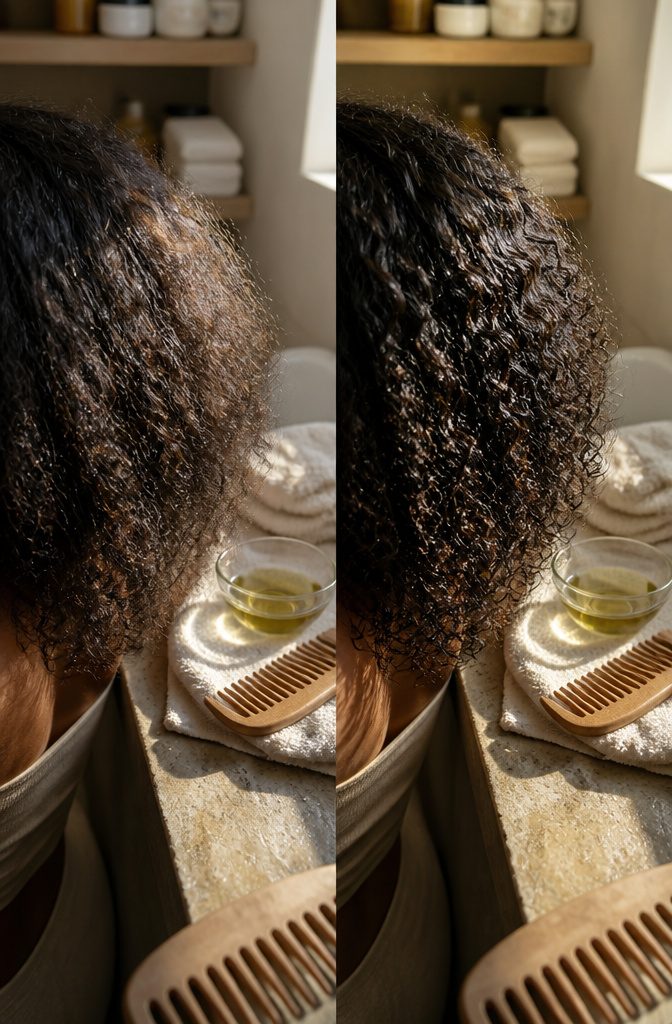
Castor oil’s viscosity is what makes it work as a moisture seal.
The oil forms a protective film around each strand, locking in hydration and reducing water loss over time. This matters most for dry, brittle, or textured hair that struggles to hold onto moisture on its own.
The coating smooths the cuticle surface, so strands feel softer and look glossier. That shine comes from better light reflection: when the cuticle lies flat instead of raised or rough, light bounces back evenly rather than scattering.
The same film gives hair a fuller appearance.
Each coated strand looks slightly thicker and more substantial, which can help fine or thinning hair seem denser. This is a visual effect, not a follicle count change.
You are conditioning existing hair, not growing new strands. For anyone looking at castor oil as a thickness solution, the improvement is cosmetic and immediate, often visible within one or two applications.
How It Reduces Breakage and Keeps Length
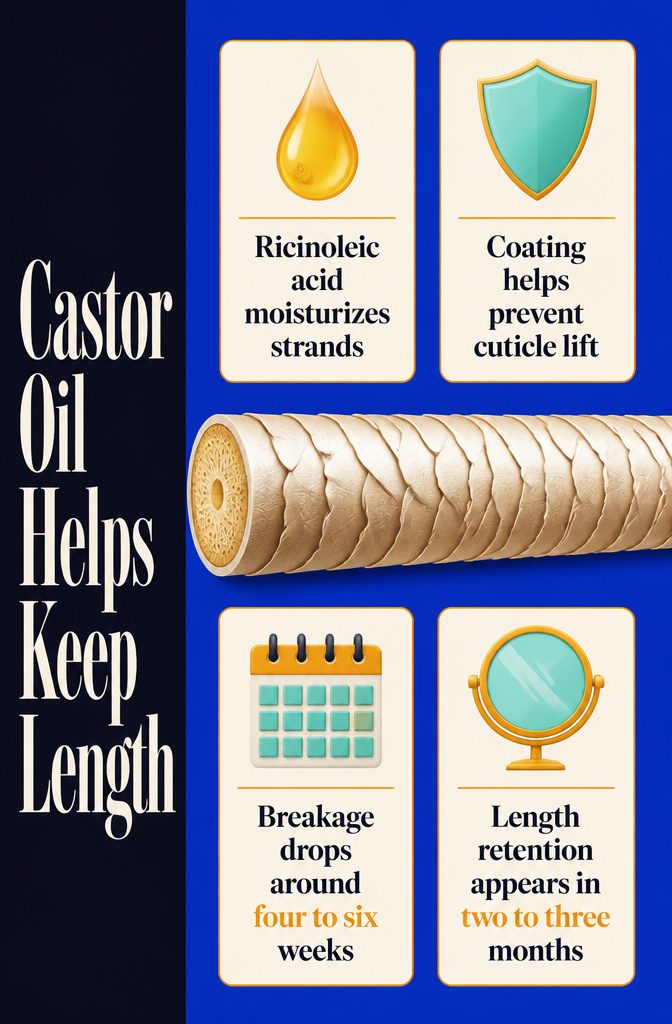
Castor oil does not trigger follicles to produce new strands, but it does protect the length you already have by keeping breakage down.
The ricinoleic acid moisturizes each strand and leaves a light coating that stops the cuticle from lifting and snapping when you detangle or heat-style.
That means fewer broken ends in your brush and more length left on your head after a few months of consistent use.
The timeline runs longer than most treatments. You might notice improved texture and shine within two to three weeks, but reduced breakage takes closer to four to six weeks.
Real length retention, the kind you can measure in the mirror, shows up around the two- to three-month mark if you apply it regularly and handle your hair gently in between.
It is not fast, but it does add up for anyone struggling to hold onto length past a certain point.
Scalp Hydration and Irritation Relief
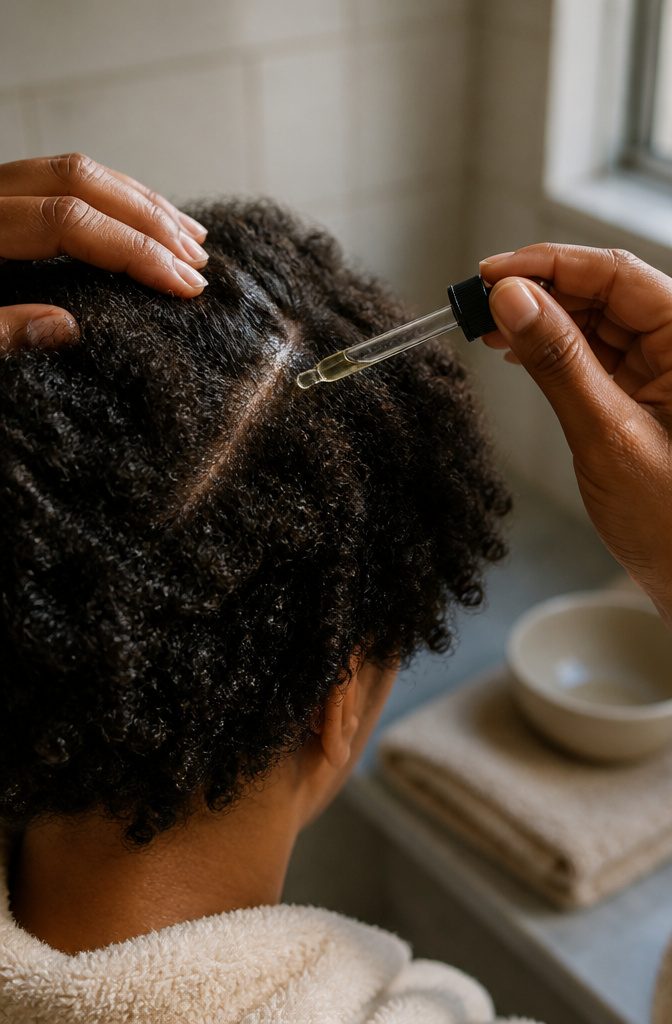
Castor oil gets mentioned often for scalp comfort, usually for dryness, flaking, or the low-grade itch that comes with either.
Ricinoleic acid, the dominant fatty acid in castor oil, shows both antimicrobial and anti-inflammatory activity in published safety reviews, and those properties may calm irritation or reduce microbial overgrowth that contributes to dandruff.
Apply it directly to the scalp with a dropper or your fingertips, massage for three to five minutes, and leave it on for at least 30 minutes before washing out.
The evidence for these effects is limited, though, and castor oil can go the other way.
Its thick texture causes buildup if you don’t wash it out thoroughly, and that buildup can clog follicles, leave your scalp greasy, or trigger the very irritation you were trying to fix.
People with oily scalps or sticky dandruff should skip it entirely, since the occlusive film can trap fungus and worsen inflammation. Patch test before committing, and don’t use it more than once a week.
How to Apply Castor Oil to Scalp and Lengths
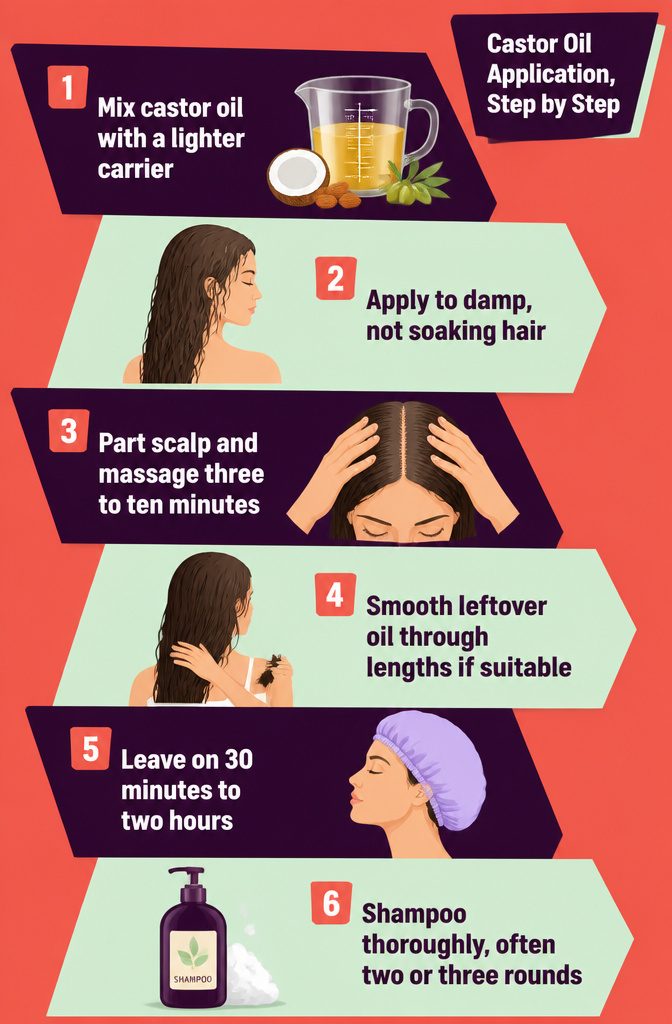
- Mix castor oil with a lighter carrier oil before you start. Castor oil is thick enough that it sits on the surface and takes multiple shampoos to remove. Coconut oil adds moisture and strength, jojoba mimics scalp sebum, and almond, olive or argan oils thin the blend without diluting the benefit. Ratios vary: one part castor to one part carrier works for most hair, one to two if your scalp runs oily, and 20–25 percent castor for low-porosity hair that resists absorption.
- Apply to damp hair, not soaking wet. Damp strands take up oil better than dry, but too much water blocks it from penetrating.
- Section your hair so you can reach the scalp, then use a dropper or your fingertips to work the oil along each part. Massage the scalp for three to ten minutes in small circles to boost circulation and spread the oil evenly.
- Run any leftover oil through mid-lengths and ends if your hair is medium to thick. Fine hair prone to grease should stop at the scalp or limit length application to the last few inches.
- Leave the oil on for 30 minutes to two hours, or cover with a shower cap and leave it overnight if your scalp tolerates it. Past four to six hours, oil begins collecting dead skin and debris.
- Shampoo thoroughly. Castor oil usually needs two or three rounds to rinse clean.
How Often to Use It
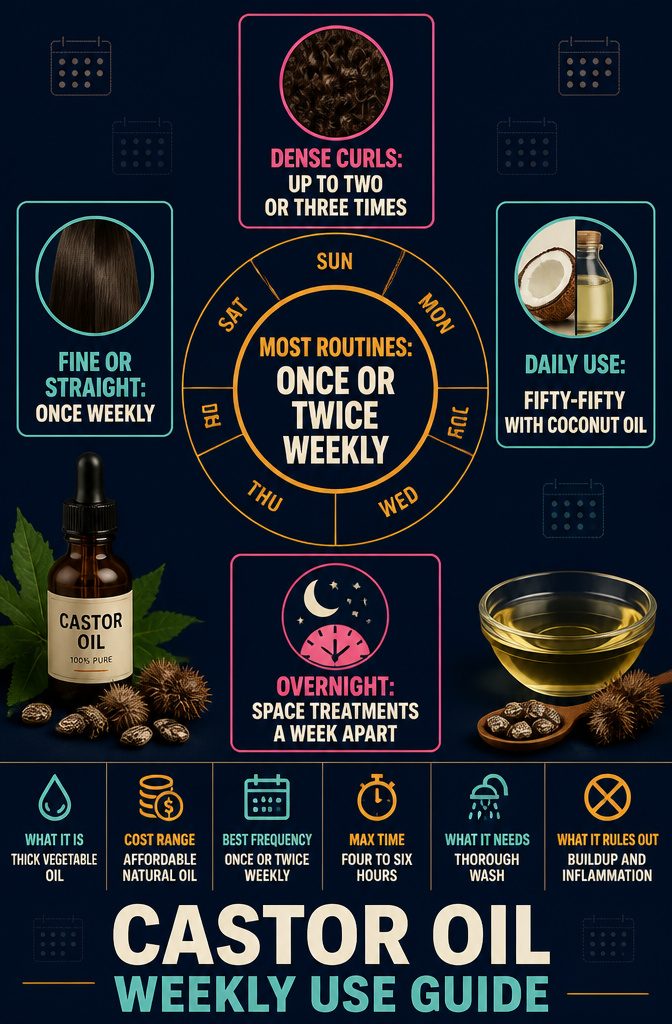
Most recommendations land at once or twice a week. That frequency keeps the scalp conditioned without crossing into buildup territory, and it suits most hair types.
If your curls are dense and thirsty, you can push to two or three times weekly. Fine or straight hair does better holding to once a week, since the thickness of the oil can make strands feel greasy fast.
Some sources note that severe dryness or scalp issues might justify daily use, but only when the castor oil is cut fifty-fifty with coconut oil to lighten the consistency.
I would treat that as a short-term fix rather than a standing routine.
Overnight application is an option, but keeping any oil on the scalp longer than four to six hours should stay intermittent.
After that window the oil starts to collect debris and dead skin, which can lead to inflammation. If you do leave it overnight, plan to wash thoroughly the next morning and space those treatments a week apart.
Buildup, Greasiness and Hair Felting
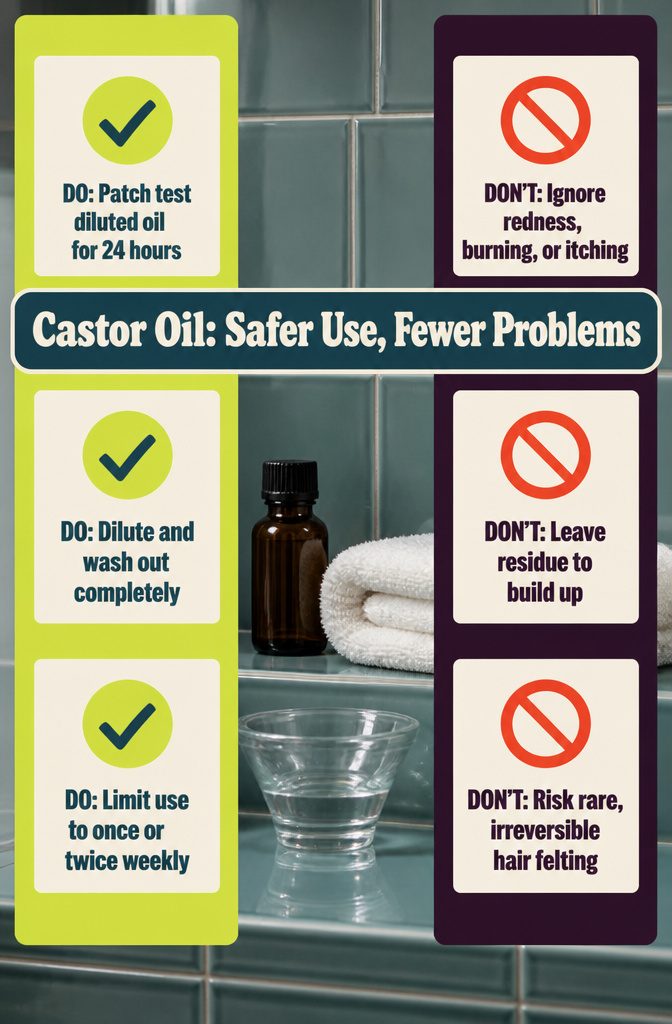
The thick, sticky texture that makes castor oil cling to the hair can also make it hard to wash out, and overuse leads to greasy buildup. A few things to watch for:
- Patch test before you apply it to your scalp. Rub a small amount of diluted oil on your inner arm and leave it for 24 hours. Redness, itching or sensitivity means you stop there.
- Difficult to rinse fully. Pure castor oil often needs two or three shampoos to clear, and oil left behind weighs hair down or clogs follicles.
- Rare but documented cases of hair felting, where strands tangle into a hard, matted mass that cannot be reversed. Dilute the oil and wash it out completely.
- Contact dermatitis or allergic reactions show up as redness, burning, swelling or unusual itching. Stop using it if any of those appear.
Individual reactions vary widely. Some users see positive results after six to eight weeks, while others deal with buildup from the start.
Limit application to once or twice a week and wash thoroughly with a clarifying shampoo to prevent residue from collecting on the scalp.
Cold-Pressed Against Black Castor Oil
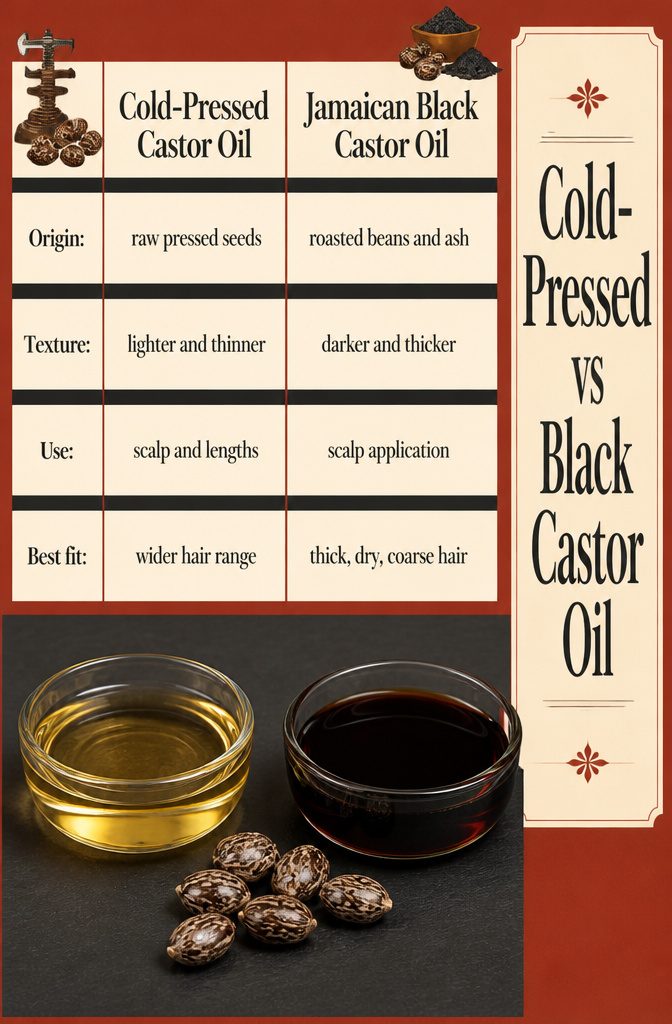
The two types start in different places. Cold-pressed castor oil comes from raw castor seeds, pressed under high pressure without heat, which keeps more of the nutrients intact and leaves the oil lighter and thinner.
Jamaican black castor oil is made from beans that are roasted first, sometimes with water, then ground, and the ash from roasting goes into the oil. That roasting step gives it a darker color and a thicker consistency.
Black castor oil tends to work better on thick, dry, or coarse hair, and you apply it to the scalp rather than down the hair shaft.
Cold-pressed oil can go on both scalp and lengths, and it suits a wider range of hair types.
If your hair is fine or gets weighed down easily, cold-pressed is the safer bet. If you have textured hair that drinks up moisture, the heavier black version may hold up better.
Which Hair Types Benefit and Which Get Weighed Down
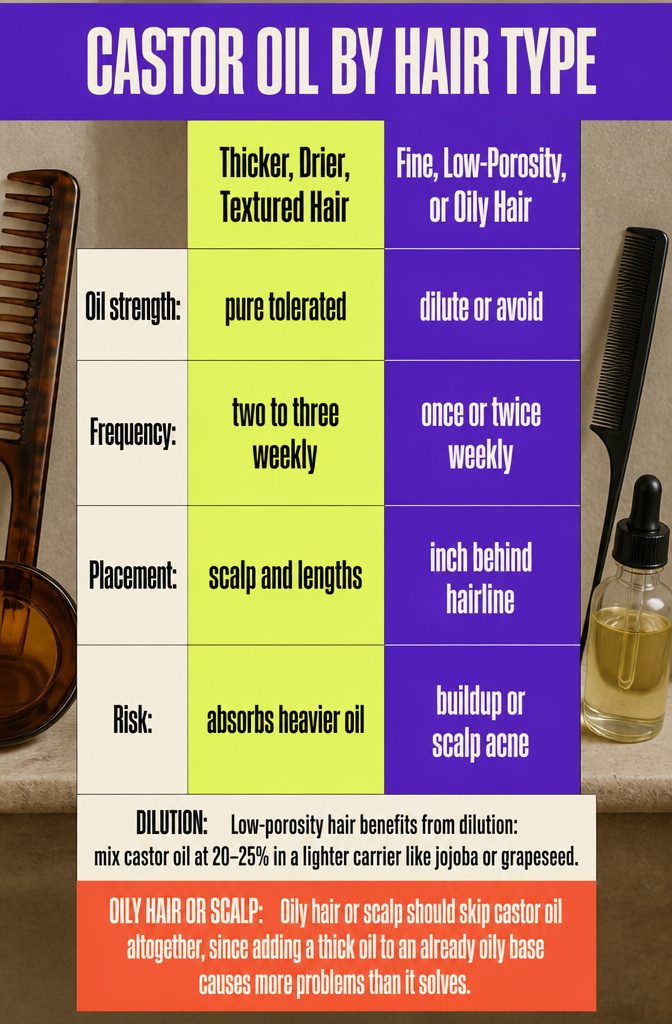
Hair type decides how castor oil behaves. Thicker, drier, or more textured hair tolerates pure castor oil better, while fine or low-porosity strands need lighter dilution to avoid buildup.
If you have tight 4C curls that soak up moisture, castor oil two to three times per week works.
Fine, straight hair does better with once or twice weekly, applied an inch behind the hairline and washed out after a few hours or overnight.
The heavy consistency that hydrates dry curls can weigh down finer strands and trigger scalp acne along the hairline.
Low-porosity hair benefits from dilution: mix castor oil at 20–25% in a lighter carrier like jojoba or grapeseed.
Oily hair or scalp should skip castor oil altogether, since adding a thick oil to an already oily base causes more problems than it solves.
When Hair Loss Needs More Than Oil
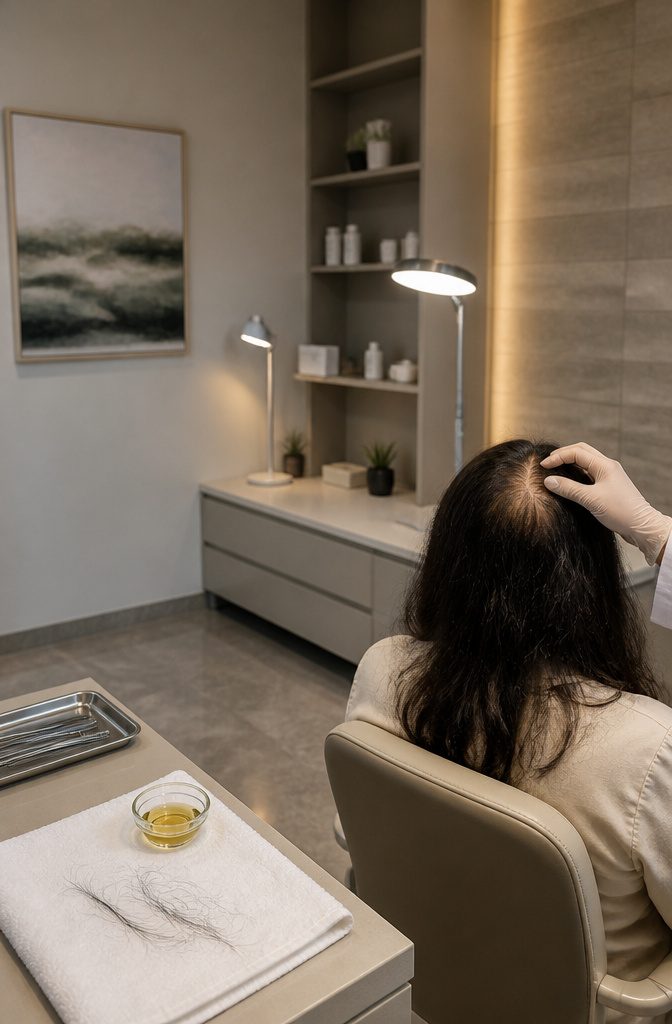
Castor oil can help with breakage and scalp comfort, but persistent hair fall or thinning may signal an underlying issue that oil alone will not fix.
Some forms of hair loss respond poorly to topical treatments because the cause sits deeper: hormonal shifts, nutritional gaps, inflammation or conditions that need dermatological attention.
If you notice sudden shedding, bald patches, ongoing scalp itching or hair loss that continues despite better products, consult a healthcare professional rather than relying on castor oil.
The oil may condition what is already there, but it cannot address the root cause when something medical is driving the loss.
Treatment may require bloodwork, a scalp examination or adjustments that go well beyond what a bottle of oil can provide.
Frequently Asked Questions
Does castor oil increase hair growth?
No strong clinical evidence shows that castor oil directly stimulates hair follicles or speeds up growth.
It reduces breakage and seals moisture, which helps you retain length over time, but that is different from producing new strands. Healthier scalp conditions and less snapping at the ends let you keep what you already grow.
How do you use castor oil for hair?
Mix castor oil with a lighter carrier like coconut or jojoba, apply to damp hair, and massage into the scalp for 3 to 10 minutes.
Leave it on for 30 minutes to 2 hours, then shampoo thoroughly. Use once or twice a week to avoid buildup.
How often should you use castor oil on your hair?
Once or twice a week works for most hair types. Dense, thirsty curls can handle 2 to 3 times weekly, while fine or straight hair does better with once a week to prevent greasiness.
Can you leave castor oil in your hair overnight?
You can leave it overnight occasionally, but keeping oil on the scalp longer than 4 to 6 hours should stay intermittent. After that window the oil starts collecting debris and dead skin, which can lead to inflammation.
What type of castor oil should I use for my hair?
Cold-pressed castor oil suits a wider range of hair types and can go on both scalp and lengths.
Jamaican black castor oil, made from roasted beans, is thicker and works better on coarse, dry, or textured hair applied to the scalp.
Is castor oil suitable for oily hair?
No. Adding a thick oil to an already oily scalp causes more problems than it solves, including buildup and clogged follicles.
Can castor oil make hair thicker?
It makes each strand look slightly thicker by coating it, which gives hair a fuller appearance. This is a visual effect, not a follicle count change.
Can castor oil reduce hair fall?
Castor oil protects the length you already have by keeping breakage down, which means fewer broken ends and more length retained over time. It cannot address the root cause when something medical is driving persistent shedding or thinning.
Can I apply castor oil directly to my scalp?
Yes, but diluting it with a lighter carrier oil makes it easier to apply and wash out. Pure castor oil is thick enough that it sits on the surface and takes multiple shampoos to remove.
Should I apply castor oil to wet or dry hair?
Apply to damp hair, not soaking wet. Damp strands take up oil better than dry, but too much water blocks it from penetrating.