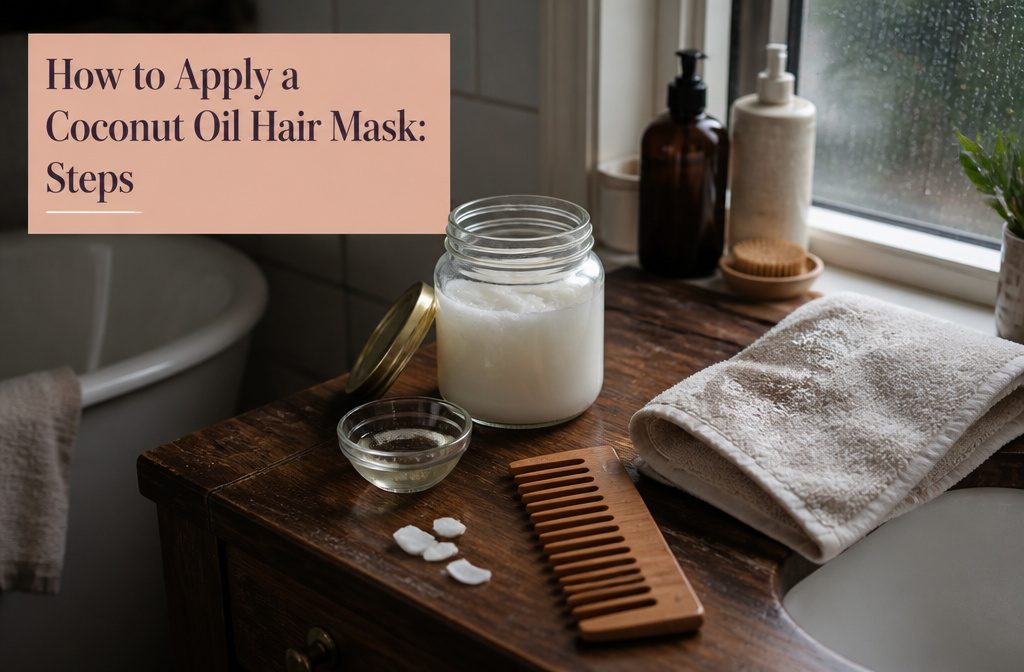
A coconut oil hair mask is warmed coconut oil applied to the hair and scalp, left on for anywhere from 15 minutes to overnight, then shampooed out.
How long you leave it on depends on what else is in the mix: masks with egg or banana need 15 to 30 minutes before the protein or fruit dries, while plain coconut oil can sit for hours or through the night if your hair is damaged enough to absorb it.
1. Choose Your Recipe and Ingredients
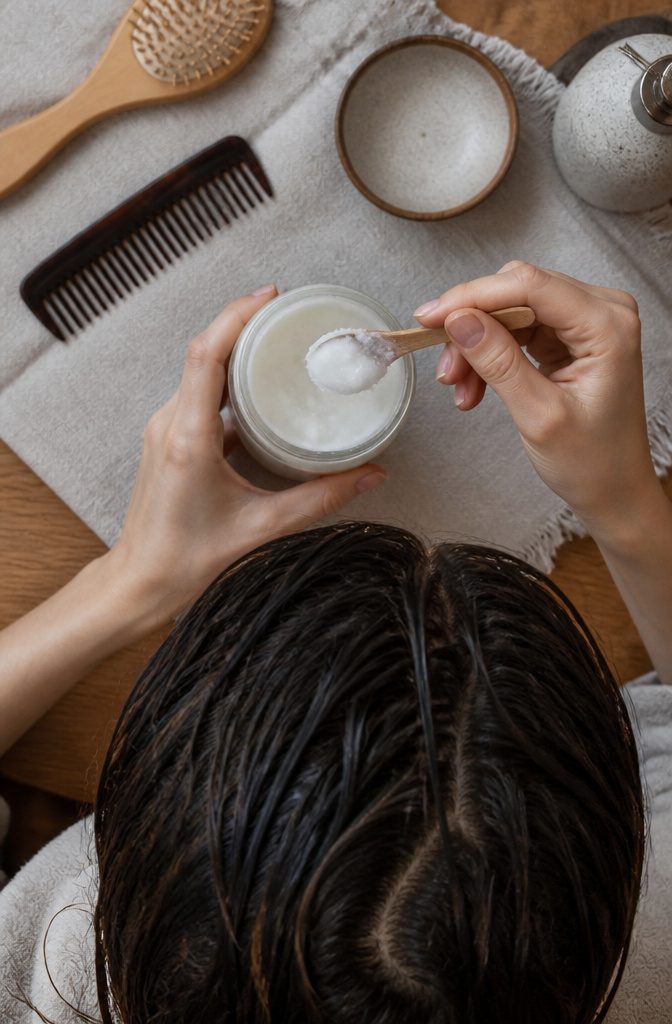
The simplest version is coconut oil alone, warmed until it melts. No mixing, no extra bowls, and you get all the moisture coconut oil provides without guessing how other ingredients will react with your hair.
Adding honey shows up in most of the common recipes. Two tablespoons of coconut oil to one tablespoon of honey is the typical ratio, and honey holds moisture in the hair shaft.
Some recipes swap plain coconut oil for a blend that includes argan or vitamin E oil, though those are optional.
For damaged hair, whisking in one egg at room temperature thickens the mask and adds protein.
Another option pairs coconut oil with apple cider vinegar for dull hair that needs more shine. The vinegar deep-cleans, and the ratio is two tablespoons of melted coconut oil to one tablespoon of vinegar.
Mashed banana or avocado blends well with coconut oil for curly or frizzy hair.
Either fruit works, and both smooth the cuticle. For dandruff, one tablespoon of coconut oil with one teaspoon of fresh lemon juice cuts greasiness on the scalp, though too much lemon can irritate.
2. Warm the Oil and Prep Your Hair
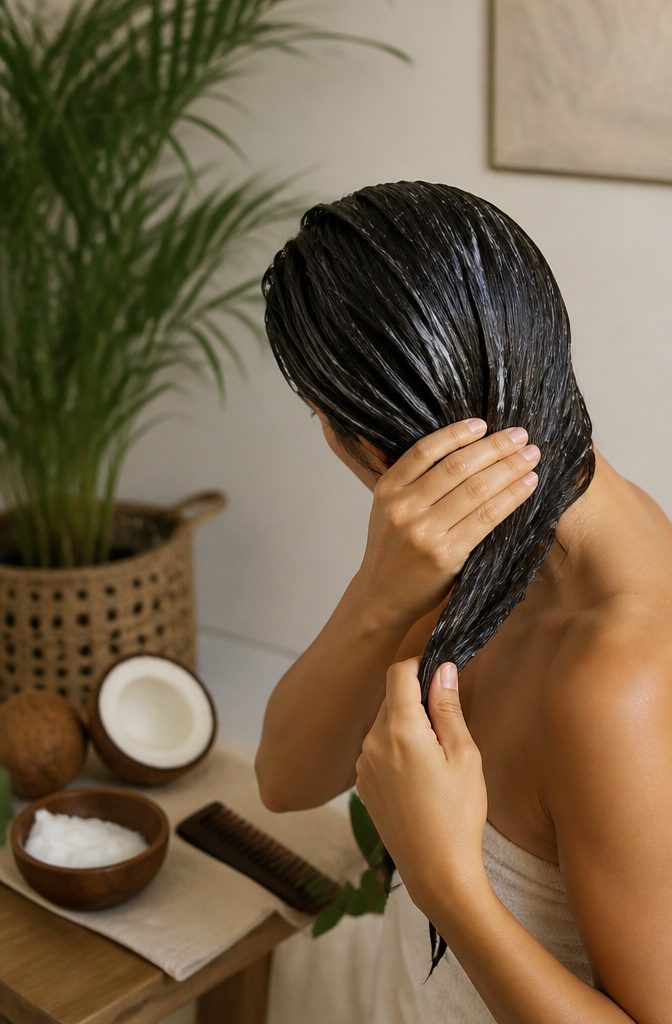
If your coconut oil is solid, warm it in a bowl until it’s workable but not boiling.
You need it fluid enough to spread evenly but not hot enough to be uncomfortable on your scalp. A minute or two near warm water or in your hands usually does it.
The conflicting prep advice comes down to personal preference. Some people apply to dry or slightly damp hair so the oil absorbs without being diluted.
Others prefer damp or towel-dried hair because it’s easier to work through. I find dry hair lets me see exactly where the oil lands, which matters when you’re focusing on the driest sections.
Divide your hair into manageable sections and use clips to keep coated strands out of your face.
Protect your clothes with a towel around your neck, or apply the mask while you’re already in just a towel. Recipes that include honey turn messier than straight oil, so plan accordingly.
3. Work the Oil Through From Ends to Roots
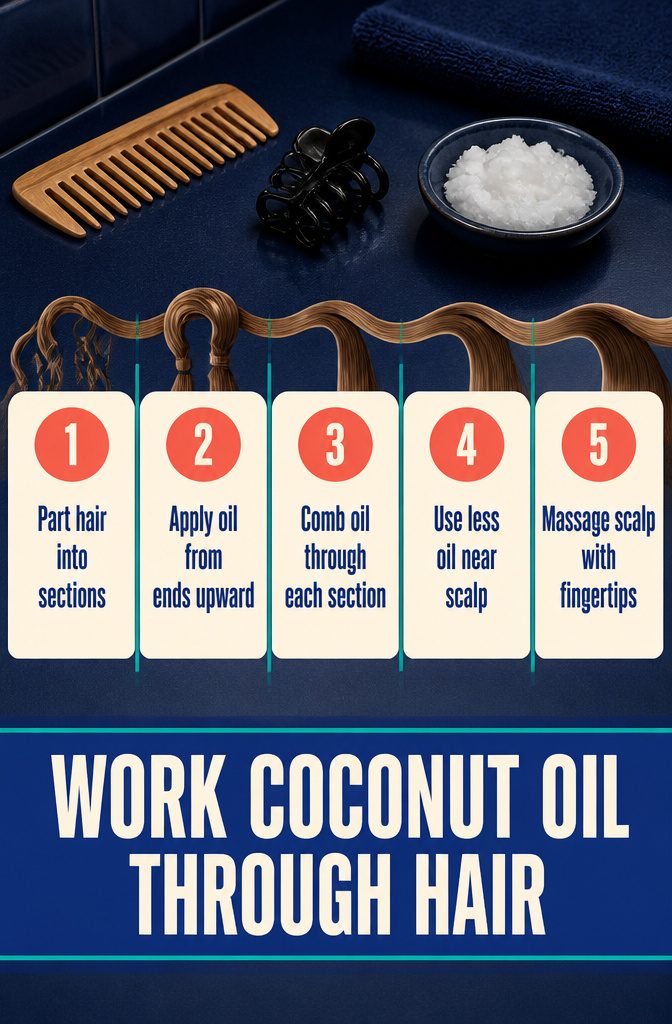
1. Part your hair into manageable sections.
Clip the sections you are not working on out of the way. This keeps saturated strands off your face and eyes, and it makes sure every strand gets coated.
2. Apply oil to one section at a time, starting at the ends and working upward.
Scoop a tablespoon of the warm oil into your palm.
Begin at the ends, then move up through the mid-lengths. The ends and mid-lengths need the most attention, since they tend to be the driest parts of your hair.
3. Comb or brush the oil through each section.
This distributes the oil evenly and ensures each strand is coated. If your hair tangles easily, comb it before you start applying oil.
4. Apply more oil to dry areas and less near the scalp.
The healthier parts of your hair, typically near the scalp, need less oil. If you have thin hair or an oily scalp, focus the oil solely on your ends and skip the scalp entirely.
5. Massage oil into your scalp using slow fingertip circles, not your nails.
This step is optional, but it feels good and helps if you have a dry or flaky scalp.
4. Cover and Secure the Hair
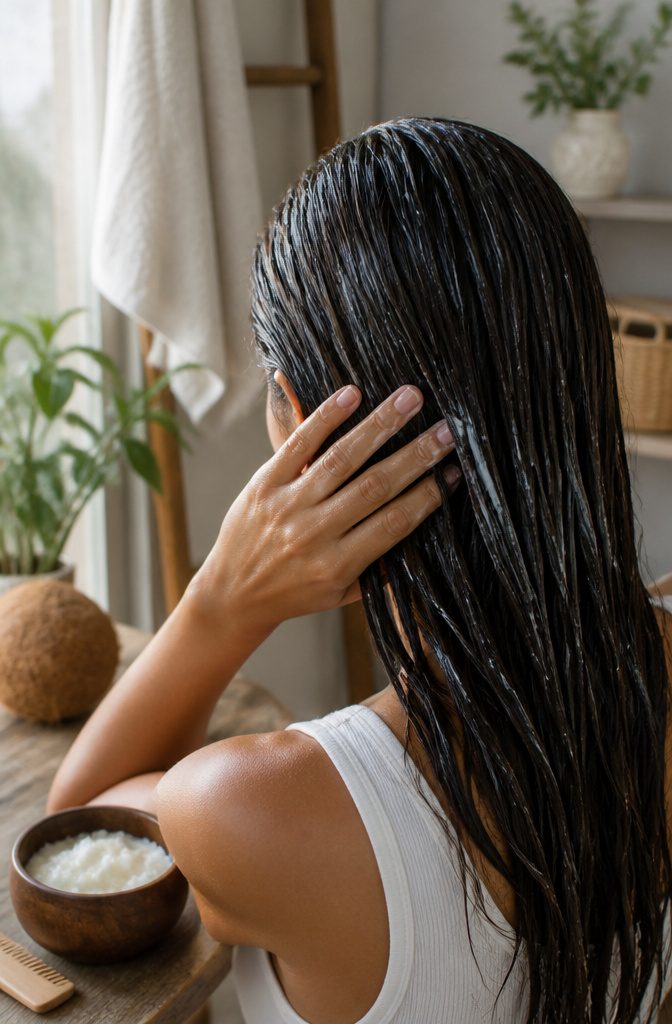
Once the mask is on, twist your hair into a loose bun and secure it with a claw clip or hair tie. That keeps the oil from dripping onto your clothes and makes the whole process feel less chaotic.
A shower cap works just as well if you have one, or you can wrap your hair in a cotton T-shirt for something more breathable.
Some people use plastic wrap or cellophane to seal everything in, which holds heat closer to the scalp and can help the oil penetrate faster.
If you are leaving the mask on overnight, the T-shirt or shower cap protects your pillowcase from stains.
One overnight routine I have seen uses a towel over the pillow as backup, which is worth doing if the mask is heavy or your hair is long enough to shift around while you sleep.
5. Leave the Mask On for 15 Minutes to Overnight
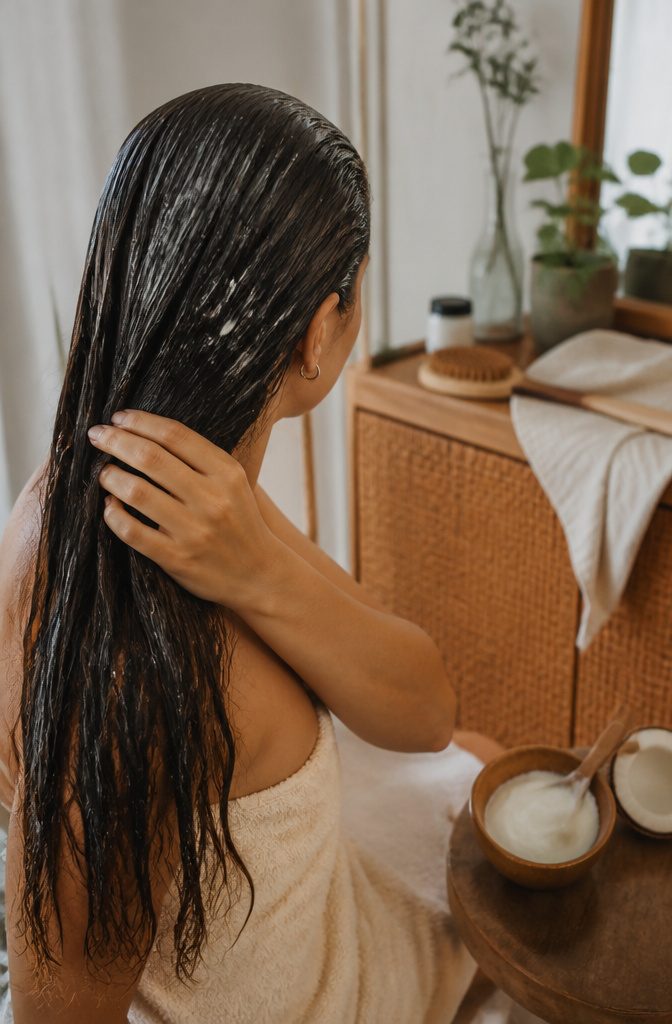
The shortest window I’ve seen is 15 minutes for masks with egg, banana or avocado, where the proteins or fruit can start to dry and stiffen if left too long.
Honey masks generally sit for 20 to 40 minutes, enough time for the humectants to pull moisture into the shaft without slipping off.
Basic coconut oil masks without add-ins can stay on anywhere from 20 minutes to two hours, and some recipes allow overnight wear if your hair is very dry or damaged.
The lavender overnight repair mask is left on through sleep, rinsed in the morning. One recipe permits up to 24 hours, though most guides settle between 30 minutes and an hour for general use.
If you’re treating dandruff, 15 minutes is typical. The longer the mask sits, the more the oil penetrates, but past a certain point you’re just waiting rather than gaining benefit.
6. Rinse and Shampoo the Oil Out
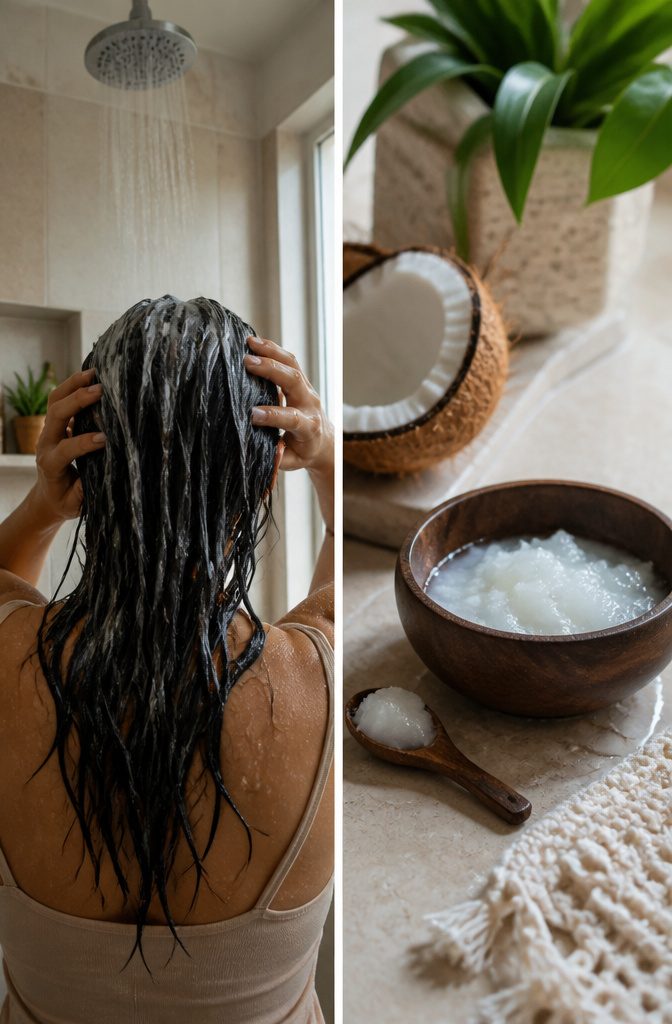
The easiest path is to rinse thoroughly with warm water first, then shampoo. Work the water through from roots to ends until it runs clear, which takes longer than you expect when the oil has really saturated the hair.
Follow with your regular shampoo, concentrating on the scalp where oil tends to cling. Most of the time that clears it, but if your hair still feels slick or heavy after rinsing the shampoo out, run a second lather through.
Conditioner is usually optional after a coconut oil mask since the treatment already left the hair soft, though you can add it to the ends if they need it.
One method flips the order: lather shampoo directly onto the oiled hair before wetting it at all, working it into the scalp as much as possible, then rinse everything out together.
That approach cuts through heavy oil faster, and I’d reach for it after an overnight treatment or if you used more than a couple of tablespoons.
7. Adjust How Often You Use It
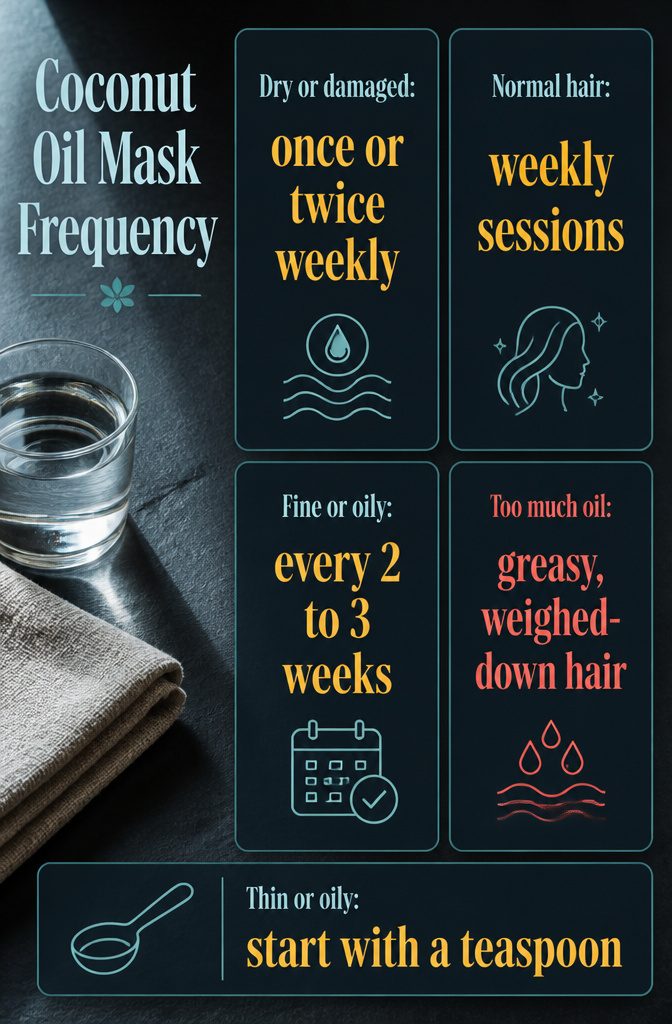
How often you apply a coconut oil hair mask depends on texture and what your hair actually needs.
Dry or damaged hair can handle a treatment once or twice a week, especially if you’re recovering from heat styling or color processing.
Normal hair benefits from weekly sessions to keep moisture steady without overdoing it. Fine or oily hair needs more space between masks, closer to every 2 to 3 weeks, to avoid buildup.
Too much oil leaves hair looking greasy, weighed down, and harder to wash clean. If your hair is thin or already prone to oil, start with a teaspoon and work it through the ends instead of coating the scalp.
You can always add more next time, but pulling back from oversaturated strands takes more work than getting there in the first place.
What Coconut Oil Does for Hair
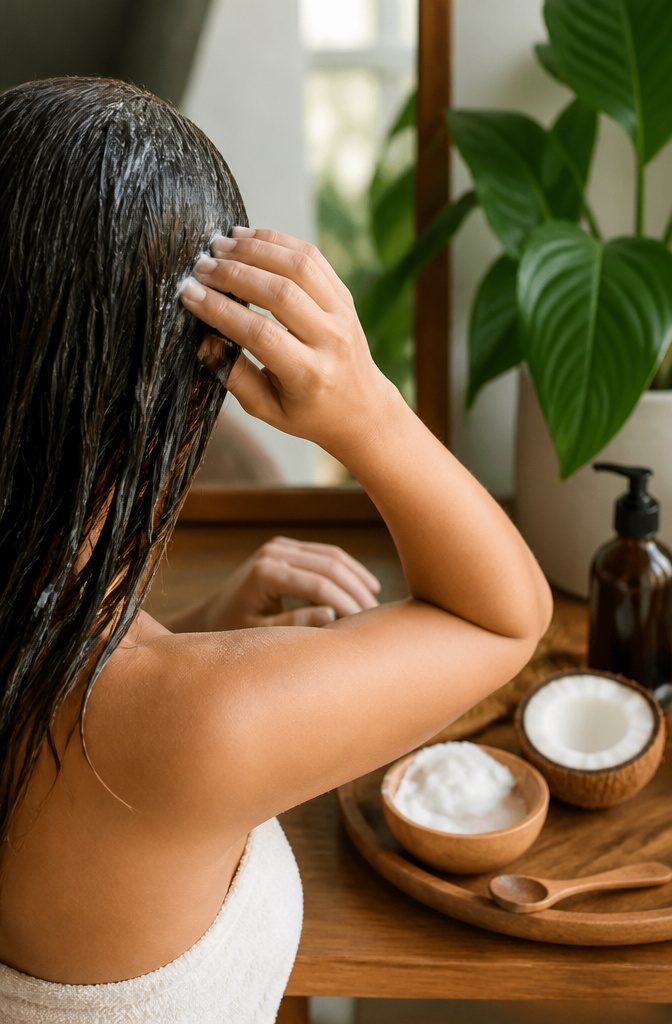
Coconut oil stands out because it penetrates the hair shaft rather than just sitting on the surface. A 2017 review found it reduced protein loss better than sunflower or mineral oil in both damaged and undamaged hair.
That matters because protein is what keeps strands strong and less prone to breakage. The mechanism comes down to lauric acid, coconut oil’s main fatty acid.
Its low molecular weight and straight chain give it high affinity for hair protein, so it can slip past the cuticle and protect the shaft from damage during washing.
A 2020 study showed that people who applied coconut oil once or twice a week had 65% lower hair weakness than those who skipped it.
The result is smoother, shinier hair with less frizz. Coconut oil is not effective for treating or managing hair loss, but it does help with moisture retention and scalp comfort.
How Much to Use for Your Hair Type
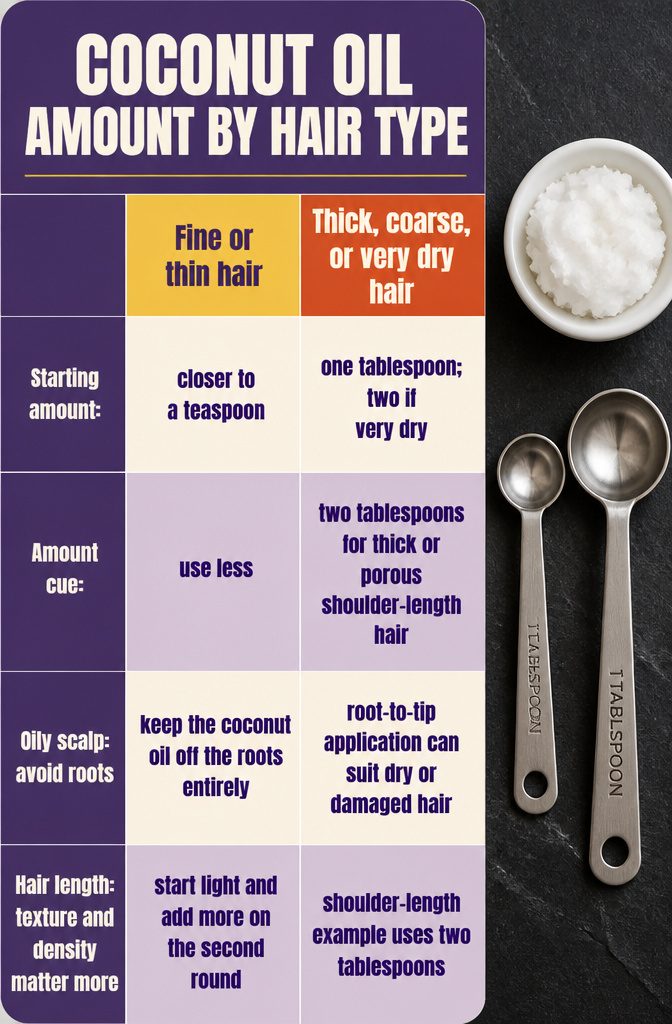
Start with one tablespoon for most textures, two if your hair is thick, coarse, or very dry.
Fine or thin hair needs less, closer to a teaspoon, since too much leaves it flat and greasy rather than soft. Use enough to coat each strand without weighing it down.
If your scalp runs oily, keep the coconut oil off the roots entirely and work it through the mid-lengths and ends instead.
That keeps the conditioning where the hair is driest without adding oil where you already produce it. Dry or damaged hair can handle a more generous application from root to tip, since the cuticle is open enough to absorb it.
Hair length changes the amount you need, but texture and density matter more.
Two tablespoons works for shoulder-length hair that is thick or porous. If you’re not sure, start light and add more on the second round rather than rinsing out excess.
Recipes I Return To
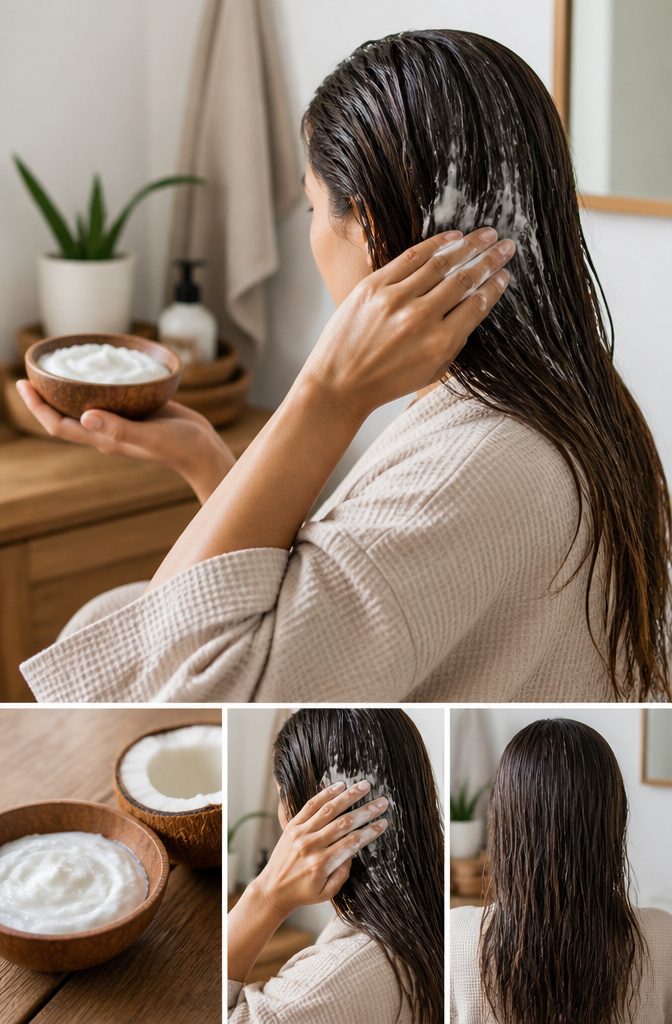
The recipes that work all start with coconut oil and one other ingredient, then shift in timing and add-ons from there.
- Honey and coconut oil, equal parts: 1 tablespoon oil and 1 tablespoon honey, melted together and applied to damp hair for 20 to 40 minutes. Optional boosts include mashed avocado, a spoonful of yogurt, or a drop or two of essential oil for scent.
- Egg and coconut oil for damaged hair: 2 tablespoons oil and 1 egg, or step up to 4 tablespoons oil with 1 large egg and 1 teaspoon honey. Leave for 15 to 30 minutes under a shower cap, then shampoo twice to clear the egg smell.
- Apple cider vinegar for dull hair: 2 tablespoons melted coconut oil and 1 tablespoon vinegar, applied the same way. The vinegar deep-cleanses and adds shine where buildup has made hair look flat.
- Overnight lavender repair: 1 to 2 tablespoons coconut oil and 2 to 3 drops lavender essential oil, massaged into the scalp for 10 minutes, then left under a shower cap or old t-shirt until morning.
- Lemon juice for dandruff: 1 tablespoon coconut oil and 1 teaspoon fresh lemon juice, left on for 15 minutes before rinsing.
I keep honey on hand because it pairs with every hair concern, and the egg mask pulls limp curls back to shape faster than anything else I return to.
Using It on Your Scalp
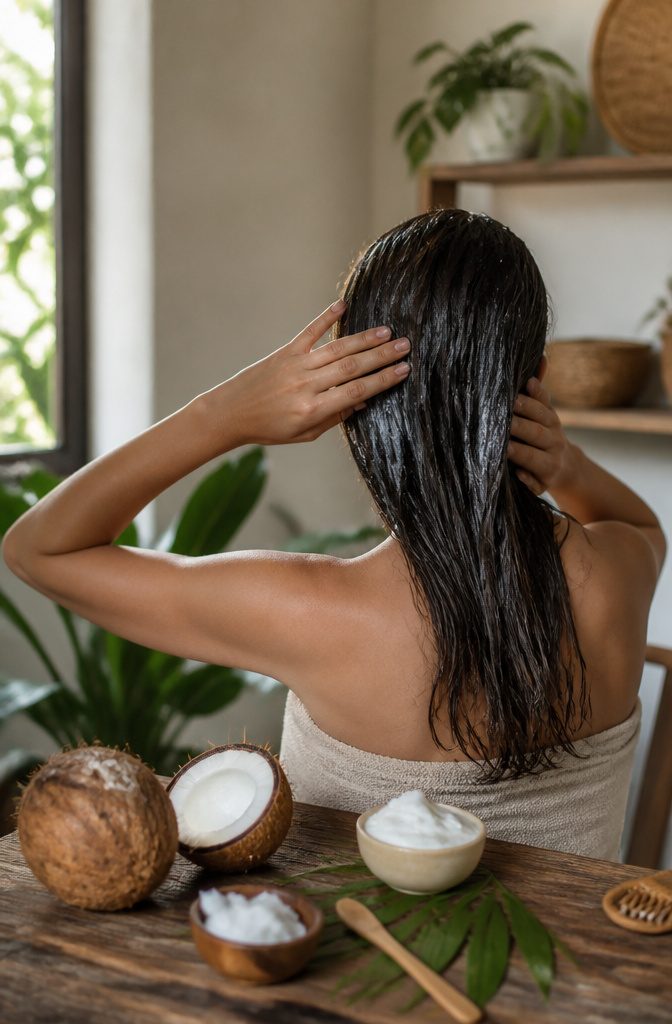
Coconut oil can soothe dry or irritated scalp, and some people find it helps with conditions like dandruff, eczema, or psoriasis.
Massage a small amount directly into your scalp and let it sit for 20 minutes before shampooing. The oil’s antimicrobial and anti-inflammatory properties may calm flaking and redness, though results vary.
A 2013 study found that coconut oil worked well on children with eczema over an eight-week period, and a 2021 study showed it reduced dandruff-causing fungal species after one week of use.
If you’re dealing with dandruff or dryness, adding a drop of tea tree oil to the coconut oil can help.
One thing coconut oil won’t do is treat hair loss. It moisturizes the scalp and follicles, but it doesn’t regenerate growth or reverse thinning.
Where to Buy It and What to Spend
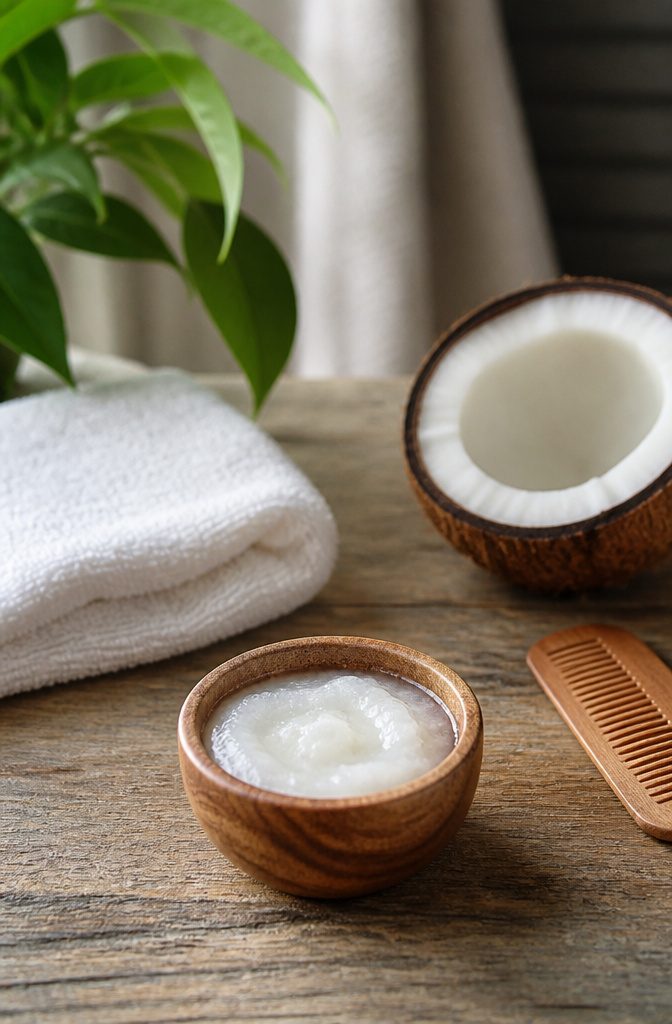
I buy organic, unrefined coconut oil from Trader Joe’s or Whole Foods for around $6 to $8, and that jar lasts through months of masks.
Unrefined means it still smells like coconut and keeps more of the fatty acids that soften hair. Refined coconut oil works too if you want a neutral scent, but I stick with unrefined for the fuller moisture.
You can also find scented coconut oils formulated for hair and body. One example runs $42 for eight ounces and comes in infusions like pineapple, mango, and white gingerlily.
They feel nice, but plain organic coconut oil from the grocery aisle does the same work on your hair for a fraction of the price.
Save the specialty bottles for when you want the fragrance, not when you need the treatment.
Overnight Treatment and Protecting Your Pillow
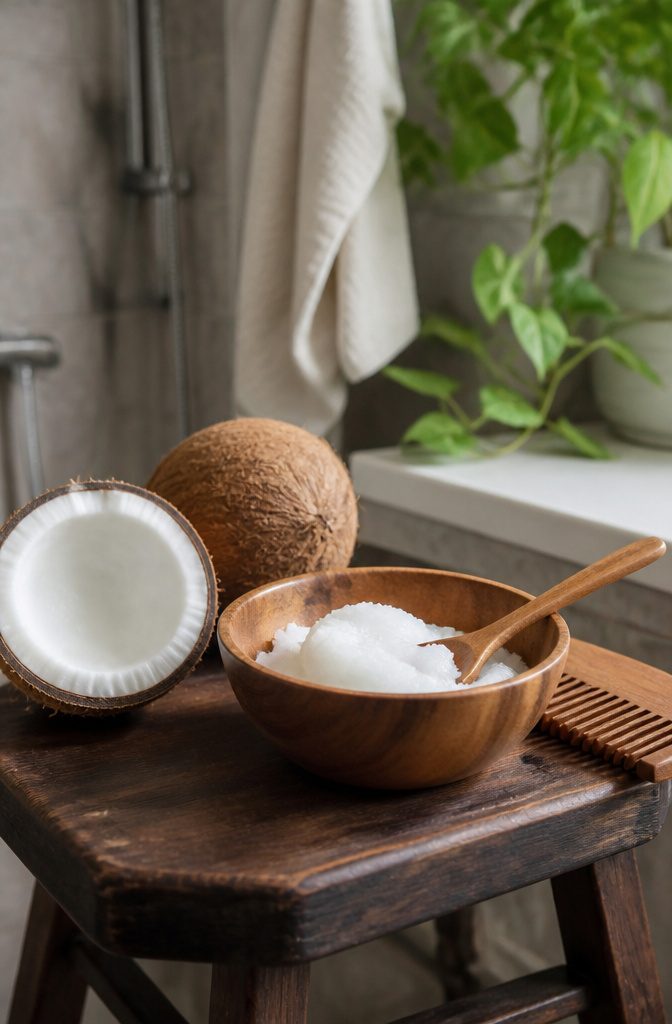
Leaving the mask in overnight gives dry or damaged hair the longest repair window, but only if you protect the pillow.
The simplest move is a shower cap over the entire treatment, worn all night and peeled off before morning shampoo.
A cotton T-shirt wrapped around the head works the same way and breathes better if a plastic cap feels too warm.
Some people skip the head covering entirely and drape an old towel across the pillow instead, replacing it with the regular case in the morning.
Overnight makes sense when hair needs deep repair from heat damage or over-processing.
The oil sits on the strand for six to eight hours instead of thirty minutes, and that longer contact window helps coconut oil penetrate further into the shaft.
Morning removal means two full shampoos to lift all the oil out, so plan for a few extra minutes in the shower.
If your hair tends toward greasiness or fine texture, the shorter daytime application usually delivers enough moisture without the risk of limp, overloaded roots.
Frequently Asked Questions
Should you put coconut oil on wet or dry hair?
Apply to dry or slightly damp hair so the oil absorbs without being diluted by water. Some people prefer damp or towel-dried hair because it’s easier to work through, but dry hair lets you see exactly where the oil lands.
How long should you leave coconut oil in your hair?
Leave it on for 20 minutes to 2 hours for most treatments, or up to overnight if your hair is very dry or damaged. Masks with egg, banana or avocado should sit for only 15 minutes to prevent stiffening.
How do I use coconut oil as a hair mask?
Warm a small amount until it melts, apply from mid-lengths to ends, and leave for 20 to 60 minutes before rinsing and shampooing. Start at the ends and work upward, using more on dry areas and less near the scalp.
How do I wash out a coconut oil hair mask?
Rinse with warm water from roots to ends until it runs clear, then shampoo your scalp where oil clings. If your hair still feels slick after rinsing, run a second lather through.
How often should you do a coconut oil hair mask?
Dry or damaged hair can handle treatment once or twice a week, normal hair benefits from weekly sessions, and fine or oily hair needs more space at every 2 to 3 weeks. Too much oil leaves hair greasy and weighed down.
Is it okay to use a coconut oil hair mask every day?
No, daily use leaves hair looking greasy and weighed down. Stick to once or twice a week for dry hair, weekly for normal hair, and every 2 to 3 weeks for fine or oily hair.