High porosity hair has cuticles that lift or spread apart, letting moisture rush in fast but escape just as quickly. The structure leaves strands feeling dry an hour after conditioning, tangling easily, and turning brittle under heat.
Weekly masks with hemp seed and baobab proteins fill those gaps and help hair hold hydration longer than a rinse-out conditioner can manage alone.
What High Porosity Hair Is and How It Behaves
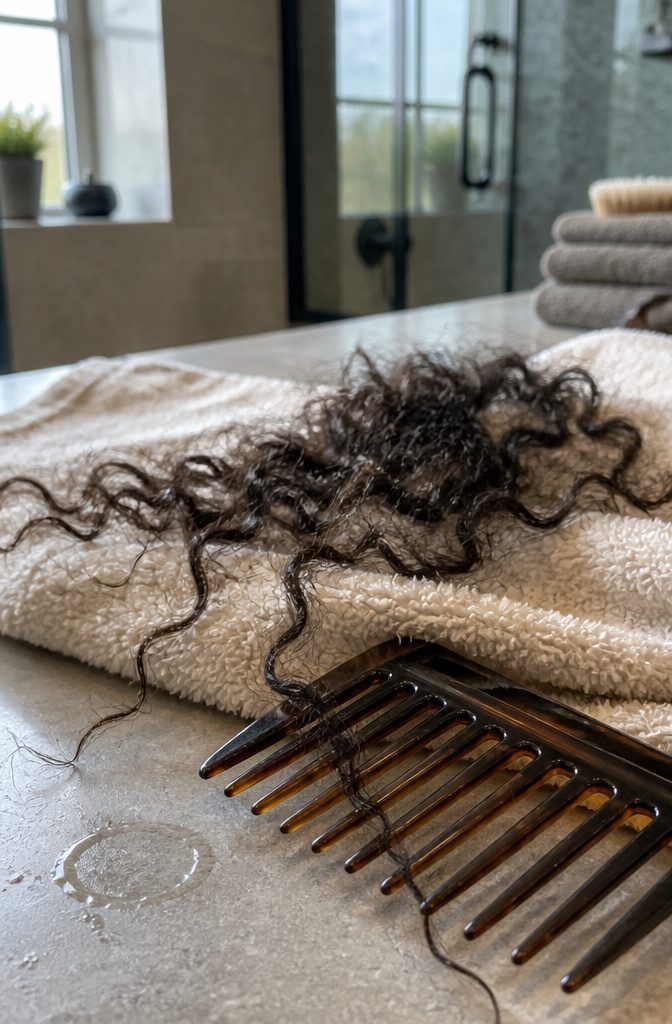
What High Porosity Hair Is and How It Behaves
High porosity hair has cuticles that are raised or damaged, leaving gaps that let moisture slip in fast but release it just as quickly.
The outer layer of each strand sits open instead of lying flat, so water, oils and conditioners absorb readily but don’t stay put.
The result is hair that feels dry, looks dull, and tangles easily even when you just washed it.
You’ll notice it dries fast after the shower, frays into frizz in humid air, and snaps when you comb through knots.
The texture reads rough or straw-like rather than smooth. Products sink in within seconds, but an hour later your hair feels parched again or weighed down with buildup.
Heat styling, bleach, relaxers and repeated color treatments crack the cuticle over time. Genetics can set you up for high porosity from the start, though damage from flat irons and blow dryers is the more common cause.
1. Hair Oils for Damage, Frizz, Heat and Curl Definition
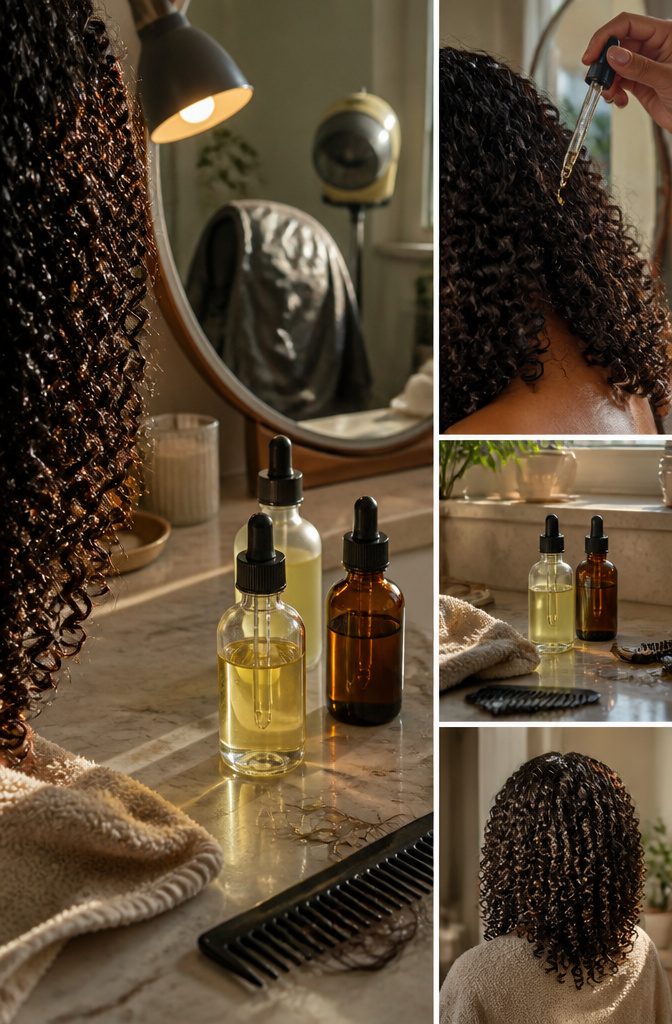
Oils designed for high porosity hair seal the cuticle after hydration, locking in moisture that would otherwise evaporate within the hour.
They work best applied to damp, hydrated hair after leave-in, followed by heat from a steamer, steam cap, or hooded dryer for 20–30 minutes.
- Cécred Oil Ritual ($48) for damage: baobab, moringa, and black seed oils reinforce fragile strands.
- Hollywood Beauty Batana Oil ($9) for frizz control on a tight budget.
- Kérastase Elixir Ultime ($62) with wild camellia and marula oils protects during heat styling and adds slip without leaving a greasy film.
- Ceremonia Aceite de Moska ($34) cuts through product buildup.
- Redken All Soft Argan-6 Oil ($38) smooths split ends.
- Olaplex No.7 Bonding Oil ($30) shields color-treated hair from heat up to 450 degrees.
- Carol’s Daughter Strength 7 Oil Blend ($14) defines tight curls without weighing them down.
2. Matrix Food For Soft Shampoo and Conditioner
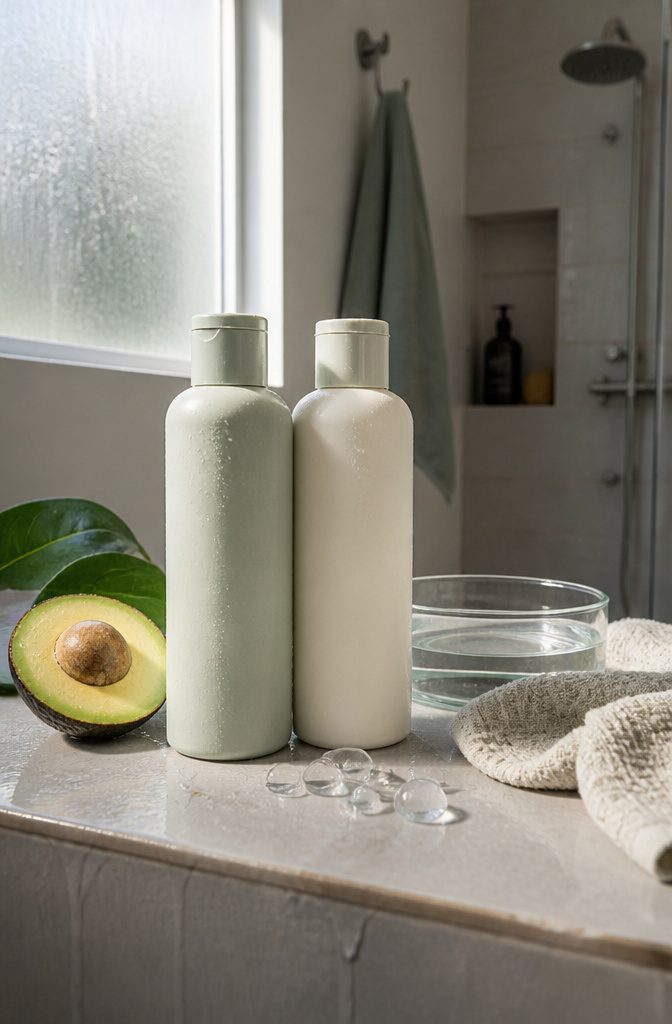
Matrix Food For Soft Shampoo and Conditioner brings Avocado Oil and Hyaluronic Acid into a weekly wash routine that hydrates while it cleanses.
The avocado oil softens and adds slip, the hyaluronic acid pulls moisture in and holds it there. Together they remove buildup and excess oil without stripping the natural moisture high porosity hair loses too quickly.
The duo works best when you treat it as a foundational step rather than the only one.
Wash weekly, follow with a deep mask or leave-in, then seal with an oil or cream to lock the hydration you just put in.
On its own the shampoo and conditioner pair cleans and conditions, but high porosity hair needs layering to keep moisture from escaping through those lifted cuticles before the next wash.
3. Matrix Food For Soft Hydrating Hair Mask
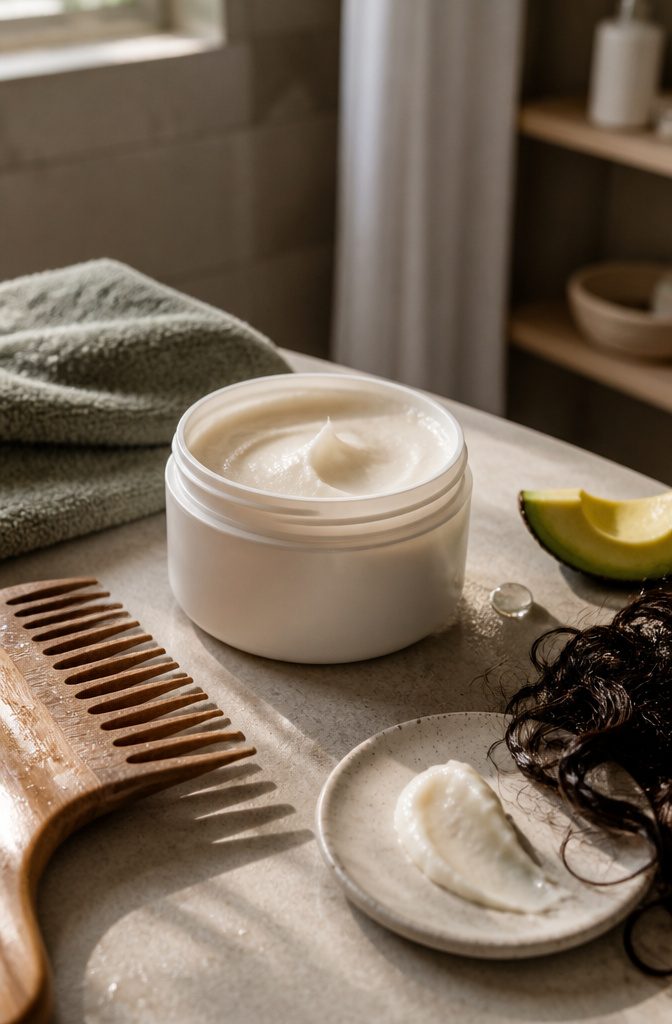
This mask delivers rich weekly hydration that goes deeper than daily conditioner. The formula uses avocado oil and hyaluronic acid to moisturize and lock in hydration, which high porosity hair loses fast.
Apply it once a week after shampooing, leave it on long enough to penetrate the open cuticles, then rinse. The result is hair that holds onto moisture instead of letting it escape an hour after you style.
The mask pairs with the Food For Soft Shampoo and Conditioner from the same line. All three share the same avocado oil and hyaluronic acid base, so you get consistent hydration at every step without switching ingredient profiles mid-routine.
The shampoo cleanses without stripping, the conditioner smooths, and the mask replenishes what a week of styling takes out.
4. L’Oréal Paris EverPure Moisture Shampoo and Conditioner
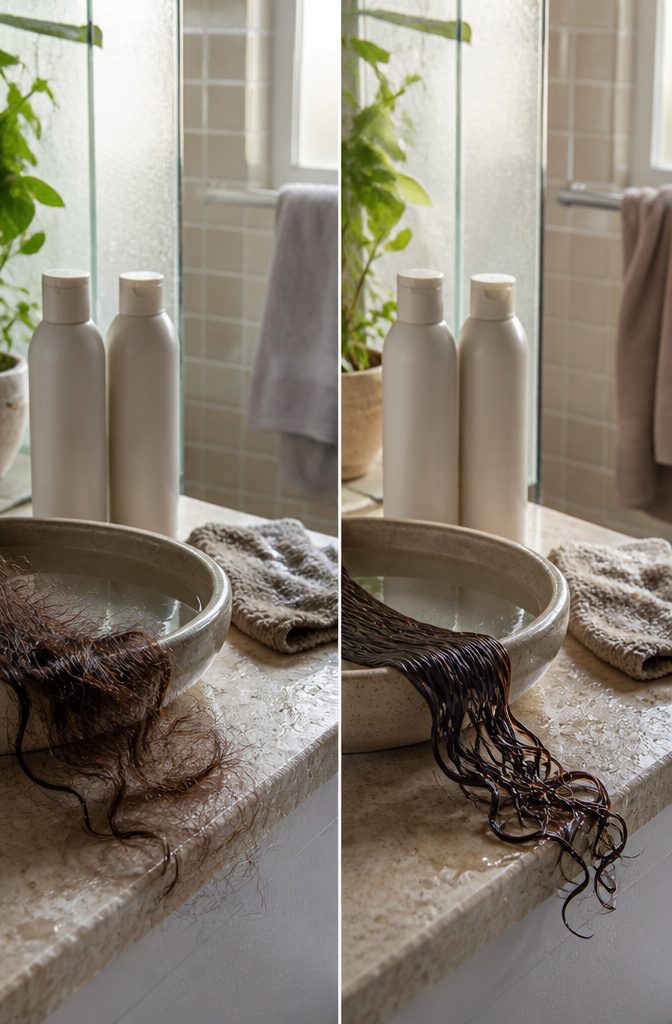
The EverPure Moisture Shampoo and Conditioner give high porosity hair a clean start without stripping what little moisture the cuticle already holds.
Sulfate-free formulas skip the harsh detergents that wash away natural oils, so strands stay better hydrated between wash days. I reach for this pair when hair feels dry but still needs a proper cleanse, not just a refresh.
The shampoo lifts buildup without leaving that tight, squeaky feeling, and the conditioner follows through with enough slip to detangle without dragging.
Finish with lukewarm water instead of hot to keep the cuticle from losing even more moisture on the way out of the shower.
5. L’Oréal Paris Elvive Dream Lengths Curls Leave-in Conditioner
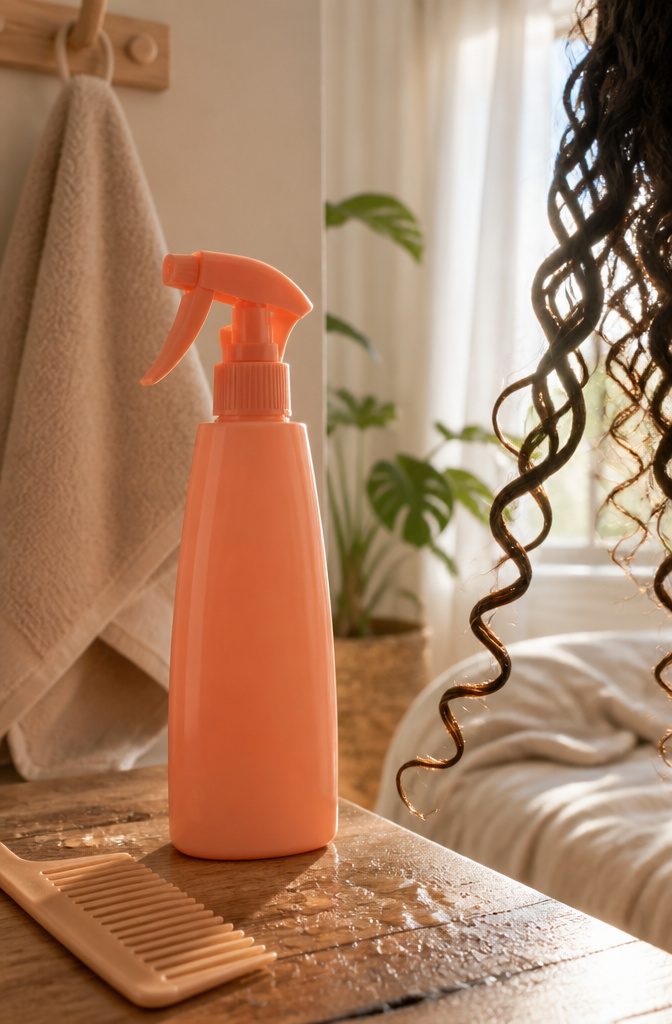
Curls drink up moisture fast and lose it just as quickly when porosity is high, so a leave-in conditioner keeps hydration in place between wash days.
The L’Oréal Paris Elvive Dream Lengths Curls Leave-in Conditioner layers hyaluronic acid and castor oil to soften and define without rinsing away the work.
Hyaluronic acid pulls water into the strand, castor oil seals the cuticle, and the result is curls that hold their shape and stay soft through day two and three.
I find leave-ins especially useful for high-porosity curl types because they add one more barrier between the strand and the air, which slows down water loss.
This one does that while keeping curls flexible rather than stiff, and it works on damp hair right after conditioning or as a refresh on dry hair later in the week.
6. L’Oréal Paris EverPure Bond Repair Oil-in-Serum
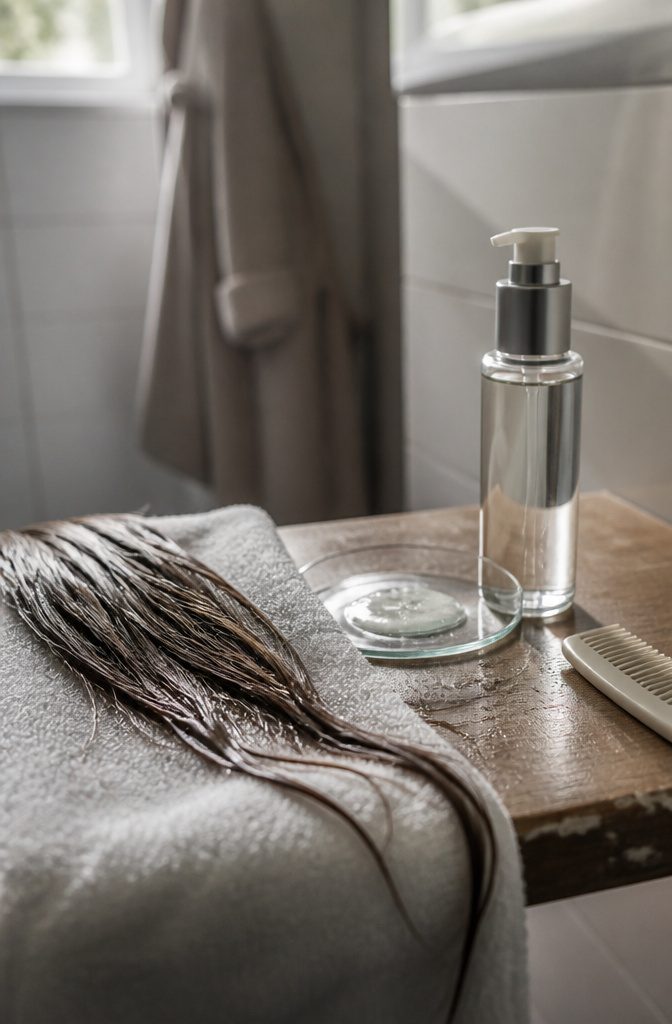
L’Oréal Paris EverPure Bond Repair Oil-in-Serum
I reach for this after conditioning, when the cuticle is still open and ready to accept a final seal.
The formula blends oil weight with serum slip, so it locks in hydration without sitting heavy on strands that already struggle with buildup. High-porosity hair loses moisture fast because those lifted cuticles let water escape as quickly as it enters.
An oil-serum hybrid addresses both sides: the serum component spreads evenly and penetrates slightly, while the oil portion forms a light barrier over the cuticle to slow evaporation.
Apply it to damp hair in sections, working from mid-length down, and the result is softer texture and better moisture retention through the day.
It won’t weigh down finer textures the way a straight oil can, which matters when you’re layering multiple products to manage porosity.
7. L’Oréal Paris EverPure Sulfate Free Deep Nourish Conditioner
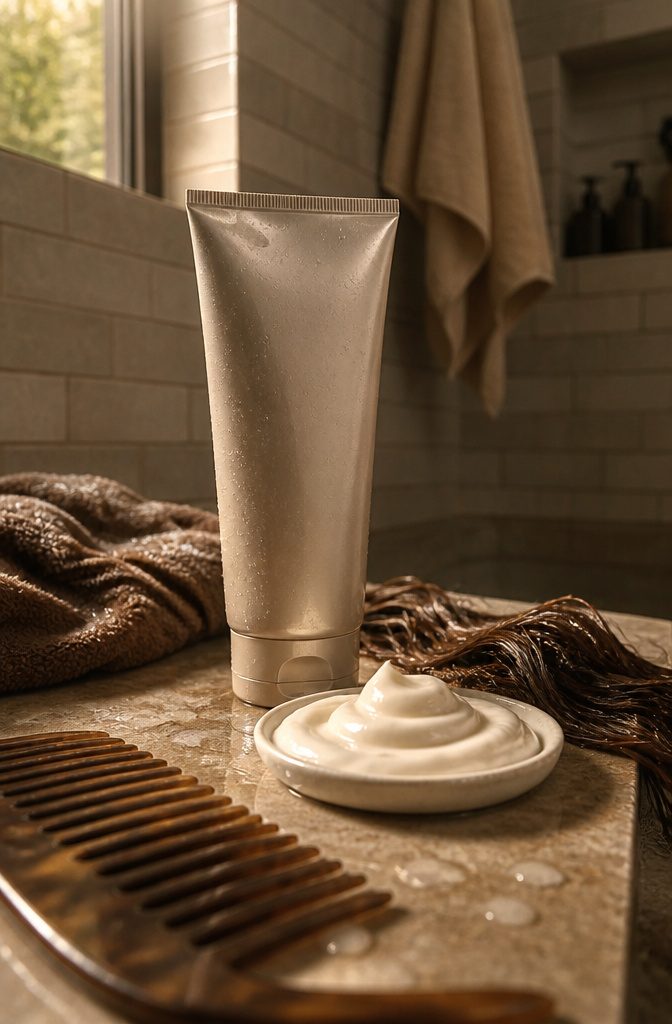
When high porosity hair soaks up moisture easily but loses it just as fast, a deep nourishing conditioner once or twice a week restores what daily rinse-outs can’t reach.
The L’Oréal Paris EverPure Sulfate Free Deep Nourish Conditioner works as that weekly reset, pushing hydration deeper into the cuticle and giving the hair time to actually absorb it before you rinse.
I use this kind of treatment when my hair starts feeling dry midweek despite layering leave-ins. The deeper conditioning step makes a visible difference in softness and how long moisture actually stays put.
High porosity cuticles lift easily, so a thicker formula that sits on the hair for a few minutes coats and cushions each strand instead of sliding off. That extra time matters more than the product itself.
8. L’Oréal Paris Elvive Hyaluron + Plump Flash Hydration Wonder Water
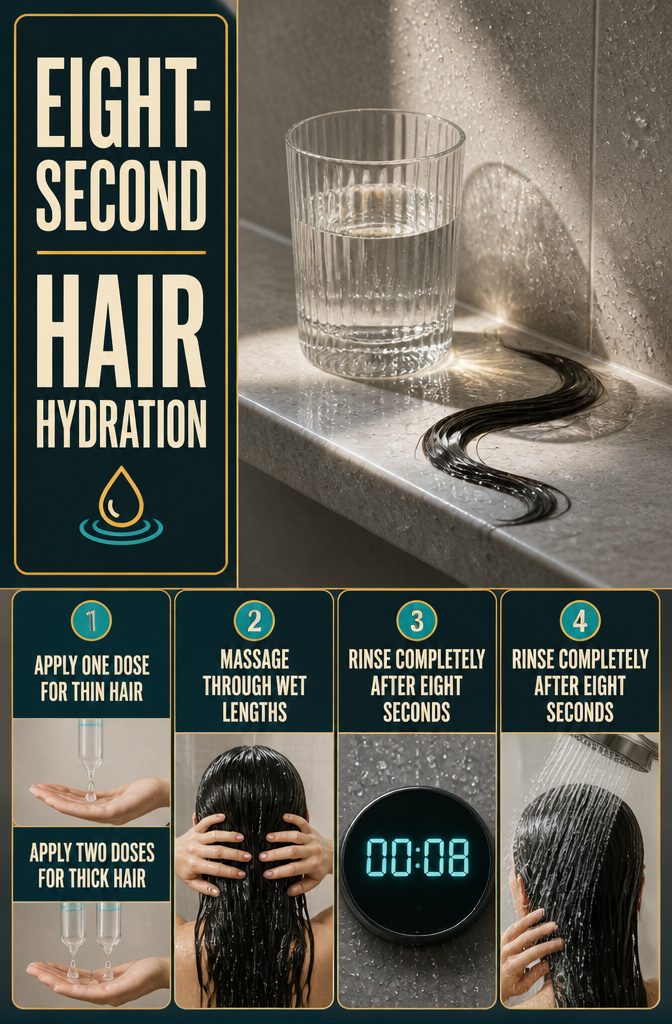
This in-shower treatment slots between shampoo and conditioner and floods hair with moisture in eight seconds. Apply one dose for thin hair or two doses for thick hair to wet lengths, massage through, then rinse completely.
The hyaluronic acid hits mid-wash when cuticles are open and porous hair can actually pull it in, rather than asking a leave-in to do all the work after you’ve toweled off.
It’s fast enough that I don’t feel like I’m adding a whole extra step, and the liquid format spreads more evenly than a mask you have to scoop and work through section by section.
If your hair drinks conditioner and still feels dry by afternoon, this gives you one more hydration layer without weighing down fine strands or requiring a twenty-minute wait under a cap.
9. L’Oréal Paris Elvive Hyaluron + Plump Moisture Plump Serum
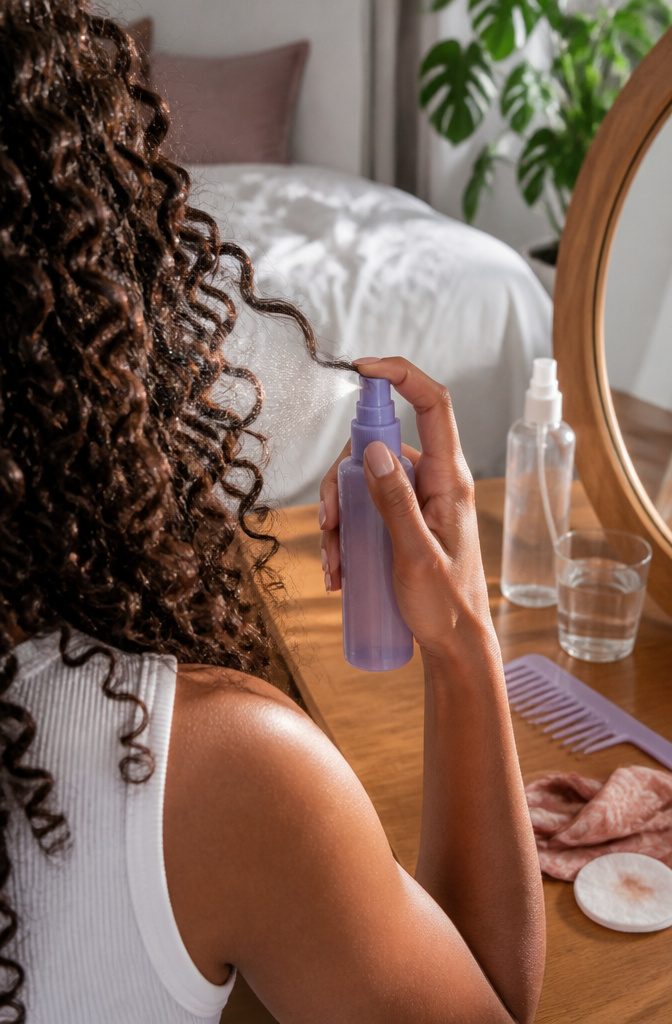
This serum solves the problem of mid-week frizz when your hair needs moisture but a full wash and deep conditioning session is not on the calendar.
Spray it through dry strands to rehydrate and revive curls without starting from scratch. The formula includes hyaluronic acid, which pulls water into the hair shaft and helps high porosity hair hold onto hydration instead of letting it evaporate.
I like that it works on all hair types and doubles as a detangler. The creamy texture does not weigh hair down or leave a sticky buildup.
If your curls lose definition by day three or the ends start to feel rough, a few spritzes smooth frizz and bring back shine. It is faster than cowashing and lighter than layering on another oil or cream.
10. SheaMoisture High Porosity Moisture Correct Masque
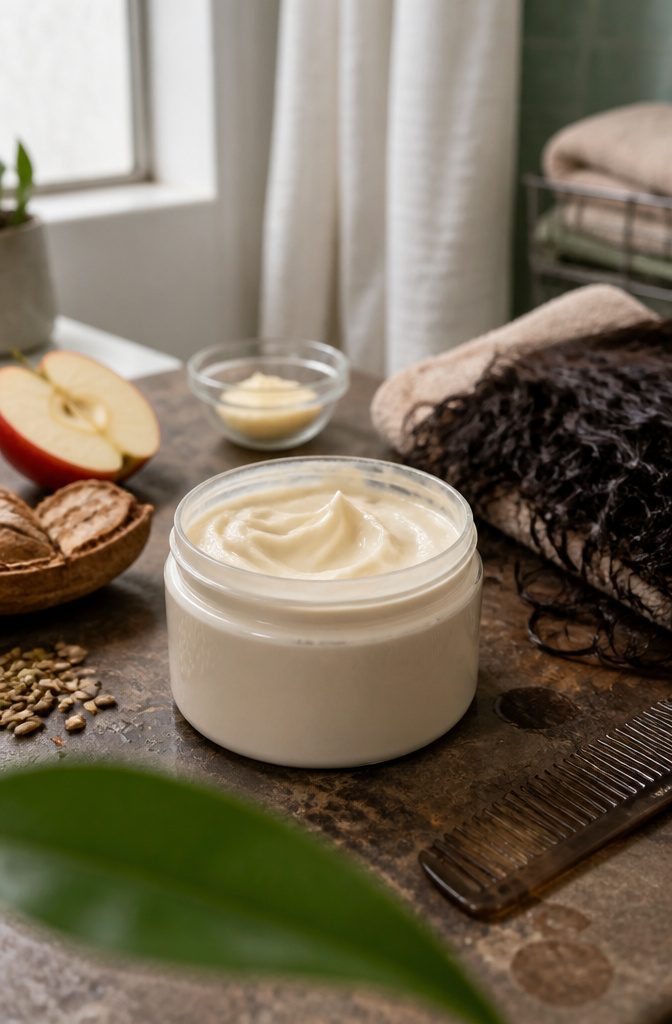
SheaMoisture makes a deep-conditioning mask designed specifically for high-porosity hair, with hemp seed, apple cider vinegar, and baobab proteins that coat and cushion each strand. That targeted formula matters.
High-porosity hair has cuticles spread too far apart, so moisture rushes in fast but escapes just as quickly. A mask built around that structure helps seal what you just added rather than letting it evaporate by lunchtime.
I recommend using a deep conditioner like this at least once or twice a week.
The difference shows up in softness and how long your hair stays hydrated between washes. If you’re only conditioning in the shower and wondering why your hair feels dry an hour later, a weekly mask fixes that gap.
11. L’Oréal Professionnel Metal Detox Range
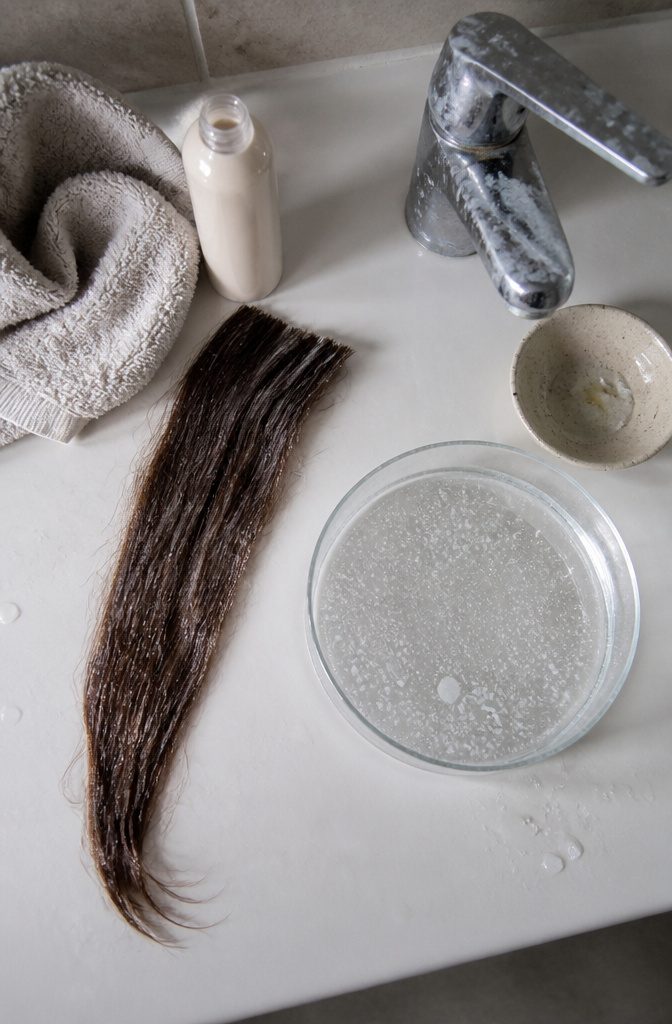
Metal deposits from tap water can quietly weaken hair over time, and the L’Oréal Professionnel Metal Detox pre-shampoo treatment addresses that directly while resurfacing porous strands.
It contains 2% Glicofiller, a molecule small enough to fill micro-breaks in the cuticle and cortex, reinforcing damaged zones and helping hair hold moisture instead of letting it escape.
The routine targets porosity at two levels: sealing the outer cuticle layer and strengthening the interior structure. That combination improves how hair behaves after washing, especially if hard water has left buildup that roughens the surface.
I like that this goes beyond surface hydration to actually address the structural gaps that make high porosity hair feel dry an hour after conditioning.
12. LOC or LCO Layering to Seal Moisture
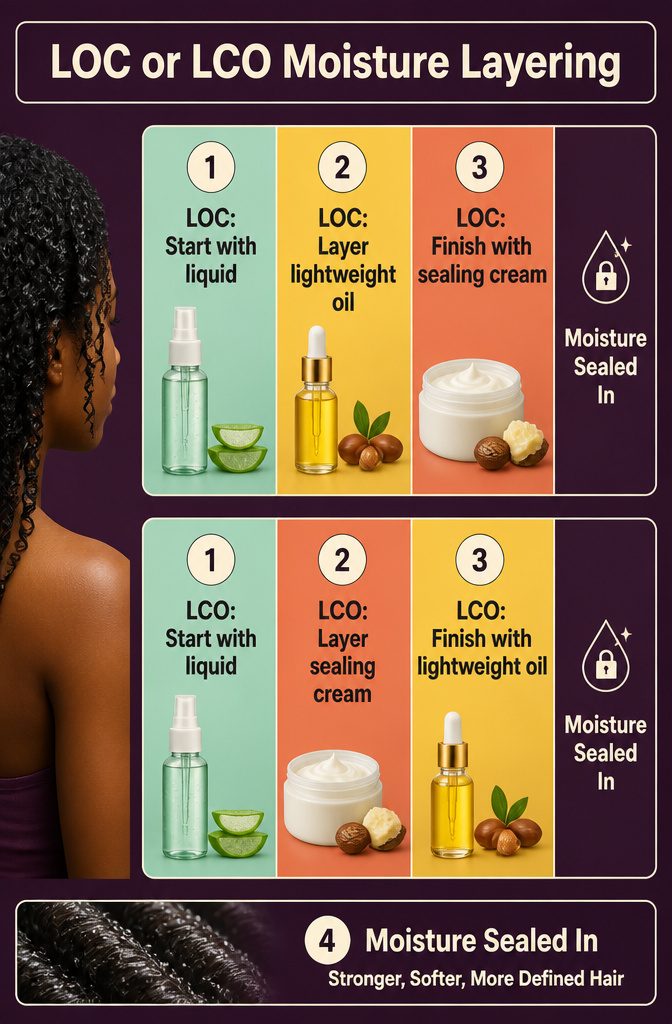
High porosity hair holds onto moisture better when you layer products in a specific order.
The LOC method starts with liquid (a water-based leave-in conditioner with humectants like hyaluronic acid or aloe vera), follows with oil (lightweight options like argan, jojoba or grapeseed), and finishes with cream (butter-based formulas that seal everything in).
The LCO method flips the last two steps, applying cream before oil. Both work by trapping moisture under a protective layer, but the order you choose depends on how your hair responds.
Some find that finishing with oil gives better seal, while others prefer cream on top for definition and weight. Try one for a week, then switch if your hair still feels dry by midday.
13. Deep Condition Regularly to Replenish Moisture
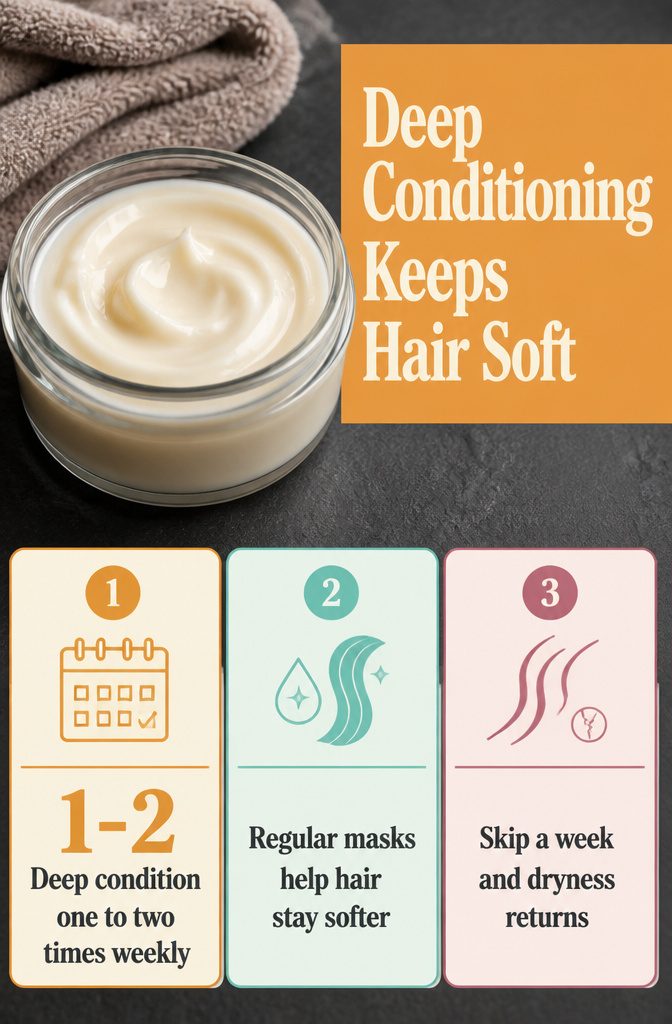
High porosity hair loses moisture fast, so deep conditioning at least once or twice a week keeps strands soft and hydrated.
L’Oréal Paris outlines weekly deep conditioning as part of a solid routine, and Healthline backs the one-to-two-times-weekly frequency. Protein treatments are heavier, so those can drop to once every two weeks.
The difference shows quickly.
When I deep condition regularly, my hair holds moisture longer and feels softer through the next few days. Skip a week and the dryness comes back.
High porosity cuticles stay lifted, so moisture walks out just as easily as it walks in. A rich mask or treatment puts back what daily styling pulls out.
14. Gentle Handling and Protective Styling
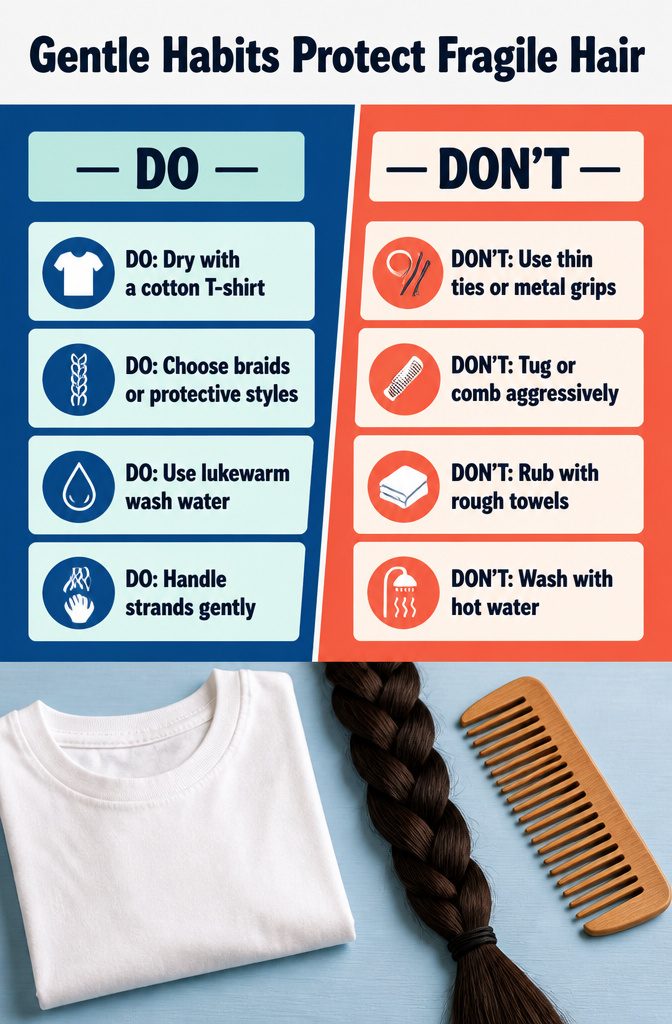
High porosity strands grab moisture fast and lose it just as quickly, but they also break more easily under friction and tension. Protective styling cuts down on constant manipulation, which means fewer snapped ends.
When you braid your hair, wear wigs, or clip in extensions, you give fragile strands a rest from daily styling. Anything that reduces how often you touch, pull, or restyle counts as protective.
Daily handling matters as much as the products you layer on. A few adjustments keep breakage in check:
- Swap rough towels for a cotton T-shirt when you dry your hair. Terry cloth creates friction that lifts the cuticle and snaps wet strands.
- Skip thin hair ties and metal grips. Both dig into the strand and create weak points that break under tension.
- Ease up on intensive combing. Jerking and tugging weaken the scalp and snap strands that are already porous and fragile.
- Use lukewarm water when you wash. Hot water lifts cuticles further and adds to the damage you’re trying to reverse.
Gentle manipulation preserves the strand structure you’re working to strengthen with masks and oils.
15. Protect Hair from Heat and Reduce Heat Exposure
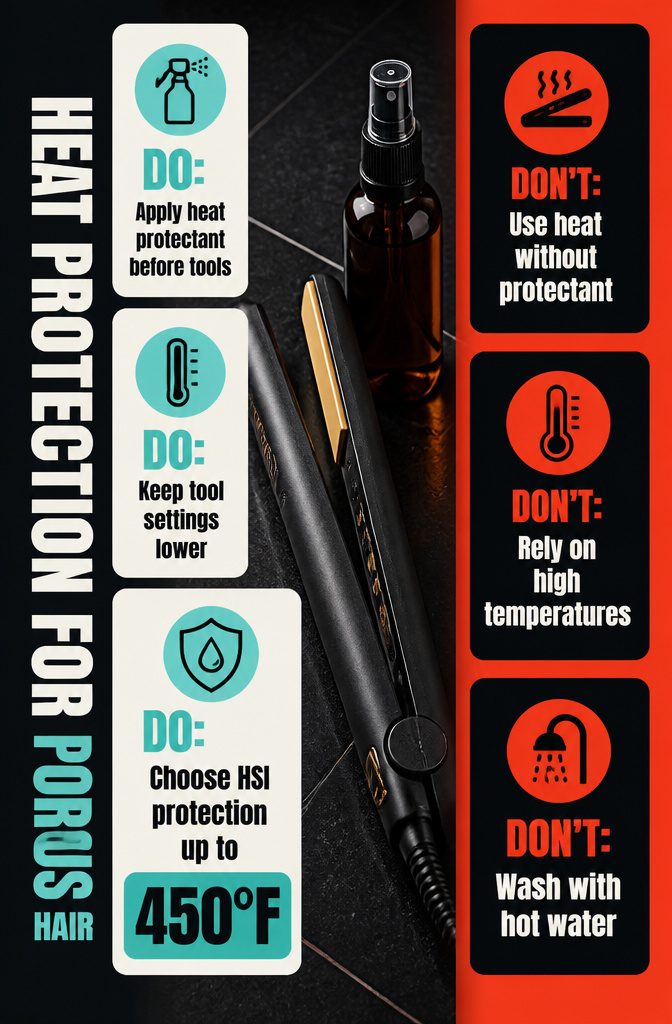
High-porosity hair loses moisture fast, and heat makes that worse. The cuticle is already raised and vulnerable, so flat irons and blow dryers dry it out even faster and worsen the damage.
Cut back on heat styling when you can. When you do use heat, a protectant is non-negotiable.
HSI Professional Argan Oil Heat Protector works up to 450°F and contains argan oil for extra smoothness.
Olaplex No.7 also protects to 450 degrees and rebuilds bonds while shielding strands. Both sit between your hair and the tool, forming a barrier that reduces direct damage.
Keep the temperature dial lower than you think you need.
High heat might straighten faster, but it leaves high-porosity hair brittle and drier than it started. Warm water instead of hot water during washing helps too, since the cuticle doesn’t need more reasons to stay open.
Ingredients That Help High Porosity Hair Retain Moisture
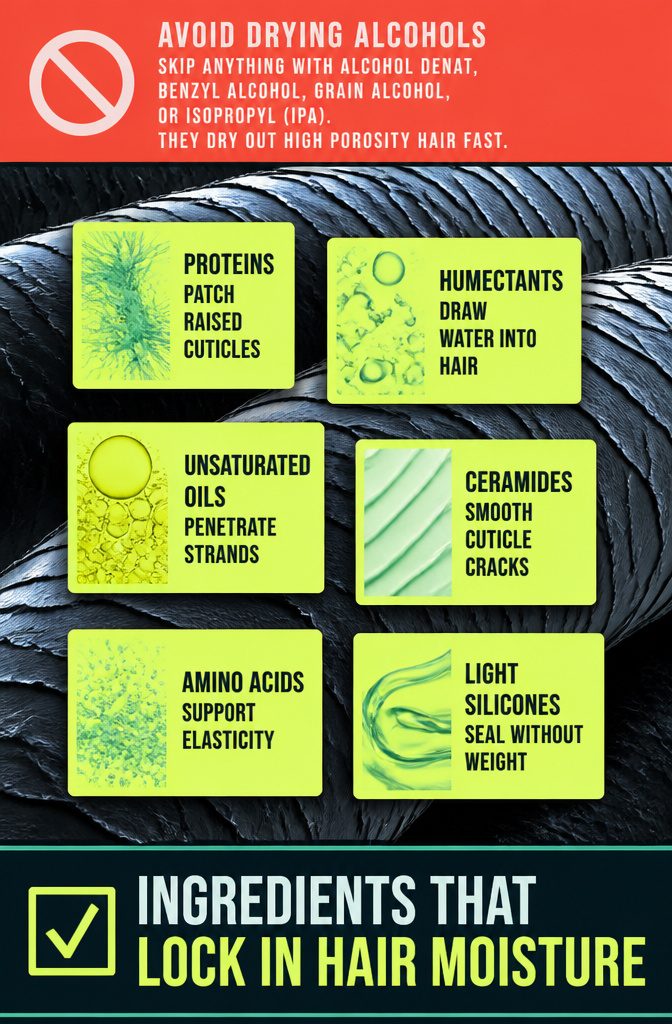
High porosity hair needs ingredients that fill gaps, hold water, and seal the cuticle. The ones below do that work.
- Proteins (keratin, wheat, silk, soy, collagen, milk proteins) rebuild damaged spots in the hair shaft and temporarily patch raised cuticles so moisture stays in longer.
- Humectants (hyaluronic acid, glycerin, honey, urea, sodium lactate, fructose, aloe) pull water from the air into the hair and keep it there.
- Oils high in unsaturated fatty acids (cottonseed, linseed, grapeseed, wheat germ, maracuja, evening primrose) penetrate the strand rather than just sitting on top, so they strengthen from inside.
- Ceramides fill cracks in the cuticle and smooth the surface so less moisture escapes between washes.
- Amino acids repair weak bonds in damaged hair and improve elasticity.
- Light silicones (dimethicone, cyclomethicone) coat the strand and lock everything in without weighing curls down.
Skip anything with alcohol denat, benzyl alcohol, grain alcohol, or isopropyl (IPA). They dry out high porosity hair fast.
How to Test Your Hair Porosity at Home
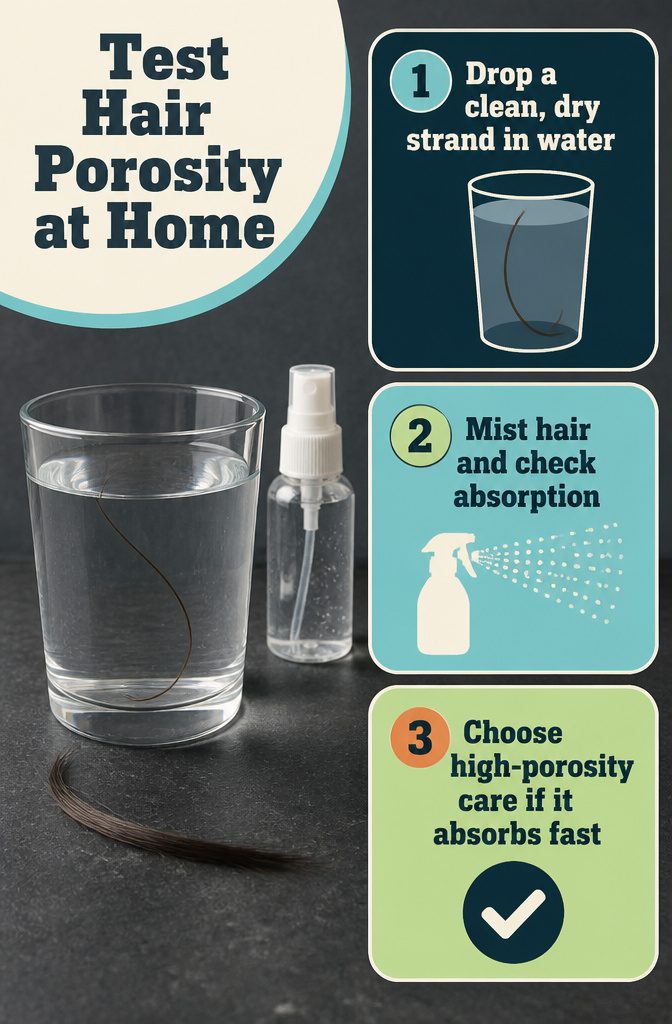
- Take a clean, dry strand of hair and drop it into a glass of water. If it sinks quickly to the bottom, you likely have high porosity. Hair that floats at the top for a while before slowly sinking suggests low porosity, and a strand that hovers in the middle before descending indicates normal porosity.
- Try the spray test as a second check. Lightly mist a section of your hair with water. High porosity hair absorbs the moisture almost instantly and feels damp right away, while low porosity hair beads up or takes longer to soak in.
- Use these results to decide whether high-porosity products and techniques make sense for your hair. If your strand sank fast or absorbed the spray immediately, moisture retention is probably your main challenge.
Daily, Weekly and Monthly Routine Frequencies
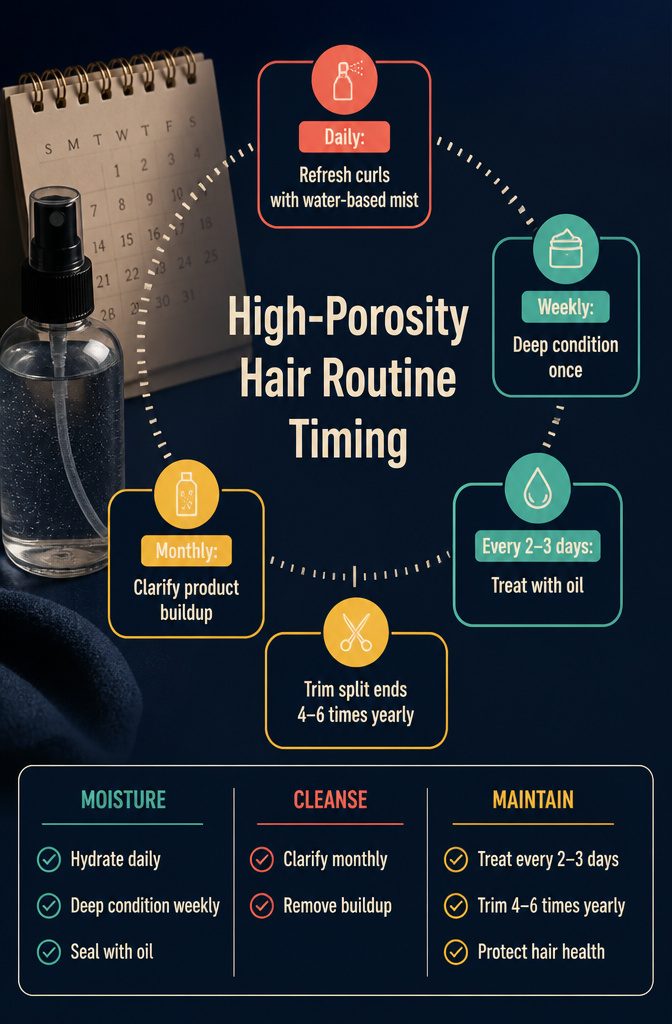
High porosity hair loses moisture quickly, so timing matters as much as the products you reach for.
- Daily refreshing keeps curls hydrated without a full wash. A water-based mist or the Elvive Hyaluron + Plump Moisture Plump Serum reactivates curl clumps and seals the cuticle between wash days.
- Weekly deep conditioning replaces moisture that leaks out through raised cuticles. One session a week stops dryness from building up.
- Monthly clarifying shampoo removes buildup that blocks moisture from getting in. The L’Oréal Paris Elvive Hyaluron + Pure Purifying Shampoo strips product residue without stripping natural oils.
- Oil treatments every 2–3 days help if your hair feels especially porous or damaged. Nanoil suggests keeping that rhythm until you see improvement, then spacing out as the cuticle smooths.
- Trims 4–6 times a year cut off split ends before they travel up the strand and open more gaps in the cuticle.
Frequently Asked Questions
What’s the difference between low-porosity and high-porosity hair?
Low porosity hair has tightly closed cuticles that resist letting moisture in, while high porosity hair has raised or damaged cuticles that absorb moisture quickly but lose it just as fast.
Low porosity requires help getting hydration inside the strand, high porosity needs help keeping it there. Both need different products and techniques to stay balanced.
Which ingredients or oil compositions should people with high-porosity hair look for?
Look for proteins like keratin, wheat, silk and collagen to rebuild damaged cuticles, humectants like hyaluronic acid and glycerin to pull in moisture, and oils high in unsaturated fatty acids such as grapeseed, linseed and evening primrose that penetrate the strand.
Ceramides, amino acids and light silicones also help by filling gaps and sealing the cuticle without weighing hair down.
What’s the best way to apply hair oil to high-porosity hair?
Apply oil to damp, hydrated hair after leave-in conditioner or cream so it seals moisture inside rather than just sitting on the surface.
Work a small amount through mid-lengths and ends, then add heat from a steamer, steam cap or hooded dryer for 20–30 minutes to help it penetrate deeper.
How can someone tell if their hair has absorbed the oil instead of the oil just sitting on top?
Hair that absorbed the oil feels soft and springy without stickiness or tackiness, and little to no oil transfers onto your fingers when you touch it.
If strands feel greasy or coated, the oil is sitting on top instead of sealing the cuticle.
How do I know if I have high porosity hair?
Drop a clean, dry strand into a glass of water.
If it sinks quickly to the bottom, you likely have high porosity. You can also mist a section with water: high porosity hair absorbs it almost instantly and feels damp right away.
How can I fix my high porosity hair?
Deep condition at least once or twice a week, layer products using the LOC or LCO method to seal moisture in, and use protein treatments every 2 weeks to rebuild damaged cuticles.
Cut back on heat styling, protect hair when you do use heat, and handle strands gently to prevent further damage. Monthly clarifying removes buildup that blocks moisture from absorbing.
Which is best for high porosity hair?
Products with proteins, humectants and lightweight oils work best because they fill gaps, pull in moisture and seal the cuticle.
Use oils like argan, jojoba or grapeseed on damp hair, follow with a cream to lock everything in, and deep condition weekly to replace moisture that escapes through raised cuticles.