Scalp oiling adds moisture and reduces breakage when you massage lightweight oils like jojoba or argan into clean, dry scalp once or twice a week.
But if your scalp already runs oily or you’re prone to dandruff, adding more oil can clog follicles, worsen flaking, and feed the fungus that causes seborrheic dermatitis.
One controlled study found that oral vitamin E supplemented for eight months increased hair count by 34.5 percent, though topical oils work differently and deliver far less reliable growth results.
What Scalp Oiling Means
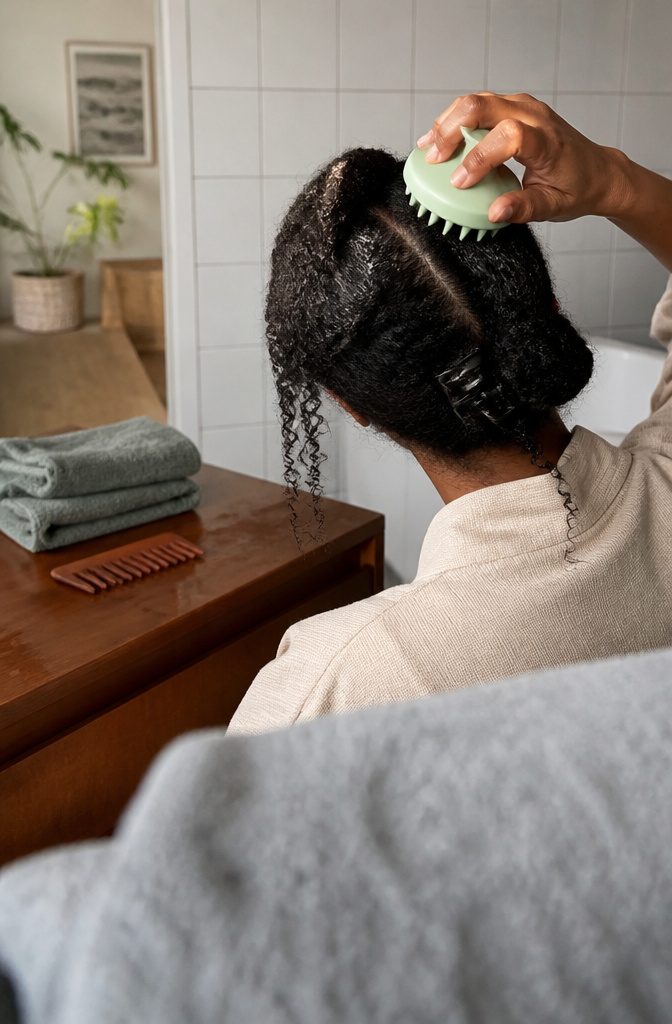
Scalp oiling means applying oil directly to the scalp and massaging it in, usually by parting sections of hair to reach the skin beneath.
The oil sits on the scalp itself rather than just coating the strands, and many people use a silicone scalp massager to work it into the follicles.
The practice comes from Ayurvedic tradition but has picked up traction recently in natural hair care routines.
This is different from hair oiling, where oil goes onto the lengths and ends of damp hair to add shine and moisture. Scalp oiling targets the skin, aiming to stimulate growth, prevent dryness and flaking, and support healthy follicles.
Scalp serums also treat scalp concerns, but oils themselves mainly condition the hair strands. Most people can do it regardless of hair type, though it shows up most often in routines for natural hair.
1. Why I Put Oil on My Scalp
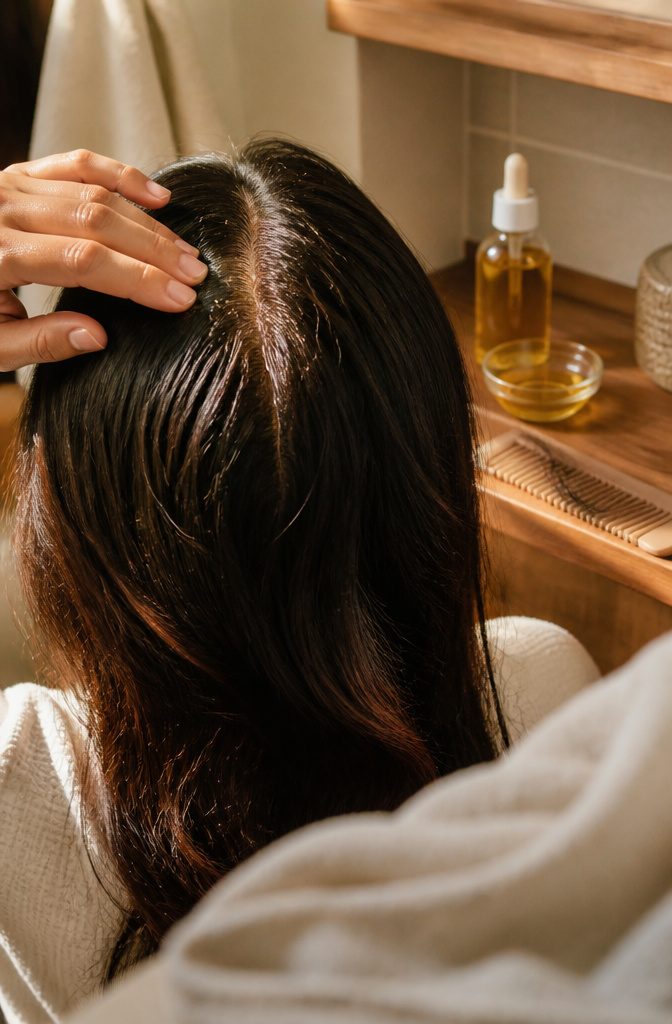
Oil adds moisture to a dry scalp and softens hair that feels coarse or brittle.
Massaging it in increases blood flow to the area, which some sources suggest may support hair growth, though the effect is modest and not guaranteed. The friction of the massage matters as much as the oil itself.
Regular scalp oiling can reduce breakage by keeping the scalp hydrated, and it may cut down on dandruff when dryness is the cause.
Moisturizing oils like coconut and argan penetrate the hair shaft, while sealing oils like jojoba lock that moisture in.
Too much oil backfires.
Heavy application clogs hair follicles, traps sebum and product residue, and can irritate the scalp or make flaking worse. Excess oil may even feed the fungus that causes dandruff, so light application matters more than frequency.
2. Whether It Suits Your Scalp and Hair
Whether It Suits Your Scalp and Hair
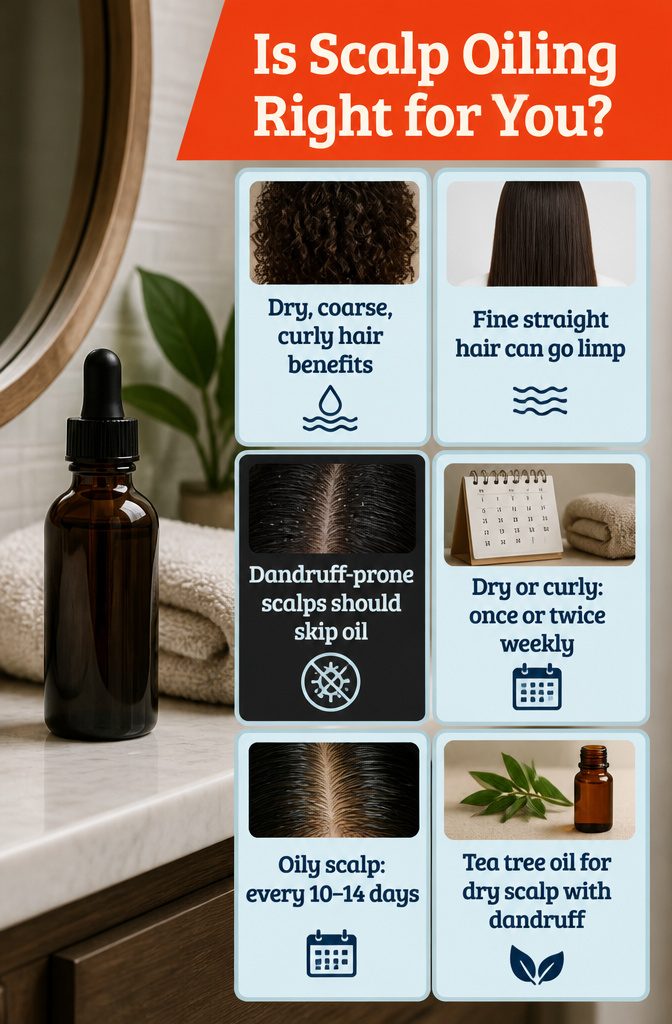
Your natural texture and scalp condition decide whether oil helps or backfires. Dry, coarse, or tightly curled hair responds well to oiling, while fine, straight strands often end up limp and heavy.
Those prone to dandruff should skip oil altogether: excess oil feeds the fungus that causes flaking, and overtreating an already irritated scalp makes the problem worse.
Frequency depends on your sebum production.
If your scalp runs dry or you have curly hair, oiling once or twice a week supplies moisture and prevents breakage. An oily scalp needs a lighter touch: start every ten to fourteen days and watch how your scalp responds.
Tea tree oil works for dry scalp paired with dandruff because it calms inflammation and inhibits fungal growth, but proceed carefully and consider whether your scalp genuinely needs more oil at all.
3. Choosing an Oil for Your Scalp
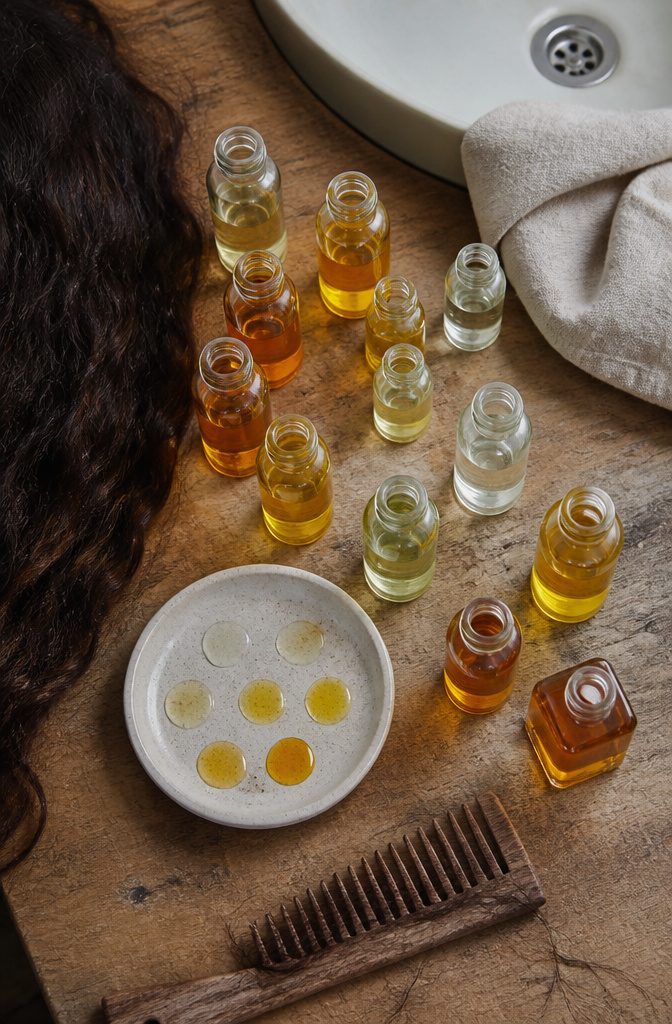
Jojoba oil works for most scalp needs.
It absorbs easily, nourishes with vitamins B, C, and E, and helps with dandruff without weighing hair down. Fine hair especially benefits from lighter oils like jojoba, argan, or grapeseed, which moisturize without leaving greasy residue.
For dry or flaky scalp, tea tree oil decongests while jojoba mimics your scalp’s natural oils and moisturizes without clogging pores.
Coconut and avocado oils carry protein that repairs damaged hair, though coconut runs thick and can feel heavy on finer textures.
Rosemary, peppermint, and castor oil target growth concerns, while lavender and cedarwood bring antioxidants that protect from heat and environmental stress.
Weight matters.
An oil too heavy leaves buildup; one too light leaves the scalp undernourished. Almond oil sits between coconut and sesame in weight and seals moisture in well, with magnesium that may help prevent loss.
Argan oil conditions and strengthens with vitamin E and omega-3 fatty acids. Skip mineral oil and heavy options like olive oil if buildup is already a problem.
4. Applying Oil to the Scalp
Applying Oil to the Scalp
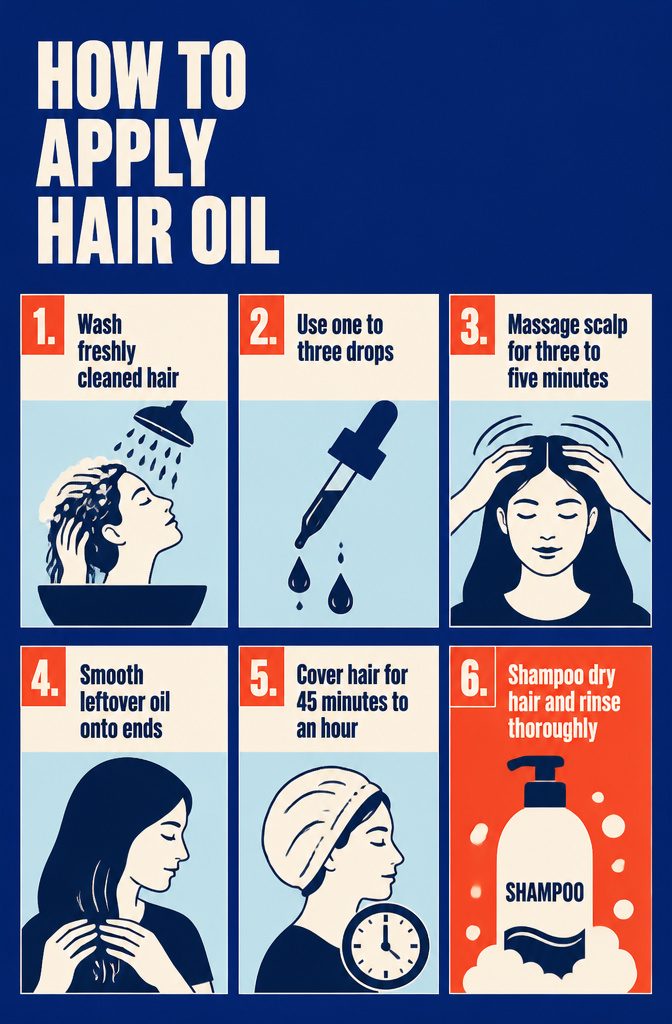
- Start with clean, freshly washed hair. A clean scalp lets the oil’s nutrients sink in without sitting on top of buildup or clogged pores.
- Use one to three drops and no more, especially if your hair is fine or thin. A pea-sized amount is enough for most people.
- Massage the oil into your scalp with your fingertips using a circular motion. Start at the nape of the neck and work upward toward the crown, then from the base of each ear toward the top. The massage itself takes three to five minutes to cover the whole scalp.
- Apply leftover oil from your palms to the ends of your hair rather than piling more onto your scalp.
- Cover your hair with a towel or shower cap and leave the oil on for 45 minutes to an hour. Some sources recommend leaving it overnight for deeper hydration.
- Shampoo while your hair is still dry, then rinse thoroughly. You may need two washes to get all the oil out. Condition as usual.
5. How Often and How Long
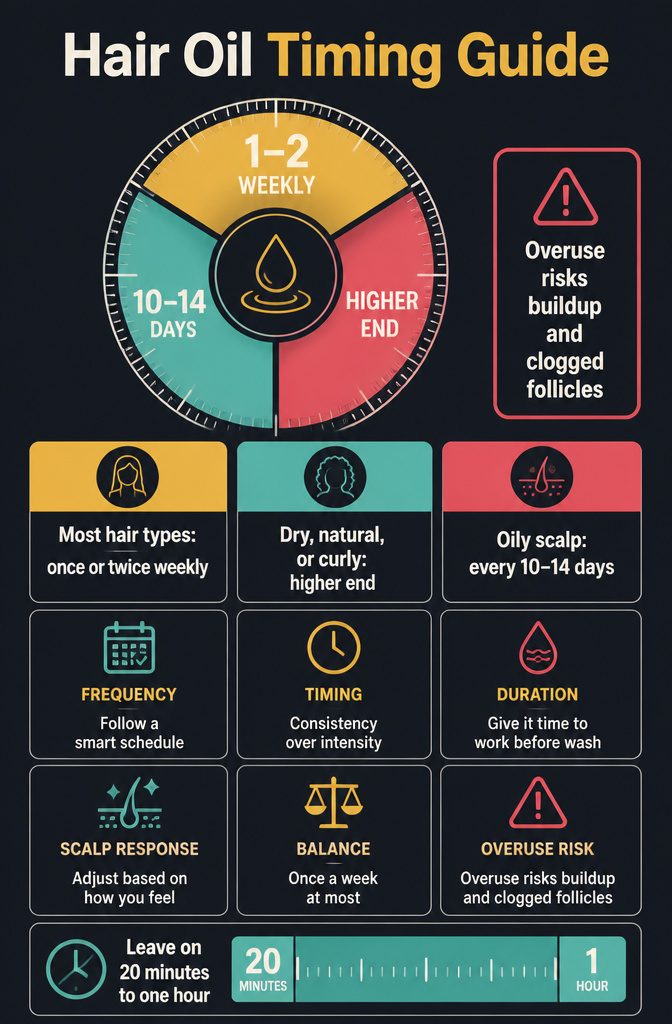
Most hair types do best with scalp oil once or twice a week. Dry, natural, or curly hair can take it at the higher end of that range, since the extra moisture helps keep frizz and breakage in check.
If your scalp leans oily, pull back to every 10–14 days so you don’t tip into greasy territory.
Consumers tend to overuse hair oiling, thinking if a little is good, a lot is better. This thinking will lead to clogged follicles, which can lead to hair loss if it’s prolonged.
— Allure
Overdo it and you risk buildup that works against you. Once a week at most keeps things balanced.
Timing matters too. Leave the oil on for 20 minutes to an hour before you wash, or go longer if your schedule allows.
Some people oil overnight, though a shorter window still pulls plenty of benefit. Pay attention to how your scalp feels after a session.
If your hair goes flat or greasy, scale back the frequency. If dryness persists, add another round each week.
6. Potential Downsides
Potential Downsides
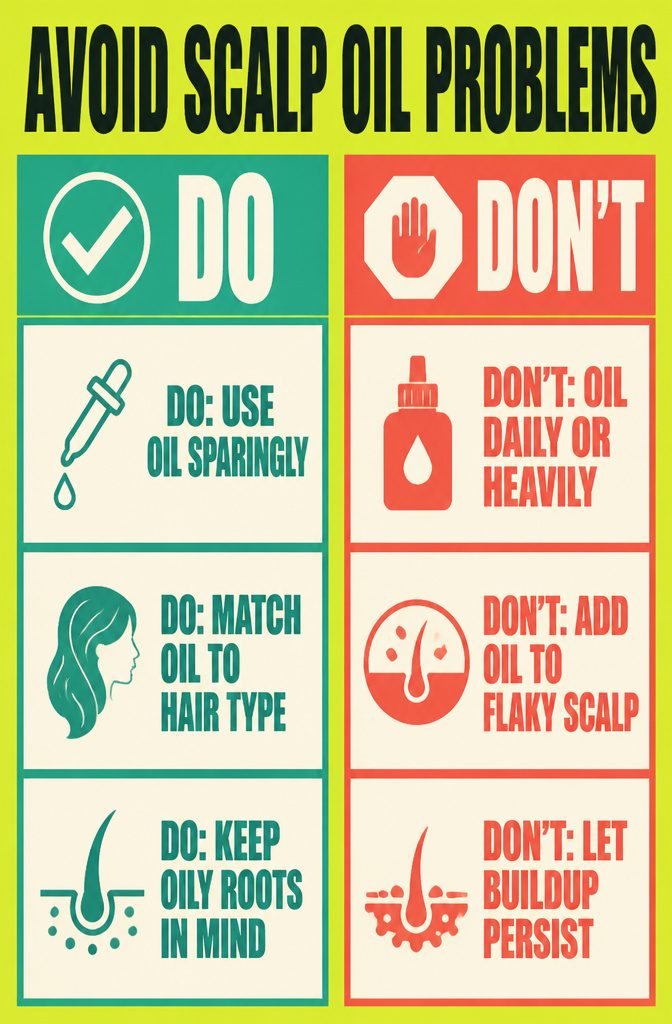
Scalp oiling can backfire when you use too much or choose the wrong oil for your hair type:
- Clogged follicles and buildup. Oil traps sebum, sweat and styling product residue on the scalp. Over time, that buildup can clog pores, irritate the skin and may contribute to hair loss if it goes on too long.
- Greasy, weighed-down hair. Daily oiling or heavy application throws off your scalp’s natural oil balance, especially if you already have oily roots. Fine, straight hair shows this most.
- Worsened dandruff. Excess oil feeds the fungus that causes dandruff. If you’re prone to flaking or seborrheic dermatitis, adding oil directly to the scalp can make it worse instead of better.
Scalp Oil Against Scalp Serum
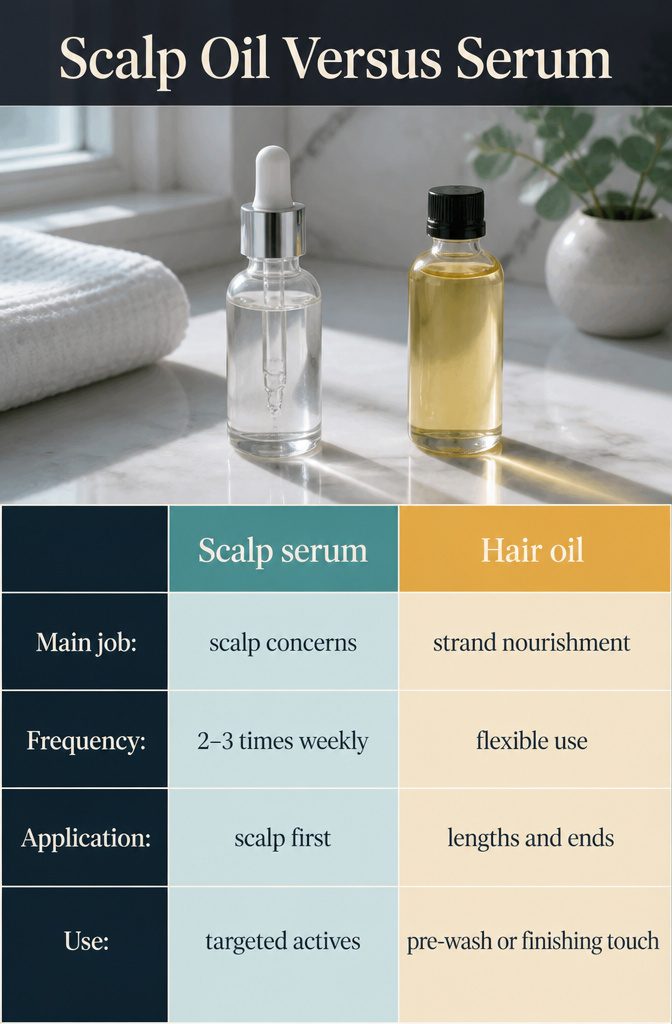
Scalp serum targets concerns such as flakes, oiliness, and thinning, while hair oil mainly nourishes strands.
That difference in job makes them easy to layer. When I use both, I apply serum to the scalp first so it can absorb, then work oil through the lengths and ends where dryness shows up.
Frequency shifts between the two. Most scalp serums work best 2–3 times per week, especially the actives meant to calm irritation or support growth.
Hair oil is more flexible. You can use it as a pre-wash treatment when buildup needs clearing or as a light finishing touch whenever ends feel rough.
Adjust based on how quickly your scalp produces oil and how much your hair drinks up moisture. I find pre-wash oil more forgiving than daily application, which can weigh down finer hair types fast.
Hair-Growth Evidence and Caution
Vitamin E shows some promise for hair count: oral supplementation produced a 34.5 percent increase in hair growth after eight months in one study, though topical application may work very differently.
Castor oil carries almost no credible backing for growth claims, and rosemary oil remains promising but not fully proven.
If thinning is the concern, a scalp serum tends to beat oil because it delivers active ingredients that target follicles directly, while oil mostly protects and nourishes the strand itself.
One real risk: seborrheic dermatitis. Oiling the scalp too often or too heavily can feed the fungus that causes dandruff, turning a treatment into a trigger.
If flaking or irritation shows up after regular scalp oiling, pull back on frequency or switch to a targeted serum instead.
Product Recommendations by Use
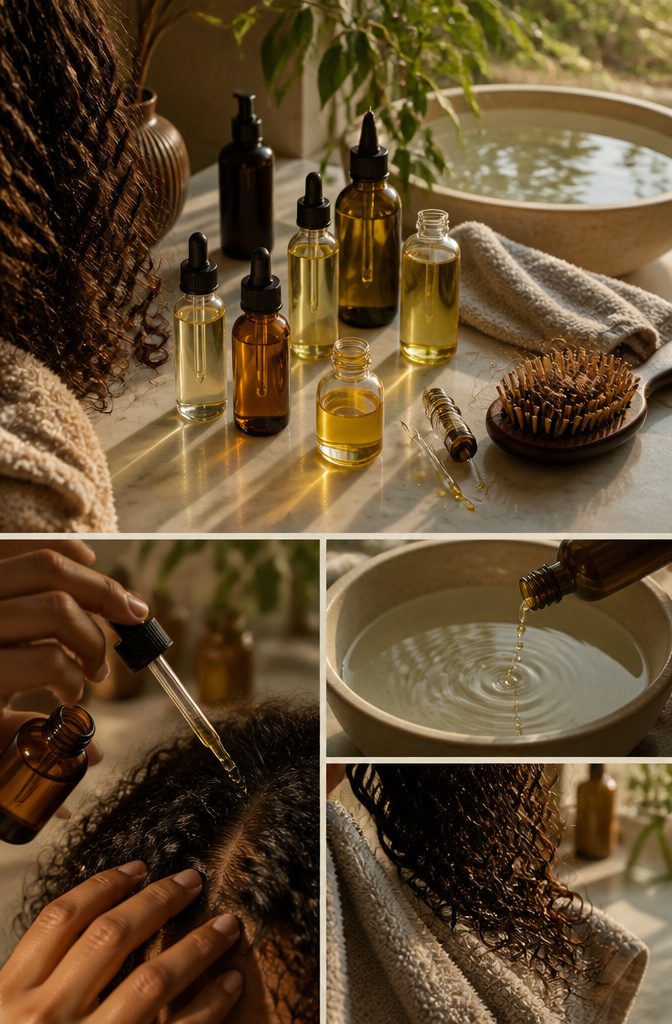
Here are the scalp oils I reach for by concern:
- SheaMoisture Wig & Weave Scalp Soother ($10) for flakes. Affordable and formulated to calm irritation under wigs or extensions, but works just as well on a natural scalp.
- Pattern Beauty Jojoba Oil Blend ($28) for curls. Jojoba mimics sebum, so it moisturizes without weighing down coils or disrupting curl definition.
- Moroccanoil Dry Scalp Treatment ($40) when dryness is the main issue. Apply before washing to hydrate without leaving residue.
- Act + Acre Cold Processed Scalp Detox ($48) for buildup. Wait 20 minutes before rinsing to let the oil lift product residue and dead skin.
- Rahua Elixir ($176) for shine or overnight repair. Warm one to three drops between your palms for a finishing gloss, or use a full dropper as a pre-wash treatment when your hair needs more.
- Aesop Sage and Cedar Scalp Treatment ($37) works as a pre-shampoo up to three times a week. Brush your hair first so the cedarwood bark oil and rosemary can loosen dirt before you rinse.
Frequently Asked Questions
What oil is good for hair scalp?
Jojoba oil works well for most scalp needs because it absorbs easily, mimics natural sebum, and helps with dandruff without weighing hair down.
Tea tree oil decongests and calms inflammation for dry or flaky scalps, while coconut and argan oils repair damaged hair with protein and vitamin E. Lighter oils like grapeseed suit fine hair, while heavier options like castor or avocado oil work for coarse or curly textures.
Is it good to put hair oil on your scalp?
Oil helps when your scalp runs dry or your hair feels coarse, and massaging it in may support growth by increasing blood flow to follicles.
Too much oil clogs pores, traps sebum and product residue, and can feed the fungus that causes dandruff. If your scalp is already oily or you struggle with flaking, skip scalp oiling or cut back to once every 10 to 14 days.
What oils should not be used on the scalp?
Skip mineral oil and heavy comedogenic oils like olive oil, which leave buildup and clog pores. Avoid applying coconut oil if your hair is fine or your scalp is already oily, since the weight can flatten strands and trap residue.
Essential oils like tea tree, rosemary, or peppermint need dilution in a carrier oil before you apply them directly to the scalp.
How often should you oil your scalp?
Once or twice a week works for most people, with dry or curly hair leaning toward the higher end and oily scalps sticking to every 10 to 14 days.
Overdoing it clogs follicles and can contribute to hair loss if it goes on too long. Leave the oil on for 20 minutes to an hour before washing, or longer if your schedule allows and your hair needs deeper hydration.
Does scalp oiling actually work?
Massaging oil into the scalp adds moisture, softens coarse hair, and increases blood flow, which may modestly support growth.
The friction of the massage matters as much as the oil itself. Overuse backfires by clogging follicles and trapping buildup, which can irritate the scalp and may contribute to hair loss if prolonged.
What is the best oil for dry scalp and dandruff?
Tea tree oil calms inflammation and inhibits fungal growth, which helps with dry scalp paired with dandruff when diluted properly.
Jojoba oil mimics natural sebum and moisturizes without clogging pores, making it another solid choice. Proceed carefully, since excess oil feeds the fungus that causes flaking and can make dandruff worse instead of better.
Can I use scalp oils every day if I have an oily scalp?
Daily use is not recommended. Applying oil too often clogs follicles and builds up excess sebum, especially when your scalp already produces oil naturally.
Use a lightweight option like grapeseed or tea tree oil once or twice a week at most, or pull back to every 10 to 14 days and watch how your scalp responds.
What’s the difference between essential oils and carrier oils in hair care?
Essential oils like rosemary, peppermint, and lavender are concentrated plant extracts that need dilution before use.
Carrier oils like jojoba, almond, and argan dilute essential oils while adding moisture and nourishment on their own. Using both together delivers the benefits of essential oils without irritating the scalp.
Is it better to oil my scalp before or after shampooing?
Before shampooing works best for most people, since the oil breaks down buildup, hydrates the scalp, and protects strands during the wash.
Applying oil after shampooing can help dry ends, but avoid putting heavy oils directly on the scalp post-wash because they weigh hair down and attract dirt. Shampoo while your hair is still dry after oiling, then rinse thoroughly.
Can scalp oils help with postpartum hair loss?
Scalp oils may support recovery by improving circulation and reducing dryness, creating a healthier environment for regrowth. Oils rich in nutrients like castor, rosemary, or argan can nourish the scalp and encourage baby hairs to grow back when used consistently.
They do not stop hormonal hair loss itself, but they help support scalp condition during the regrowth phase.
What oils are best for people with sensitive or inflamed scalp?
Diluted jojoba, lavender, or calendula-infused oil work well for sensitive or inflamed scalps because they soothe without clogging pores.
Patch test any new oil on a small area first to check for irritation. Lighter options absorb more easily and reduce the risk of buildup that can worsen inflammation.
Can I use scalp serum and hair oil together?
You can layer both as long as serum goes on the scalp first and oil stays on the strands.
Apply the serum so it can absorb and target follicles, then work oil through the lengths and ends where dryness shows up. The difference in job makes them easy to use together without interfering.
How often should I apply scalp serum vs hair oil?
Most scalp serums work best 2 to 3 times per week, especially actives meant to calm irritation or support growth.
Hair oil is more flexible: use it as a pre-wash treatment when buildup needs clearing or as a light finishing touch whenever ends feel rough.
Adjust based on how quickly your scalp produces oil and how much moisture your hair needs.
Which is better for hair growth: scalp serum or hair oil?
Scalp serum is more effective for stimulating growth because it contains active ingredients that target follicles directly.
Hair oil mainly protects and nourishes the strand itself rather than prompting new growth. If thinning is the concern, reach for a serum over oil.
Can hair oil clog the scalp?
Too much oil directly on the scalp can clog pores and cause buildup by trapping sebum, sweat, and styling product residue.
Over time, that buildup may irritate the skin and can contribute to hair loss if it goes on too long. Light application and proper frequency matter more than the type of oil you choose.