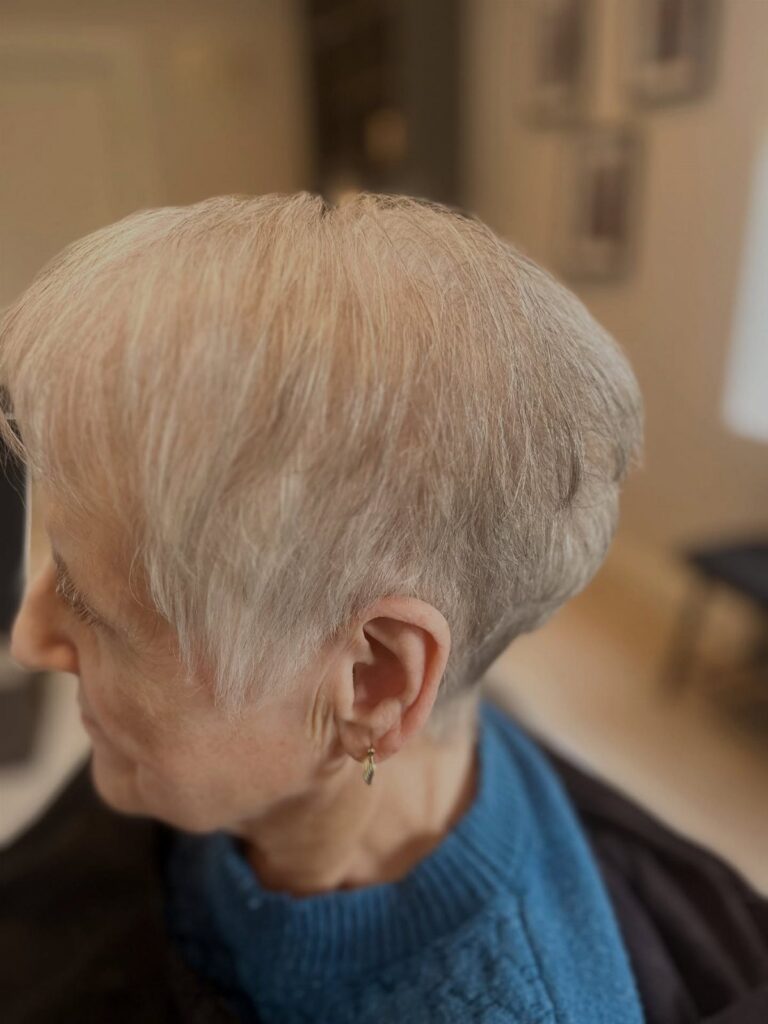
The cuts here range from a textured crop and tapered pixie that keeps the top long for styling room to bobs with highlights placed to add depth as roots grow in.
The choice turns on how often you can get back for a trim: a wedge or pixie flattens faster and needs more frequent maintenance to hold its stacked shape, while a bob stretches longer between cuts.
1. Textured Crop
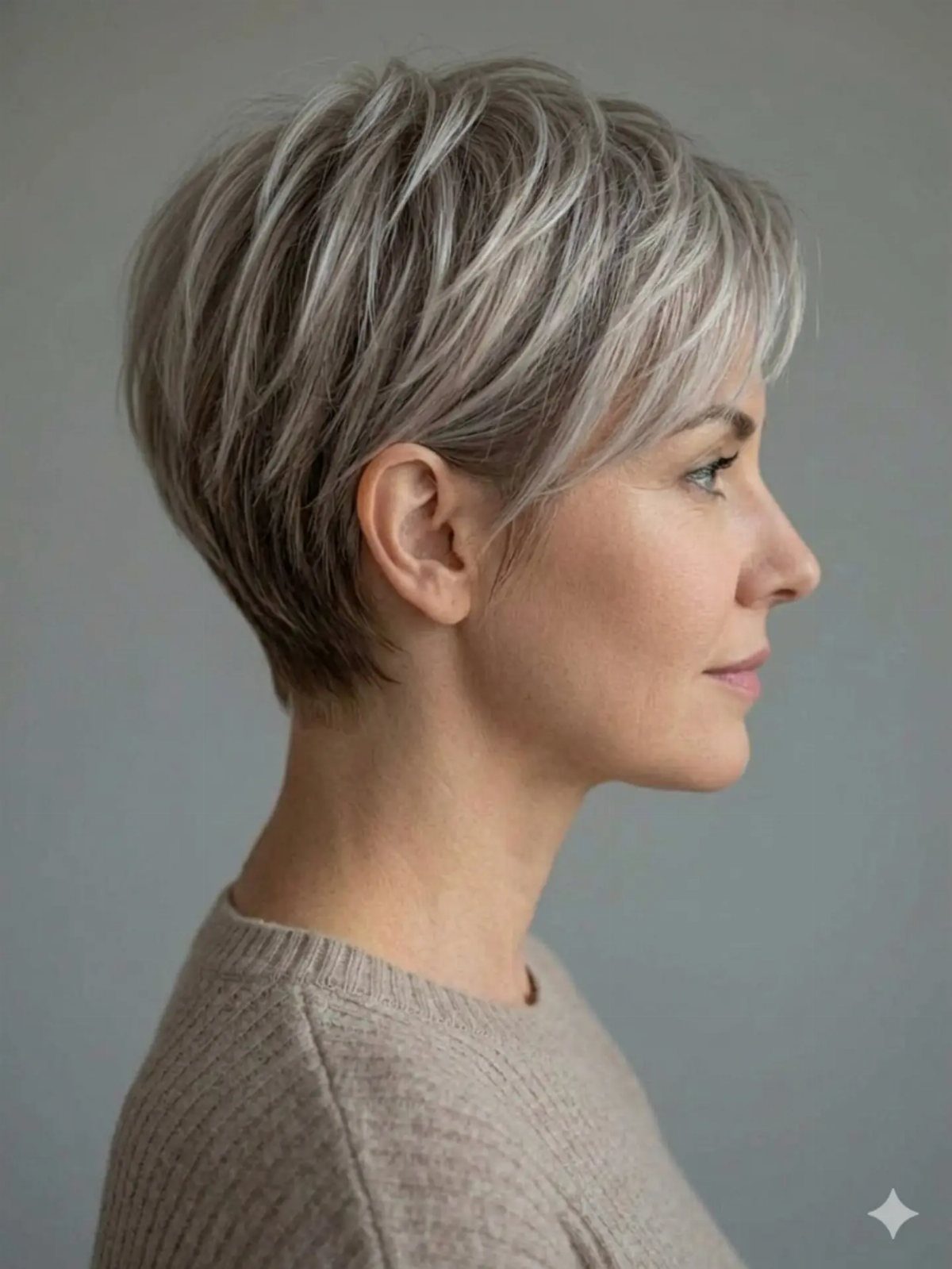
The top sits longer and the sides trim close, with texture cut in throughout. That difference in length adds lift where thinning hair needs it most.
Ask for short sides and back with enough length on top for texture, then have your stylist point-cut or razor the ends to break up any flat weight. The varied lengths catch light and read as fuller.
Mousse or texturizing spray at the roots gives the lift time to hold. I find this cut works best when hair has some natural wave or bend to start with.
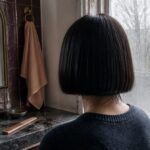
2. Salt and Pepper Bob
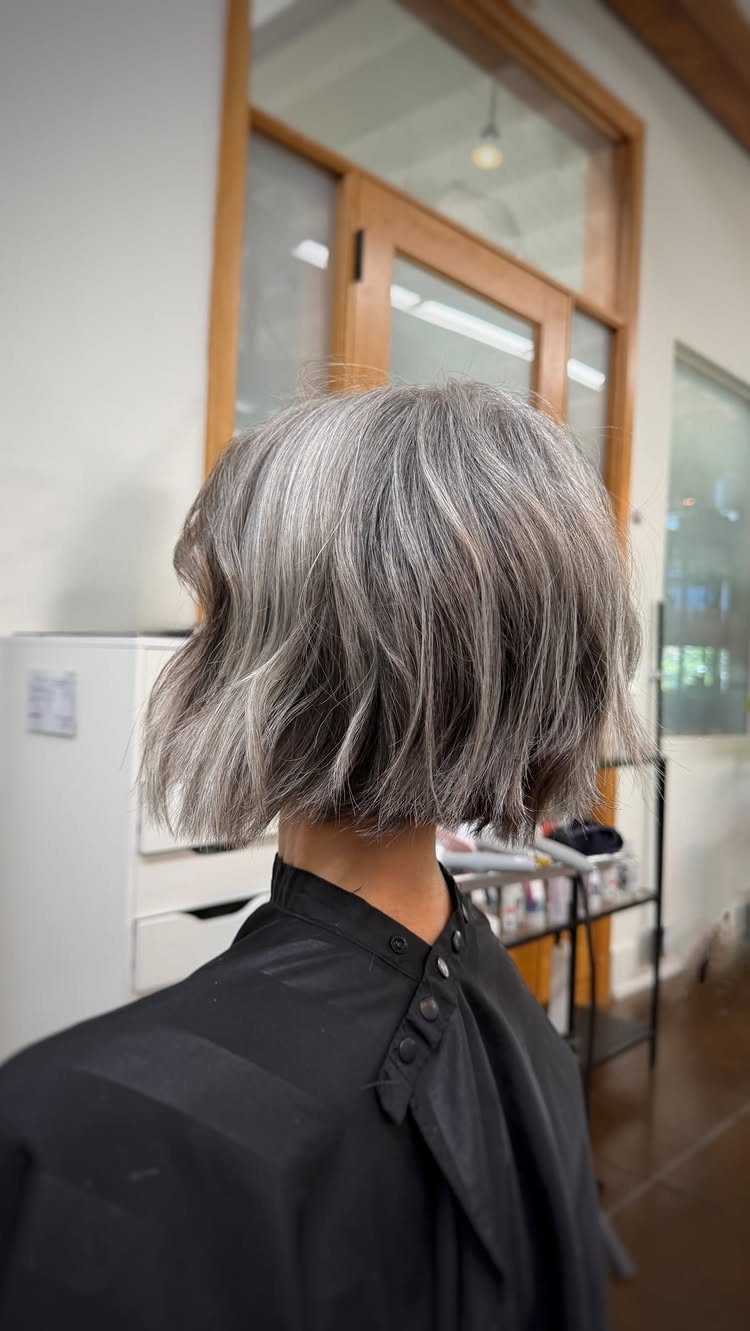
This bob sits just below the ear and keeps the natural mix of gray and darker tones instead of covering it. The length falls blunt at the bottom, and the waves add body that fine hair often needs.
If your color is already transitioning, this cut shows it off without extra appointments. The wave can come from your own texture or from a large-barrel curling iron used loosely through the ends.
I like this option when someone wants a polished look that still feels easy. A light styling cream smooths frizz without flattening the wave.
3. Strawberry Blonde Bob
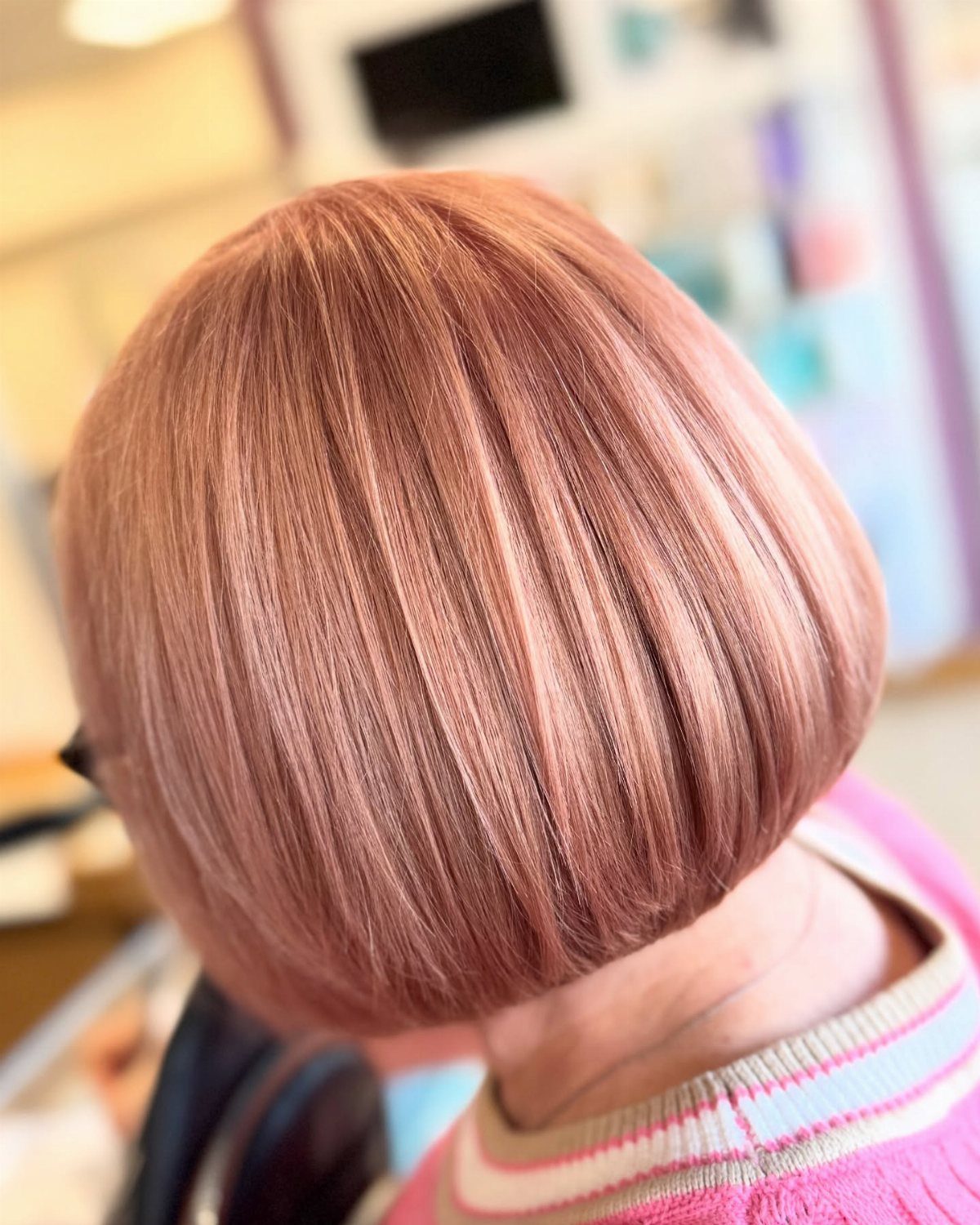
The color sits between blonde and red, warmed with dimensional highlights that add depth and movement. The cut holds a blunt edge, which gives the style clean definition and makes each strand count.
Strawberry blonde works well on lighter skin tones and covers gray while still reading as natural. The highlights sit a shade or two lighter than the base, placed around the face and through the mid-lengths.
This cut air-dries with body if you scrunch in mousse while damp. A blow-dry with a round brush gives more polish when you want it.
4. Wedge Cut
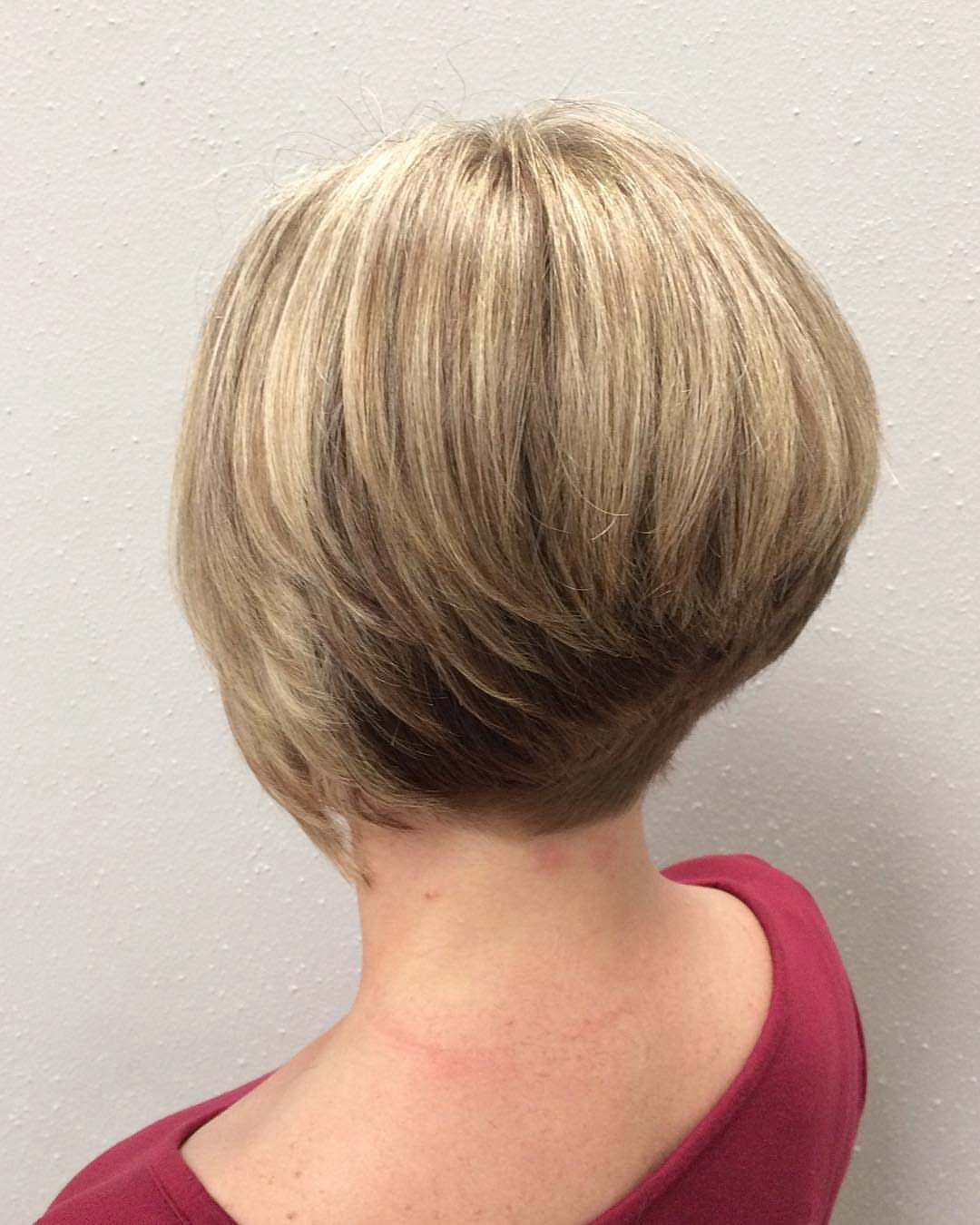
The back stacks in short, graduated layers that create height at the crown, then the sides angle down toward the face. That shape lifts the back and frames the front without extra styling.
The wedge suits fine hair because the stacked layers build density where it shows most. Your stylist cuts the back shorter and layers it upward, then leaves the front longer to soften the face.
I think this cut looks best on someone comfortable with regular trims. The stack grows out quickly, and the shape flattens without that upkeep.
5. Pixie with Tapered Sides
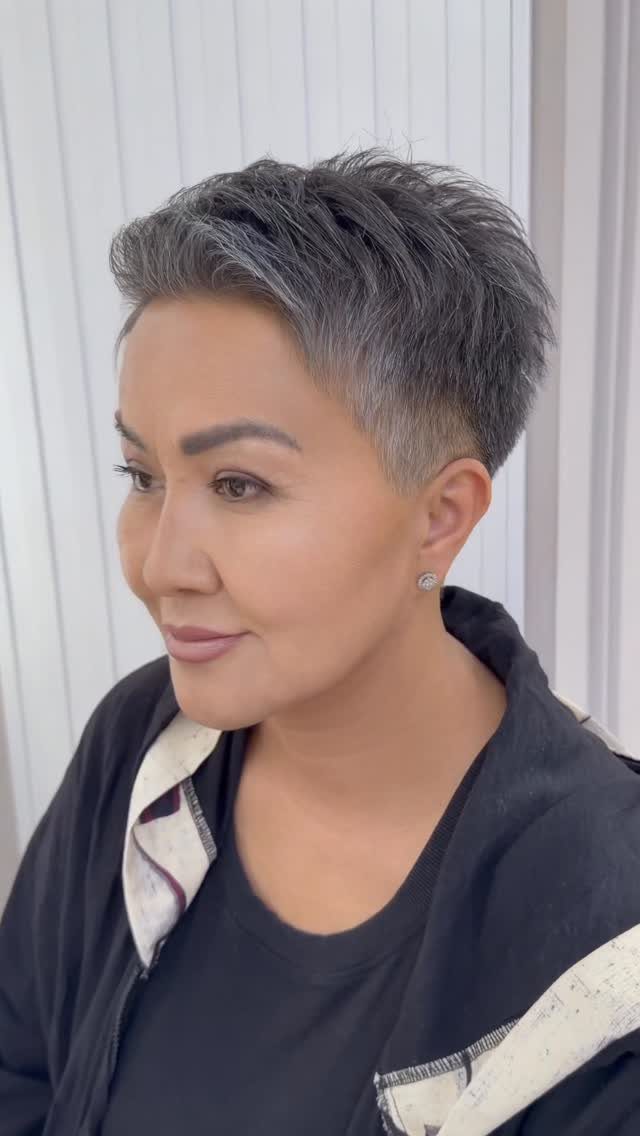
The sides taper in close while the top keeps its length and texture. That contrast makes the top read as fuller and gives you room to style it forward or to the side.
Ask for a tapered fade on the sides and back, then leave length on top with point-cutting or texturizing shears to remove bulk. The longer top can sweep across or stand up with pomade or paste.
This cut grows out cleanly if you keep the sides trimmed. I find it suits someone who wants a polished shape that still feels low-effort.
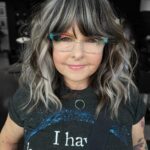
6. Short Wavy Silver Cut
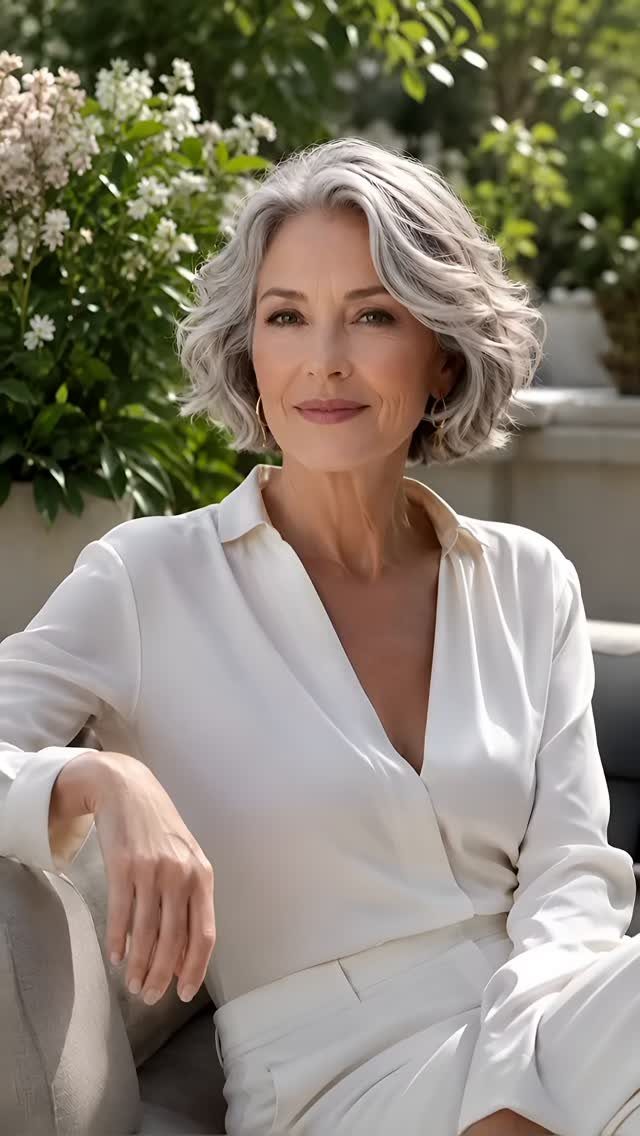
The silver-gray color stays natural, and the waves add soft body without sharp curl. The length sits just above the shoulders, long enough to move but short enough to feel light.
This style works when your hair already has some wave or when you set it with large rollers or a curling wand. The texture makes thinning hair look fuller because the wave creates space and lift.
A lightweight mousse or sea salt spray enhances the wave without weighing it down.
7. Layered Bob with Highlights
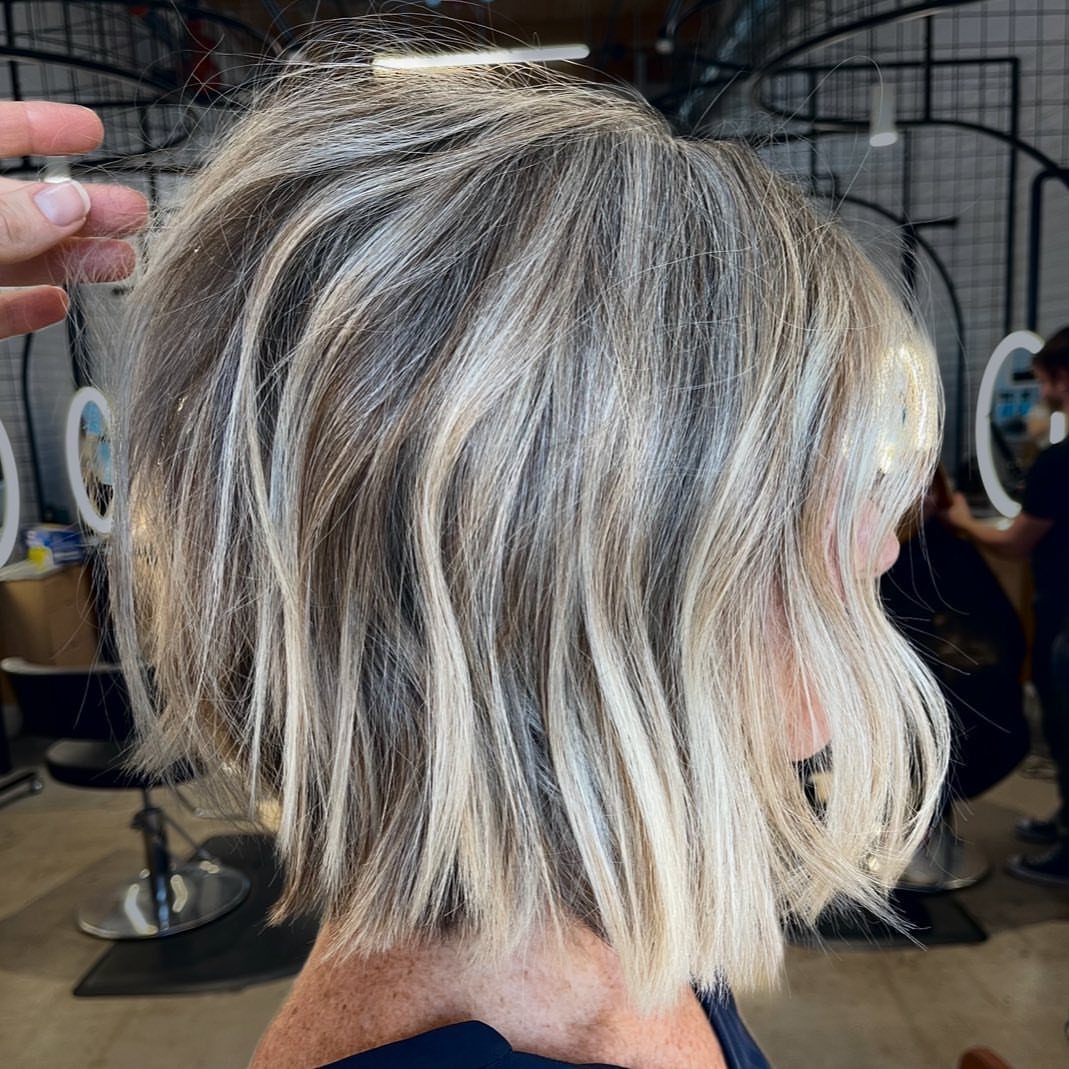
The layers sit shorter at the back and longer toward the front, and the blonde and grey highlights place dimension through the cut. That layering makes fine hair read as thicker because the varied lengths create movement.
The highlights sit a few shades apart, which adds depth without a hard line as roots grow in. I like this option when someone wants color that feels soft and grows out gracefully.
A round brush and blow-dryer lift the roots and smooth the ends. The layers mean less weight pulling the hair flat.
8. Short Wavy Bob
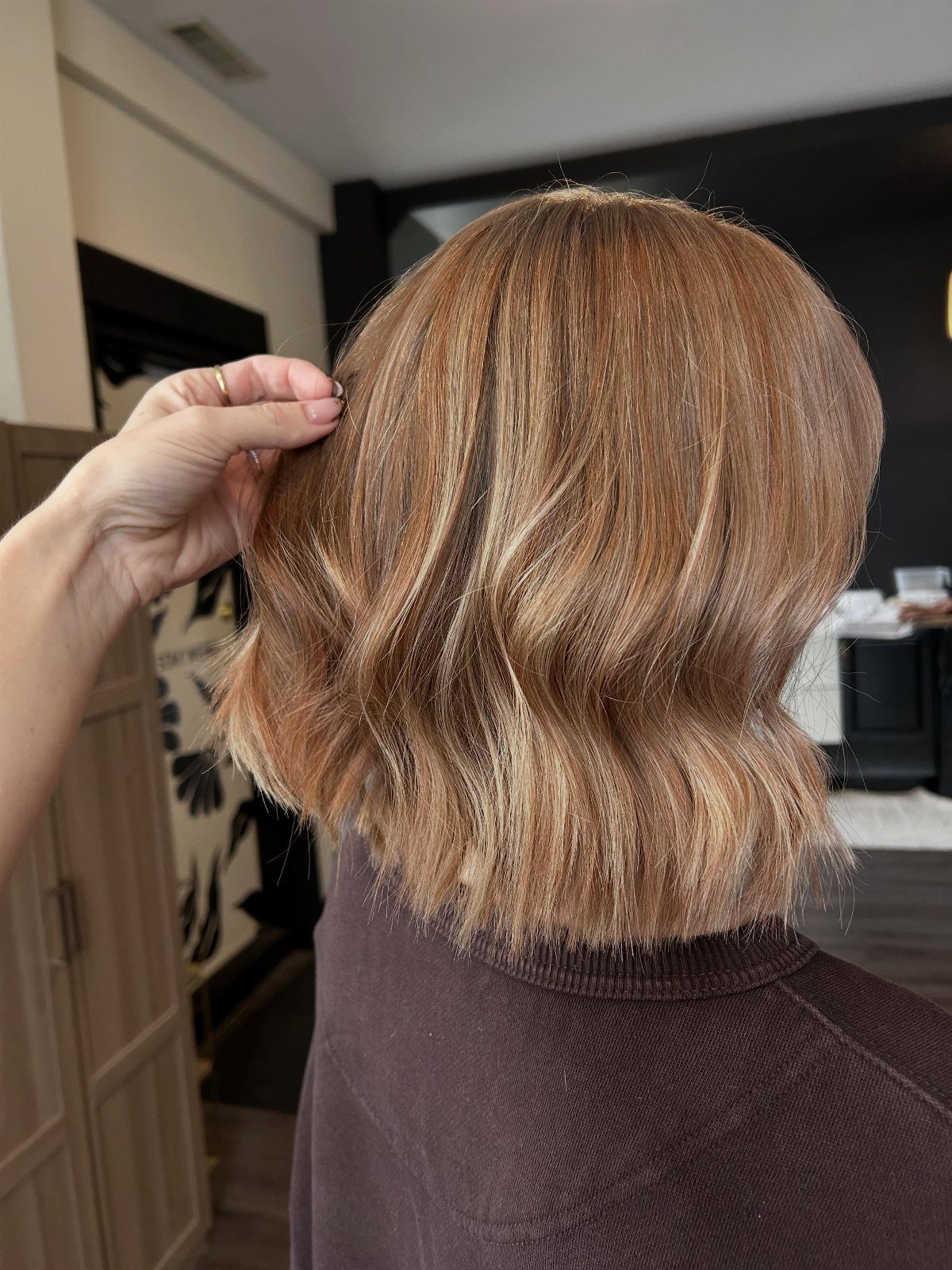
Layers cut through the back add texture, and the wave gives body that thinning hair often lacks. It lands above the shoulders, so fine hair gets lift without losing the body a wave needs.
The texture can come from natural wave or from a curling iron with a larger barrel, wrapped loosely and brushed out. A texturizing spray or light mousse holds the shape without stiffness.
This cut suits someone who wants a relaxed look that still reads as put together. The wave hides any unevenness in density better than a blunt line would.
9. Short Angled Bob
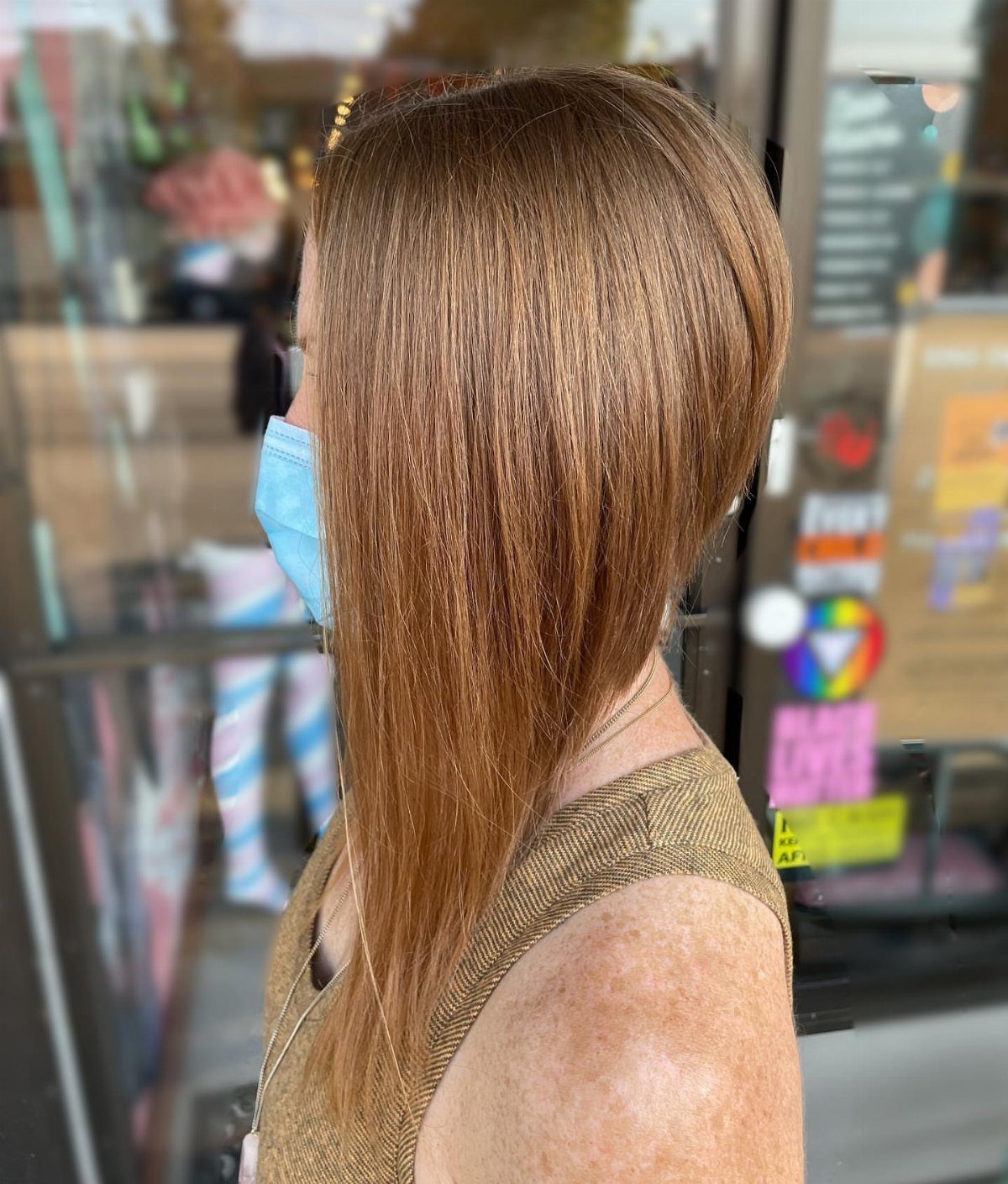
The front edge sits longer than the back, which angles upward and frames the face while keeping the nape short. That diagonal line draws attention forward and adds structure.
The angle works well on fine hair because it concentrates the length where it shows. Your stylist cuts the back short, then graduates the sides forward to the longest point near the chin.
I round-brush it while drying, pulling tension through the ends and directing the airflow up at the roots. The angle grows out more evenly than a blunt bob, so trims can stretch a bit longer.
Lightweight Volume Products
Rice protein, panthenol and biotin add body without weight, and you find them in most volumizing mousses and root sprays made for fine hair.
Rice protein swells the hair shaft slightly, which makes each strand read as thicker. Panthenol keeps hair flexible while it lifts, and biotin supports the follicle over time.
Niacinamide in a scalp treatment improves circulation, which matters when thinning starts at the root. Hydrolyzed wheat protein or keratin fills in gaps along the strand, so hair looks smoother and fuller after styling.
Skip thick oils like coconut and shea butter, which weigh fine hair down. They sit on fine hair and flatten it.
Non-water-soluble silicones, including dimethicone, build up and weigh hair down after a few washes. Sulfates strip the scalp, which leaves fine hair even more fragile than it started.
Care and Styling Cautions
Short cuts show every uneven edge, so trims matter more than they do with length.
A lob holds its shape for 3 to 4 months before it needs another cut, while a stacked wedge or pixie flattens faster and asks for touch-ups closer together.
Fine hair dries out easily, so I use a wide-tooth comb and rinse with cool water after conditioning. Sulfate-free shampoo keeps protein in the strand, and a silk scarf at night reduces friction that breaks hair while you sleep.
A ceramic flat iron directs heat evenly and causes less damage than older tools. Silicone-free formulas let hair move instead of sitting rigid.
Color and Scalp Contrast
Coloring hair close to your scalp tone reduces the contrast where skin shows through, which makes thinning less visible. That approach works best with short cuts, where the scalp sits closer to the surface and any color difference reads quickly.
Adding subtle color variation to short hairstyles catches light and makes fine hair look fuller because the eye reads movement instead of flat color.
The lighter pieces sit 1 or 2 shades above the base, which keeps the effect soft and grows out without a hard line.
Look to techniques such as highlights and balayage to add depth and movement to your locks. This can instantly give your hair the appearance of being fuller, which is especially useful if you find your hair is thinning.
Frequently Asked Questions
What are some good short haircuts for older women with fine hair?
A textured crop, pixie with tapered sides, or angled bob all add lift where fine hair needs it most. The cuts use short sides and layered or point-cut tops to create movement and make each strand read as fuller.
Wedge cuts and layered bobs also work well because they concentrate length at the crown or around the face while removing weight that pulls hair flat.
What not to do with fine, thin hair?
Ingredients that coat the strand or strip the scalp do more harm than good: coconut oil, shea butter, dimethicone and sulfates all land on my no list.
These ingredients weigh fine hair down or make it more fragile. Styles pulled tight and heat tools cranked high both damage the strand where it’s already fragile.
Does thinning hair look better longer or shorter?
Shorter cuts remove the weight that pulls thinning hair flat and make it easier to add lift at the roots.
Short styles also concentrate length where it shows most, around the face and crown, instead of spreading thin density over more area. A short cut with layers gives fine hair movement, and movement is what the eye reads as density.
Why are short hairstyles great for thin hair over 60?
Short cuts remove the weight that flattens thin hair and make it easier to build volume with layers or texture.
They take less time to style and hold their shape longer through the day. A well-cut short style also frames the face and draws attention forward instead of to sparse areas.
What ingredients should you look for in products for fine hair?
Rice protein, panthenol, biotin, niacinamide, and hydrolyzed wheat protein or keratin all add body without weight. These ingredients make each strand read as thicker without sitting heavy on fine hair.
Can you add bangs to short fine hairstyles?
Wispy, side-swept, or curtain bangs work well because they blend into short layers and add softness without weight.
Heavy bangs sit flat and call attention to the scalp behind them. I style bangs with a round brush at the root and a volumizing spray while the hair is still damp.
Can you improve the thickness of fine hair over time?
Strand size stays the same, but scalp care, a nutrient-rich diet, and avoiding heat damage can support overall hair health and density.
Daily scalp massage increases blood flow to the follicle, and leave-in formulas with panthenol or peptides thicken the appearance of each strand. If hair loss is progressing, ask your doctor whether minoxidil makes sense for you.