The hair growth cycle is the sequence of four phases every follicle moves through, from active growth to shedding, before starting over.
Each phase runs on its own timeline, which is why your scalp sheds 50 to 150 hairs a day without going bald.
Scalp hair spends 2 to 7 years in the growth phase alone, while a follicle rests for only 2 to 4 months before the next cycle begins.
Anagen: The Active Growth Phase
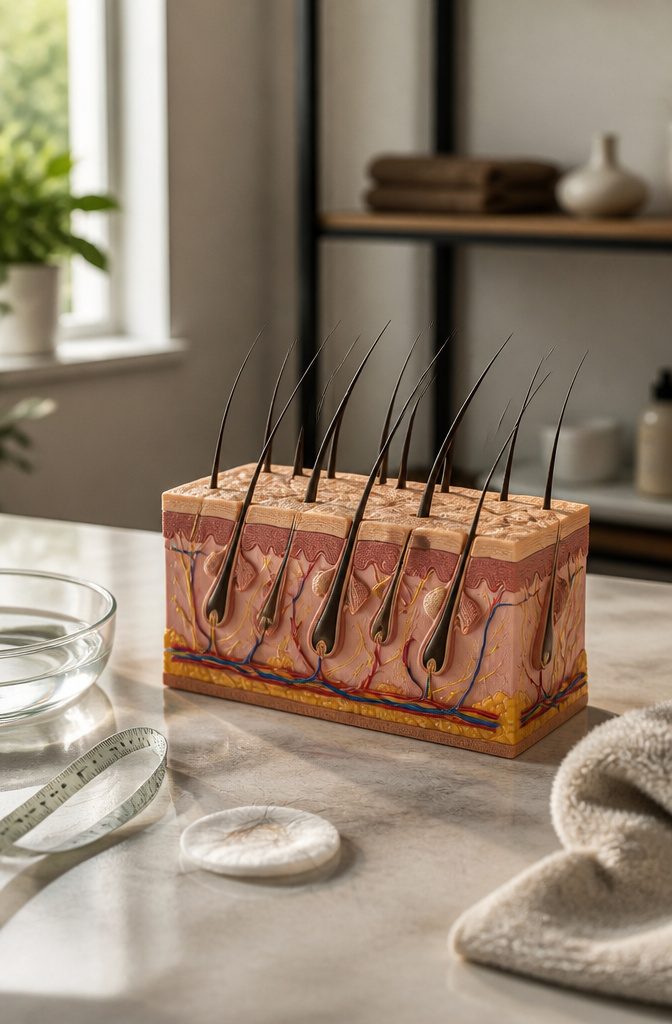
Anagen is the phase during which the follicle actively produces the hair shaft, and it runs far longer than the others.
For scalp hair, anagen lasts between 2 and 7 years, with some sources extending the upper bound to 8. Specifically, the phase averages around 3 years in men and 5 years in women.
At any given moment, 85 to 90 percent of the hairs on your head are in this stage, which explains why you see so much more growth than shedding day to day.
The length of your anagen phase determines how long a strand can become before the follicle stops producing and the hair enters the next phase.
Someone with a 2-year anagen phase can grow roughly 24 centimeters before the strand plateaus, while a 7-year phase allows for 84 centimeters or more.
That difference is largely genetic, and it accounts for why two people with identical care routines end up with completely different maximum lengths.
Growth itself proceeds at about 1 centimeter per month, or 1.25 centimeters in some measurements. The follicle cells divide rapidly, the dermal papilla pulls in nutrients from the bloodstream, and the shaft lengthens until anagen ends.
Catagen: The Transition Phase
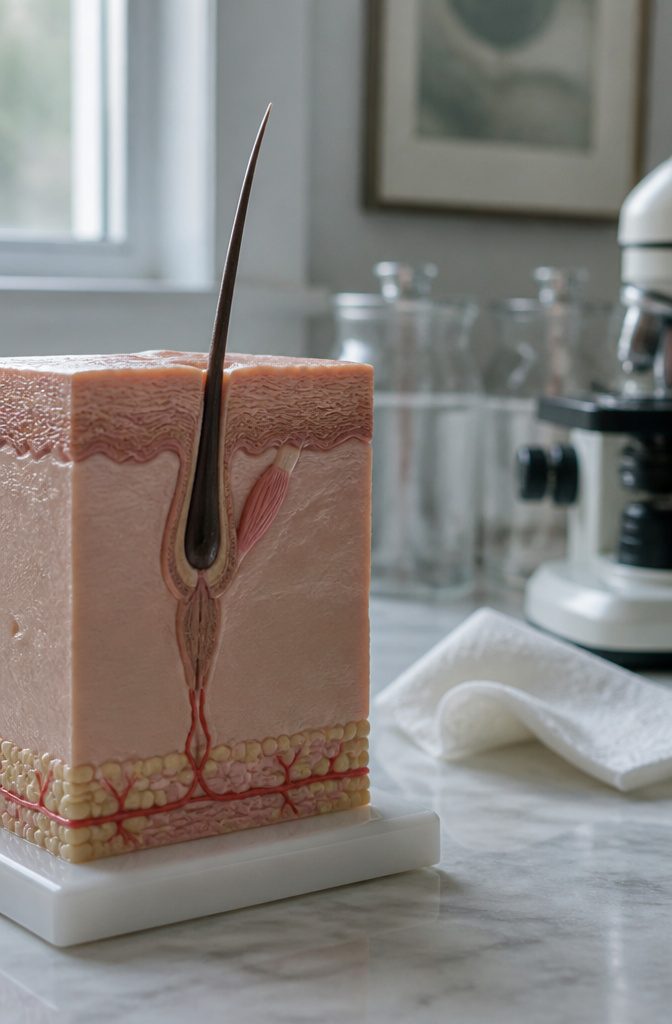
Catagen starts the minute anagen ends. Growth stops, the follicle shrinks, and the hair detaches from the blood supply that kept it alive.
The lower portion of the follicle regresses to about a sixth of its original length, and cell division in the bulb shuts down completely.
What remains is a club hair, anchored only by the outer root sheath but no longer getting longer.
The whole phase lasts 2 to 3 weeks, though some sources put it closer to 10 days.
Either way, it is brief. At any given moment, only 1 to 2 percent of the hairs on your scalp are in catagen, which is why you never notice it happening.
It is a bridge phase, marking the shift from active growth to rest, and most of your hair moves through it too quickly to register.
Telogen: The Resting Phase

During telogen, the follicle goes quiet.
The hair is fully formed and sitting in place, but no growth happens. This phase lasts 2–4 months, and at any moment roughly 10–15% of the hairs on your scalp are in it.
The hair shaft has keratinized and stopped receiving nutrients. It stays anchored as a club hair, but beneath it a new hair begins forming in the follicle that just released one during catagen.
The old hair may remain for weeks or months before the new anagen hair pushes it out.
Because telogen runs for months, anything that sends extra hairs into this phase produces shedding with a delay. A triggering event today shows up as noticeable thinning 2–4 months later.
Exogen: The Shedding Phase

Exogen is when the old hair releases from the follicle.
The duration runs 2 to 5 months, and new growth often starts underneath before the old strand falls out. Some sources treat exogen as a distinct fourth phase with its own molecular signaling, while others fold it into telogen.
The difference matters less than knowing this is the phase you see: the hairs in the brush, on the pillow, in the shower drain are all hairs that reached exogen and let go.
Washing and brushing accelerate the release of hairs already in this phase. The mechanical force dislodges strands that were ready to leave.
Normal shedding sits between 50 and 100 hairs per day, though one estimate puts it as high as 150. That spread reflects the range of what a healthy scalp does, not a problem to fix.
Why Each Follicle Runs on Its Own Schedule
Why Each Follicle Runs on Its Own Schedule
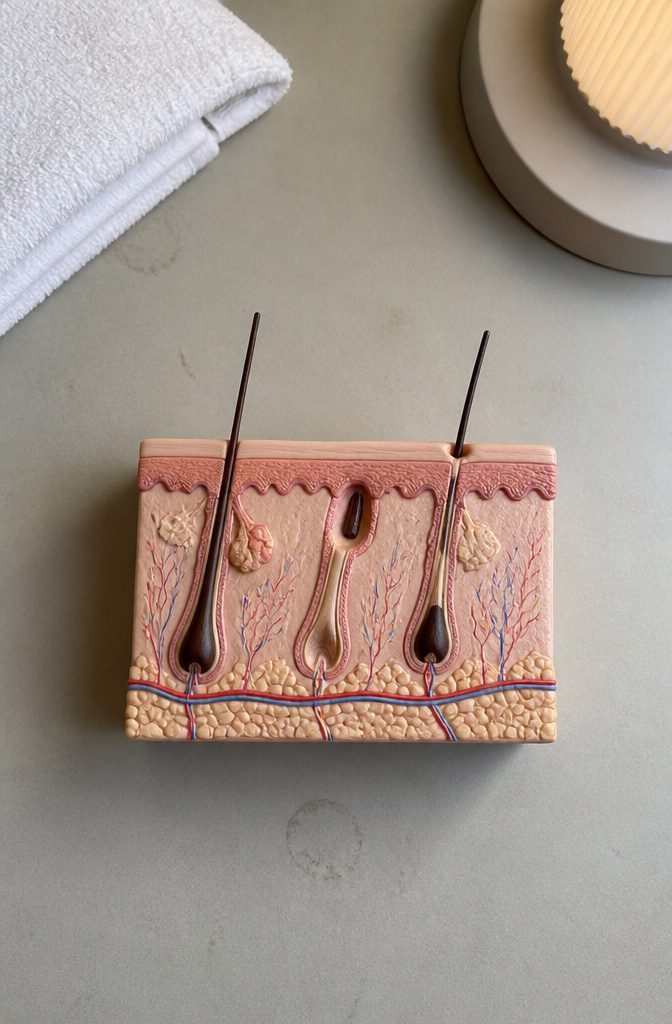
Every follicle on your scalp cycles independently. While one hair is growing, the one beside it might be resting, and another three inches away might be shedding.
At any moment, roughly 85–90% of your hairs are in active growth, 1–2% are transitioning, and 10–15% are resting or ready to fall. That staggered timing is the reason you shed 50 to 100 hairs every day without noticing gaps.
If all follicles ran on the same schedule, you would lose thousands of strands at once and spend weeks nearly bald before the next wave grew in. Instead, the independent cycles keep renewal constant.
A follicle sheds one hair, rests briefly, and starts the next strand while neighboring follicles stay in their own phases. The overlap means your scalp density holds steady even as individual hairs turn over.
How Much Daily Shedding Is Normal
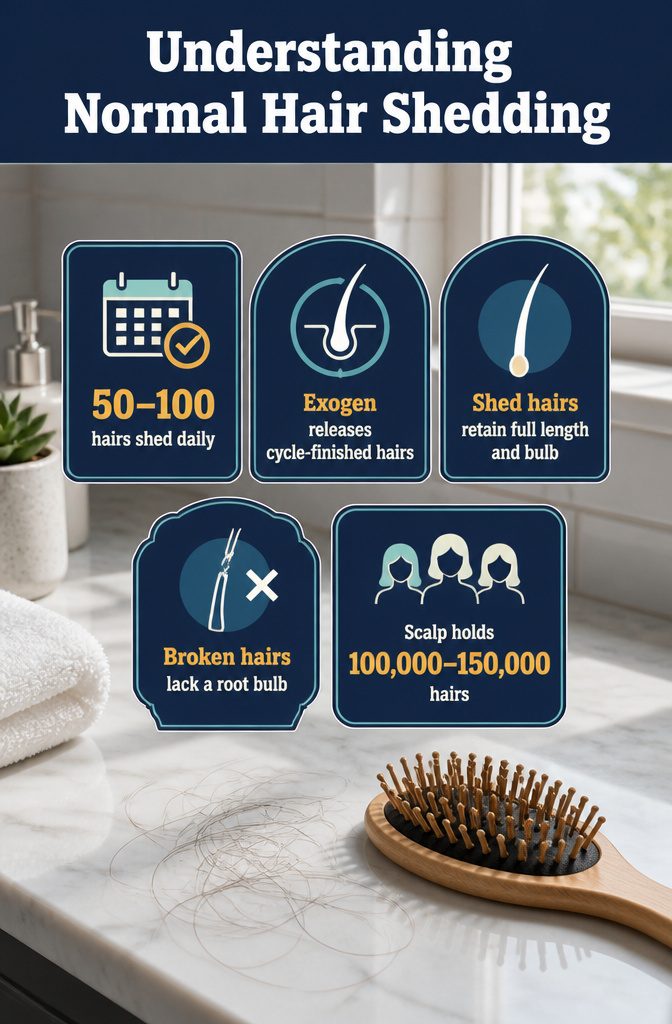
A healthy scalp sheds 50 to 100 hairs per day, though some put the range as high as 50 to 150. That is not loss.
It is renewal. The hairs coming away in your brush or the shower drain are hairs that have finished their cycle and loosened from the follicle during exogen.
Washing and brushing do not cause the shedding; they just help hairs already ready to release come away.
A shed hair runs the full length it grew and often has a small pale bulb at the root end.
A broken hair is shorter and stops mid-shaft with no bulb. Knowing which one you are seeing changes what the numbers mean.
Your scalp holds 100,000 to 150,000 hairs total, so even at the top of the daily range you are shedding a fraction of one percent. The cycle keeps replacing what it releases, and most of the time that replacement keeps pace.
What Affects How Long Each Phase Lasts
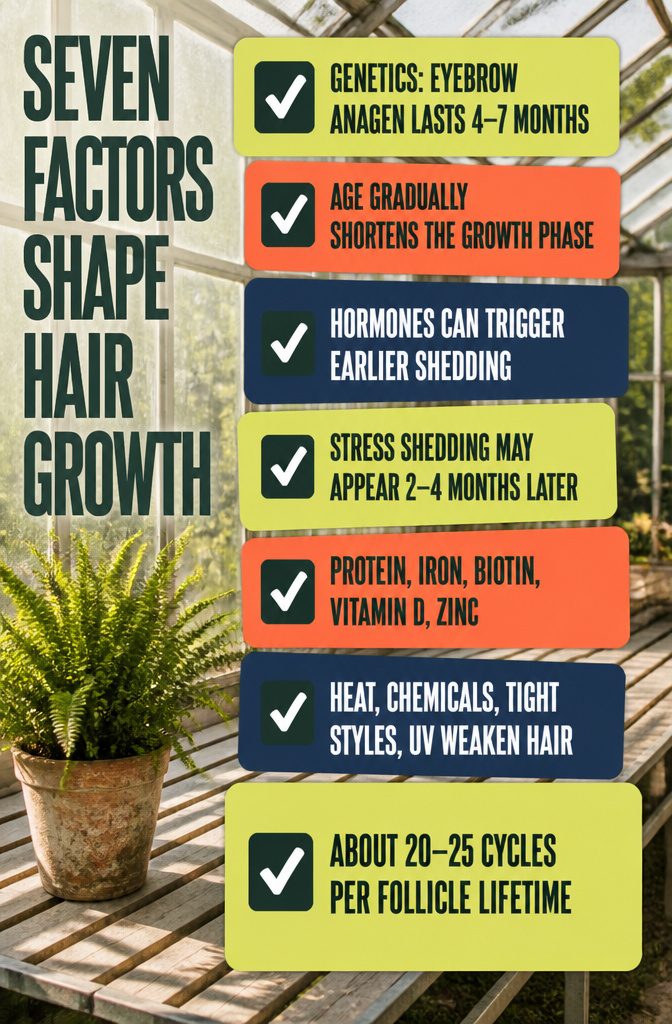
Several factors determine how long each phase lasts and how fast hair grows, and they can also shift when shedding happens:
- Genetics sets the baseline: the length of your anagen phase, your hair texture, and whether you’re likely to lose hair as you age. Eyebrow hair, for example, stays in anagen for only 4–7 months, while scalp hair can grow for years.
- Age shortens the growth phase over time. Hair grows more slowly, and fewer follicles stay active. This shift becomes more noticeable during and after menopause.
- Hormones push hair into resting or shedding phases earlier than expected. Pregnancy, menopause, thyroid disorders, and conditions like androgenetic alopecia all shorten anagen or trigger more follicles to shed at once.
- Stress disrupts the cycle in two ways. Chronic stress can cause telogen effluvium, where stress hormones push anagen hairs into telogen prematurely. Shedding appears 2–4 months after the stressful event. Acute stress can also trigger alopecia areata, an autoimmune response that attacks follicles directly.
- Nutrition affects growth rate and follicle strength. Deficiencies in protein, iron, biotin, vitamin D, or zinc can slow growth and weaken strands.
- Hair care practices damage follicles when overdone. Frequent heat styling, harsh chemical treatments, tight hairstyles, and UV exposure all weaken the hair and disrupt the cycle.
- Health conditions and medications interfere with normal phase timing. Autoimmune diseases, diabetes, and certain drugs can all affect how the cycle runs.
Each follicle goes through about 20–25 cycles in a lifetime, so anything that shortens anagen or speeds up shedding cuts into that total.
When Shedding Signals a Problem
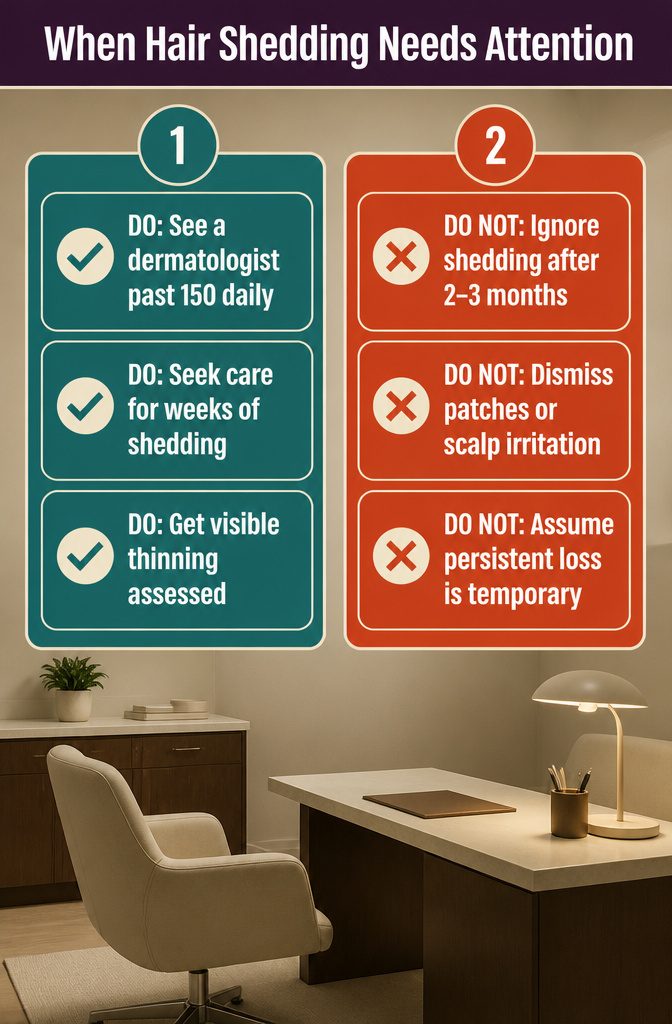
Fifty to 150 hairs leaving the scalp each day is routine shedding, the exogen phase clearing out rested hairs to make room for new ones.
Shedding that suddenly climbs past that range, lasts for weeks, or leaves visible thinning calls for a dermatologist.
The delay confuses people.
A stressor can move growing hairs into telogen early, but those hairs do not shed immediately. They rest for the full two to three months of telogen before they release.
Lose 20 pounds, run a high fever, have surgery or stop birth control pills, and the heavier shedding shows up two to three months later, long after the trigger passed.
A follicle entering catagen or telogen ahead of schedule shortens the growth phase and accelerates what looks like loss.
Telogen effluvium is the name for that pattern when stress, illness or hormonal shifts push more than ten percent of your hair into telogen at once.
It is temporary, and growth usually returns within six months. Persistent shedding, patches or scalp irritation point to something else and need a physician.
Frequently Asked Questions
What are the 4 phases of hair growth?
The 4 phases are anagen (active growth), catagen (transition), telogen (rest), and exogen (shedding).
Anagen lasts 2 to 7 years, catagen runs 2 to 3 weeks, telogen spans 2 to 4 months, and exogen takes 2 to 5 months. Each follicle cycles through these stages independently, so different hairs are in different phases at the same time.
How long does a hair growth cycle last?
A complete cycle runs anywhere from roughly 2 years to over 7 years, depending mostly on genetics.
The anagen phase accounts for most of that time, lasting 2 to 7 years, while catagen, telogen, and exogen together add only 4 to 9 months. Age, hormones, and health can shorten or lengthen each phase.
How do I know if my hair is in anagen phase?
Fine baby hairs near your scalp or hairline signal that those follicles are in active growth. At any moment, 85 to 90 percent of the hairs on your head are in anagen, so most of what you see is already growing.
Does hair fall out in cycles?
Yes. Hair sheds during exogen, the final phase of the cycle, after it has finished growing in anagen, transitioned through catagen, and rested in telogen.
A healthy scalp sheds 50 to 100 hairs per day as those hairs release and new ones start underneath.
What happens during the catagen phase?
Growth stops, the follicle shrinks to about a sixth of its original length, and the hair detaches from the blood supply. The phase lasts 2 to 3 weeks, and only 1 to 2 percent of your hairs are in it at any moment.
What percentage of hair is in the growth phase?
About 85 to 90 percent of the hairs on your scalp are in anagen, the active growth phase, at any given time. That high percentage explains why you see far more growth than shedding day to day.
Can stress affect the hair growth cycle?
Yes.
Chronic stress can push growing hairs into telogen early, a condition called telogen effluvium, and trigger heavier shedding 2 to 4 months later. Acute stress can also cause alopecia areata, an autoimmune response that attacks follicles directly.
Why does hair shed months after stress or illness?
A stressor moves hairs from anagen into telogen ahead of schedule, but those hairs don’t release right away.
They rest in telogen for 2 to 4 months before shedding during exogen, so the increased hair fall shows up long after the trigger has passed.
Is a 7-year hair cycle normal?
Yes.
Anagen can last anywhere from 2 to 7 years, with some sources extending it to 8. A 7-year growth phase is on the longer end and allows hair to reach 84 centimeters or more before the follicle stops producing.
What is the difference between catagen and telogen?
Catagen is a brief transition phase where the follicle shrinks and growth stops, lasting 2 to 3 weeks.
Telogen is the resting phase that follows, running 2 to 4 months, during which the hair stays anchored but does not grow while a new hair begins forming beneath it.