
Thinning hair responds to different tools depending on how much time you can commit and whether you want regrowth or coverage.
If the cause traces to medication, thyroid disease, low iron, or traction from tight styles, treatment changes to match it.
Layered short cuts lift fine hair away from the scalp and add volume without waiting, and wigs cover the entire head when density loss is widespread.
1. Laser Helmet

A laser helmet delivers red light directly to the scalp through built-in diodes that sit close to the follicles. The 272-count model visible here covers more area per session than lower-diode versions, which shortens treatment time.
Most helmets call for sessions every other day. Results, if they show, take months of consistent use, and stopping reverses the gains.
The upfront cost runs high, but there are no refills or repeat purchases once you own it.
2. Scalp Serum Application
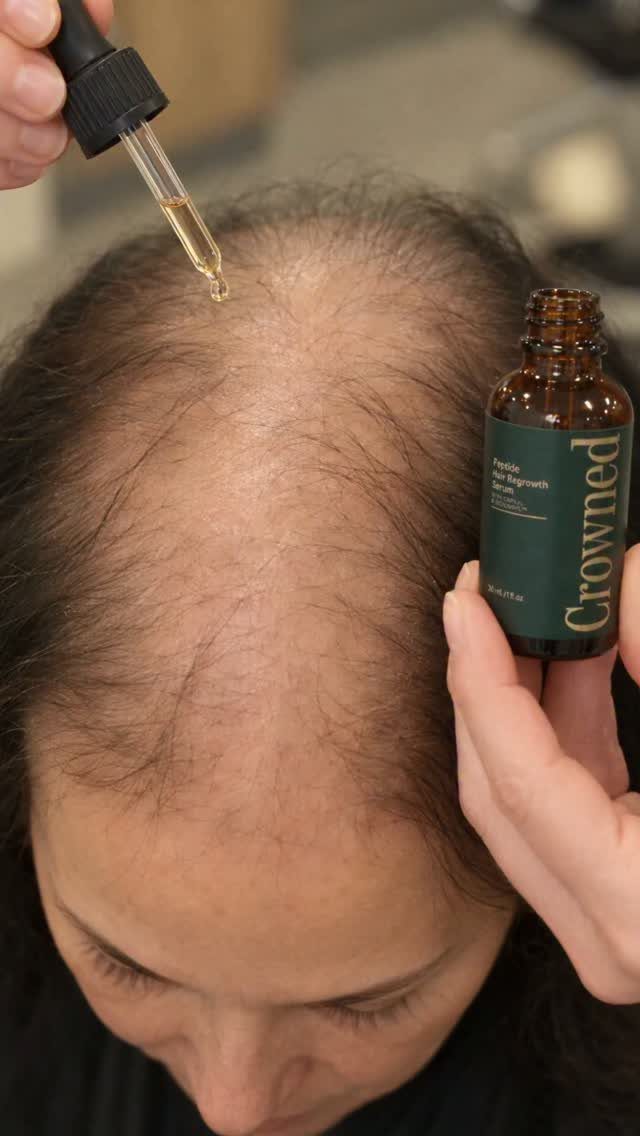
Serums work when you apply them where hair is thinning, not all over. The dropper lets you place liquid directly on the scalp without coating lengths that do not need it.
Peptide formulas aim to support follicle health and encourage regrowth. Results depend on the active ingredients, and most require daily or twice-daily application for several months before change becomes visible.
If you stop, any regrowth the serum supported will gradually reverse.
3. Layered Short Haircut

Layers lift fine or thinning hair away from the scalp and create the appearance of more volume.
Short lengths keep weight from pulling the cut flat, and bangs draw attention forward while covering a receding hairline if that is a concern.
This cut sits chin-length with texture through the ends. Blonde highlights add dimension, which makes individual strands less visible against the scalp.
Ask for layers that start near the crown and increase toward the ends, not stacked or graduated layers that remove too much density.
4. Wigs for Coverage

A full wig covers the entire head and replaces your natural hair for the day.
Wigs styled on mannequin heads let you see the finished look before you put one on.
Synthetic fiber holds its style without heat tools, but it melts under high temperatures. Human hair wigs cost more and need regular styling, just like your own hair.
If thinning is concentrated at the crown or part, a topper covers less area and clips in without hiding hair that still has density.
Identify Cause Before Treatment
Pattern loss accounts for 95% of cases, but the remaining 5% can trace back to medication, thyroid disease, severe infection, low iron, hormonal shifts after childbirth, or traction from tight styles that pull at the roots over time.
Drugs for high blood pressure, heart conditions, depression, and gout can all trigger shedding. So can chemotherapy, radiation, birth control pills, and unusually high vitamin A intake.
Trichotillomania is a pulling disorder that affects the scalp and brows, and it needs behavioral support rather than a topical fix.
If you see sudden loss, bald patches, a receding hairline, or continued thinning despite over-the-counter products, a professional evaluation narrows the cause and opens treatment options that match it.
Alopecia areata is a less common type of hair loss that affects about 2% of the population. It is an autoimmune condition in which the body attacks hair follicles.
Treatment Takes Consistent Use
Serums, laser devices, and topical formulas all follow this pattern: the timeline runs long, and maintenance continues after regrowth appears.
Consulting a specialist early gives you more prevention and treatment options to choose from, since early intervention often responds better than waiting until thinning becomes severe.
Normal Daily Hair Shedding
Losing 50–150 strands per day is routine shedding, not a sign of a problem.
A sudden increase in daily shedding, a part that widens over time, or scalp visibility where hair previously covered the area may all warrant evaluation.
If you notice a shift in how much hair collects in the shower or on your brush, tracking it over a few weeks gives you a clearer pattern to discuss with a specialist.
Frequently Asked Questions
What are the best hair vitamins for women?
Iron, zinc, vitamin D, and B vitamins matter for hair health, but they only make a difference if you’re actually deficient.
Get blood work done and talk to your doctor first, because extra vitamins won’t push regrowth if your levels are already normal.
Can testosterone cause hair loss in women?
Androgens like testosterone and DHT trigger a process called miniaturization, where follicles gradually shrink. Research hasn’t settled how much androgens drive thinning in women, but higher levels, particularly with PCOS, correlate with noticeable loss.
At what age does women’s hair start thinning?
Female pattern hair loss generally begins between ages 20 and 40, though women can experience thinning at any age. Genetic thinning often becomes visible later, between 50 and 70, as follicles replace thick strands with progressively finer ones.
Can hormonal hair loss be reversed?
The answer depends on the cause and how early treatment begins. Hormonal shifts from pregnancy, menopause, or birth control can push hair into a shedding phase, and some regrowth may return once hormone levels stabilize or with the right treatment.
How long does it take for female pattern baldness treatments to work?
Expect to wait at least several months before you see real change, and a full year often goes by before you know if a treatment is truly working.
Is female pattern baldness reversible?
The follicles stay alive, so treatment can stop progression and wake up shrunken follicles, but if you quit, the gains disappear.
Are treatments for female pattern baldness covered by insurance?
Insurance typically treats hair loss as cosmetic, so serums, lasers, PRP, and transplants come out of pocket.
If a medical diagnosis like thyroid dysfunction or anemia is behind the thinning, your plan might cover tests and treatment for that condition, and HSA or FSA dollars may apply with a letter from your doctor.
How do I know if my hair loss is genetic or caused by something else?
A specialist can evaluate the pattern and may order blood tests to rule out hormonal imbalances, thyroid issues, or nutritional deficiencies.
When those tests return normal, genetic thinning becomes the likely answer, showing up as a wider part and diffuse loss at the crown.
Does hair transplantation work for women?
Transplants can work for women who have localized loss, a retreating hairline, or thinning at the crown, as long as the donor area remains dense enough to harvest from.
Diffuse thinning across the scalp often requires medical treatment first, and inadequate donor density can rule out surgery for some candidates.
What’s the downtime for a hair transplant?
You can get back to most regular activities within a few days. New hair emerges around month 3 or 4, becomes easier to see between months 6 and 9, and reaches final density somewhere between 12 and 18 months.
Can I treat hair loss without surgery?
Topical serums, oral drugs, laser devices, and PRP injections all skip surgery and perform better when you catch thinning early.
Specialists often layer these options together depending on your case, and sticking with them over many months can boost regrowth and thicken what’s left.





