Minoxidil, prescription finasteride, and targeted supplements can slow or reverse thinning when the cause matches the treatment, but most take four months to a year of daily use before you see results.
The mistake is starting with products before ruling out sudden or patchy loss that needs a medical diagnosis first.
Seven sources agree that a dermatologist assessment is the starting point when thinning appears quickly or in patterns that don’t fit gradual age-related change.
1. Get a Medical Assessment to Find the Cause
Get a Medical Assessment to Find the Cause
Thinning that appears suddenly, shows up in patches, or comes with other symptoms you cannot explain warrants a conversation with a doctor or dermatologist.
Treatment depends on knowing what is driving the loss, and seven sources agree that a professional assessment is the starting point when thinning does not fit the gradual, diffuse pattern of age-related change.
Some symptoms can indicate an underlying health condition or quickly advancing disease that could lead to hair loss or balding. Make sure you get see your doctor if you experience: Sudden patchy hair loss, Greater than usual hair loss when combing or washing your hair, Receding hairline if you’re a woman
— WebMD
Pattern thinning is different from temporary shedding or breakage, and if you notice a sudden change rather than a slow shift, get it checked.
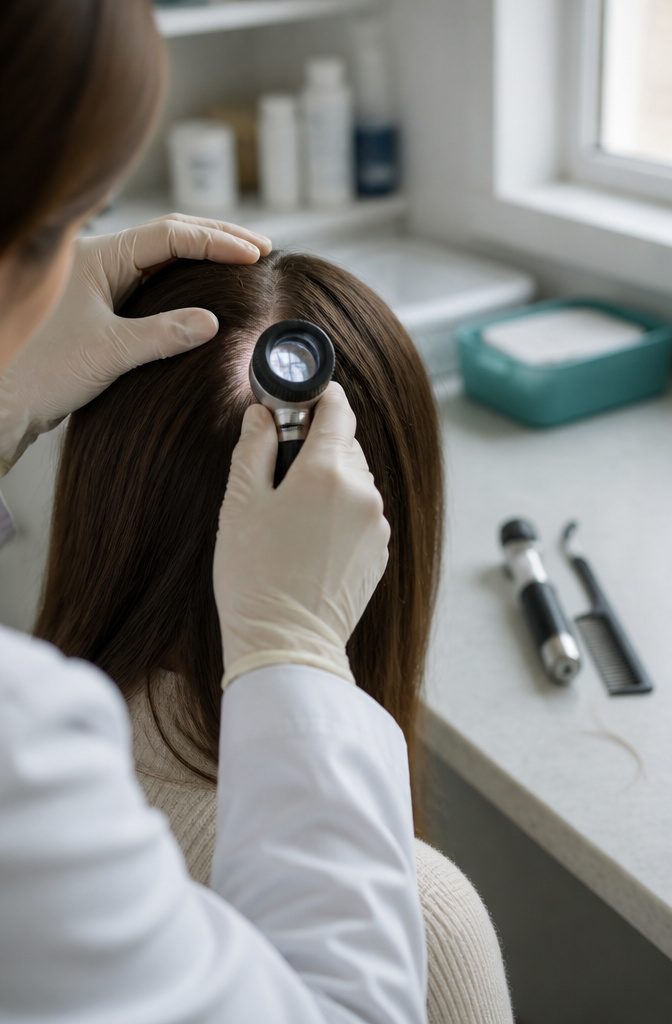
A dermatologist can look at your scalp under magnification, order bloodwork if needed, and identify whether something like alopecia areata or another condition is at work.
I think of it as buying clarity rather than waiting to see how bad it gets.
2. Use Minoxidil or Prescription Medication When It Fits Your Cause
Use Minoxidil or Prescription Medication When It Fits Your Cause
Minoxidil stops hair from thinning and stimulates new growth across several types of hair loss, from androgenetic alopecia to telogen effluvium.
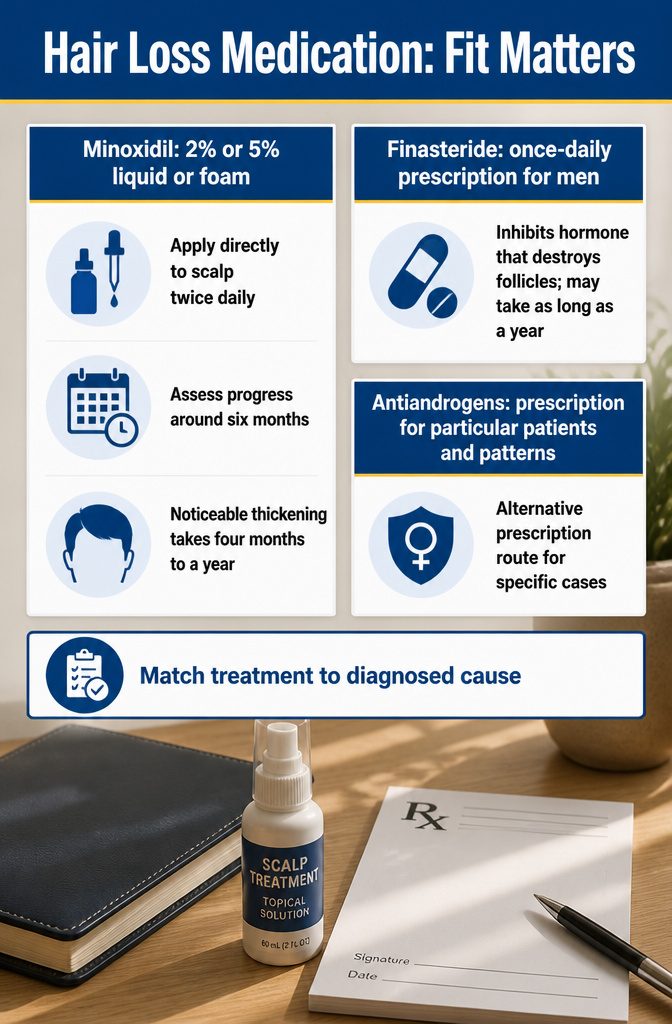
Available over the counter as a 2 percent or 5 percent liquid or foam, it’s applied directly to the scalp twice a day.
Noticeable thickening takes four months to a year, and a dermatologist typically assesses progress after six months by counting new hairs and comparing photographs. If you like the results, you can continue indefinitely; stopping usually brings the loss back.
Finasteride is a once-daily oral prescription for men with male pattern hair loss. It inhibits the hormone that destroys follicles and may take as long as a year to show significant growth.
Antiandrogens offer another prescription route for particular patients and patterns. All three options work best when the cause matches the mechanism, which is why getting a proper diagnosis matters before committing to months of daily application or pills.
3. Test for Nutrient Deficiencies Before Taking Supplements

Iron, vitamin D, B12, and zinc each play a role in hair growth, and when levels drop, thinning can follow.
Iron carries oxygen to follicles, vitamin D influences the follicle cycle, B12 supports red blood cell production, and zinc helps with tissue repair and scalp balance.
The American Academy of Dermatology confirms that deficiencies in these nutrients can contribute to diffuse thinning, and a blood test is the most reliable way to know whether one is present.
That said, supplements are not a fix for everyone. Evidence shows they help regrow hair in people with low baseline levels, but there is not enough proof that they work for healthy people eating a balanced diet.
One study found that 22.7% of men with pattern hair loss had low iron levels, but that still leaves most cases tied to something else. Oversupplementing carries its own risks, from mild to severe depending on the nutrient.
If thinning has appeared alongside fatigue or other symptoms, a conversation with your doctor and bloodwork can give you an answer grounded in your actual levels rather than guesswork.
4. Eat Protein and Nutrient-Rich Foods

Hair is made almost entirely of keratin, a protein, so loading up on lean meats, fish, eggs, and legumes gives your body the building blocks it needs to grow strong strands.
Sources also point to iron-rich greens like spinach and kale, which support follicle health, and healthy fats from avocados, nuts, and seeds, which keep your scalp in good shape. A healthy scalp is the foundation of healthy hair.
Beyond protein and iron, biotin shows up in eggs, almonds, and sweet potatoes and plays a role in keratin production.
Vitamin C from berries, oranges, and bell peppers helps your body produce collagen, another protein that contributes to hair strength. Zinc, found in pumpkin seeds and lentils, keeps the oil glands around your follicles working properly.
That said, diet cannot address every cause of thinning.
If you already eat a balanced diet, adding more of these nutrients may not change much. Where food does help is when your hair loss stems from a deficiency in the first place.
5. Wash, Detangle, and Dry More Gently
The details matter more when hair is already fragile. A few swaps in your wash-and-dry routine can keep you from snapping strands that would otherwise stay attached.
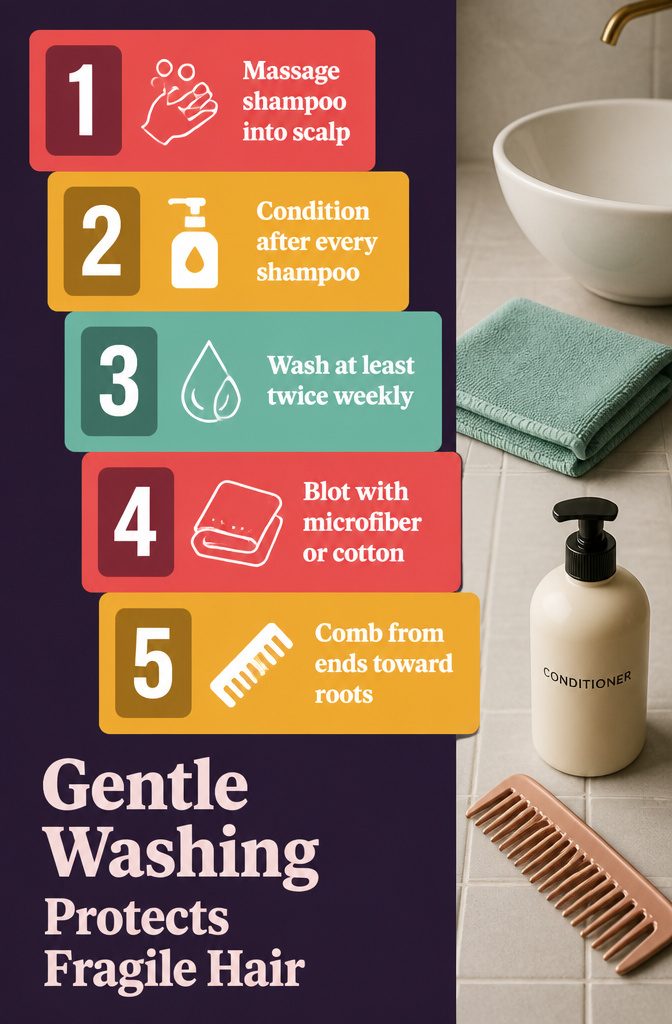
- Massage shampoo into your scalp, not the length. When you rinse, let it flow through the rest of your hair instead of scrubbing it in. The runoff cleans the strands without roughing up the cuticle.
- Use conditioner after every shampoo. It replaces moisture and natural oils that cleansing strips away, which helps prevent dryness and breakage.
- Keep your scalp clean by washing at least twice per week. Less frequent washing can leave buildup, but overwashing dries hair out and makes it brittle.
- Blot with a microfiber towel or a cotton t-shirt instead of rubbing with a regular towel. Wet hair is more elastic and far more likely to snap under friction.
- Detangle with a wide-tooth comb, starting at the ends and working up to the roots. This stops you from ripping through knots and breaking the hair shaft. If you have straight hair, let it dry partway first. If you have textured or tightly curled hair, comb while it is still damp.
6. Loosen Tight Styles and Cut Back on Heat
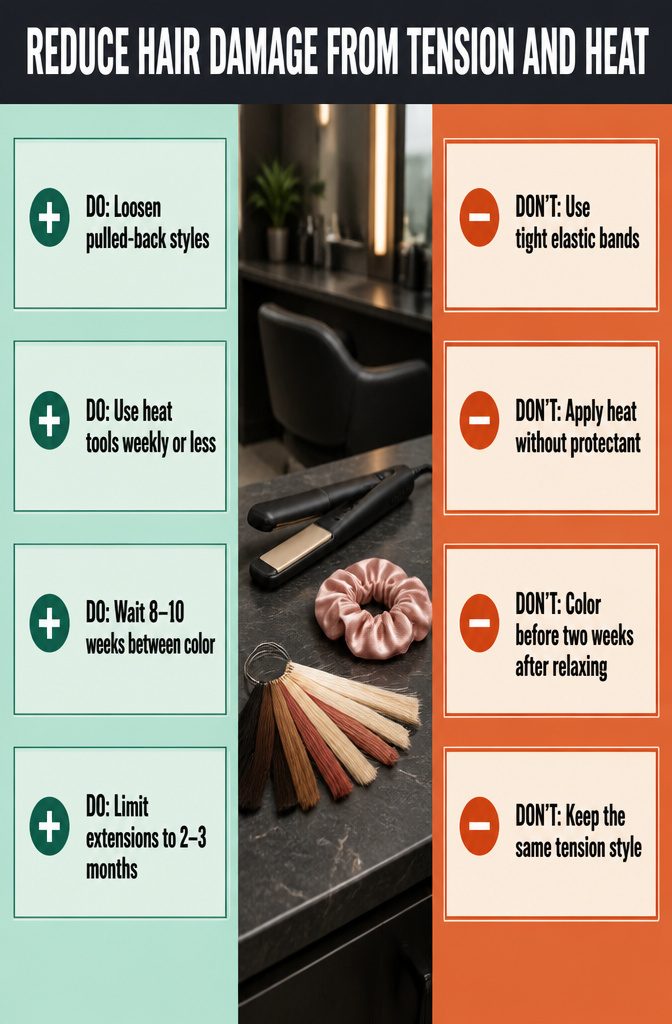
Physical stress breaks hair before thinning ever starts. Tight ponytails, braids, and buns pull on follicles long enough to cause traction alopecia, and hot tools damage the protein structure that keeps strands intact.
A few swaps lower that load:
- Use hot tools once a week or less. When you do reach for them, drop the temperature to the lowest setting that still works and apply a heat protectant first.
- Space out color appointments to 8 to 10 weeks or longer between touch-ups, especially in winter when dry air compounds the damage. If you want more than one chemical service, perm or relax first, then wait two weeks before coloring.
- Wear weaves or extensions for two or three months at most, and keep up scalp hygiene while they’re in. Switch styles between sessions so the same follicles aren’t under constant tension.
- Switch to looser styles with silk or satin scrunchies instead of elastic bands that grip hard. Give hair regular breaks from anything pulled back.
Microfiber towels blot water without roughing up the cuticle the way terry cloth does, and a wide-tooth comb pulled gently from ends to roots keeps wet hair from stretching and snapping.
7. Try Scalp Massage, Caffeine, or Light Therapy With Realistic Expectations
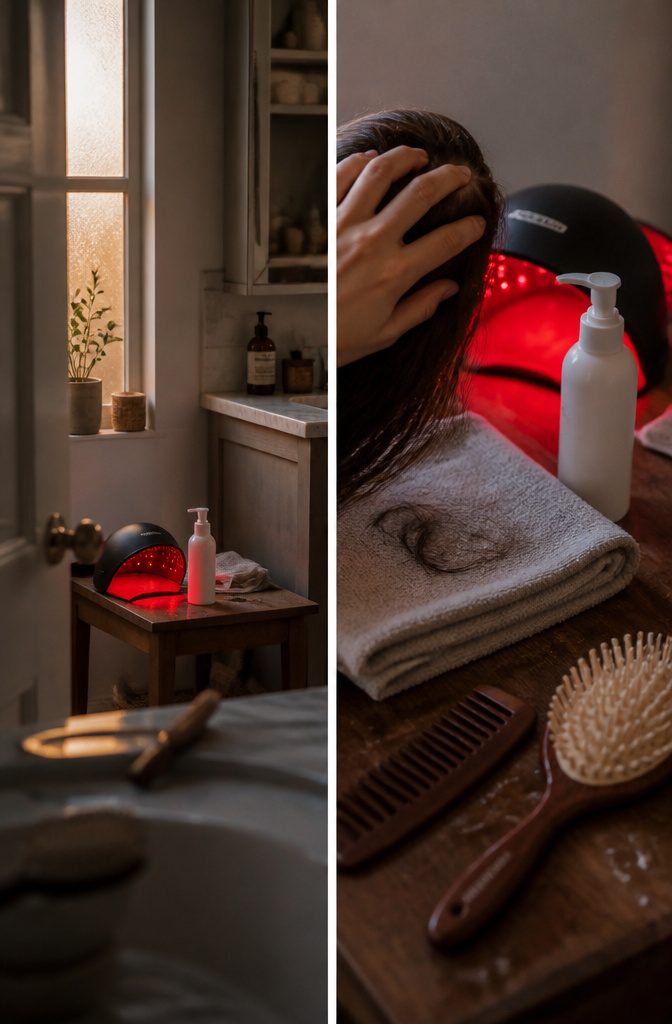
Scalp massage takes patience but carries almost no risk. In one study with about 330 people massaging daily for 11 to 20 minutes, almost 70% reported less loss or more growth after six months.
A smaller trial with nine men and 4-minute daily massages found thicker hair after the same span, though not longer.
The benefit may come from better blood flow to the follicles or lower stress hormones, and even if the evidence is thin, the routine itself feels good.
Caffeine shows up in serums and shampoos meant to block DHT and wake up follicles, and one treatment rings in at $17.00. Some sources suggest caffeine may match minoxidil 5% for male pattern baldness, but the data supporting that claim remains limited.
Red-light devices using wavelengths of 630 nm to 800 nm appear more consistently in the literature. Sessions typically run 10 to 25 minutes, two to three times a week, and results take four to six months.
Side effects are rare, mostly mild itching. Helmets, combs, and caps are all FDA-cleared options, so consistency matters more than the form factor.
8. Support Overall Health and Review Contributing Habits
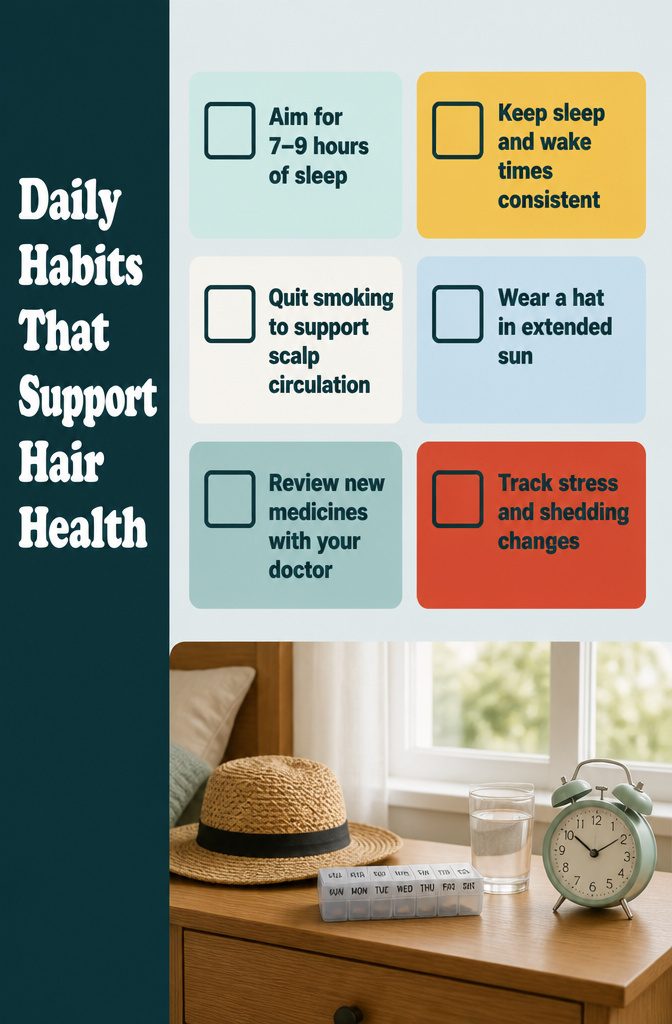
Your daily habits shape the environment hair grows in, and a few changes can make a real difference.
- Chronic stress disrupts the hair growth cycle, pushing more follicles into a resting phase before they’re ready. Acute stress can trigger a wave of temporary shedding a few months after the event. Sleep consistency helps regulate the hormones tied to hair growth; aim for 7–9 hours each night, ideally going to bed and waking around the same time.
- Smoking reduces circulation to the scalp and accelerates thinning. Quitting removes that drag on follicle health.
- Sun exposure damages both hair and the scalp itself. Wear a hat when you’ll be outside for extended stretches, especially in summer.
- Review medications with your doctor if thinning started after you began a new prescription. Some drugs list hair loss as a side effect, and switching to an alternative may reverse the issue.
What Causes Hair to Thin
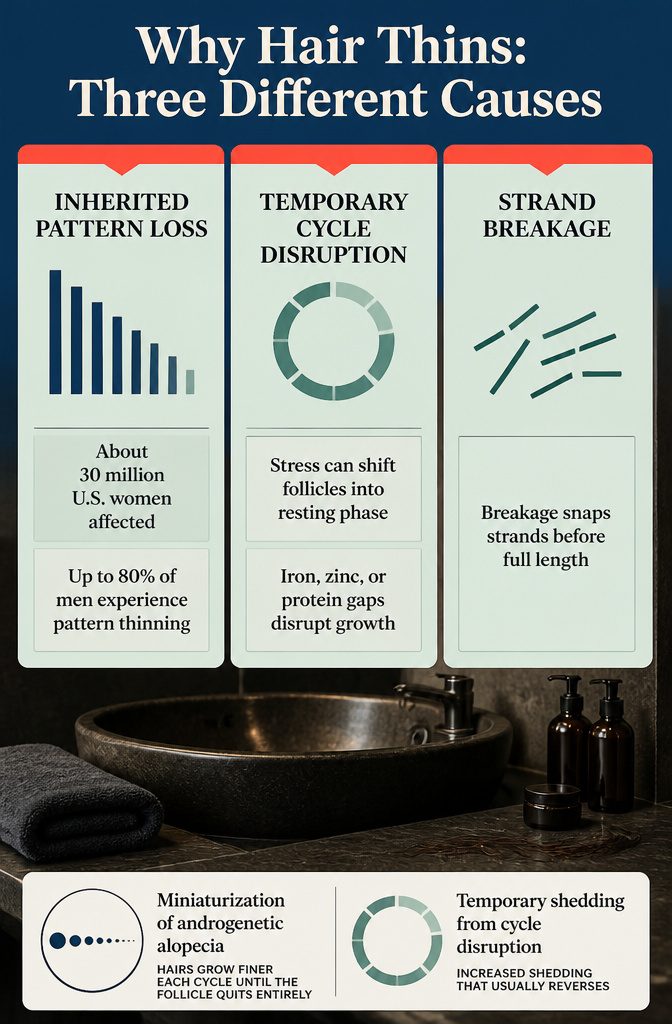
Hair thins for reasons that overlap and occasionally stack. Female pattern hair loss affects about 30 million women in the U.S., while up to 80% of men face male-pattern thinning, often starting between ages 20 and 25.
Both are driven by genetics and hormones, particularly dihydrotestosterone in men, and they progress gradually over years rather than shedding in clumps.
Temporary thinning looks different.
Stress can push follicles into a resting phase all at once, a condition called telogen effluvium. Thyroid problems, autoimmune conditions and scalp infections disrupt the growth cycle.
Nutritional gaps in iron, zinc or protein starve the follicle. Hormonal shifts after childbirth or stopping birth control trigger months of increased shedding that usually reverses.
Then there is breakage, which mimics thinness without true follicle loss.
Tight ponytails, frequent chemical treatments and harsh hold products snap strands before they reach full length. That differs from the miniaturization of androgenetic alopecia, where new hairs grow finer each cycle until the follicle quits entirely.
How to Tell Normal Shedding From Progressive Thinning
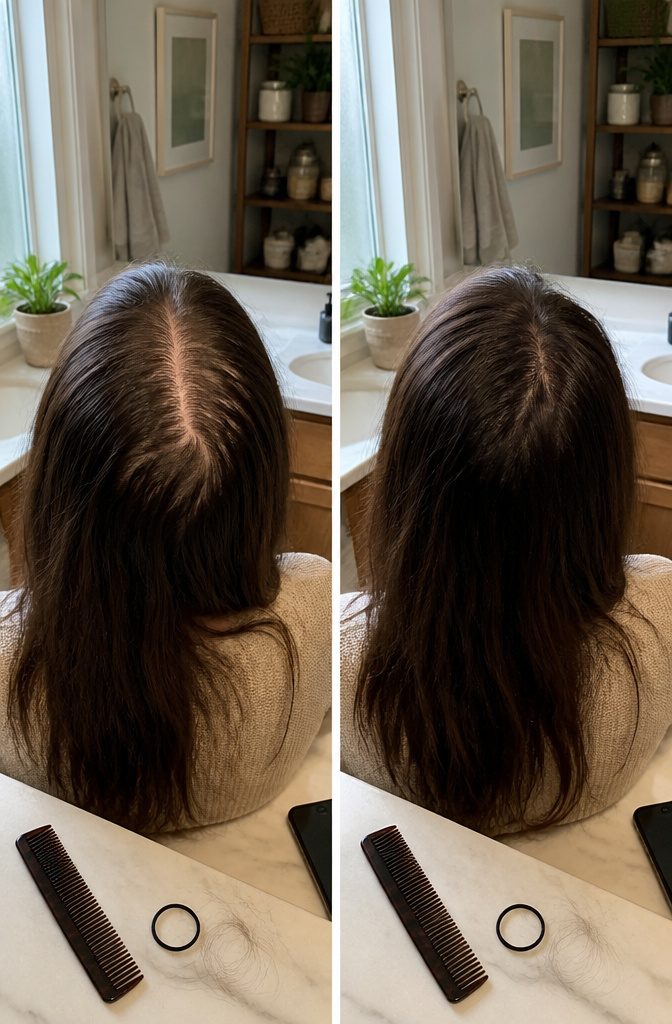
The average person sheds 50 to 100 hairs per day, and that loss is part of the normal growth cycle. Thinning looks different: it happens gradually, and the signs show up in your overall density rather than in the drain.
A widening part is often the first thing you notice.
If more scalp shows along the line where you part your hair, especially under bright lights, that is a change worth tracking. A ponytail that feels thinner or requires an extra wrap of the elastic tells you the same thing.
You might also catch glimpses of your scalp through your hair at the crown, or your hair might feel finer when you run your fingers through it.
Taking a photo every few months in the same light gives you an objective record. Memory alone makes it hard to spot slow shifts, and a visual diary removes the guesswork.
Frequently Asked Questions
Why am I losing my hair?
Hair loss stems from genetics, hormones (particularly DHT in men), medical conditions like thyroid problems or autoimmune disorders, stress, nutrient deficiencies, medications, and damaging hair practices.
Female pattern hair loss affects about 30 million women in the U.S., while up to 80% of men face male pattern thinning, often starting between ages 20 and 25.
Temporary causes like telogen effluvium from stress or hormonal shifts after childbirth usually reverse once the trigger is addressed.
How much hair loss is normal per day?
Shedding 50 to 100 hairs daily is part of the normal growth cycle. Thinning shows up differently: a widening part, a thinner ponytail, or visible scalp at the crown that gets worse over time rather than staying constant.
Does stress cause hair loss?
Chronic stress disrupts the hair growth cycle and pushes more follicles into a resting phase before they’re ready.
Acute stress can trigger a wave of temporary shedding a few months after the event, a condition called telogen effluvium that usually reverses once the stress resolves.
Which vitamin deficiency causes hair loss?
Iron, vitamin D, B12, and zinc deficiencies can all contribute to diffuse thinning. Iron carries oxygen to follicles, vitamin D influences the follicle cycle, B12 supports red blood cell production, and zinc helps with tissue repair and scalp balance.
A blood test is the most reliable way to confirm whether a deficiency is present rather than guessing and supplementing blindly.
Is thinning hair normal with age?
Male pattern thinning affects up to 80% of men, often starting between ages 20 and 25, and the severity increases with age.
Female pattern hair loss affects about 30 million women in the U.S., and approximately 80% of women experience some hair changes by age 80. Age-related thinning is common and tied to genetics and hormones.
How does female hair loss differ from male hair loss?
Women usually experience thinning across the entire head without a receding hairline, while men lose hair in a defined pattern starting above the temples and forming an M-shaped hairline.
Complete baldness is common in men with androgenetic alopecia but rare in women.
Does biotin stop hair thinning?
Biotin plays a role in keratin production and shows up in eggs, almonds, and sweet potatoes.
Evidence shows supplements help people with confirmed deficiencies, but there is not enough proof they work for healthy people eating a balanced diet. If you already get enough biotin from food, adding more may not change your hair density.