The 10 ideas here range from a 10-second headband fix to curtain bangs that read as deliberate even when lengths are uneven, with regular trims and conditioning to keep the grow-out on track.
A center part needs at least cheekbone length to work; curtain bangs can start much shorter because the outward angle reads as deliberate even when the lengths are uneven.
1. Curtain Bangs
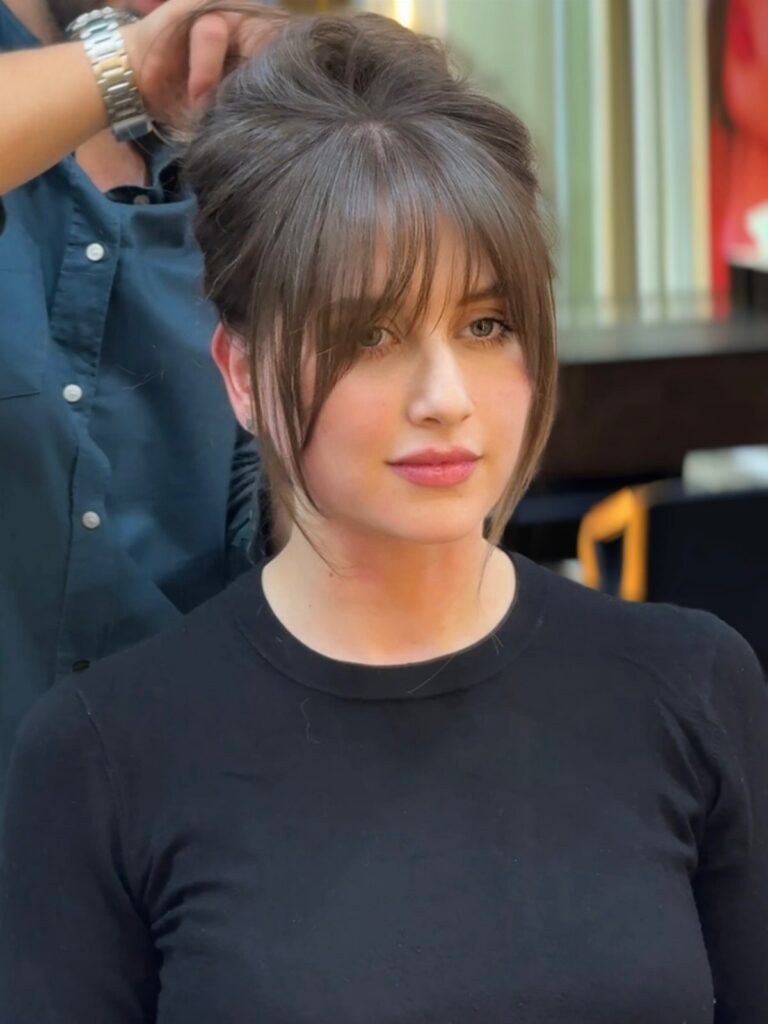
Curtain bangs part down the center and sweep outward, so each side of the face gets a soft frame instead of a blunt horizontal line across the forehead.
For anyone in the middle of a grow-out, this is one of the more forgiving shapes to ask for.
The outward angle means different lengths read as deliberate rather than uneven, and the style works on straight or wavy hair alike.
Ask your stylist to keep the center short and feather the ends as they angle toward your cheekbones.
2. Face-Framing Layers
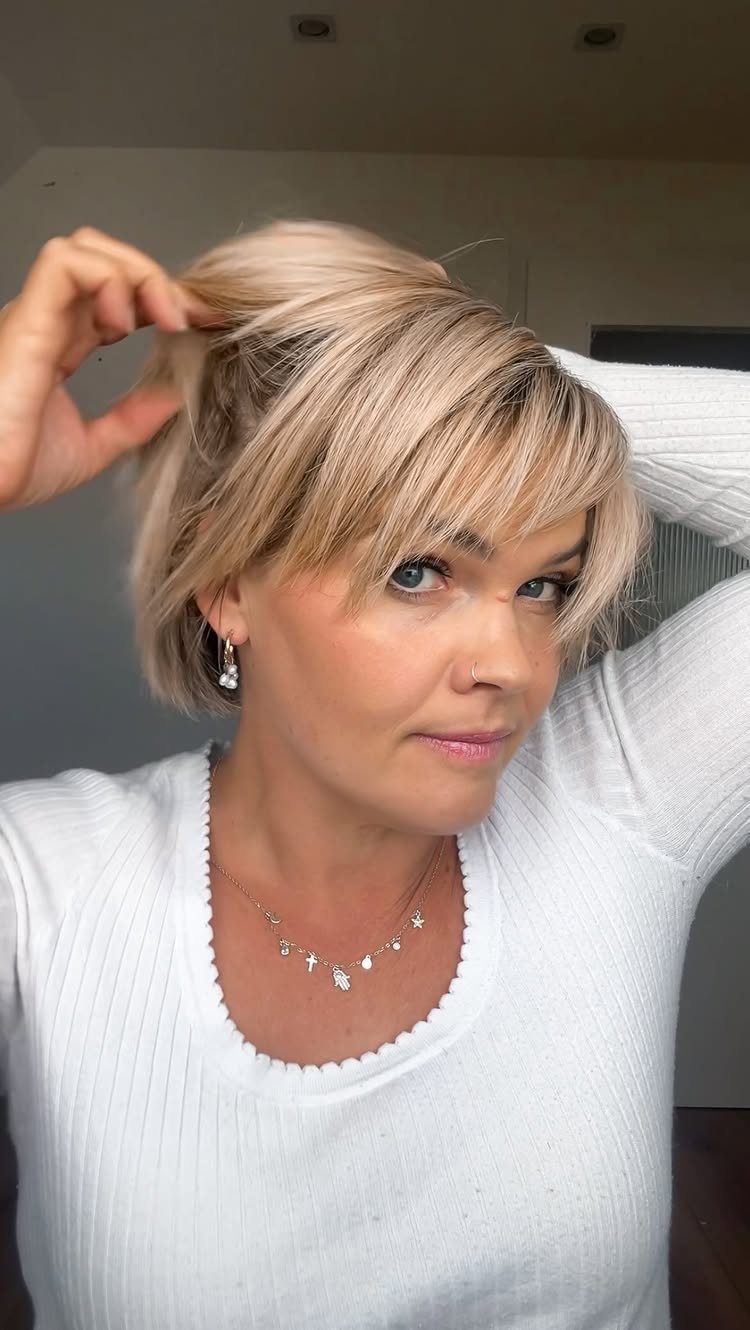
Face-framing layers fold the growing fringe into the rest of the cut so the front pieces just become the shortest layer rather than a separate problem.
Blonde hair in particular shows this blending well because the highlights soften any hard line between bang length and the layers behind it.
If your bangs have reached your chin or below, this approach makes the most sense: a stylist can connect the front sections into long layers that graduate back through the rest of the cut.
3. Face-Framing Waves
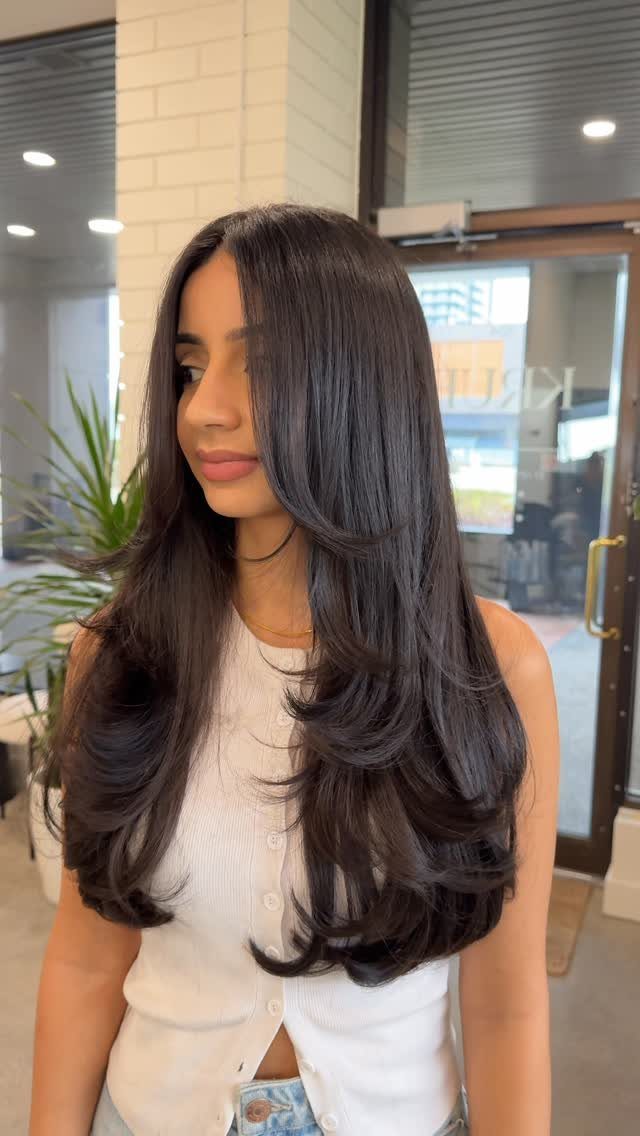
Soft bends through the front sections pull growing bangs into the rest of the hair so the uneven lengths read as movement rather than a grow-out.
Waves work this way because they break up the horizontal line that makes in-between bang length obvious.
On long, dark hair like this, the face-framing effect is mostly about where the bend sits: if the wave turns at cheekbone level, it draws the eye down and outward rather than straight across the forehead.
A 1-inch barrel kept loose at the roots and tighter mid-shaft gets this shape.
4. Soft Face-Framing Waves
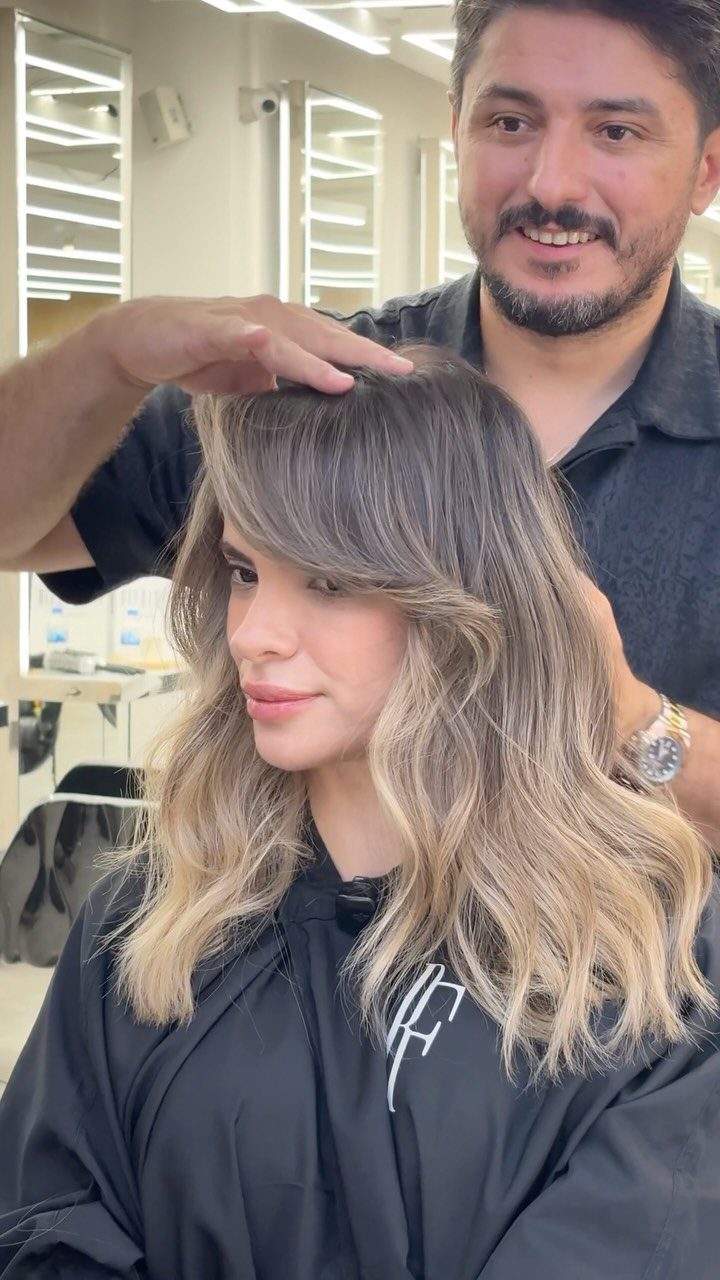
Gentle waves through the front sections do the same blending work as layers, except the styling does it rather than the scissors.
Lighter pieces catch the light at the bend and make the framing read stronger, so highlights are worth considering here.
For a result this soft, wrap sections away from the face rather than toward it, and shake the waves loose before they cool completely.
This is a good option if your stylist has already cut the layers and you want to reinforce the framing at home on days when the hair needs a little help.
5. Long Wispy Bangs

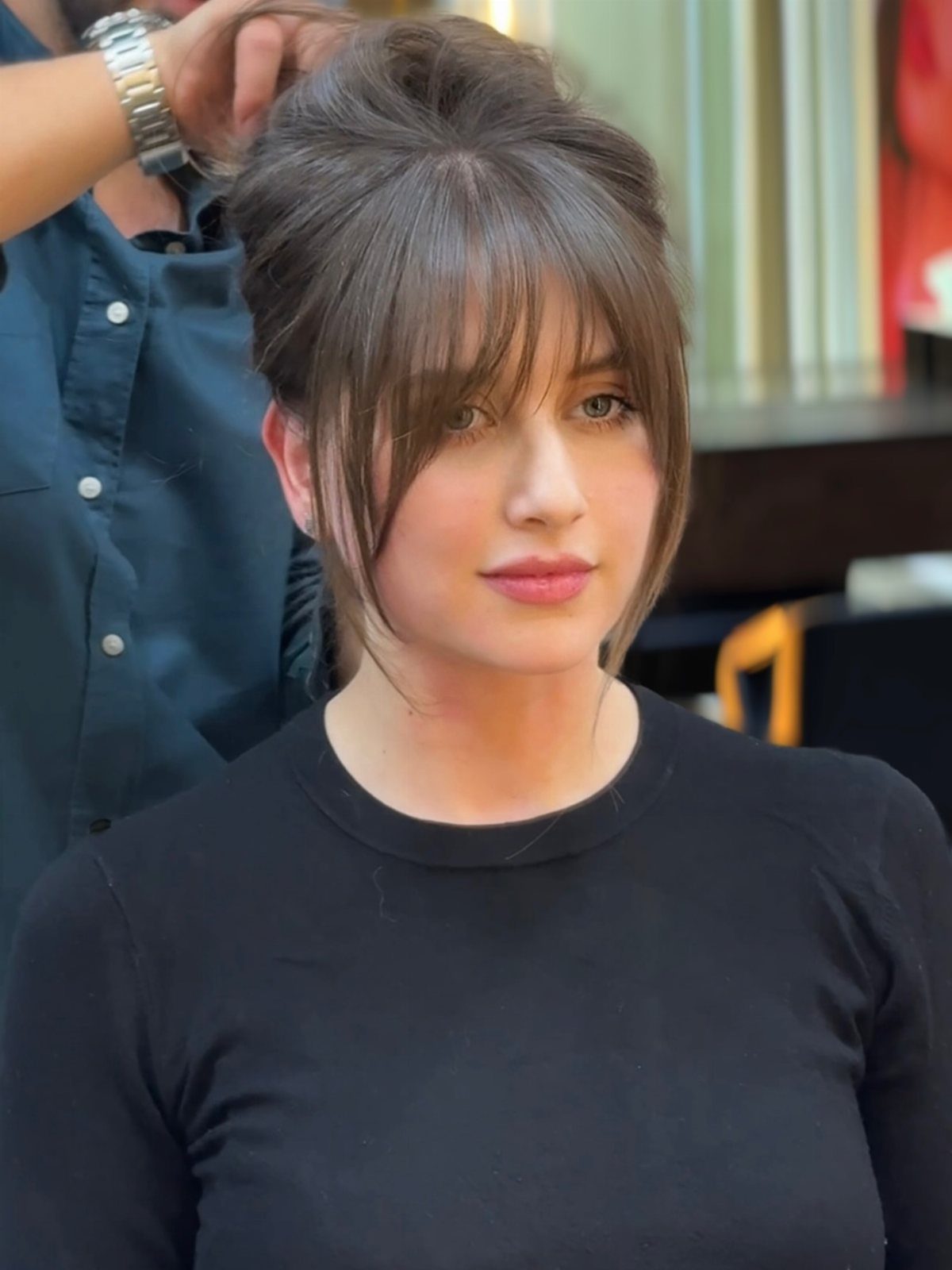
Long wispy bangs let the fringe keep growing past the eyebrows while the rest of the hair goes up, which turns the 2 lengths into a deliberate contrast instead of an awkward stage.
Pulling the body of the hair into a bun or updo makes the bangs the focal point rather than the part that doesn’t match.
Wispy ends matter here: a blunt or thick fringe at this length feels heavy, but thinned-out ends stay light and frame the face without competing with the updo.
Ask for point-cutting at the ends to keep them airy.
6. Headbands
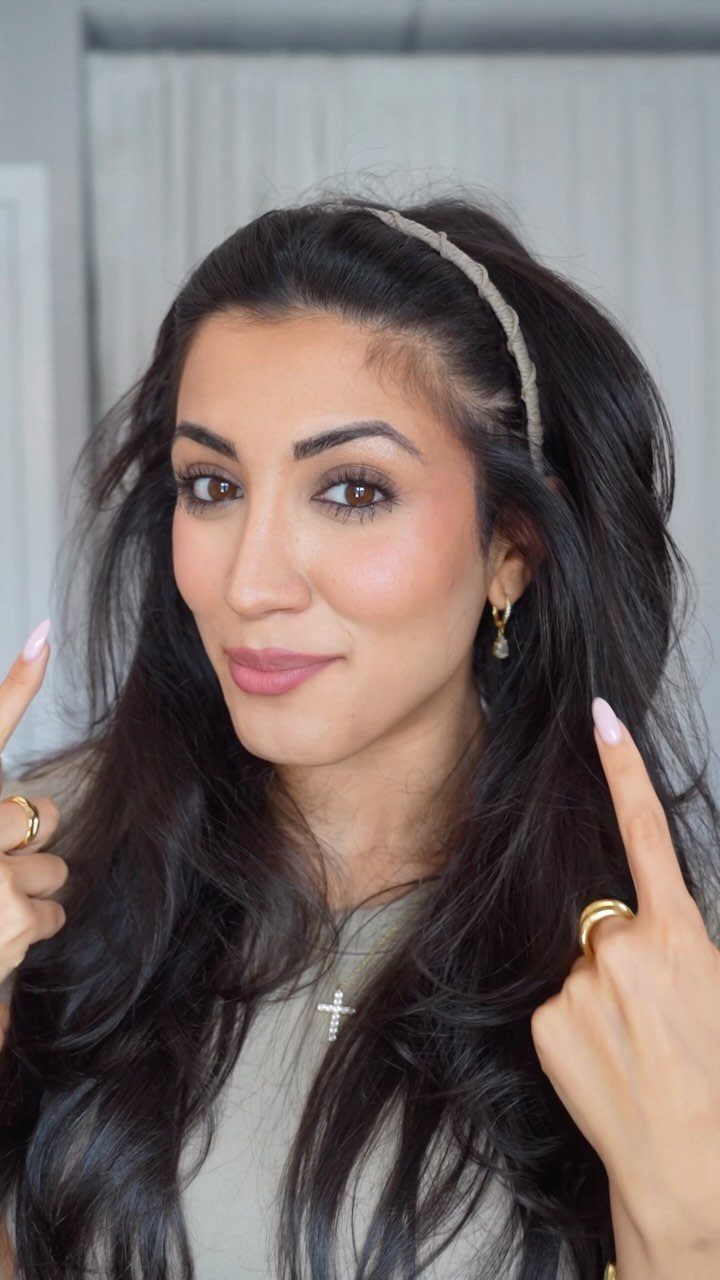
A thin headband is one of the most straightforward ways to handle bangs that are too long to style as bangs and too short to tuck behind the ear.
Placing it about an inch back from the hairline rather than right at the front lets the pieces in front lift slightly instead of lying flat, which looks more intentional.
This works on any texture and takes about 10 seconds, which makes it practical for the mornings when the grow-out stage is just not cooperating.
7. Slicked-Back Hair
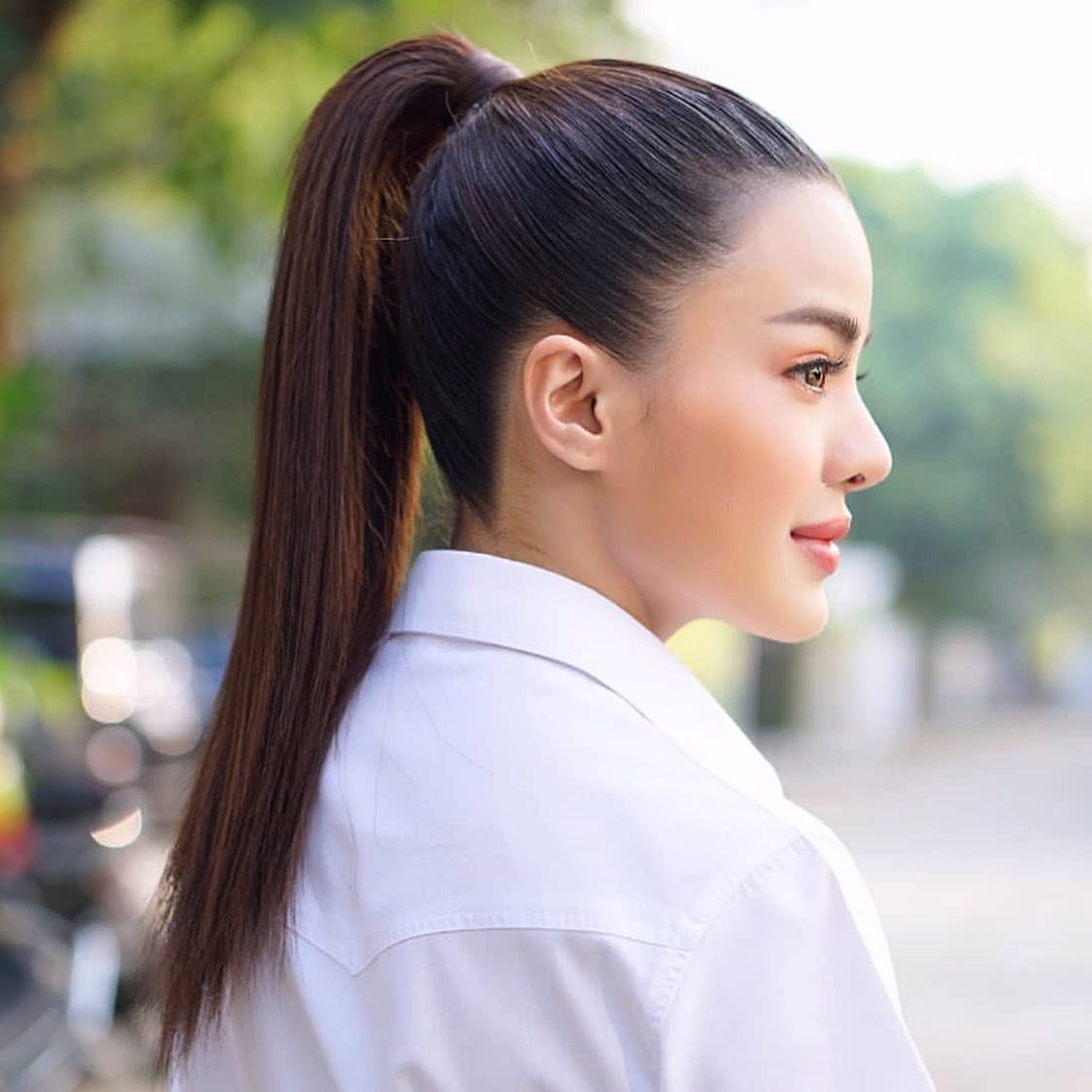
Slicking the fringe straight back removes the grow-out problem entirely by making it part of a sleek, unified shape rather than a front section that needs to match anything.
A high ponytail like this one works because the tension pulls everything back smoothly, bangs included. A little gel or pomade along the hairline keeps shorter pieces from springing forward through the day.
Good option for mornings when the in-between length just isn’t cooperating with anything else.
8. Side-Swept Bangs
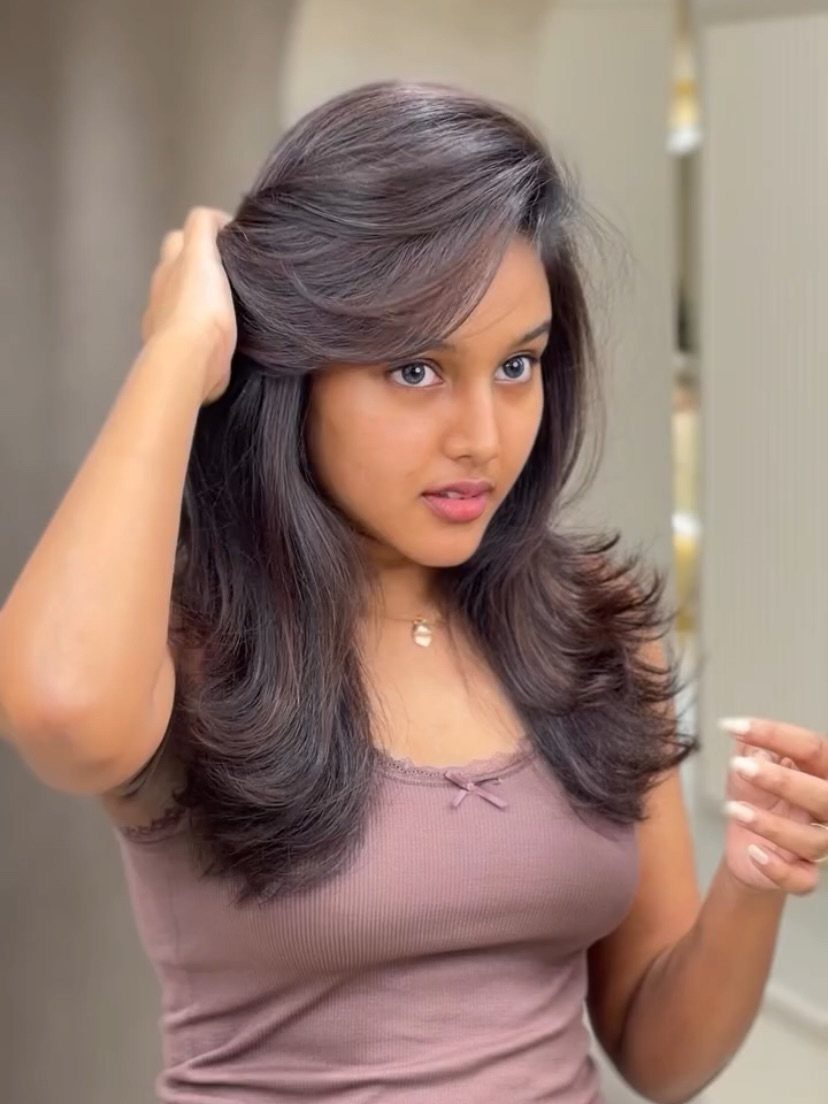
Grown-out fringe swept to one side reads as a style choice rather than a stage, especially once it’s long enough to follow a deep part without flipping back.
The part does most of the work: set it off-center and comb the front pieces in the same direction as the wave.
On hair with volume like this, the sweep blends naturally into the rest of the styling rather than sitting flat against the forehead.
9. Braids
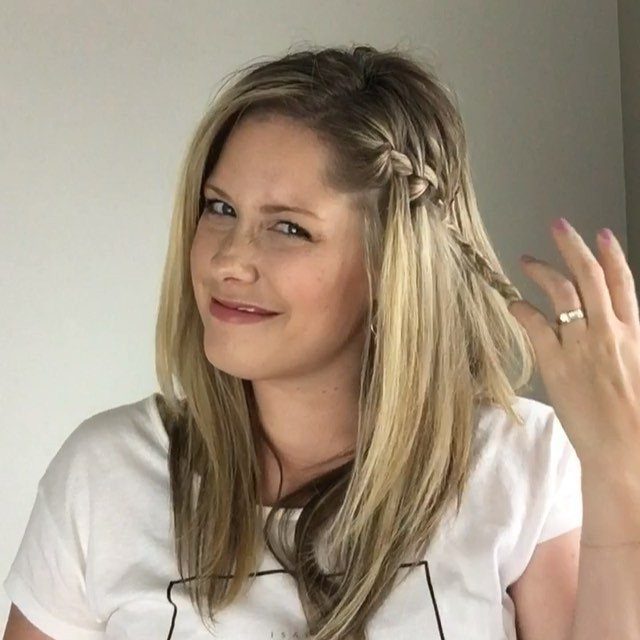
A small braid along the hairline captures the shortest pieces and holds them back without needing pins or product to keep them in place.
This is a good pick when the fringe is just long enough to braid but still too short to tuck behind the ear reliably.
10. Center Part
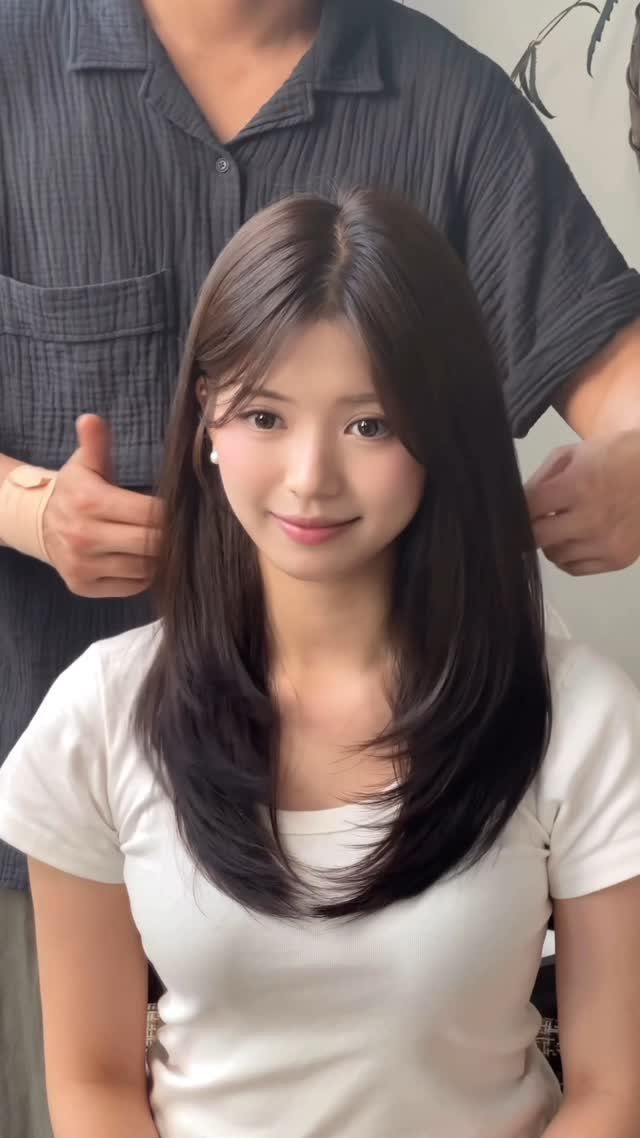
Splitting grown-out bangs down the center and letting them fall to either side is one of the cleaner solutions once fringe gets too long to lie flat across the forehead.
Once the pieces reach at least cheekbone length, a center part gives them somewhere to go and frames the face on both sides evenly. On straight or lightly waved hair, the fall tends to stay put without much help.
Regular Trims While Growing
Regular trims every 6 weeks feel counterproductive when the goal is length, but they actually help the process. Keeping the ends healthy means the hair holds moisture and nutrients better, which supports steady growth rather than stalling it.
Ask your stylist to taper the bangs gradually at each appointment rather than cutting them blunt across.
By the time they’re long enough to part down the center, they’ll already be soft and sweeping instead of a hard line that needs more work to blend.
If you think getting bangs is a commitment, just wait until you decide to grow them out.
Hair Growth and Conditioning
A deep-conditioning mask once a week keeps the hair in the kind of shape where it grows steadily rather than breaking off at the ends and losing ground.
Biotin, a water-soluble B vitamin, has research behind it for supporting hair growth. Adding a supplement is a straightforward step if you want to move the process along from the inside out.
Frequently Asked Questions
How do you grow out bangs?
Regular trims every 6 weeks and a gradual taper at each appointment are the two things that actually move the process forward. Trims keep the ends healthy so hair holds moisture and grows steadily instead of breaking off.
While the length is in between, styles like a center part, side sweep, or curtain bang shape make the grow-out look deliberate rather than unfinished.
What is the best length for bangs?
For a grow-out, cheekbone length is the turning point where most transition styles start working reliably: a center part frames both sides evenly, and face-framing layers can connect the front sections into the rest of the cut.
Below the chin, the fringe is long enough to blend into long layers entirely and stop reading as bangs at all.
Are bangs out of style in 2026?
Curtain bangs in particular are very much in style right now and work well at multiple lengths, which makes them a practical choice whether you’re starting fresh or mid-grow-out.
Softer, face-framing shapes are the direction most cuts are going, so the versions that blend into layers rather than sitting blunt across the forehead are the strongest options at the moment.