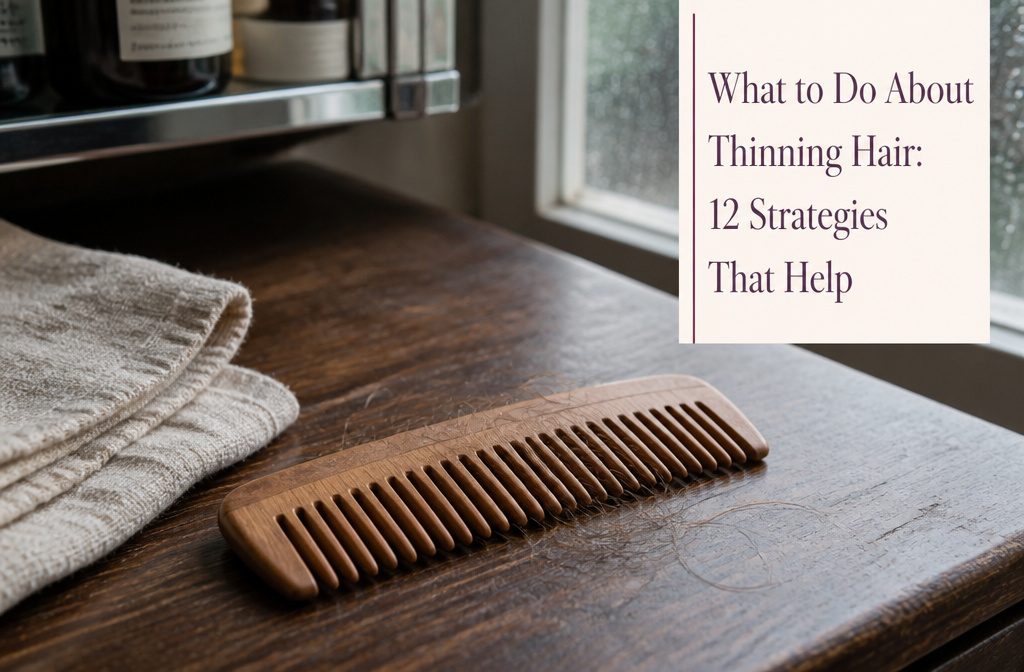
Thinning hair responds to a range of treatments, from over-the-counter minoxidil and prescription finasteride to platelet-rich plasma injections and hair transplants, but which one works depends on the cause.
Seeing a dermatologist early matters because once follicles stop functioning completely, medication cannot revive them. Research shows that 60% of men using minoxidil saw increased scalp coverage after 48 weeks, though visible results can take up to 16 weeks.
Find the Cause and Get Assessed
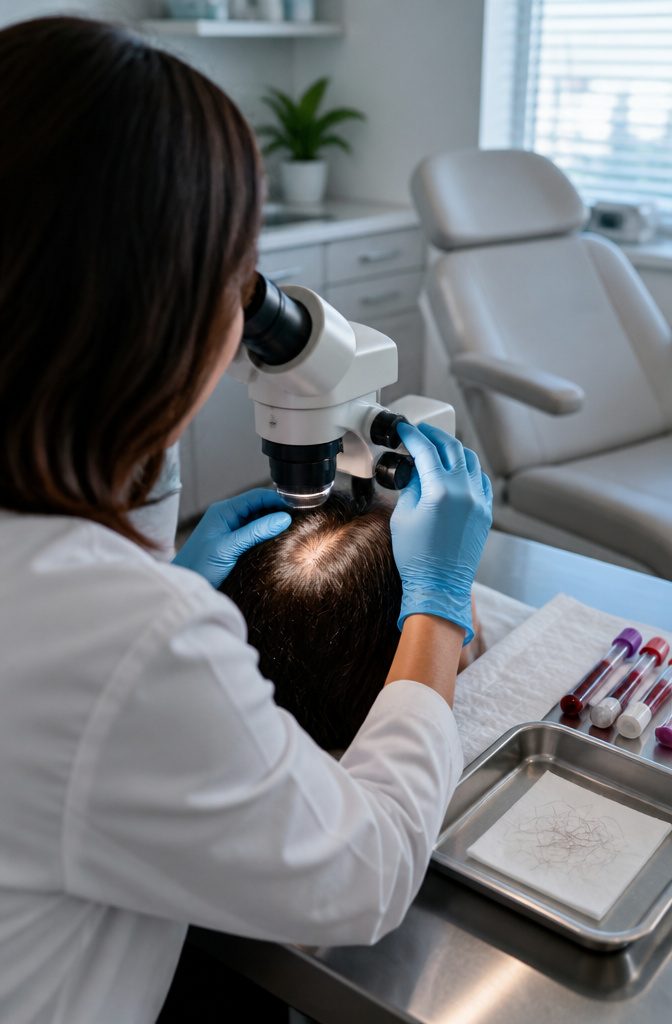
Hair loss has multiple possible causes, and the treatment that will work depends on which one you are dealing with. Seeing a dermatologist or healthcare provider as soon as you notice thinning gives you the best chance of successful treatment.
A dermatologist can perform a scalp examination under a microscope and run a hair-pull test to see how many hairs come out.
Blood tests check vitamin and mineral levels like vitamin D, vitamin B, zinc and iron, as well as hormone levels including thyroid.
In some cases, a scalp biopsy removes a small piece of scalp skin for examination. These tests catch underlying conditions like hormonal imbalances in polyendocrine metabolic ovarian syndrome or hypothyroidism, both of which can cause hair loss.
Your primary care physician can also assess whether medication, hormone changes or aging are responsible and may prescribe treatments or refer you to a specialist.
Use Medication When Appropriate

Minoxidil is what most people reach for first. It comes in two strengths, 2% and 5%, and you can buy it over the counter as liquid, foam, or spray.
It works by increasing blood flow to the hair follicles, though researchers still debate exactly how. You apply it to dry hair twice a day, and research shows it increased scalp coverage in 60% of men after 48 weeks.
It takes patience. Visible results can require up to 16 weeks, and if you stop using it, the hair you regained will fall out again.
For any of these treatments, the key is starting them as soon as you detect hair loss.
Once follicles stop working completely, medication cannot revive them.
Oral minoxidil is also an option, prescribed off-label for hair loss. It is as effective as the topical version and can help if the foam or liquid irritates your scalp.
Side effects include unwanted hair growth on the face or body, and occasionally low blood pressure or heart palpitations. Your doctor will adjust the dose and watch for problems.
Finasteride is a prescription pill that blocks DHT, the hormone that shrinks hair follicles in pattern baldness. After 5 years of 1 mg daily, 48% of men rated their hair growth as improved and 42% had no further loss.
It slows or stops hair loss in nearly 90% of men. It is not approved for women who are or could become pregnant, though doctors sometimes prescribe it off-label for postmenopausal women.
Potential side effects include sexual dysfunction, which usually clears up after stopping the medication but can take three months or longer for some.
Spironolactone and other anti-androgens are also prescribed for certain types of hair loss in women.
Which medication is appropriate depends on the cause of thinning, your medical history, and whether you are pregnant or plan to be. A dermatologist will tailor the treatment and monitor for side effects.
Protect Hair from Damage
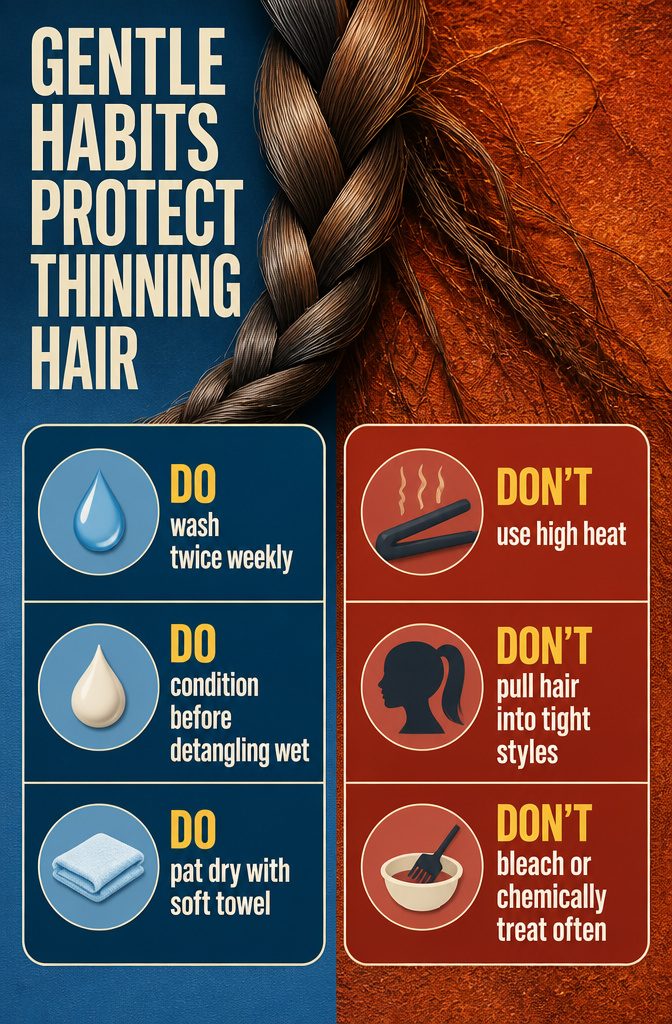
Breakage adds to the volume you’re already losing, so gentler handling keeps more strands on your head. Each of these shifts lowers that mechanical toll:
- Wash less often—twice a week instead of daily lets your scalp hold onto its protective oils and reduces the friction and manipulation that weaken hair at the root.
- Condition every time you wash, then detangle gently with a wide-tooth comb or your fingers while hair is still wet and slippery. Dry hair snaps more easily.
- Pat hair dry with a soft towel instead of rubbing hard. Rough towel-drying frays the cuticle and breaks strands that are already fragile.
- Turn heat tools to low or cold settings, or skip them altogether and try no-heat styling methods. Flat irons, curling wands and blow-dryers on high weaken the hair shaft over time.
- Loosen tight hairstyles. High ponytails, tight braids and cornrows pull constantly at the root and cause traction hair loss. Use soft fabric hair ties, leave styles looser, and give your scalp regular breaks.
- Limit bleach and harsh chemical treatments. If you color or straighten your hair, see a professional who can minimize damage, and choose gentler, less frequent applications.
Eat a Balanced Diet and Address Deficiencies

Hair is made of a protein called keratin, and your body turns to nails, hair, and skin last when allocating nutrients.
If you are only hitting the recommended daily allowance of protein—0.8 gram per kilogram of body weight per day—that may not be enough.
For hair benefits, aim for 1.2 to 2.0 grams per kilogram of body weight. Eggs, salmon, chicken, and Greek yogurt are all good sources.
Iron, zinc, folic acid, vitamin D, and B vitamins also support hair growth.
Lean meats, fatty fish, beans, nuts, seeds, fruits, and vegetables cover most of these. Fermented foods and fiber help control inflammation and improve nutrient absorption.
Before taking supplements, get tested. They help only if you have a deficiency, and excessive intake of selenium, vitamin A, or vitamin E has been linked to hair loss.
The supplements advertised for hair growth are not regulated by the FDA, so safety and effectiveness vary.
Consider Procedures and Other Professional Therapies
Consider Procedures and Other Professional Therapies
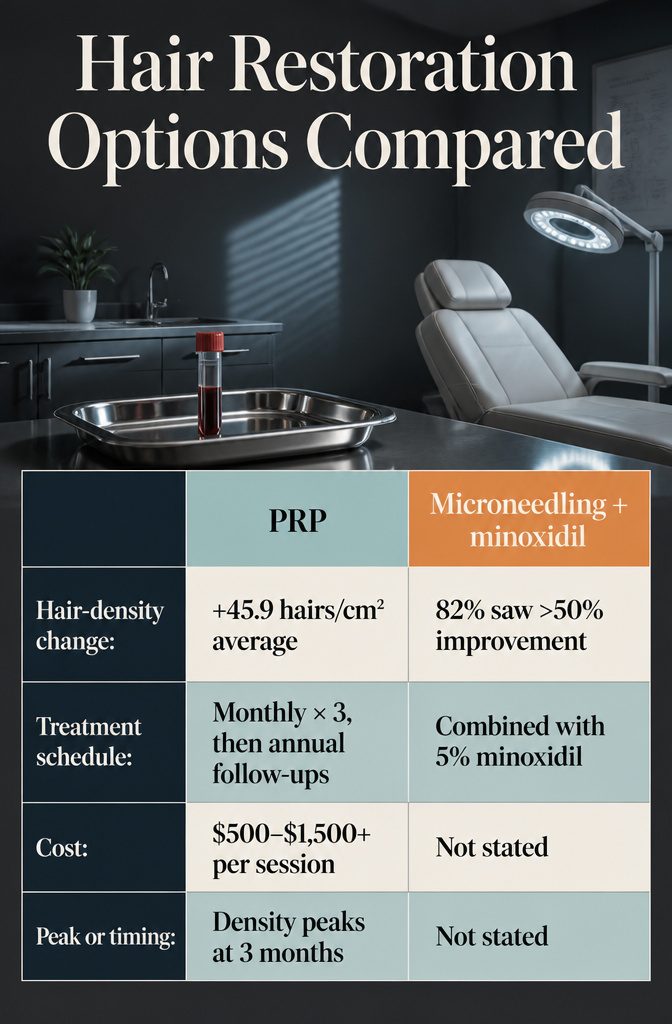
Platelet-rich plasma treatment takes a sample of your own blood, spins it to concentrate the platelets and growth factors, and injects the material back into your scalp to stimulate growth.
One study found that total hair density increased by 45.9 hairs per cm² on average after three rounds of treatment, with hair density peaking at three months.
Expect to pay $500 to $1,500 or more per session, repeated monthly for three months, then annual follow-ups. Insurance does not cover it.
Microneedling with a derma roller may boost how well topical minoxidil works. Eighty-two percent of people who combined derma rolling with 5% minoxidil saw more than 50% improvement, compared to just 4.5% using minoxidil alone.
At-home laser devices, available without a prescription in combs and helmets, range from a few hundred to a few thousand dollars and may take several months to show results.
Hair transplantation, such as follicular unit extraction, moves healthy follicles to thinning areas.
It can take about six months for a thousand or so follicles to re-enter growth phase and start producing new hair. Procedures complement medication rather than replace it.
Manage Stress and Relevant Health Factors

Stress matters here more than most people realize. High stress triggers cortisol release, which disrupts the normal hair growth cycle and can push follicles into an extended resting phase that leads to shedding.
Hair functions as an organ, and when your body is managing chronic stress, it prioritizes survival over non-essential systems like hair growth.
If stress has been running high for weeks or months, telogen effluvium is a likely result.
This is diffuse shedding across the entire scalp, and it typically shows up two to four months after the stressful event. Telogen effluvium usually resolves on its own within 3 to 6 months once the stressor is removed or managed.
Taking time for activities that actually lower stress, whether that’s a regular meditation practice or a hobby you can lose yourself in, makes a measurable difference. Talking to a therapist can help if stress has become chronic.
Beyond stress, underlying health conditions and hormonal shifts play a direct role in thinning.
Thyroid imbalances, anemia, and vitamin deficiencies all affect hair density, and treating the root condition often improves hair loss. Early intervention tends to slow thinning and support regrowth, so addressing these factors sooner rather than later pays off.
Use Cosmetic Products or Styling to Improve Appearance
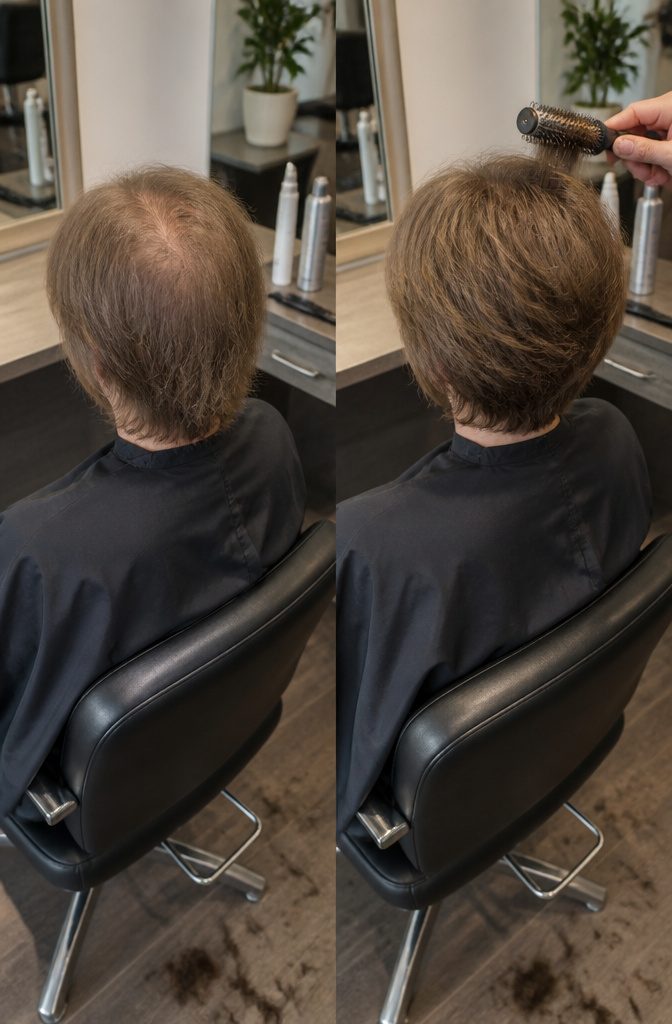
Sometimes the fix isn’t treating the cause but changing how the hair looks right now. Styling adjustments and camouflage products can make thinning less noticeable while you wait for other approaches to work, or when regrowth isn’t realistic.
Volumizing shampoos and conditioners add body to fine or thinning hair without weighing it down.
Nioxin System Kits include a shampoo, conditioner and scalp treatment designed for different stages of thinning, and the company recommends using the complete system at least three times a week for visible results in 30 days.
Hair Fall Defense Serum improves hair anchorage, with average results in eight weeks in a double-blind clinical study with 120 panelists.
Night Density Rescue Serum works overnight to boost hair density, with results in two months. For styling, Volumizing + Thickening Mousse and Hair Thickening Gel create the appearance of fuller hair.
Layered cuts, texturizing sprays and root lifters add visual volume. Hair fibers, sprays, hairpieces and wigs offer instant coverage.
Scalp micropigmentation tattoos tiny pigment dots onto the scalp to mimic the look of hair follicles or a shaved head. It costs £800 to £3,500 and lasts three to six years, though fading depends on skin type, sun exposure and aftercare.
Treat Scalp Health Concerns

Healthy hair starts at the scalp, and keeping it clean and addressing dandruff or inflammation can create a better environment for growth.
Regular washing helps remove buildup and dead skin cells, while scalp massage during shampooing encourages blood flow. You can use your fingertips or try a handheld scalp massager, though the evidence for preventing thinning this way is limited.
Sources differ on how much scalp massage actually helps. Some present it as a low-cost, low-risk option worth trying, while others note there isn’t much proof it can stop hair loss.
The same goes for essential oils like peppermint and rosemary, or caffeine shampoos. None of these are likely to harm you, but good evidence is thin.
When you massage in shampoo, use gentle pressure rather than scraping or rubbing, which can damage hair and make shedding worse.
Consider Supplements Only With Care

Supplements marketed for hair growth come with more caution than promise. If you are genuinely deficient in iron, zinc, vitamin D, or B vitamins, correcting that deficiency matters for overall health and may help slow hair loss.
But taking megadoses in the hope of regrowing hair has little evidence behind it, and excessive amounts of some nutrients—selenium, vitamin A, and vitamin E—have been linked to hair loss rather than improvement.
Biotin has become a popular supplement choice, mostly because low biotin levels are associated with thinning hair. Most people already get plenty of biotin from a balanced diet.
Organ meats, eggs, fish, sweet potatoes, nuts, and seeds all supply it naturally. There is no conclusive data showing that supplemental biotin helps regrow hair, and it can interfere with certain blood tests, leading to incorrect results.
Products like Viviscal and Nutrafol include biotin alongside collagen, horsetail extract, B-complex vitamins, and other ingredients, and some studies suggest they support hair growth.
Before adding any supplement, I recommend getting a blood test to confirm whether you actually have a deficiency.
Overdoing it with certain vitamins does more harm than good, and dietary supplements are not regulated by the FDA for safety or effectiveness before they reach store shelves.
Avoid Smoking

Smoking may speed hair loss.
The mechanics tie back to inflammation and circulation: smoking disrupts the hair growth cycle and can even pull pigment out early, turning strands gray before their time. A 2021 review pointed to both effects, and the pattern holds across studies.
If you smoke now, stopping gives hair a better chance to hold its ground.
The inflammatory load drops, blood flow improves, and the follicle gets a cleaner environment to work in. It won’t reverse genetic thinning or undo years of damage overnight, but it removes one obstacle hair doesn’t need.
Wait for Temporary Shedding to Resolve When Appropriate
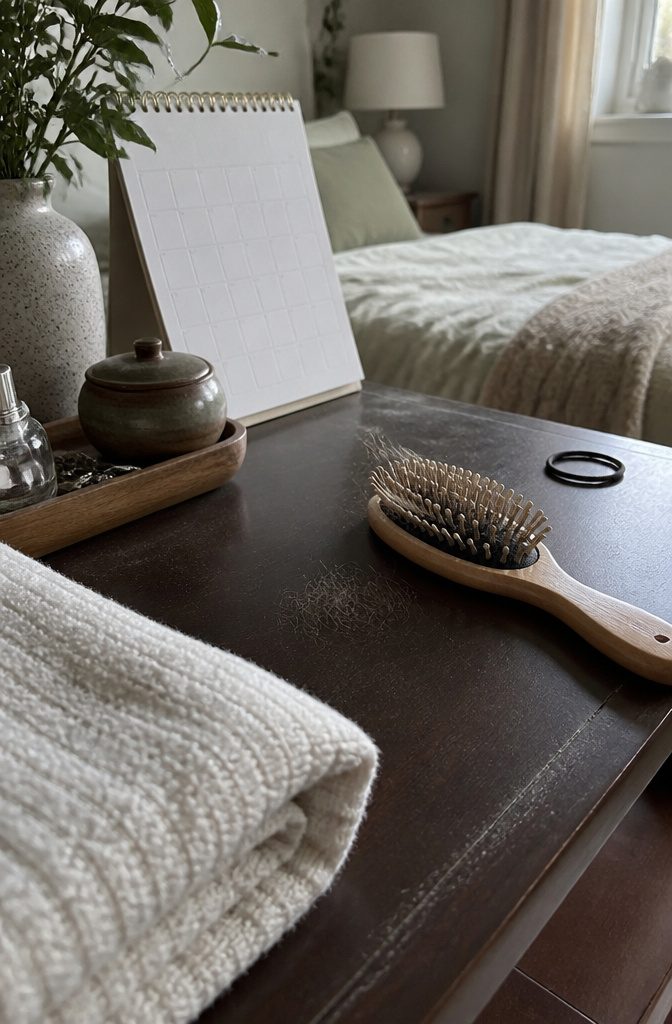
Some hair loss stops on its own once the trigger lifts. Telogen effluvium, the shedding that follows stress, pregnancy, or sudden weight loss, usually improves in three to six months as the body recovers.
The condition pushes a higher number of follicles into the resting phase at once, which leads to noticeable shedding weeks later. When the underlying cause resolves or receives treatment, the cycle corrects itself and regrowth begins.
Waiting feels passive, but tracking progress matters.
If shedding continues past six months or worsens, the cause may not be temporary after all. In that case, seeing a dermatologist becomes the next step rather than something you keep putting off.
Consider Hormone Therapy in Menopause
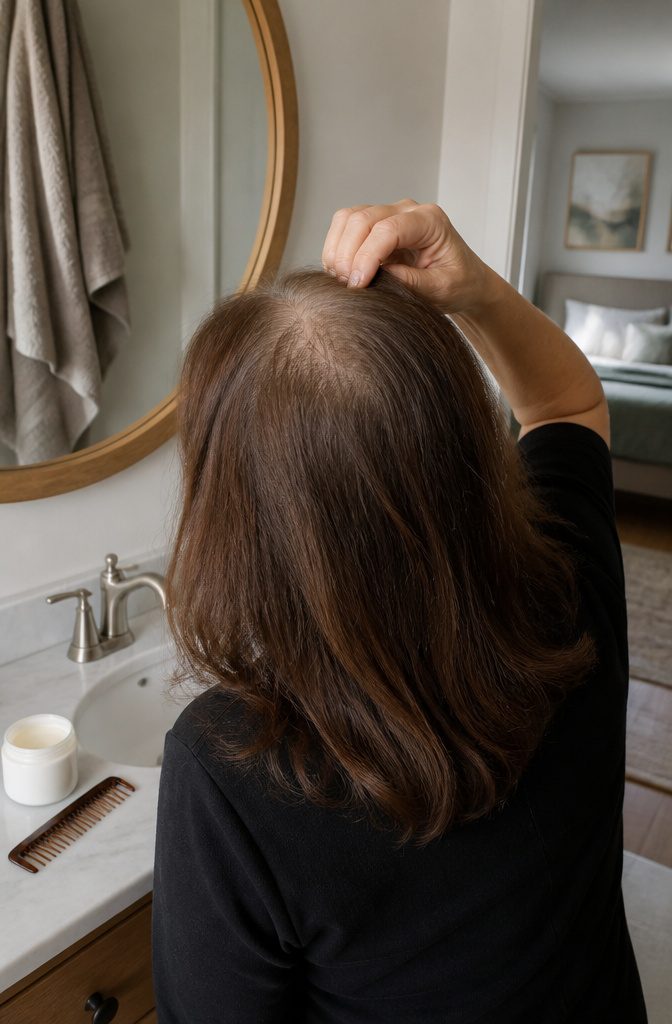
Menopause brings a drop in estrogen and progesterone, and those hormones directly affect how hair grows and how well it stays put.
Lower levels mean thinner strands and hair follicles that shrink, which is why hair that was full in your twenties or thirties can start looking noticeably sparse during the transition.
One clinic promotes hormone therapy to restore estrogen and progesterone levels as a way to address menopausal hair loss, though that recommendation does not appear widely across other sources.
Most discussions of thinning during menopause focus on managing the symptom rather than replacing the hormones themselves.
If you are already considering hormone therapy for hot flashes or other menopausal concerns, it is worth asking your doctor whether it might also help with hair thickness. Otherwise, the options in other sections apply just as well here.
Causes and Patterns of Thinning
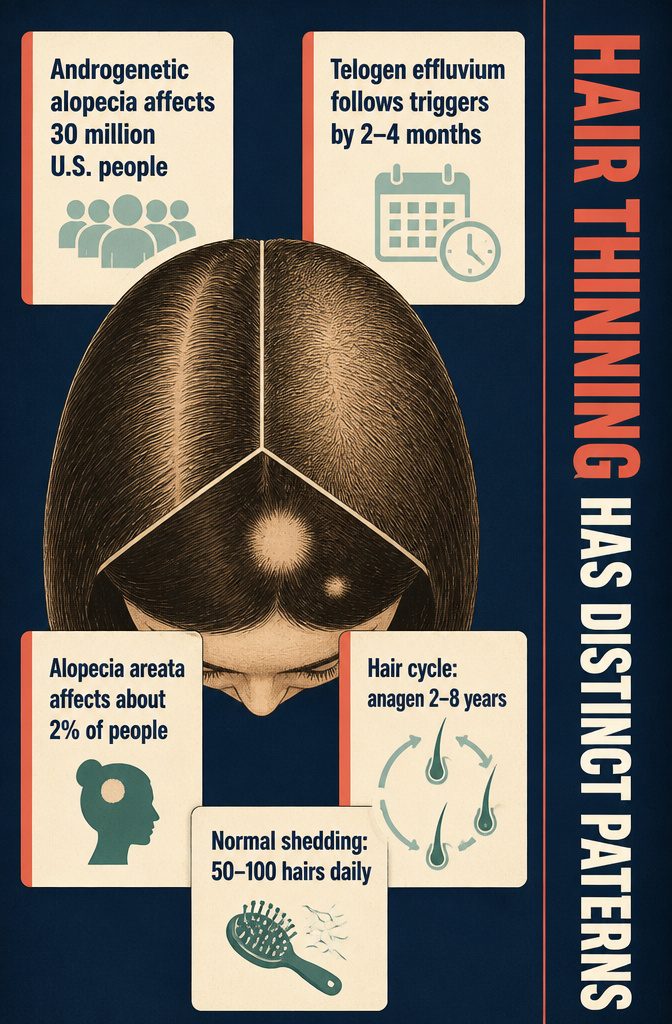
Thinning can happen as a gradual retreat or arrive all at once.
Androgenetic alopecia, the gradual pattern kind, affects about 30 million people in the United States and accounts for most age-related thinning. More than 50 percent of women will notice hair loss at some point.
In men, the front hairline recedes or the crown thins. In women, the middle part widens or the frontal scalp area loses density, though the pattern can be more widespread.
Telogen effluvium causes sudden, diffuse shedding across the whole scalp, usually two to four months after a high fever, infection, surgery, or emotional stress.
The body shifts hair follicles into the resting phase and they let go. Alopecia areata, an autoimmune condition, affects about 2 percent of the population and leaves round or oval patches where hair falls out.
Hair grows in cycles: anagen lasts two to eight years, catagen two to three weeks, telogen two to four months.
Losing 50 to 100 hairs a day is normal. Medications, hormonal shifts, and styling damage can all tip the count higher.
Treatment Choice and Medical Advice

Treatment depends on the cause, and that means finding out what is driving the loss before you choose a fix.
A dermatologist can examine your hair and order tests to rule out hormonal imbalances like hypothyroidism or PCOS, both of which can trigger thinning.
Knowing whether you are dealing with telogen effluvium, androgenetic alopecia, or alopecia areata changes what will help and what will waste time.
Timing matters. Hair loss treatment is more likely to work the earlier you start, and waiting until a significant amount has been lost reduces what can be regained.
If you notice a receding hairline or thinner density, that is the moment to act, not once the follicles have stopped functioning.
Treatment aims vary by diagnosis: for androgenetic alopecia, treatment enlarges follicles so strands look thicker and denser overall, while telogen effluvium often resolves on its own once the underlying cause is treated.
Hair-Care Practices
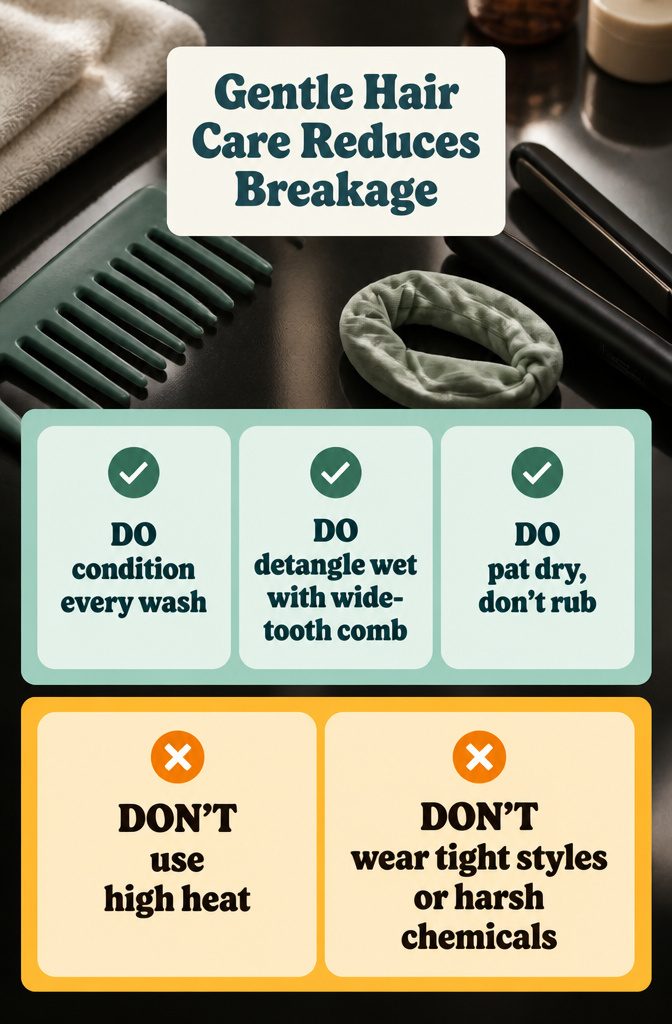
The way you handle thinning hair matters as much as what you use on it. Gentle handling protects the strands you have and reduces the load on follicles already under strain.
Start with these shifts:
- Condition every wash to reduce breakage and dryness. Detangle with a wide-tooth comb or your fingers while hair is wet, not dry.
- Pat hair dry with a soft towel instead of rubbing it. Rough friction weakens strands.
- Limit heat styling. Flat irons, curling irons, and blow-dryers on high settings all damage hair. Use lower or cold settings when you do apply heat, and reach for heat protectant products.
- Avoid tight hairstyles like buns, ponytails, braids, and cornrows that pull on roots. Looser styles and soft hair ties reduce tension.
- Skip harsh chemical treatments when possible. Bleach, permanent dyes, and chemical straighteners weaken hair and leave it prone to breakage.
Diet, Nutrients, and Supplements

Hair is made of keratin, a protein, which means the diet needs to supply enough amino acids to build it.
The RDA for protein is 0.8 gram per kilogram of body weight per day, but that is the bare minimum to avoid a nitrogen imbalance. For healthy hair, most people should consume 1.2 to 2.0 grams per kilogram.
Hair benefits sit at the higher end of that range, since the body uses nutrients for nails, hair, and skin last. Good sources include eggs, salmon, chicken, Greek yogurt, lean meats, beans, and plant-based proteins.
Iron, zinc, folic acid, vitamin D, and B vitamins also support hair follicles and growth.
One study found that 22.7% of men with male pattern hair loss had low iron levels. Most people can get what they need from a balanced diet rich in whole foods, fruits, vegetables, nuts, and seeds.
Supplements may help if you have a true deficiency, but taking them without one rarely makes a difference. Getting too much of certain nutrients, including selenium, vitamin A, and vitamin E, has been linked to hair loss.
Frequently Asked Questions
What causes hair to thin?
Hair thinning has multiple causes including genetics, lifestyle factors, recent life events like sudden weight loss or childbirth, and medical conditions.
Androgenetic alopecia affects about 30 million people in the United States and accounts for most age-related thinning. Stress, nutrient deficiencies, hormonal changes, immune system issues, and harsh chemical treatments can all contribute.
Can hair grow back from thinning?
Regrowth depends on what caused the thinning in the first place. Hair that thinned due to nutrient deficiencies, stress, pregnancy, or other non-genetic reasons often regrows once the underlying cause is addressed.
Genetic pattern baldness is harder to reverse, though medication can slow or stop further loss and may improve density if started early.
What vitamin deficiency causes hair loss?
Deficiencies in iron, zinc, vitamin D, folic acid, and B vitamins have all been linked to hair loss, though evidence varies.
One study found 22.7% of men with male pattern hair loss had low iron levels. Getting tested before taking supplements is important, since excessive amounts of selenium, vitamin A, or vitamin E can actually cause hair loss.
What shouldn’t you do if your hair is thinning?
Avoid harsh chemical treatments like bleach, permanent dyes, and chemical straighteners, which weaken hair and make breakage worse.
Limit heat styling tools, especially on high settings, and skip tight hairstyles like high ponytails and tight braids that pull at the root. Smoking disrupts the hair growth cycle and may speed hair loss.
Is thinning hair normal with age?
Yes, age-related hair loss is common.
Male pattern hair loss affects up to 80% of men and 50% of women during their lifetime, with the average onset between ages 20 and 25. Severity and prevalence increase with age, with half of men affected by age 50.
What are the big 3 for thinning hair?
Minoxidil increases blood flow to hair follicles and improved scalp coverage in 60% of men after 48 weeks.
Finasteride blocks DHT, the hormone that shrinks follicles, and slows or stops hair loss in nearly 90% of men. Protecting hair from damage by using gentler styling and avoiding tight hairstyles keeps more strands on your head.
Why is my hair so thin I can see my scalp?
Visible scalp usually indicates androgenetic alopecia, where hair follicles shrink and produce finer strands, or telogen effluvium, which causes sudden diffuse shedding across the entire scalp.
In women, androgenetic alopecia often widens the middle part or reduces density at the frontal scalp area. Seeing a dermatologist for an examination and tests can identify the specific cause and determine which treatment will work.