High porosity hair holds moisture for an hour or two after washing, then dries out completely.
Most people lose that moisture because they seal too early, before the strand is actually hydrated, or they skip the seal entirely and let water evaporate straight through the lifted cuticle.
The fix runs in layers: a water-based leave-in first, then oil, then cream, in that order.
What High Porosity Hair Means
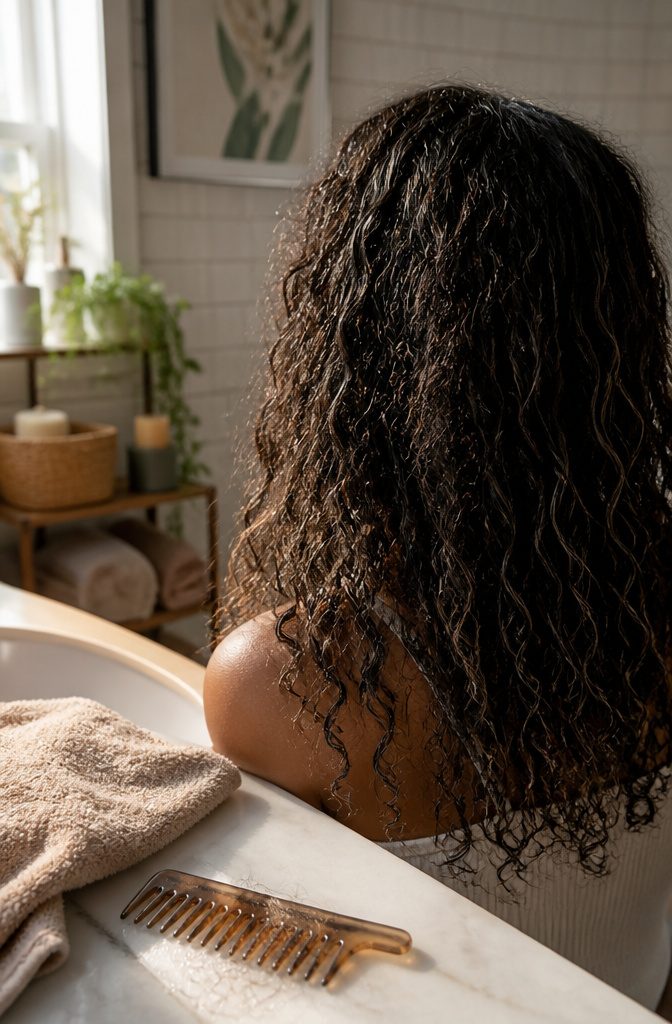
High porosity hair absorbs moisture and products quickly but loses them just as fast, usually because the cuticles are raised, open, or damaged.
That damage comes from chemical processing like color, perms, or relaxers, from heat styling, or from rough handling over time.
The cuticle layer sits open instead of flat, so water and product rush in but escape before they can do much good.
The result is hair that feels dry, looks frizzy, and breaks more easily than it should. It tangles, lacks shine, and may feel brittle even after you condition it.
Color fades faster, too, because the open cuticles let pigment slip out the same way moisture does. If your hair dries out within an hour of washing or never seems to stay soft, raised cuticles are usually the reason.
Signs Your Hair Is High Porosity
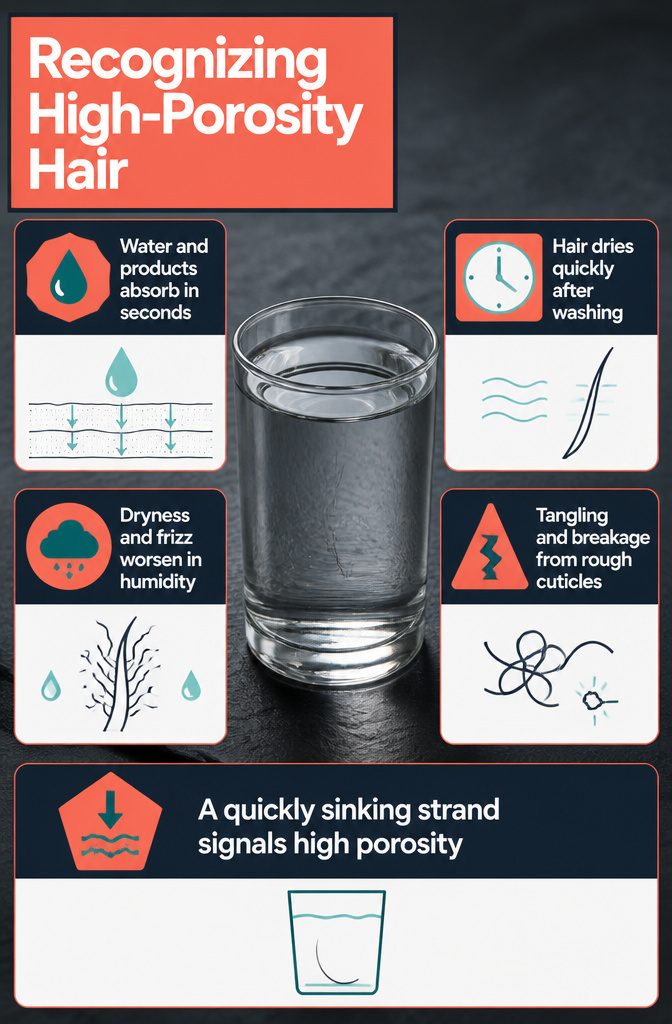
If your hair dries out fast after washing, tangles easily, or feels rough and frizzy within a day, you may be dealing with high porosity. Here are the signs to watch for:
- Water and product absorb almost instantly. Spritz a section with water; if it feels damp in seconds, the cuticle is letting moisture through.
- Hair dries quickly after a shower. High porosity strands release moisture as fast as they take it in.
- Persistent dryness and frizz, especially in humid weather. The raised cuticle catches moisture from the air but does not hold it.
- Frequent tangling and breakage. The rough, open cuticle snags on itself and on neighboring strands.
To test at home, drop a clean strand into a glass of water. A strand that sinks quickly points to high porosity; if it floats on top, porosity is low.
1. Cleanse Gently Without Stripping Oils
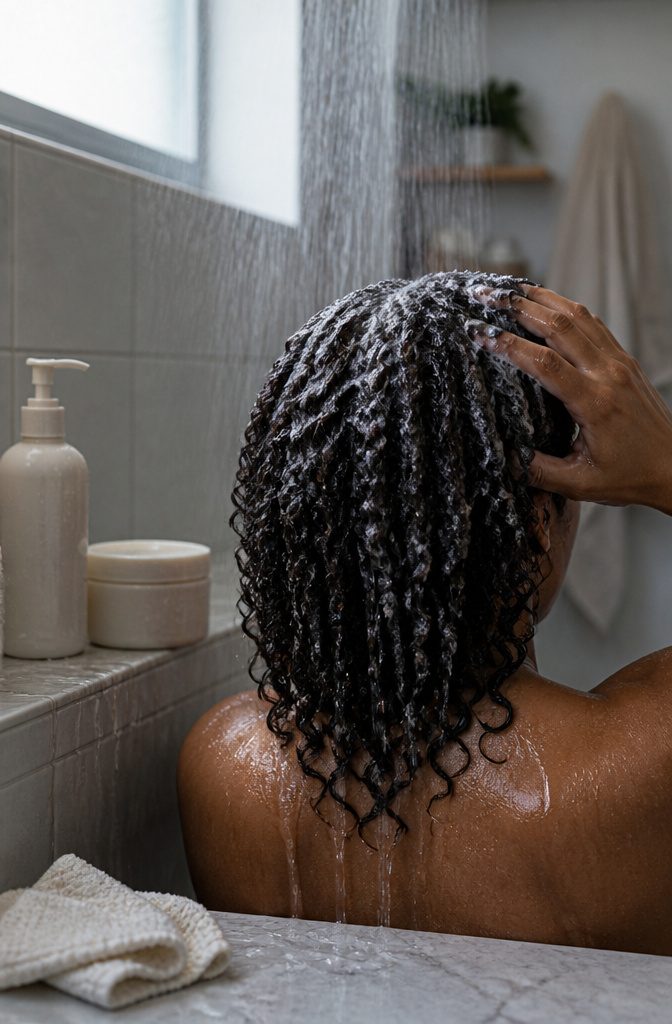
Stripping shampoos rip through the cuticle and leave high porosity hair drier than it started. Choose a sulfate-free, moisturizing cleanser that removes buildup without pulling out the natural oils your hair needs to hold onto hydration.
Ingredients like panthenol and plant-based oils condition the strand while they clean it, instead of working against the structure you are trying to repair.
If you co-wash between regular shampoo days, that is fine for high porosity hair. The conditioner formula is gentler than surfactant-heavy shampoos.
But skipping real shampoo entirely lets product residue pile up on the scalp and block moisture from getting in. Use a proper cleanser at least once a week, even if you rely on co-washing the rest of the time.
Rinse with lukewarm water, not hot.
Hot water lifts the cuticle further and makes it easier for moisture to slip right back out. Lukewarm keeps the cuticle from opening any wider than it already sits.
2. Condition and Deep Condition
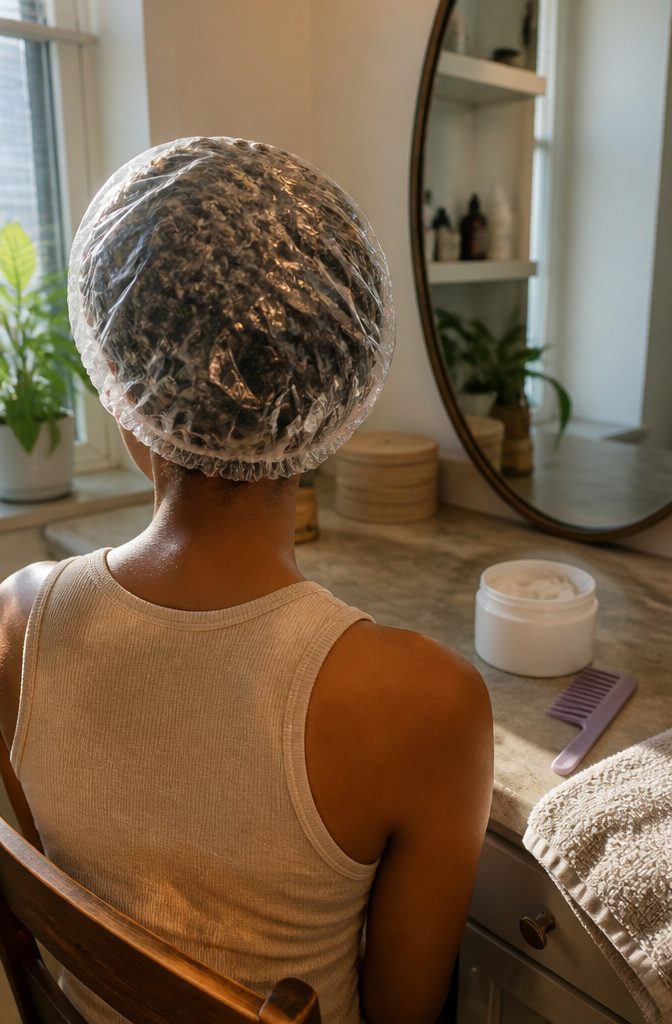
A moisturizing conditioner after every wash keeps porosity from turning into constant dryness.
High porosity hair loses water as fast as it takes it in, so a richer deep conditioner or mask becomes part of the regular schedule rather than an occasional rescue.
How often depends on how damaged the hair is and how dry it feels. Some people deep condition every wash, others once a week, and a few stretch it to every two weeks when the hair is in better shape.
The treatment itself takes at least 20 to 30 minutes under a plastic cap. Extra heat from a dryer or steamer is not required, though some people like the way it feels.
The cap alone traps enough warmth to let the conditioner work. When the hair starts looking limp or tangled faster than usual, that is the signal to move the next deep conditioning session up a few days.
3. Add Moisture and Strength With Leave-In and Protein
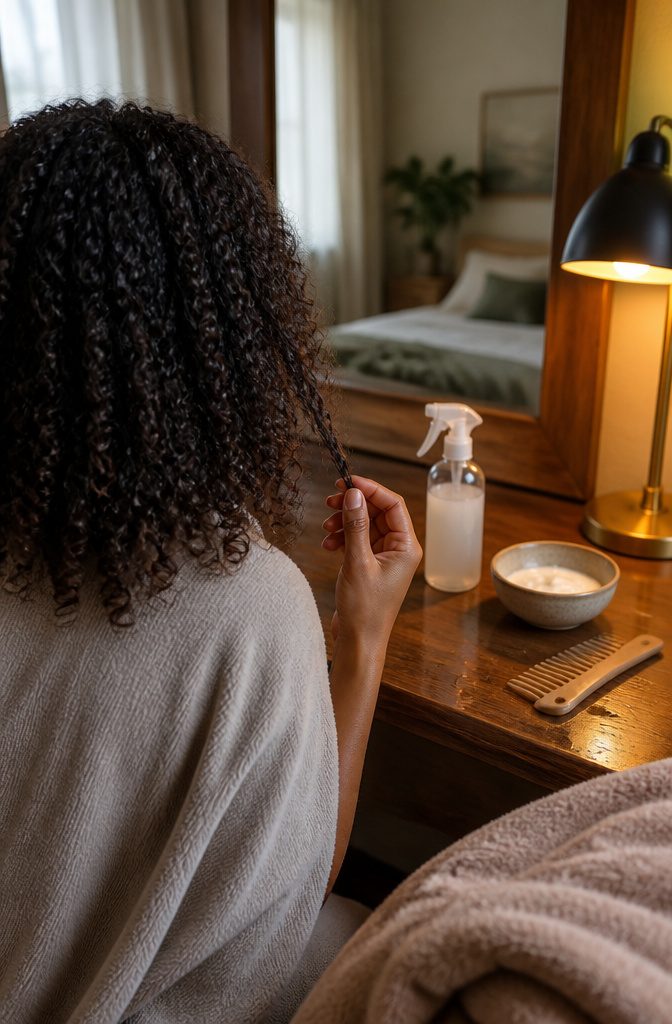
After deep conditioning, a water-based leave-in holds moisture close to the strand. The LOC method builds from there: liquid first, then oil, then cream.
Each layer seals the one before it. I look for leave-ins light enough that they sink in rather than sit on the surface, since weight flattens what structure is left.
High-porosity hair requires both internal strengthening and surface sealing through ingredients that both strengthen the cortex and seal the cuticle: think hydrolyzed proteins (collagen, keratin, silk) and humectants like glycerin or panthenol to attract moisture.
— Allure
Protein treatments patch the gaps in lifted cuticles, making strands stronger and more elastic.
Some sources suggest protein a couple of days a week, others place it every two to three weeks before deep conditioning. Balance matters.
Too much and hair turns stiff, too little and it stays weak. Bond repair treatments like Olaplex No. 3 work deeper, reconnecting bonds broken by color or bleach.
Watch how your hair feels after use. Protein-balanced hair should feel strong and supple, not brittle.
4. Seal With Oil, Butter, or Cream
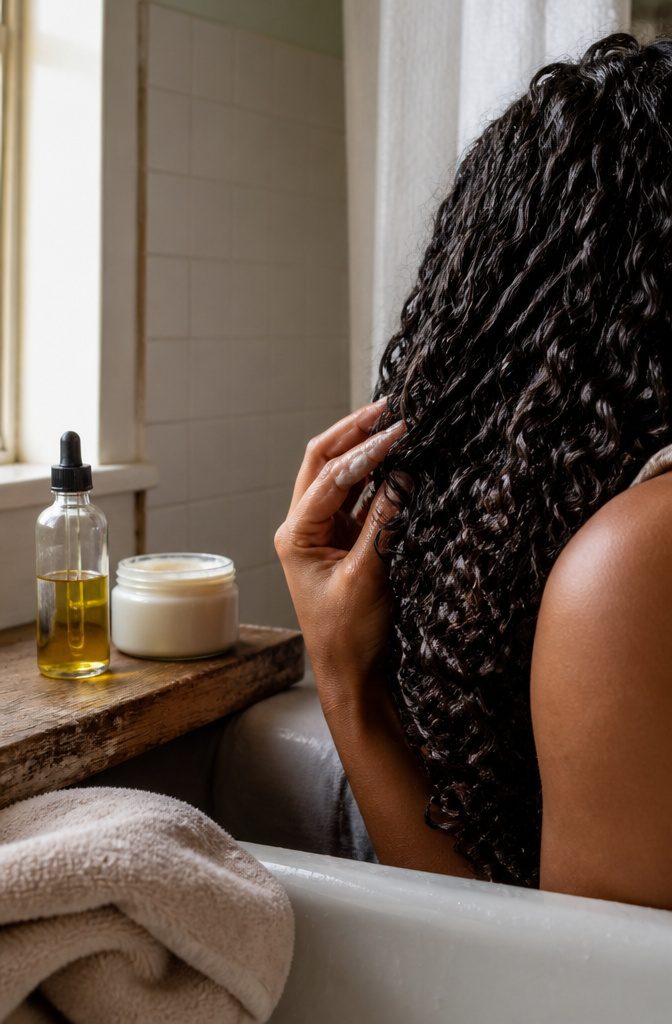
Once you’ve added moisture, the next step is to slow how fast it leaves. High porosity hair releases water almost as quickly as it absorbs it, so sealing right after conditioning gives you hours of softness instead of minutes.
The LOC method layers three textures to trap moisture: a water-based leave-in first, then oil, then cream. The leave-in deposits hydration directly onto the strand.
The oil sits over the lifted cuticle and slows evaporation. The cream locks it all in and adds definition or smoothness depending on what you’re styling toward.
Some people flip the last two steps and run LCO instead, cream before oil, and that works better for thicker or tighter curl patterns where the cream needs to grip the strand before the oil seals the surface.
For oils, jojoba, castor, and avocado are heavy enough to plug the gaps in damaged cuticles. Argan and grapeseed feel lighter if your hair is fine or easily weighed down.
After the oil, a styling cream or butter finishes the seal, and if you’re working with curls, a styling jelly on top holds the shape and fights frizz through the day.
5. Protect Hair and Maintain It Between Washes

Between washes, the work stays light but it stays consistent. High porosity hair dries out faster than other types, so refresh every one to two days with a water-based mist or a diluted leave-in to keep moisture levels steady.
A few habits prevent friction and moisture loss without adding steps:
- Sleep on satin or silk. A satin pillowcase or bonnet stops cotton from wicking away hydration and creating friction that roughens the cuticle further.
- Limit heat styling. Each session on already-lifted cuticles risks more damage. When heat is necessary, apply a protectant and keep the temperature low.
- Detangle gently with conditioner or a slip product. Dry detangling on high porosity hair causes breakage.
- Shield hair from sun, wind, and pool water. Wear a hat or scarf outdoors, and rinse with clean water after swimming in chlorinated or salt water.
When to Use Protein and Bond Repair
When to Use Protein and Bond Repair
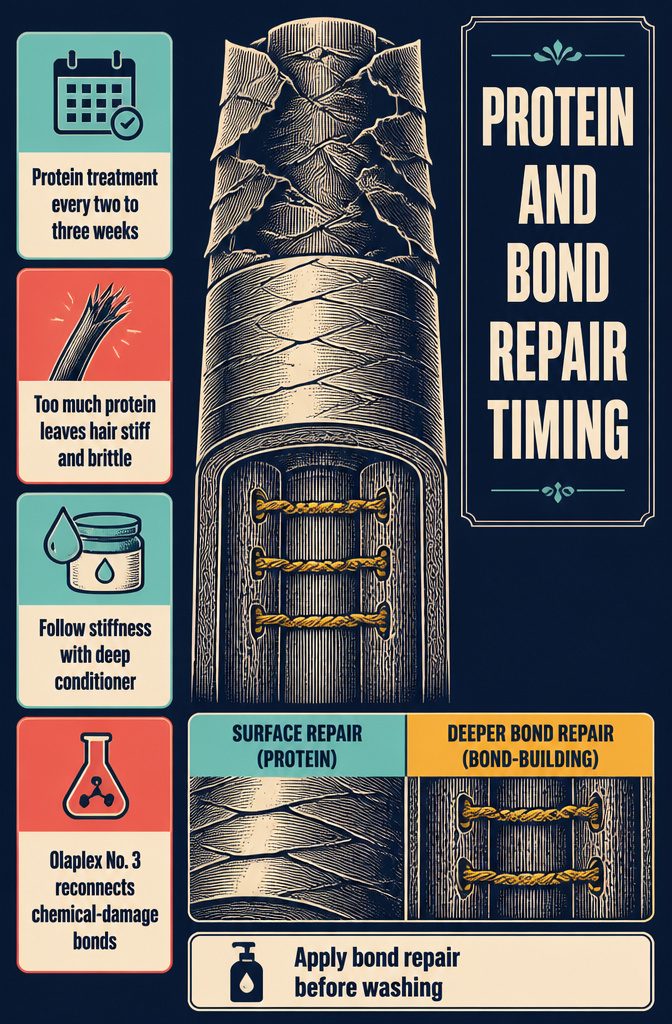
Protein treatments work by temporarily filling the gaps in the raised cuticle with hydrolyzed protein molecules, reducing the surface area through which moisture can escape.
Think of it as patching holes before you pour in water. For high porosity hair, that structural step makes everything that follows more effective.
Use a protein treatment every two to three weeks.
Balance matters here. Too much protein leaves hair stiff and brittle; too little and the strands stay weak and prone to breakage.
Hair that feels strong but still supple tells you the frequency is right. If stiffness shows up, pull back and follow immediately with a moisturizing deep conditioner.
Bond-building treatments go deeper. Products like Olaplex No. 3 reconnect the disulfide bonds that chemical processing breaks during color or bleaching, working inside the cortex rather than just patching the surface.
Applied to dry or damp hair before you wash, bond repair is especially useful when high porosity came from chemical damage rather than heat or mechanical wear.
Managing Heat, Humidity, and Environmental Exposure
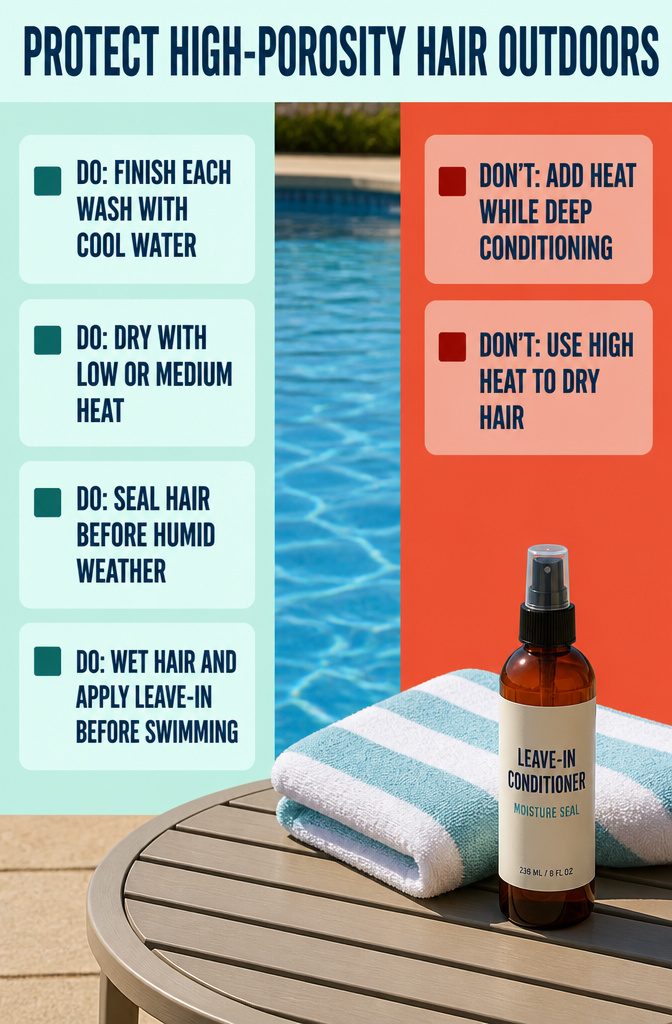
High porosity hair absorbs water and loses it just as fast, and that same openness leaves the cuticle vulnerable to anything in the air.
- Rinse with cool water at the end of every wash. Hot water swells the cuticle even more; a cool rinse smooths it down and helps the hair hold onto the moisture you just put in.
- Skip extra heat when you deep condition. The cuticle is already open enough to take in product, and adding heat can dry the strand out further instead of helping it absorb.
- Use low or medium heat when you dry, never high. Gentle airflow gets the job done without pushing more moisture out through those lifted cuticles.
- Limit time in humid weather without protection. High porosity hair pulls moisture from the air until it swells and frizzes, so a sealing product or a protective style keeps the cuticle from overloading.
- Chlorine and salt water soak in fast and leave residue behind. Wet your hair with clean water and apply a leave-in or oil before swimming so the strand is already full and cannot take in as much from the pool or ocean.
Frequently Asked Questions
How do I know if I have high porosity hair?
Drop a clean strand into a glass of water.
If it sinks quickly, your hair is high porosity. You can also spritz a section with water; if it absorbs almost instantly and feels damp in seconds, the cuticle is open and letting moisture through.
What causes high porosity hair?
Chemical processing like color, perms, or relaxers opens the cuticle, as does heat styling and rough handling over time.
Some people have naturally high porosity hair, but most cases come from damage that lifts the cuticle layer instead of leaving it flat.
Does protein help high porosity hair?
Yes.
Protein treatments fill the gaps in raised cuticles, making strands stronger and more elastic. Use one every 2 to 3 weeks, and follow with a moisturizing deep conditioner to keep hair from turning stiff.
How often should high porosity hair be washed?
Wash with a sulfate-free shampoo at least once a week to remove buildup. You can co-wash between shampoo days, but skipping real cleanser entirely lets residue pile up and block moisture from getting in.
Is coconut oil good for high porosity hair?
Heavier oils like jojoba, castor, and avocado plug the gaps in damaged cuticles better than lightweight options. Coconut oil can work, but thicker oils with more fatty acids slow moisture loss more effectively on hair with raised cuticles.
How often should I use Olaplex No. 3 on high porosity hair?
Every 2 to 4 weeks works for most people with chemical damage. If your hair is severely damaged, you can use it weekly during an initial repair period, then taper to monthly maintenance once the hair improves.
Is high porosity hair weak?
Not necessarily, but it is more prone to damage and dryness because the cuticle stays open. Proper hydration and protein treatments strengthen the strand and improve resilience over time.
How long does high porosity hair take to dry?
High porosity hair dries quickly after washing, often within 15 to 30 minutes depending on length and thickness. The open cuticle releases moisture as fast as it absorbs it, which is why it feels dry so soon after you condition.
What’s the difference between low porosity and high porosity hair?
Low porosity hair has a closed cuticle that resists moisture entering. High porosity hair has a raised cuticle that absorbs moisture quickly but releases it just as fast, leaving strands dry and frizzy.