An aloe vera hair mask moisturizes dry strands and soothes scalp irritation without weighing hair down, but you need to rinse it thoroughly or it leaves a light film that dulls shine.
The simplest version mixes 2 tablespoons of aloe gel with 1 tablespoon of virgin coconut oil, applied from mid-shaft to ends and left on for 30 minutes to an hour.
1. Aloe Vera and Coconut Oil Mask
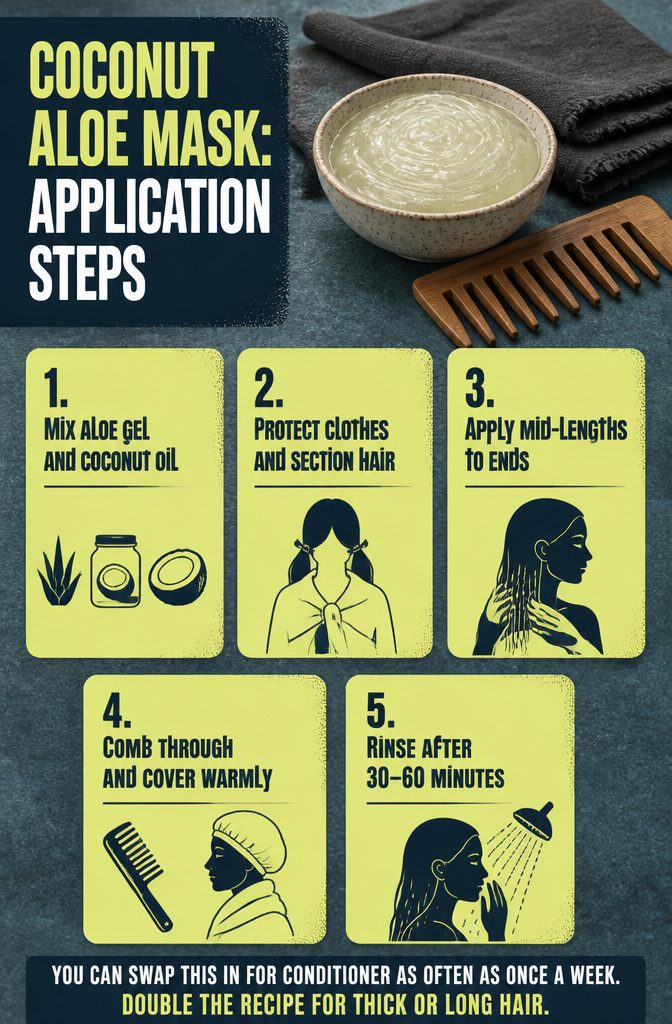
- Mix 2 tablespoons of aloe vera gel with 1 tablespoon of virgin coconut oil until smooth. Solid coconut oil melts in seconds in the microwave. You can also blend in 2 tablespoons of coconut milk or 1 teaspoon of honey for extra slip and shine.
- Protect your clothes with a towel or old shirt, then divide long hair into sections for easier coverage.
- Apply the mask starting at mid-shaft and work through to the ends with your fingers. Once the ends are saturated, massage any leftover product into your scalp.
- Comb through with a wide-toothed comb to distribute evenly, then cover your hair with a shower cap and wrap a towel over it to trap warmth.
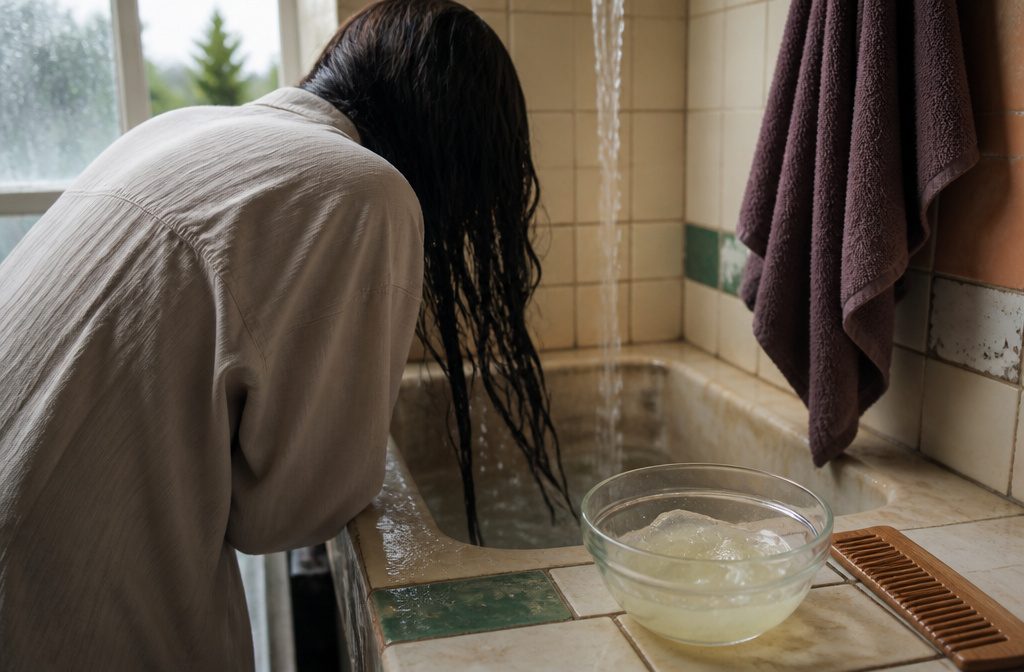
- Leave on for 30 minutes to an hour, then rinse thoroughly with warm water. Aloe vera can leave a light film, so wash with shampoo if needed.
You can swap this in for conditioner as often as once a week. Double the recipe for thick or long hair.
2. Aloe Vera and Apple Cider Vinegar Mask for Flakes
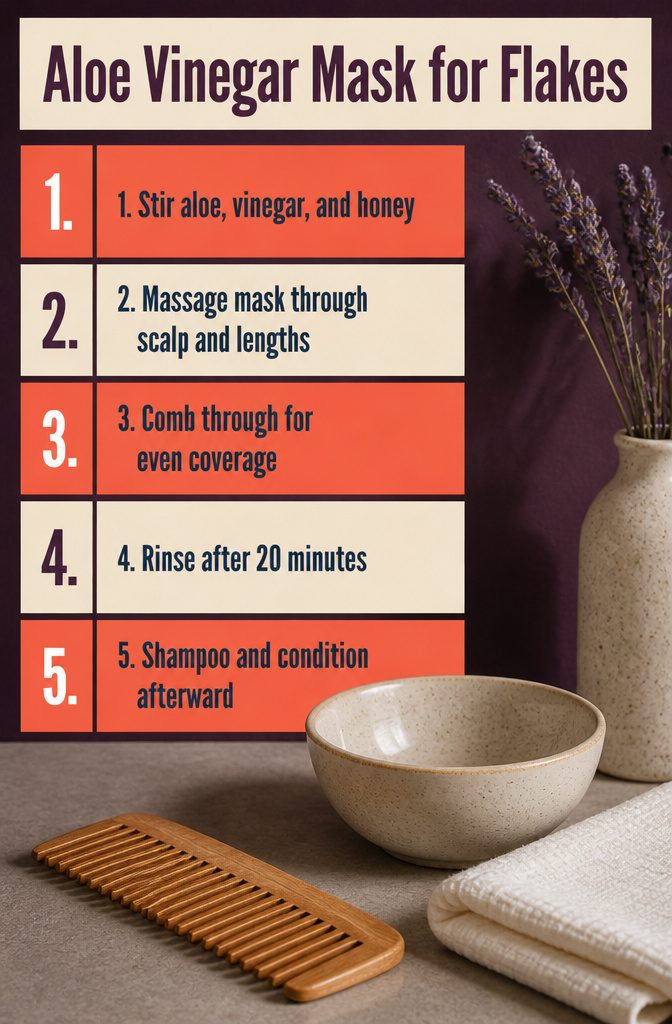
- Combine 4 tablespoons aloe vera gel, 2 teaspoons apple cider vinegar, and 1 teaspoon honey in a small bowl and stir until smooth.
- Part your hair into sections and massage the mask directly onto your scalp, working through to the ends until everything is saturated.
- Run a wide-toothed comb or wet brush through your hair to distribute the mask evenly.
- Leave the mask on for 20 minutes, then rinse with warm water.
- Follow with a mild shampoo and conditioner to remove any lingering vinegar scent.
The apple cider vinegar helps shed dead skin and kill bacteria, while the honey locks in moisture and smooths the hair shaft.
I use this mask every other week when flakes show up, though some people go weekly if their scalp needs it. The vinegar smell fades once you shampoo, and the short application time makes it manageable even on a weeknight.
3. Aloe Vera and Yogurt Mask
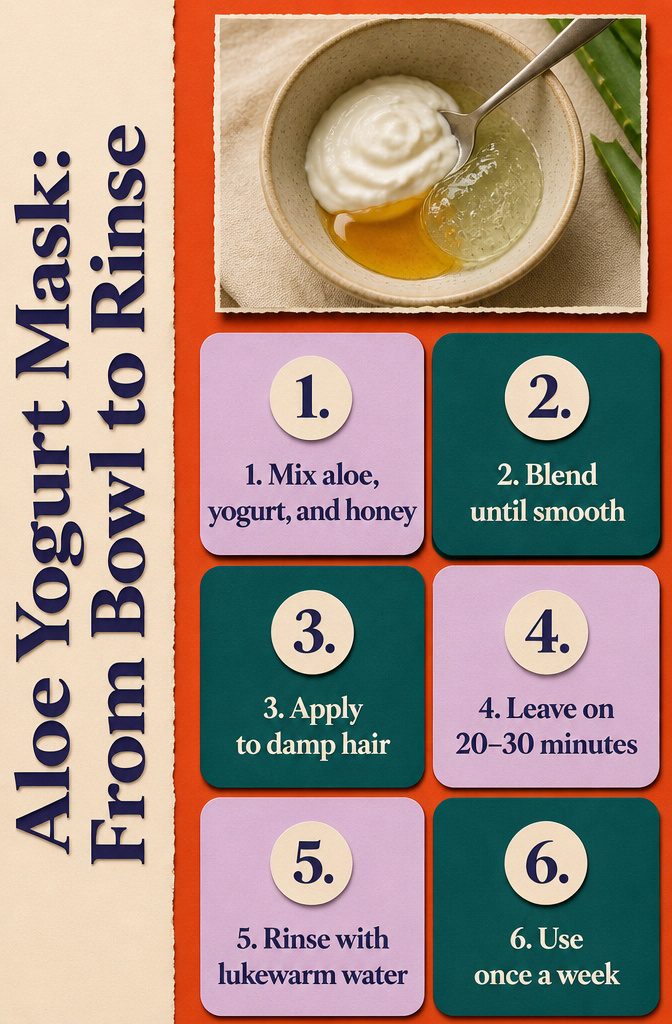
Aloe Vera and Yogurt Mask
- Mix 2 tablespoons each of aloe vera gel, plain yogurt, and honey in a bowl. You can also try 3 tablespoons aloe with 2 tablespoons yogurt if you want a lighter consistency.
- Blend the ingredients together until smooth.
- Apply the mask to damp hair, starting at the roots and working through to the ends.
- Leave it on for 20–30 minutes, no longer.
- Rinse thoroughly with lukewarm water.
- Use once a week for best results.
The yogurt brings probiotic properties that may help with dandruff, according to a 2017 study. Choose full-fat, plain, unsweetened Greek yogurt for this recipe.
4. Aloe Vera and Green Tea Mask
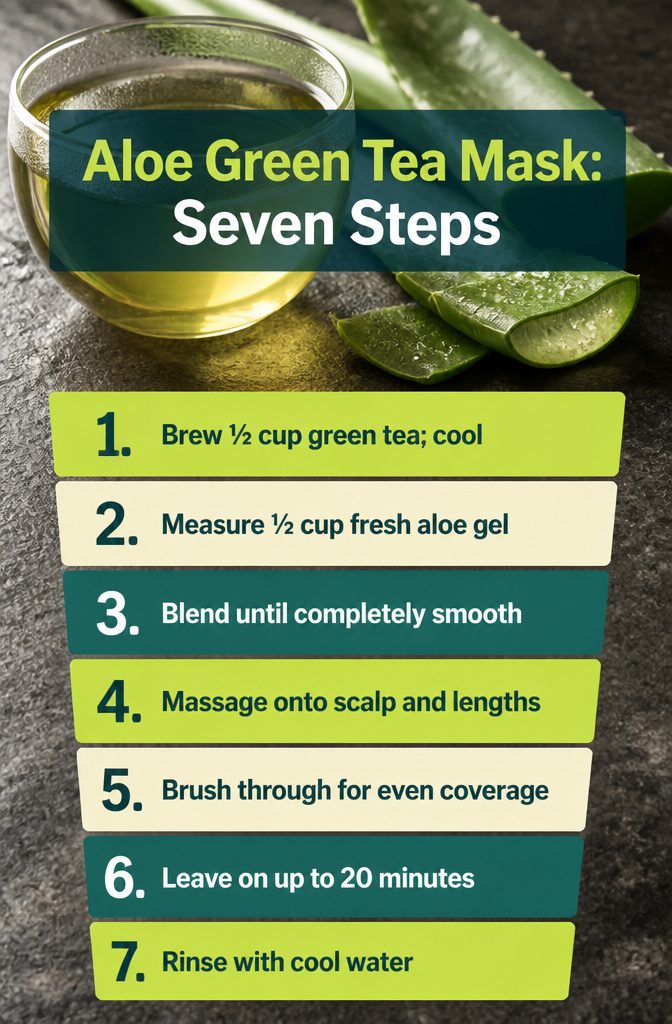
Aloe Vera and Green Tea Mask
- Brew ½ cup of green tea and let it cool to room temperature.
- Measure out ½ cup of fresh aloe vera gel.
- Blend both ingredients together until the mixture is completely smooth. Any lumps will stick to your hair.
- Massage the mask onto your scalp first, then work it through the length of your hair until every section is saturated.
- Brush through with a wet brush or wide-toothed comb to distribute evenly.
- Leave the mask on for up to 20 minutes.
- Rinse with cool water.
Green tea contains antioxidants believed to support hair growth, so this option stacks moisture with scalp stimulation. I repeat it once per week to get the full benefit without overloading my hair.
5. Fresh Aloe Gel Applied Directly
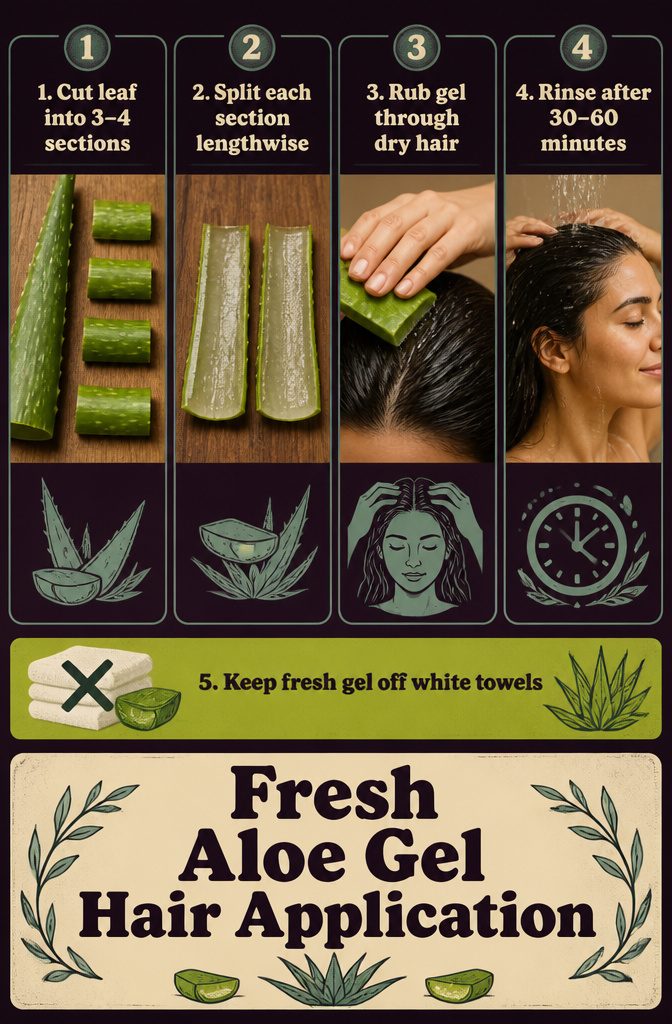
- Cut a thick leaf from the outer section of an aloe plant, then slice it into three or four shorter sections to make the gel easier to reach.
- Slice through the middle lengthwise with a sharp knife to separate the two halves, exposing the clear gel inside.
- Rub the cut side of each leaf section directly over dry hair, starting at the roots and working down through the lengths and ends. You can also part your hair into sections and apply the gel to the scalp with your fingertips, massaging in small circles for 3–5 minutes.
- Leave the gel on for 30 minutes to an hour, then rinse and wash with a mild sulfate-free shampoo.
- Keep the leaves away from white towels. The bright green gel can stain fabric, and fresh aloe has a strong smell that fills the room—closer to raw onions than the odorless bottled gel you may be used to.
What Aloe Masks May Do for Hair and Scalp
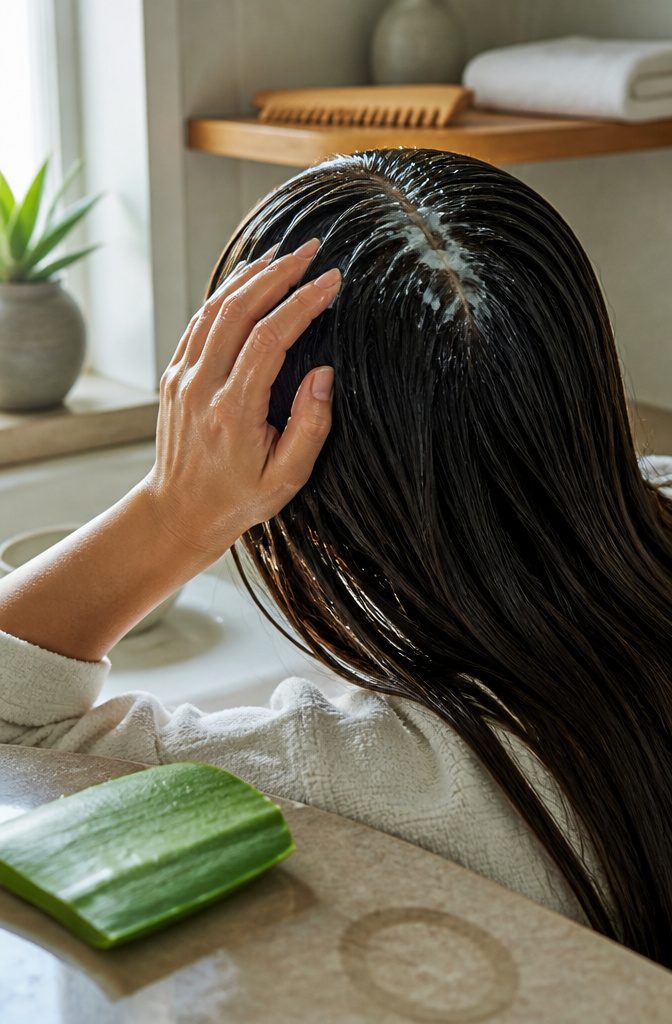
Aloe vera gel moisturizes dry strands, soothes scalp irritation, and gently strips away oil and product buildup without damaging hair.
The plant contains over 75 potentially active constituents, including vitamins A, C, E, and B12, plus enzymes and fatty acids that may help reduce inflammation and strengthen hair from the roots.
People have used aloe for baldness as far back as 70 AD, though modern research on its hair benefits remains limited.
In terms of making hair grow faster, the jury is still out, and I’m skeptical. A natural remedy like aloe vera might boast anecdotal evidence to back it up, but I didn’t notice any immediate effects and doubt that this would work for me in the long run.
If you’re hoping for faster growth, temper your expectations. Aloe makes hair feel shinier, softer, and lighter almost immediately, cutting through styling residue without adding weight.
Who Can Use an Aloe Vera Hair Mask
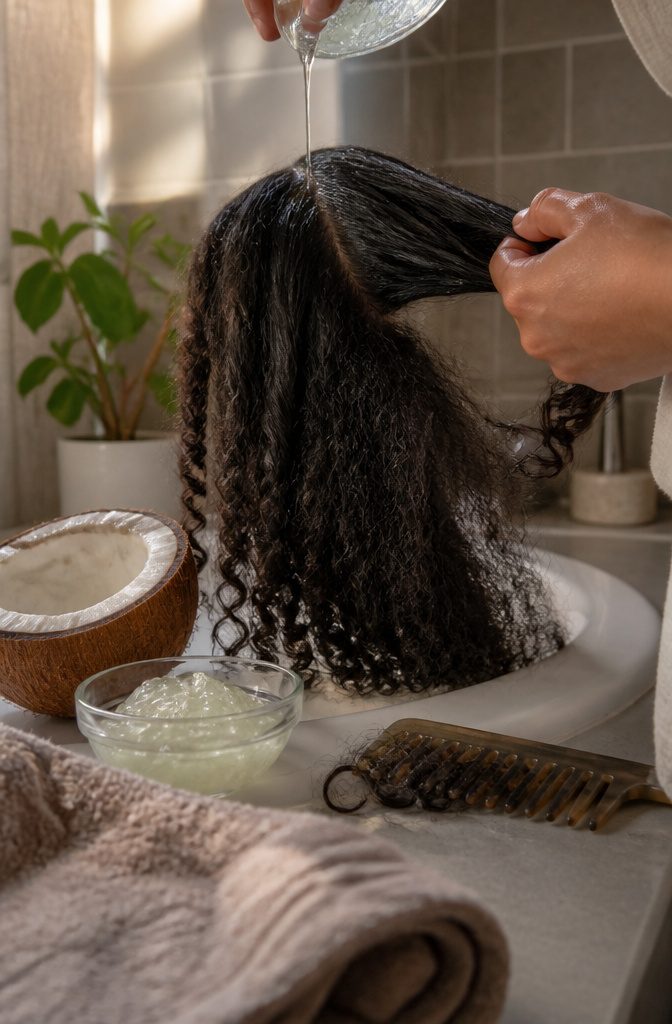
Aloe vera gel may work for multiple hair types, and no research singles out one best match. Professionals recommend it for oily hair, dry or damaged strands, and curly or natural textures.
Fine hair typically does better with a lighter aloe rinse than with a thick mask, while coarse, dry hair can handle richer combinations that include coconut oil or yogurt. The lightweight rinse suits anyone who finds traditional masks too heavy.
Frequency matters.
Once or twice a week is the upper limit, even for damaged hair. Rich masks deliver hydration, but using them too often leaves hair looking oily and creates conditions for bacteria or yeast to grow on the scalp.
Less turns out to be more with aloe masks, and stretching the interval keeps hair from building up residue or losing volume.
Patch Test and Safety Before Using Aloe
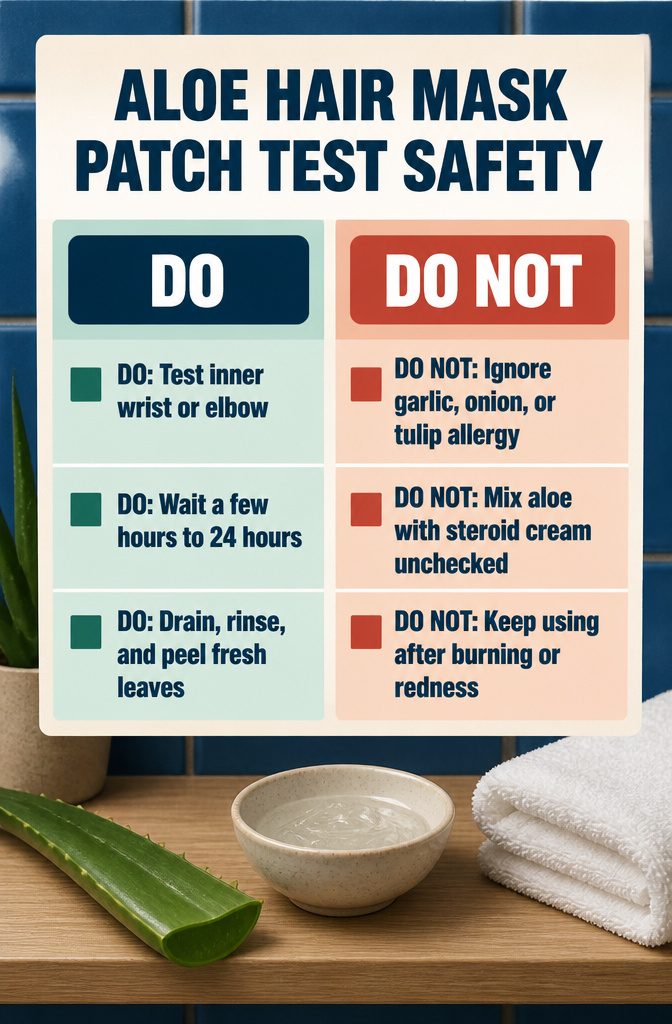
Before you mix any aloe vera mask, apply a small amount of gel to the inside of your wrist or inner elbow and wait a few hours to 24 hours to check for redness, itching, or swelling.
A few things to watch for:
- People allergic to garlic, onions, or tulips may also react to aloe, since they’re all in the same plant family (Liliaceae).
- If you’re using a steroid cream like hydrocortisone or cortisone on your scalp, check with a provider before applying aloe in the same area. Aloe increases how much of the steroid your skin absorbs.
- Fresh aloe leaves contain yellow latex that can irritate. Let it drain completely, rinse the leaf well, and peel away all traces before scooping out the clear gel.
- If you feel burning, excessive redness, or discomfort after applying aloe, rinse it out right away.
Frequently Asked Questions
How long should I leave aloe vera in my hair?
Most aloe vera masks work in 20 to 30 minutes for a quick treatment or 30 to 60 minutes for deeper conditioning. Rinse thoroughly with warm water when the time is up, then follow with shampoo if you notice any film or residue.
Is aloe vera suitable for all hair types?
Yes, aloe vera works across different hair types, though fine hair does better with a lighter rinse than a thick mask. Coarse, dry hair can handle richer combinations that include coconut oil or yogurt without getting weighed down.
How often should you use an aloe vera hair mask?
Use an aloe vera mask once or twice a week at most, even if your hair is damaged. Too-frequent application leaves hair oily and creates conditions for bacteria or yeast to grow on the scalp.
What can I mix with aloe vera for hair?
Coconut oil adds moisture for dry hair, apple cider vinegar helps shed flakes and balance pH, yogurt brings probiotic properties for dandruff, and green tea contributes antioxidants for scalp stimulation.
Honey smooths the hair shaft and adds slip to any of these combinations.
Will aloe vera make my hair sticky?
Pure aloe gel may leave a light film, but it washes away with shampoo. Blend the gel until smooth before applying and rinse thoroughly to avoid any leftover residue.
Can aloe vera help with hair fall?
Aloe vera moisturizes the scalp and may support a healthy environment, but it cannot prevent genetically determined hair loss. The real benefit is in how it makes hair feel right now: shinier, softer, and less weighed down by styling residue.
Are there any risks to using aloe vera on hair?
People allergic to garlic, onions, or tulips may also react to aloe, since they are all in the same plant family.
Patch test first by applying a small amount to the inside of your wrist and waiting a few hours to 24 hours for redness, itching, or swelling.
If you are using hydrocortisone or cortisone on your scalp, check with a provider before applying aloe in the same area, since aloe increases how much of the steroid your skin absorbs.
Can I use aloe vera gel on my hair every day?
Daily scalp use is possible for soothing relief, though hair masks should stay at once or twice a week. Using masks more often makes hair look oily and creates conditions for bacteria to grow.