Dry hair responds to ingredients that pull moisture in and hold it there, which is why aloe, honey and rosemary show up in so many homemade masks.
1. Stretchy Creamy Hair Mask
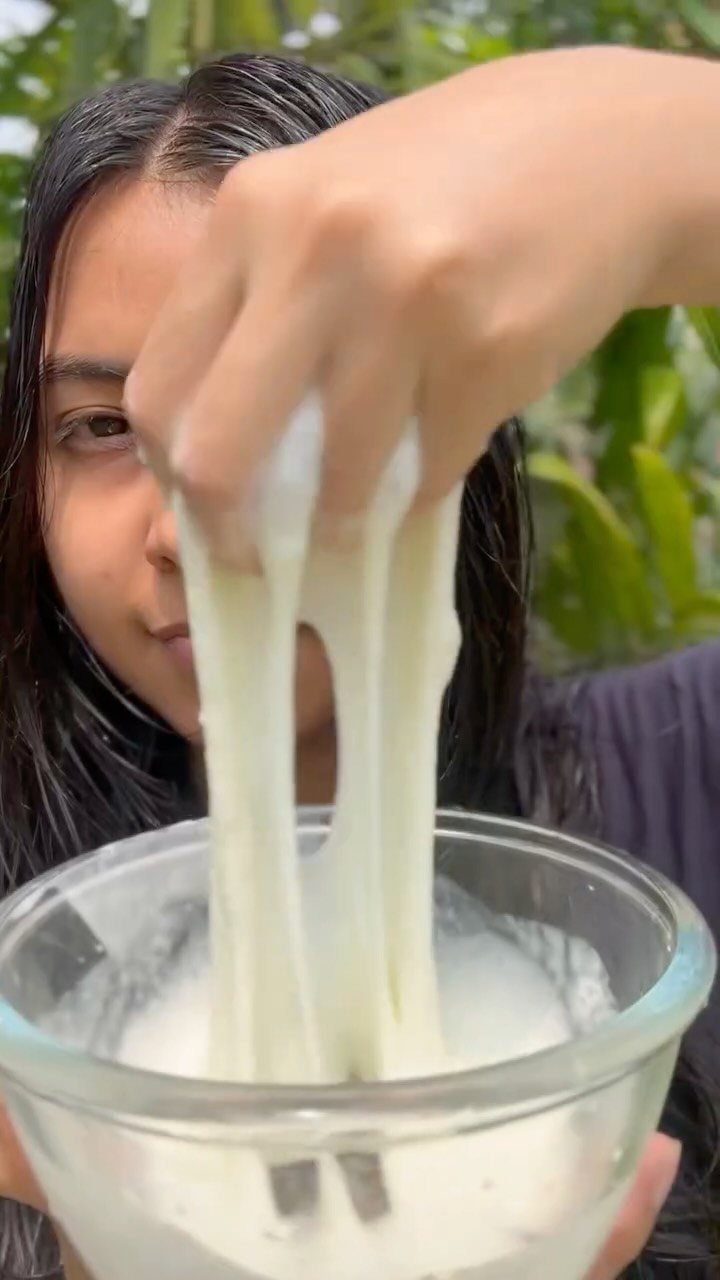
This thick white paste stretches when you pull it, which tells you it has slip for detangling and enough body to coat each strand without running off.
Whisk plain yogurt, coconut oil and honey until the mix turns smooth. The yogurt’s lactic acid gently cleans the scalp while the oil and honey add moisture.
Rinse thoroughly with lukewarm water, then shampoo once to remove any residue.
2. Fresh Aloe Vera Hair Mask
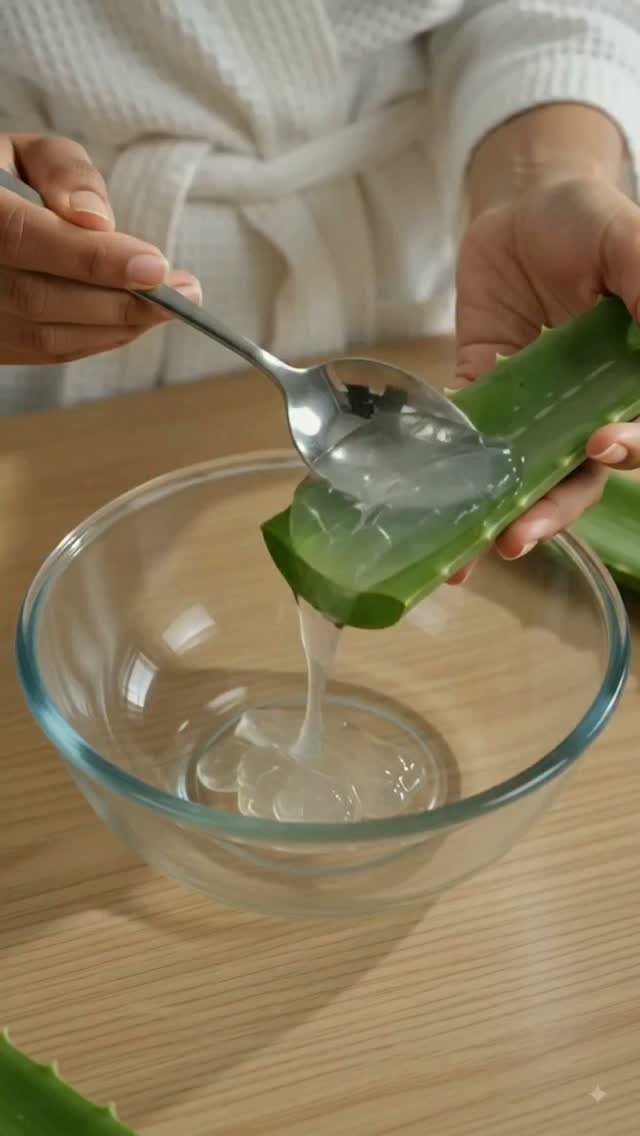
Scooping gel straight from the leaf gives you pure aloe without preservatives or thickeners. The clear gel soothes a dry, itchy scalp and adds lightweight moisture without weighing hair down.
Slice open a thick aloe leaf lengthwise and use a spoon to scrape the gel into a bowl.
Apply it to your scalp first, massaging it in, then work it through the lengths of damp hair. Rinse it out and shampoo when the aloe has had time to work.
3. Rosemary and Honey Hair Mask
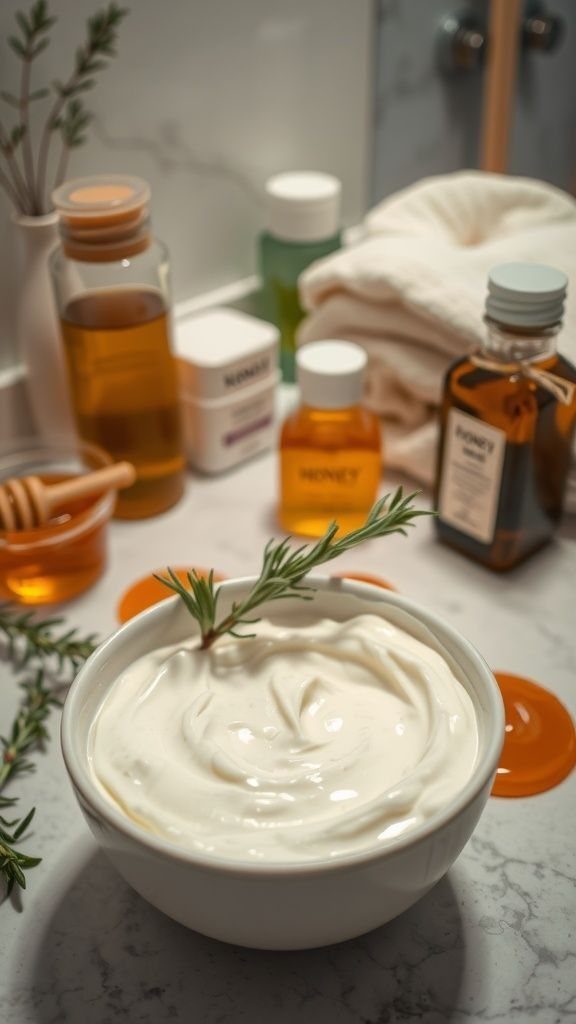
This mask pairs honey’s humectant pull with rosemary’s reputation for scalp circulation. The thick white base holds both ingredients and spreads easily through sections.
Stir plain Greek yogurt or mashed avocado with honey and finely chopped fresh rosemary.
Let the rosemary sit in the mix so its oils release. Cover with a shower cap and rinse when it has had time to condition, then shampoo.
4. Applied Paste Hair Mask
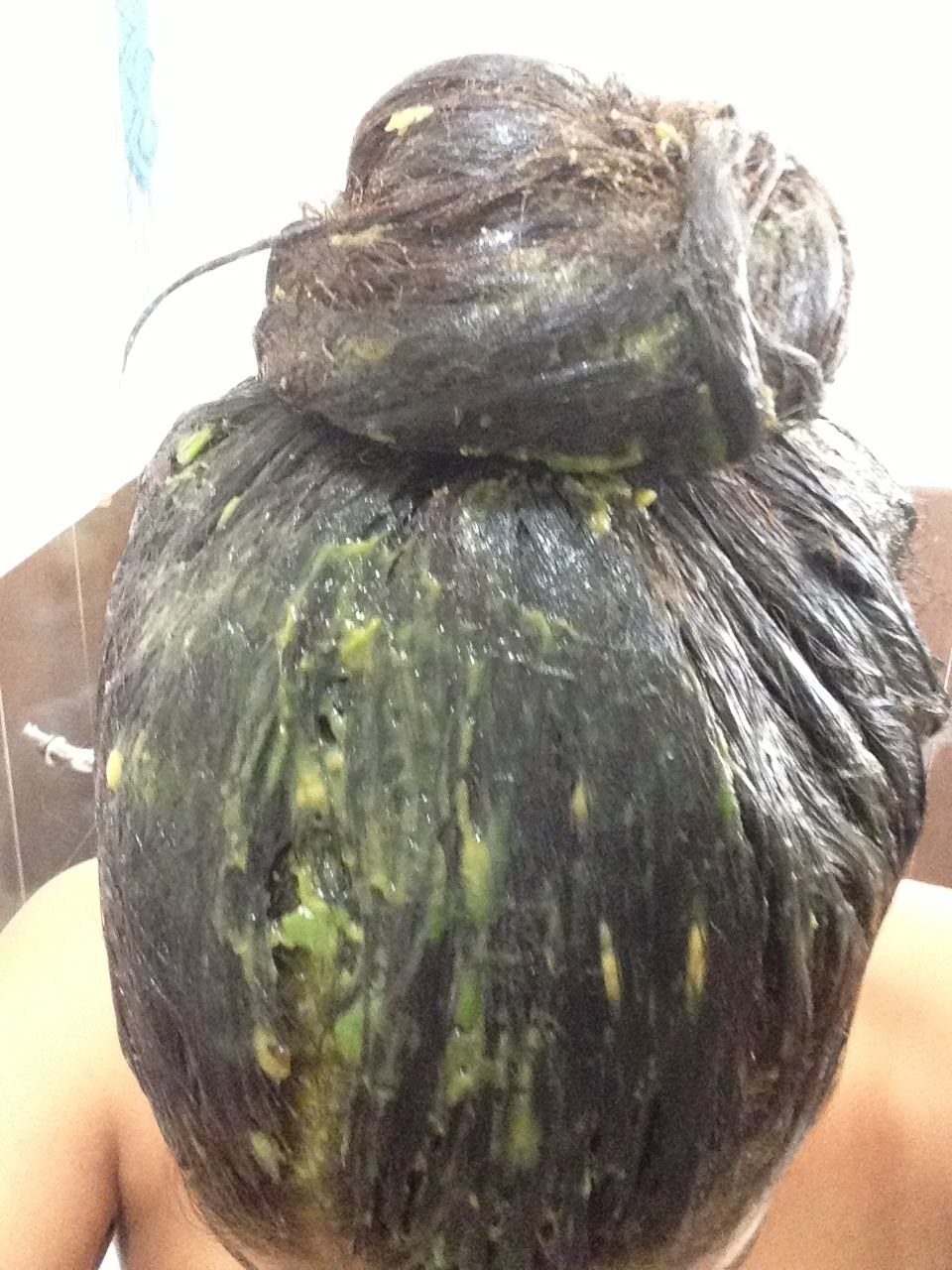
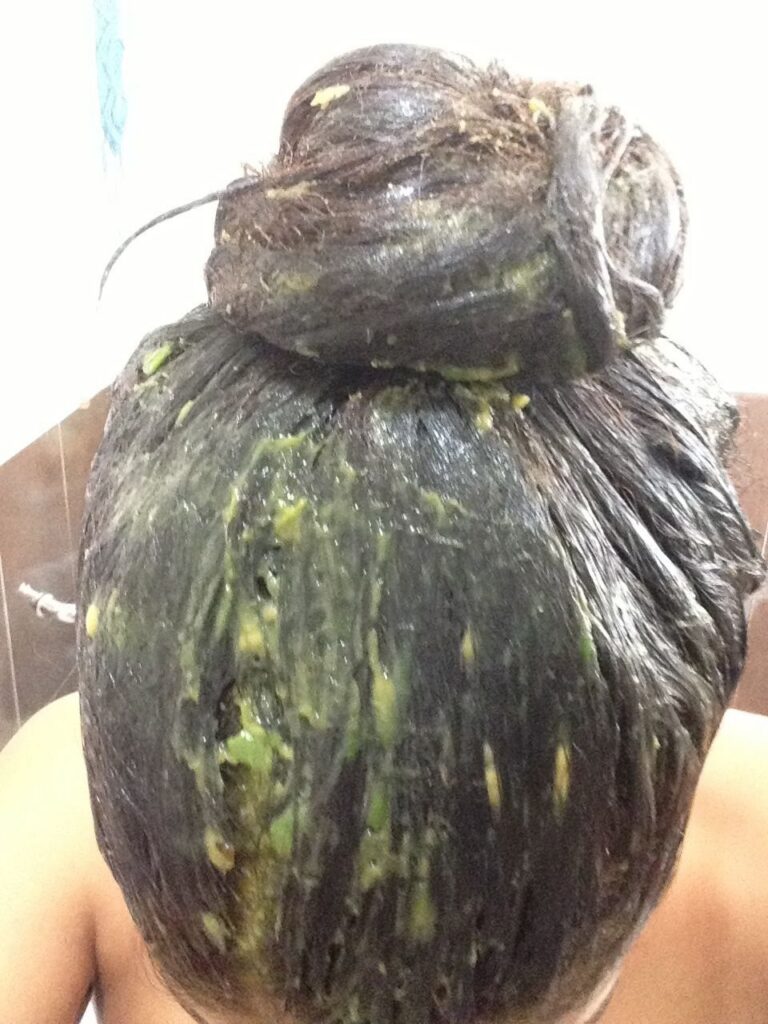
Coating hair while it’s tied up keeps the mask from dripping and lets you move around the house during treatment time. The thick green paste likely includes ingredients like avocado, spirulina powder, or matcha for color and moisture.
Apply the mask in sections, starting at the scalp and working down to the ends, then twist hair into a bun and clip it in place. Rinse thoroughly in the shower, letting warm water soften the paste before shampooing.
Mask Frequency and Duration
Most masks sit for 10–20 minutes, long enough for ingredients to condition without turning into an afternoon commitment.
You can stretch that to 2–3 hours if you want deeper penetration, or leave a gentle oil-based mask on overnight when your schedule allows it.
Hair that feels dry but manageable does fine with a treatment every 7 days.
Twice weekly suits hair that has been chemically treated, heat-styled often, or feels brittle. Add an extra mask the week your ends look frayed or your scalp feels tight.
The mask rinses out completely when you shampoo after, so the benefit comes from what absorbed during the waiting time, not from what lingers on the surface.
Hair Care Between Masks
Condition every time you shampoo so the cuticle lies flat after cleansing. Skip the towel rubbing and wrap hair instead, or let it air-dry partway before you touch it.
Cut back on flat irons, curling wands and blow dryers set above medium heat. Space out chemical treatments like color, relaxers and perms so hair has recovery time between services.
Brush before you shower, not after. Damp hair is more fragile and breaks more easily, so let it dry about halfway before you comb through with wide teeth, starting low and moving toward the roots.
You may see softer, shinier hair right after the first mask.
Repairing split ends or restoring elasticity takes a few weeks of regular use. If a month goes by with no change, ask a stylist what your hair needs.
Choose by Hair Type
Fine, straight hair needs moisture without weight, so skip heavy oils like coconut or castor and reach for yogurt or aloe-based masks instead.
If your hair has low porosity, warming the oil before you apply it helps it sink in.
Microwave 3–5 tablespoons of almond, jojoba or coconut oil for 10 seconds, apply it to damp hair and your scalp, comb through, and leave it for 20 minutes before rinsing and conditioning.
The warmth helps the cuticle open enough to let the oil in.
Curly and coarse hair holds masks well and tolerates richer ingredients. Oily scalps should keep heavy masks on the lengths and ends only, leaving the roots alone.
Color-treated hair needs gentler formulas that add moisture without stripping dye, so choose masks without sulfates or clarifying acids.
Frequently Asked Questions
What is the best hair mask for bleached hair?
Mashed banana mixed with melted coconut oil works well on bleached hair. Bananas contain silica and antioxidants that may help restore hair damaged by dye, while coconut oil adds moisture back in.
Work it through from root to tip, tuck your hair under a cap, wait an hour, then rinse and follow with shampoo.
Which hair mask is best for dry, frizzy, and damaged hair?
Banana masks work well for frizz because they lock in moisture with natural oils, potassium, and vitamins.
Frizz happens when hair lacks moisture, so the banana softens strands and helps prevent split ends. Mash a ripe banana until smooth, mix it with a tablespoon of oil, and apply it to damp hair for 20–30 minutes.
What is a good homemade hair mask for frizzy hair and split ends?
Banana and oil masks target both frizz and split ends by adding moisture and sealing the cuticle.
The banana’s vitamins and natural oils soften hair, while the added oil coats strands to smooth them. Avocado mixed with olive oil also works, since avocados contain minerals that seal cuticles and strengthen hair.
Do DIY hair masks really work?
Yes, masks give hair extra time to absorb conditioning ingredients that a quick rinse-out conditioner does not provide. Hair that has been color-treated, heat-styled, or feels dry benefits most because the longer contact time lets oils and humectants penetrate.
What are the best DIY hair masks for curly hair?
Curly hair holds richer masks well, so avocado, yogurt, honey, coconut oil, olive oil, and jojoba oil all work. They hydrate and bring out curl shape without making hair heavy or flat.





