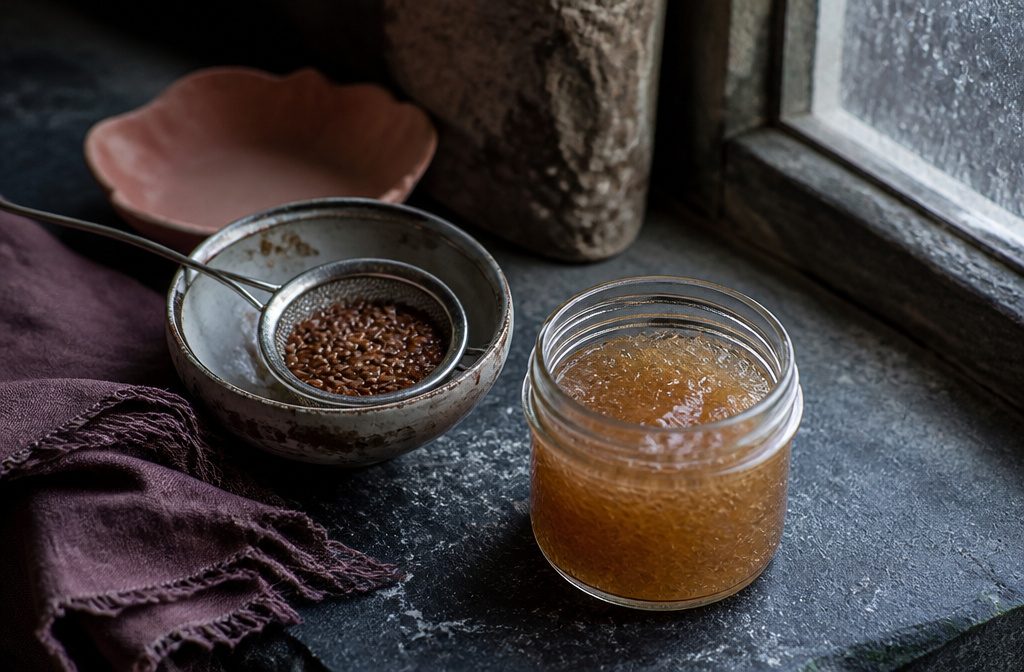
Flaxseed gel made from ¼ cup whole seeds and 2 cups water gives light-to-medium hold for curly hair without crunch, but only if you strain it while hot and let it cool completely before adding oils or aloe.
Most batches reach the right slippery, stringy texture in 5–15 minutes of simmering, and refrigerated gel lasts up to two weeks in an airtight jar.
1. What You Need: Seeds, Water and a Strainer
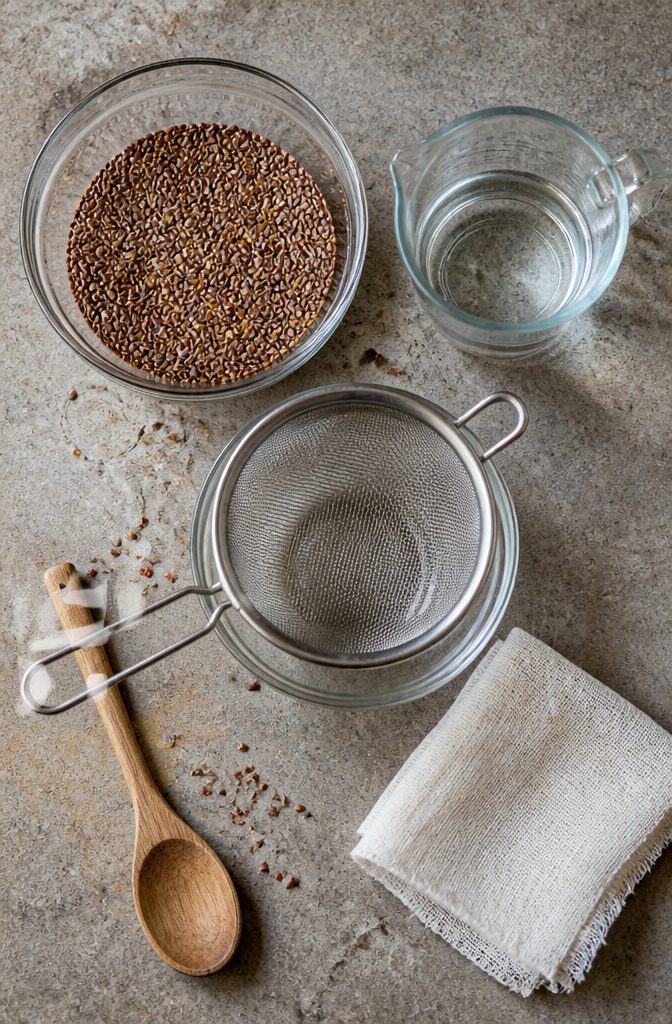
The foundation is simple: whole flaxseeds and water.
Most recipes call for ¼ cup of seeds to 2 cups of water, though some use 5 tablespoons instead, and others go as high as ½ cup. Golden or brown flaxseeds both work.
One source insists on whole seeds and rejects milled, but two others describe using ground flaxseed successfully. Ground seeds make straining trickier, since fine particles slip through pantyhose and need a cloth strainer to catch what escapes.
For straining, fine-mesh sieves, cheesecloth, nylon stockings and pantyhose all pull the seeds out while the gel drips through.
You can add oils like hemp seed or olive oil, aloe vera gel or juice, essential oils for fragrance, marshmallow root, xanthan gum or a natural preservative like rosemary extract or citric acid.
I recommend skipping the extras the first time. Master the basic gel before you add anything that changes how it behaves or how long it lasts.
2. Soak Seeds Overnight if You Want More Gel
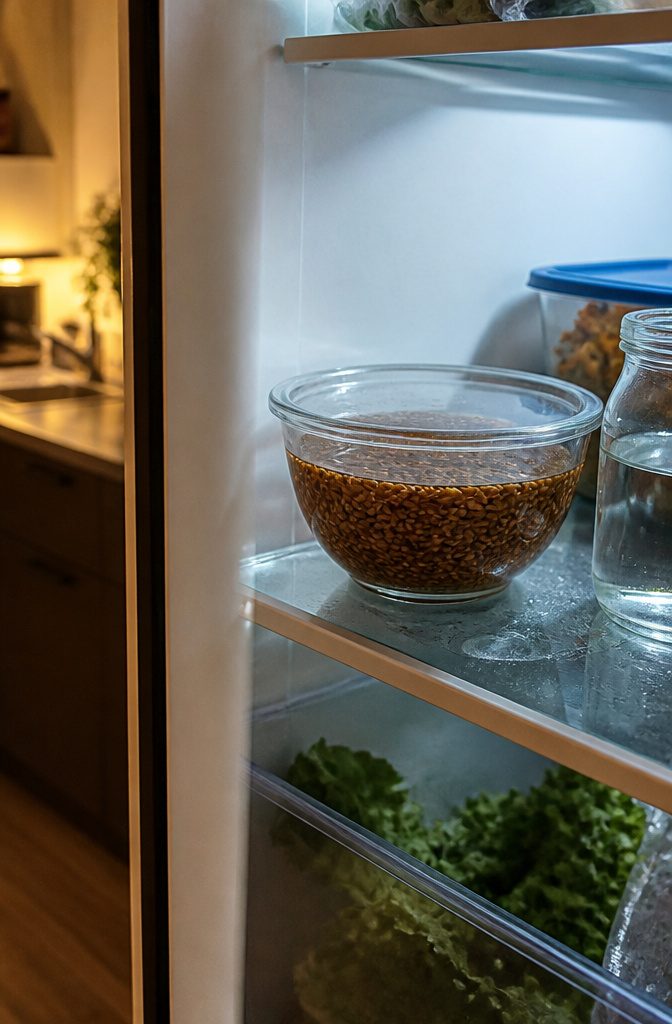
Soak Seeds Overnight if You Want More Gel
Soaking is optional. Most recipes skip it and go straight to cooking the seeds.
If you do soak, refrigerate the seeds in water for about eight hours. The extra time in water may increase the amount of gel you get when you cook them, but the method works fine without it.
I treat soaking as a choice that depends on how much gel I need. If I’m making a small batch for touch-ups between wash days, I skip the soak and save time.
If I want a bigger yield to freeze in cubes or share with friends, the overnight soak makes sense. The texture and hold stay the same either way.
3. Heat the Water and Seeds Together
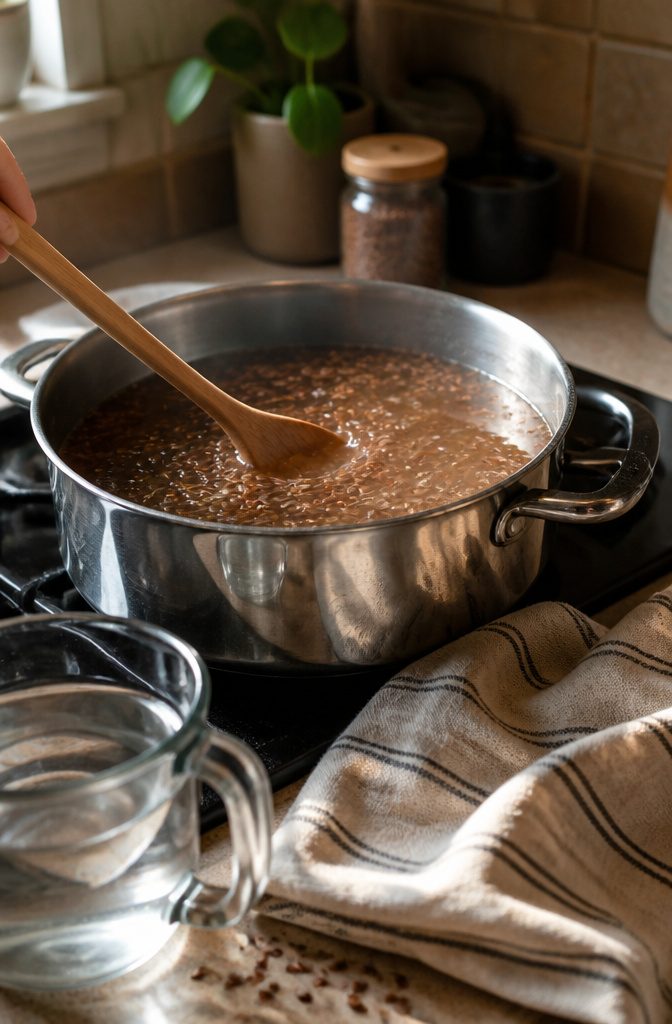
You can start both ingredients together in a cold pot or bring the water to a boil first and add the seeds after.
Either sequence works. The ratio matters more than the order.
Stir occasionally once the pot is on the heat so the seeds keep moving through the water instead of settling in a clump at the bottom. They release their gel faster when they stay suspended.
Use a pot that holds 2–3 US quarts.
Smaller pots risk overflow as the mixture foams and thickens. If it climbs toward the rim, pull the pot off the burner for a few seconds to let it settle before returning it to the heat.
Medium heat keeps the simmer gentle. You want bubbles, not a rolling boil that splatters gel across the stovetop.
4. Cook Until the Mixture Turns Slippery and Stringy
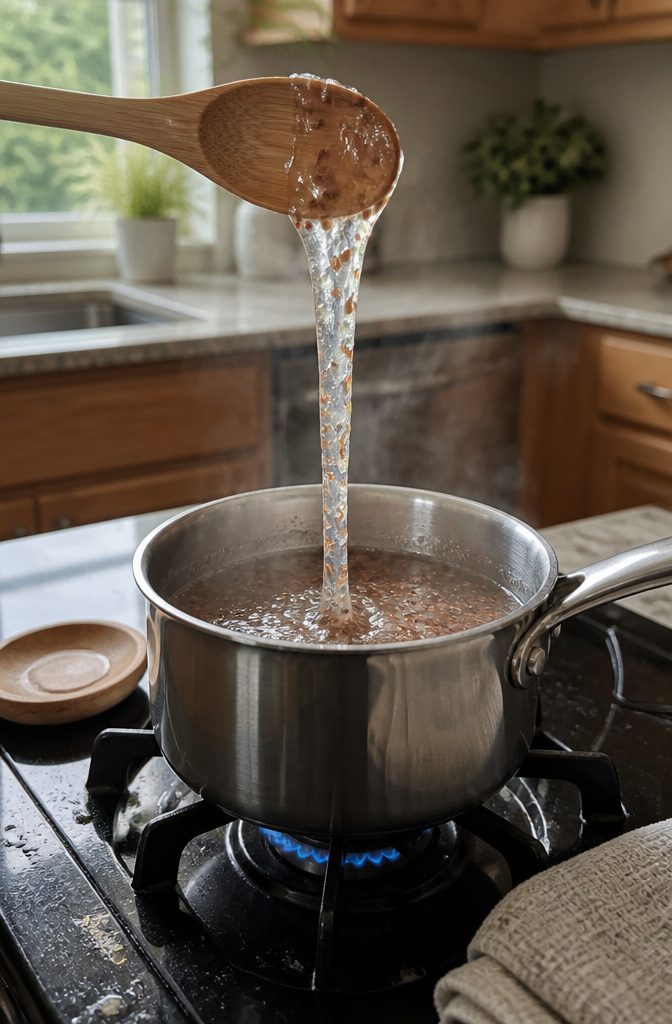
The mixture is ready when it turns slippery, stringy and slightly foamy, with a texture that looks a bit like raw egg white.
When you lift your spoon, the gel should fall back into the pot in a thin stream rather than running like plain water.
Timing depends on how thick you want the final gel and your seed-to-water ratio. For an easier strain, pull the pot at 5–7 minutes.
For thicker gel with stronger hold, simmer closer to 10–15 minutes. Some batches hit the right consistency around 10 minutes, others need 12.
If you let it cook too long, the gel becomes difficult to strain and may flake once it dries in your hair. I pull mine just before it looks overly thick, knowing it will firm up more as it cools.
5. Strain While Hot Through a Fine Mesh or Cloth
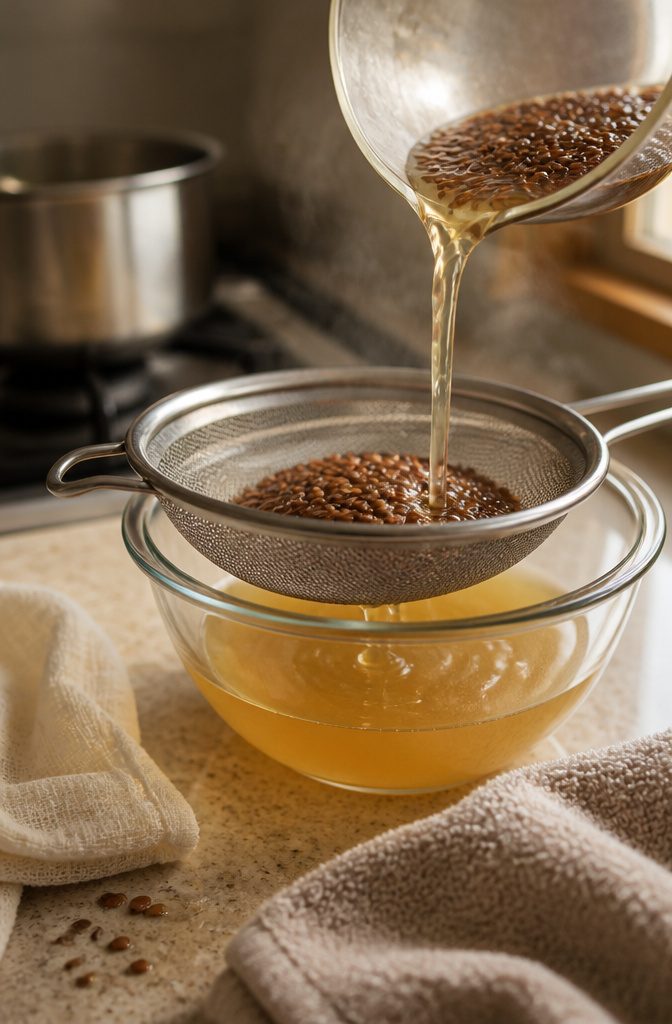
Most recipes tell you to strain while the mixture is still hot or just warm enough to touch, because flaxseed gel sets up firm as it cools and turning thick gel into a smooth product through cloth or mesh becomes much harder.
The window is short: once the pot comes off heat, you have maybe fifteen to thirty minutes before separation becomes a fight.
The tool list is short.
Fine-mesh sieves work, as do cheesecloth, nylon stockings and clean pantyhose. CurlMix skips the stocking route entirely and warns that hot gel straight from the stovetop can burn your hands through thin nylon.
Time for Martinis tried pantyhose with ground flaxseed and found that fine particles slipped through, which meant straining a second time with cloth to catch what escaped.
Whole seeds are easier to trap, but if you boiled the mixture down too far and the gel refuses to move through any strainer, add a little water and warm it gently before trying again.
6. Cool the Gel Before Adding Aloe or Oils
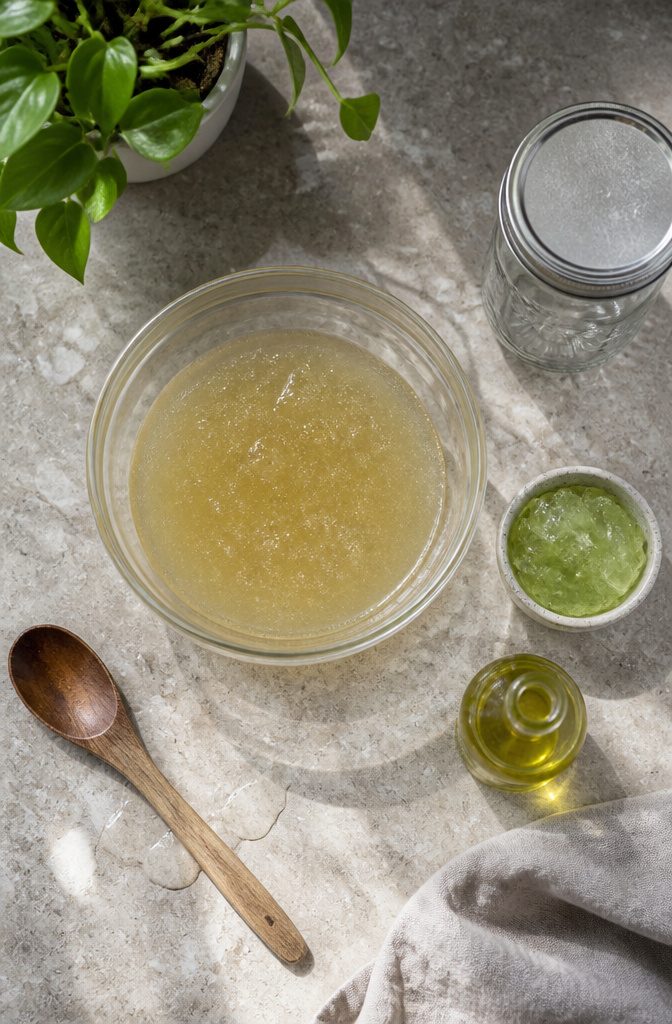
Cool the Gel Before Adding Aloe or Oils
Optional ingredients go in after you strain, not during the boil. CurlyNikki recommends letting the gel cool completely before stirring in aloe vera, which keeps the texture smooth and prevents heat from breaking down the aloe’s slip.
Other recipes add oils or fragrance as soon as straining finishes, which works fine if you are working with stable carriers like hemp seed oil or essential oils that tolerate warmth.
CurlMix lists 2 ounces hemp seed oil, ¼ cup marshmallow root, 1 teaspoon xanthan gum and 20 drops fragrance as possible additions.
Recipes vary widely. Some call for 2 tablespoons aloe vera gel for extra moisture, others add 5 to 10 drops rosemary or peppermint oil to stimulate the scalp, and a few mix in shea butter for softness.
I like the flexibility here, since you can tailor the gel to what your hair actually needs rather than making a single formula work for everything.
Store everything in clean containers with tight lids. Mason jars work well and refrigerate easily.
7. Refrigerate Up to Two Weeks or Freeze in Ice Cubes
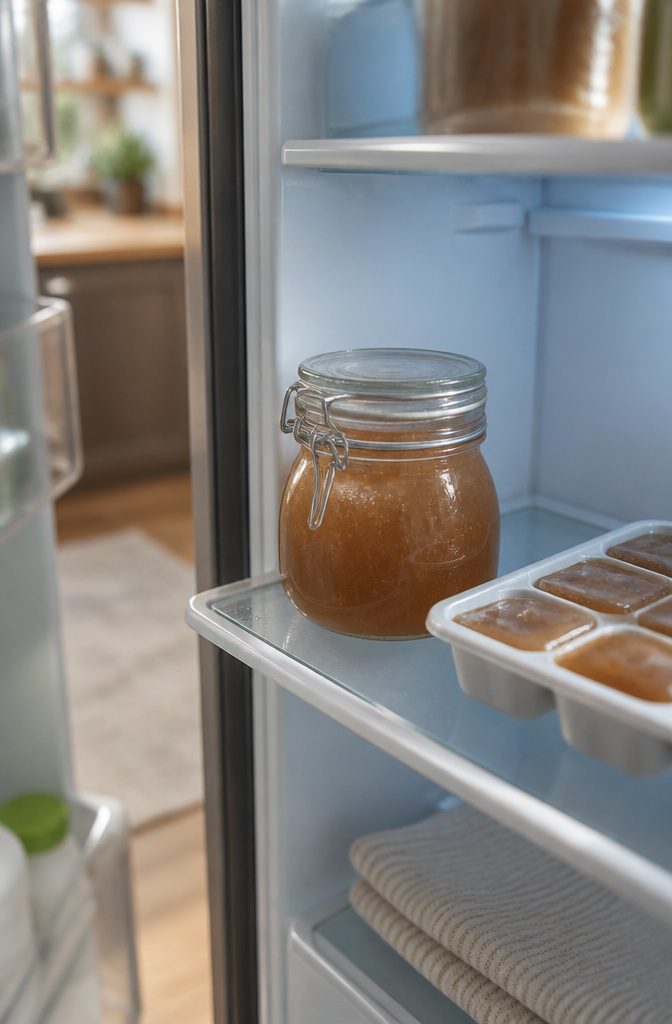
Store your finished gel in a clean, airtight container in the refrigerator. A jar with a spring-top lid keeps air and bacteria out better than a loose screw-top.
Refrigerate this gel for a much longer shelf life. If you make a lot at once, you can store some in the freezer for up to 6 months.
— wikiHow
Freezing in ice-cube trays lets you make one large batch and thaw just what you need for each styling session, rather than asking the same jar to survive week after week in the fridge.
Shelf life without preservative varies by source.
Most agree on one to two weeks refrigerated, though a few claim up to three. I would treat two weeks as the ceiling.
If you leave it on the counter, use it within a few days. Throw it away if the smell, color or texture changes, and do not attempt to rescue suspicious gel by adding essential oil after the fact.
Essential oils are not preservatives. A commercial preservative can extend life to six months or a year, but homemade gel is a fresh product by design.
8. Apply to Damp Hair Section by Section
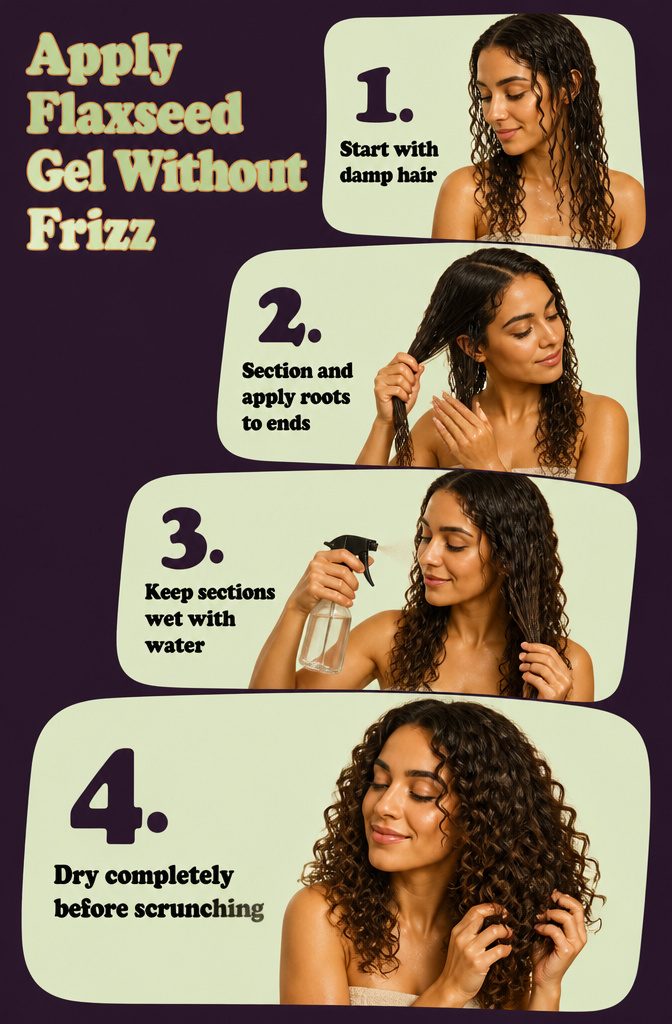
Start on damp or wet hair, usually right after washing.
Section the hair and work the gel from roots to ends using whatever technique fits the texture: rake it through with your fingers, smooth it over sections with praying hands, shingle individual curls, or pull a styling brush through.
Water helps the gel distribute evenly, so keep a spray bottle nearby if sections begin to dry while you work.
Once the gel is applied, leave the hair alone. Air-dry or diffuse until the hair is completely dry before scrunching out any cast.
Breaking the cast while hair is still damp turns definition into frizz faster than almost anything else. Flaxseed gel usually builds a soft cast that scrunches away easily once dry, leaving hold without much crunch.
Small amounts work for touch-ups on dry hair between wash days, though most people get better curl definition and more even coverage starting from damp.
9. Fix Too-Thick Gel With Water or Less Cooking Time
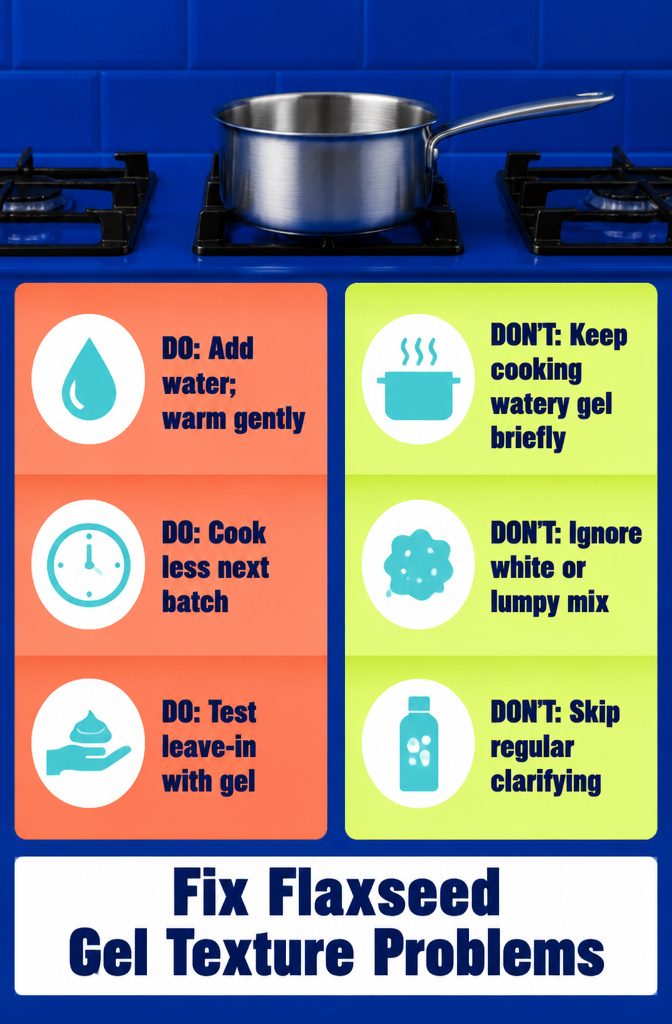
If the gel comes off the heat too thick to strain, add a small amount of water and warm it gently on low heat until it loosens.
If you already strained it and the batch is still too dense, use more water in the next round or pull the pot off the burner a minute or two earlier. You want gel, not mortar.
If the opposite happens and the gel turns out watery, cook it longer next time until it looks slippery and pulls into strings when you lift the spoon.
The gel thickens as it cools, so what looks thin in the pot may firm up in the jar.
Flaking after application usually traces back to too much gel, a batch that is overly concentrated, or products that do not play well together.
Before you coat a full section, I mix a small amount of leave-in and gel in my palm.
If the mixture turns white or lumpy, they are incompatible and you will see flakes later. Buildup on the hair can also trigger flaking, so clarify regularly if you layer products often.
How Flaxseed Gel Holds Curls Without the Crunch
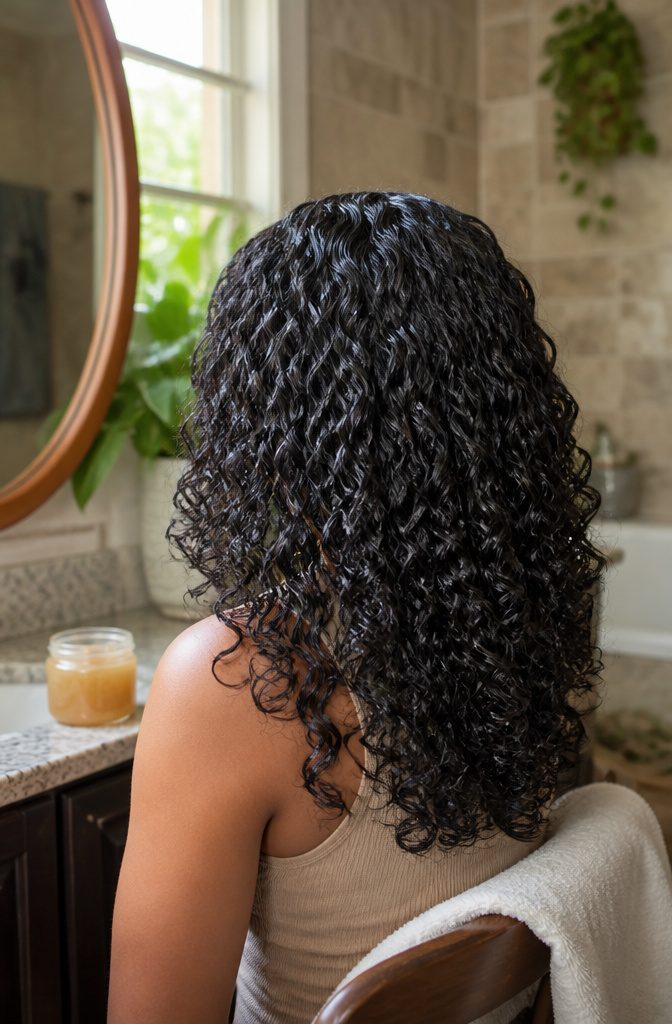
Flaxseed gel gives light-to-medium hold depending on how concentrated you make it and how much you layer on.
The mucilage forms enough of a film to let curl clumps stay together instead of separating into hundreds of tiny pieces, which is why it works so well on wash-and-gos.
Some hair dries with a soft cast that you can scrunch away once it’s completely dry, leaving definition without much crunch.
The gel’s natural humectant properties pull moisture into the hair shaft, so you get frizz reduction and shine without buildup or stiffness.
I find the lightweight texture makes it easy to layer with other products or use alone if you prefer a more minimalist routine.
If you need a wash-and-go that can survive three workouts, ninety-percent humidity and an outdoor wedding, homemade flaxseed may not be enough by itself. But for soft, touchable hold, it’s excellent.
Growth Claims Lack Strong Evidence for Topical Use
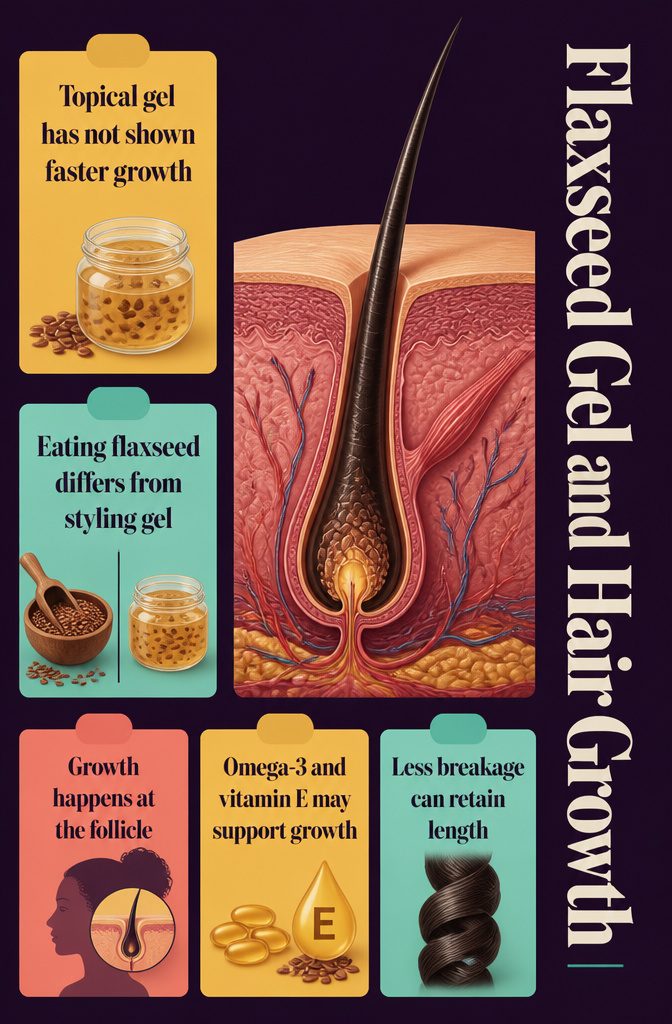
Growth claims show up on plenty of flaxseed gel pages, but topical gel has not been shown to make follicles grow faster.
CurlyNikki draws the line clearly: eating flaxseed and boiling it into a styling gel are not the same thing, and growth happens at the follicle, not on the strand.
Smytten frames it more gently, saying omega-3 fatty acids and vitamin E may support healthy growth with consistent use.
The nutrients are real, but they need to reach the follicle to affect how fast hair grows. What flaxseed gel can help with is length retention.
If the gel gives slip, reduces rough handling and lets you leave a style alone for days, you keep more of what the follicle is already producing. That distinction matters more than it sounds.
How to Use Flaxseed Gel on Curly, Straight or Wavy Hair
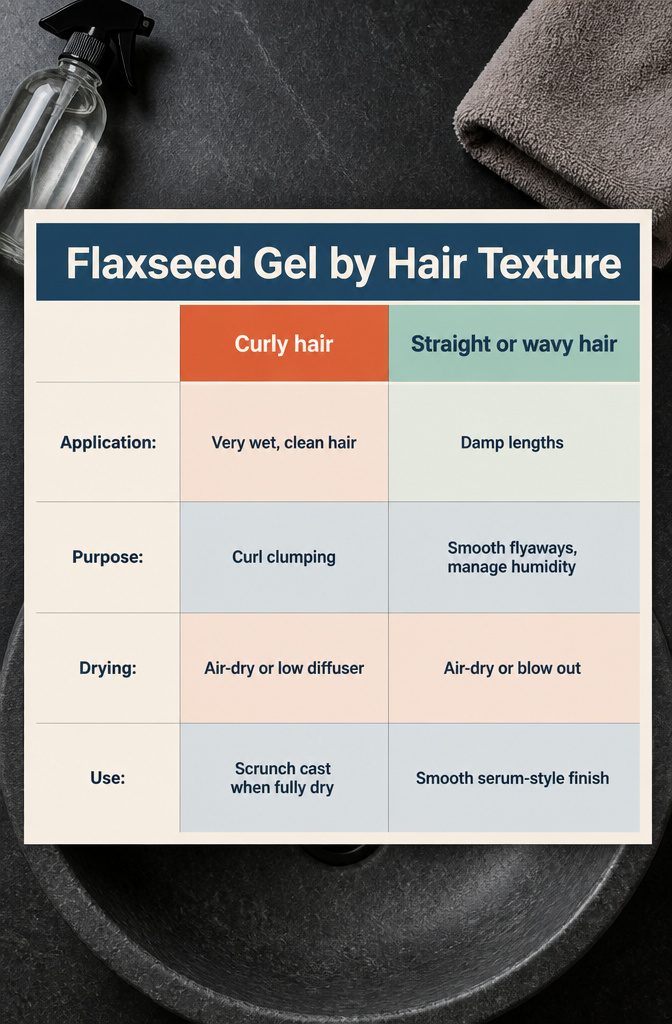
Application technique shifts with texture. Curly hair takes the gel best on very wet, clean hair, applied section by section with fingers, praying hands or a brush, whichever method gives your curl pattern the best clumping.
Keep a spray bottle nearby if sections start to dry while you work.
Air-dry or use a diffuser on low heat, and do not scrunch out the cast until your hair is completely dry. Breaking it early turns definition into frizz.
Straight and wavy hair can use the gel as a smoothing serum to tame flyaways and manage humidity. Apply it evenly through damp lengths, then air-dry or blow out.
The gel’s lightweight character suits low-porosity hair, but layering it over a rich leave-in, a thick cream, a butter and an oil can weigh everything down. Simplify the product stack before deciding flaxseed does not work for you.
The soft hold may not suit every style if you have 4C hair and need a firmer cast. Most people apply to damp or wet hair for even distribution and better curl definition, though small amounts work for dry-hair touch-ups.
Mask Recipes for Moisture, Frizz and Growth
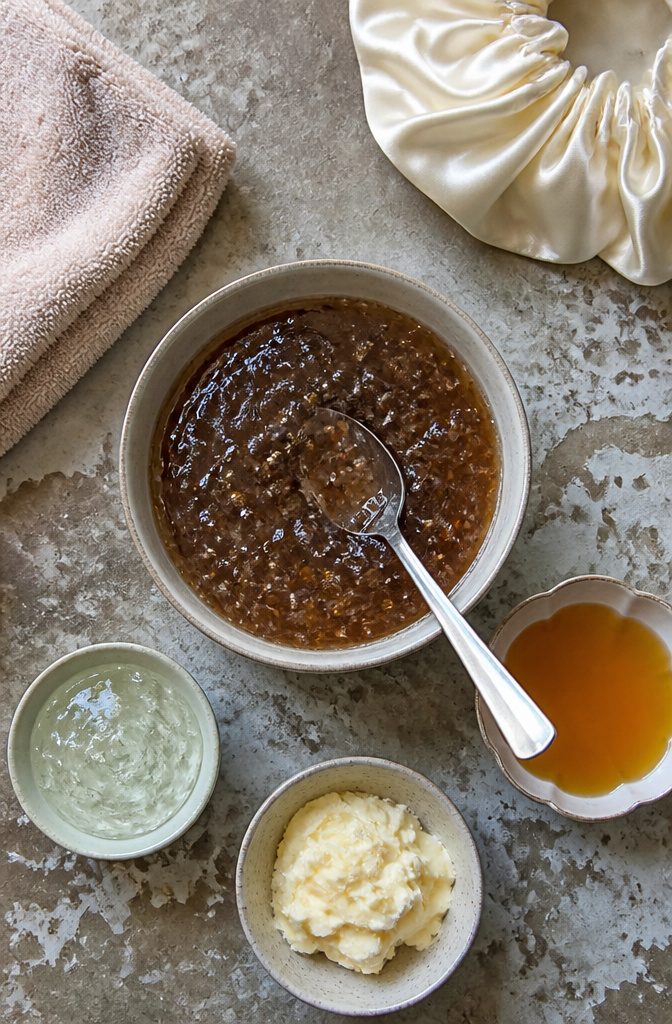
Mix the gel base with oils, honey or aloe to target dryness, frizz or overall moisture. Leave the mask on for 20 to 60 minutes depending on how much time you have, then rinse.
Three combinations from Yuaia:
- ½ cup flaxseed gel, 1 tablespoon shea butter, 1 tablespoon aloe vera gel for curly hair that needs definition and softness
- ½ cup gel, 2 tablespoons coconut milk, 1 tablespoon honey for moisture and shine
- ½ cup gel, 1 tablespoon argan oil, 1 tablespoon castor oil for dry, brittle strands
Smytten lists seven variations including 2 tablespoons aloe vera gel, 1 tablespoon melted coconut oil, 5–10 drops rosemary or peppermint essential oil, 1 tablespoon raw honey, 1 teaspoon apple cider vinegar, and 2–3 vitamin E capsules mixed into different recipes for growth, scalp health and strengthening.
Use 2–3 times a week.
Frequently Asked Questions
How long does flaxseed gel last in the fridge?
Store flaxseed gel in an airtight container in the refrigerator for 1 to 2 weeks.
Throw it out if the smell, color or texture changes before that. Without preservative, treat 2 weeks as the ceiling.
Should I apply flaxseed gel on wet or dry hair?
Apply flaxseed gel to damp or wet hair for even distribution and better curl definition. Small amounts work for touch-ups on dry hair between wash days, but most people get the best results starting from damp.
How long do I boil flaxseed gel?
Simmer for 5 to 7 minutes if you want easier straining, or 10 to 15 minutes for thicker gel with stronger hold. Pull the pot when the mixture turns slippery, stringy and slightly foamy.
How do I strain flaxseed gel?
Strain while the mixture is still hot using a fine-mesh sieve, cheesecloth, nylon stockings or clean pantyhose.
Hot gel straight from the stovetop can burn your hands through thin nylon, so use care or let it cool just enough to touch.
Can I use milled flaxseeds?
Yes, ground or milled flaxseeds work, though they make straining trickier since fine particles slip through pantyhose. Use a cloth strainer to catch what escapes, or stick with whole seeds for easier separation.
Why is my flaxseed gel too thick?
Use more water in the next batch or pull the pot off the burner a minute or two earlier. If the gel is already strained and too dense, it simply came off the heat too concentrated.
My gel mixture is too thick to strain. How do I fix this?
Add a small amount of water and warm it gently on low heat until it loosens. Once it flows again, you can strain it normally.
Why is my flaxseed gel flaking?
Flaking usually traces back to too much gel, a batch that is overly concentrated, or products that do not play well together. Buildup on the hair can also trigger flaking, so clarify regularly if you layer products often.
Can I freeze flaxseed gel?
Yes.
Freeze cooled gel in ice-cube trays and thaw just what you need for each styling session. Frozen gel can last up to 6 months.
Can I add aloe vera to flaxseed gel?
Yes.
Let the gel cool completely before stirring in aloe vera, which keeps the texture smooth and prevents heat from breaking down the aloe’s slip. Do not treat aloe as a preservative.
Should I add oil to flaxseed gel?
Oil is optional.
Adding it changes the gel’s lightweight character, so some people prefer using oil separately. If you do add oil, stir it in after straining.
Can I mix flaxseed gel with leave-in conditioner?
Usually, but test a small amount of leave-in and gel in your palm first. If the mixture turns white or lumpy, they are incompatible and you will see flakes later.
Is flaxseed gel good for 4C hair?
Yes, flaxseed gel works beautifully on 4C hair for finger coils, twist-outs, braid-outs and wash-and-go styling. The soft hold may not suit every style if you need a firmer cast, so layer it with a stronger styler if needed.
Is flaxseed gel good for low-porosity hair?
Yes, the lightweight character suits low-porosity hair. Just avoid layering it over a rich leave-in, thick cream, butter and oil, which can weigh everything down.
Can I use flaxseed gel every day?
You can use it as often as your hair tolerates, but daily layering can cause buildup. Clarify regularly if you layer products often.
Can flaxseed gel help with hair growth?
Topical gel has not been shown to make follicles grow faster.
What flaxseed gel can help with is length retention: if the gel gives slip, reduces rough handling and lets you leave a style alone for days, you keep more of what the follicle is already producing.
How long should you leave flaxseed gel in your hair?
As a styling product, leave it in all day. As a treatment mask, leave it on for 20 to 60 minutes depending on how much time you have, then rinse.
Can flaxseed gel cause hair loss?
No, flaxseed gel is not a common cause of hair loss. If you experience unusual shedding, it is likely due to other factors or a rare allergic reaction, so stop use and consult a dermatologist.
Does flaxseed gel work on dreads?
Yes, flaxseed gel works as a moisturizer for dreadlocks. Many people use flaxseed gel in tutorials to re-lock their dreads.
What can I use instead of flaxseed?
Chia seeds work well as a replacement because they also form a gel when boiled with water. Use them the same way you would use flaxseed.