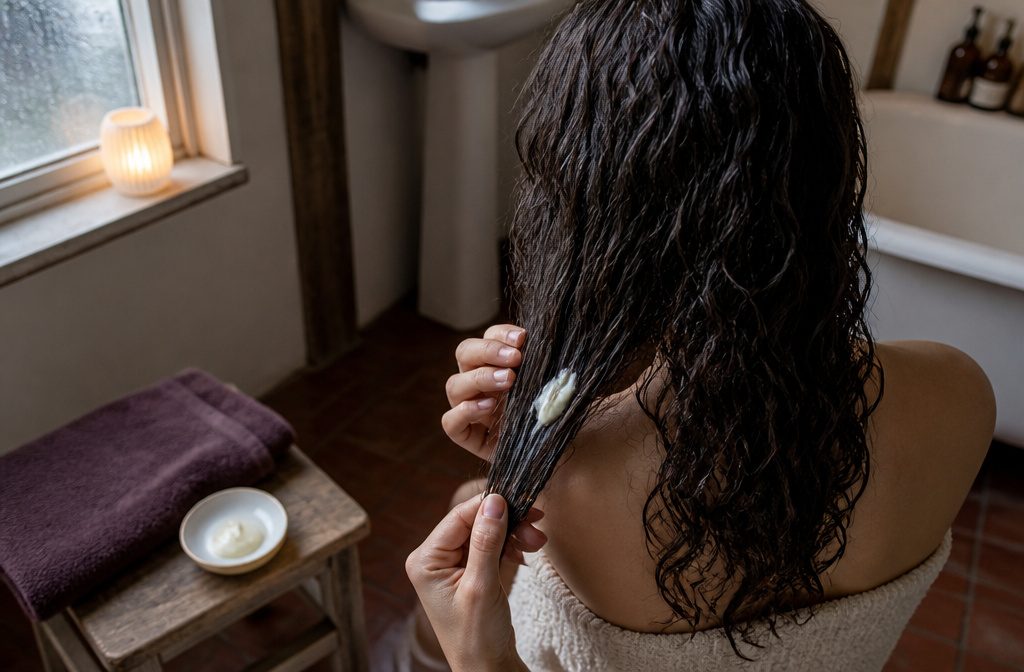
Leave-in conditioner goes on damp hair after you rinse out regular conditioner, not instead of it. It’s a third step that holds moisture between washes and makes detangling easier.
The place most people slip up is the roots: applying product there flattens fine hair and turns it greasy, since mid-lengths and ends are where the hair actually needs it.
1. Wash and Condition First
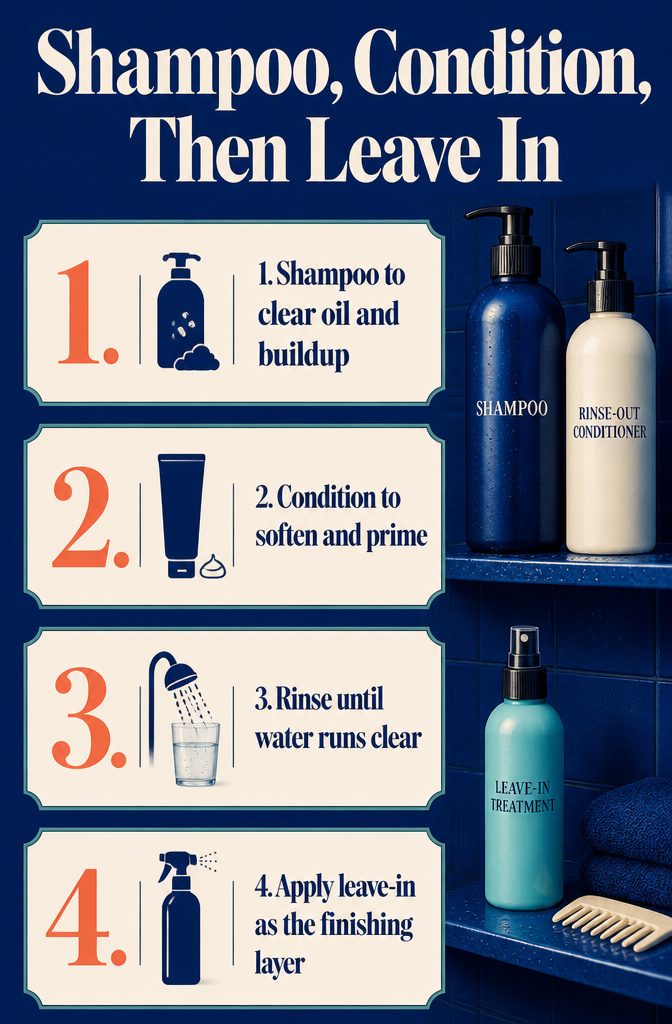
Start with shampoo and rinse-out conditioner before you reach for the leave-in. Leave-in is the third step, not the second, and it works best when the first two are complete.
Shampoo clears away buildup and oil so the leave-in can actually penetrate. Follow with rinse-out conditioner to soften and prime the hair for moisture.
Rinse thoroughly.
Leaving too much rinse-out conditioner in your hair before applying leave-in creates buildup and makes hair feel coated or greasy. I make sure the water runs clear before I move on.
Leave-in treatments supplement rinse-out conditioner rather than replace it. Think of the rinse-out as the foundation and the leave-in as the finishing layer that locks everything in.
2. Towel-Dry to Damp
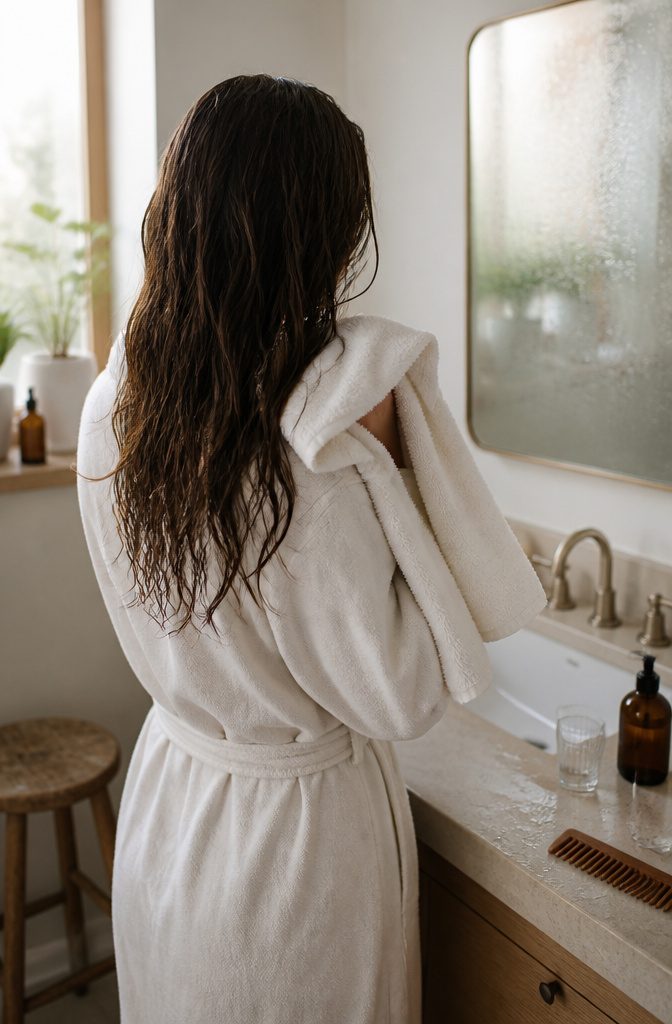
Towel-dry your hair until it’s damp, not dripping.
Wet hair makes product slip right off before it absorbs, and bone-dry hair won’t let the conditioner spread evenly. Damp hair works best because the shaft is slightly open, ready to pull in moisture and hold it.
Pat instead of rubbing, since wet hair snaps easily. You want the hair towel-dried enough that water isn’t running down your neck, but still cool and soft to the touch.
That level of dampness locks the product in as your hair dries, keeping it hydrated instead of just coated on the surface.
3. Apply the Leave-In
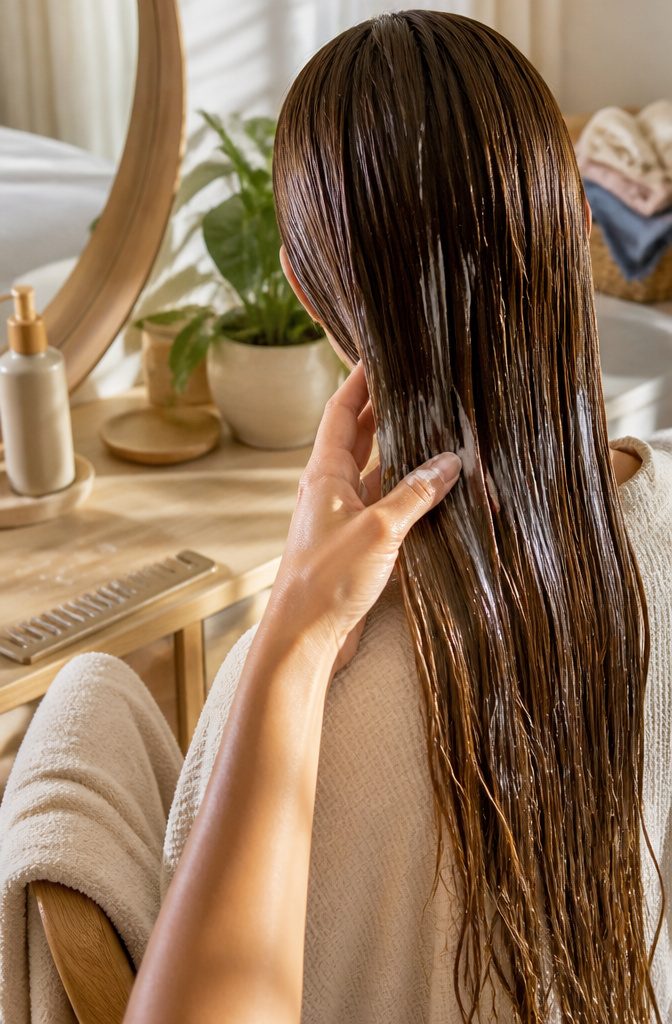
Most products go on mid-lengths and ends only, where the hair is driest and most vulnerable to damage. Applying leave-in conditioner near the scalp or roots can make fine hair look flat or greasy.
The exception is a formula specifically labeled for scalp use, which is rare enough that you can assume yours is not unless the bottle calls it out.
How much you need depends on hair length and thickness.
For short or fine hair, start with a dime-sized amount of cream or two to three sprays. Medium-length hair takes a nickel-sized dollop or three to four spritzes.
Long or thick hair can handle a quarter-sized amount or five to six sprays. If your hair absorbs water slowly, it has low porosity and might need an extra spritz or two.
I always start with less than I think I need. You can add more after you comb through if the hair still feels dry, but too much product sitting on the surface leaves everything sticky and weighed down.
4. Distribute, Detangle, Then Style
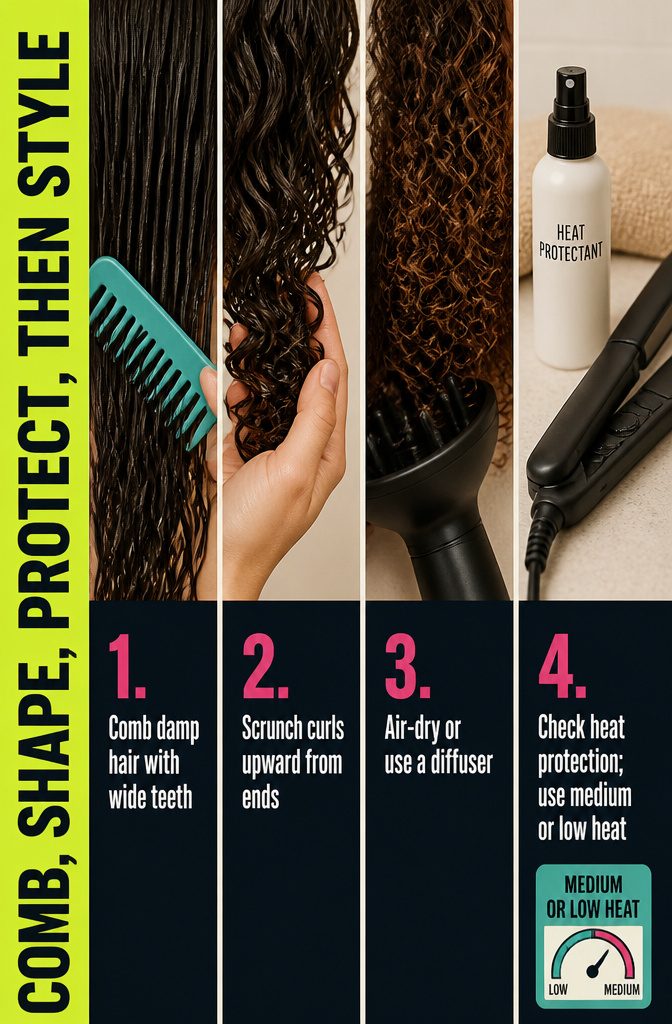
Once the leave-in is on, comb through with a wide-tooth comb or your fingers to spread it evenly and work out any tangles while the hair is still damp.
Pat gently if you meet resistance. Wide teeth move through without snagging.
For curls, scrunching upward from the ends helps support definition and encourages clumping, which keeps frizz down.
Press sections of damp hair up toward the scalp rather than pulling down. Then air-dry for a natural finish, or use a diffuser if you want more volume and faster drying.
If you plan to blow-dry smooth or use a flat iron, check whether your leave-in includes heat protection.
Many do not. Add a separate heat protectant if it does not list one, and keep your tools on medium or low heat to prevent damage.
What Leave-In Conditioner Is and How It Differs From Rinse-Out
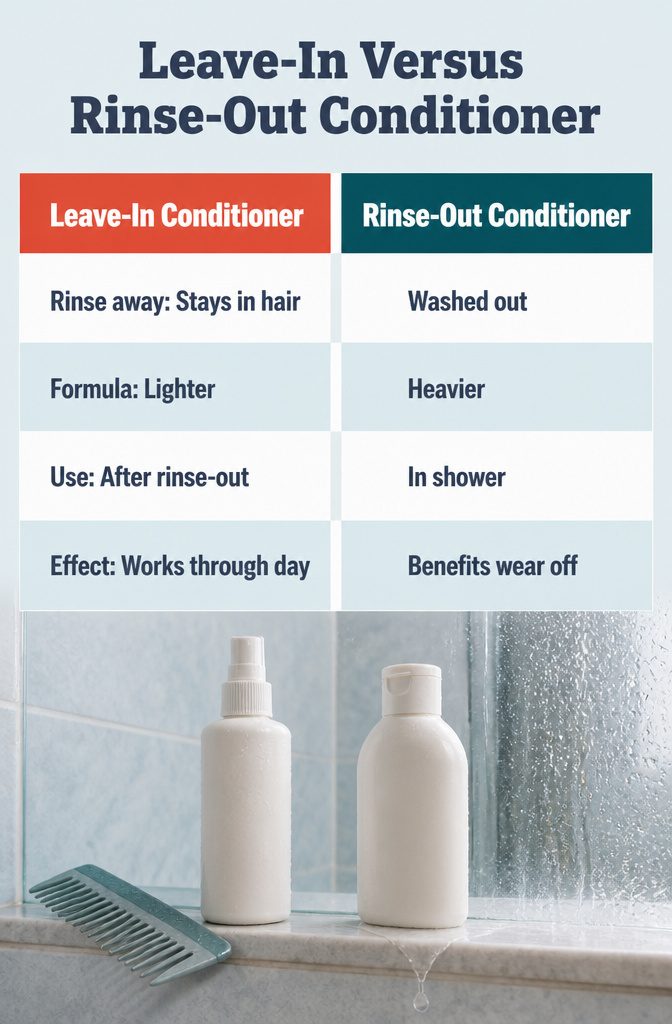
Leave-in conditioner stays in your hair after you apply it, rather than being rinsed away in the shower. That sets it apart from rinse-out conditioner, which you use on wet hair and wash out before you step out.
The formula is lighter, designed to sit on strands without weighing them down or leaving buildup. It goes on damp hair after you’ve already shampooed and rinsed out your regular conditioner, so it’s a third step rather than a replacement.
While regular conditioner moisturizes hair follicles, the effect wears off relatively quickly, and its benefits are limited.
— Garnier
That ongoing delivery is what makes leave-in worth adding. It keeps moisture, manageability, and protection working through the day and into the next.
Using your rinse-out conditioner as a leave-in is not recommended. The heavier formula can cause product buildup and weigh hair down, since it was never designed to stay put.
Matching Formula and Amount to Hair Type
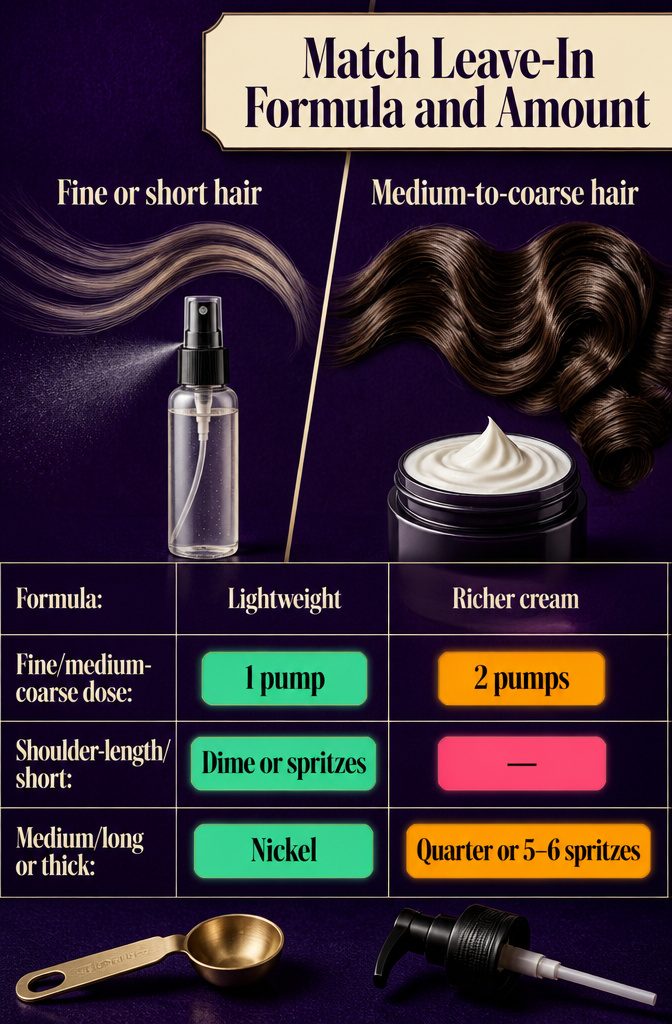
The amount matters as much as the formula. Fine hair needs about one pump of product, while medium-to-coarse hair takes two.
For hair cut to shoulder length or shorter, a dime-sized amount or a few spritzes covers it. Medium-length hair takes a nickel-sized amount, and long or thick hair needs closer to a quarter-sized amount or five to six spritzes.
I start with less than I think I need, since adding more is easy and pulling back from greasy, flat hair is not.
The formula itself has to match the hair it’s going on. Lightweight leave-ins work for fine or short hair without dragging down volume.
Thicker, drier, or curly hair needs a richer formula that actually penetrates the strand. A thick cream meant for curls will collapse fine hair, and a light mist won’t do much for coarse, dry lengths.
Too much product of any kind turns into buildup, grease, or limpness, so the right formula at the right dose keeps hair conditioned without looking or feeling heavy.
Benefits and Styling Support
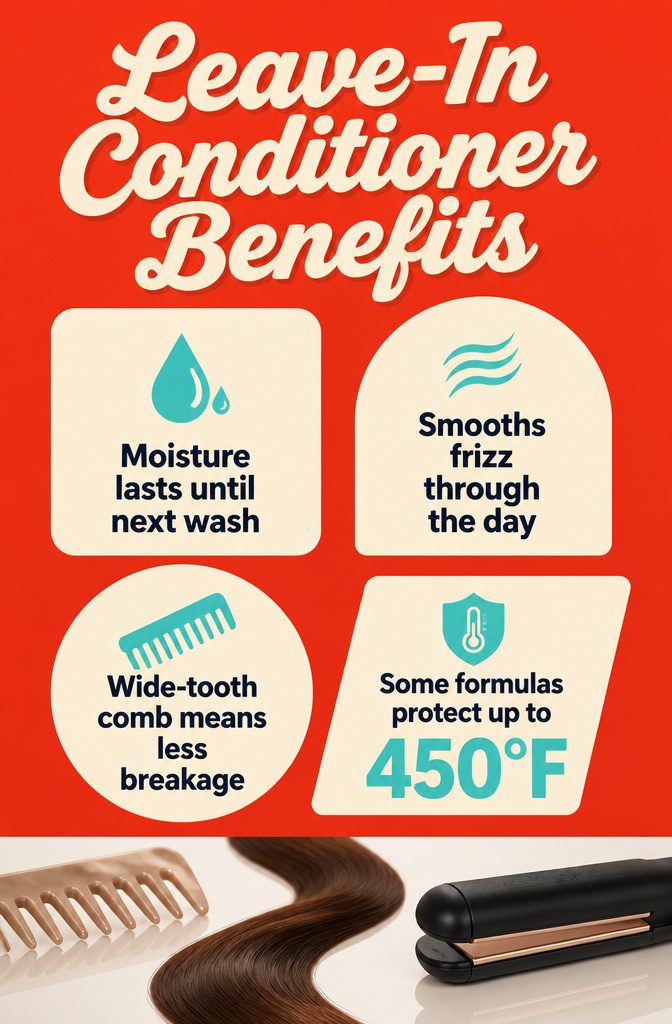
Leave-in conditioner does three things worth the shelf space: it hydrates hair between washes, smooths frizz by sealing the cuticle, and makes detangling faster with less breakage.
Heat protection is the fourth, and it matters if you blow-dry or flat iron.
The specific benefits:
- Hydration that stays put. Unlike rinse-out conditioner, a leave-in keeps working until the next wash. That means softer mid-lengths and ends, especially on curly or coily hair that dries out fast.
- Detangling without the tug. Applied to damp hair, leave-in makes it easier to pull a wide-tooth comb through knots. Less tugging means less breakage.
- Frizz control. The product smooths down flyaways and calms the cuticle. Results last through the day if you apply it evenly.
- Heat protection up to 450°F. Some formulas shield hair from blow dryers and flat irons. Check the label before styling; not every leave-in includes it.
How Often to Use Leave-In Conditioner
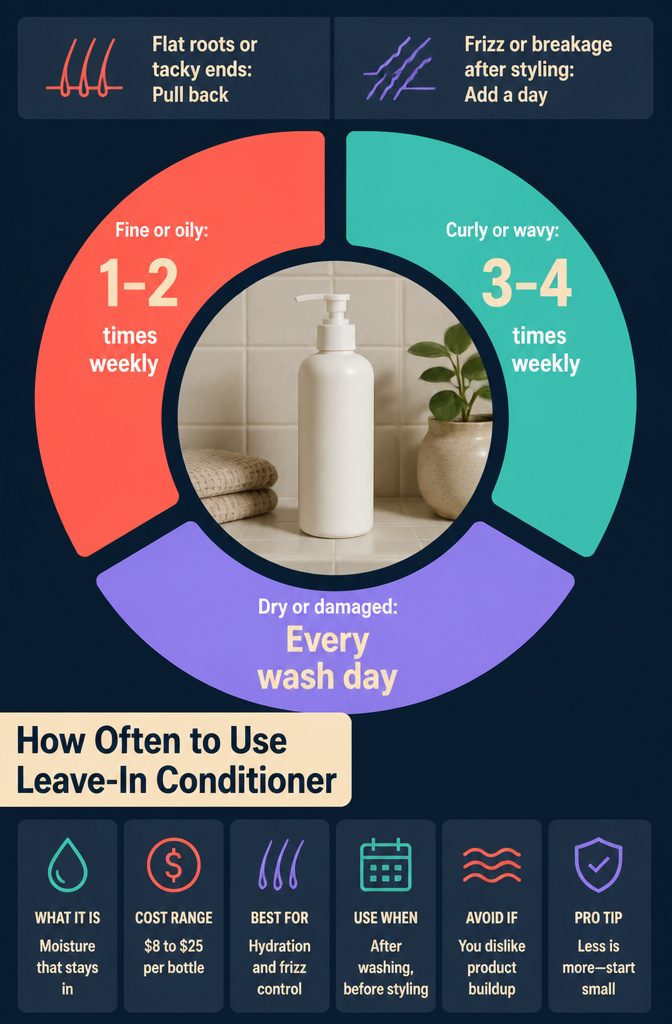
How often you reach for leave-in conditioner depends on whether your hair soaks up moisture or sits there coated after one pass.
Fine or oily hair needs it once or twice a week to keep buildup from weighing down the roots.
Curly or wavy hair holds the rhythm better at three or four times a week, enough to keep definition without going limp.
Dry or damaged hair can take it every wash day, since the cuticle drinks moisture faster than it can turn greasy.
Your own hair will tell you if the schedule is wrong.
If roots look flat by midweek or ends feel tacky instead of soft, pull back. If curls start to frizz or break an hour after styling, add another day.
Using Leave-In on Dry Hair or Between Washes
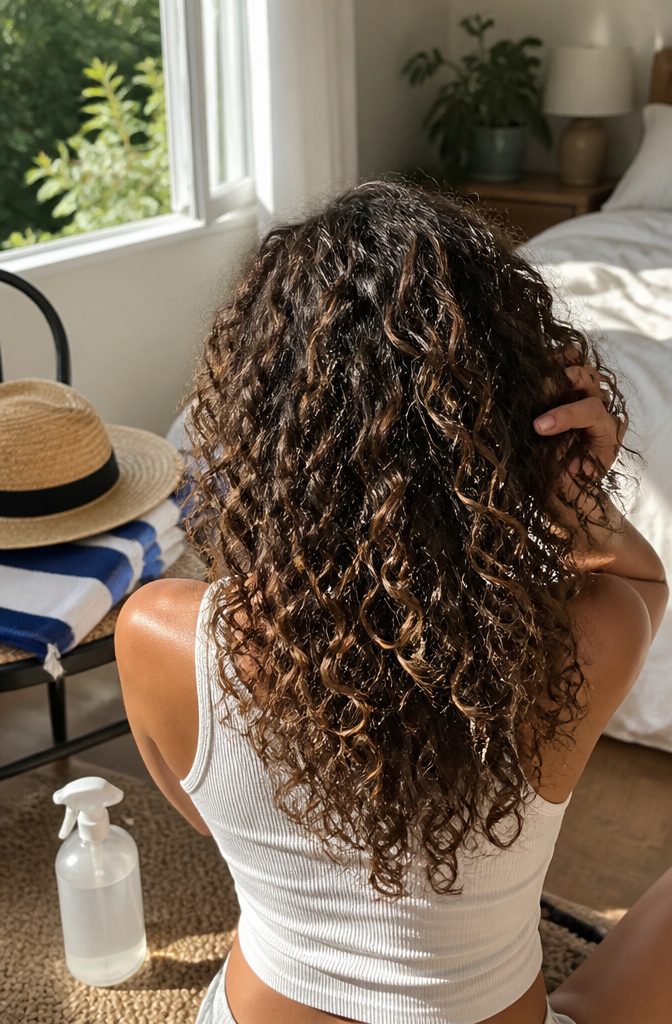
Most leave-ins work best on damp hair fresh from the shower, but some formulas can refresh dry hair between washes or revive curls that have lost their shape.
I reach for this when second-day hair looks flat or frizzy and I don’t have time to rewet it completely. A light mist of water followed by a small amount of leave-in brings back definition without starting over.
Dry-hair application also helps after sun or chlorine exposure, when hair feels stripped and parched.
The leave-in restores lost moisture and smooths the cuticle. Look for products rich in natural oils if you’re using them this way, since dry hair absorbs heavier formulas better than damp hair does.
Not every leave-in is built for this, though. Formulas labeled as refreshers or meant for curls tend to perform better on dry hair than thick cream leave-ins designed for post-wash application.
Frequently Asked Questions
How often should I use leave-in conditioner?
Fine or oily hair needs leave-in once or twice a week to avoid buildup, while curly or wavy hair can use it 3 to 4 times a week.
Dry or damaged hair can handle it every wash day since the cuticle absorbs moisture faster. Adjust based on whether your roots look flat or your ends feel tacky between washes.
Can I use leave-in conditioner on dry hair?
Yes, some formulas can refresh dry hair between washes or revive curls that have lost their shape.
A light mist of water followed by a small amount of leave-in brings back definition without rewetting completely. Look for products rich in natural oils, since dry hair absorbs heavier formulas better than damp hair does.
Can I replace my regular conditioner with leave-in conditioner?
No. Leave-in treatments supplement rinse-out conditioner rather than replace it.
The rinse-out is the foundation and the leave-in is the finishing layer that locks everything in. Using rinse-out conditioner as a leave-in causes buildup and weighs hair down since the heavier formula was never designed to stay put.
Can you blow dry or straighten your hair with leave-in conditioner?
Yes, but check whether your leave-in includes heat protection first.
Many formulas do not list one. Add a separate heat protectant if needed, and keep your tools on medium or low heat to prevent damage.
What does leave-in conditioner do?
Leave-in conditioner hydrates hair between washes, smooths frizz by sealing the cuticle, and makes detangling faster with less breakage.
Some formulas include heat protection up to 450°F. It stays in your hair after you apply it, keeping moisture and manageability working through the day.
How long do you leave leave-in conditioner in your hair?
Leave-in conditioner is designed to stay in and is not rinsed out.
It keeps working until the next wash. Apply it to damp hair after shampooing and rinsing out your regular conditioner, then style as usual.





