Most masks combine 1 egg with something thick and 1 oil, and the timing and removal stay the same across recipes.
The choice depends on whether your scalp is dry or oily: lemon juice cuts buildup but can make brittle ends worse, while doubling the avocado skips the citrus and adds moisture instead.
1. Avocado, Lemon, and Egg Hair Mask
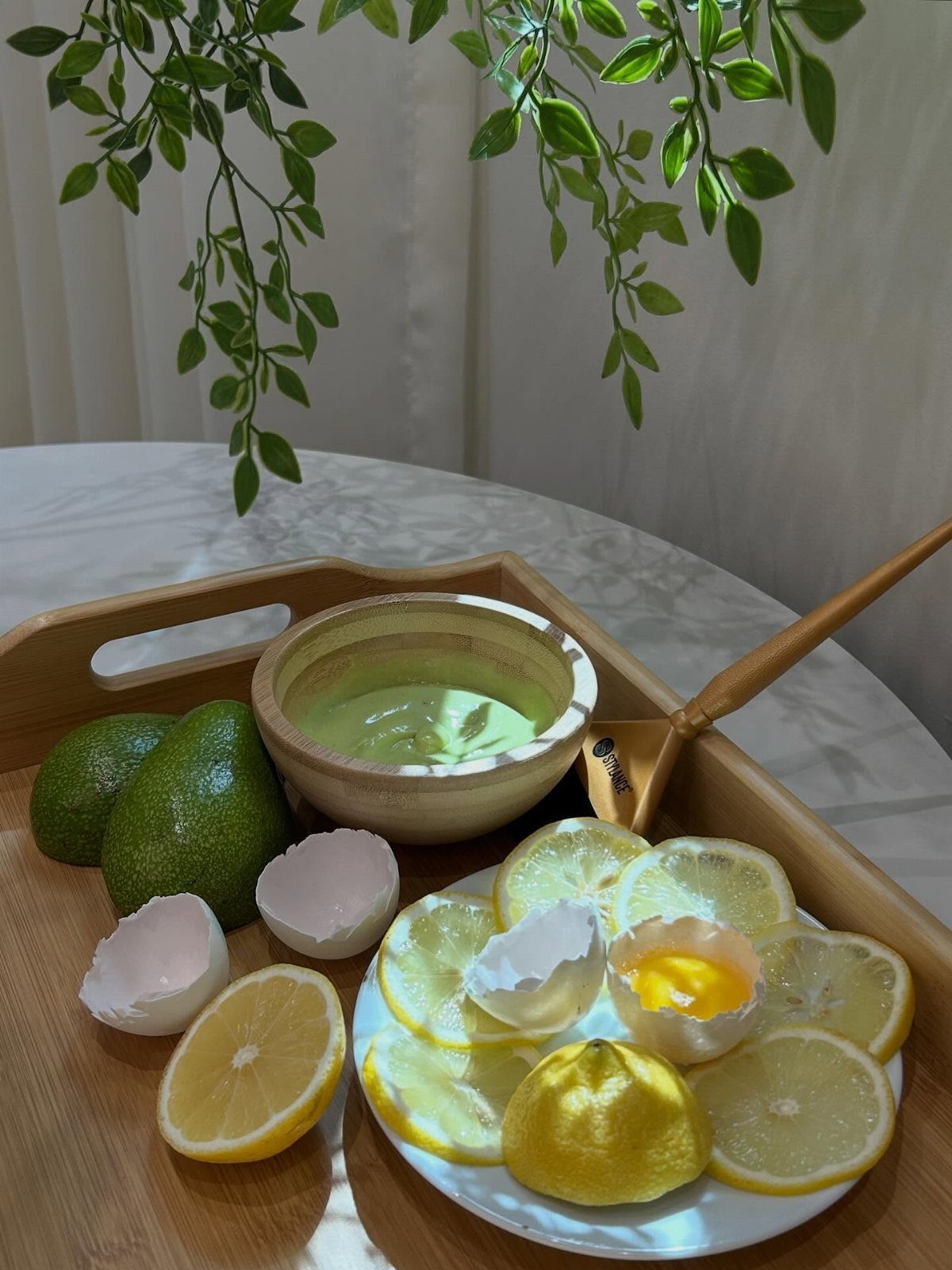
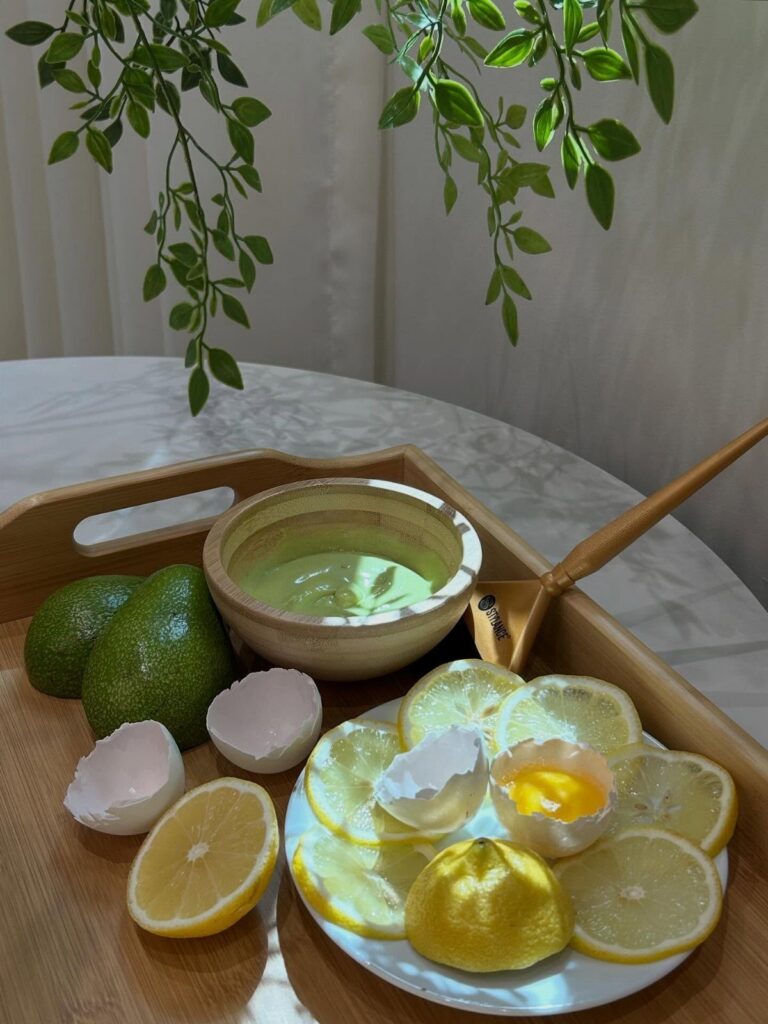
This mask blends ripe avocado with fresh lemon juice and a whole egg. The avocado adds moisture, the egg yolk coats each strand, and the lemon cuts through oil buildup on the scalp.
Mash half an avocado in a bowl until smooth, then whisk in 1 egg and the juice of half a lemon.
The lemon can dry out already fragile hair, so if your ends are brittle, skip the citrus and double the avocado instead.
2. Egg, Yogurt, and Oil Hair Mask
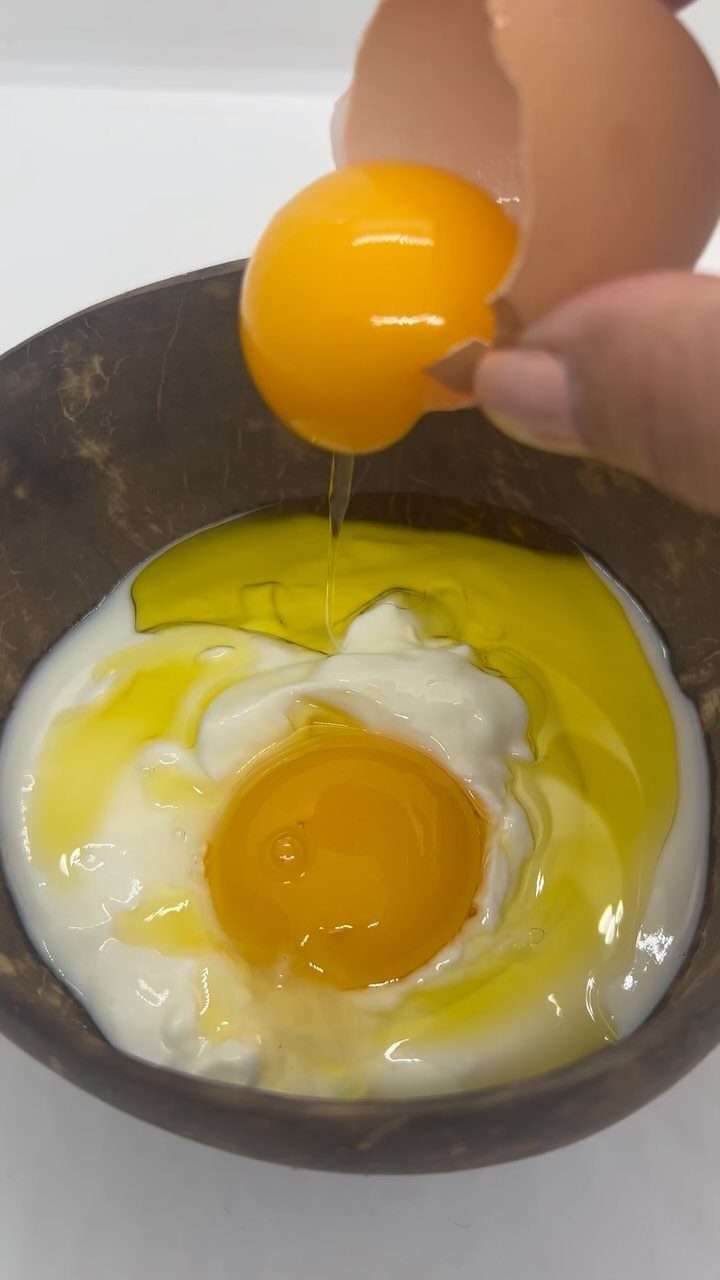
Plain yogurt and oil form the base here, with a raw egg stirred in for protein. The yogurt softens and conditions, the oil seals in moisture, and the egg strengthens the hair shaft.
Mix 3 tablespoons of plain yogurt with olive or coconut oil, then crack in 1 egg and whisk until combined. Coat every section of towel-dried hair with the mixture.
3. Applying Mask to Curly Hair
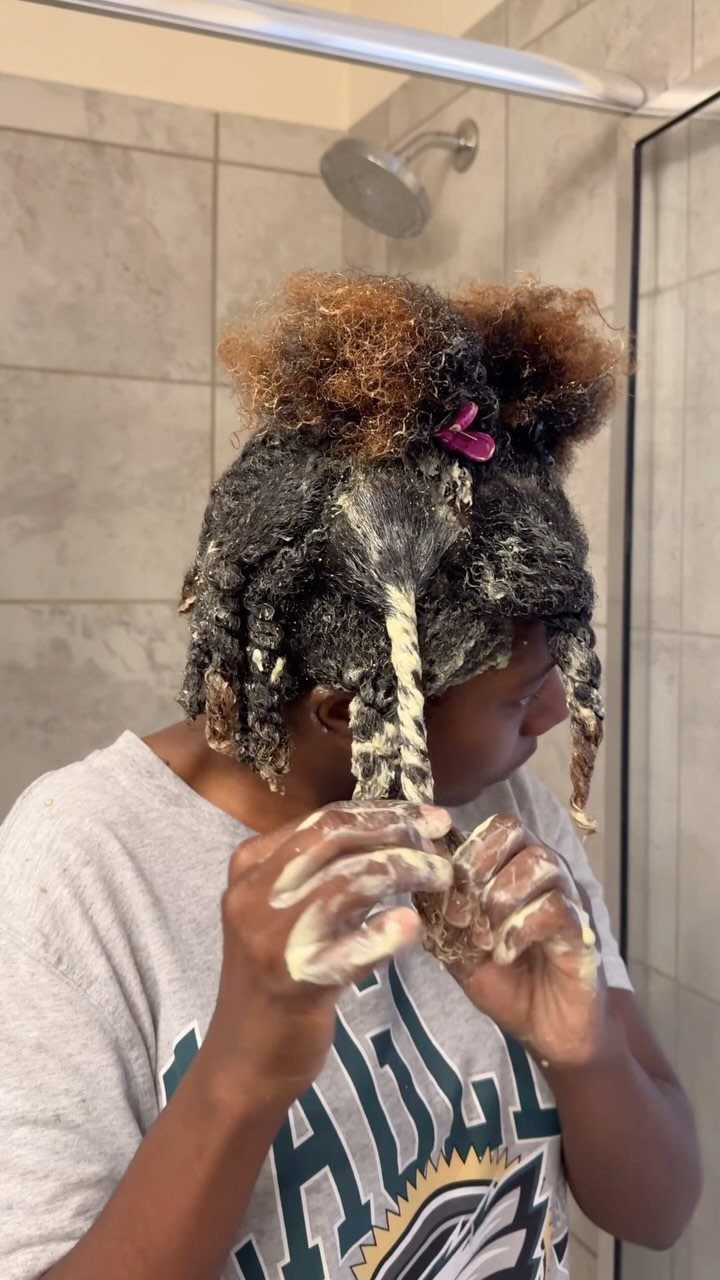
Applying the mask in the shower lets you work it through wet curls without making a mess elsewhere. Part the hair into sections, then use your fingers to press the mask into each curl clump and down to the scalp.
For thick or dense curls, a wide-tooth comb helps distribute the product evenly without disrupting the curl pattern. Leave the mask on for the time the recipe calls for, then rinse with lukewarm water until the water runs clear.
Application and Removal
I apply masks to damp hair right after I wash and squeeze out the extra water. If the recipe is mostly oil, dry hair may absorb it better since oil and water repel each other.
Put a towel across your shoulders so you don’t drip oil or avocado down your back. For long or thick hair, clip it into sections before you start.
If your hair is dry, start at the roots and pull it all the way down. Oily hair starts at mid-shaft and works down, skipping the scalp unless you’re treating dandruff specifically.
Cover with a shower cap or plastic wrap, then wrap a towel around your head to catch drips. Shampoo twice if the recipe was heavy on oil or left any food bits behind.
DIY Effectiveness and Caution
Homemade masks condition and add moisture, but they may not detangle or repair as thoroughly as a formulated treatment.
Good Housekeeping says to proceed cautiously since kitchen ingredients can irritate your scalp or dry out hair if the mix is off.
Start slowly and see how your hair responds. A dermatologist quoted in the same piece says frequency depends on what you’re treating: once or twice a week for dry ends, monthly for general upkeep.
Shampoo thoroughly after rinsing. Leftover avocado or banana sitting in your hair is not a situation you want to deal with later.
Hair Length and Recipe Amount
The quantities in most recipes fit shoulder-length hair. For longer hair, double or triple the amounts so you have enough to coat every section from root to tip.
One tester doubled the avocado recipe for long hair and still wished she had mixed more. Another recipe covered very long hair as written, while readers with shorter cuts could halve a banana-yogurt mask and have plenty left over.
Mix a little extra if you’re not sure. Running out halfway through means stopping to mash more avocado with wet hands, and the first section dries out while you work.
Frequently Asked Questions
What is the best homemade mask for your hair?
The best mask depends on what your hair needs. For dry hair, avocado and egg coats each strand while adding moisture.
Lemon juice strips away oil when you work it into the roots. Yogurt and oil work well for general conditioning and softness.
Do homemade hair masks actually work?
They soften and hydrate, but a mask from your pantry won’t detangle or rebuild damage the way a salon formula does. They work well for hydration and softness between salon visits.
How long should I leave a homemade hair mask in for?
Leave the mask on for the time the recipe calls for, usually 15 to 20 minutes.
Dry ends need it once a week, twice if they’re really rough. For general upkeep, monthly is enough.
What is a hair mask?
A hair mask is a concentrated conditioning treatment that sits on your hair longer than regular conditioner, usually 15 to 20 minutes or more.
The ingredients are more concentrated and work to hydrate, soften, and repair. Most come together from what’s already sitting in your cabinet.