
Growing out gray takes anywhere from 6 months to clear most colored ends at shorter lengths, to 18 months or longer at shoulder length, because hair adds about half an inch each month.
The right approach depends on how much of the awkward demarcation line you’re willing to live with: a pixie or bob cuts it off in one appointment, highlights and toning soften it over time, and simply letting it grow means managing two tones for the full stretch.
1. Blending Highlights

Highlights work by breaking up the hard line where dyed lengths meet new gray growth, so the transition reads as intentional blending rather than neglect.
A colorist places lighter pieces near the face first, where gray tends to come in fastest, then works them back through the lengths. A good blend lets both tones show without either one taking over.
This is one of the lower-commitment ways to grow out color, since you can space appointments further apart as the gray fills in.
2. Gray Bob
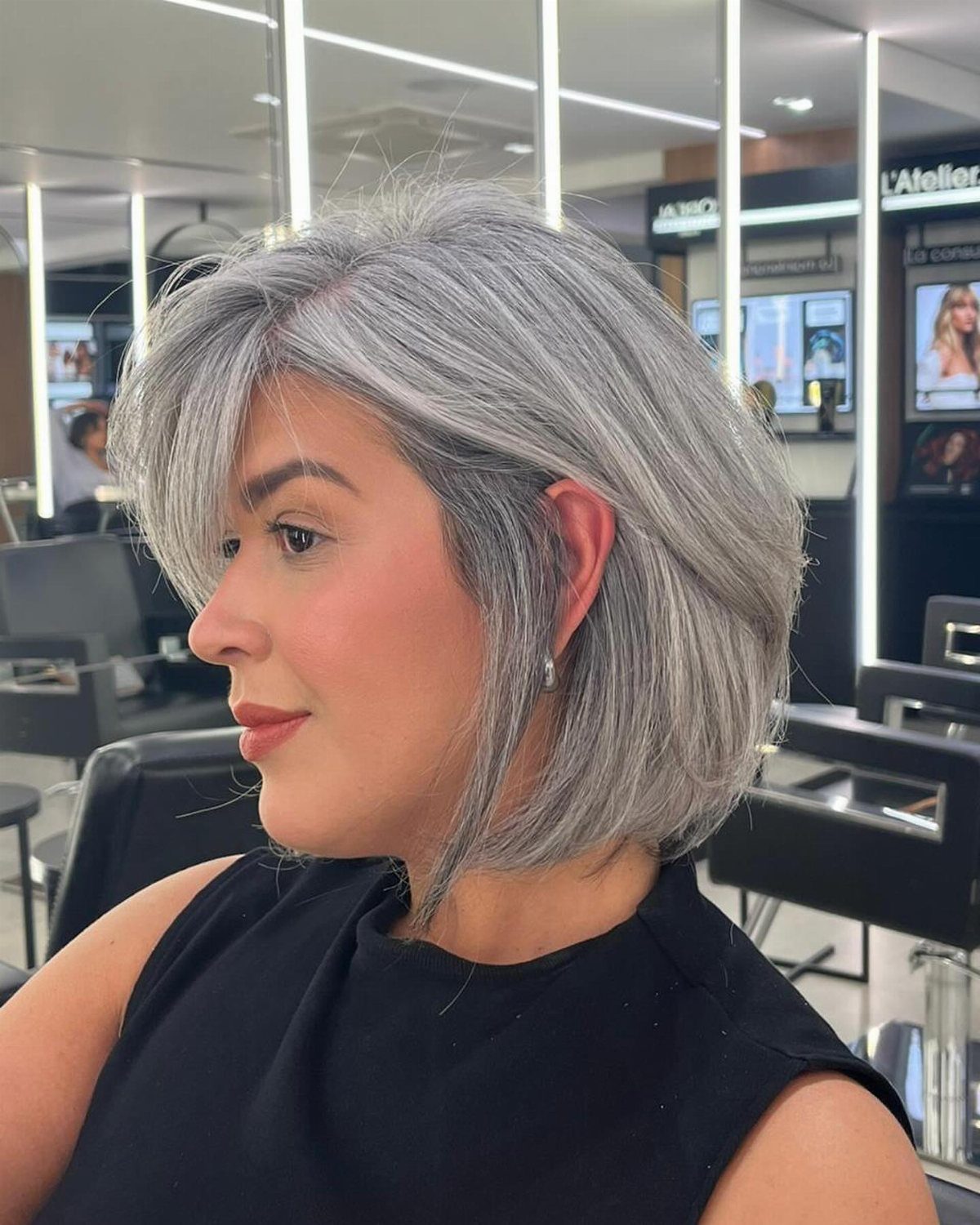
Cutting to a bob does 2 things at once: it removes most of the previously colored length and leaves you with a style that reads as a deliberate choice, not a grow-out in progress.
Silver and gray at this length tend to look polished with very little effort. A round brush and a dryer gets you most of the way there in the morning.
For anyone who has been putting off the transition because of the awkward middle stage, this is the cut that skips it.
3. Pixie Cut
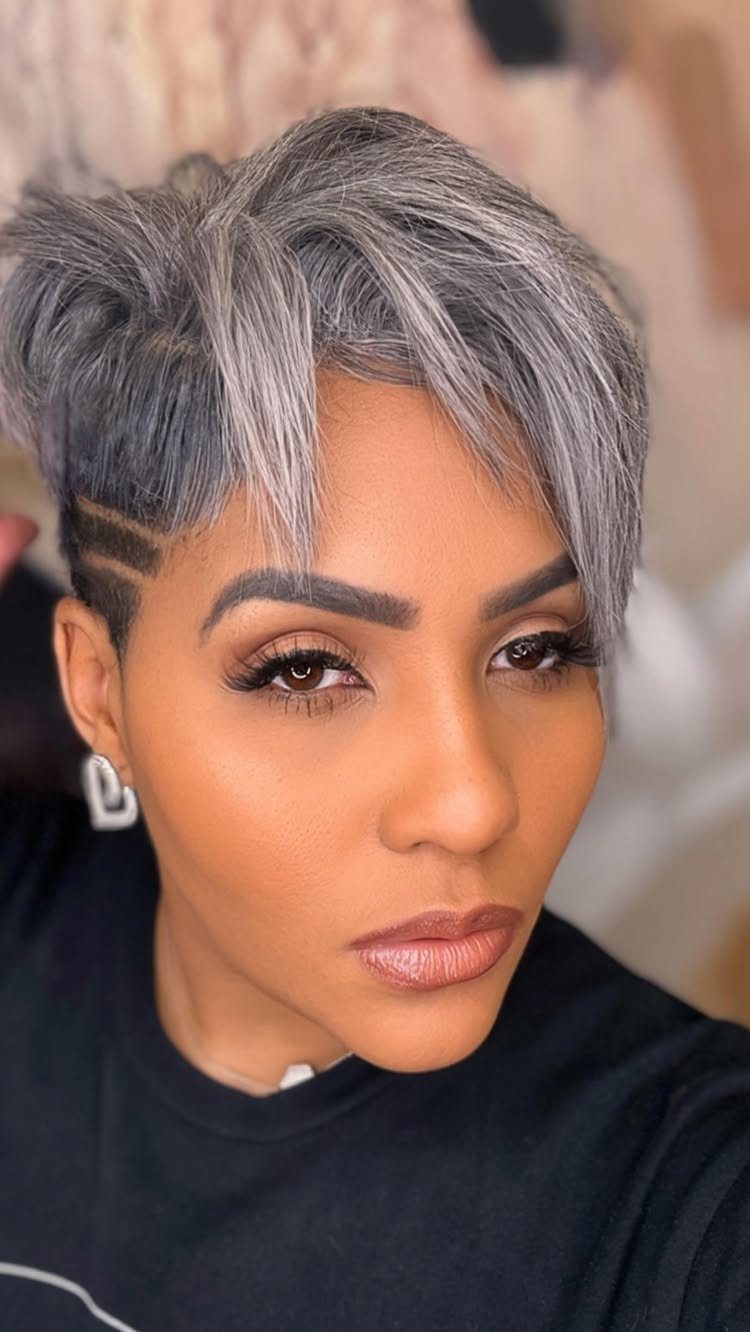
Going short is the most direct path through a gray transition. A pixie cuts off the dyed length in one appointment and puts you at your natural color from day one.
Silver at this length tends to catch light well and needs almost no product to look finished.
4. Swooping Silver Layers
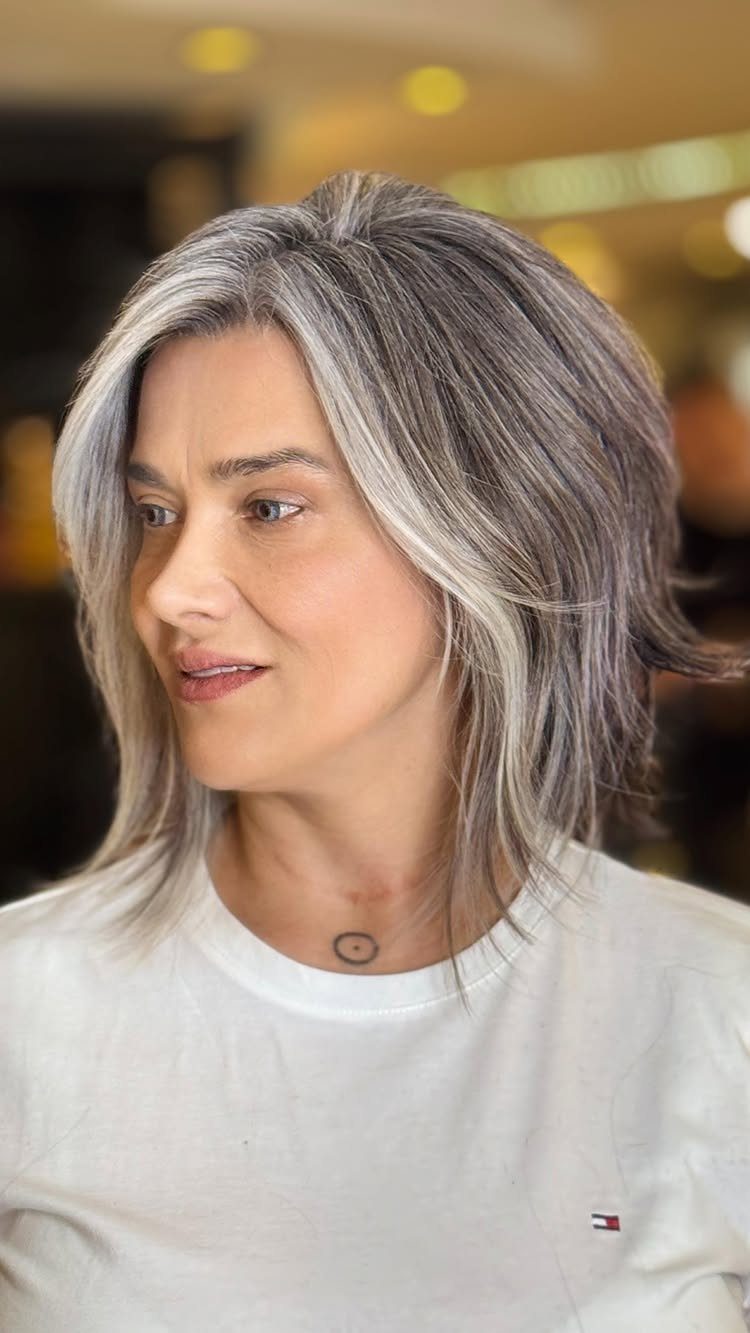
Layers solve one of the more common complaints about growing out gray: that the hair falls flat and heavy as the color grows in.
A stylist cuts them to start at the cheekbone or jaw, then moves through the lengths, so the hair lifts away from the head and moves rather than sitting in a single weight line.
The side part here does extra work, adding volume on its own.
Gray tends to be coarser than pigmented hair, and layers let that texture show as body rather than bulk.
5. Long Gray Hair

Gray does not have to go short. Keeping length through a transition is completely workable, and straight silver hair worn long like this reads as a strong style choice rather than an in-between.
The harder part is patience: growing out color at this length means managing two textures and two tones for an extended stretch.
Regular trims and a weekly deep conditioning treatment keep the ends from looking dry against the brighter silver coming in at the root.
A purple or blue toning shampoo once a week helps the silver stay cool rather than yellowing.
6. Salt and Pepper Waves
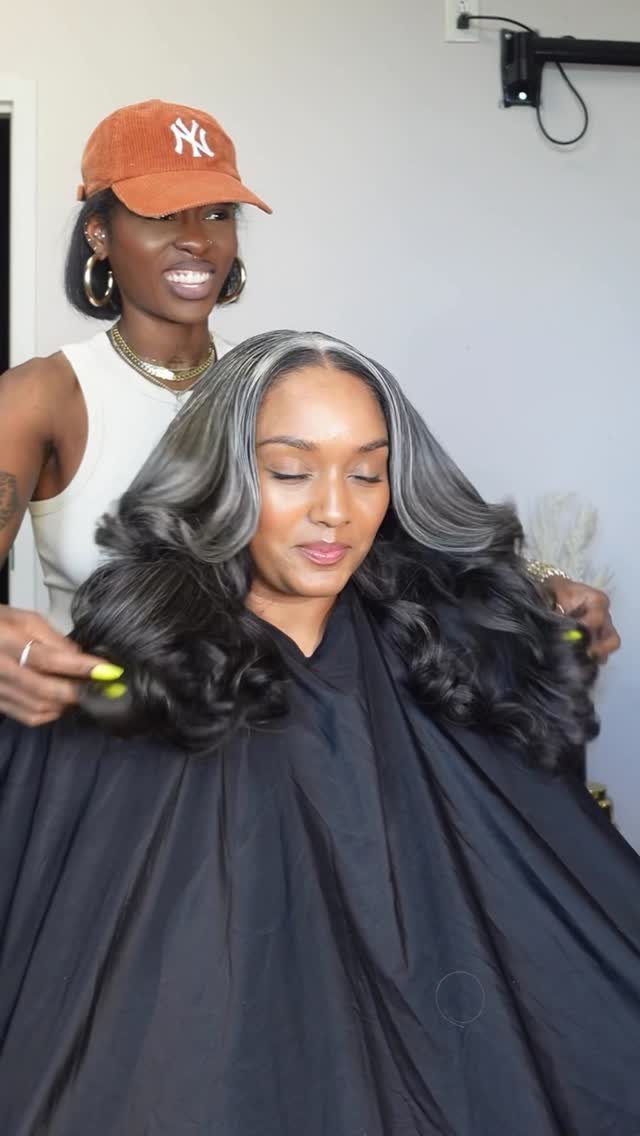
Salt and pepper hair worn in loose waves is one of the better arguments for skipping the dye altogether.
The mix of dark and light strands gives the waves natural dimension that a single-process color usually has to fake with highlights.
Wavy hair that’s going gray often gets coarser and more textured over time, which actually works in your favor here.
A styling cream or light mousse on damp hair, then air-dry or diffuse, brings the wave pattern out without fighting the texture.
This look leans heavily on the cut underneath, so regular layers keep it from going shapeless as it grows.
7. Let It Grow

No colorist appointment, no transition plan: just stopping. When you let natural gray come in fully and wear it long, it looks deliberate rather than unfinished.
The honest part is the timeline.
Getting from dyed lengths to fully natural color at any real length takes patience, and the in-between stretch is real. Regular trims help the ends stay healthy while the gray works its way down.
If you’re growing it to that length, a deep conditioning treatment every week or 2 keeps the silver looking bright rather than dry.
8. Gray High Bun with Bangs
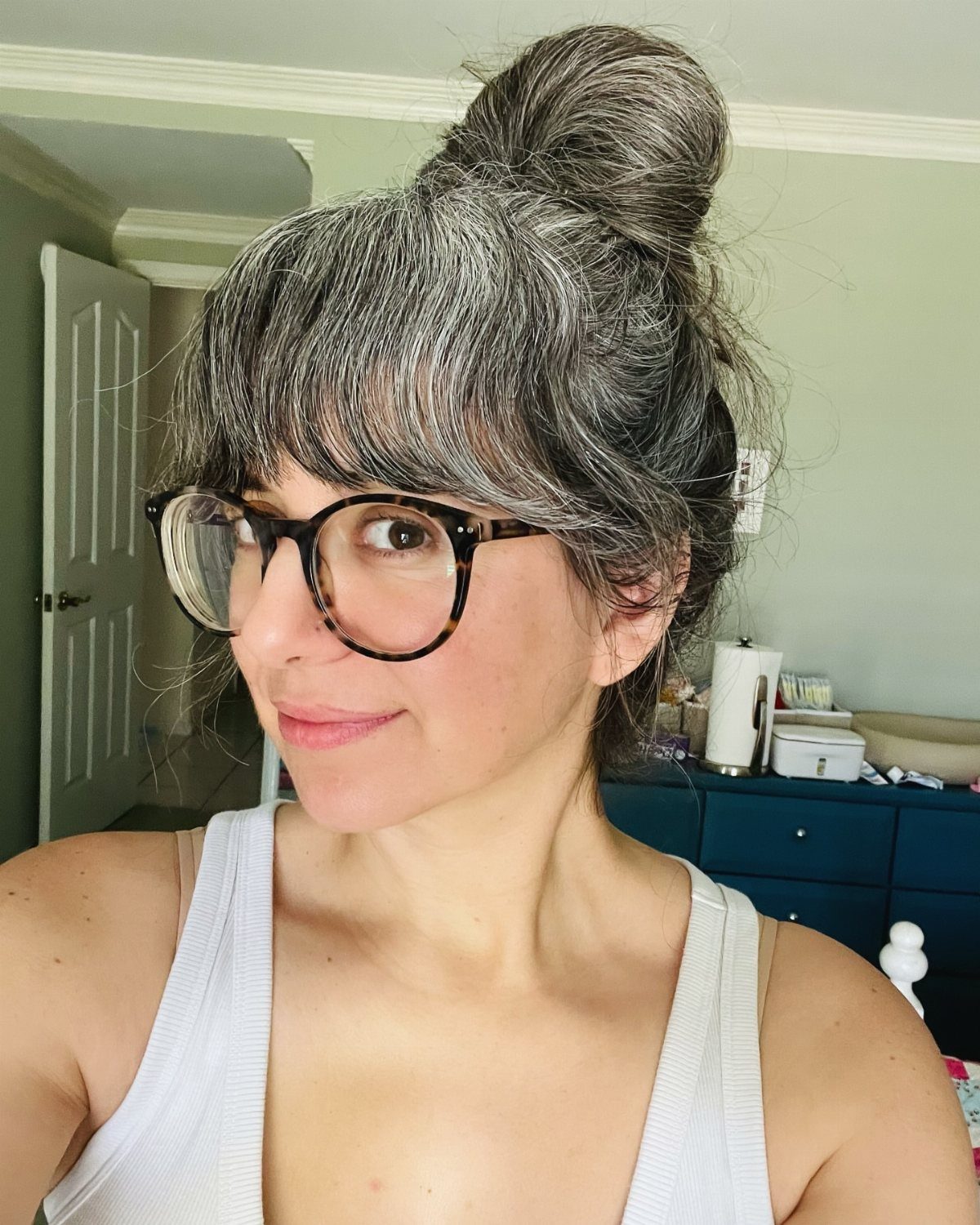
Bangs do specific work here: they give the eye something to land on at the front while all the length goes up and away into the bun.
Straight bangs cut to just above the brow are the most forgiving to maintain between trims. On gray and silver hair they tend to look sharp with almost no styling, just a flat iron pass if they need it.
The bun itself sits high enough to read as a style, not just a quick fix. For anyone who wears glasses, this proportion tends to work well: the frames and the bangs frame the face at the same level.
9. Gray Roots with Blonde Ends

Gray roots growing into blonde lengths are one of the quieter transitions available, because the two tones are close enough in value that the line between them softens on its own.
Warm blonde and cool silver can clash as they meet, so a toning treatment every few weeks keeps the blonde from pulling too yellow against the incoming gray.
A purple shampoo once a week does the same job with less effort.
Trimming off an inch or so every couple of months gradually shifts the balance toward gray without a hard cut.
10. Gray Roots with Dark Ends

Dark ends with gray roots is one of the starker two-tone combinations, and wearing it with confidence is mostly about deciding it looks intentional.
The contrast is sharpest in the first few months.
As the gray grows further down, the line softens, and the hair starts to read more like an ombre than a grow-out. Layers speed that shift along by breaking up the single weight line where the tones meet.
For anyone not ready to cut, this is a workable middle stage rather than something to rush through.
11. Gray Roots with Purple Hair
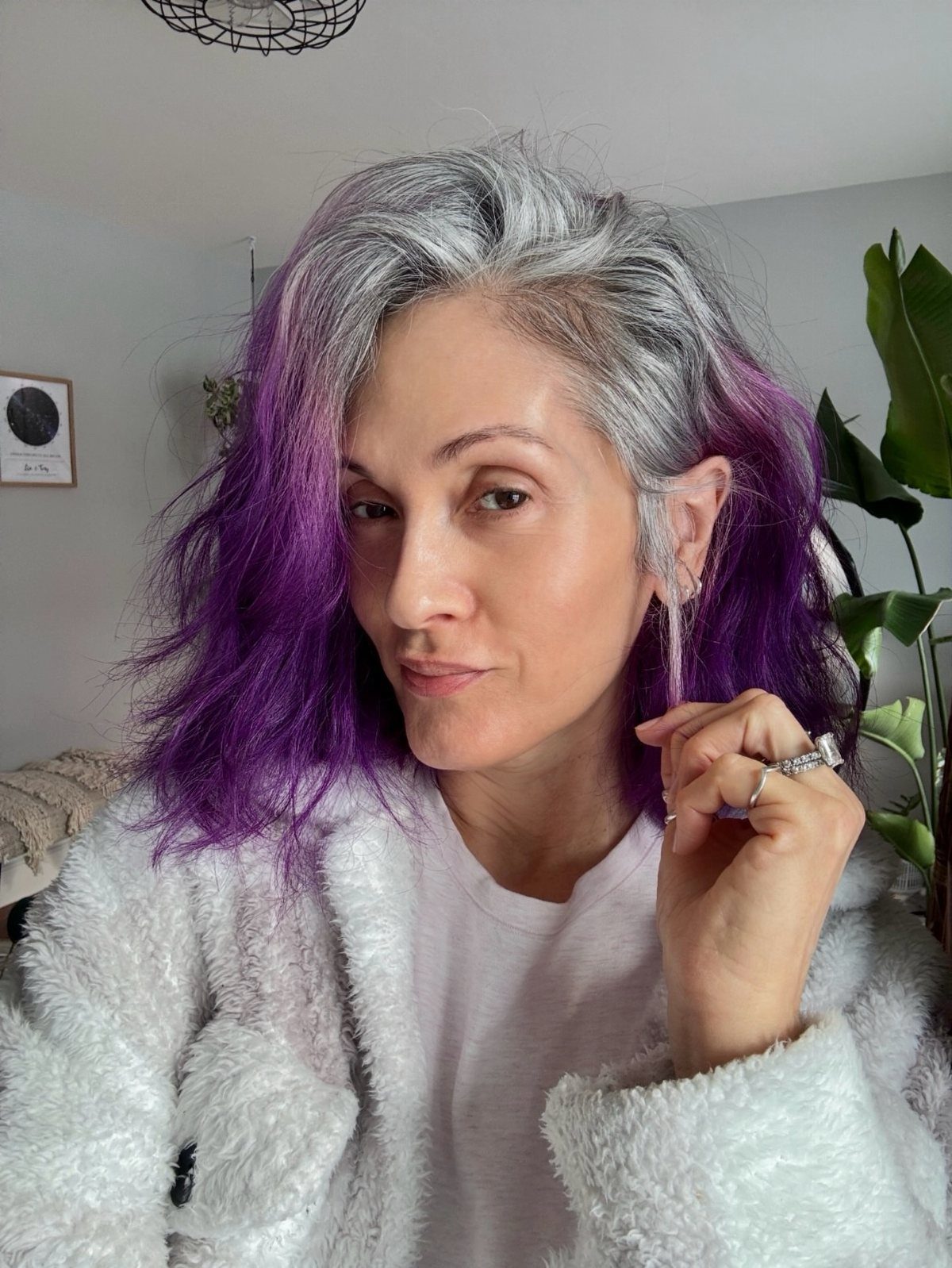
Purple is one of the more forgiving colors to grow gray into, because the cool tones sit closer to silver than warm shades do.
The contrast at the root line is still visible, but it reads more like an intentional root shadow than a neglected grow-out.
A color-depositing purple conditioner used every few washes keeps the lengths saturated while the gray takes over at the crown.
Once the gray has grown several inches, the 2 tones can blend into something genuinely interesting without any additional work.
12. Shoulder-length Gray and Brown Blend

Shoulder length gives gray and brown enough room to mix across the whole head rather than sitting in 2 distinct bands.
At this length, the blend tends to look most natural with some layering through the ends, which lets both tones catch light rather than flattening into a single tone.
A weekly toning treatment keeps the silver pieces from going brassy alongside the warmer brown strands.
This is one of the lower-effort places to land during a grow-out: the length is manageable, the blend softens the transition, and a round brush gives you a polished result in a few minutes.
Transition Takes Time
Hair grows about half an inch a month, which means a full transition at shoulder length runs closer to 18 months. One account puts it at six months to clear nearly all the colored ends, leaving just an inch behind.
The in-between stretch is the part most people struggle with. When only a few inches of gray have come in, the line at the root can read as patchy or uneven rather than a blend.
Whether you trim or let it grow, the split between colored ends and natural roots lasts for months.
Single-process color formulas designed to blend gray can soften the demarcation line as it grows, adding more neutral tones between the dyed lengths and the incoming silver.
Redken’s Color Camo line is one example used to add pepper back into transitioning hair.
Choosing to Stop Coloring
The decision to stop coloring often comes down to time and money spent on root touch-ups every few weeks. One woman pointed to the unequal pressure on women to cover gray in the first place.
The response from family and colleagues can be harder than expected.
A colleague at a work event told her the gray showing at her scalp had gone weeks past acceptable and made her look older. Women, more than men, tend to push back against the choice.
Some stylists refuse outright to help with a gray transition, which means finding someone new. Online gray-hair communities offer support during the grow-out, and for some, telling friends and family made backing out feel impossible.
What began as a resource to help women feel less embarrassed or ashamed about grays has now grown into a community of 74,000 where its followers share stories about why they decided to transition.
— Glamour
Gray Hair and Stress
Intense periods can push pigment-producing cells to shut down, and gray strands appear after the fact. The color forms before the hair grows out, so the gray you see reflects what was happening weeks earlier.
A small study found that some gray hairs regained their original color, with changes tied to periods of stress or relaxation in a subset of participants. Cleveland Clinic notes that when stress levels drop, once-gray hairs may grow back pigmented.
The research is early, but it points to a process that can reverse in some cases rather than locking in for good.
Frequently Asked Questions
How to gradually go gray?
Highlights near the face and through the lengths break up the line between dyed hair and gray roots, so the transition looks intentional rather than patchy.
Another option is cutting to a bob or pixie, which removes most of the colored length and skips the awkward middle stage entirely.
What causes grey hairs to grow?
Hair turns gray when follicle cells slow down melanin production, the substance that gives each strand its color.
How to Know if You Should Let Your Hair Go Gray?
Gray roots or streaks are the clearest sign: if your roots are growing in silver or dove gray, the color is already arriving and covering it takes more work over time.
If you’re tired of the appointment cycle, growing it out removes that schedule from your life.
Does stress cause gray hair?
Severe stress can stop pigment cells from working, and the gray shows up once that hair grows long enough to see.
Color gets locked in before a strand leaves the scalp, so gray you spot today tells you what happened a month or two back.
One early study saw a few gray hairs return to their old color once stress eased, but the findings are still new.
Can you prevent or reverse gray hair?
Age-related graying cannot be stopped.
Treating a vitamin deficiency or other condition may slow the graying, but already-gray hair probably will not reverse. Dyeing covers the gray, but it does not change the color forming in the follicle.





