Fine hair benefits most from a fringe that adds the illusion of density without flattening what little volume is there, and whether that means a blunt-cut edge that tricks the eye into reading thickness, a wispy point-cut tip that builds movement in, or curtain bangs spread wide enough to hide sparseness across the forehead, the deciding factor is how much upkeep you’re willing to commit to.
A blunt fringe sharpens fast and needs frequent trims to hold its line; a choppy or wispy style is more forgiving as it grows.
1. Side-swept Bangs

A diagonal fringe swept to one side breaks up the forehead line and pulls the eye across rather than straight down, which is exactly what fine hair benefits from.
Asking for a side-swept bang cut at an angle rather than straight across gives you a softer edge that blends more naturally into the rest of the hair.
Fine hair holds this shape better when the bang isn’t cut too blunt at the tips.
It also grows out gracefully, which matters when every salon visit costs time and money.
2. Curtain Bangs

Curtain bangs part at the center and fall outward on both sides, framing the face the way a set of curtains frames a window.
For thinning hair, this style distributes the fringe across a wider section of the forehead rather than concentrating it in one spot, so any sparseness is far less visible.
Because they taper toward the temples and blend into longer layers, the transition looks intentional rather than abrupt.
To get that soft, outward sweep, roll each side away from the face with a round brush while directing the dryer in the same direction.
3. Wispy Bangs

Wispy bangs are thinned at the tips so the fringe sits lightly across the forehead rather than landing as a solid block.
That texture is a genuine advantage for fine hair.
A full, blunt fringe can look flat when the hair behind it lacks volume, but a wispy fringe already has movement built in, so it reads as a style choice rather than a limitation.
Asking your stylist to point-cut or feather the ends gets you this look. A tiny amount of a lightweight styling cream can separate the pieces if they clump.
4. Blunt Cut Bangs
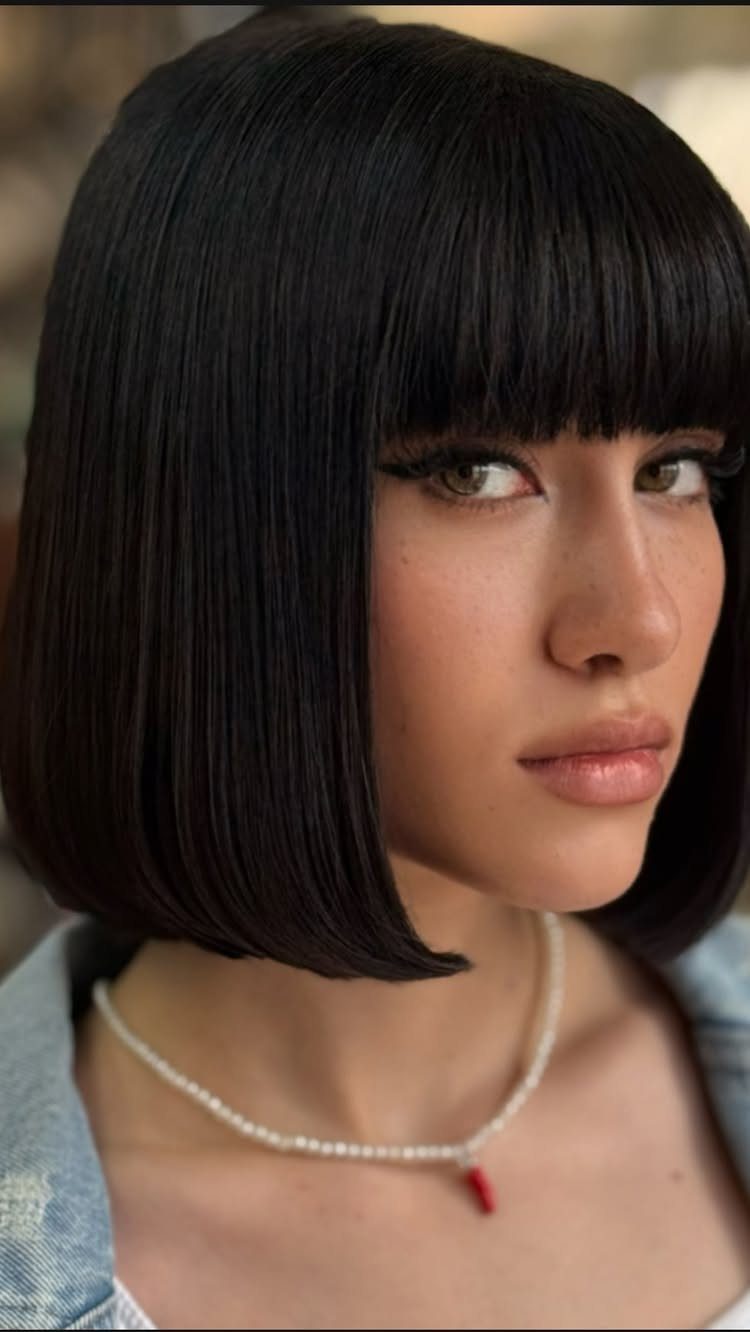
Straight-across bangs cut to a clean, even line give the front of fine hair more apparent density than almost any other fringe shape.
The solid edge creates an optical effect: the eye reads the line as thickness, not individual strands. That’s why this bang style works particularly well for very fine or flat hair, where every visual cue toward fullness matters.
The upkeep is real, though. A blunt fringe grows out faster than it looks like it does, so keeping that line sharp means staying on top of regular trims.
5. Wavy or Curly Bangs
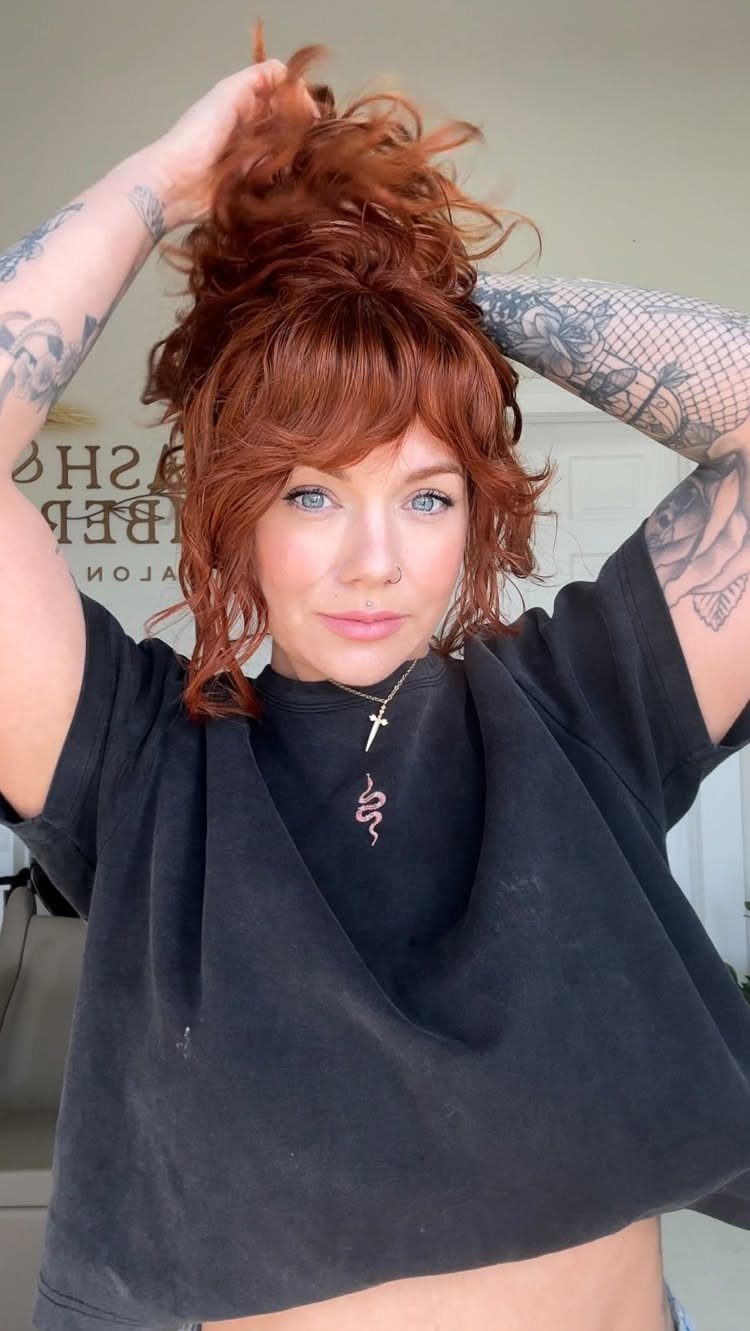
Natural wave or curl in a bang is free volume, and that’s the whole advantage here for anyone with fine hair.
Rather than fighting texture to get a smooth fringe, this style works with it.
The wave lifts the bang slightly off the forehead and creates a piecey, dimensional look that a pin-straight fringe on fine hair rarely achieves without a curling iron.
If your hair is only loosely wavy, a small-barrel iron can encourage the shape. Scrunch in a light mousse while damp and let the bang air-dry to see what your natural texture actually gives you before adding heat.
6. Pixie Cut with Short Bangs
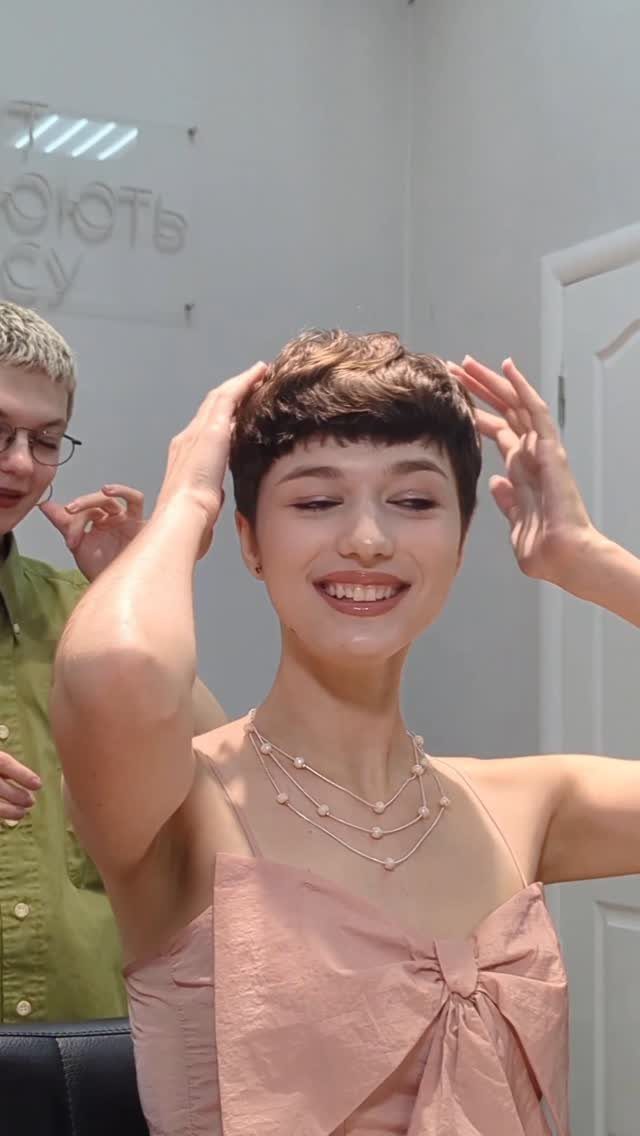
Short bangs on a pixie sit high on the forehead, which sounds counterintuitive for thinning hair but actually reduces the amount of scalp visible at the front hairline.
A pixie also removes length and weight, which can make very fine, limp hair look more deliberate. The short bang adds a defined edge to what might otherwise read as hair that simply ran out.
Texture matters here: ask for the tips to be point-cut so they sit with a little movement rather than landing in a flat line across the brow.
7. Short Choppy Bangs
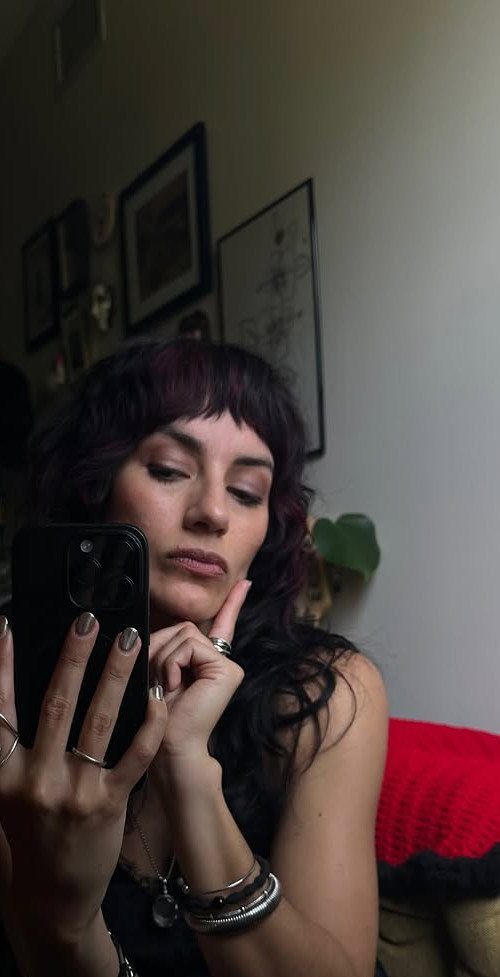
Choppy bangs are cut with deliberate, uneven ends so the fringe breaks into separate pieces instead of falling as one flat curtain.
For fine hair, that separation does real work. Each piece catches light on its own, which reads as texture and density rather than the single thin layer a smooth fringe would reveal.
Point-cutting the ends is what gets you there; ask your stylist to snip into the tips vertically rather than cutting straight across.
A small amount of dry texture spray pressed through the bang helps the pieces stay distinct through the day.
8. Bob Haircut with Bangs
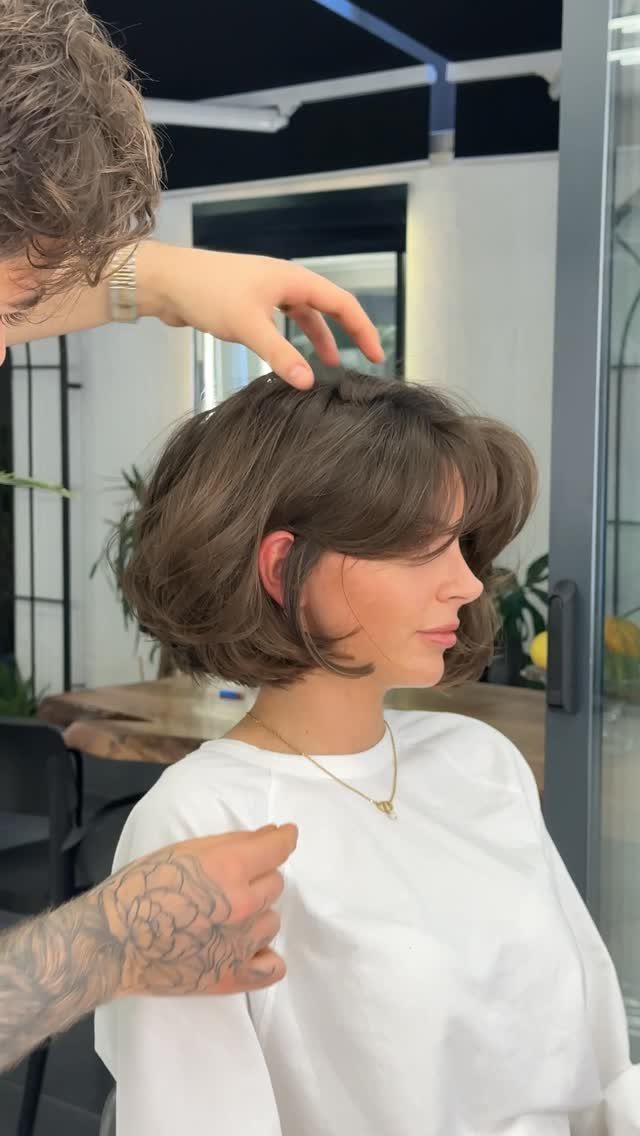
Pairing a bob with a fringe gives fine hair 2 sources of visible density at once: the blunt perimeter of the bob at the ends, and the bang across the forehead.
The fringe shortens the apparent length of the face and draws attention forward, which can make the overall cut look fuller than the same bob worn without one.
A chin-length bob is a practical choice here because it keeps the total weight manageable while still giving the fringe something to blend into at the sides.
Regular trims matter for both pieces; the bang and the bob line both lose their shape quickly on fine hair.
“With fine hair, the bangs section might have to be slightly bigger for density as every strand counts; however, it’s also important to preserve density throughout the overall haircut and maintain balance between the bangs and the rest of the shape.”
— ELLE
Consult a Stylist Before Cutting
Cutting your own bangs is a gamble with low upside and real downside, and that’s especially true for fine hair.
A small error in angle or length can leave the whole style looking off, and bangs are not forgiving about corrections.
A stylist will size up your face shape, hair density, and how your hair actually falls before touching a scissor.
The right balance between bang length, thickness, and how they frame a thinning hairline is hard to judge in a bathroom mirror.
Starting longer is the safer call. Hair can always come shorter; it cannot go back.
Style and Care for Fine Hair
Root lift and direction both come from working a round brush through the bang while you blow dry. Heat applied at the root while the hair is still damp does the most work.
Frequent heat styling does take a toll on fine hair over time, leaving it frizzy and dull faster than it would on thicker strands. A weekly deep conditioning masque helps offset that.
For a sleeker finish, a flat iron run lightly through the bang after it dries gives a smoother result than the blow dry alone.