
Demodex on scalp refers to an overgrowth of microscopic mites that normally live in hair follicles and oil glands. Most adults carry fewer than five mites per square centimeter without symptoms.
Disease begins at counts above five per square centimeter paired with visible inflammation: follicular scaling, pustules, or redness. In one biopsy study of 333 people with hair loss, only four of seventeen who had mites showed signs of folliculitis.
What Demodex Mites Are and Where They Live
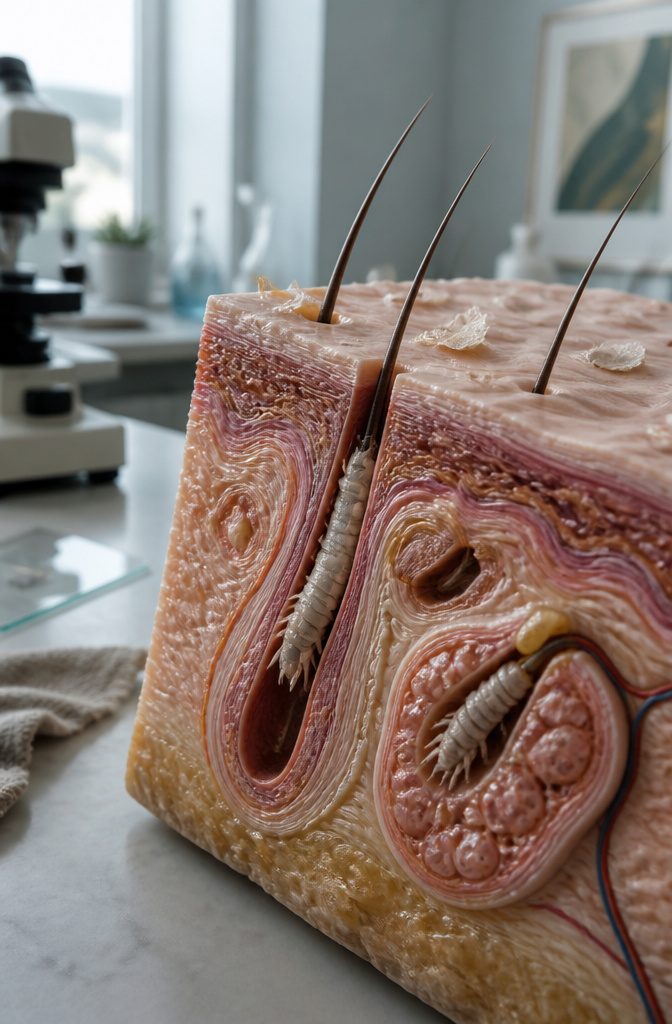
Demodex folliculorum and Demodex brevis are microscopic mites that live in human hair follicles and oil glands. The two species differ in size and habitat.
D. folliculorum measures 0.3–0.4 mm long and settles in the follicular infundibulum, the upper part of the hair shaft. D. brevis is smaller at 0.15–0.2 mm and burrows deeper into the sebaceous glands themselves.
In some studies, Demodex mites have been found in 10 percent of skin biopsies and 12 percent of follicles. Other samples uncovered at least one species of Demodex in all adults tested.
That prevalence means most people carry them without knowing.
Both species are most concentrated on the face: cheeks, nose, chin, forehead, temples. They also appear on balding scalp, neck, and ears.
D. folliculorum feeds on sebum and dead skin cells. The mites complete a 14-day life cycle and move at 8–16 mm per hour, mainly at night when bright light no longer drives them back into the follicle.
When Mite Presence Becomes Disease
Demodex mites live on healthy skin, and their presence alone does not mean disease.
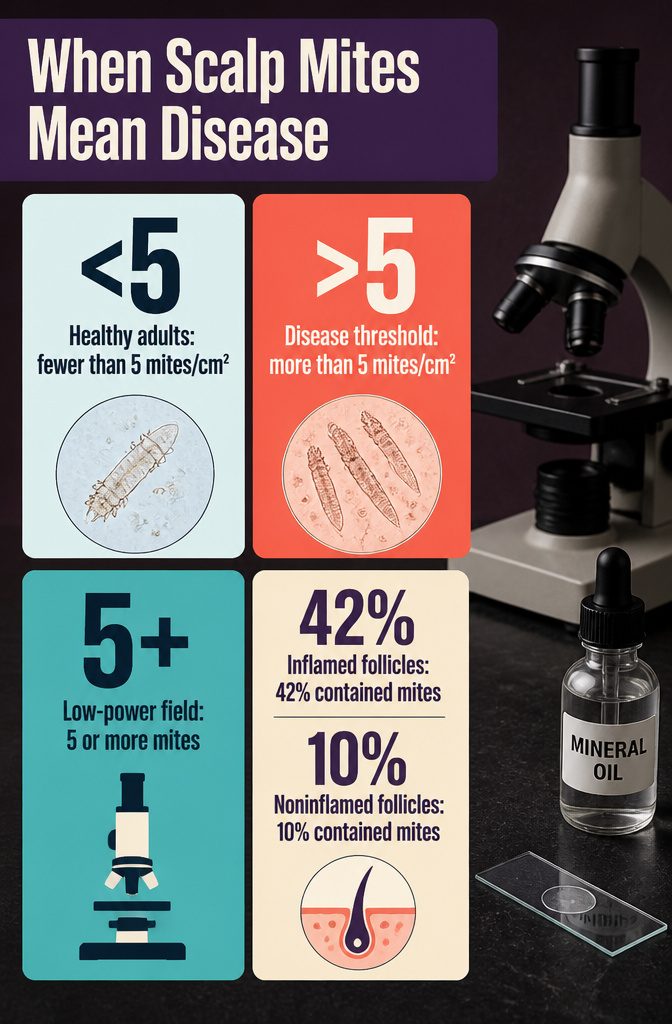
The average healthy adult carries fewer than 5 D. folliculorum mites per square centimeter of skin, and most middle-aged adults host at least some mites in their hair follicles.
Neonates pick them up through close contact with caregivers, and colonization increases with age as sebum production rises.
Demodicosis is defined as more than 5 mites per square centimeter or 5 or more mites visible in a low-power microscopic field from a 10–15% potassium hydroxide preparation of skin scrapings.
One study found Demodex in 42% of inflamed follicles but only 10% of noninflamed follicles, suggesting that high density paired with compatible signs like follicular scaling, pustules or itch is what matters. The number, not just the presence, makes the diagnosis.
Scalp Signs Linked to Demodex
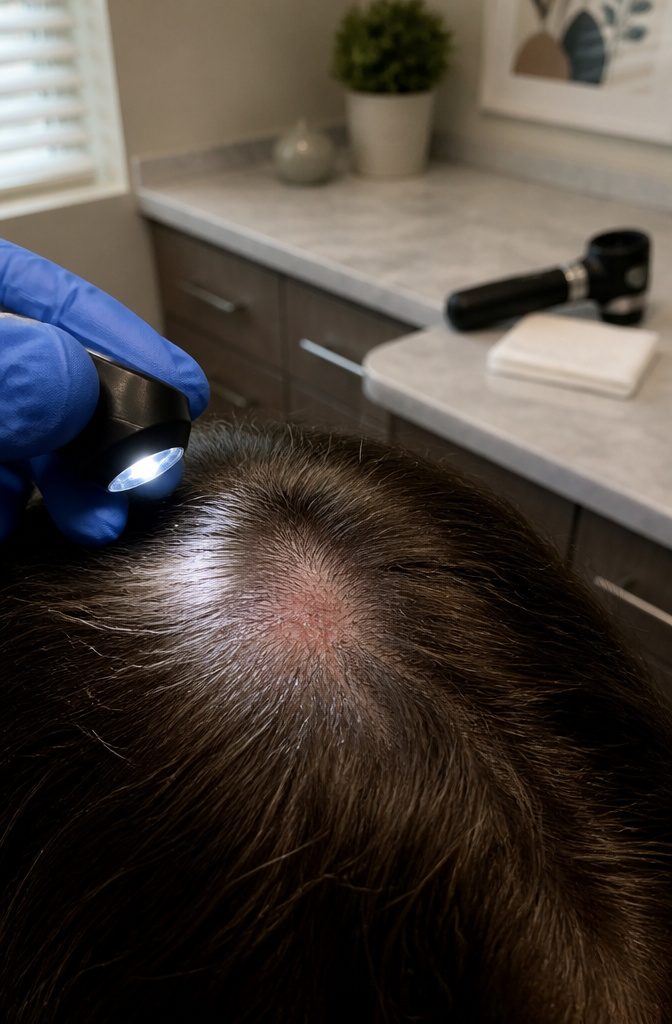
A biopsy study of 333 people with hair loss found Demodex in seventeen cases. In thirteen, the mites appeared without causing trouble.
Four showed signs of folliculitis, with hair loss, redness, scales, and pustules on the scalp. Medical literature also describes papulopustular eruptions in some scalp cases.
Commercial sources claim the mites cause itching, dandruff, yellowish scabs, scaly red patches, and excessive flaking. Those descriptions appear without clinical study backing, so I treat them as possible associations rather than confirmed markers.
The biopsy findings are narrower and more cautious: most people with Demodex on the scalp show no symptoms at all, and the fraction that does presents with inflammation you can see.
How Diagnosis Works and What Else to Rule Out
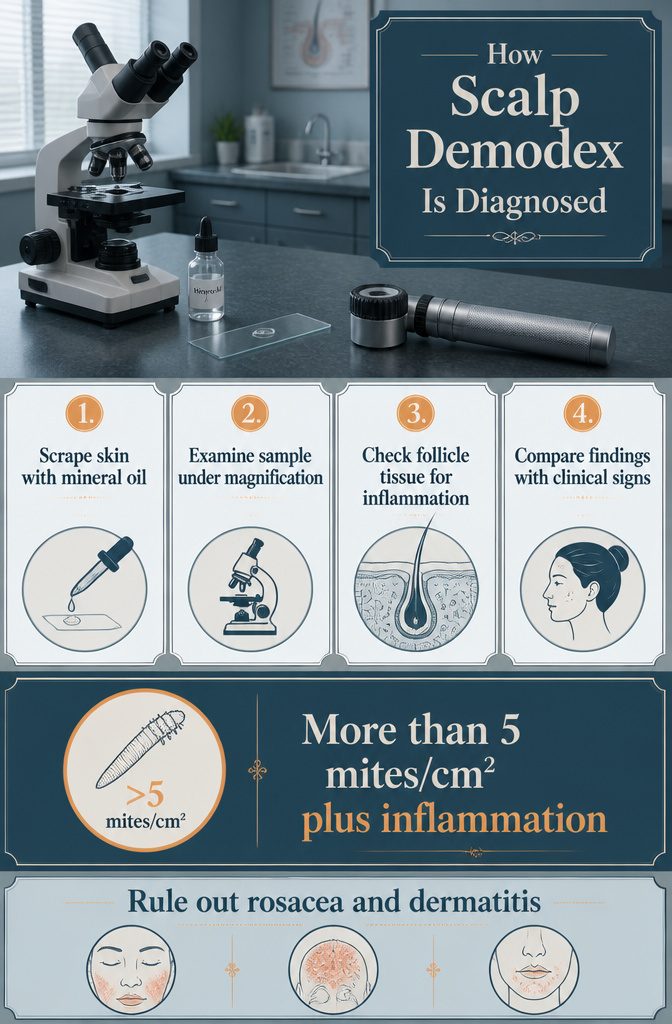
Diagnosis starts with sampling the skin to see whether mites are present in high numbers.
One method scrapes the surface with mineral oil and examines the material under a microscope using potassium hydroxide preparation. Another approach takes a biopsy of the follicle itself and looks at the tissue under magnification.
Skin surface biopsy can also capture follicular content from the outermost layer. Dermoscopy sometimes reveals spiky white structures blocking the openings of follicles, a sign that suggests demodicosis before any lab work begins.
Finding mites does not by itself prove disease.
Diagnosis requires both high density—more than five mites per square centimeter—and compatible signs of inflammation such as follicular hyperkeratosis, lymphocytic infiltrate around the follicle, or neutrophils and granulomas in cases involving the scalp.
Presence alone means nothing, because most adults carry low numbers without symptoms.
The clinical picture matters as much as the count. Demodex findings can look identical to rosacea, seborrheic dermatitis, or perioral dermatitis, so the biopsy needs to show both the mites and the inflammatory response before treatment begins.
Treatment Options Described in the Sources
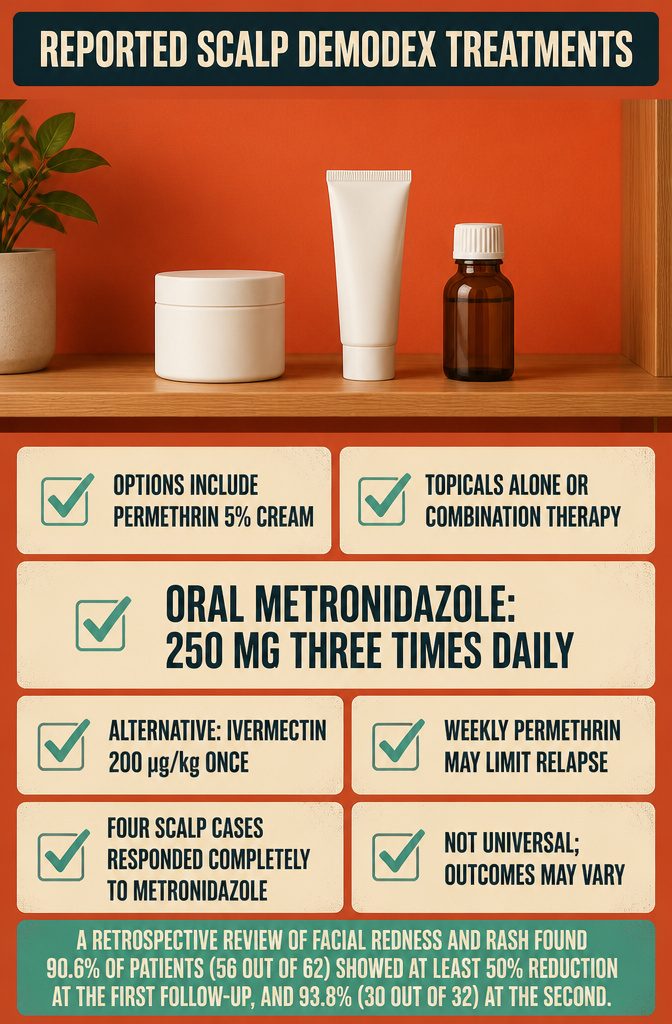
The regimens documented range from topical preparations alone to combination therapy that pairs a cream with an oral agent.
Benzyl benzoate, permethrin 5% cream, sulfur ointment, crotamiton, selenium sulfide, metronidazole, salicylic acid, and ivermectin have all been reported as topical options. Oral metronidazole runs from 250 mg three times daily down to 500 mg once daily.
When three weeks of treatment brings no improvement or the patient cannot tolerate it, oral ivermectin at 200 μg/kg once, paired with a topical agent, may be tried instead.
Intermittent permethrin 5% applied weekly has kept relapse at bay in some cases.
Four scalp cases responded completely to metronidazole, though that outcome is not universal. A retrospective review of facial redness and rash found 90.6% of patients (56 out of 62) showed at least 50% reduction at the first follow-up, and 93.8% (30 out of 32) at the second.
Age, Immunity, and Mite Levels
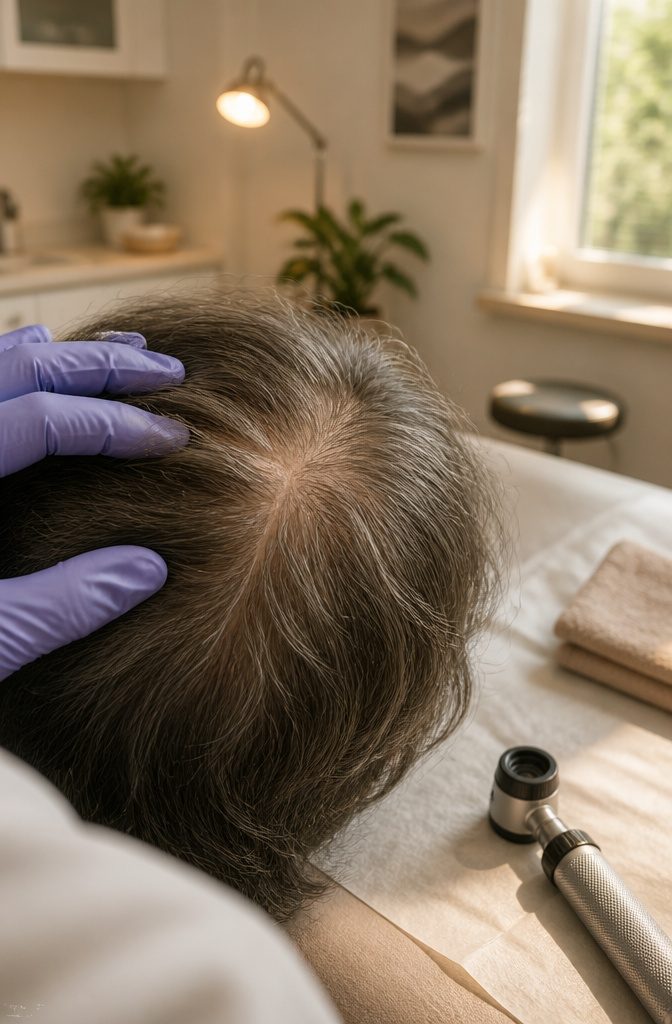
Higher mite levels correlate with older age and weakened immunity. Demodicosis turns up more often in older adults than in younger ones, and the mites are rarely seen in children under five because sebum production stays low.
D. brevis peaks in people aged twenty to thirty, when sebum levels hit their highest point.
Immunodeficiency opens the door wider. HIV, cancer, and other systemic conditions raise both the likelihood of higher mite counts and the chance that those counts will trigger visible symptoms.
Local immune suppression matters too. Topical steroids, calcineurin inhibitors, and phototherapy can all tip the balance, and some patients need the suppressing treatment withdrawn before the mite problem will clear.
Those on chronic immunosuppression may need intermittent topical therapy long-term just to keep mite numbers in the normal range.
The Uncertain Link Between Mites and Symptoms
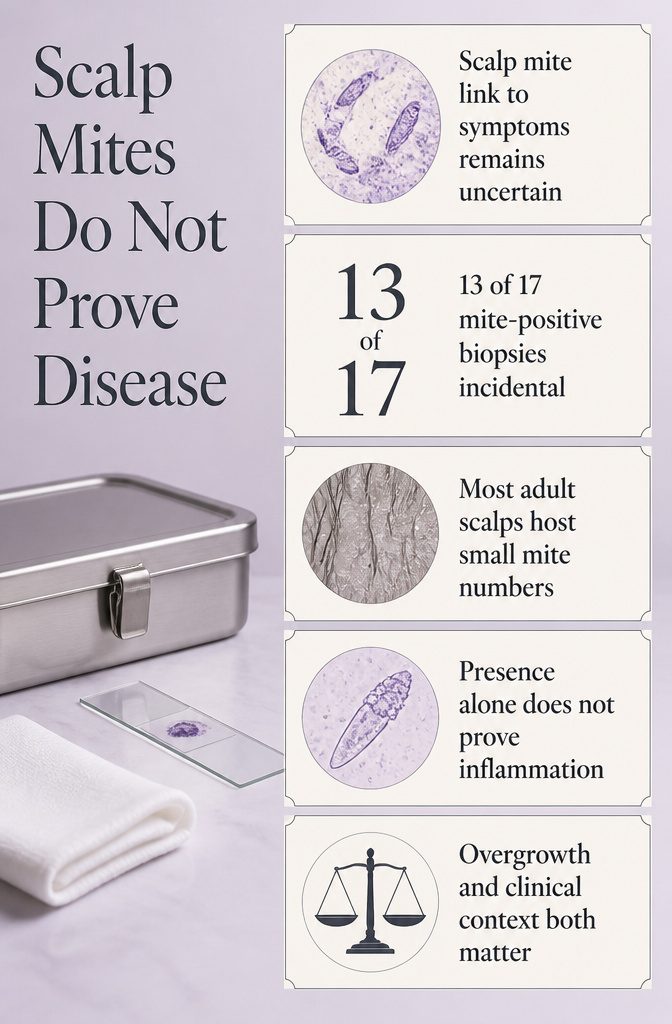
The relationship between finding mites on a scalp and the person actually being sick is not definitively established. Most scalp biopsies that turn up Demodex are not considered pathogenic at all.
In one set of seventeen biopsy samples that contained mites, thirteen were judged to be incidental findings rather than the cause of whatever symptom prompted the biopsy in the first place.
That distinction matters when you’re trying to figure out whether treatment is worth pursuing. Mites live on nearly every adult scalp in small numbers, so their presence alone does not mean they are driving inflammation, itching, or hair loss.
The question is always whether the population has crossed into overgrowth and whether that overgrowth is contributing to the problem you’re seeing.
Current evidence does not give us a clean yes-or-no answer, which is why diagnosis leans on context and clinical judgment rather than a simple count.
Frequently Asked Questions
What is Demodex folliculorum?
Demodex folliculorum is a microscopic mite 0.3–0.4 mm long that lives in the upper part of human hair follicles and feeds on sebum and dead skin cells.
Most adults carry these mites on the face, scalp, neck, and ears without any symptoms. The mites complete a 14-day life cycle and move 8–16 mm per hour, mostly at night.
What is Demodex brevis?
Demodex brevis is a smaller mite species measuring 0.15–0.2 mm that burrows into sebaceous oil glands rather than staying in the follicle itself.
It feeds on the cells of the oil glands. Like D. folliculorum, it lives on most adult faces and scalps without causing problems unless the population grows too high.
How is Demodex diagnosed?
Diagnosis requires both a high mite count (more than 5 per square centimeter) and visible signs of inflammation like follicular scaling, pustules, or redness.
A doctor scrapes skin with mineral oil and examines it under a microscope, takes a biopsy of the follicle, or uses dermoscopy to spot white structures blocking follicle openings.
Finding mites alone does not prove disease, since most adults carry low numbers without symptoms.
What is the treatment for demodicosis?
Topical treatments include permethrin 5% cream, benzyl benzoate, sulfur ointment, metronidazole, and ivermectin applied to the skin.
Oral metronidazole (250–500 mg daily) or oral ivermectin (200 μg/kg once) may be added in cases that do not respond to topical therapy alone. Four scalp cases in one study cleared completely with metronidazole, though results vary by patient.
Can you get rid of Demodex completely?
No, you cannot eliminate Demodex mites entirely because most adults carry them as part of normal skin fauna.
Treatment aims to bring overgrowth back down to normal levels (fewer than 5 mites per square centimeter) rather than eradicate them. Patients on chronic immunosuppression may need intermittent topical therapy long-term to keep mite numbers in a healthy range.
What is the relationship between Demodex mites and seborrheic dermatitis?
Demodex mites can look identical to seborrheic dermatitis on the scalp, and high mite counts have been reported in some patients with seborrheic dermatitis-like eruptions.
A biopsy is needed to show both the mites and the inflammatory response before attributing symptoms to Demodex. The exact relationship remains unclear, since mites appear in many skin conditions without proven causation.
What is the relation between itching and Demodex mites?
Overpopulation of Demodex may cause itching on the skin or scalp, though itching has many other possible causes. The biopsy literature focuses on folliculitis and pustules rather than itch as the main sign.





