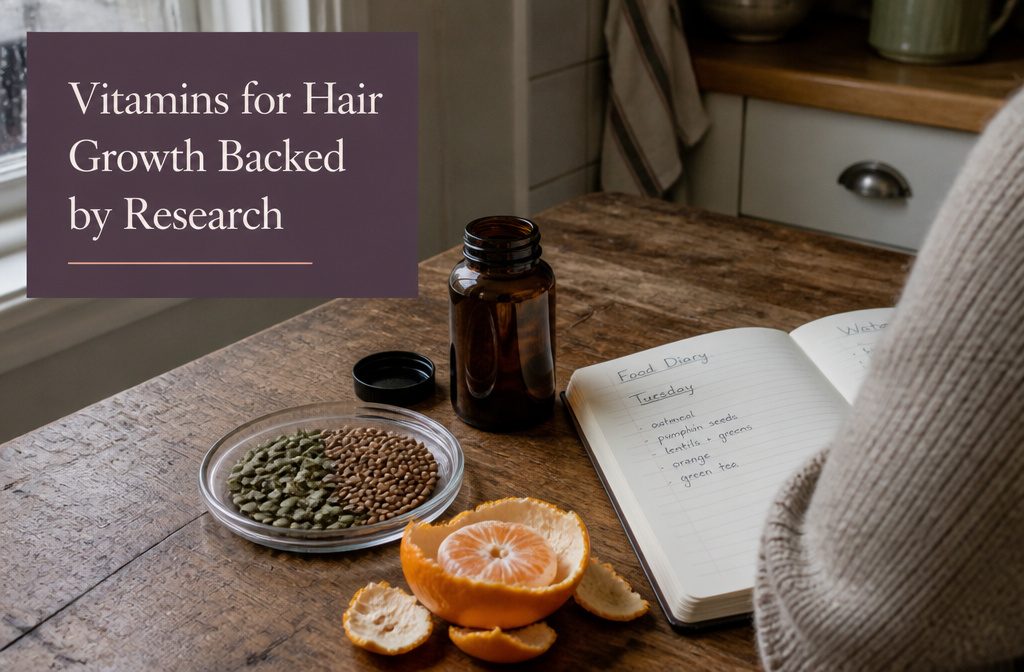
Biotin wins if you’ve tested low or eat a restrictive diet, because it supports keratin production and a 2016 study found 38% of women with hair loss were deficient.
If your levels are normal, though, extra biotin won’t speed up growth, and the same holds for most vitamins on this list: they correct deficiency, not genetics or hormones.
1. Biotin for Keratin and Hair Strength
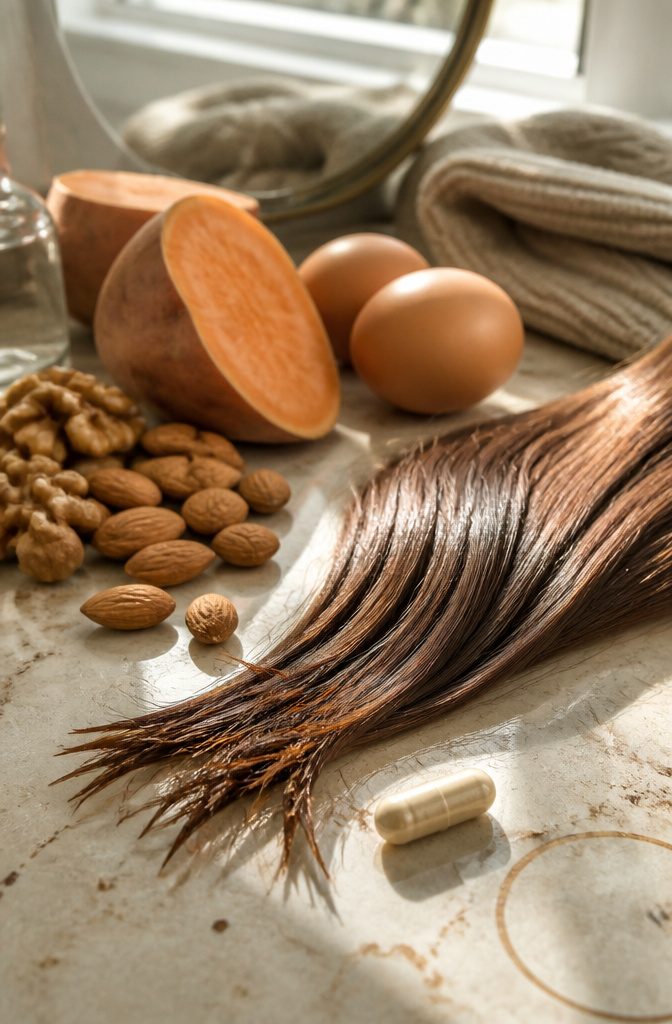
Biotin turns up in nearly every conversation about hair supplements, and the link to keratin makes sense.
Hair is built from keratin protein, and biotin supports keratin production, which gives strands their strength and helps prevent breakage. If you are actually deficient, supplementing can make a difference.
A 2016 study in 541 females found a biotin deficiency in 38% of the participants who were experiencing hair loss.
That is a high rate, and it suggests biotin levels are worth checking if thinning is a concern.
But the picture gets less clear from there: sources agree that supplemental biotin helps people who are deficient, yet there is not enough evidence to support its use in people whose biotin levels are already normal.
If your diet includes eggs, nuts, sweet potatoes, and organ meats, you may already be getting enough from food and gut bacteria.
One caution at very high doses above 20,000 mcg: biotin can interfere with certain lab tests, leading to false-positive results. If you are supplementing and need bloodwork, mention it to your doctor.
2. Vitamin D When Levels Are Low

Vitamin D deficiency shows up clearly in people with hair loss, but supplementing when your levels are already normal does not appear to push regrowth any further.
A 2019 review found a strong connection between low vitamin D and alopecia areata, the autoimmune condition that causes patchy hair loss.
But a large study tracking 55,929 women saw no meaningful link between total vitamin D intake and hair loss in women who weren’t deficient to begin with.
The daily recommendation sits at 600 IU (15 mcg), and blood levels should fall between 30 and 60 ng/ml. Around 41% of the US population runs clinically low, so testing before supplementing makes sense if thinning or shedding has appeared suddenly.
Doses over 50,000 IU or blood levels above 150 ng/ml turn dangerous fast, so high-dose correction should happen under supervision rather than guesswork.
3. Iron for Hair Loss Tied to Deficiency
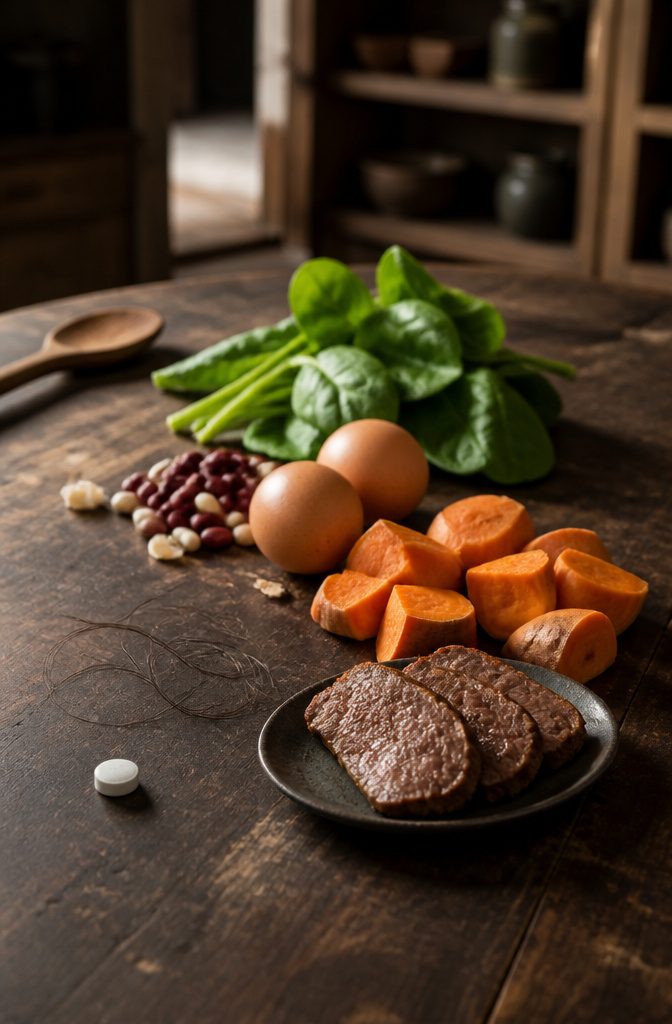
Iron matters when your levels run low. Deficiency is directly linked to hair loss, particularly in women with iron-deficiency anemia where red blood cell counts drop.
The hair follicle matrix cells divide faster than nearly any other cells in the body, and without adequate iron, that process stalls.
Daily needs sit at 8 mg for men and postmenopausal women, while women before menopause need 18 mg. Hair La Vie Revitalizing Hair Blend supplies 10 mg of iron per serving, landing in the middle of that range.
The supplement also includes vitamins, minerals, and botanicals aimed at hair growth, plus a proprietary blend with whole-food vitamin C, fatty acids, and collagen-promoting nutrients.
Iron-rich foods include beef, chicken, eggs, spinach, sweet potatoes, and beans.
If you suspect your levels are off, check with a doctor before supplementing. Iron can upset the stomach, and overdose carries real risk.
4. Zinc for Follicle Health and Plant-Based Diets
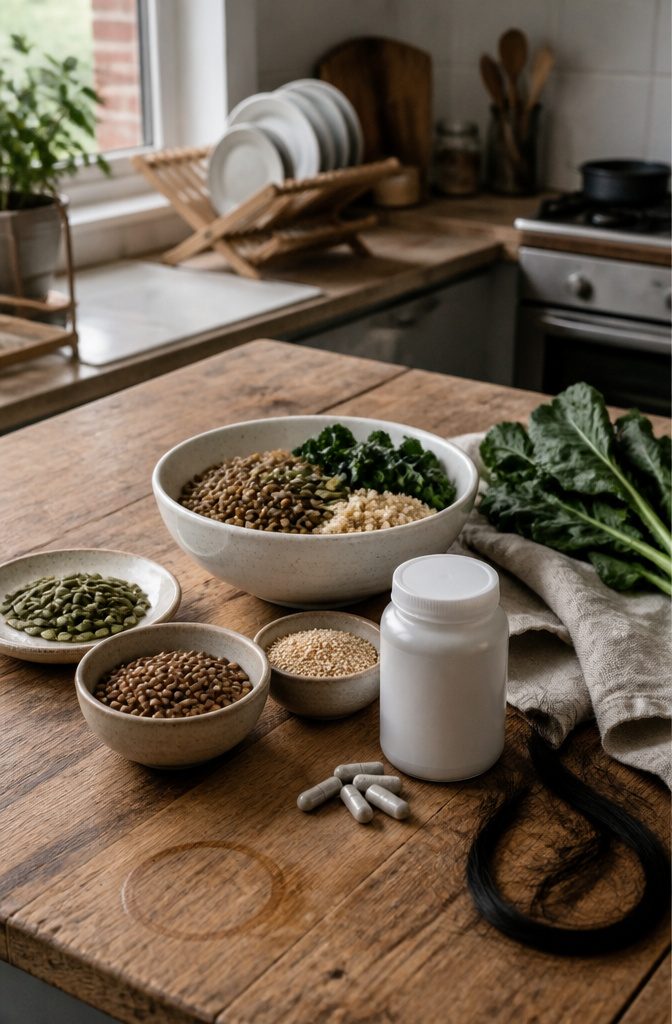
Zinc keeps follicles functioning and hair growing at a normal rate, but deficiency is more common than most people think, especially if you follow a plant-based diet.
The mineral supports tissue repair and growth in the scalp, and low levels show up as thinning or slower regrowth.
Vegetarians and vegans absorb less zinc from food because phytates in grains and legumes bind to it, so supplementation often makes sense if blood work confirms you are running low.
Pairing zinc with copper matters. They compete for absorption in the gut, and taking excess zinc long term without copper can push you into copper deficiency.
I look for products that include both, like the Solgar Hair Growth softgel, which balances 100 percent of the daily value of each.
Over-supplementing zinc on its own can also cause nausea and paradoxically worsen hair loss by disrupting the balance of other minerals, so starting with a test and sticking to recommended doses keeps things moving in the right direction.
5. Vitamin C for Collagen and Iron Absorption
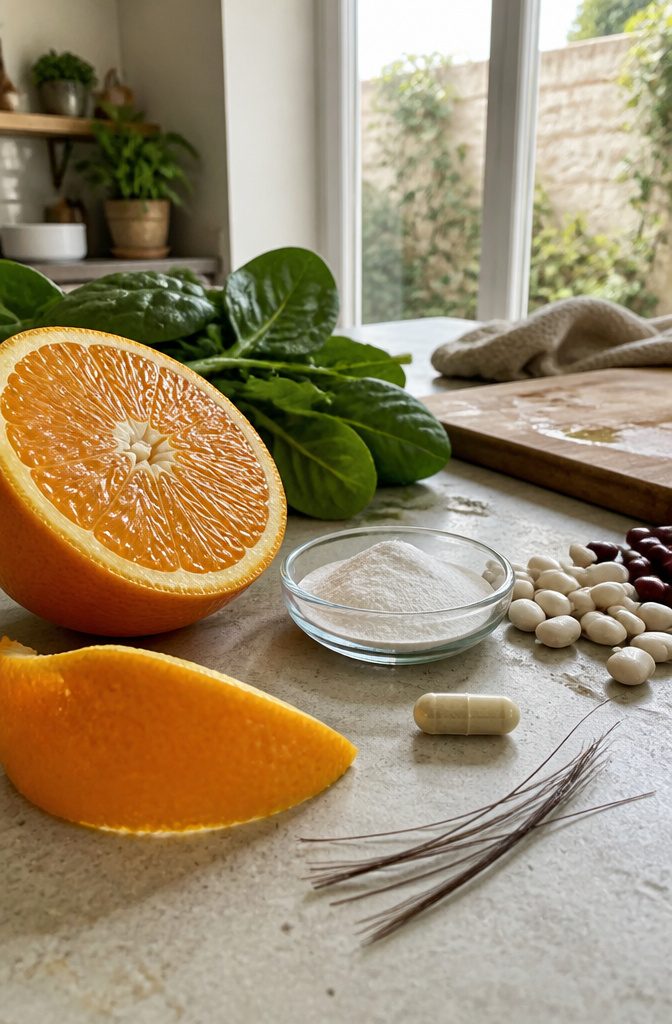
Vitamin C does two things for hair that matter.
It helps the body produce collagen, the protein used to build keratin, the structural material in each strand. And it improves iron absorption, which means the scalp gets more of the oxygen-carrying mineral tied to hair growth and follicle health.
Collagen itself is a building block. Marine collagen peptides have been shown to support hair growth and may help prevent hair loss by increasing natural growth factors and decreasing inhibitors.
The peptides are more bioavailable than other forms, which makes them a better choice if you’re adding a supplement to address thinning or slow regrowth.
Iron deficiency is one of the most common nutrient gaps worldwide, especially in women, and hair follicle matrix cells are among the fastest-dividing cells in the body.
Without enough iron, those cells slow down. Vitamin C steps in to pull more iron from food and supplements, which is why a lot of hair-focused formulas pair the two.
6. Vitamin E as an Antioxidant for Scalp Health

Vitamin E works as an antioxidant that neutralizes free radicals in the scalp, which may reduce oxidative stress and create better conditions for hair growth.
One eight-month study found that participants who took vitamin E supplements experienced 34% increased hair growth. That figure matters because it is one of the few controlled results available for this nutrient.
The theory extends to circulation.
Some research suggests vitamin E may improve blood flow throughout the body, and circulation has been linked to healthy hair growth. Hair experts often conclude that vitamin E might support scalp circulation, though the connection is qualified rather than confirmed.
People with alopecia areata have been found to have lower concentrations of vitamin E in their blood compared to those without the condition.
A 2010 study on tocotrienol supplements, a form of vitamin E, showed improved hair health and reduced hair loss in people with alopecia. Not all studies confirm these findings, so the evidence remains mixed.
7. Collagen and Amino Acids as Building Blocks
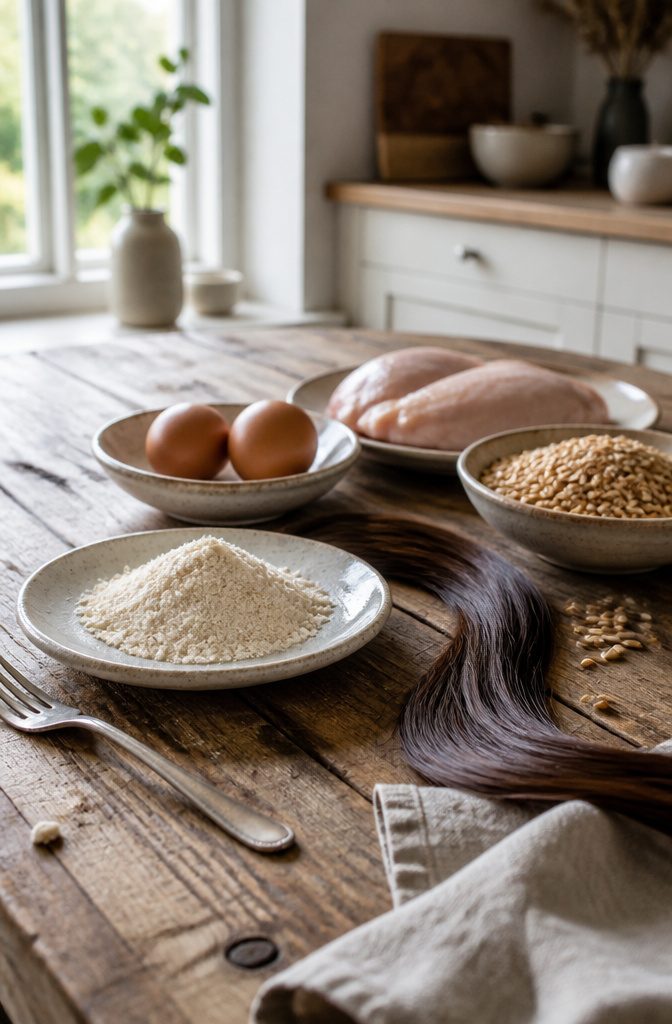
Hair is about 90% keratin, and keratin is made from amino acids.
Collagen peptides supply those amino acids in broken-down form, so they feed the process that builds the hair shaft. Aside from water, 95% of hair is protein, and collagen gives the body access to the specific building blocks it needs.
Marine collagen peptides are particularly bioavailable. They’ve been shown to support hair growth and may help prevent hair loss by increasing natural growth factors and decreasing the ones that inhibit it.
The research on alopecia points to collagen peptides as a useful tool for both prevention and regrowth.
Cysteine is one amino acid worth singling out.
Keratin contains high levels of it, and getting enough through protein intake can improve how hair looks and feels. Poultry, eggs, beef and whole grains are rich food sources of cysteine.
8. Other B Vitamins and Multivitamins

The B-complex group includes B12, folic acid, and niacin, plus several others that show up in multivitamins and targeted hair supplements.
A B12 deficiency can lead to hair loss, but if your levels sit within the normal range, extra B12 through a supplement probably won’t accelerate growth.
The 2019 review that looked at multiple studies found no connection between changes in B12 and hair retention once the deficiency was corrected. Adults need 2.4 mcg of B12 per day, pregnant people need 2.6 mcg, and people who breastfeed need 2.8 mcg.
Folic acid supports cell generation, which can affect hair during the active growth phase.
The evidence is still building, but it’s included in most prenatals, which may explain why expectant mothers often report thicker hair. B vitamins are water-soluble, so the body flushes out what it doesn’t use each day.
That makes daily intake more important than loading up at once. Older age, digestive conditions, plant-based diets, and certain medications all raise the risk of a B vitamin shortfall, which is when supplementation makes the most sense.
When Supplements Work and When They Don’t
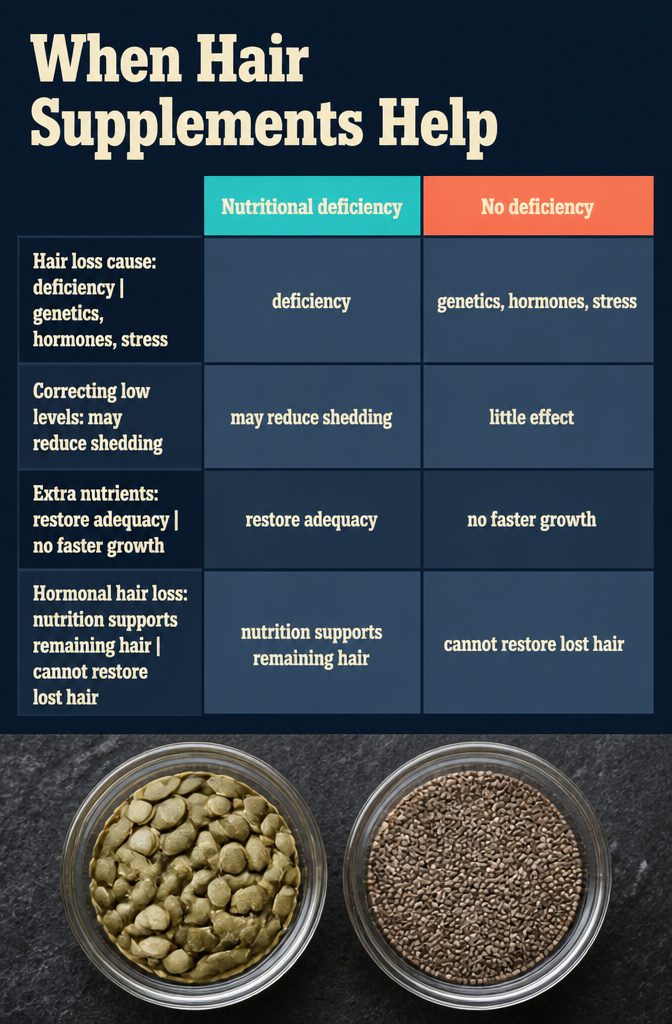
Supplements help when the hair loss ties to a nutritional deficiency, and they do little when it does not. If you are low on iron or vitamin D, correcting that can stop shedding or restore strength.
But vitamins will not override genetics, hormonal shifts, or stress. Male pattern baldness, for example, is driven by androgens like testosterone and DHT, and no supplement can rewrite that pattern.
Women over 45 often see thinning as estrogen drops, sometimes paired with a rise in androgens, and while good nutrition supports what hair remains, it cannot restore what hormones took.
The broader claim that individual vitamins speed up growth lacks backing. Hair follicles need nutrients to produce healthy strands, but feeding them extra once your levels are normal does not make them work faster.
Deficiency shows up as brittle hair or slower growth; adequacy lets the follicle do its job, and more than adequate does not improve on that.
Getting the Cause and Safety Right
Getting the Cause and Safety Right
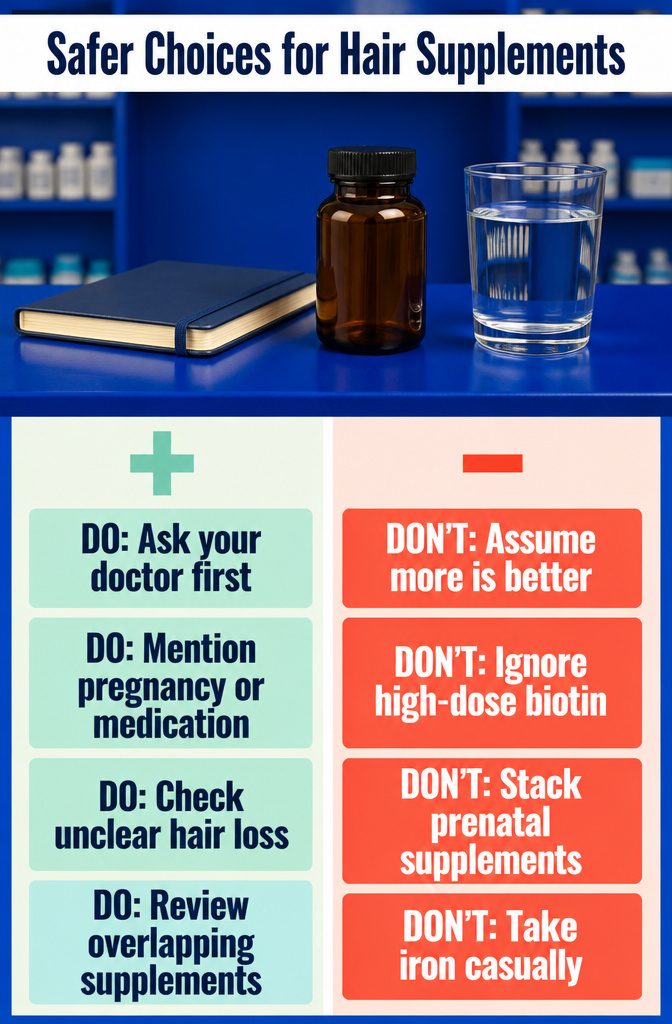
Talk to your doctor before you add any supplement, particularly if you are pregnant, breastfeeding, on medication, or dealing with a health condition.
Supplements can interact with prescriptions, and what looks like simple hair loss may have a medical cause that needs a different approach entirely.
More is not always better. Biotin shows up in hair supplements at doses far past what the body needs—sometimes 3,000 micrograms when the daily recommendation for lactation sits at 35 micrograms.
High biotin intake, especially above 20,000 micrograms, can interfere with lab tests for heart attacks, vitamin D, and other markers, leading to false positives.
Stacking a prenatal with another supplement can push vitamin B6, B12, vitamin D, zinc, and selenium well over 100 percent of the daily value.
Excessive vitamin D can cause calcium buildup and kidney trouble. Iron overdose is dangerous, and even routine iron supplements can upset your stomach.
If the root cause is unclear or multiple products are in play, a conversation with your doctor keeps you on solid ground.
Diet and Broader Hair Care Beyond Pills
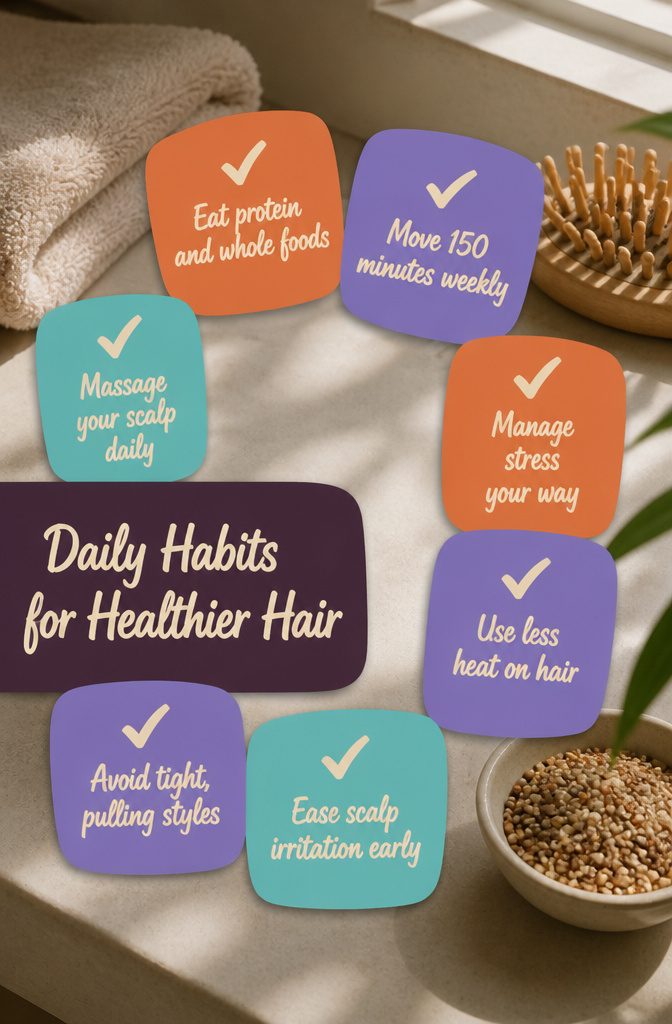
Pills are one lever, but hair responds to what you eat, how you treat your scalp, and how much stress you carry. A few steps that support growth beyond supplementation:
- Eat enough protein and whole foods. Hair follicle cells divide quickly, and they need amino acids, iron, zinc, and a steady supply of vitamins to keep pace. A nutrient-dense diet makes a difference before any pill does.
- Move for at least 150 minutes a week at moderate to intense effort. Exercise lowers stress, which can disrupt the hair growth cycle, and improves blood flow to the follicles.
- Massage your scalp daily. It relaxes you and increases circulation to the roots. Topical products with rosemary, saw palmetto, or vitamin E add another layer of support.
- Manage stress through mindfulness, meditation, or whatever method actually works for you. High stress can push hair into shedding phases earlier than it should.
- Limit damage from heat tools, over-washing, and tight styles that pull at the roots. Protective products help, but the best fix is using less heat in the first place.
- Ease scalp irritation when it shows up. A flaky or inflamed scalp slows growth and weakens strands at the base.
Frequently Asked Questions
Can vitamins help with hair growth?
They can when a nutritional deficiency is causing the problem, but they won’t override genetics, hormones, or stress.
Correcting low iron or vitamin D levels can stop shedding and restore strength, but once your levels are normal, extra supplementation won’t make hair grow faster. Male pattern baldness and hormonal thinning won’t respond to vitamins alone.
Do hair vitamins work?
Hair vitamins may support health if you have a deficiency, but clinical evidence in people with normal nutrient levels is limited.
Hair follicles need amino acids, antioxidants, and minerals to produce keratin, so supplements can help when your diet or absorption falls short. They work best as part of a broader routine that includes diet, scalp care, and stress management.
What vitamin helps your hair grow the most?
No single vitamin stands out as the strongest for growth.
Biotin supports keratin production, vitamin D matters when levels run low, iron prevents deficiency-related shedding, and vitamin C aids collagen synthesis and iron absorption. The combination of nutrients matters more than any one vitamin on its own.
What foods are good for hair growth?
Protein-rich foods like poultry, eggs, and beef supply the amino acids that build keratin.
Organ meats, nuts, sweet potatoes, and whole grains deliver biotin and cysteine. Spinach, beans, red peppers, and citrus fruits provide iron, zinc, and vitamin C. A nutrient-dense diet supports follicle function before any supplement does.
What supplement is good for hair fall?
The right supplement depends on what’s causing the shedding. Iron helps when deficiency-related anemia is present, vitamin D works if your levels are low, and biotin may address a shortfall tied to breakage.
Testing before supplementing keeps you from taking what your body doesn’t need and missing what it does.
How can I boost hair growth?
Eat enough protein and whole foods, exercise for at least 150 minutes a week, and massage your scalp daily to improve circulation.
Manage stress through mindfulness or other methods, limit heat and tight styles that damage strands, and use topical products with rosemary, saw palmetto, or vitamin E. Address scalp irritation when it appears.





