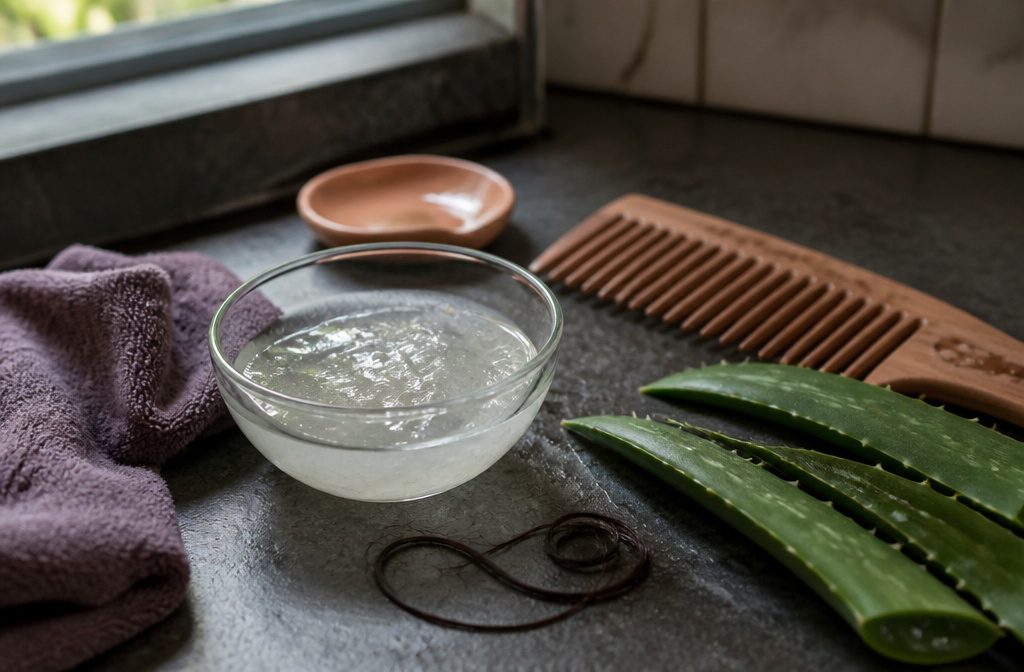
Aloe gel mixed with coconut or castor oil works best for most people because it moisturizes without weight and you can use it weekly without irritation.
Skip it if your scalp runs oily or your hair is fine, since the coconut oil can leave a greasy film that takes two shampoos to clear.
The distinction between conditioning existing hair and stimulating new growth matters here. A mask that softens and reduces breakage helps you retain length, but no homemade blend repairs split ends permanently or makes hair grow faster from the follicle.
Diluted apple cider vinegar clears buildup at 2–4 tablespoons per 16 ounces of water, and Jamaican black castor oil absorbs better than the standard version when paired with aloe overnight.
What a Hair Mask Actually Does
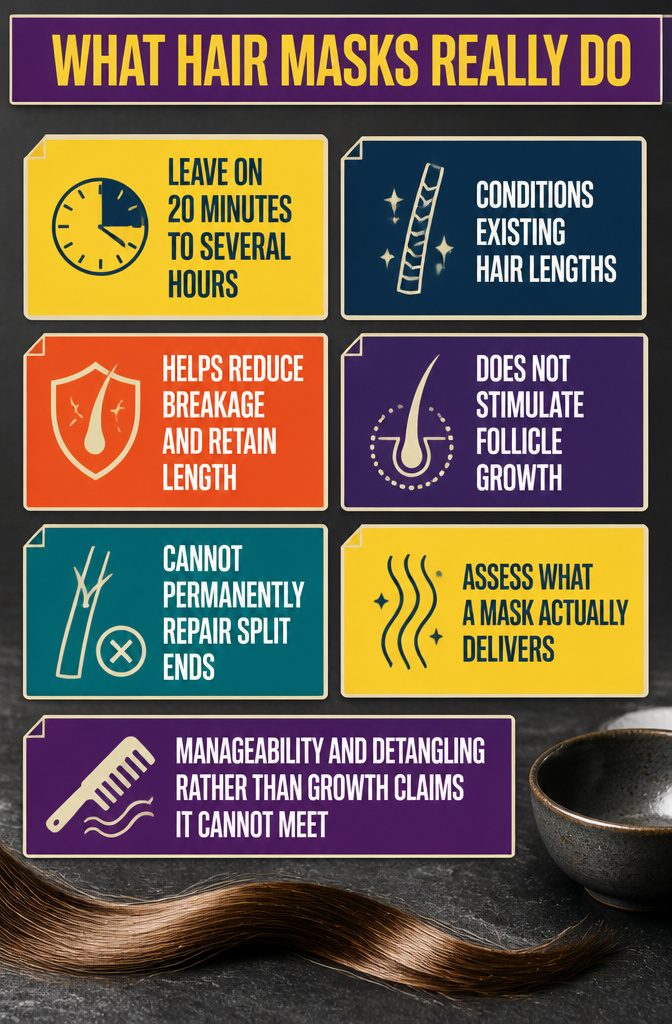
A hair mask is a concentrated conditioning treatment left on for 20 minutes to several hours, far longer than the rinse-out conditioner you use in the shower.
The ingredients soak into the hair shaft during that time, softening and strengthening the lengths you already have. That makes masks useful for reducing breakage and retaining length, but it does not mean they stimulate new growth from the follicle.
A treatment that improves the texture and appearance of existing hair cannot make hair grow faster or thicker from the roots.
The distinction matters: softer, smoother lengths do not prove faster growth, and no homemade blend repairs split ends permanently. Assess what a mask actually delivers, manageability and detangling, rather than growth claims it cannot meet.
1. Aloe and Coconut or Castor Oil Mask
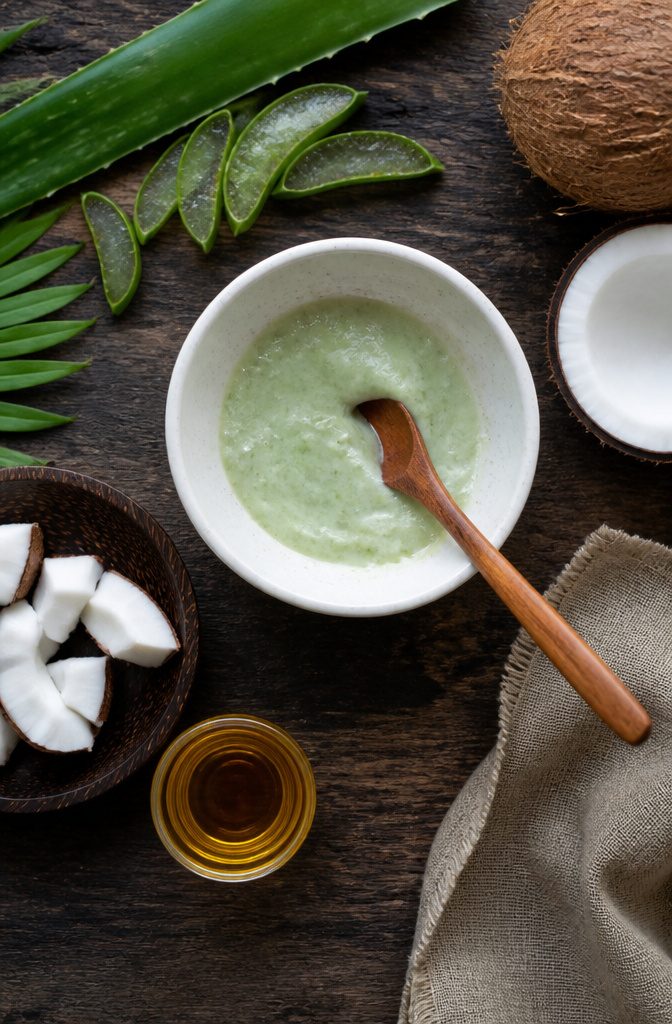
Aloe gel works as a mask base because it moisturizes without weight, and paired with coconut or castor oil it reaches both scalp and hair.
The coconut pairing soothes the scalp and adds shine: scoop out the middle of a large aloe leaf, mix in a teaspoon of coconut oil, massage into the scalp and leave on for ten minutes.
Because both ingredients are non-acidic, you can use this mask once a week or whenever your scalp needs extra care.
The castor oil version targets growth claims more directly. Combine equal parts aloe and castor oil, massage into the scalp, cover with a shower cap and leave overnight, then rinse with warm water in the morning.
Jamaican black castor oil has higher absorption and is the one to choose if you find it. Castor oil earns its reputation on eyebrows, and the same mechanism applies to hair on your head when paired with aloe’s moisture.
2. Rosemary Oil Mask
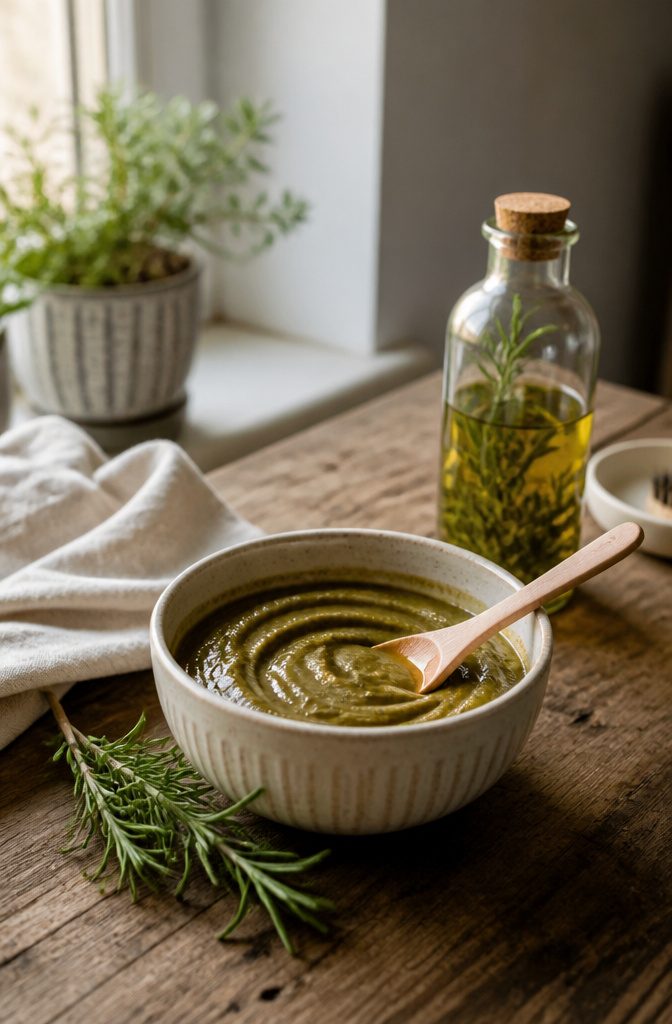
Rosemary oil shows up in two formats for growth-focused routines.
The first is a leave-on spritz: soak fresh rosemary branches in water, strain the mixture into a spray bottle, mist it onto your scalp and hair at night, and wash it out in the morning.
The second is a rinse-out mask that combines rosemary oil with coconut oil, honey, and aloe vera.
Both rely on the claim that rosemary oil improves blood circulation to the scalp and follicles, which proponents link to stronger strands and less shedding.
If you’re using a hair mask made primarily of oil, like coconut or olive oil, it may be best to apply the mask to dry hair. Because oil can repel water, some hair care experts believe that dry hair is able to absorb oil better than wet hair.
That timing matters if you go the mask route, since rosemary oil counts as an oil-heavy base.
3. Apple Cider Vinegar Treatment
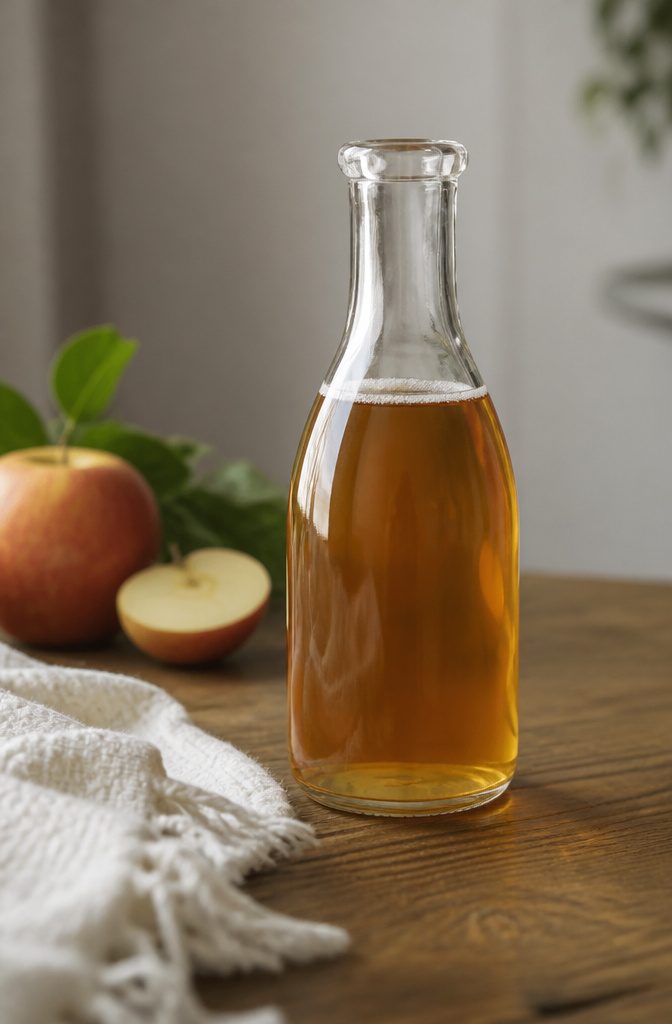
Apple cider vinegar works as a scalp treatment, but only diluted to at least 2–4 tablespoons per 16 ounces of water.
Anything stronger risks irritation or damage. The acidity helps clear buildup and brings antimicrobial benefits that can support a healthier scalp, which in turn makes room for stronger hair.
After shampooing and conditioning, spray the mixture evenly over your scalp and hair, let it sit for 3–5 minutes, then rinse thoroughly.
Frequency depends on how your scalp reacts; once or twice a week is a starting point, but pull back if you notice dryness or sensitivity.
The rinse step matters more than it seems. Skip it and you leave an acidic film that can weaken strands over time, especially on color-treated hair where the acid may lift dye.
4. Coconut Oil and Honey Mask
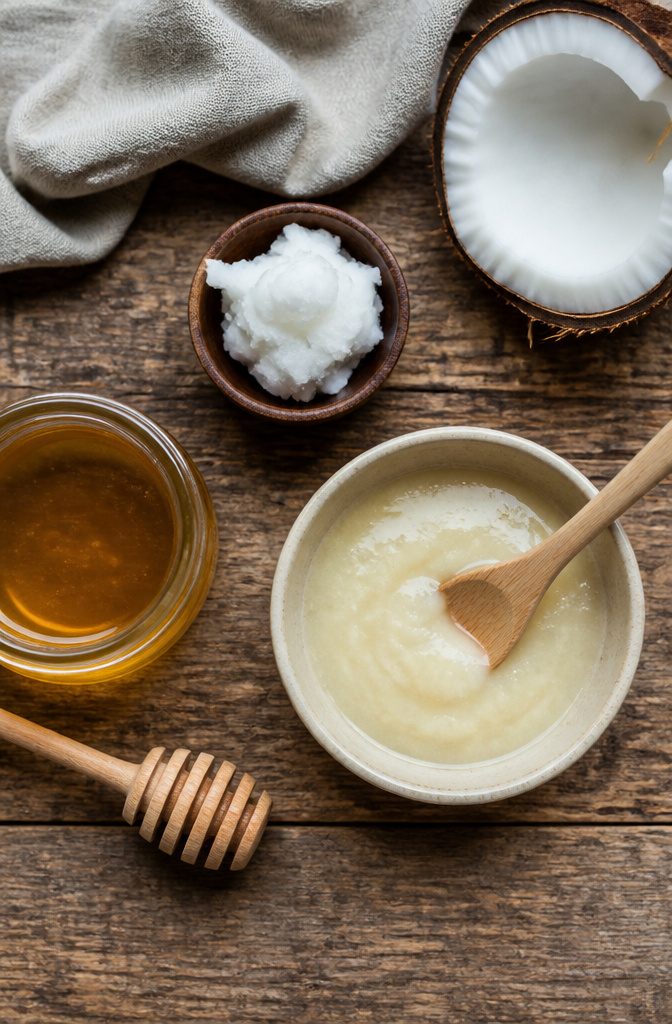
Coconut Oil and Honey Mask
Coconut oil brings vitamins and minerals that feed the follicle, and honey holds moisture where hair needs it.
The pairing works best for frizzy or damaged hair, where the oil softens and the honey keeps the strand from drying out again between washes.
Together they smooth the cuticle enough that flyaways lie flat and the whole length looks less beat up.
The mask conditions from root to tip. Coconut oil coats the strand, and honey draws water into it, so you get slip and shine without the weight that comes from silicones.
Hair comes out softer and easier to comb through, and texture improves over a few sessions if the damage started with heat or chemical processing.
5. Avocado and Aloe Mask
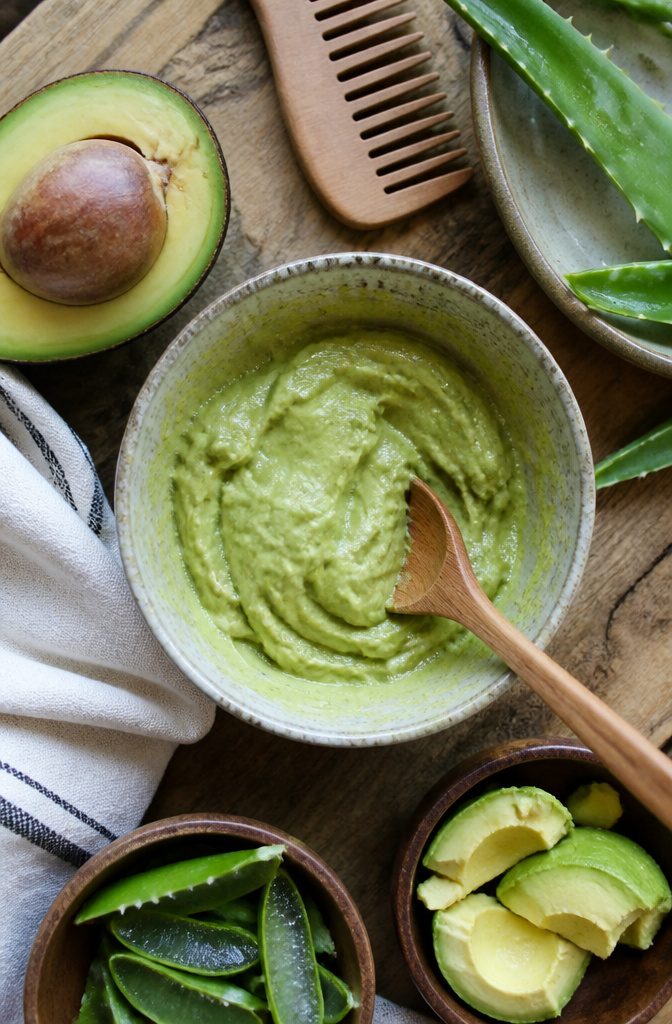
Avocado and Aloe Mask
Avocado paired with aloe vera gel and coconut oil targets two problems at once: dry lengths that snap easily and a flaky, irritated scalp.
The avocado brings fats that coat the strand, aloe soothes inflammation, and coconut oil adds slip so the mask spreads without tugging.
Mash half a ripe avocado until no lumps remain, mix in two tablespoons each of aloe gel and melted coconut oil, then work it through damp hair from roots to ends.
Leave it on for twenty to thirty minutes before rinsing thoroughly. This one works best on coarse or porous hair that drinks up moisture.
If your scalp runs oily or your hair is fine, the coconut oil can weigh things down and leave a greasy film that takes two shampoos to clear.
6. Egg White and Coconut Oil Mask for Fine Hair
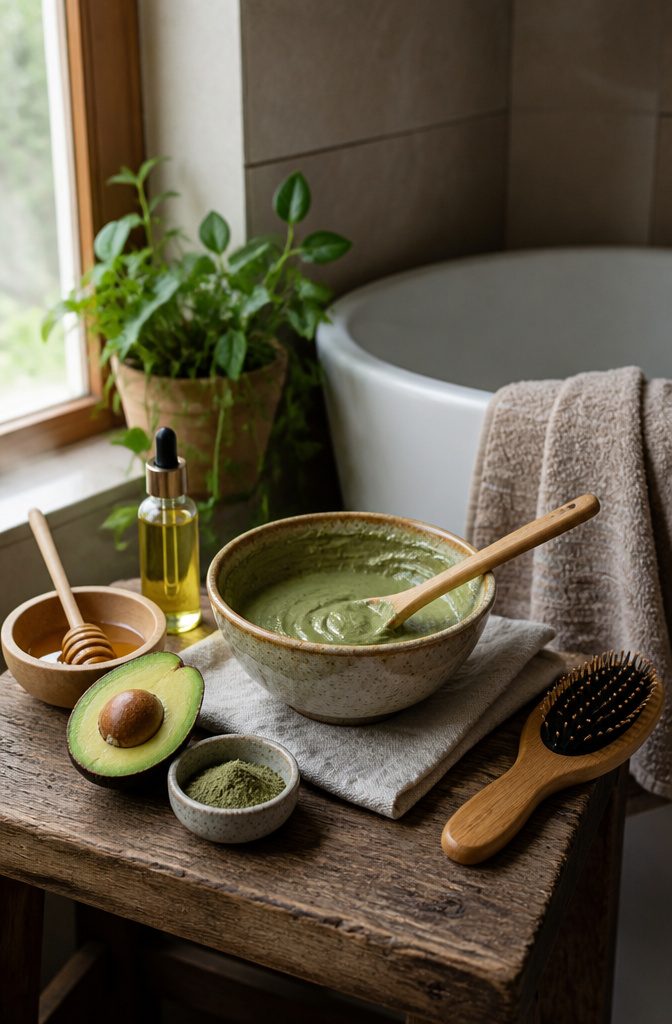
This mask splits egg whites from the yolk, and that matters for finer hair.
The white brings protein without the fat that weighs down thin strands, while coconut oil adds just enough moisture to keep things flexible. Whole-egg masks can leave fine hair looking flat or greasy, so the egg-white-only formula keeps volume intact.
Whisk the egg whites and coconut oil together until they blend, then work the mixture into damp hair from root to tip.
Let it sit for twenty minutes, then shampoo out. Rinse with cool water.
Hot water cooks the egg, and cooking eggs in your hair is not a problem you want to troubleshoot in the shower. The cool rinse is non-negotiable, and this recipe is not interchangeable with whole-egg versions that include the yolk.
7. Cinnamon and Oil Scalp Mask
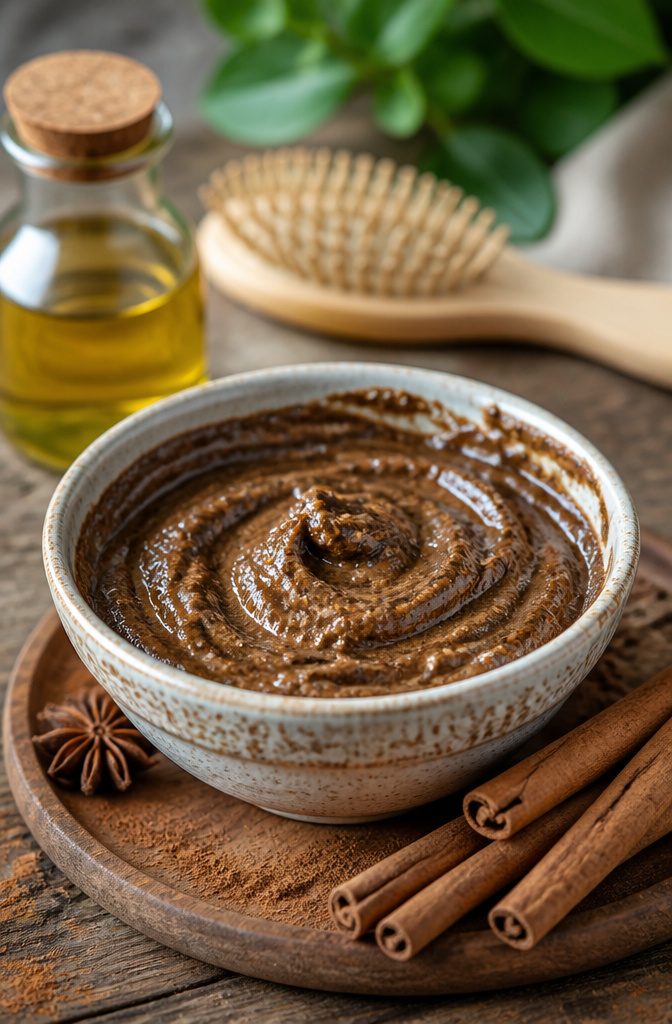
Cinnamon mixed with coconut or castor oil doubles as a scalp treatment when you massage it in before applying it to the lengths.
The heat from cinnamon is supposed to increase circulation to the follicles, which may encourage growth at the root.
Coconut oil softens and penetrates the hair shaft, while castor oil coats and adds weight. Either one works; castor oil is thicker and may feel heavy if you have fine hair.
The massage matters as much as the cinnamon itself. Spend a few minutes working the mixture into your scalp with your fingertips before smoothing the rest through mid-lengths and ends.
Cinnamon can irritate sensitive skin, so test a small amount on your inner arm first and wait half an hour. If you see redness or feel burning, skip the cinnamon and use the oil alone.
8. Banana, Cinnamon, and Oil Mask
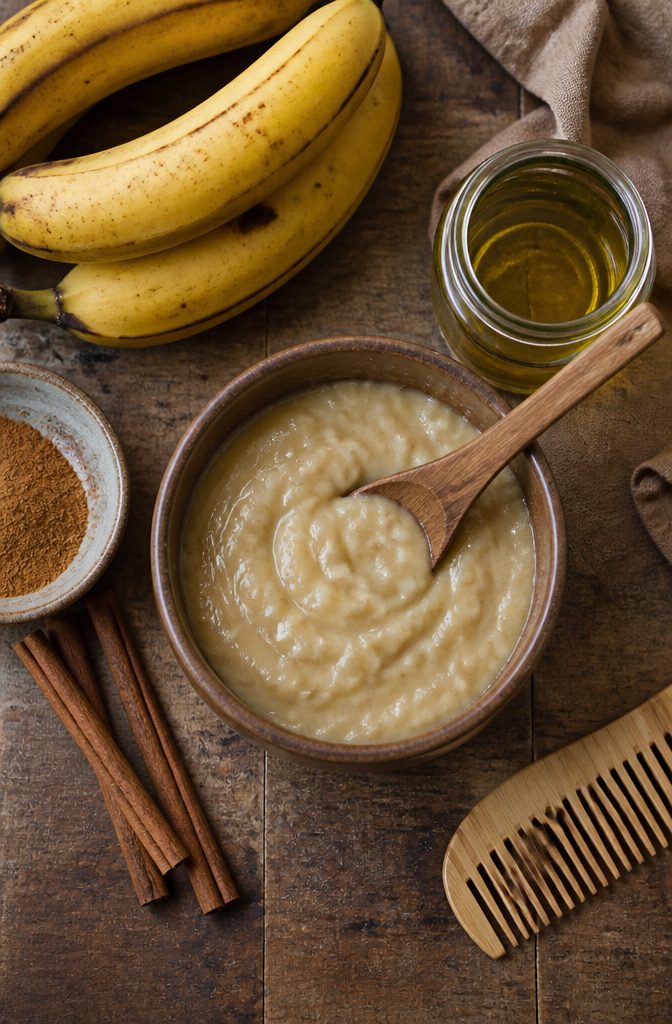
Banana, Cinnamon, and Oil Mask
This recipe adds banana and oil to cinnamon for a mask that conditions the full length of your hair rather than focusing on the scalp alone.
The banana softens and smooths frizz, while the oil seals moisture into dry ends. The cinnamon still stimulates circulation at the roots, but the real work here is managing texture and dryness from mid-length down to the tips.
Mash one ripe banana until smooth, mix in a tablespoon of cinnamon and two tablespoons of coconut or olive oil, and apply from roots to ends. Leave it on for thirty minutes, then rinse thoroughly.
The banana can leave residue if you skip the final rinse, so take your time with it. This mask works best when your hair feels rough or looks dull, not just when you want length.
9. Egg, Banana, and Oil Mask
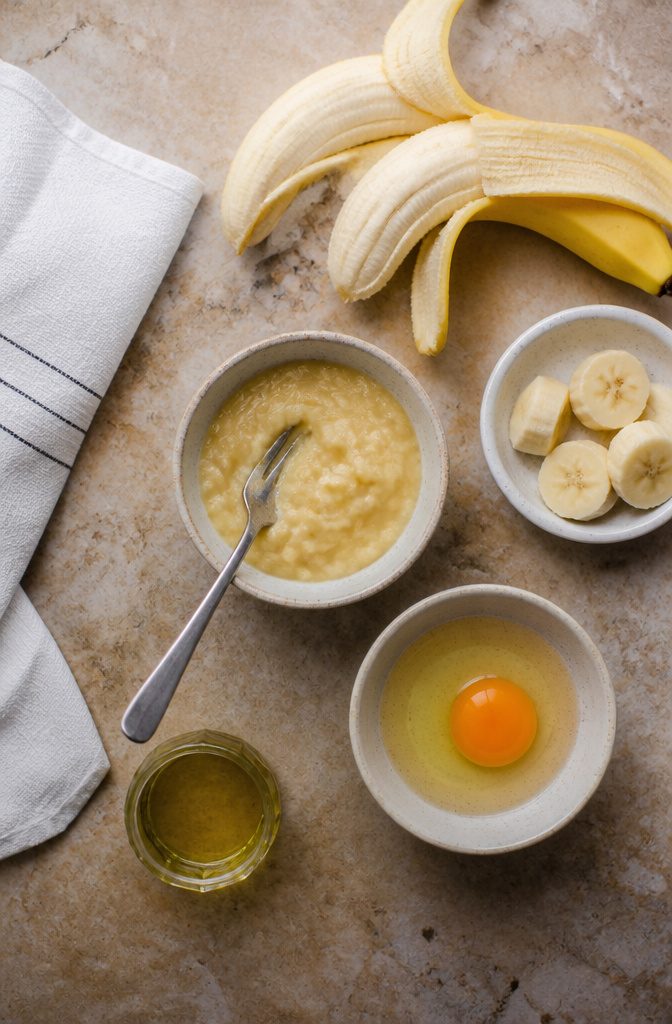
The egg, banana, and oil combination tackles damage that stands in the way of length. Heat styling and bleach weaken the strand, and broken ends make growth look invisible even when the follicle is working.
One or two eggs (two for long hair) mash into a banana with a tablespoon of coconut or castor oil, then the paste goes onto damp lengths for thirty to sixty minutes.
Rinse with cool water, not warm. Heat cooks the egg protein into the strand, which is the opposite of conditioning.
The recipe is built for repair rather than volume, so it keeps the yolk where the fine-hair version in an earlier section drops it. Apply this one to two times a week when damage is visible.
10. Avocado, Egg, Milk, Honey, and Cinnamon Protein Treatment
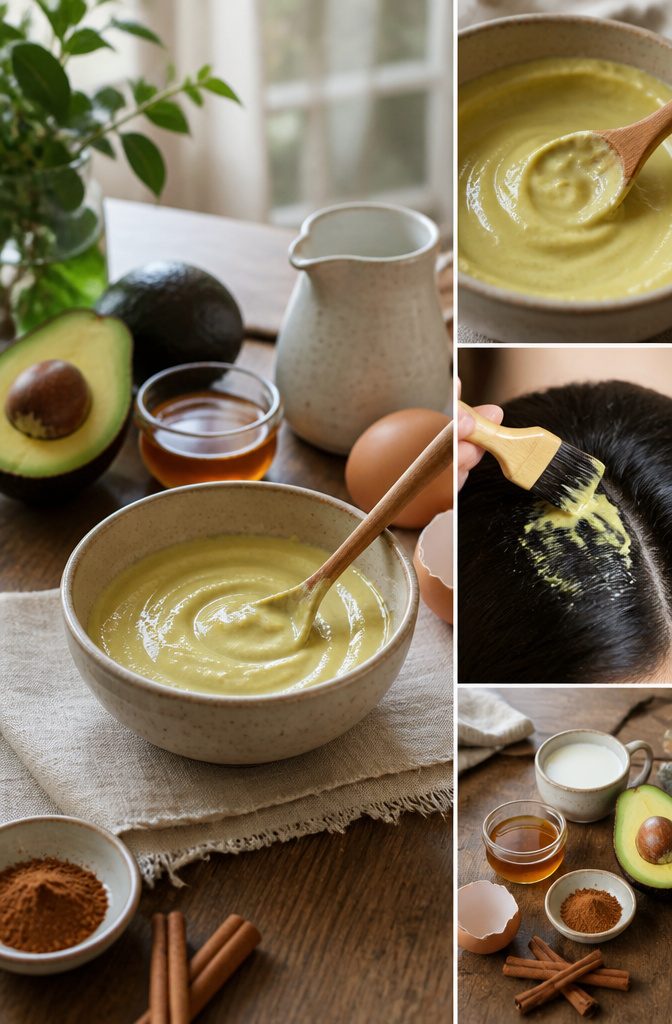
Avocado, Egg, Milk, Honey, and Cinnamon Protein Treatment
This mask layers more ingredients than any other recipe here.
A quarter of an avocado, one or two eggs depending on length, a third cup of dairy milk, a teaspoon of honey, and a tablespoon of cinnamon go into the bowl together.
The combination delivers protein from egg and milk, fat from avocado, and the circulation push cinnamon is supposed to give the scalp.
Mix everything together and apply to damp hair, root to tip. Spend time massaging it into your scalp rather than rushing through.
Leave it on for thirty to sixty minutes, then rinse with cool water. Warm water will cook the eggs, and you do not want scrambled egg in your hair.
This treatment suits damaged or depleted strands that need rebuilding. The protein load makes it too heavy for fine or already-healthy hair, and the effort it takes to mix and rinse means it will not be everyone’s weekly go-to.
Once or twice a week is the suggested frequency if your hair responds well.
11. Castor Oil Mask
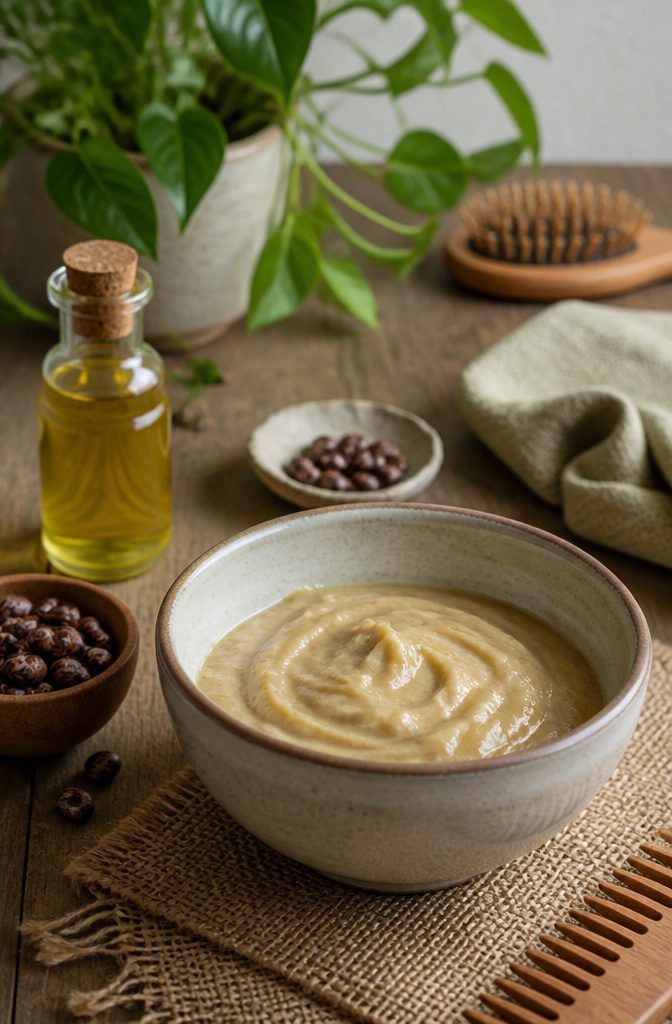
Castor oil sits at the heart of this mask, and if you have tried it on eyebrows, you already know the texture: thick enough that you will want to thin it for anything beyond a scalp treatment.
Most recipes mix it with equal parts aloe vera for an overnight mask: massage it into your scalp, cover with a shower cap, and rinse in the morning. Jamaican black castor oil absorbs better than the standard version.
The addition of coconut oil, almond oil, or honey changes the slip and makes application easier, especially if you plan to work it through lengths rather than stopping at the roots.
I keep the aloe-and-castor version for scalp work and reach for the honey option when my ends need attention.
12. Onion Juice Scalp Mask
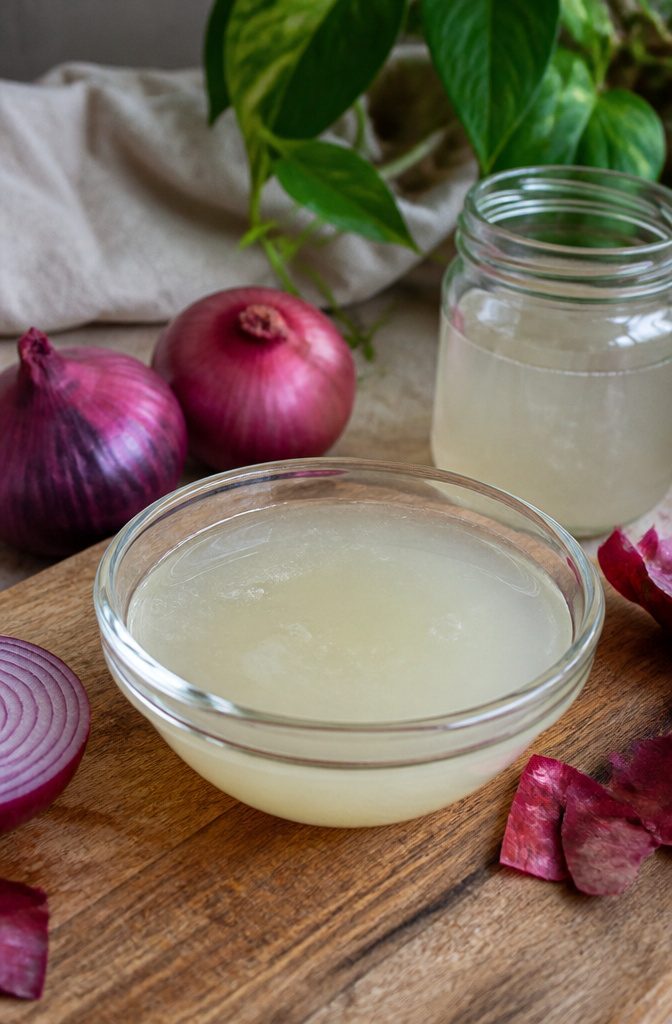
Onion Juice Scalp Mask
The onion mask is a scalp treatment, not something you smooth down the length. You extract the juice from an onion and massage it directly onto the scalp.
Sulfur is the active element behind the claim: it may improve blood circulation and boost collagen production, both of which support healthier hair. Onions also carry anti-inflammatory and antimicrobial properties that some believe help with growth.
The odor is the obvious trade-off. You can add olive oil, coconut oil, honey, fenugreek, or lime juice to soften the smell and add hydration, but the onion base still announces itself.
If you can tolerate the scent long enough to let it work, the sulfur content makes this one worth trying when other masks have done nothing for the scalp itself.
13. Fenugreek and Aloe Mask
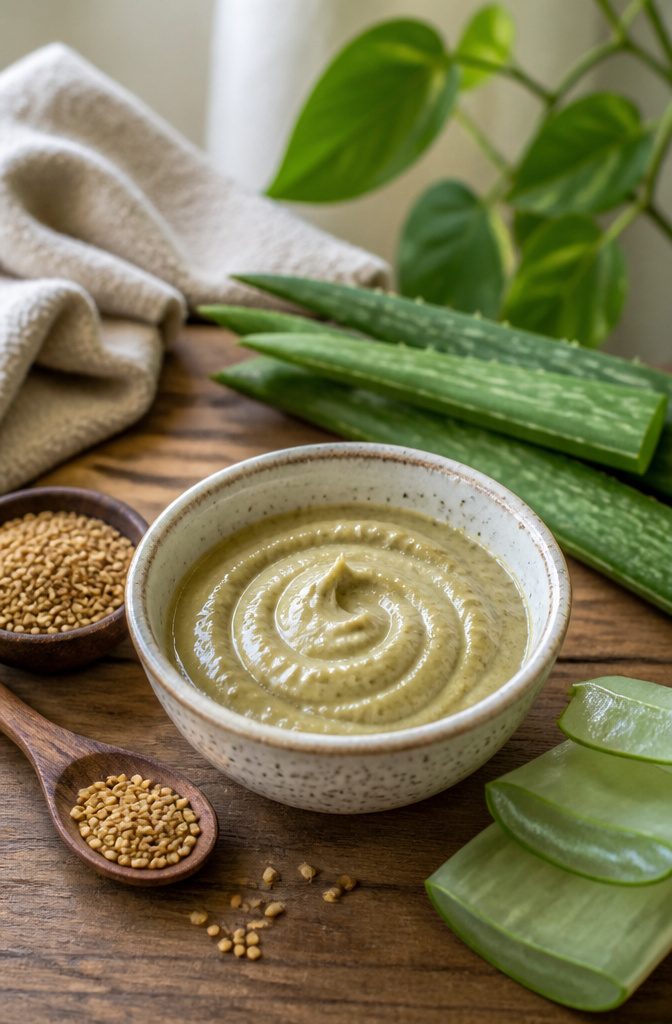
Fenugreek and aloe vera pair well when the scalp feels irritated or hair seems to shed more than usual. Fenugreek seeds need soaking overnight, then grinding into a paste that you can mix with fresh aloe gel.
The fenugreek releases a slippery texture when soaked, which makes it easier to spread and rinse, and the combination sits on the scalp for about thirty minutes before washing.
Fenugreek carries a reputation for calming flaky, inflamed skin and may help with shedding if the cause sits at the scalp rather than deeper in the follicle. Aloe adds moisture without weight.
The mask can smell grassy and strong, so rinsing thoroughly matters. Anyone with a known allergy to legumes should skip fenugreek entirely, since it belongs to the same family.
14. Brown Sugar and Coconut Oil Scalp Scrub Mask
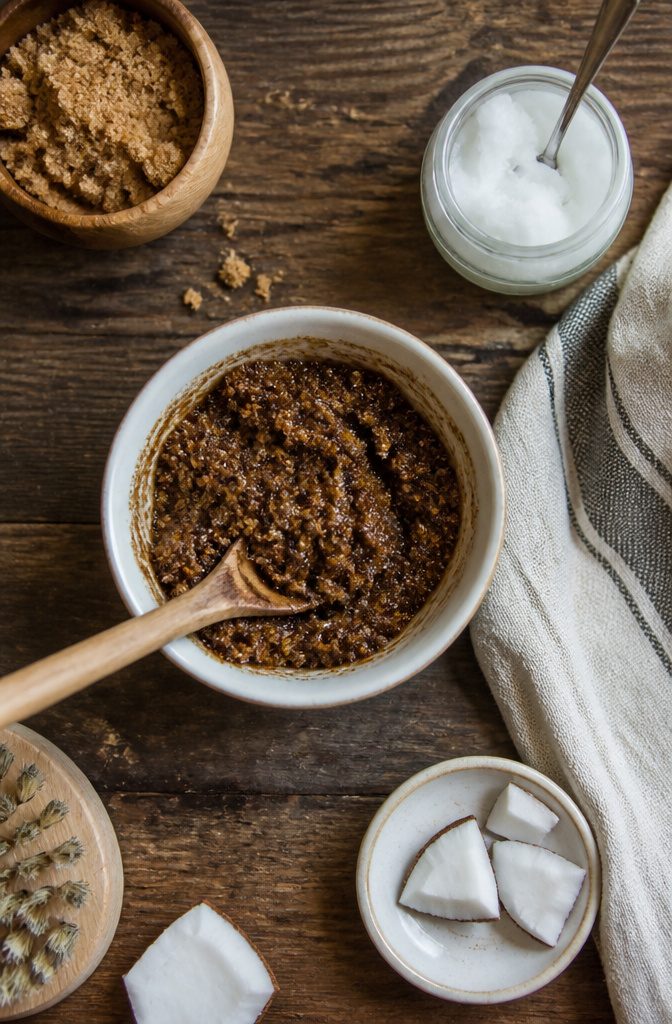
Most hair masks in this list sit on the strand and condition.
A brown sugar and coconut oil scrub works the other direction: it exfoliates the scalp to clear away dead skin, product residue, and the buildup that can keep follicles from functioning well.
Brown sugar acts as a gentle physical exfoliant, while coconut oil moisturizes and softens both scalp and hair as you work the mixture in.
Scalp buildup matters because it can clog follicles, trap oil, and create an environment where dandruff thrives.
Clearing that layer lets the scalp breathe and can reduce itching. Mix brown sugar and coconut oil into a paste, massage it into your scalp in slow circles, then rinse thoroughly.
Frequency is the catch. Over-exfoliating irritates the scalp, strips natural oils, and can leave skin red or flaky.
Use this mask no more than once a week, and if your scalp feels sensitive afterward, pull back to every other week. Physical exfoliation is useful, but only in small doses.
15. Yogurt and Aloe Mask
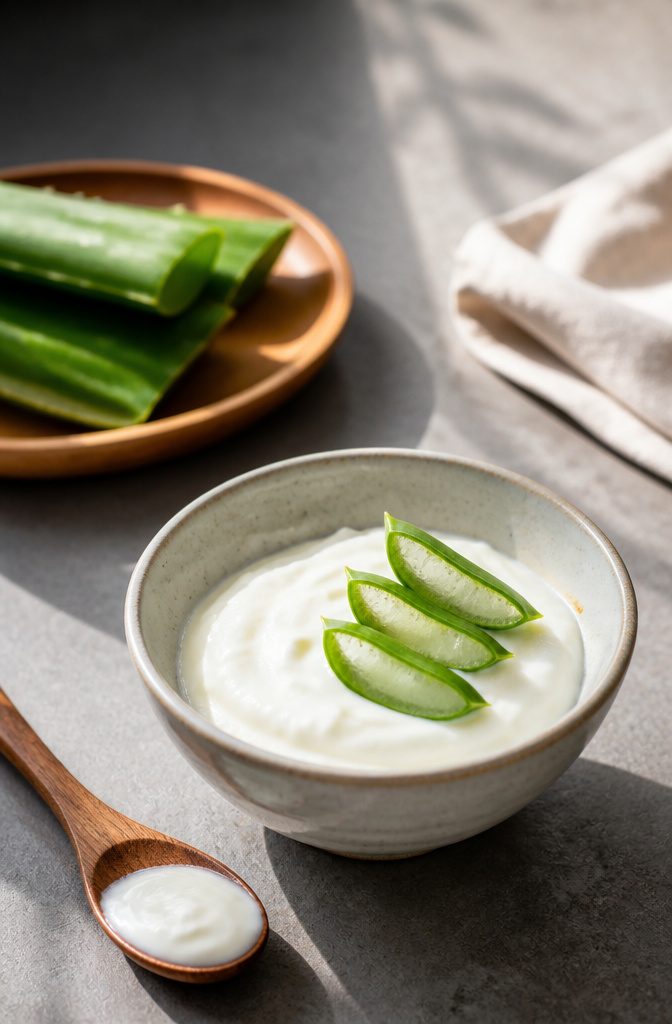
Yogurt and Aloe Mask
Yogurt and aloe vera together make a lighter mask than most oil-heavy recipes, and the combination targets frizz and shine more than deep conditioning.
The lactic acid in yogurt acts as a gentle conditioner, and aloe brings moisture without weight. The mask also delivers proteins, vitamins, and hydrating enzymes that feed both the hair shaft and the scalp.
This one suits you if heavier oils leave your hair limp or greasy. Mix plain yogurt with fresh aloe vera gel, apply to damp hair from roots to ends, and leave it on for twenty to thirty minutes before rinsing.
The texture rinses clean, and the finish feels smoother without the residue that coconut or castor oil can leave behind.
16. Flaxseed Mask
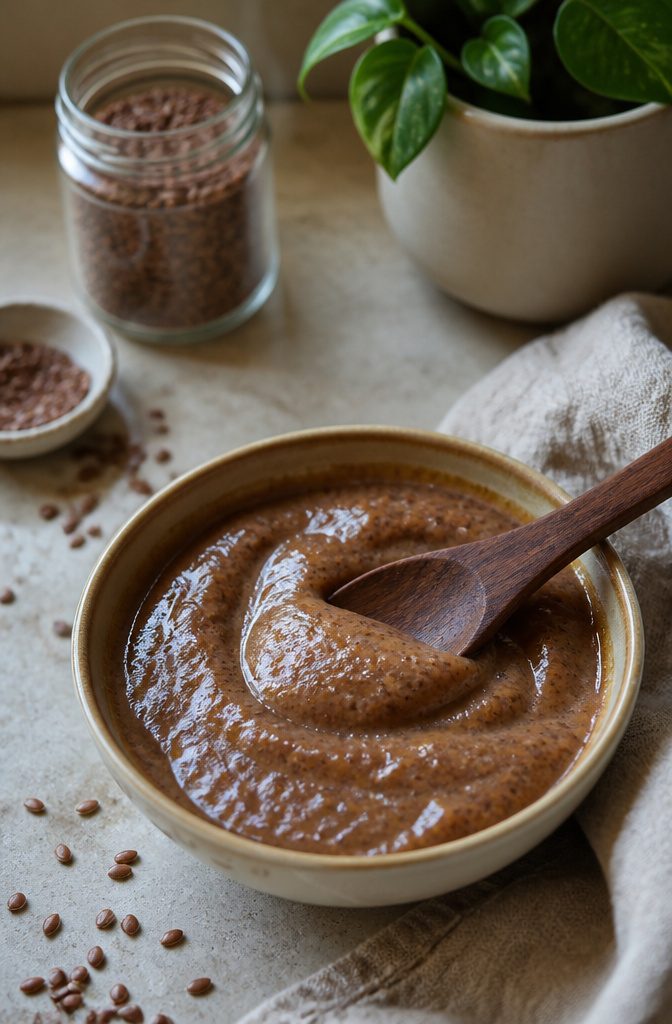
Flaxseed Mask
Flaxseed gel works as a base for growth masks because of its omega-3 fatty acids and plant protein, both tied to healthier follicles and strand strength.
You make the gel by boiling flaxseeds in water until the liquid thickens and turns slippery, then straining out the seeds while the mixture is still warm.
What you’re left with is a clear, viscous gel that coats each strand and holds moisture against the scalp.
The gel goes on damp hair from roots to ends.
Some people mix in a carrier oil or aloe before applying, which helps it spread more easily and adds slip for detangling. The mask sits for twenty to thirty minutes under a shower cap, then rinses clean without leaving buildup.
Flaxseed breaks down quickly once prepared, so most batches last only three to five days in the refrigerator before they start to smell off.
17. Hibiscus Flower and Leaf Mask
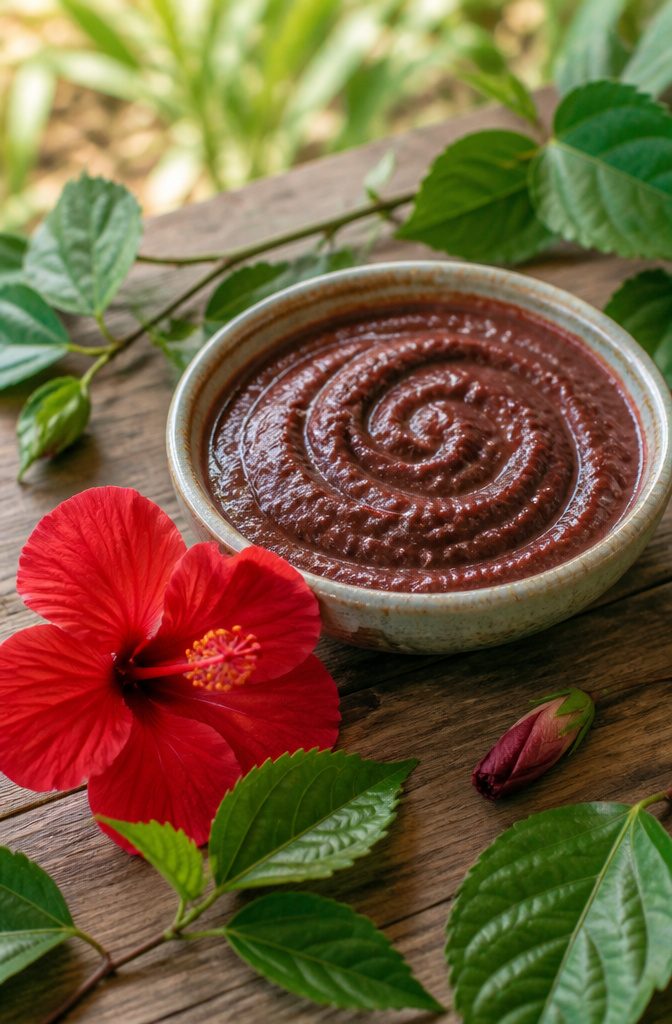
Hibiscus Flower and Leaf Mask
Hibiscus shows up in growth-focused masks as a paste made from crushed flowers and leaves, sometimes thinned with water to spread more easily.
The flower carries amino acids and vitamin C that supporters say strengthen the hair shaft and prevent breakage.
The leaves add their own set of compounds thought to stimulate follicles. You grind the petals and leaves together until you have a thick, slightly fibrous paste, then smooth it through damp hair from roots to ends.
Adding oil to the paste softens the texture and makes rinsing easier.
Coconut oil keeps the mask moisturizing; castor oil shifts the focus toward scalp health and thickness. Either one stretches application time before the paste starts to dry and tighten.
Leave the mixture on for thirty to forty minutes, then rinse thoroughly. The paste can stain, so drape an old towel over your shoulders and work over a sink.
18. Coconut Milk Mask
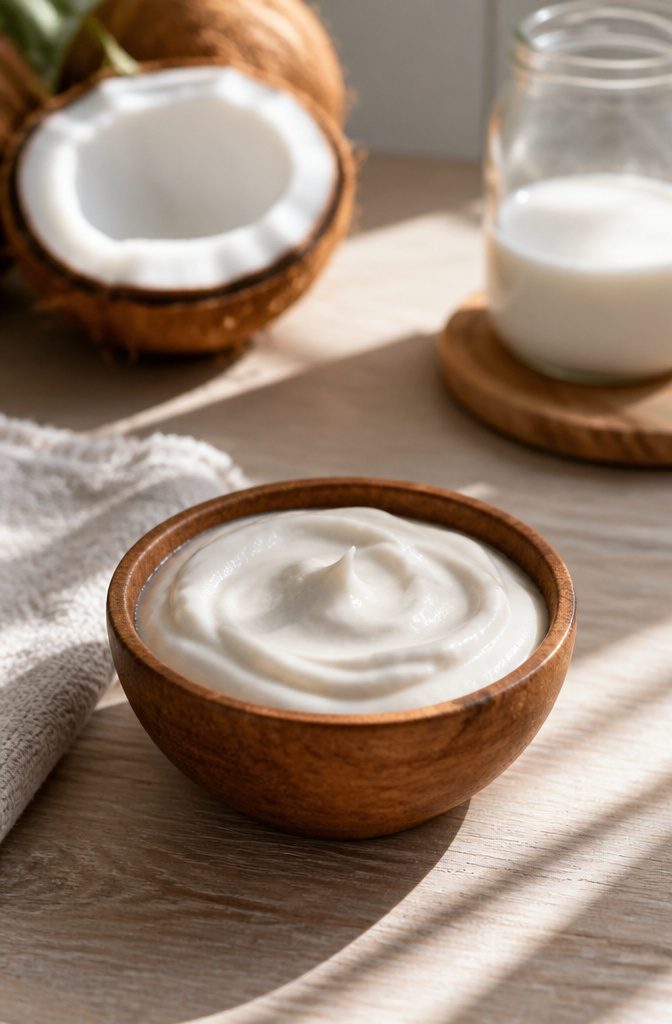
Coconut milk offers lighter, thinner coverage than coconut oil, and that makes it easier to rinse out when the treatment is done.
The milk moisturizes without the weight oil sometimes leaves behind, so it suits fine or medium textures that flatten easily.
You can use it straight from the can, applying it to damp hair from roots to ends and leaving it on for twenty to thirty minutes before washing.
Adding a tablespoon of honey thickens the mixture and pulls in more moisture, while a few drops of rosemary or lavender oil brings the scalp into the treatment.
The combination works well when dryness shows up more at the roots than the lengths, though the milk alone handles general hydration without any extras.
19. Papaya Mask
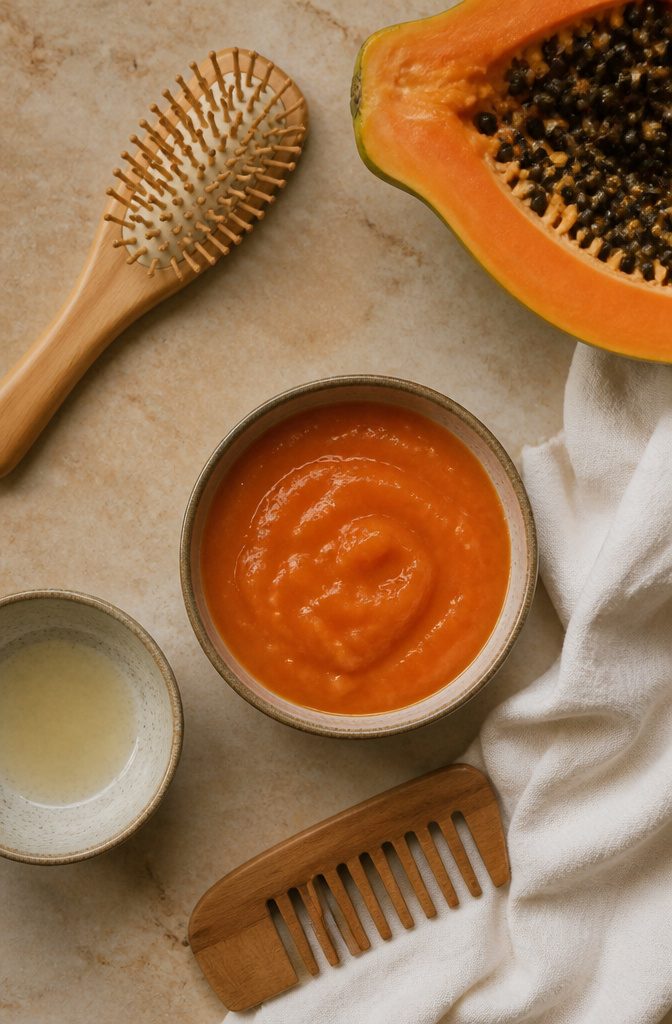
Papaya brings something most fruit masks do not: papain enzymes that break down protein buildup on the scalp.
That matters if you use styling products regularly or go weeks between clarifying washes, because the enzymes work through residue that plain conditioning cannot budge.
The mask also delivers vitamins A, C, and E, plus antioxidants that nourish follicles rather than just coating the hair shaft.
Papaya on its own can feel drying, so most recipes pair it with olive oil, honey, banana, aloe vera, or curd to keep conditioning in the mix.
If your scalp is sensitive or prone to irritation, test a small amount first. The exfoliating action that clears buildup can sting on compromised skin.
20. Banana and Olive Oil Mask
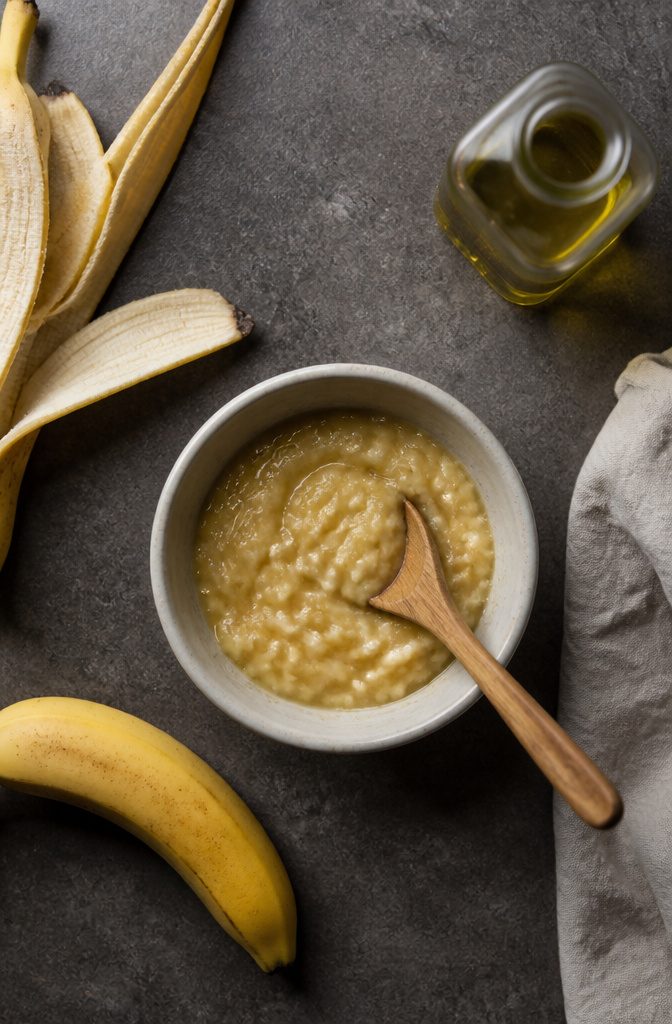
Banana and Olive Oil Mask
Mashing one ripe banana with two tablespoons of extra virgin olive oil gives you a simple two-ingredient mask built on moisturizing properties and antioxidants.
The banana brings moisture that addresses dryness and flakiness at the scalp, while the olive oil contributes healthy fats and squalene, a compound the body produces naturally but makes less of as you age.
Squalene keeps hair and skin moisturized, so the pairing targets dryness and improves elasticity.
The blend needs to be smooth, though. A lumpy paste leaves sticky residue that clings to strands and refuses to rinse cleanly, turning what should be a quick treatment into a frustrating wash session.
If you want additional benefits, coconut oil, yogurt, honey or aloe vera fold in without changing the base texture.
21. Strawberry Mask
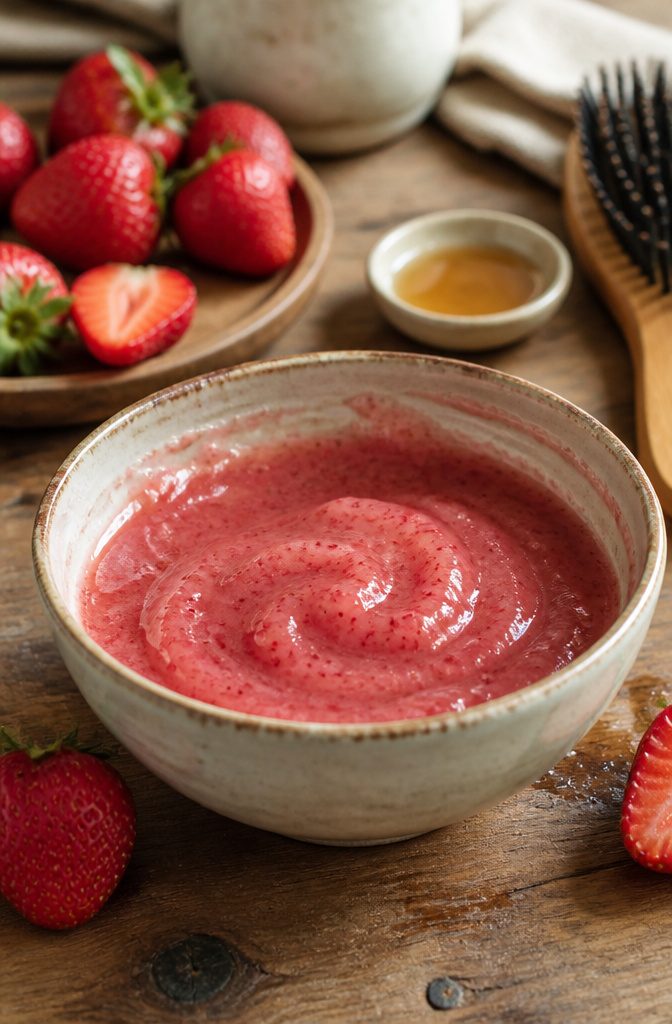
Strawberry Mask
Strawberries form the base here, mashed or pureed smooth before you apply them.
The fruit brings vitamin C and antioxidants to the scalp, which can help keep follicles in better shape. On the hair itself, the natural acids work as a gentle clarifier, lifting product residue without stripping.
Adding honey pulls moisture into the strand and makes the mask easier to spread. Yogurt brings lactic acid for a slightly deeper clean and some protein for temporary strength.
Oils like coconut or argan shift the mask toward conditioning rather than clarifying, so the version you mix depends on whether your scalp feels clogged or your ends feel dry.
Fresh strawberries break down quickly, so I mix only what I need and rinse thoroughly after fifteen to twenty minutes. Leaving fruit on longer risks stickiness without any real gain.
22. Curry Leaf Mask
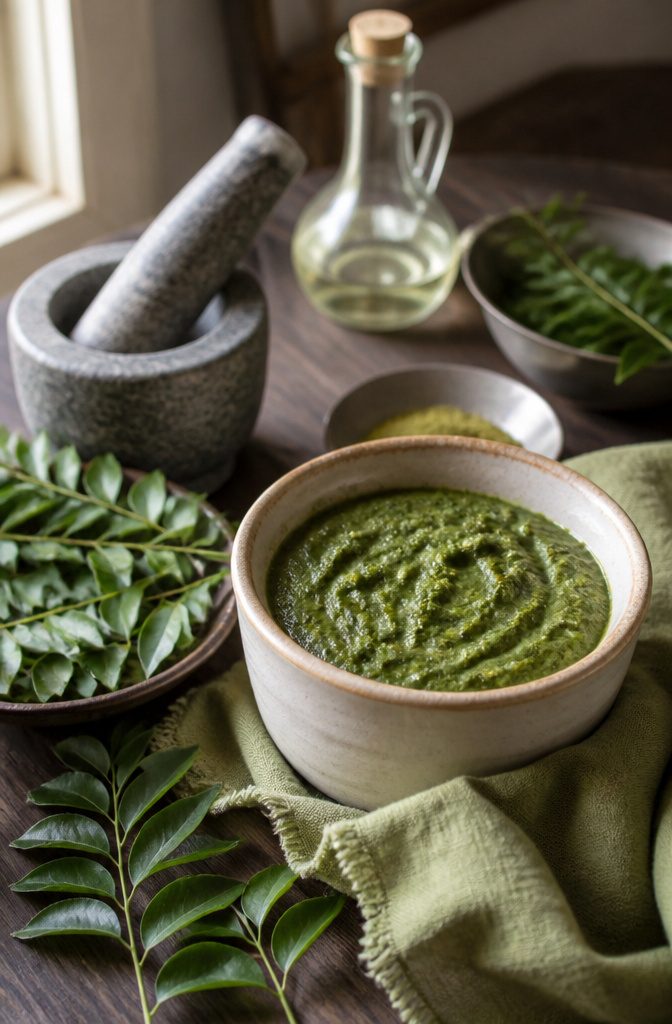
Curry Leaf Mask
Curry leaves work as a scalp treatment on their own or combined with oil to make the application easier.
The method is straightforward: crush fresh curry leaves into a paste, smooth it onto the scalp, and leave it for thirty to forty minutes before rinsing.
The leaves are credited with improving circulation at the root and delivering antioxidants that may help reduce shedding.
Adding coconut or castor oil turns the paste into something that spreads more evenly and conditions the length at the same time. The oil also softens the cleanup, since dried leaf paste can stick.
If you want a mask that reaches beyond the scalp, the oil pairing makes more sense. Without it, you get a targeted treatment that sits where you put it and nothing more.
23. Wheat Germ, Banana, Avocado, and Olive Oil Mash
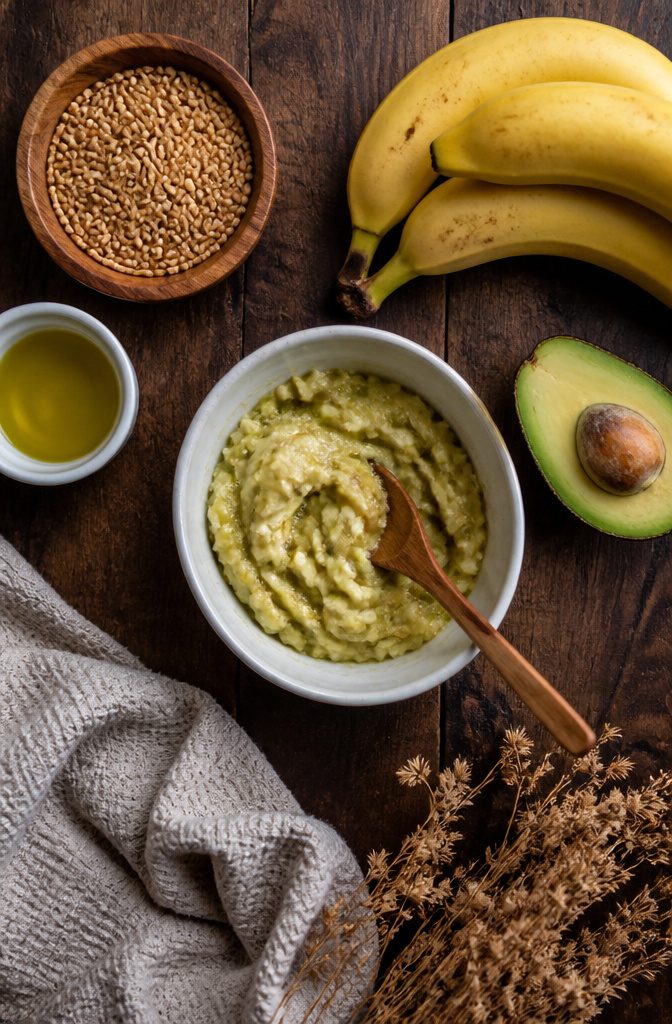
Wheat Germ, Banana, Avocado, and Olive Oil Mash
This recipe is built on wheat germ oil, which brings vitamin E for moisture and vitamin B to stimulate circulation at the scalp.
Mash one small ripe banana with a medium ripe avocado, then add 1 tablespoon olive oil and 1 tablespoon wheat germ oil.
Mix the ingredients together until smooth. Apply the mask all over your scalp and hair, focusing on the roots and tips where dryness tends to show first.
Leave it in for about 30 minutes, then rinse with cold water. The wheat germ oil is what makes hair look lustrous and glisten, which I appreciate when other masks leave things flat.
24. Fish Oil and Olive Oil Mask
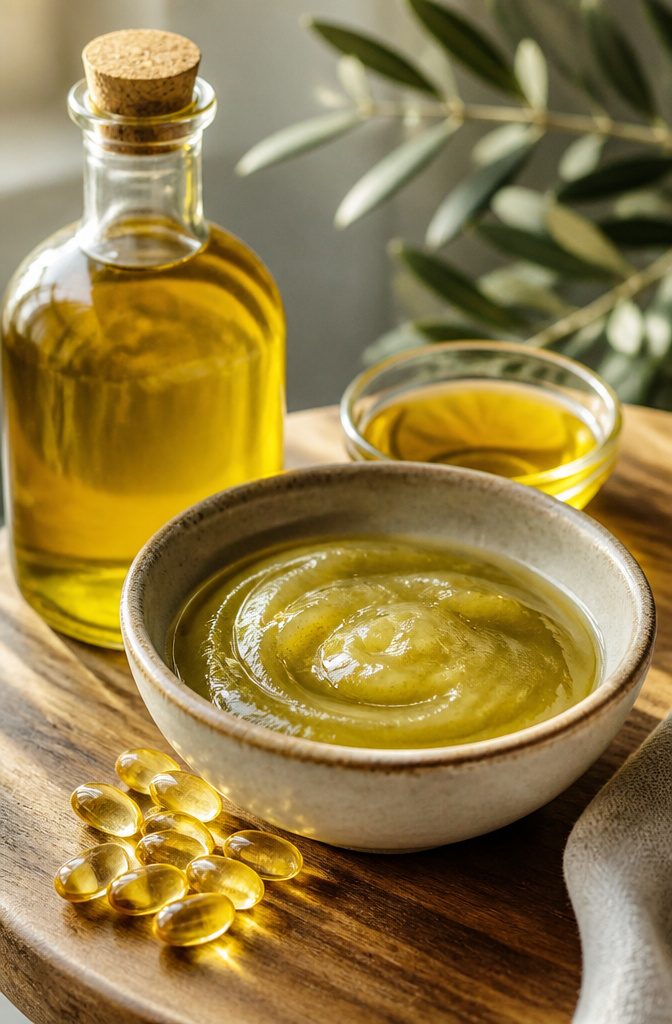
Fish Oil and Olive Oil Mask
Mix equal parts olive oil and liquid fish oil, then apply the blend to your scalp for 15 minutes before rinsing. Naturally Curly recommends Nature’s Answer Liquid Omega-3 Deep Sea Fish Oil if you want a specific product to start with.
The reason fish oil makes the list is omega-3 content. It supports healthy hair from the inside when taken as a supplement, and some stylists think topical application delivers similar benefits to the follicle.
Fish oil smells terrible. Fish oil is pungent, and sitting with it on your head for a quarter hour is not subtle.
Keeping the bottle refrigerated helps somewhat, but this mask asks you to tolerate an odor that other recipes skip entirely. If you can tolerate it, fifteen minutes gets you the omega-3 benefits without spending all evening breathing through your mouth.
25. Multi-Ingredient Avocado and Argan Oil Mask
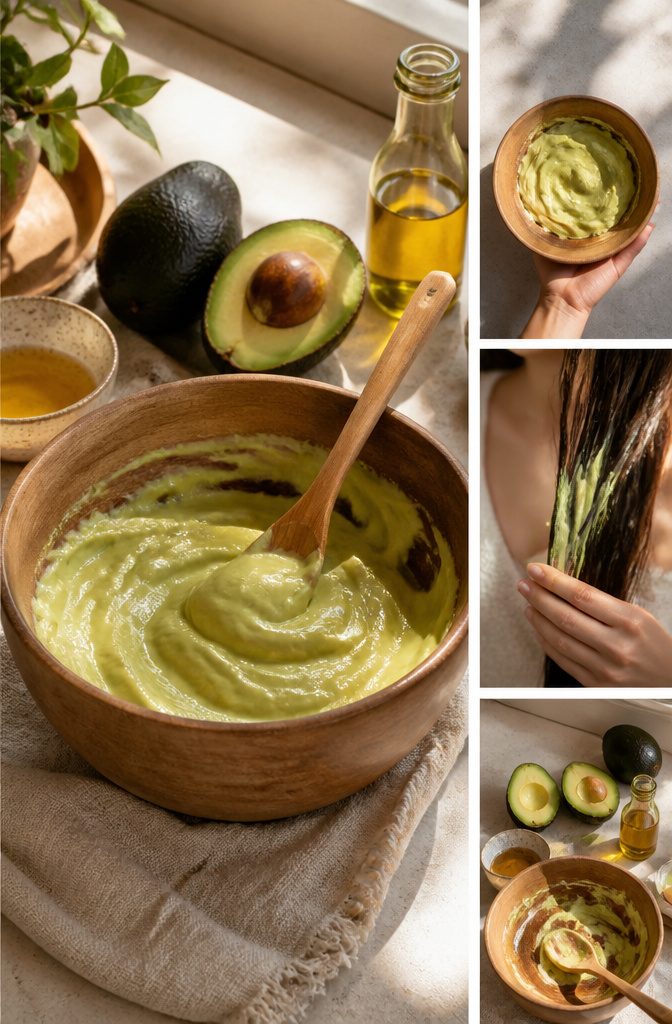
The recipe Cardi B shared blends avocado, argan oil, mayo, honey, egg, black castor oil, olive oil, and banana into one mask, and the ingredient list reads like a collision between three separate treatments.
Most avocado masks stop at oil and maybe honey.
This one keeps going. The argan and castor oils target moisture and scalp health, the egg adds protein, the banana softens, and the honey humectants pull water into the hair.
Mayo sits in the odd spot: it makes the texture smoother but can leave hair smelling faintly of sandwich, and one hair expert notes it mostly sits on the shaft without doing much.
You can skip it if the scent bothers you. Blend everything until completely smooth so no avocado chunks catch in your hair, leave it in as long as you want, then rinse.
The complexity is the trade-off here. Mixing seven or eight ingredients takes longer than mashing one avocado with oil, but the blend does layer hydration, slip, and protein in a single pass.
How to Pick a Finished Mask by Label
How to Pick a Finished Mask by Label
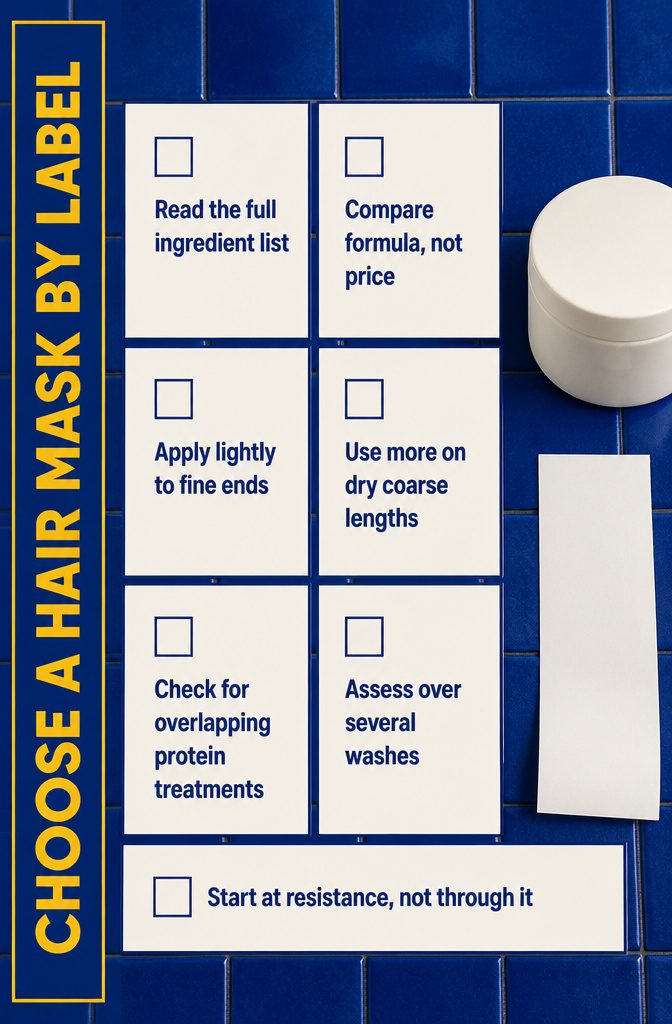
A finished formula places conditioning agents where a mix of kitchen ingredients cannot, and the full ingredient list tells you more than price.
Drugstore brands can use excellent ingredients in formulas that respond as well as expensive options that lean on fragrance and packaging. Compare what is actually in the jar rather than assuming a higher shelf means better results.
Fine hair responds well to lighter application on the ends where product builds up fast.
Dry or coarse lengths take more. Your hair type decides the amount, not a universal scoop.
Check how the mask fits what you already use. A protein treatment layered over another protein product can stiffen rather than strengthen.
Give the formula several washes to assess unless irritation shows up early, because one application rarely shows the full effect. Start at resistance, not through it.
How Often to Use a Hair Mask
Most masks work best once or twice a week, taking the place of your regular conditioner.
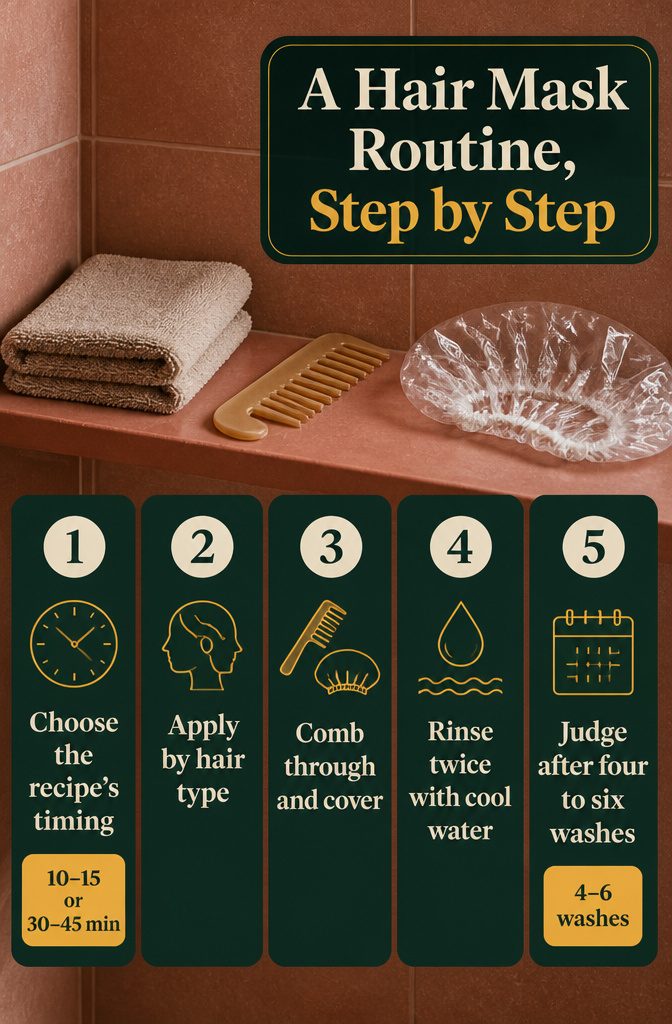
Some recipes call for thirty to forty-five minutes under a towel or shower cap, others ten to fifteen. The timing depends on what you mixed, so stick with the recipe you chose rather than inventing a universal rule.
If your hair is dry, start near the scalp and work toward the ends. Oily hair gets the mask from mid-shaft down.
A wide-tooth comb spreads it evenly. Cover your head with plastic wrap and a towel to trap a little heat, rinse with lukewarm or cool water, and expect to rinse twice to get everything out.
Give it four to six washes before you judge whether it worked.
Better manageability, less breakage, and hair that actually feels balanced are the signs to watch for. If your hair feels heavy or stripped, adjust how often you apply it.
Precautions Worth Knowing Before You Start
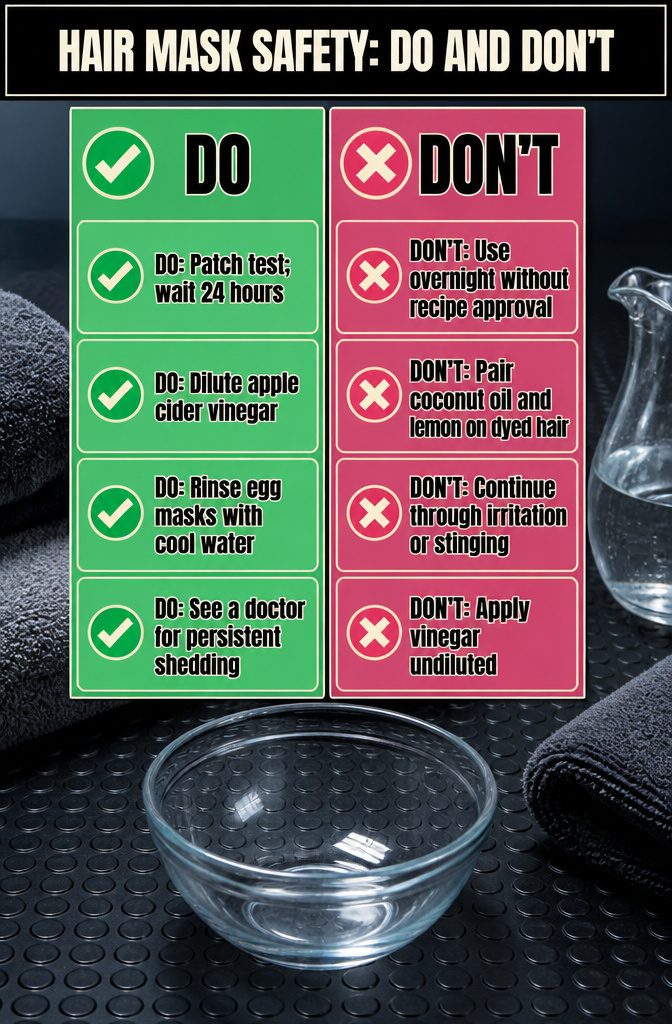
A few things to check before mixing a batch and applying it:
- Patch test any new ingredient on your inner forearm and wait 24 hours, especially if you’re using something acidic or aromatic for the first time.
- Dilute apple cider vinegar before use. The acid can irritate bare skin, so mix it with water rather than applying it straight.
- Rinse egg-containing masks with cool water. Warm or hot water cooks the egg, and you’ll spend the rest of your shower picking bits out.
- Skip overnight use unless the recipe explicitly says otherwise. A homemade blend doesn’t become suitable for all-night wear just because your hair is dry.
- Avoid coconut oil and lemon combinations on color-treated hair. Lemon is acidic enough to fade color and dry out strands.
- Stop immediately if you feel irritation, stinging, or unusual dryness.
- If you’re dealing with persistent shedding or noticeable thinning, see a doctor rather than assuming a mask will solve it. A cosmetic treatment can’t address a medical cause.
Frequently Asked Questions
Do hair masks help your hair grow faster?
No. A hair mask conditions and strengthens the lengths you already have, which reduces breakage and helps you retain length, but it does not stimulate new growth from the follicle or make hair grow faster from the roots.
Softer, smoother strands are not the same as faster growth.
How often should I use a hair mask for hair growth?
Once or twice a week is a good starting point, replacing your regular conditioner. Adjust based on how your hair responds: pull back if it feels heavy or greasy, or increase frequency if dryness persists.
What ingredients boost hair growth?
Ingredients like castor oil, rosemary oil, onion juice (for sulfur), and fenugreek are credited with improving scalp circulation and follicle health, which may support stronger hair and reduce shedding.
No ingredient guarantees faster growth, but these may help create better conditions at the scalp.
Can I use a hair mask every day?
It depends on the formula and your hair type.
Most masks are designed for once or twice weekly use, and daily application can lead to buildup, greasiness, or protein overload. Match frequency to what your hair actually needs rather than following a fixed schedule.
How do I know if a hair mask is working?
Look for easier detangling, better moisture balance, less breakage when you comb through, and a healthier overall appearance. These signs show the mask is improving the condition of your existing hair, even if growth itself stays the same.
Do expensive hair masks work better than drugstore options?
Not always. Price does not guarantee results; ingredient quality and formulation do.
Some drugstore brands deliver excellent conditioning, while some high-end products rely more on packaging and marketing. Compare how your hair responds rather than assuming cost equals performance.
Should I apply a hair mask to wet or dry hair?
Most masks work best on clean, damp hair. Oil-based masks like coconut or olive oil may absorb better on dry hair, since oil can repel water and wet strands may not take in as much.