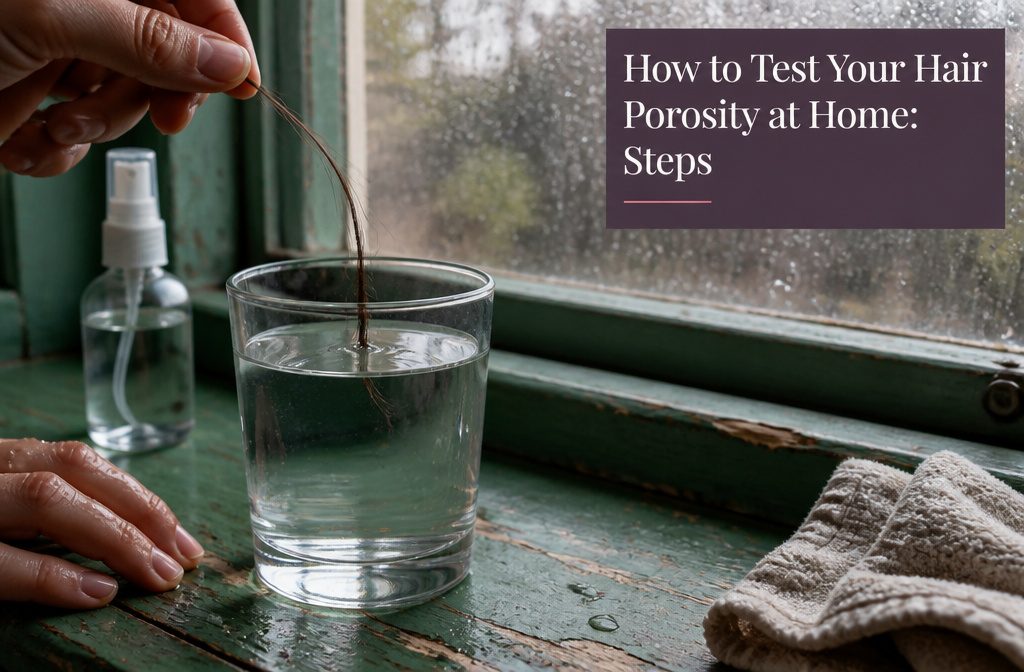
Four home tests tell you whether your hair cuticle is open or sealed, each one taking under 5 minutes with water, a spray bottle or your fingertips.
Product buildup throws off every result, especially the float test, which has no clinical backing but remains the most popular method online.
Ends often read as high porosity while roots stay low because twelve-inch hair carries two to three years of damage the scalp has never seen.
What Hair Porosity Actually Means
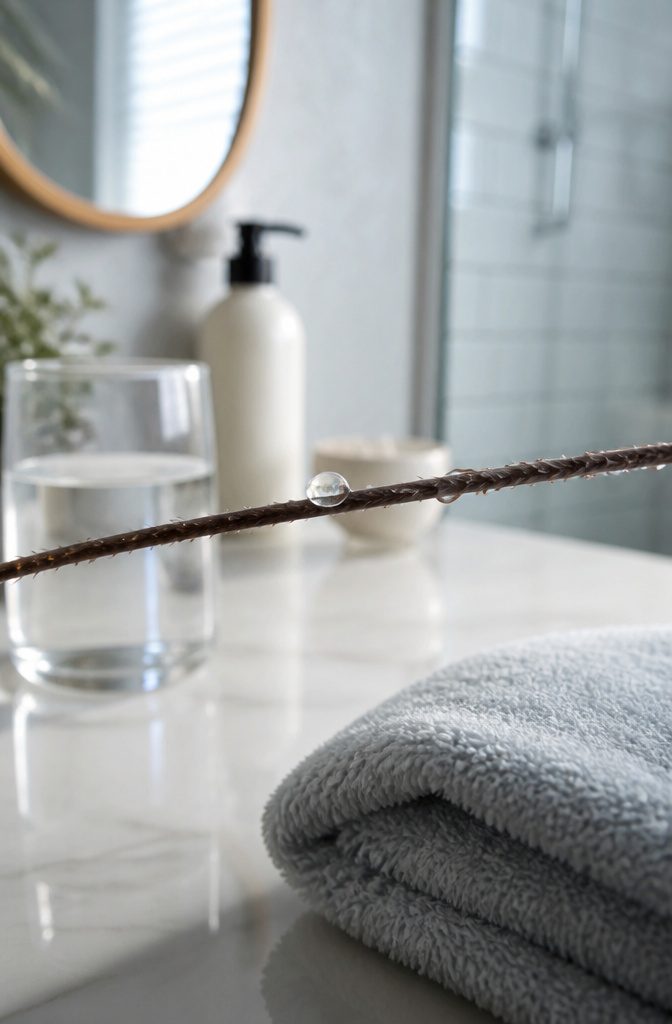
Porosity describes how readily moisture moves in and out of the hair shaft, governed entirely by the cuticle. Each strand carries five to ten overlapping cuticle layers, arranged like shingles on a roof.
When those layers lie flat and tight, water and conditioner struggle to penetrate. When they lift, chip, or pull away, the strand absorbs quickly and releases just as fast.
That difference explains why one person’s hair takes twenty minutes to wet through in the shower while another’s soaks instantly, why some heads air-dry in an hour and others stay damp past lunch, and why a leave-in that sinks into your friend’s curls sits on yours all day.
Cuticle structure controls all three.
Neither low nor high porosity is better. Low porosity usually signals an intact cuticle, structurally sound.
High porosity can be natural architecture or the residue of bleach and heat. Both respond to the right routine; neither is a flaw.
1. Prepare a Clean Strand or Section
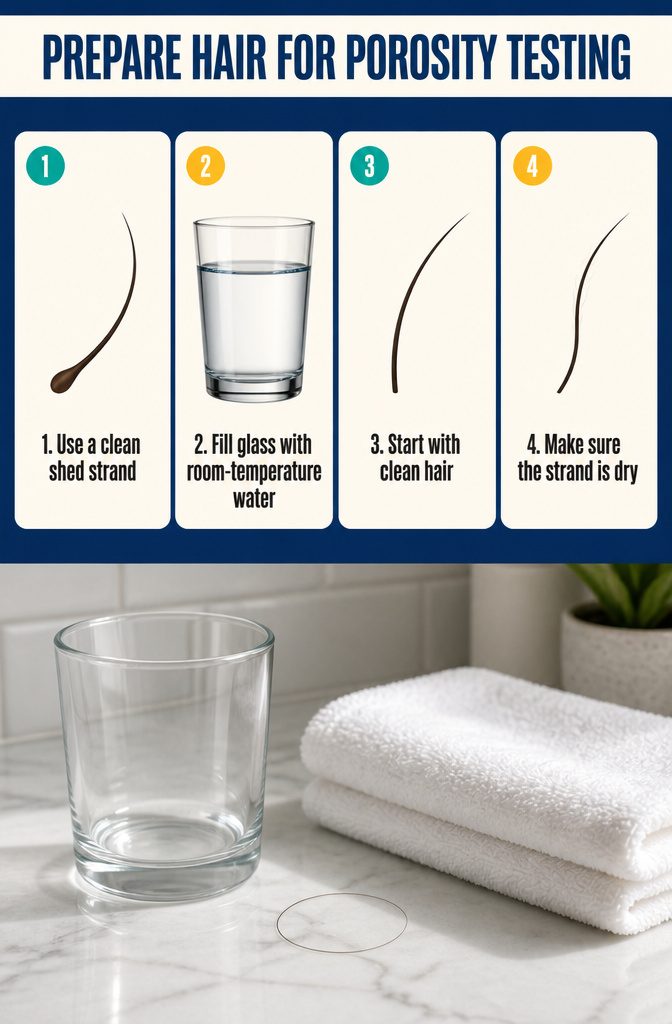
- Use a clean, shed strand for the float test, not one you pull directly from your scalp. Shed hair has no oils or follicle tissue left on it, so the test reads porosity alone. For the slip test or a visual check, work with a single strand or small section instead.
- Fill a glass with room-temperature water before you drop the strand in. Hot or cold water changes how quickly hair sinks, and you want porosity doing the work, not temperature.
- Make sure the strand is clean and dry before you start. Product buildup, conditioner or oil will coat the cuticle and throw off the result, especially on the slip test where you’re feeling for smoothness or resistance.
2. Check How Quickly Water Soaks In
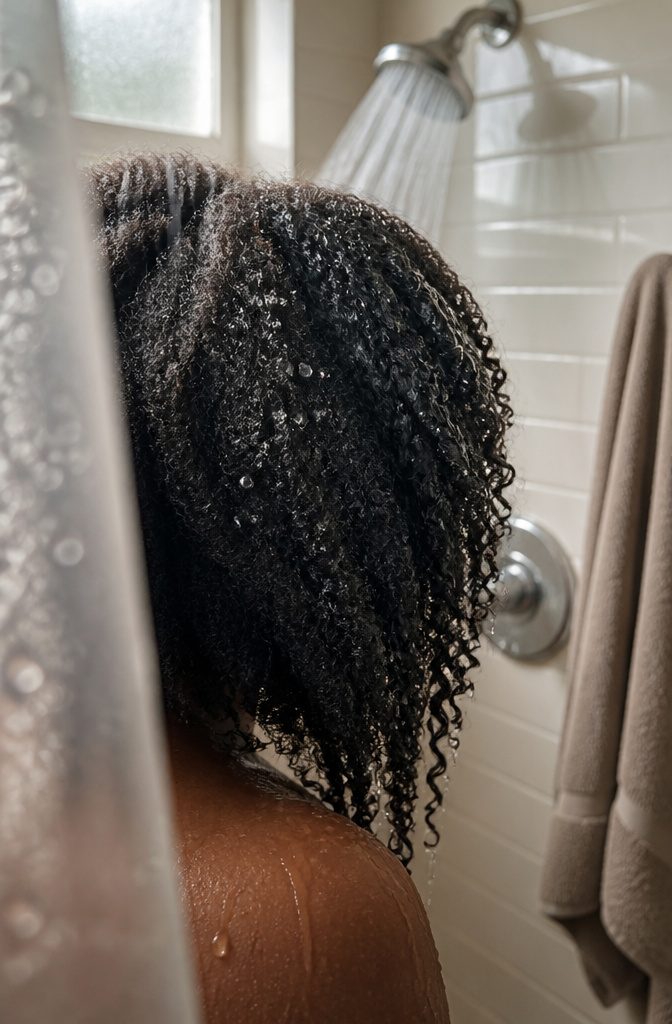
The most honest clue to porosity sits in your own shower routine. Next time you wet your hair, watch what happens in the first few seconds.
Water that beads on the surface and takes time to soak through usually means low porosity; hair that goes from dry to soaked almost instantly points toward high.
Drying time tells the same story from the other end.
Hair still damp an hour after washing, or wet at bedtime after swimming, often indicates a tight cuticle holding water in. Hair that dries in under an hour is letting moisture escape freely, a sign of higher porosity.
This observation costs nothing and runs every time you wash. You have already collected the data; you just haven’t been reading it yet.
3. Try the Mist Test
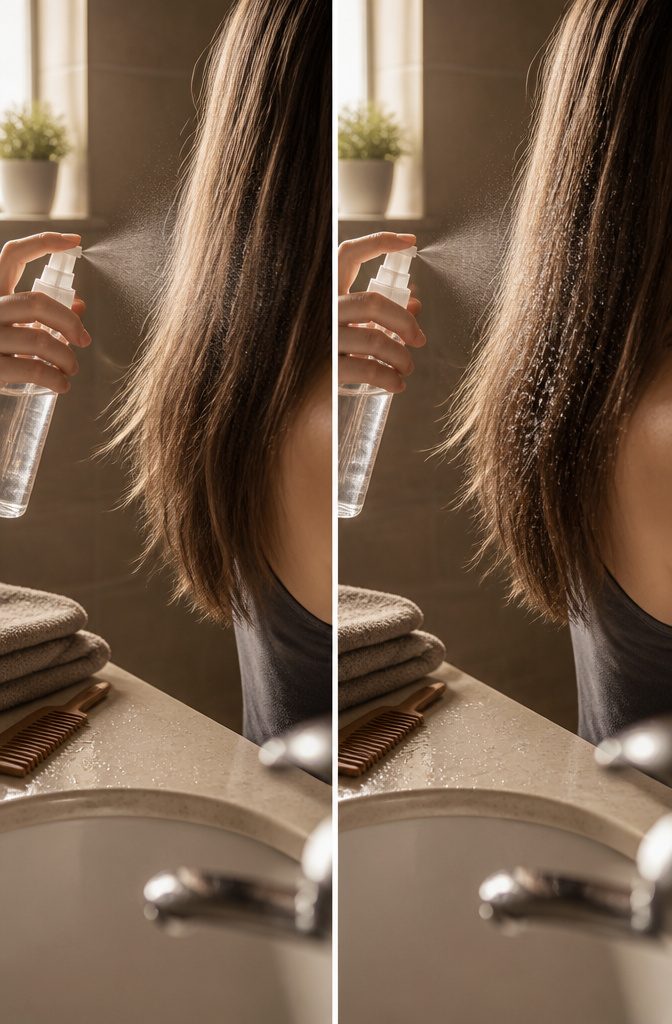
- Spray a clean section of dry hair with plain water from a spray bottle, keeping the mist light and even. A fine mist works better than heavy droplets because you want to see how the surface of your hair reacts, not just drench it.
- Watch what happens in the first few seconds. If water beads up and sits on the surface, your cuticle is tightly closed and you likely have low porosity. The hair resists absorbing moisture.
- If the mist soaks in almost immediately, that points toward high porosity. The cuticle is open enough that water moves straight through without hesitation.
- Beads that sit for a moment and then gradually absorb suggest medium porosity. The hair accepts moisture at a moderate pace, which is usually the easiest type to work with.
4. Try the Float Test If You Use It
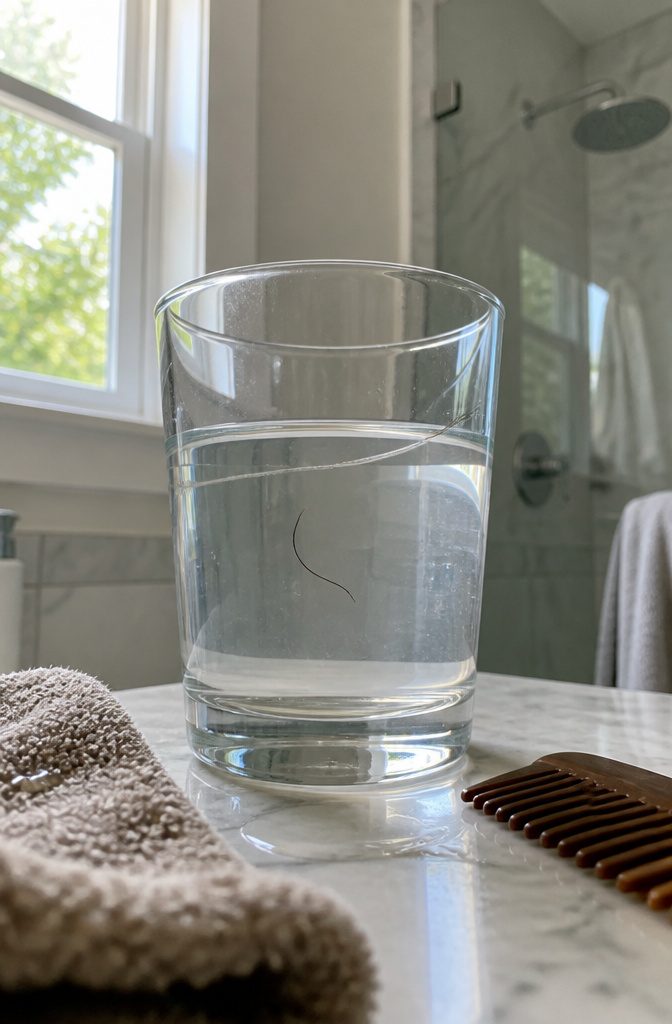
Place a few clean, shed strands in a glass of room-temperature water and watch what happens.
Floating for ten to fifteen minutes points toward low porosity, quick sinking within three to five minutes suggests high, and a strand that hangs in the middle or drifts down slowly lands somewhere in the middle range.
The test costs nothing and takes two minutes, which explains its popularity.
Surface tension and residue throw off the result more often than most tutorials admit. Conditioner, oil, and styling product coat the strand and repel water regardless of what the cuticle looks like underneath.
Even freshly washed hair carries deposited ingredients by design. There is no peer-reviewed validation of the float test as a diagnostic tool, and hair scientists rely on methods you cannot replicate at home.
Treat the result as a starting point rather than a diagnosis, and use a strand from hair washed without heavy conditioner or leave-in to get a cleaner read.
5. Try the Slip Test
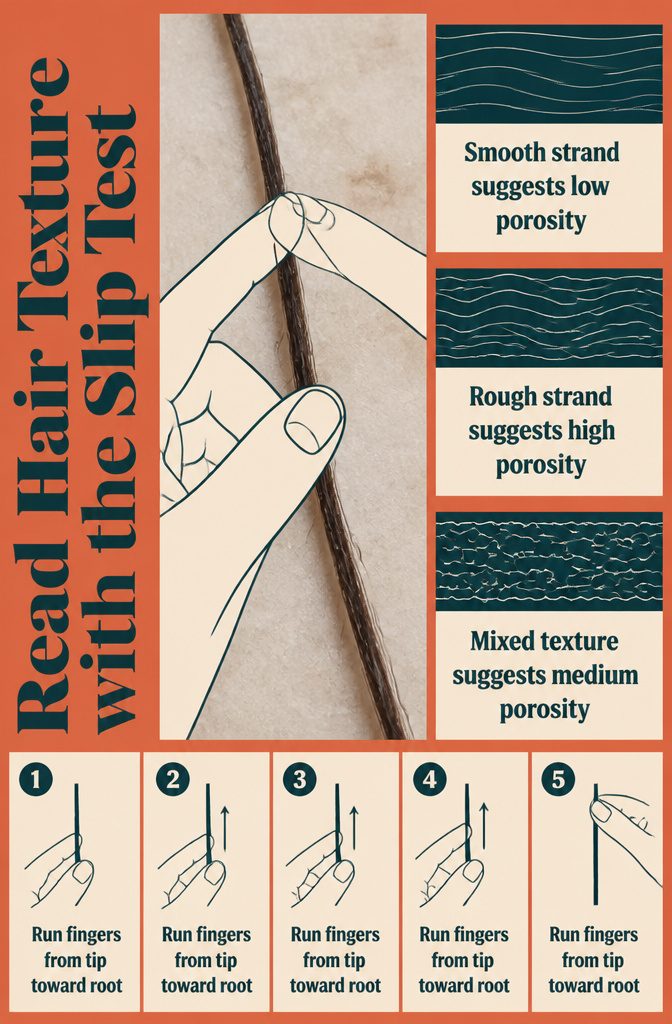
- Run your fingers along a single strand from the tip toward the root, feeling for texture as you go.
- Smooth feel means the cuticle sits flat and tight, which points to low porosity.
- Rough or bumpy texture, or a strand that catches on your fingers, suggests the cuticle is raised and open, marking high porosity.
- A textured middle result, neither perfectly smooth nor consistently rough, lands you in medium porosity range.
6. Check Drying Time and Product Behavior
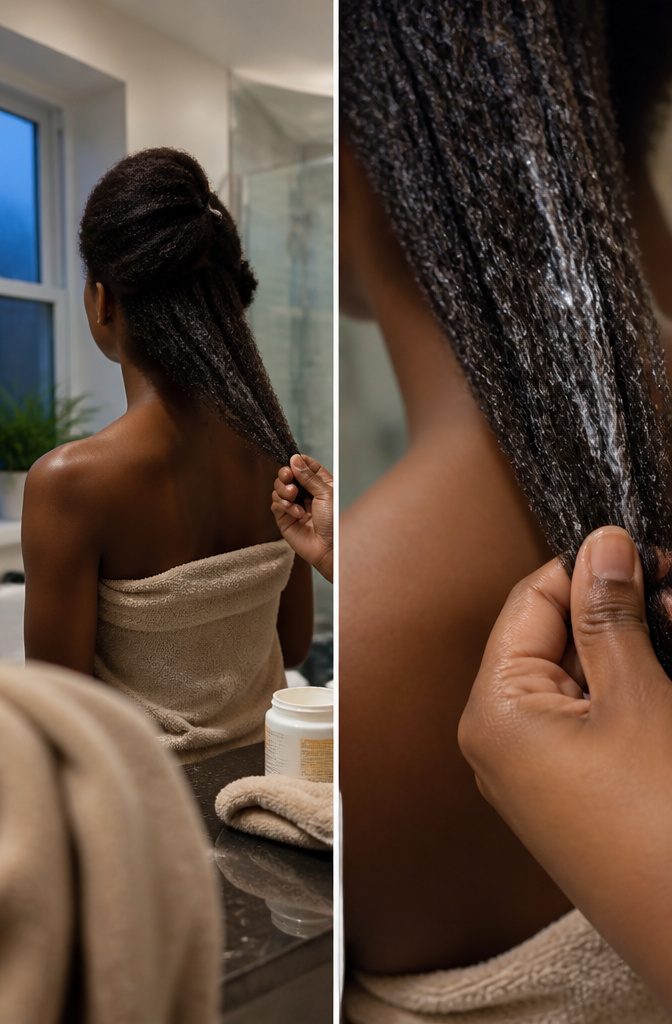
Pay attention to how your hair behaves in the shower and after.
If water beads on the surface and takes a while before your hair finally wets through, or if drying takes more than eight hours, you’re likely looking at low porosity.
Hair that soaks instantly and air-dries in under an hour usually points toward high.
Product behavior tells you more. Creams and leave-ins that sit on top without absorbing, or hair that looks coated even when you use lightweight formulas, often mean a tight cuticle.
Hair that drinks up heavy products and still feels dry an hour later is probably higher porosity.
These are practical clues, not verdicts. They add confidence to what a float test or slip test suggests, but they don’t replace one.
Roots, mid-lengths, and ends often behave differently, especially if you color or heat-style, so what you notice in one zone may not match the rest.
7. Compare Results Across Sections
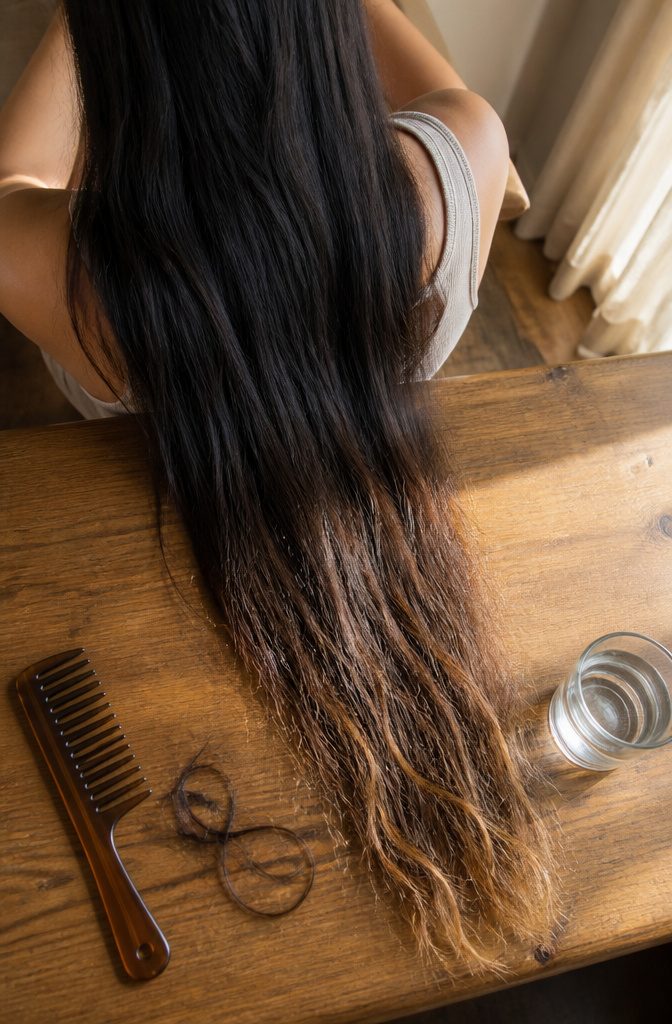
Your hair does not age at one speed, and the strands you test may tell different stories.
Hair grows about half an inch per month, which means twelve-inch hair carries ends that are two to three years old. Those ends have lived through hundreds of washes, heat sessions, and sun exposure that roots have never seen.
Shoulder-length hair can span five to six years of history, and the damage shows: ends often read as high porosity while roots stay low.
If you run the float test on a root strand and the slip test on mid-lengths and get conflicting answers, follow the majority or treat each zone differently.
High-porosity ends need heavier leave-ins and oils, while low-porosity roots do better with lighter product. Testing a couple of strands from different sections gives you the full picture instead of guessing from one.
8. Treat the Result as an Estimate
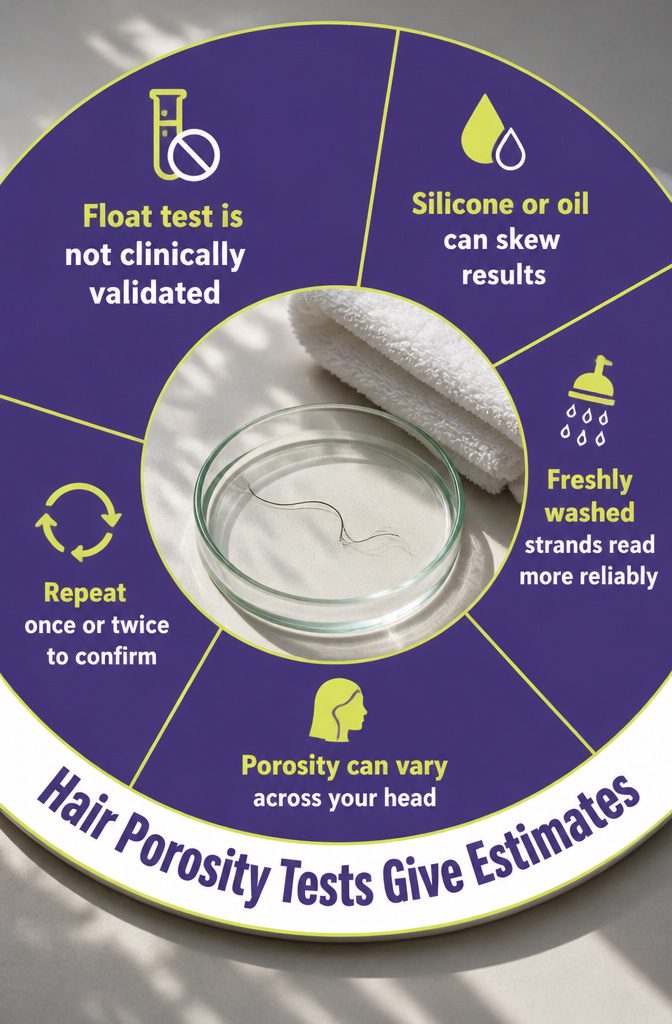
Treat the Result as an Estimate
These tests give general insight, not precision. The float test is a starting point rather than a clinically validated diagnostic, and product buildup or residue on the strand can throw off the result.
Even high porosity hair sometimes floats when it shouldn’t if the strand carried silicone or oil from a previous wash.
Testing a freshly washed strand gives a more reliable read.
Repeating the test once or twice helps confirm what the first float suggested. The result guides care rather than locks you into one category forever, and testing hair from different sections can show you whether porosity varies across your head.
Low Porosity Hair
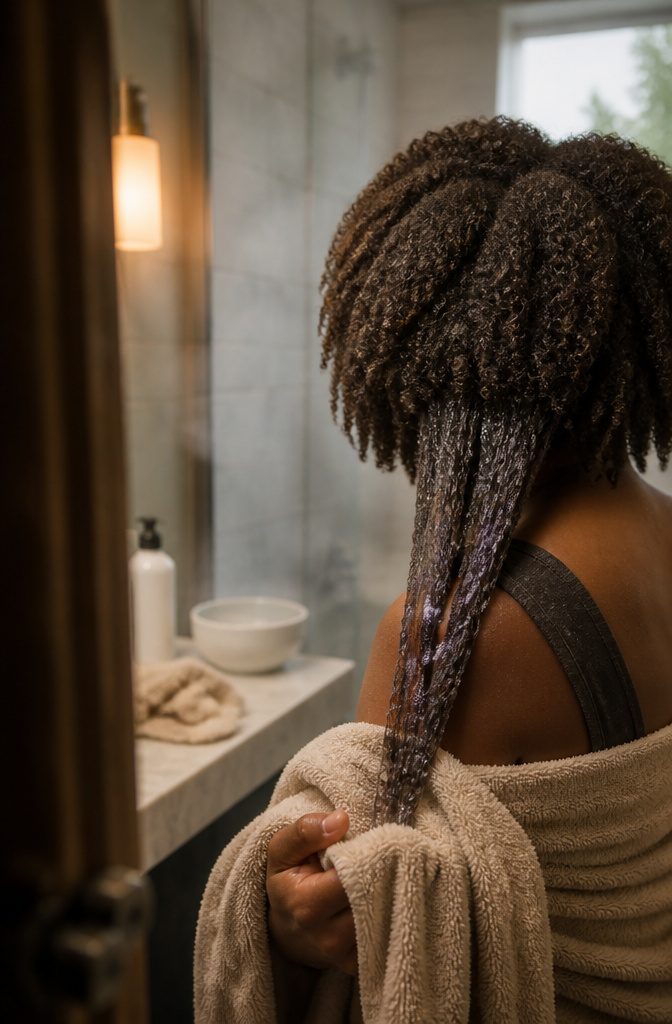
Low porosity hair has a tightly packed cuticle that resists moisture absorption, so products often sit on the surface rather than sinking in.
Water beads on the hair in the shower, taking a long time to saturate, and air-drying can stretch past eight hours. Buildup is the main enemy here, because anything heavy just layers up instead of absorbing.
Lightweight, water-based products applied to damp hair absorb more easily than creams or butters.
Heat during deep conditioning helps the cuticle lift slightly so product actually penetrates. I use the Butter-Me Mask once weekly with warmth, wrapping my hair in a warm towel or letting shower steam do the work for 5–10 minutes.
The Teatox Scalp Toner every 2–3 weeks clears any product or mineral buildup without stripping. If I pre-treat, it’s one or two drops of Wonder Oil on the ends only, nothing heavier.
Medium Porosity Hair
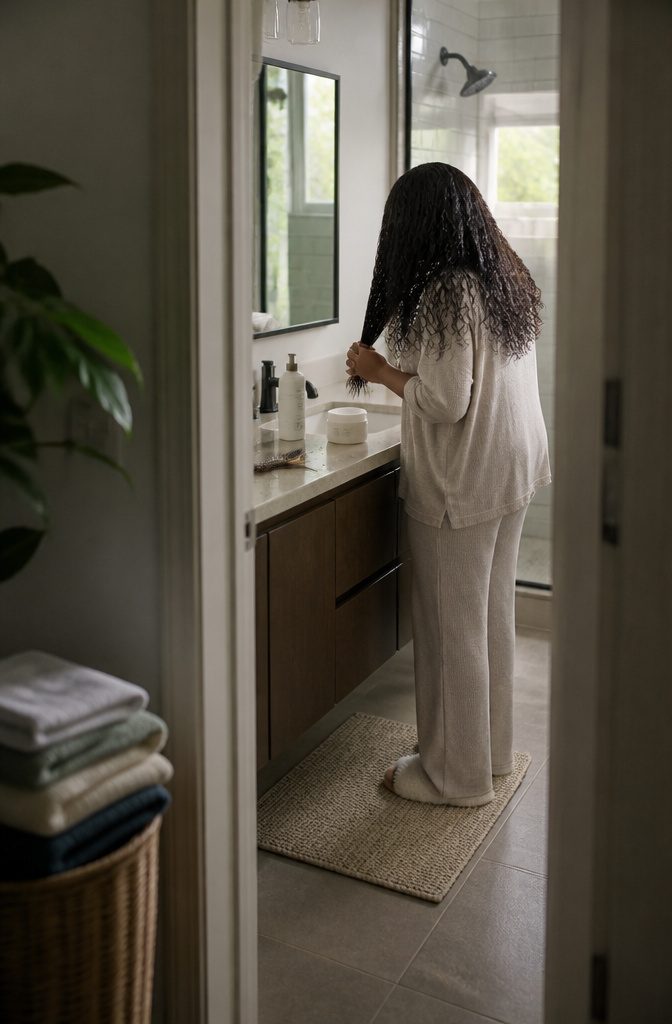
Medium porosity sits between the extremes. The cuticle layers are neither sealed shut nor fully raised, so moisture moves in and out at a balanced pace.
Healthy hair can absorb roughly 30 percent of its own weight in water, and medium porosity hair does exactly that without drama or delay.
This is the easiest porosity type to maintain. Wash 2–3 times weekly with whatever shampoo already works for your hair.
Once a week, apply a conditioning mask. On non-mask days, condition the ends lightly and move on.
A few drops of oil massaged into the scalp for three minutes before shampooing keeps buildup from settling in. If you layer on styling products regularly, use Teatox Scalp Toner every 3–4 weeks to strip residue without overdoing it.
Medium porosity rarely punishes a slightly generic product choice, which means you get to skip the careful calibration that low and high porosity demand.
High Porosity Hair
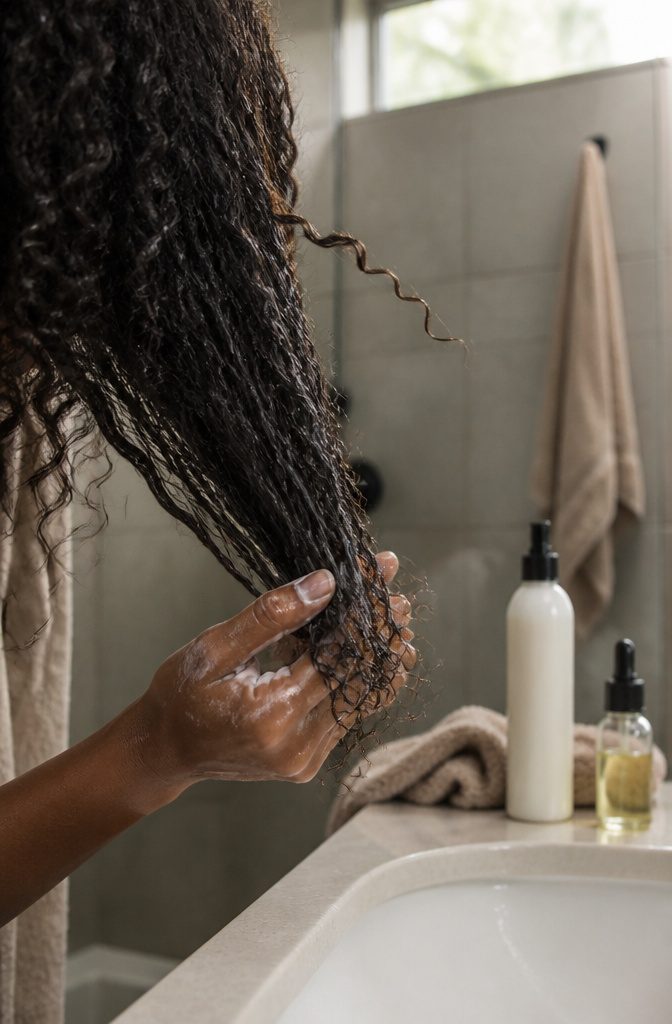
High porosity hair absorbs water the second you step under the shower, and then dries fast, sometimes within an hour.
The cuticle lifts or has gaps from heat, bleach, or the natural geometry of tightly curled strands, and moisture rushes in and then right back out through those same openings.
Between washes, frizz shows up quickly, tangles snag, and hair can feel dry hours after conditioning.
A mild, sulfate-free shampoo followed by a rich conditioner with oils and butters helps to mitigate dryness in high-porosity hair.
The strategy that helps is layer and seal: apply a water-based leave-in or gel first, then lock it in with a richer cream, butter, or oil.
Work 3–5 drops Wonder Oil through mids to ends before washing to detangle and protect. Follow with Butter-Me Mask once or twice a week for 10 minutes, concentrating on the driest sections.
Cool rinse for 10–15 seconds to help lay the cuticle, then layer your leave-in, serum, and one final drop of oil scrunched on the very ends. Teatox Scalp Toner monthly keeps buildup in check without overdoing it.
What Changes Your Porosity
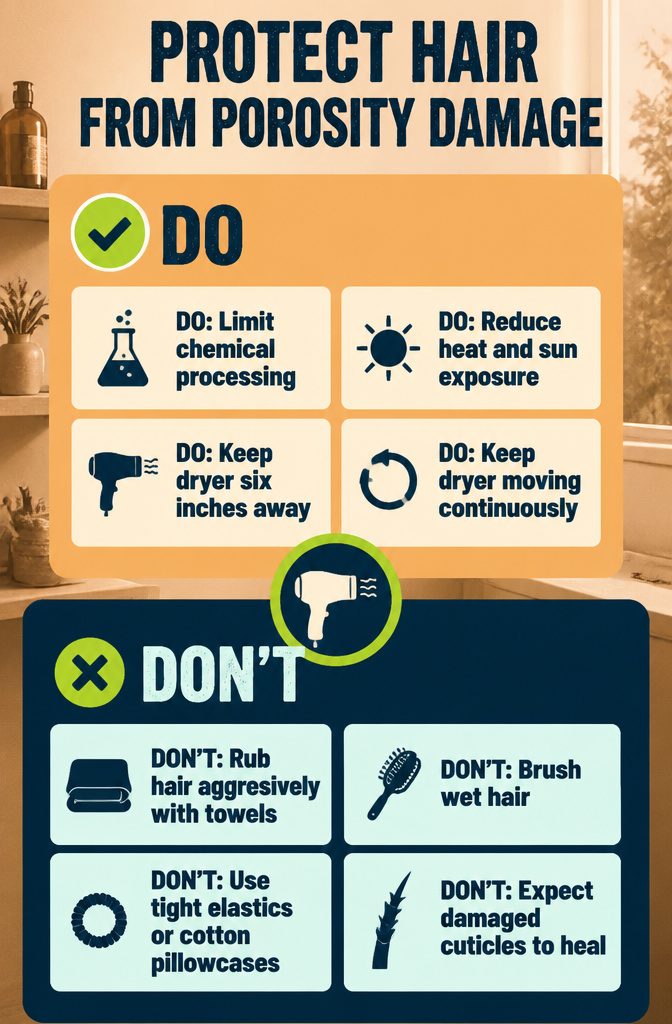
Genetics set the baseline, but porosity can shift over time, and most of the shift comes from what you do to your hair.
Chemical processing lifts the cuticle on purpose: bleach, permanent color, relaxers and perms all swell the strand and open the outer layer so molecules can get inside.
Heat from flat irons and curling wands running at 350–450°F changes the structure of the hair proteins, especially on damp hair where trapped water can turn to steam.
Sun exposure degrades both the proteins and the protective lipids of the cuticle, and chlorinated pools plus hard water make it worse.
Friction adds up too: aggressive towel-rubbing, brushing wet hair, tight elastics and cotton pillowcases sand down cuticle edges one wash at a time.
The cuticle is dead tissue, so damage is cumulative and one-directional.
Hair can’t heal itself. Products can smooth lifted edges and temporarily coat damage, but the only true reset is new growth from the follicle and scissors for what’s already damaged.
One thing does help: a hair dryer held about six inches away and kept in continuous motion shows less surface damage than close-up high heat.
Frequently Asked Questions
How do you test hair porosity at home?
Drop a clean, shed strand in room-temperature water and watch what happens. Floating for 10–15 minutes points toward low porosity, quick sinking within 3–5 minutes suggests high, and a strand that drifts down slowly lands somewhere in the middle range.
You can also try the mist test: spray a clean section with water and see if it beads on the surface (low) or soaks in instantly (high).
Is the water porosity test accurate?
It’s a starting point rather than a clinically validated diagnostic tool.
Surface tension and residue throw off the result more often than most tutorials admit, and conditioner or oil on the strand will repel water regardless of what the cuticle looks like underneath.
Testing a freshly washed strand helps, and repeating the test once or twice confirms what the first float suggested.
What is low porosity hair?
Low porosity hair has a tightly packed cuticle that resists moisture absorption, so products often sit on the surface instead of sinking in.
Water beads on the hair in the shower and takes time to saturate, and air-drying can stretch past 8 hours. The tight cuticle usually signals structurally sound hair rather than damage.
What are the symptoms of high porosity hair?
Hair goes from dry to soaked almost instantly and dries in under an hour.
Between washes, frizz shows up quickly, tangles snag, and hair can feel dry hours after conditioning. Many split ends and poor elasticity are common signs, especially when the porosity comes from heat or chemical damage.
Is it better to have high or low porosity hair?
Neither. Porosity describes how your hair behaves and guides care rather than ranking it.
Low porosity usually signals an intact cuticle, structurally sound, while high porosity can be natural architecture or the residue of bleach and heat. Both respond to the right routine.
Can hair porosity change over time?
Yes. Genetics set the baseline, but porosity can shift from what you do to your hair.
Chemical processing, heat from flat irons and curling wands running at 350–450°F, sun exposure, chlorinated pools, hard water, and friction from towel-rubbing or brushing wet hair all lift or damage the cuticle and raise porosity over time.
Can porosity be different at the roots versus the ends?
Yes. 12-inch hair carries ends that are 2–3 years old and have lived through hundreds of washes, heat sessions, and sun exposure that roots have never seen.
Ends often read as high porosity while roots stay low, so testing strands from different sections gives you the full picture.
What products work best for low porosity hair?
Lightweight, water-based products applied to damp hair absorb more easily than creams or butters.
Heat during deep conditioning helps the cuticle lift slightly so product actually penetrates. Clarifying products every 2–3 weeks clear buildup without stripping, since anything heavy just layers up instead of absorbing.
How often should I wash low porosity hair?
2–3 times weekly works for most low porosity hair.
Use lightweight, water-based products on damp hair and deep condition once weekly with warmth to help the cuticle lift. Clarifying every 2–3 weeks prevents buildup from settling in without overdoing it.
Is high porosity hair more prone to breakage?
Yes. The lifted or damaged cuticle that creates high porosity also makes the strand structurally weaker, especially when wet.
Porous hair snaps more easily during detangling and responds poorly to rough handling, so gentle techniques and leave-in conditioner providing slip are non-negotiable.
Does hair porosity affect how color treatments turn out?
Yes.
More porous hair absorbs color faster and processes more dramatically because the lifted cuticle lets molecules move in quickly. Hair that’s already porous from bleach or heat may take color unevenly if some sections are more damaged than others.
Does hair porosity affect gloss treatments too?
Yes.
A gloss sits differently depending on how readily hair absorbs product. Mentioning known porosity to a stylist beforehand helps them adjust the treatment so it processes evenly and lasts as long as it should.