Eating eggs supports hair health through protein, biotin, and other nutrients, but topical egg masks have not been proven to stimulate growth.
The shine and softness people notice from masks come from fatty acids coating the strand, not from feeding the follicle.
One large egg delivers 6 grams of protein and roughly 33% of your daily biotin, both tied directly to keratin production, and that internal supply is where the real support happens.
Can Eggs Help Hair Grow
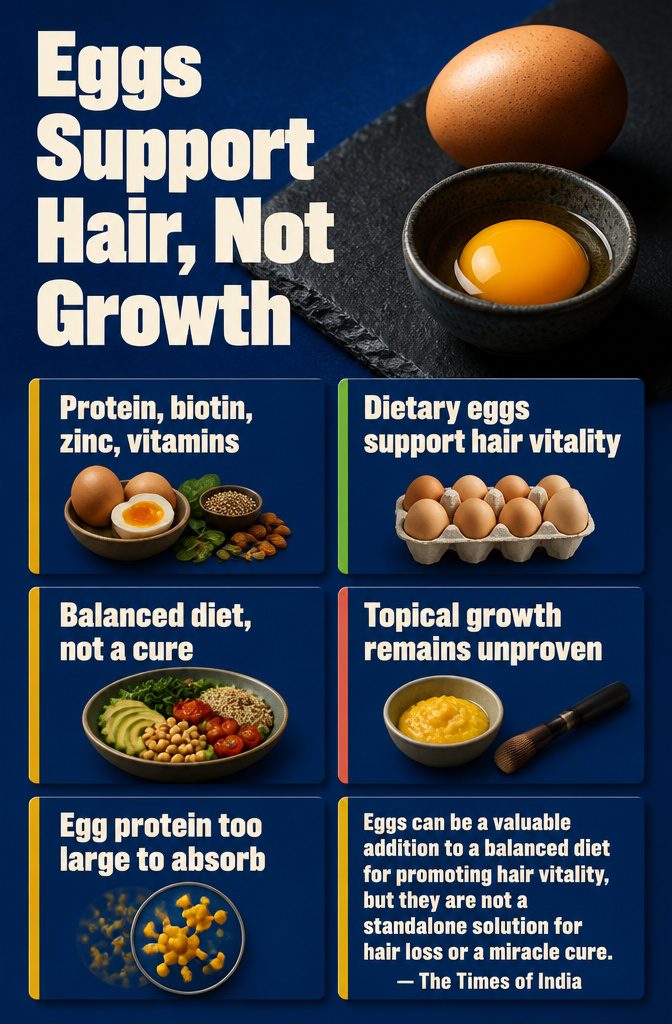
Eggs provide nutrients tied to hair health, but no topical egg treatment has been proven to stimulate actual growth.
Protein, biotin, zinc, and vitamins all support the conditions hair needs, and eating eggs regularly fits into a diet that keeps those levels where they need to be.
Where opinions split is on putting eggs directly on your scalp: some claim the yolk’s peptides can wake dormant follicles, while others point out that egg protein molecules are too large to absorb into the hair shaft at all.
"Eggs can be a valuable addition to a balanced diet for promoting hair vitality, but they are not a standalone solution for hair loss or a miracle cure."
That framing is the honest one: supportive, not curative.
Eating Eggs Versus Applying Them
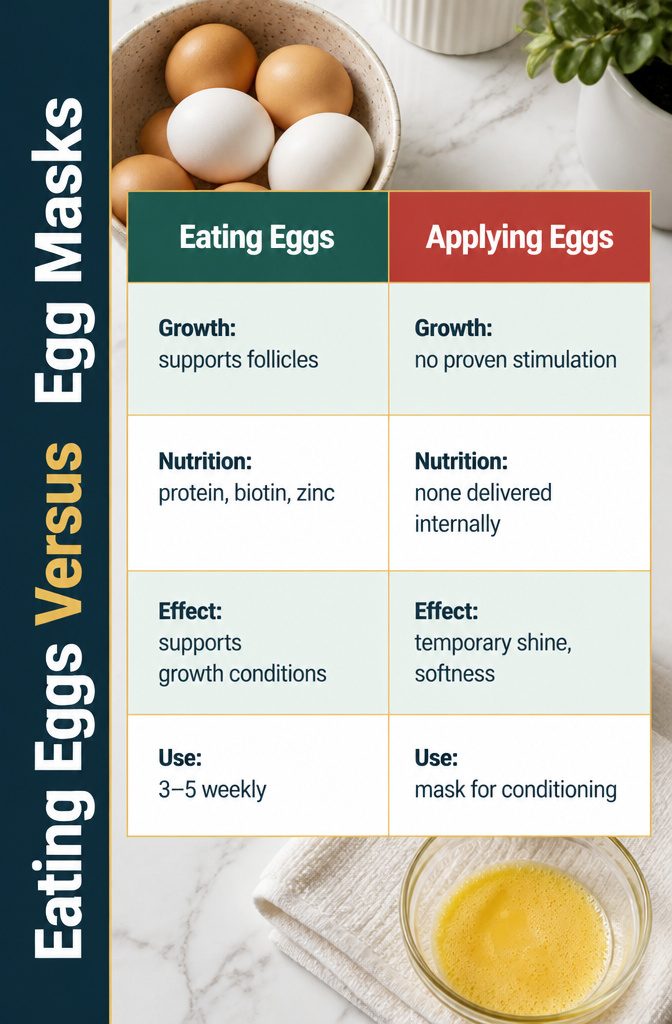
Eating eggs is the better path for hair growth, full stop. Dietary protein, biotin, and zinc from eggs feed the follicle from inside, where growth actually starts.
Applying an egg mask can smooth the cuticle, add temporary shine, and soften strands through the fatty acids in the yolk, but topical application isn’t scientifically proven to stimulate growth.
The conditioning effect is real and noticeable; the growth claim isn’t.
If you want both, eat 3–5 eggs a week as part of a balanced diet and use a mask for the shine and softness on the days your hair needs it.
Nutrients That May Support Hair Health
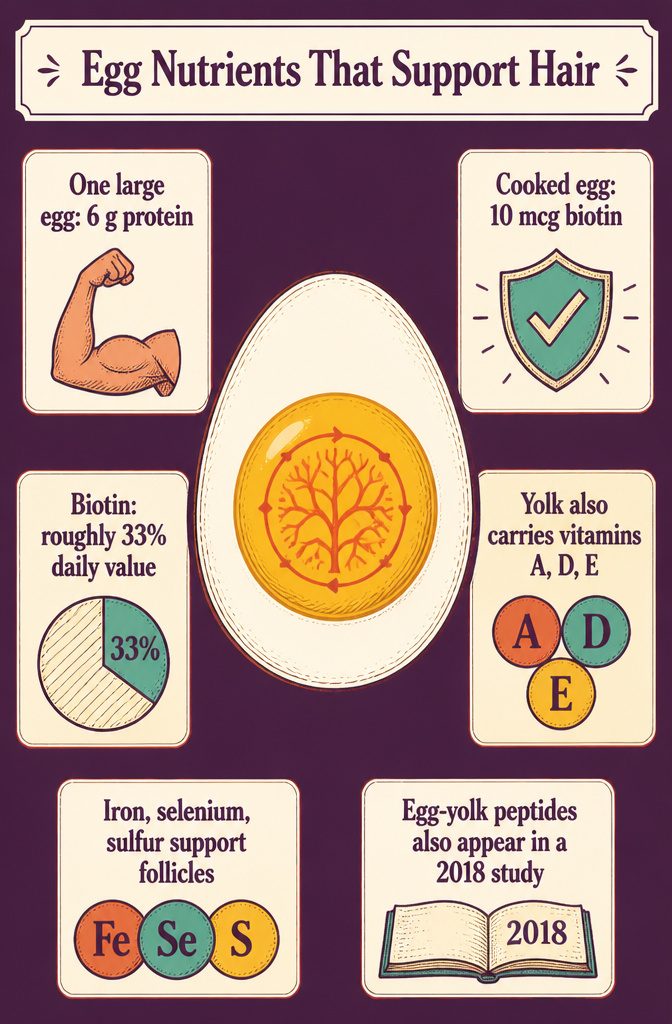
Hair is made almost entirely of keratin, and keratin is a protein, which is why a single large egg’s 6 grams of protein matters here.
Without enough dietary protein, strands become brittle and prone to breakage before they get anywhere near their full length.
The yolk adds a separate layer. One cooked egg delivers around 10 mcg of biotin, covering roughly 33% of the daily value.
Biotin drives keratin synthesis, so a shortfall shows up fast as shedding and weak roots. Vitamins A, D, and E, plus iron, selenium, and sulfur, round out what the yolk carries, each supporting follicle health in a different way.
Egg-yolk peptides also appear in a 2018 study tied to VEGF, a compound that improves blood flow to the scalp.
What Topical Masks May Actually Do
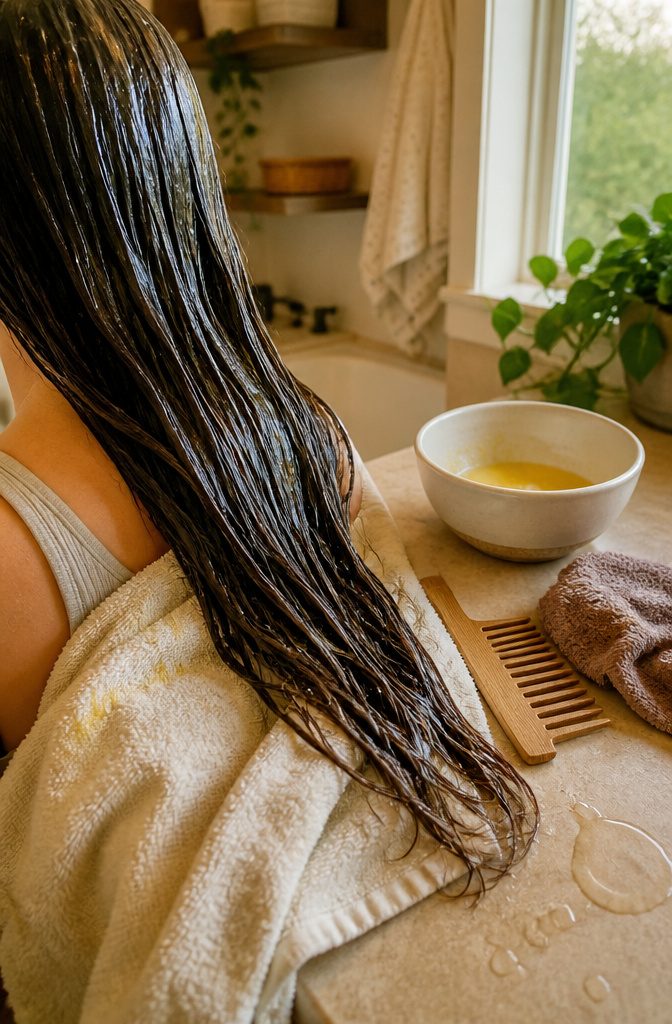
Shine, conditioning, and reduced breakage are what egg masks can realistically deliver. Egg whites may form a temporary film over the hair shaft that smooths the cuticle and cuts frizz.
Egg yolk fats, particularly lecithin, can moisturize dry strands and leave them feeling softer. Those are real, if temporary, effects worth knowing about.
Topical egg treatments have not been shown to stimulate hair growth, and the evidence behind most conditioning claims is largely anecdotal.
The protein in egg is too large to absorb into the hair shaft, so any strengthening effect stays on the surface.
That does not make a mask useless, but it does mean managing expectations: you are coating the hair, not feeding the follicle.
How to Use an Egg Mask Safely
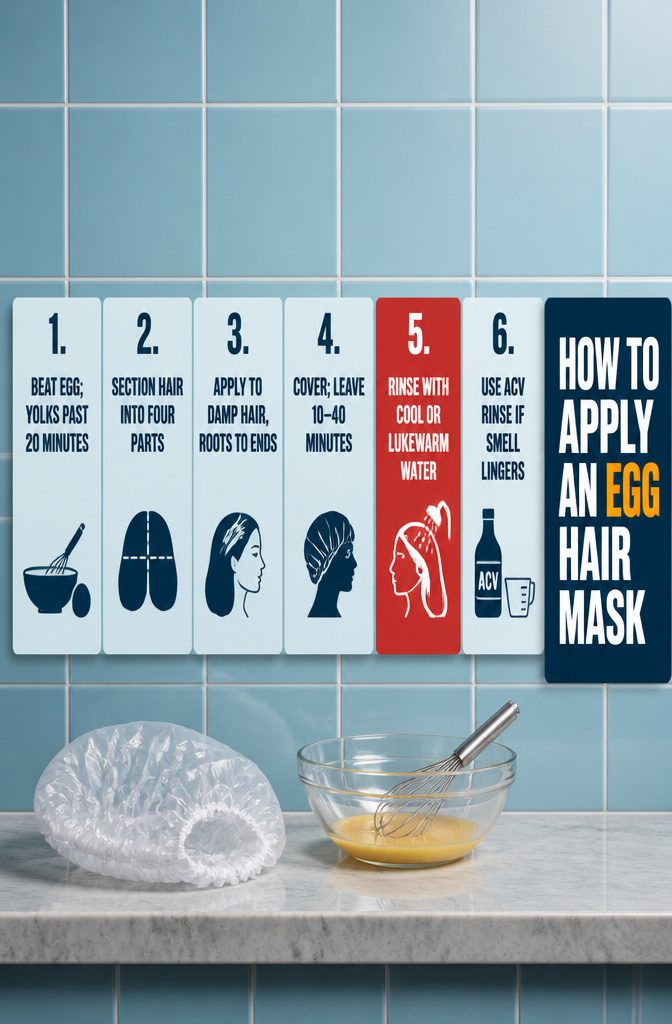
- Beat one egg for short-to-medium hair, two for long, or up to four if your hair is thick. You can use the whole egg, but if you plan to leave the mask on longer than 20 minutes, stick to yolks only.
- Section your hair into four parts if it is medium or longer. This makes coverage easier and lets you focus the mask on thinning areas if that is where you need it most.
- Apply the egg to damp hair, working it through from roots to ends. If you want extra conditioning, mix in half an avocado or a tablespoon or two of coconut oil before applying.
- Cover your hair with a shower cap or plastic wrap to avoid dripping. Leave the mask on for 10 minutes at minimum, up to 30–40 minutes for most recipes. Some sources suggest overnight for deeper penetration, though that increases the risk of smell.
- Rinse with cool or lukewarm water only. Hot water cooks the egg and makes it nearly impossible to wash out. Rinse over a basin if you can; it reduces shedding compared to a strong shower stream.
- Follow with an apple cider vinegar rinse if the egg smell lingers. Mix 2–4 tablespoons of vinegar into 2 cups of water and pour it through your hair after rinsing the mask. Lemon juice works too, though some people worry it may reduce the benefits if used too liberally.
When Eggs Are Not Enough
Eggs address a narrow slice of what drives hair loss.
Genetics, hormones, age, stress, and underlying medical conditions all affect the growth cycle independently of nutrition, and no amount of protein or biotin overrides those influences. Conditions like alopecia areata or thyroid disorders need medical attention, not a better breakfast.
Eggs will not stimulate growth when the cause is not a deficiency. For hair loss rooted in hormonal imbalance or genetics, treatments like minoxidil (available without a prescription) or finasteride (prescription-only) are the tools that actually target those pathways.
Hair grows roughly half an inch per month under normal conditions; nothing in an egg speeds that baseline when the real obstacle is something else entirely.
Hair Cycle and Causes of Loss
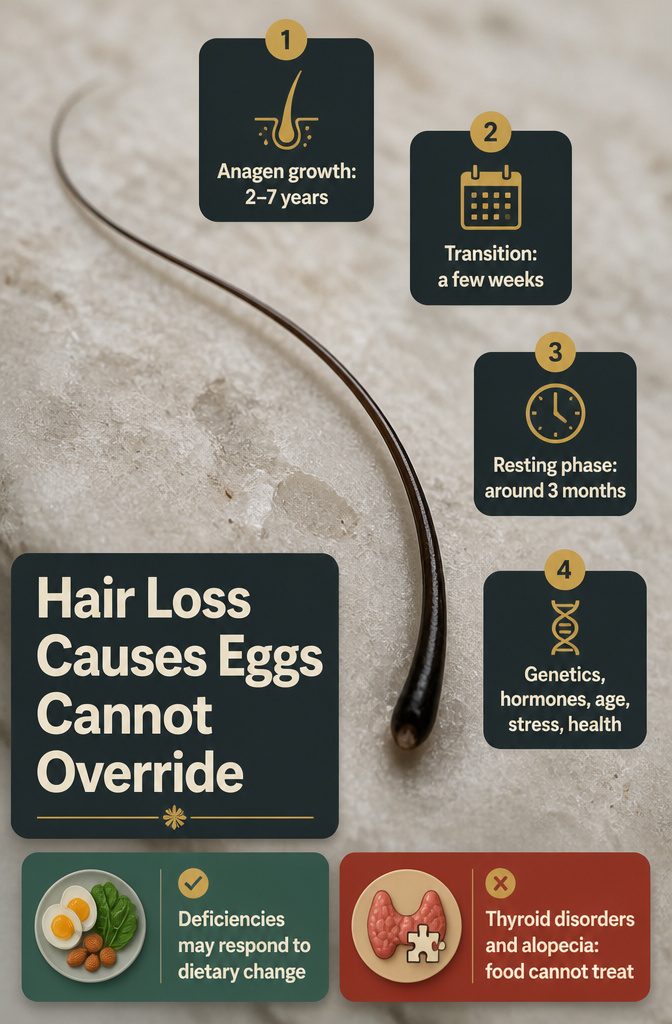
Each strand of hair spends 2–7 years in the anagen phase actively growing, then moves through a brief transitional phase lasting a few weeks before resting for around 3 months and shedding.
That cycle runs on genetics, hormones, age, stress, and overall health — none of which eggs can override.
Hair loss tied to nutrient deficiencies is the one place dietary changes, including adding eggs, can genuinely move the needle.
Protein deficiency and biotin deficiency can both trigger telogen effluvium, a temporary shedding pattern. Hormonal imbalances, thyroid disorders, and conditions like alopecia areata sit outside that lane entirely; no food addresses them.
Whole Egg, Yolk, or White
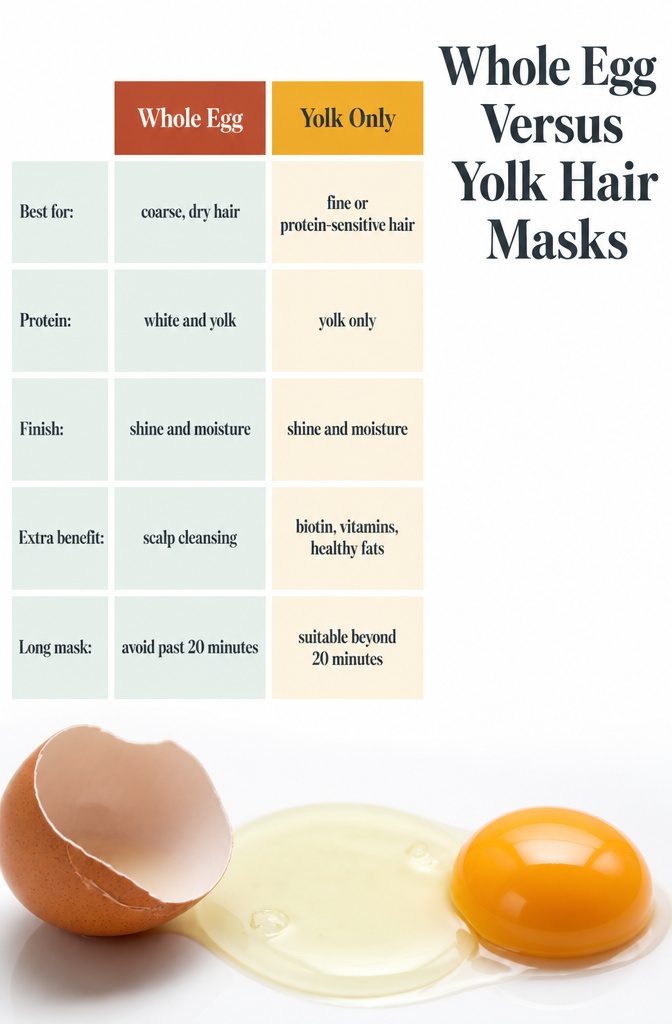
Whole eggs work fine if your hair handles protein well. Switch to yolk only if you have fine hair, protein sensitivity, or you’re leaving the mask on longer than 20 minutes, since the extra protein from whites can cause stiffness.
Yolks still deliver biotin, vitamins, and healthy fats, so you’re not losing much by skipping the white. Whites do bring their own benefits: they’re where the scalp-cleansing and clarifying action comes from.
Yolks are what add shine and moisture. If your hair is on the coarser or drier side and tolerates protein, the whole egg gives you both.
Rinsing and Reducing Egg Smell
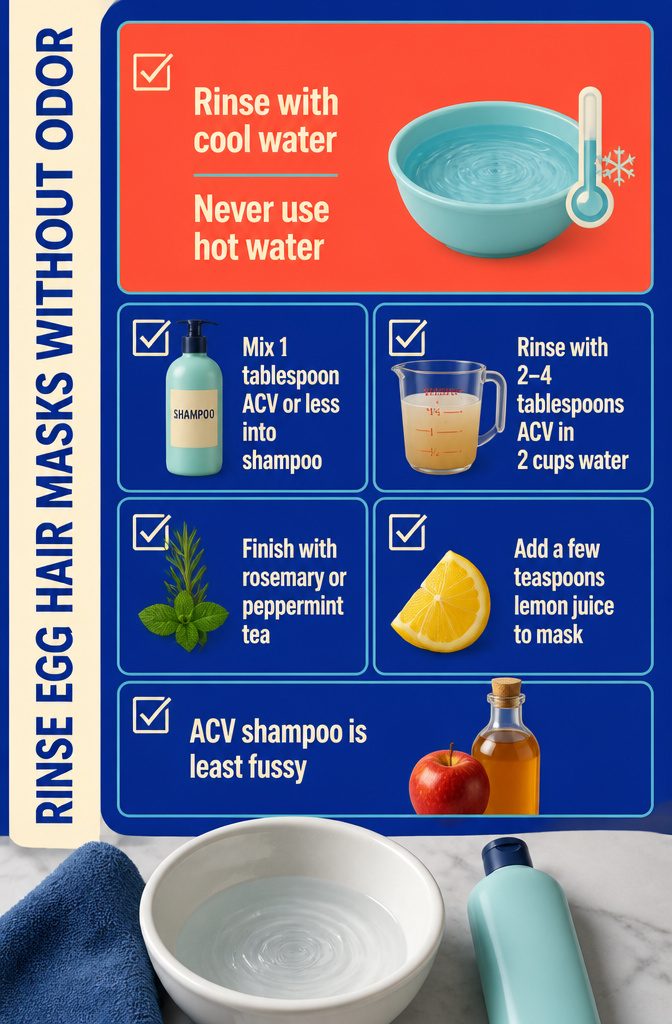
Cool water is the one rule that matters most here. Hot water can literally cook the egg into your hair, making it nearly impossible to rinse out and intensifying the smell.
A few ways to cut the eggy scent:
- Mix 1 tablespoon or less of apple cider vinegar into your shampoo instead of using it straight.
- Do a separate ACV rinse: 2–4 tablespoons in 2 cups of water. It removes residue and seals the cuticle.
- Swap in a strong brewed herbal tea, rosemary or peppermint, as your final rinse.
- Add a few teaspoons of lemon juice to the mask before applying.
Any of these works. The ACV-in-shampoo method is the least fussy for most people.
How Much Egg to Eat for Hair Health
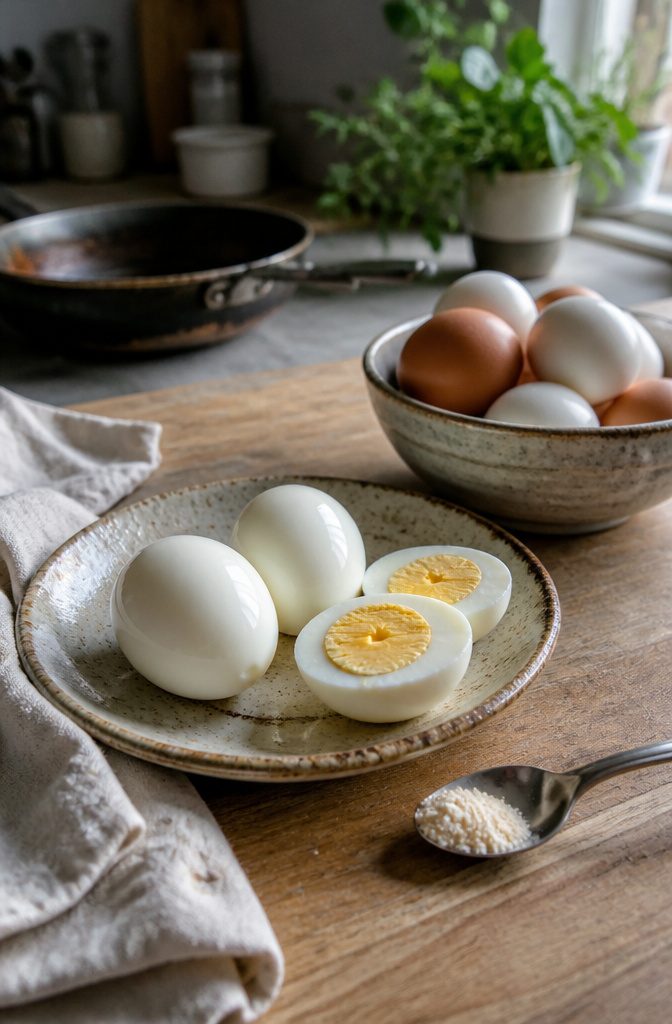
Three to five eggs a week gives the body a steady supply of the protein hair is built from: one large egg delivers around 6 grams, and the protein quality is high enough that the body uses most of it.
Cook them rather than eating them raw, because raw egg whites contain avidin, a protein that binds to biotin and blocks absorption. Cooking deactivates avidin, which means the biotin in the yolk actually reaches your follicles.
For readers interested in a more concentrated approach, 450 mg of hydrolyzed eggshell membrane daily for 3 months was linked in one trial to thicker hair, less breakage, and better growth in adults aged 35–65.
That membrane contains hyaluronic acid, keratin, and amino acids rather than the nutrients in the egg itself.
Frequently Asked Questions
Does egg help your hair grow faster?
No topical egg treatment has been proven to stimulate actual growth or speed up the natural rate of roughly half an inch per month.
Eating eggs regularly supplies protein, biotin, and zinc that support the conditions hair needs to grow, but dietary eggs address deficiencies rather than accelerating the baseline cycle.
Topical masks can smooth the cuticle and add shine, but those are conditioning effects, not growth stimulation.
Is egg good for your hair?
Eggs eaten as part of a balanced diet provide protein, biotin, and other nutrients that support hair health, especially when nutrient levels are low.
Applied as a mask, eggs can temporarily smooth the cuticle, add shine, and soften strands through the fatty acids in the yolk. The conditioning effect is real; the growth claim lacks scientific proof.
Can eggs alone regrow hair?
No. Hair loss stems from genetics, hormones, age, stress, and medical conditions, none of which eggs can override.
Eggs address nutrient deficiencies, which can trigger temporary shedding, but they will not regrow hair when the root cause is hormonal imbalance, thyroid disorders, or alopecia areata.
How often should I do an egg hair treatment?
One to two times a month is the most common recommendation, or up to once weekly if your hair tolerates it well.
Frequency depends on how your hair responds and whether you are using the treatment for conditioning or to address a specific concern like dryness or breakage.
Should I use whole eggs or just yolks?
Whole eggs work fine if your hair handles protein well. Switch to yolk only if you have fine hair, protein sensitivity, or you are leaving the mask on longer than 20 minutes, since the extra protein from whites can cause stiffness.
Yolks deliver biotin, vitamins, and healthy fats without the risk of overloading fine strands.
How do I rinse out the egg without it cooking?
Use cool or lukewarm water only. Hot water cooks the egg into your hair, making it nearly impossible to wash out and intensifying the smell.
Rinse over a basin if you can, then follow with an apple cider vinegar rinse or herbal tea to remove any lingering scent.
How do I avoid the egg smell?
Mix 1 tablespoon of apple cider vinegar into your shampoo, or do a separate rinse with 2 to 4 tablespoons of vinegar in 2 cups of water after rinsing the mask.
You can also add a few teaspoons of lemon juice to the mask before applying, or use a strong brewed herbal tea like rosemary or peppermint as your final rinse.