
Hair grows about half an inch each month, or roughly six inches per year, but that figure assumes the strand stays attached long enough to show the gain.
Most people do not have a growth problem; they have a retention problem, where breakage snaps off as much length as the follicle produces.
Your genes decide how long each strand stays in the active growth phase, which typically lasts two to seven years and sets the ceiling for how far your hair can grow.
Hair Grows About Half an Inch Each Month
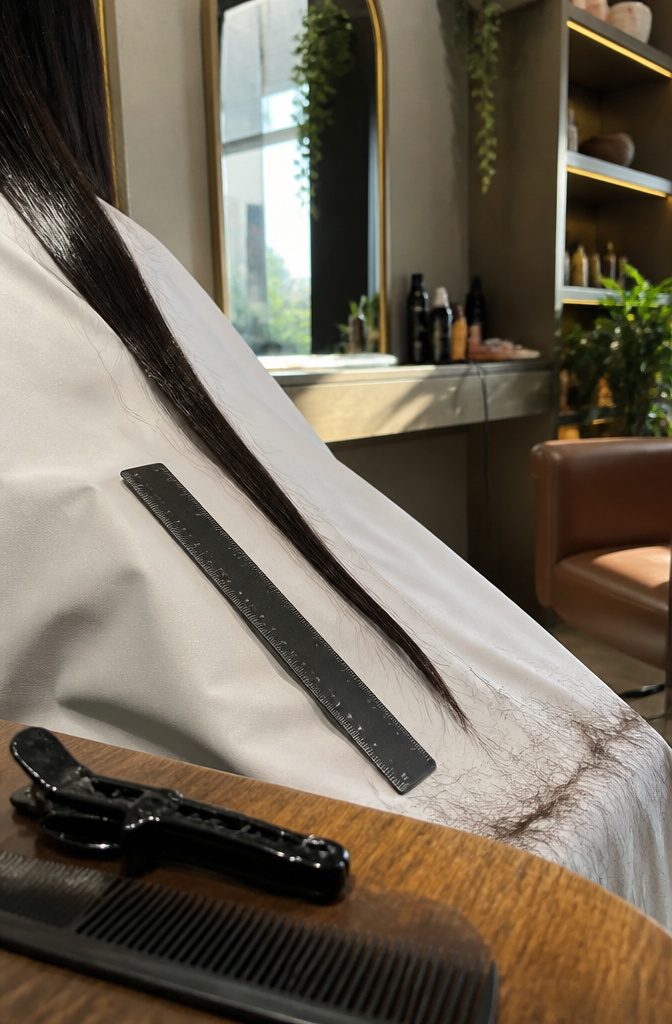
Hair typically grows around half an inch per month, or roughly six inches per year. That figure comes from the anagen phase, when cells in the follicle root divide most rapidly and push new strands upward.
It is an average, not a guarantee for every person, and it assumes the strand stays attached long enough for you to see the gain.
During the anagen phase, your hair grows around half an inch a month—this lasts an average of three to five years, reaching around 18 to 30 inches.
— Vogue
That three-to-five-year window is why some people can grow waist-length hair while others plateau at shoulder. About 80% to 90% of scalp hair is actively growing at any given time; the rest sits in a resting or shedding phase.
Visible length depends on both growth and retention. If your hair grows an inch but half an inch breaks off the bottom, you have only netted half an inch of progress.
Most people do not have a growth problem; they have a retention problem, and the timeline for shoulder length or longer reflects that reality.
What Growth Means Versus What You Can See
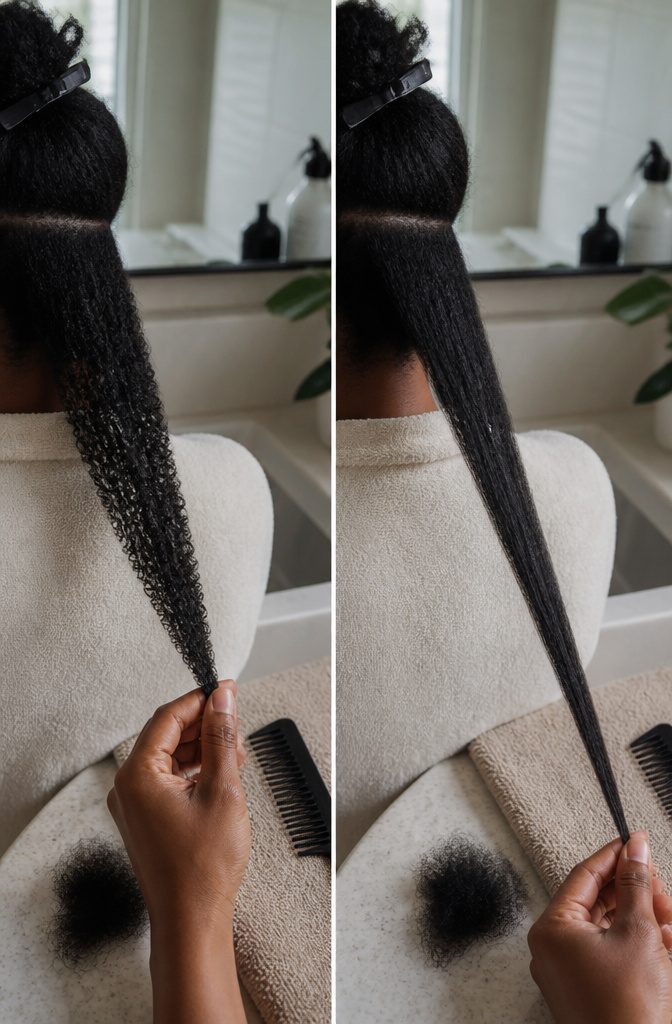
Growth at the scalp happens steadily, but what you actually see depends on how much length survives and how your texture displays it.
A strand can add half a centimeter of new growth every two weeks and still look the same length six months later if breakage snaps off as much as the follicle produces.
Tightly coiled hair is mechanically more fragile at each bend of the curl, so it breaks more easily during combing, heat styling, and tight updos. That fragility, not the follicle itself, is usually why length accumulates slowly.
Curl shrinkage hides even more.
A coiled strand physically measuring ten inches can hang at four, masking 60% of your true length. Straight hair shows every millimeter immediately, which makes growth look faster even when it isn’t.
Texture also shifts the baseline rate. Studies have measured East Asian hair near 1.3 centimeters per month on average, while tightly coiled hair common in people of African descent averaged closer to 0.9 centimeters per month.
Those are group averages with plenty of individual overlap, so they predict very little about any one scalp.
The Four Phases That Control How Long Each Strand Grows
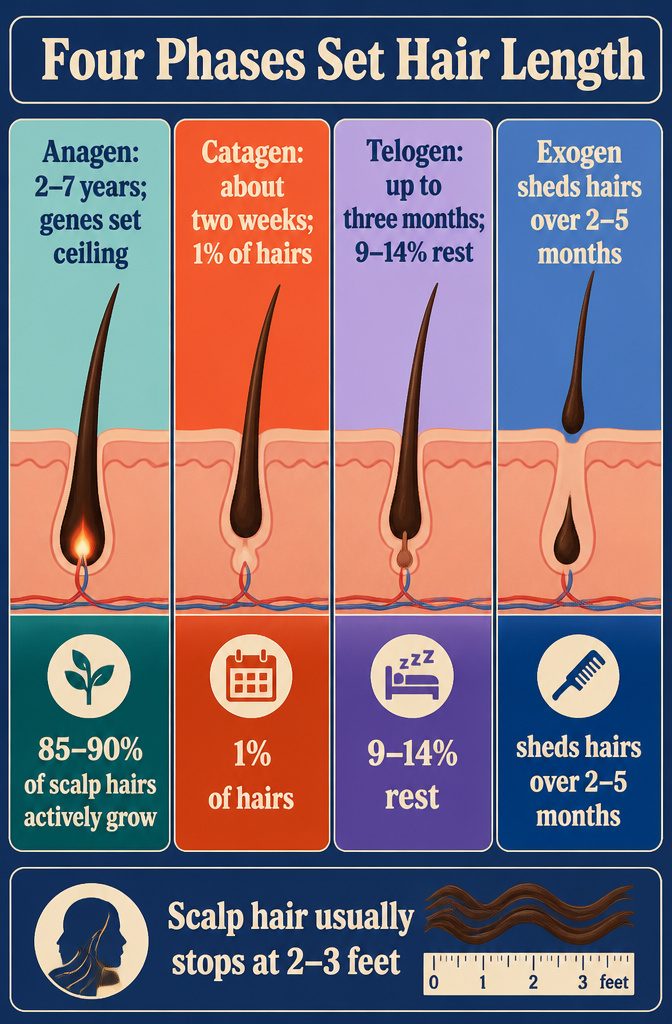
Each strand on your head moves through four distinct phases, and the longest one sets the ceiling for how far your hair can grow.
Anagen is the active growth phase, lasting anywhere from two to seven years depending entirely on your genes. At any moment, roughly 85 to 90 percent of your scalp hair is in anagen, lengthening steadily.
Someone whose anagen runs seven years can grow hair past their waist; someone with a two-year phase tops out near the shoulders no matter what they do. That phase duration matters far more than daily growth rate.
Catagen is brief, about two weeks, and involves only 1 percent of hairs at a time. The follicle shrinks and the strand detaches from its blood supply.
Telogen is the resting phase, lasting up to three months. About 9 to 14 percent of your hairs rest at any moment while new growth forms beneath.
When the new strand pushes through, the old one sheds. Losing 50 to 100 hairs daily is normal shedding, not a warning sign.
Exogen is the shedding phase itself, running two to five months, when resting hairs finally fall out.
Because the cycles stagger across your scalp, you never molt all at once. Most scalp hair stops around two to three feet before the follicle cycles back.
What Decides Your Rate and Maximum Length
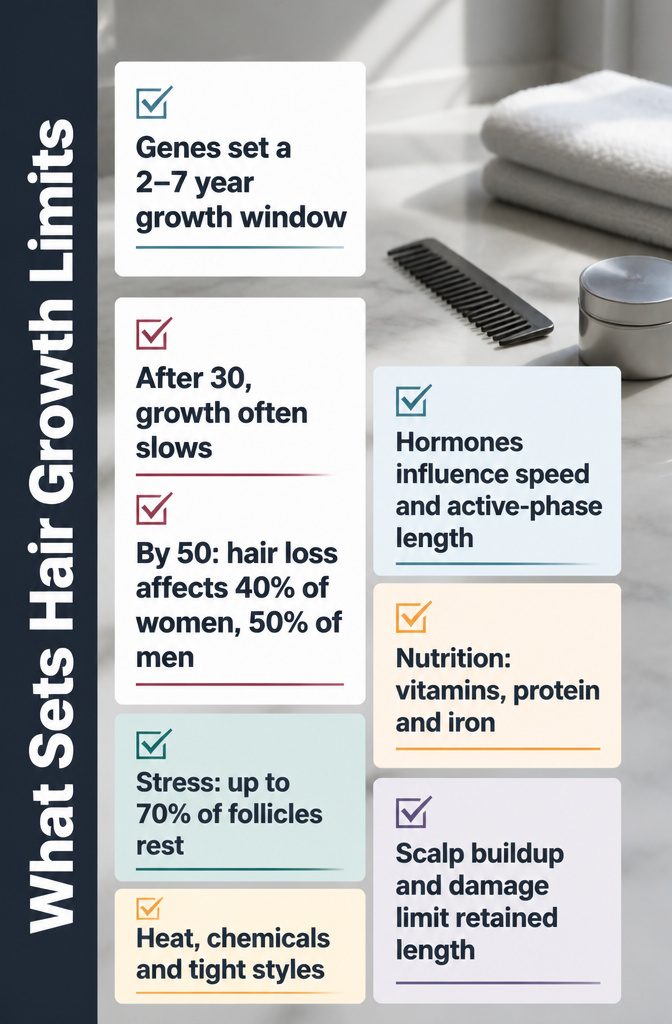
Genes decide how long each strand stays in anagen (the active growth phase) and how fast your hair adds length, which means family photos tend to predict your ceiling better than any product you can buy.
Most people fall somewhere in a two- to seven-year anagen window, and that window is yours to keep.
A short lead-in, then the forces that move within that frame:
- Age typically slows the rate after thirty, and about 40% of women and 50% of men experience hair loss by age fifty. Some follicles miniaturize over time, and anagen phases shorten.
- Hormones (androgens, estrogen, thyroid) influence growth speed and how long strands remain in the active phase.
- Nutrition supplies the building blocks: vitamins A, B, C, D, E, protein, iron. Deficiencies can stall growth for months or longer.
- Stress can push up to 70% of follicles into the resting phase at once, triggering heavy shedding two to four months later.
- Scalp condition matters: buildup, clogged follicles, dandruff and inflammation all slow regrowth.
- Heat, chemicals and tight styles damage the shaft and break strands before they reach their full length.
How Long Regrowth Takes After a Haircut or Shave
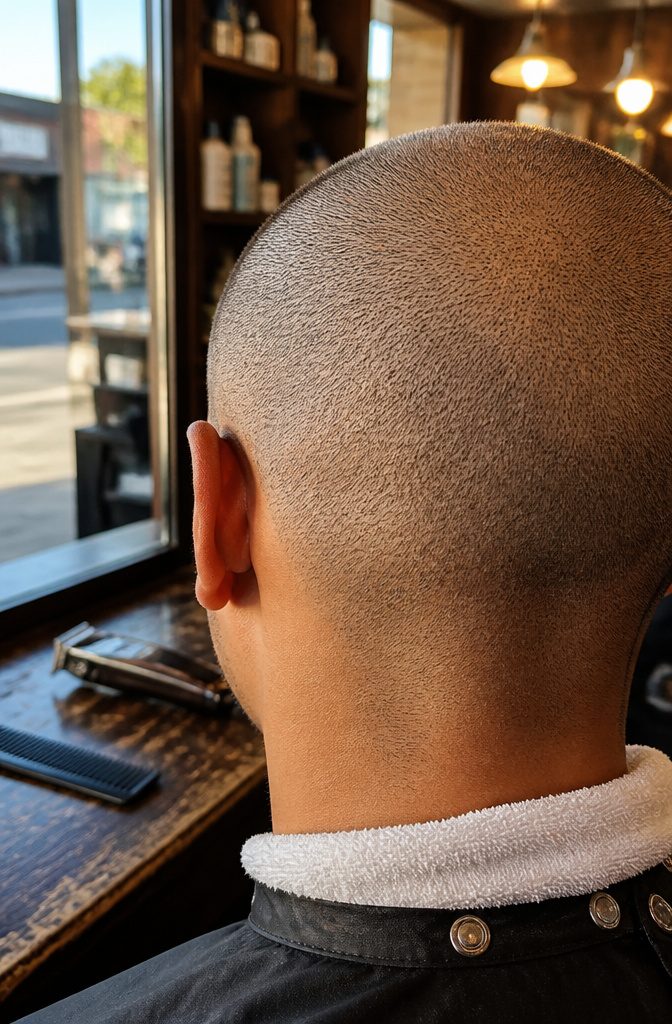
A haircut removes length but leaves the rate untouched.
Hair still adds about half an inch each month from the root, so the time you wait depends entirely on how much the scissors took off and how fast your own strands move.
If you shave your head, stubble shows within a few days, and you can expect roughly an inch after two months and six inches within a year.
Growing a pixie cut out to shoulder length usually takes two to three years, because shoulder length sits around twelve inches and a pixie leaves one to three inches behind.
Bangs cut above the eyebrows need about a year to reach the chin, assuming you trim nothing in between.
The numbers shift if your growth runs slower or faster than average, but the pattern holds: what you cut dictates how long you wait, and nothing about the cut itself changes how quickly new length arrives.
How Long Regrowth Takes After Waxing

Waxing pulls out the entire hair shaft from below the skin, so the follicle has to rebuild from scratch.
You won’t see stubble for nearly two weeks, and the full cycle from waxing to the next session usually runs three to six weeks.
That longer gap is the main reason people choose waxing over shaving, where stubble can show up in a day or two.
The follicle itself takes two to three weeks to repair and push a new hair through the surface. If you wax the same area repeatedly, you may notice finer regrowth or fewer hairs coming back.
That’s because repeated trauma can permanently damage some follicles, shrinking them or shutting them down altogether. It’s not guaranteed, but it’s common enough that long-term waxers often stretch their intervals even further as the years go on.
How Long Regrowth Takes After Stress or Telogen Effluvium
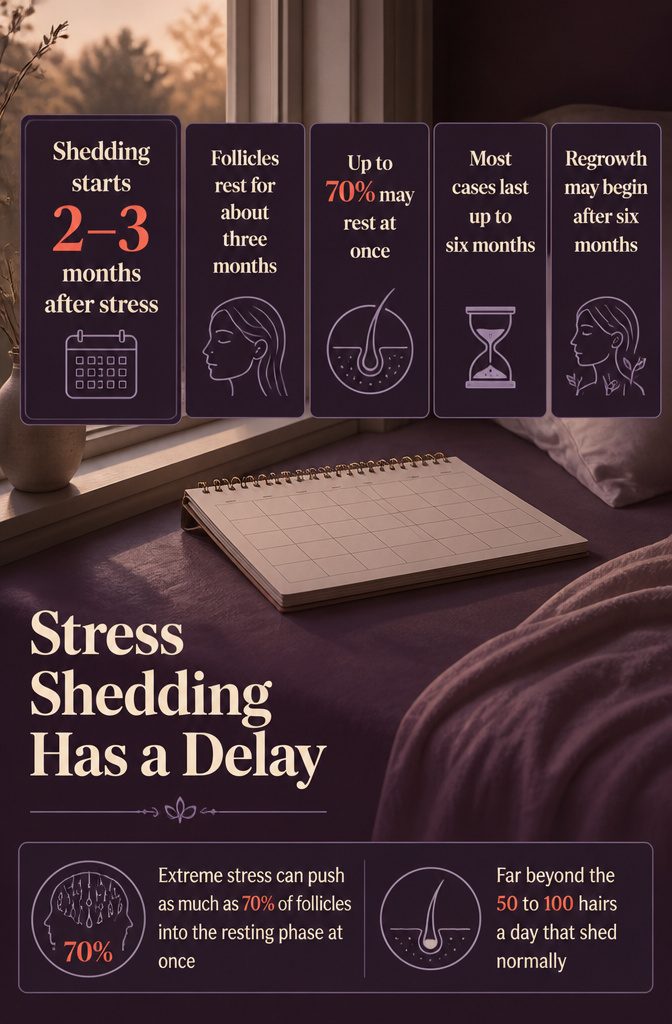
Stress-related shedding, called telogen effluvium, typically starts 2 to 3 months after the stressful event. A hospitalization, a high fever, childbirth, or even ongoing emotional strain can trigger the loss.
The follicles stay in the resting phase for about three months, then the hair falls out. Most cases last up to 6 months once the trigger stops, though ongoing stress can keep hair thinning for years.
The delay catches people off guard.
You might lose significant hair in October from something that happened in July. Extreme stress can push as much as 70% of follicles into the resting phase at once, far beyond the 50 to 100 hairs a day that shed normally.
Hair may start growing back after 6 months if you address what caused it, but patience matters here. The cycle has to complete before you see the new growth filling in.
How Long Regrowth Takes After Chemotherapy

Hair may start to regrow 2 to 3 weeks after chemotherapy treatment ends, often showing up as soft fuzz or fine, wispy peach fuzz at first. After about a month, the typical growth rate of 4 to 6 inches per year resumes.
Most people start seeing regrowth within 3 to 6 months, though in some cases it can take up to a year for hair to start growing. Full recovery can take 1 to 2 years.
The texture or color may look different at first. Some people get wavy or curly regrowth even if their hair was straight before, a phenomenon known as chemo curls.
This happens because the chemotherapy drugs target rapidly dividing cells, including hair follicle cells, causing follicle damage. The texture typically evens out over time.
How Long Regrowth Takes After Nutritional Deficiency
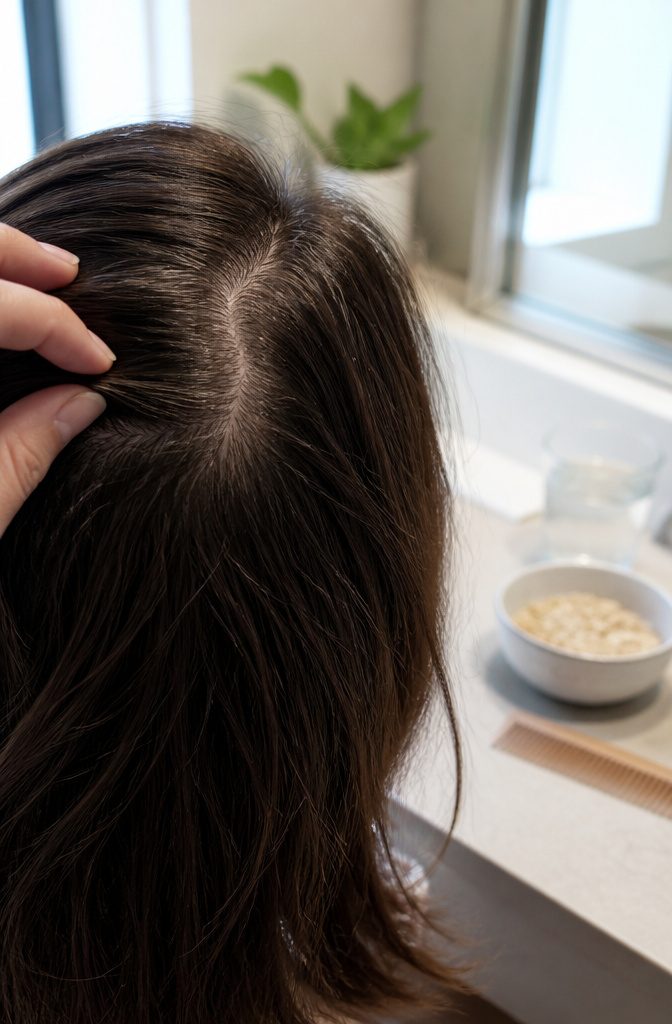
Regrowth after addressing a nutritional deficiency can take a few months or stretch past a year, depending on how severe the shortage was and which nutrient ran low.
Hair is metabolically non-essential, so the body deprioritizes follicles when resources drop. Correcting the gap matters, but the clock starts slow.
The nutrients that support hair include iron, protein, zinc, biotin, folic acid, omega-6 fatty acids, and vitamins A, B, C, D, and E. Iron deficiency is a common culprit, especially in women with heavy periods, because ferritin stores help produce the proteins that build the hair shaft.
Low iron stalls growth outright.
Biotin deficiency is rare but will make hair brittle and slow when it does occur. Protein shortages leave follicles short on raw material, since keratin is almost entirely protein.
People who see improvements from dietary changes are nearly always correcting a genuine deficiency, not exceeding sufficiency. A follicle with what it needs does not speed up because you delivered more.
Whether Anything Reliably Speeds Growth
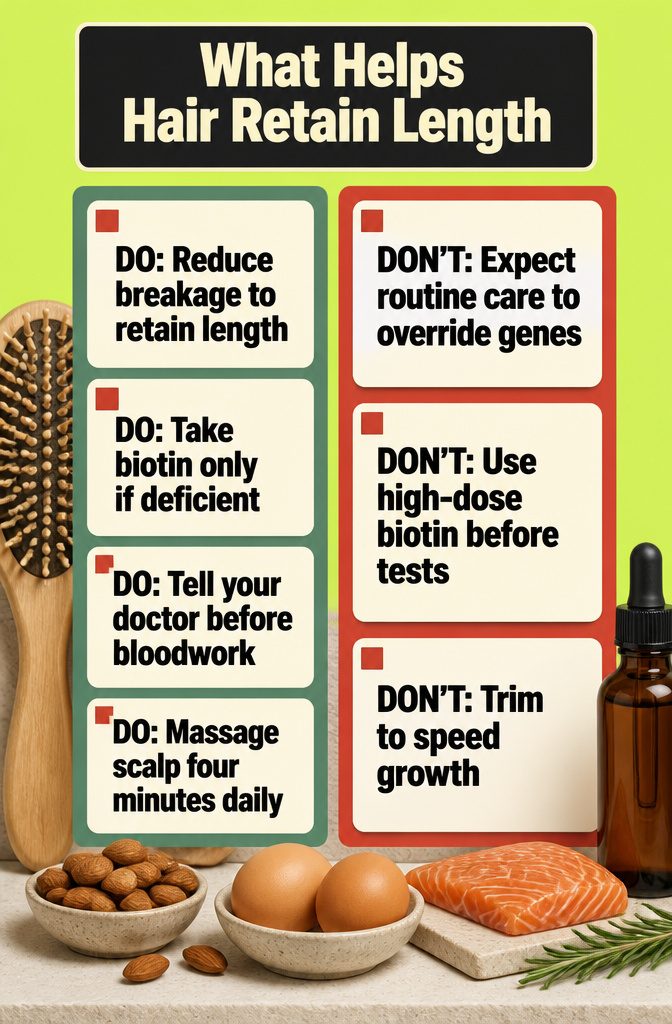
Routine care cannot reliably override a genetically set growth rate, though reducing breakage can help you retain length.
Biotin supplements improve hair only in people who are deficient in biotin, and deficiency is rare. Most people get adequate biotin from ordinary foods like eggs, nuts, and salmon.
High-dose biotin can interfere with thyroid and cardiac blood tests, potentially producing falsely high or low results. If you take a hair supplement, your doctor needs to know before any bloodwork.
Evidence for supplements in healthy people is not concrete.
Rosemary oil has been compared to 2% minoxidil in recent studies, but the research needs more depth. A 2014 study found that topical peppermint oil helped stimulate blood flow to hair follicles and promote growth in mice.
Scalp massage for 4 minutes daily is said to lead to thicker hair over time. Trimming every 6 to 8 weeks removes split ends before they break, but it does not speed growth.
Frequently Asked Questions
How long does it take for hair to grow back?
Hair grows about half an inch per month from the scalp, so regrowth timing depends entirely on what caused the loss and how much length you need to replace.
A haircut leaves the growth rate unchanged, stress-related shedding may start recovering after 6 months once the trigger stops, and chemotherapy patients often see new growth within 2 to 3 weeks after treatment ends.
Normal baseline growth adds roughly 6 inches per year, but retention matters as much as speed.
How fast does hair grow?
Hair typically grows about half an inch per month, or roughly 6 inches per year.
That figure reflects the anagen phase when follicle cells divide rapidly and push new strands upward. Genetics decide most of the variation between people, and texture can hide length even when growth proceeds normally.
Can you make hair grow faster?
No reliable method overrides your genetically set growth rate.
Biotin supplements improve hair only in people who are actually deficient, and deficiency is rare. Good nutrition and gentle handling help you retain the length your follicles produce, but they will not speed the rate beyond what your genes allow.
What factors affect hair growth?
Genes decide how long each strand stays in the active growth phase and how fast it adds length. Age typically slows the rate after 30, hormones influence speed and phase duration, and nutrition supplies the building blocks follicles need.
Stress can push up to 70% of follicles into the resting phase at once, and heat, chemicals, and tight styles damage the shaft and break strands before they reach full length.
How long does it take for hair to grow back after waxing or shaving?
Shaving removes only the top part of the hair, so stubble can show within a day or two.
Waxing pulls out the entire shaft from below the skin, so you will not see stubble for nearly 2 weeks, and the full cycle from waxing to the next session usually runs 3 to 6 weeks.
Does hair grow back thicker after shaving or waxing?
No.
Shaving or waxing does not change regrowth speed or thickness. Shaving creates a blunt tip that can feel coarser as it grows, but the follicle itself produces the same hair it always has.
How long does it take for hair to grow back after chemo?
Hair may start to regrow 2 to 3 weeks after chemotherapy treatment ends, often showing up as soft fuzz at first.
After about a month, the typical growth rate of 4 to 6 inches per year resumes, and most people start seeing visible regrowth within 3 to 6 months. Full recovery can take 1 to 2 years.
How long does it take for hair to grow back after telogen effluvium?
Stress-related shedding typically starts 2 to 3 months after the stressful event and most cases last up to 6 months once the trigger stops.
Hair may start growing back after 6 months if you address what caused it, though ongoing stress can keep hair thinning for years. The follicles stay in the resting phase for about 3 months before the hair falls out, so patience matters.
Can hair grow 2 inches in a month?
No.
Scalp hair grows about half an inch per month on average, and even a full inch exceeds the normal range. Growing 2 inches in a month is biologically impossible for human scalp follicles.
Does cutting your hair make it grow faster?
No.
Trimming does not speed growth from the root. What it does is remove split ends before they travel up the strand and break, which helps you retain the length your follicles produce at their usual rate.
How much does hair grow in 2 weeks?
About half a centimeter, or roughly 0.25 inches. Hair adds length steadily at the root during the active growth phase, so 2 weeks delivers about a quarter of the monthly half-inch average.
How long does it take hair to grow 6 inches?
About 12 months at the average growth rate of half an inch per month, assuming no major setbacks.
The timeline shifts if your growth runs slower or faster than average, or if breakage removes length as fast as your follicles add it.