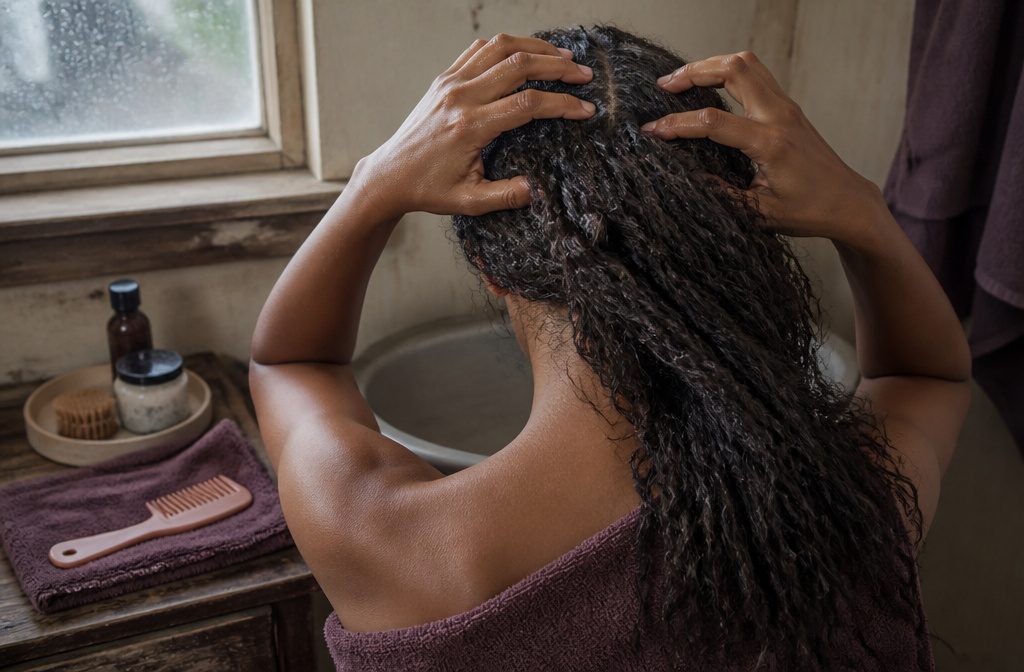
Hair grows about half an inch per month when follicles stay in their active growth phase, but breakage can erase that progress before you notice any length.
Most people focus only on stimulating the roots while rough handling, heat damage and nutritional gaps snap off the ends.
A 2016 study linked scalp massage to measurable thickness gains after 24 weeks, and minoxidil 5% remains the clinical standard for pattern loss, but retention matters as much as growth rate.
1. Eat a Balanced Diet With Adequate Protein

Your body needs protein to build the keratin structure that makes up each strand. When protein intake falls short, the body redirects what it has toward functions it deems more urgent, and hair growth slows while shedding can pick up.
One 2016 article linked inadequate protein to fragility, brittleness and eventual hair loss. The amino acid cysteine, found in grain products like buckwheat and brown rice, plays a role in how quickly hair grows.
Restrictive or crash diets can deplete nutrient stores fast enough that growth stalls and thinning becomes visible. A balanced diet that includes fruits, vegetables, whole grains and a variety of protein sources replenishes those stores and supports stronger hair.
Lean meats, fish, dairy, tofu, salmon, eggs and chicken all deliver the protein your follicles rely on. Deficiencies can worsen hair condition, but returning to adequate nutrition helps growth resume at its natural pace.
2. Consider Supplements If You Have a Deficiency

Supplements turn up in a lot of hair-growth plans, but the advice only really lands if you are actually deficient in one of the nutrients hair needs.
Biotin gets the most attention. A 2017 review found that people with hair loss saw regrowth when they took biotin daily, and the doses studied ranged widely, from 1,000 micrograms to 30,000 micrograms.
Biotin is one of the most commonly recommended supplements for hair growth. A 2017 review of 18 studies determined biotin supplements ranging from doses of 1,000 μg a day to 30,000 μg a day resulted in hair growth in those with hair loss.
That review matters because it gives you a starting point: biotin only helps if you were low to begin with. The evidence is not especially solid for people who already get enough through food.
Beyond biotin, hair depends on a handful of other nutrients: B2, B12, B6, folate, cysteine, selenium, vitamins C and E, omega-3 fatty acids, iron, zinc, and vitamin D. Deficiencies in any of these can slow growth or contribute to shedding.
I would check blood work before adding a supplement, since too much of certain nutrients can cause problems of its own.
3. Keep Your Scalp Clean and Healthy
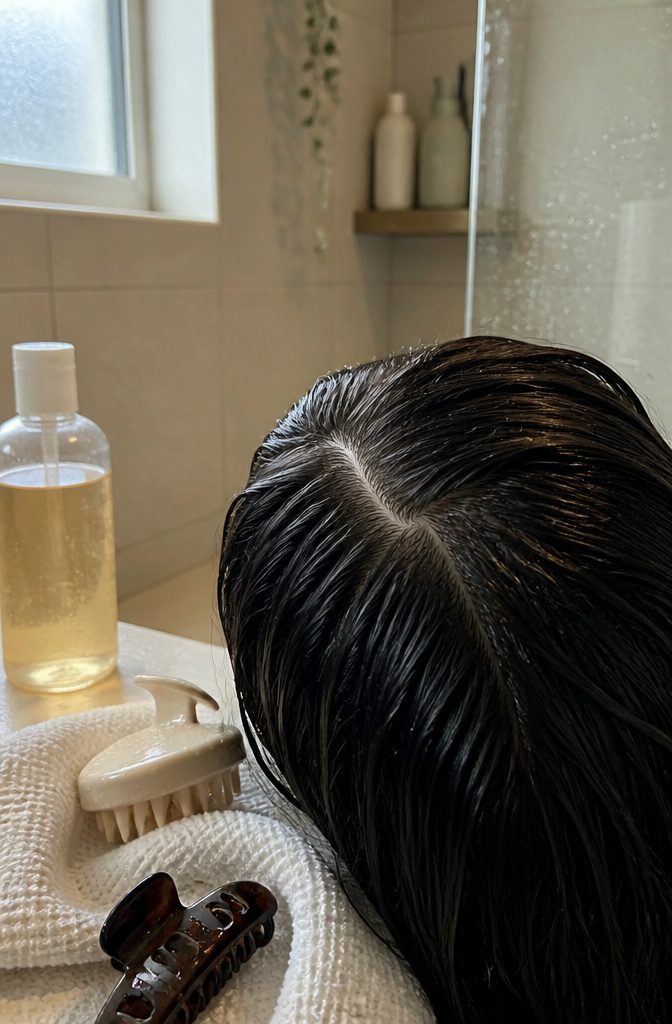
Keep Your Scalp Clean and Healthy
Healthy hair grows from a healthy scalp. Buildup from styling products, oil and dead skin can clog follicles and slow growth, so keeping the scalp clean matters.
You need to find the balance: washing too often strips natural oils and dries out the scalp, but washing too little leaves buildup that gets in the way.
Shampooing every other day or skipping two days works better than daily washing, and a dry shampoo fills the gap between washes.
Look for clarifying shampoos and scalp scrubs that remove buildup without harsh sulfates, which strip moisture and can irritate the skin.
A scalp serum can boost scalp health the same way a facial serum does. The Kerastase Initialiste serum gives the scalp a clean, nourished base for hair to grow.
Castor oil is another option, applied directly to the scalp, though the science backing it is thin. Warm water for washing is better than hot, which dries out both scalp and strands.
4. Massage Your Scalp to Support Circulation
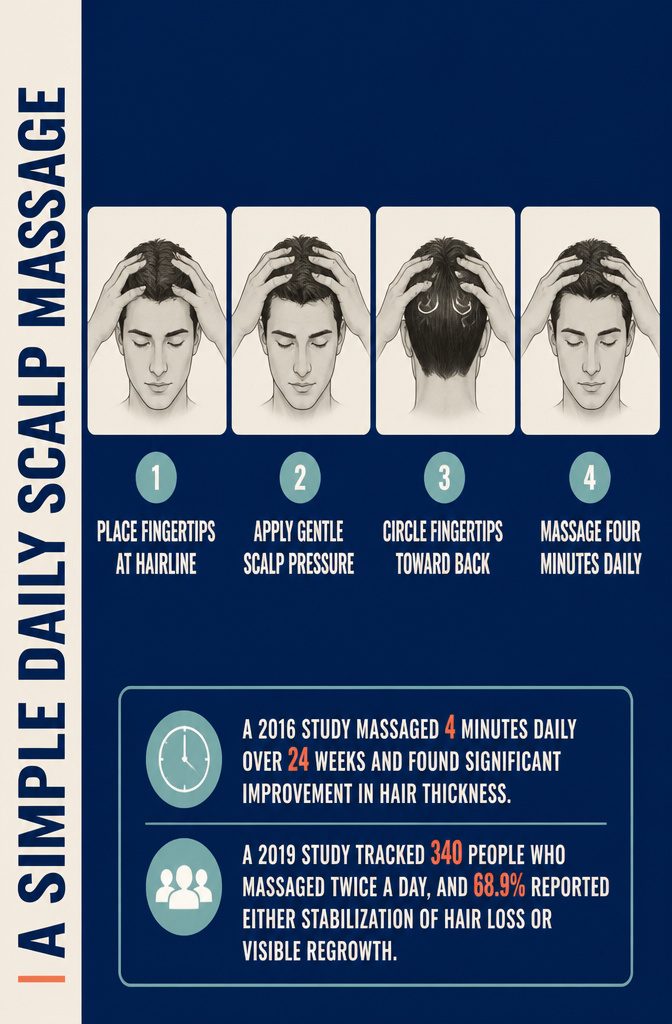
Scalp massage may support circulation to the follicles, and two studies suggest it can make a measurable difference.
A 2016 study followed a group of Japanese men who massaged their scalps for 4 minutes daily over 24 weeks and found significant improvement in hair thickness by the end.
A larger survey in 2019 tracked 340 people who massaged twice a day, and 68.9% reported either stabilization of hair loss or visible regrowth.
The method itself is straightforward. Use your fingertips to apply gentle pressure across the scalp, working in small circles from the hairline back.
You can do it dry before bed or in the shower with conditioner still in your hair. I think the appeal here is that it costs nothing and takes less time than most other interventions on this list.
Whether the benefit comes from improved blood flow or from mechanical stimulation of the follicles, the consistency matters more than the pressure.
5. Handle Hair Gently When Brushing and Styling
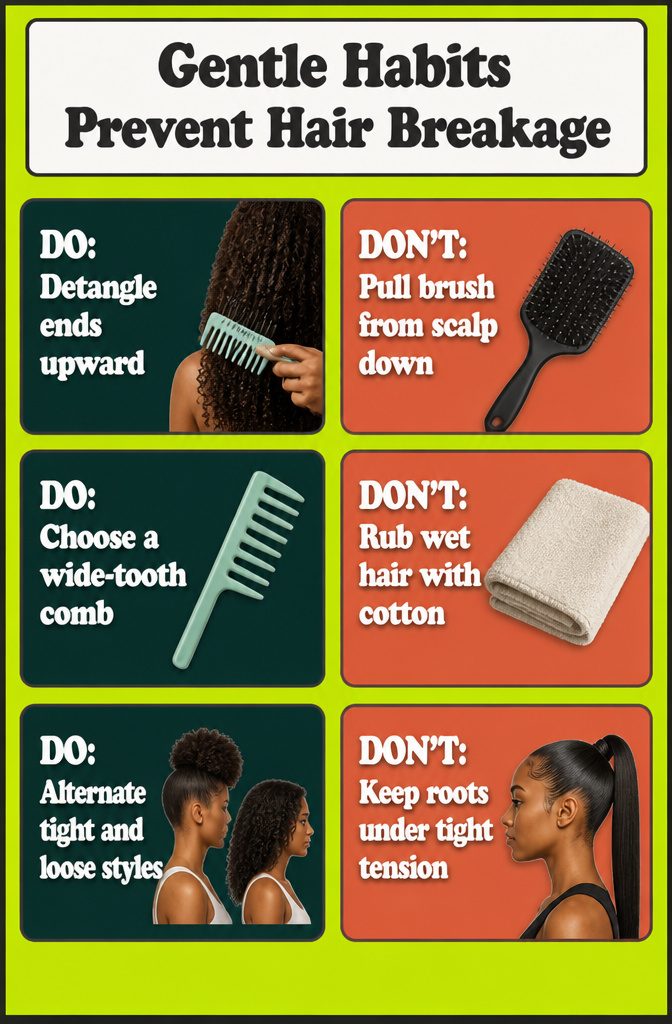
Breakage steals length before you see it. Even if hair is growing steadily at the root, rough handling can snap the ends faster than new inches appear.
I start detangling at the ends and work upward rather than dragging a brush from the scalp down, which pulls out strands still in the growth phase. A wide-tooth comb moves through knots more gently than a paddle brush.
Tight ponytails, braids and cornrows that pull at the roots cause tension damage over time.
Alternating tight styles with looser ones gives the hair a chance to recover. Friction matters, too.
Rubbing wet hair with a cotton towel roughens the cuticle, so wrapping it in a microfiber towel absorbs water without the friction. Silk pillowcases reduce overnight breakage the same way.
6. Limit Hot Tools and Use Heat Protectant
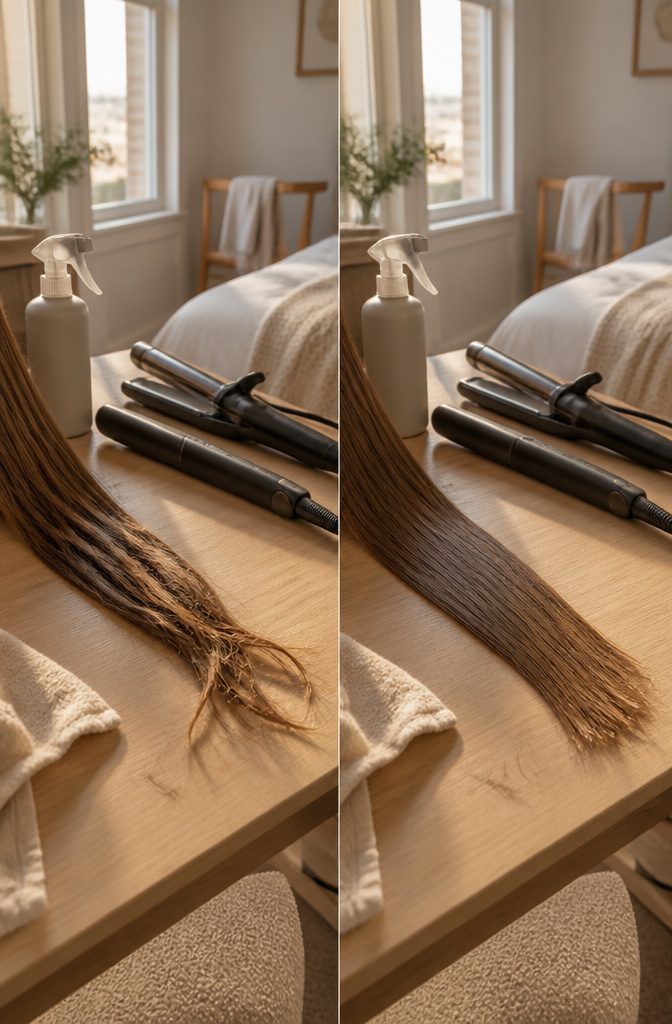
Heat styling is one of the fastest ways to stall progress.
Every pass with a flat iron or curling wand weakens the hair shaft, and heat damage leads directly to breakage. If your ends snap off as fast as your roots grow, you will never see the length you want.
I limit blow dryers and hot tools to twice a week at most. On the days I do use them, I reach for a heat protectant first.
The L’Incroyable Blowdry Lotion offers thermo-protection up to 450°F, which covers most styling tools. It sits between your hair and the barrel, and that layer makes the difference between strands that hold up and strands that fray.
Skipping heat entirely is better when you can manage it.
Air drying takes longer, but it keeps the cuticle intact. On mornings when I have the time, I let my hair dry on its own and save the flat iron for the days that actually call for it.
7. Avoid Bleach and Other Chemical Processing
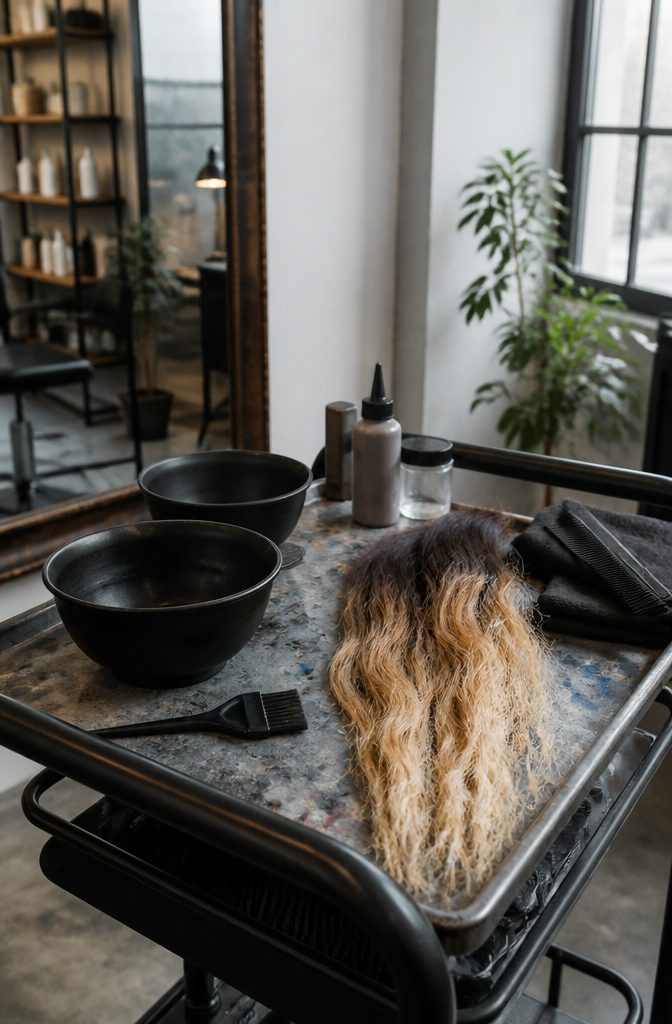
Bleaching, permanent dye, and chemical relaxers all weaken the hair shaft, making it more likely to snap off before it reaches the length you’re after.
When you lighten hair several shades or straighten tight curls with chemicals, you’re breaking bonds inside the strand to change its structure. That process leaves the cuticle rough and porous, so even gentle handling can cause splits and breakage.
If you want your hair to reach longer lengths, skip the bleach and hold off on the permanent color until you’re closer to your goal length. That doesn’t mean you can’t change your look at all.
Demi-permanent color and glosses deposit tone without lifting the cuticle as much, and they fade without leaving a harsh line of regrowth. You get less dramatic color change, but you keep more of the length you’ve grown.
8. Trim Split Ends Every 8 to 12 Weeks
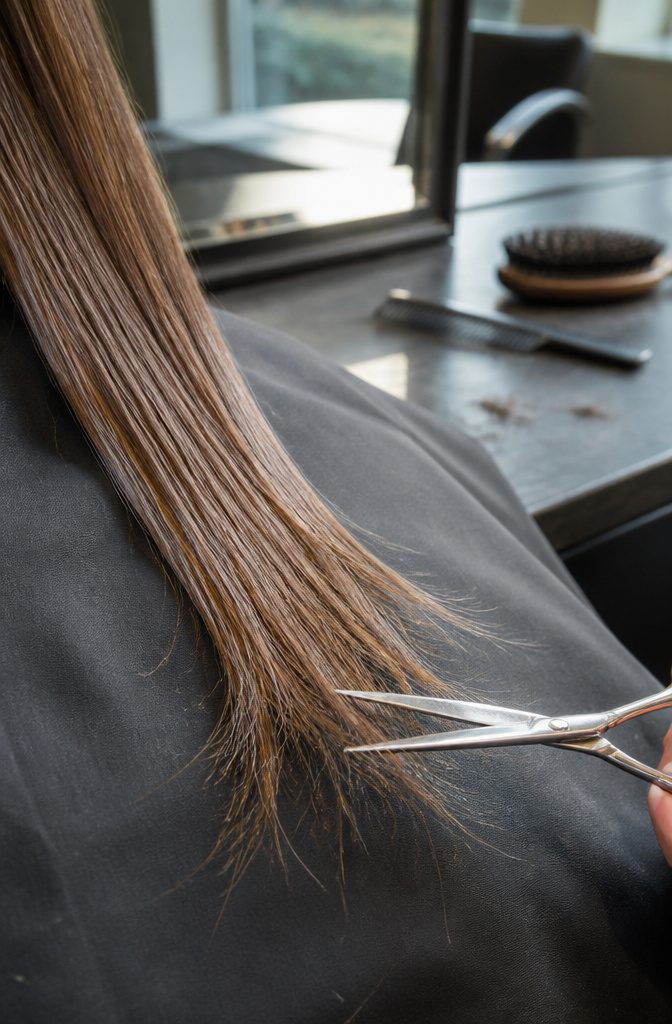
Trimming split ends keeps the length you already grew rather than making the strand extend faster from the root. Hair grows at about half an inch each month from the follicle, and a trim does nothing to speed that rate.
What it does do is stop damaged ends from splitting higher up the shaft and forcing you to cut off more later.
Split ends unravel and travel upward if left alone. A light dusting every 8 to 12 weeks removes the frayed tips before they turn into a bigger problem.
Skip the trim and you might need several inches lopped off at your next appointment instead of a quarter inch. The net result is shorter hair even though you waited longer between cuts.
I keep trims minimal when I am growing my hair out, asking only for enough to clean up the damage. You want to retain length while the root does its work, not cut for the sake of cutting.
9. Manage Stress to Protect the Hair Cycle

Chronic stress pushes hair follicles into a resting phase called telogen effluvium, which shortens the active growth window and triggers sudden shedding.
The hormone cortisol is behind it, and you’ll often notice thinning weeks after a stressful event rather than during it.
Keeping stress in check protects the hair cycle. Build in activities that actually lower cortisol: a yoga session, time outside for a walk, or reading something that holds your attention.
Regular relief matters, not perfection. When stress stays high for months, hair pays the price in lost density and slower regrowth.
10. See a Specialist for Persistent Loss
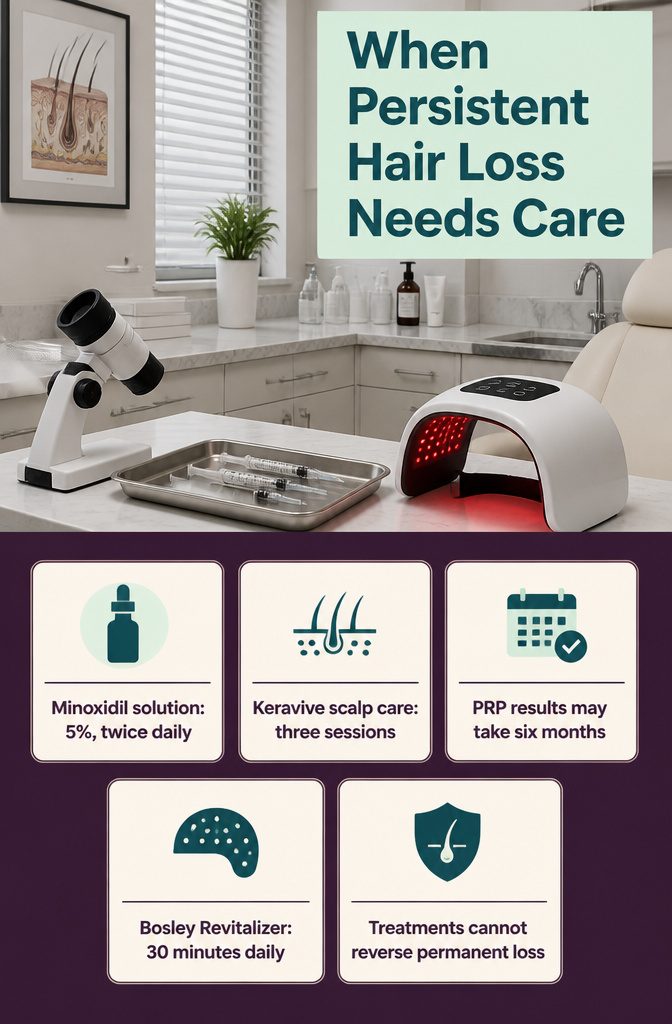
When hair sheds noticeably or growth stalls for months despite changes to diet and routine, a dermatologist or trichologist can identify what topical care cannot fix.
Minoxidil 5% solution, applied twice daily, remains the clinician-backed standby for pattern loss. It takes consistency, but the liquid version absorbs faster than foam if you can tolerate the texture.
In-office treatments layer on top of home care. HydraFacial Keravive runs three sessions deep-cleaning and infusing the scalp, while PRP injects your own platelet-rich plasma to wake dormant follicles.
Results from PRP can take up to six months, so patience matters. Mesotherapy uses micro-injections of vitamins and peptides, and some practices combine it with PRP for a two-pronged approach.
For at-home support between visits, the Bosley Revitalizer delivers light therapy in 30 minutes of daily wear. None of these reverse permanent loss, but they can slow thinning and coax dormant hair back into active growth.
How Fast Hair Actually Grows
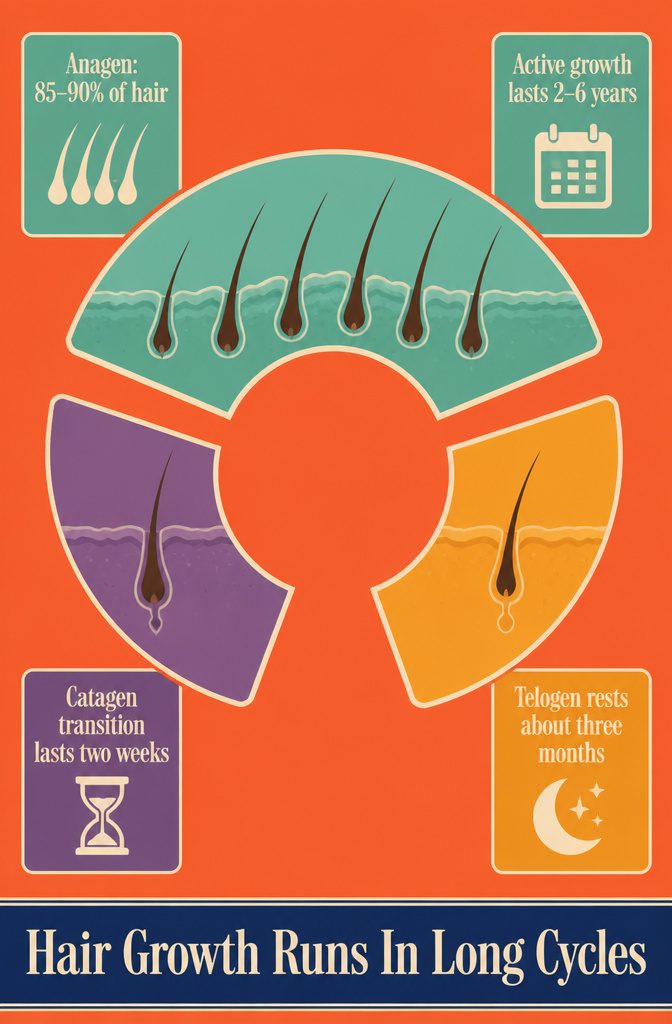
Hair grows in cycles, and understanding those cycles explains why length takes time. At any moment, 85–90% of the hair on your head is in the anagen phase, the active growth stage that can last between 2 and 6 years.
During anagen, follicles push out hair at a rate of up to half an inch per month, or about 6 inches per year.
Some sources put the range at 0.5–1.7 cm per month, and I find the variation reflects what genetics and overall health allow.
After anagen, the follicle enters catagen, a brief 2-week transition where growth stops. Then comes telogen, the resting phase lasting about 3 months, during which 10–15% of your hair sits dormant before shedding to make room for new strands.
Stress, hormonal imbalances, nutrient deficiencies, or genetics can shorten the anagen window, and many of those factors cannot be fully controlled. You want to prolong the growth phase and keep follicles active.
Why Retaining Length Matters as Much as Growth
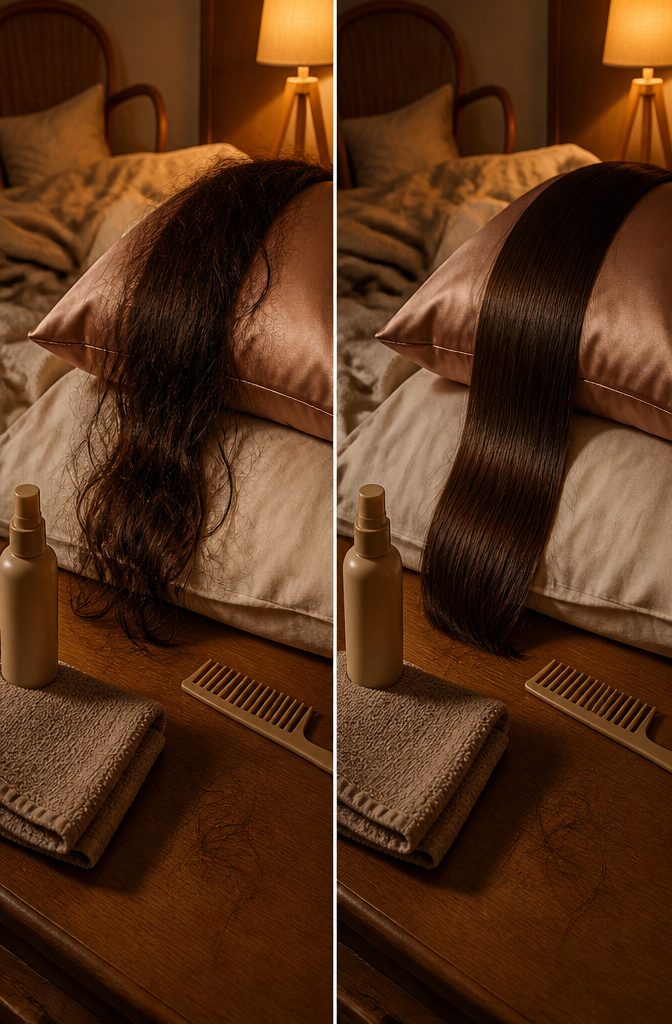
Hair grows at a steady half inch per month from the follicle, but breakage can erase that progress faster than the roots can add it.
The length you see is what survives between washes, heat tools, tight styles and friction against cotton pillowcases. If ends are splitting and snapping off, you may be growing normally and still watching the same shoulder-length cut refuse to budge.
That is why gentle handling matters as much as any supplement or scalp massage.
Microfiber towels instead of cotton, silk pillowcases to cut friction overnight, wide-tooth combs that do not yank through tangles, and a heat protectant every single time the flat iron comes out.
Small shifts in routine keep the fragile ends intact long enough to register as visible length. Growth is happening; retention is the part you control.
Frequently Asked Questions
How fast does hair grow?
Hair grows about half an inch per month, or roughly 6 inches per year. This rate is set mainly by genetics, age, and overall health, and most products or supplements will not speed it up noticeably.
How does hair grow?
Hair grows in a cycle with four phases: anagen (active growth lasting 2 to 6 years), catagen (a 2-week transition), telogen (a 3-month rest), and exogen (shedding). At any time, 85 to 90% of your hair is in the anagen phase, growing steadily.
Can hair grow faster with supplements?
Supplements can help if you have a deficiency in biotin, vitamin D, zinc, iron, or other nutrients hair needs. If your levels are already adequate, adding more will not change your growth rate.
Does shampoo and conditioner promote hair growth?
Shampoo and conditioner do not make hair grow faster from the follicle. They can clean the scalp and prevent buildup that clogs follicles, which supports a healthier environment for growth, but they will not alter your genetic growth rate.
Is hair thinning permanent?
Not always.
Early treatment with minoxidil, low-level laser therapy, or other clinician-backed options can slow loss or stimulate regrowth. The sooner you address it, the better your chances of reversing thinning before it becomes permanent.