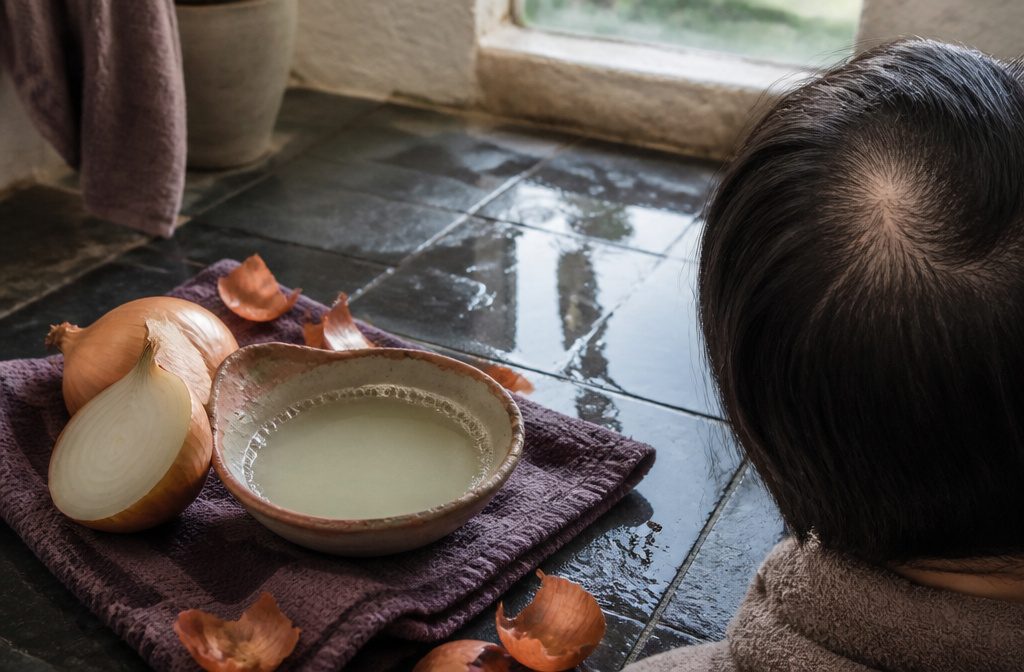
Onion juice applied to the scalp two to three times a week may support hair regrowth in people with alopecia areata, an autoimmune condition that causes patchy bald spots.
Nearly 87% of participants in one small study saw regrowth after six weeks of twice-daily application, though men responded better than women.
The treatment takes 15 to 20 minutes per session, and the sulfur smell lingers unless you rinse with diluted apple cider vinegar.
1. Choose and Prepare Your Onion

Red onions are the best choice here. They contain more flavanols than white or yellow varieties, which makes them the preferred option when you’re after hair growth support.
White and yellow onions work too if that’s what you have on hand, but red delivers more of the compounds you want.
Start by peeling the onion and rinsing it under running water to remove any dirt.
Dry it with a towel, then chop it into quarters or smaller chunks. The smaller pieces blend more easily and give you a smoother paste to work with.
Add the chopped onion to a blender or food processor and blend until you have a thick paste.
That paste is what you’ll strain next to extract the juice. Some people boil onions instead, but blending gives you more control over the consistency and pulls more juice from the pulp.
2. Strain the Juice
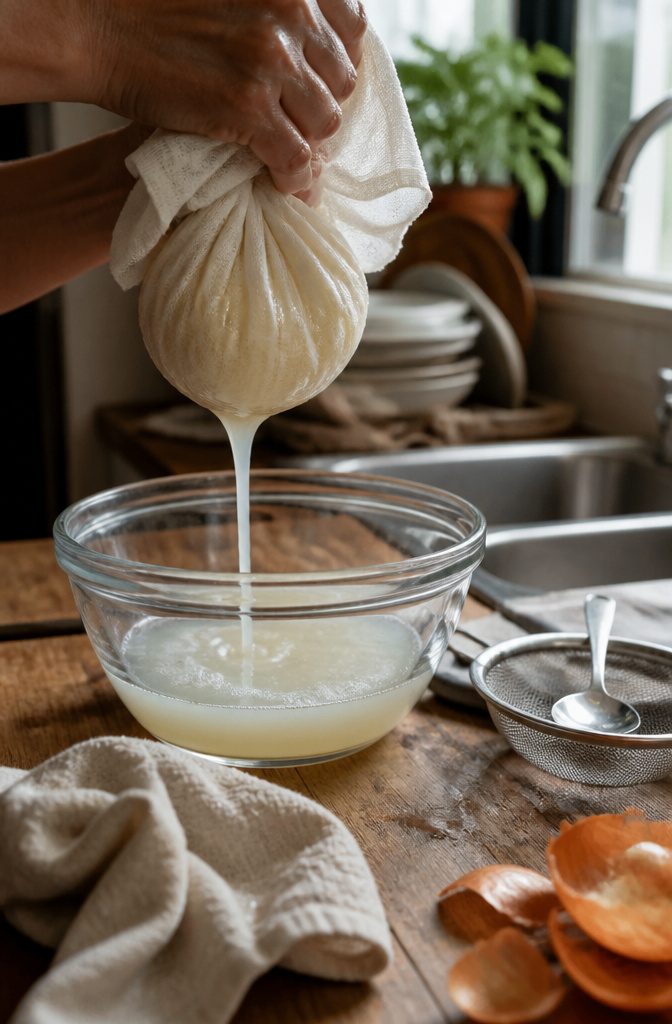
Once the onion paste comes out of the blender, pour it through a cheesecloth or fine strainer set over a clean bowl.
If you’re using cheesecloth, gather the edges around the pulp and squeeze hard to get as much liquid as possible.
A fine strainer works the same way, but you press down with a spoon to push the juice through and leave the solids behind.
The alternative skips the blender entirely. Boil two cups of water, add a chopped onion, and let it simmer for ten minutes.
Strain the onion water after it cools for a few minutes. The method is quieter and easier to clean up, though it yields onion-infused water rather than concentrated juice.
Either way, straining is the step that decides how much pulp ends up in your final batch, and too much pulp makes application messy.
3. Patch-Test Before You Apply
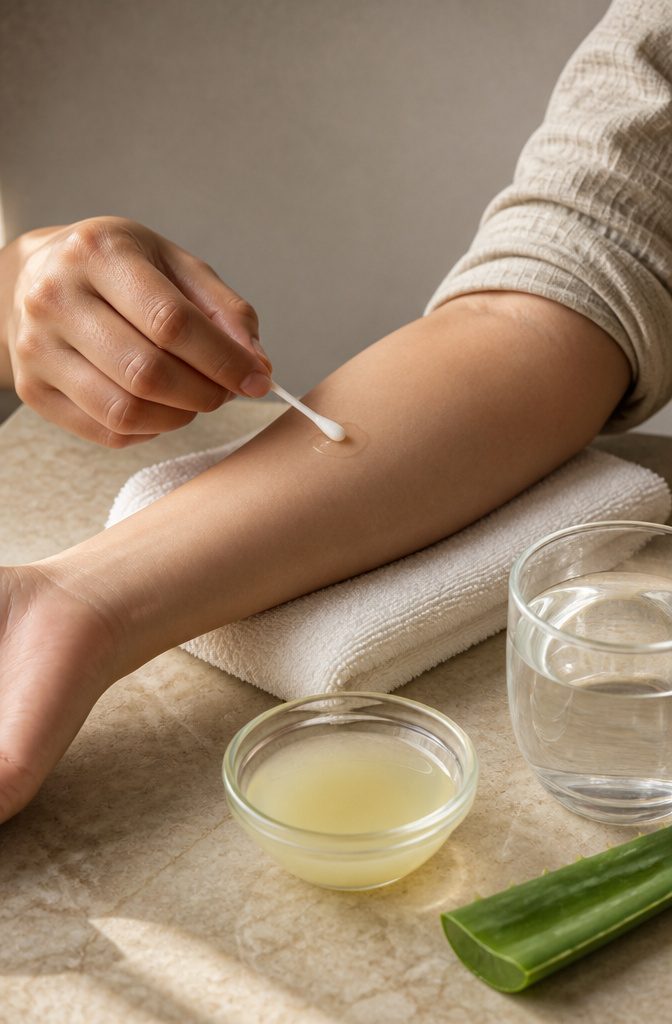
Apply a small amount of onion juice to your inner elbow or behind your ear, then wait 24 hours before moving to your scalp.
Some prefer a 30-minute test on a small area of skin, then watching for reactions over the next week. Both approaches work, and the longer window gives you more certainty.
Irritation and allergic reactions are the main concern. Even if you eat onions without issue, direct application can still cause redness, itching or burning on sensitive skin.
If you have a known onion allergy, skip this treatment entirely. Getting juice in your eyes brings the same stinging you get when cutting onions, so keep application careful and deliberate.
If the test area shows redness or itching, dilute the juice with water or aloe vera gel before trying again, or drop the idea.
The discomfort is not worth pushing through, and plenty of other treatments exist that will not leave your scalp angry.
4. Apply the Juice to Your Scalp
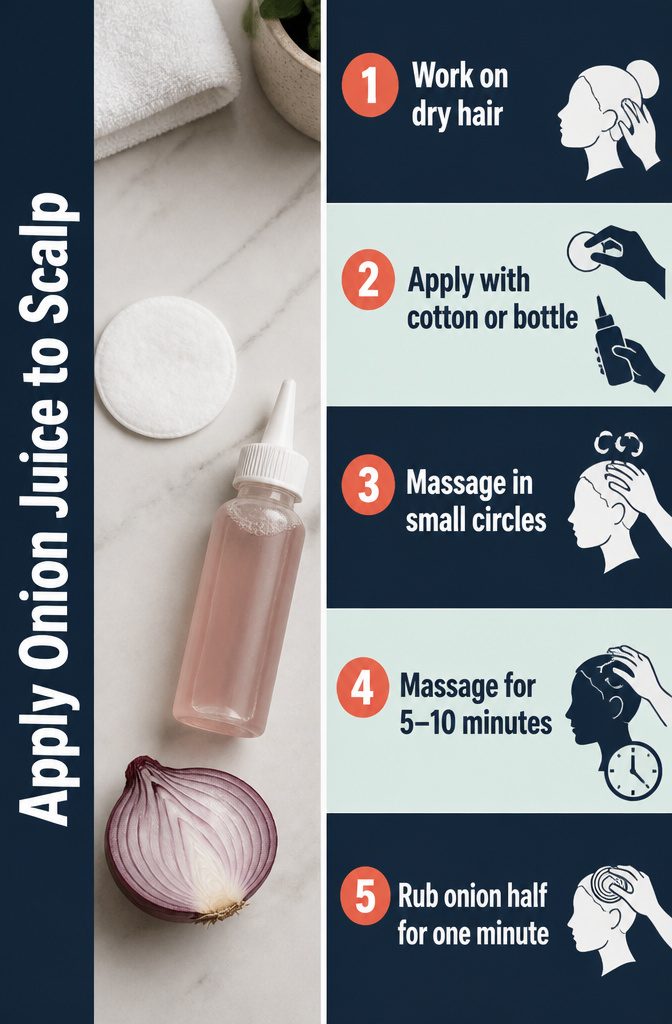
Cotton balls or a spray bottle are the easiest tools for this step. Dip a cotton pad into the juice and press it directly onto your scalp, focusing on any areas where hair looks thin.
If you prefer faster coverage, pour the juice into a clean applicator bottle with a pointed tip and squeeze it around the roots. Either way, work on dry hair before you shampoo.
Massage gently in small circles for 5–10 minutes to help the juice work into the scalp.
The rubbing brings more blood to the follicles and spreads the sulfur compounds where they need to go. Some sources suggest as little as 2–3 minutes if you are pressed for time.
One direct method skips the straining entirely: cut a red onion in half and rub the cut side on thinning patches for up to a minute, then massage the scalp with your fingers for another minute.
The smell will be stronger, but you save the filtering step.
5. Leave the Treatment On

Once you’ve applied the juice, you need to decide how long to leave it on.
The range is wide: some people rinse after 15 to 20 minutes, others wait an hour, and a few leave it on for two hours or even overnight. Shorter contact times reduce the smell and the chance of irritation.
Longer sessions give the sulfur compounds more time to reach the follicle, but pure onion juice left on overnight can dry out your scalp or trigger redness if your skin is sensitive.
I cover my head with a shower cap during the wait.
It keeps the juice from dripping and holds a little warmth against the scalp, which seems to help absorption. The cap also traps the smell instead of letting it drift through the house.
6. Rinse and Wash
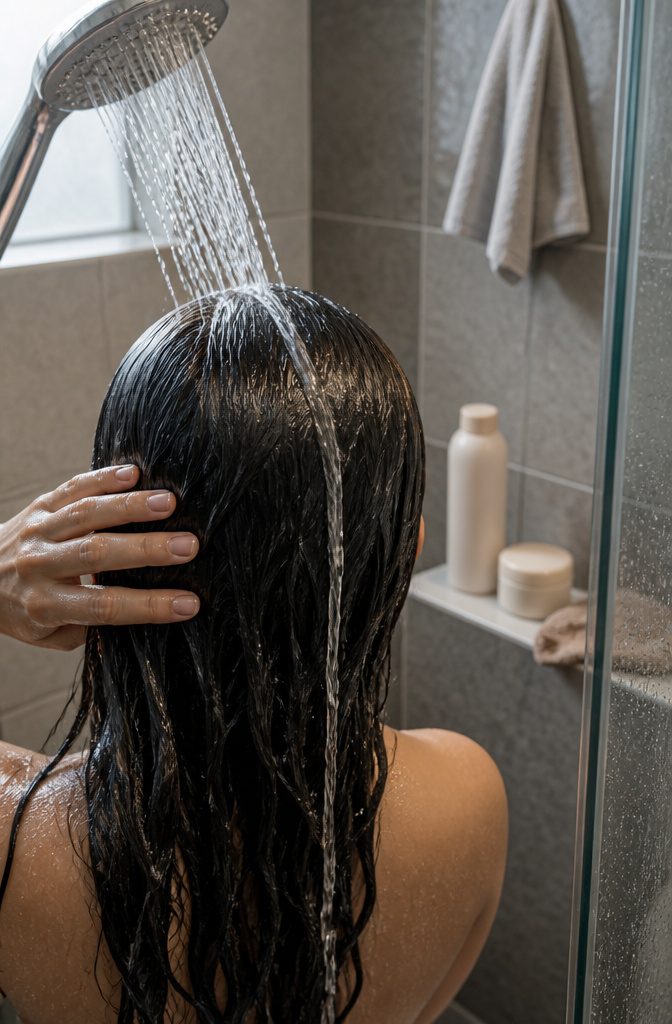
After fifteen to twenty minutes, rinse your hair thoroughly with lukewarm or warm water. Flush out the juice before you shampoo so the onion residue doesn’t sit on your scalp longer than it needs to.
Once the water runs clear, wash with a mild or gentle shampoo. I choose something sulfate-free when I can, since onion juice already strips a bit of moisture.
Follow up with conditioner. Onion juice can leave hair feeling dry and straw-like, especially if you’ve applied it to the lengths.
A light conditioner on the mid-lengths and ends restores some slip without weighing down the scalp. If you skip it, expect tangled, brittle strands by the time your hair dries.
7. Store Leftovers and Repeat
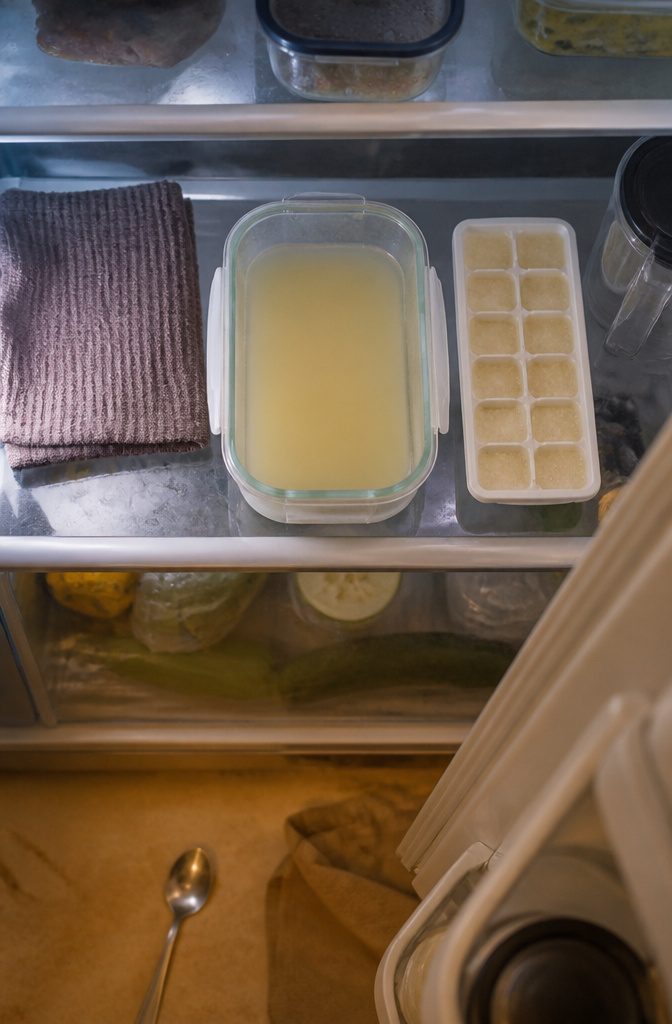
Onion juice loses its potency as it sits, so I refrigerate leftovers in an airtight container and use them within three to five days.
Beyond that, the sulfur compounds break down and the juice picks up off flavors from the fridge.
Freezing in ice-cube trays works if you want to prep in bulk; once the cubes are solid, transfer them to a zip-lock bag and thaw one or two at room temperature before each application.
How often you repeat matters.
Most sources recommend two to three times a week, which balances consistency with scalp tolerance. Daily use can irritate, especially if your skin runs sensitive.
One study protocol went as far as twice daily, but that frequency is overkill for casual experimenting at home. I stick to the twice-weekly schedule; it gives the follicles regular exposure without turning the routine into a full-time commitment.
Why Onion Juice May Support Hair Growth
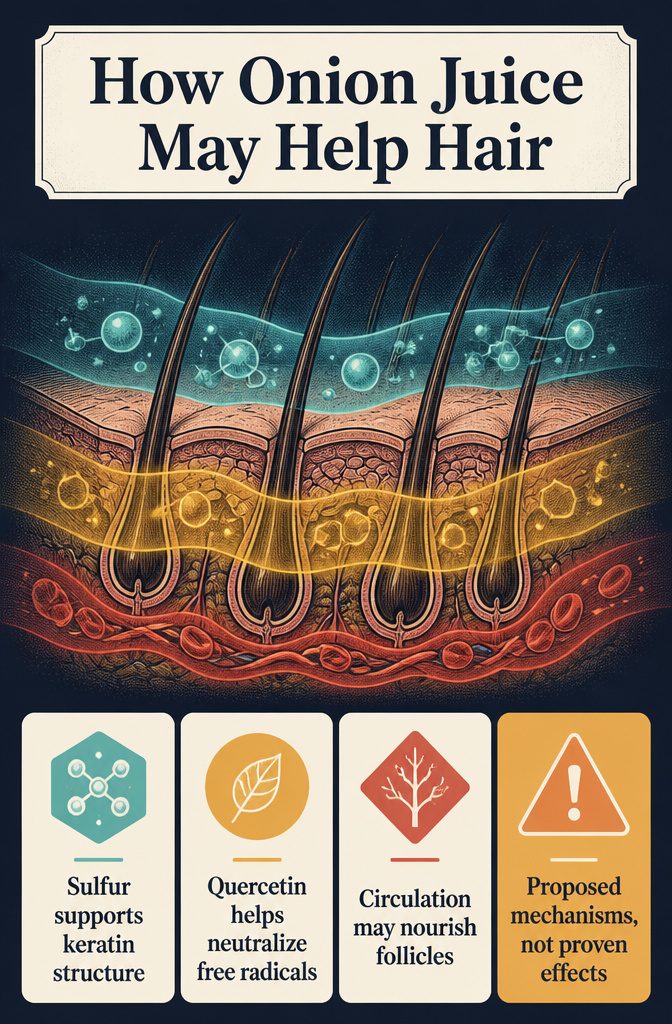
Onions are rich in sulfur, and keratin, the main protein that gives hair its structure, is built in part from sulfur.
The idea is that applying a sulfur-rich juice may help your scalp produce more keratin and collagen, both of which influence strength and resilience.
Some dermatologists note that sulfur also carries antibacterial properties, which could reduce scalp inflammation or fight minor infections that compromise follicle health.
Onion juice contains antioxidants, particularly quercetin, a flavonoid with anti-inflammatory effects. Antioxidants help neutralize free radicals that can damage hair follicles, lowering oxidative stress and protecting the cells.
Improved blood circulation is another proposed benefit. Better circulation means more oxygen and nutrients reach the follicles, which may keep them in the growth phase longer and reduce shedding.
These are proposed mechanisms, not proven effects. Some patients report improvements in scalp health over time, but onion oil does not directly stimulate hair growth on its own.
What the Research Actually Shows
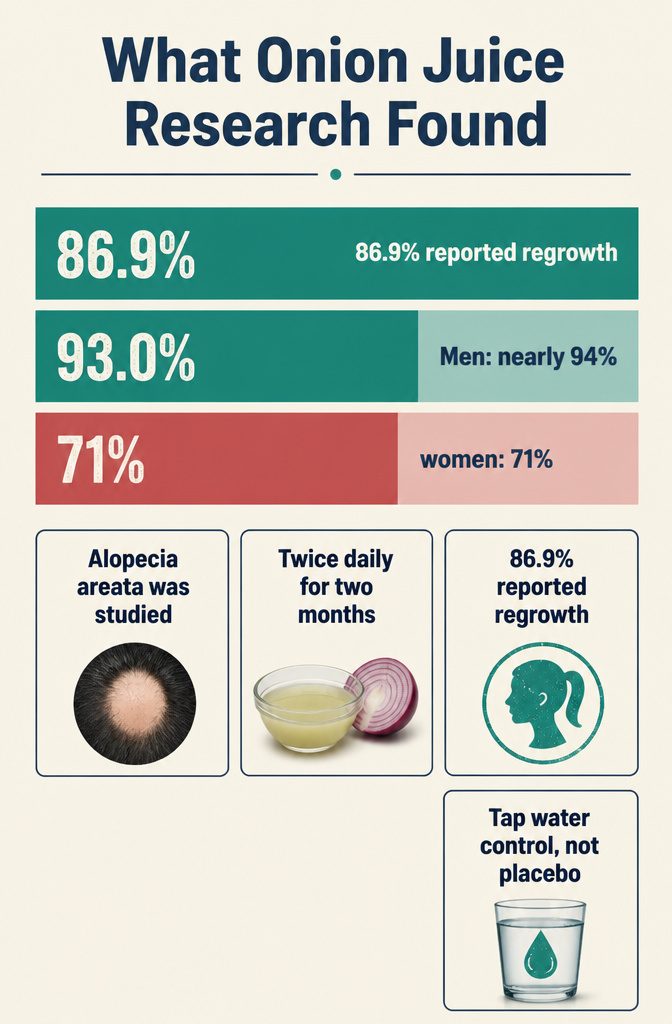
The study people mention most tested crude onion juice on patients with alopecia areata, an autoimmune condition that attacks hair follicles and causes patchy bald spots. Participants applied the juice to their scalp twice daily for two months.
After six weeks, 86.9% reported some regrowth. Men responded better than women: nearly 94% of men saw regrowth, compared to 71% of women.
Current evidence only supports onion juice as a potential treatment for alopecia areata, not for other forms of hair loss.
That distinction matters because alopecia areata is different from postpartum shedding, female pattern baldness, or telogen effluvium.
The trial tested one specific cause of hair loss, and the findings do not carry over to the more common types. The evidence is limited, and researchers used tap water as the control group rather than a placebo.
Risks and When to Avoid It
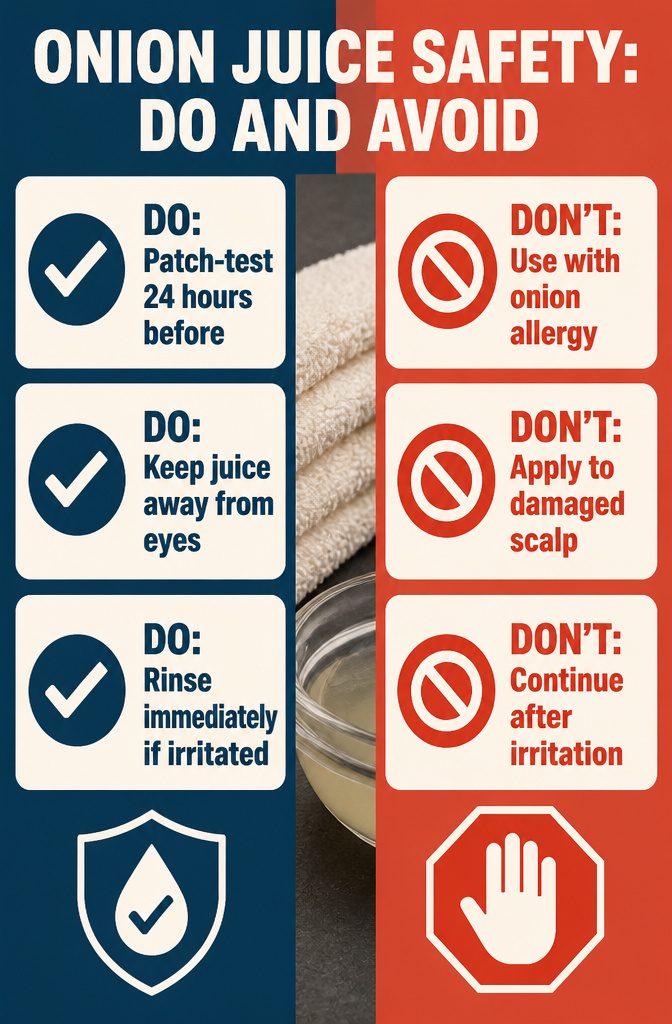
The sulfur concentration that makes onion juice useful can also irritate your scalp.
Some people report itching, eczema, or a burning sensation when the juice sits on skin, especially if they already have sensitivity or an existing allergy to onions. If you have an onion allergy, skip this treatment entirely.
Eating onions and applying concentrated juice to your scalp are different exposures, and the second can trigger a reaction even if the first does not. Allergic responses include inflammation, hives, and rashes on the hands or scalp.
Eye contact is the other real risk. Onions contain alliinase, the enzyme that makes you tear up when you chop them.
Getting juice in your eyes causes immediate itching and burning. Apply carefully, and keep the juice away from your hairline if it tends to drip.
Do not use onion juice on a damaged scalp.
Open cuts, scrapes, or active infections give the sulfur direct access to tissue that is not meant to handle it, and the burning intensifies. Wait until the scalp heals before you try a treatment.
A patch test on your inner elbow 24 hours before application catches most reactions before they reach your scalp. If irritation shows up during or after use, rinse immediately and stop.
How to Manage the Smell
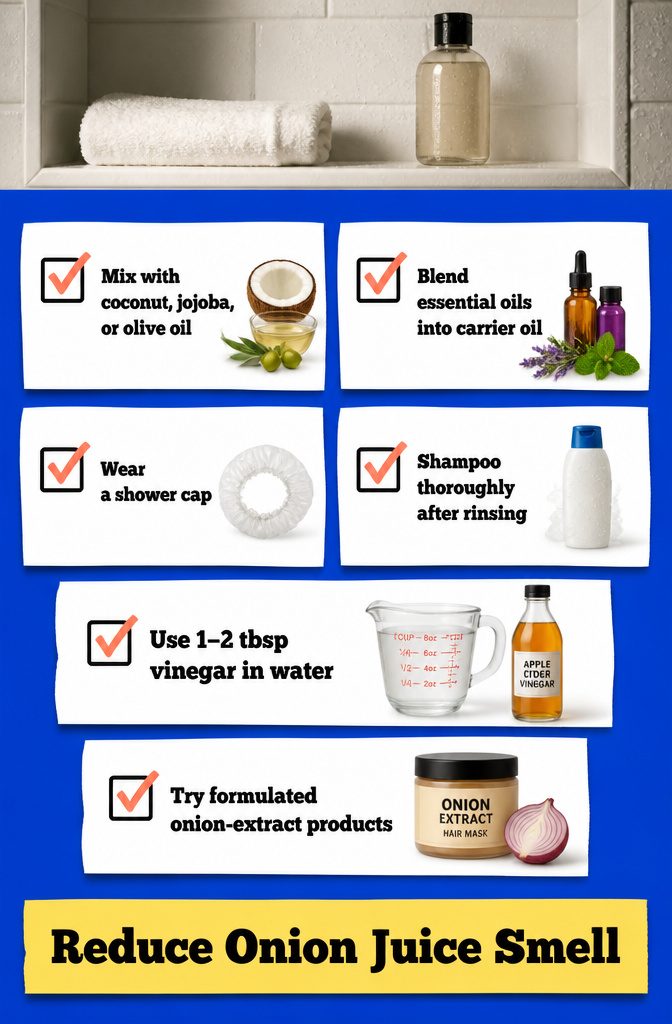
The smell can be the deal-breaker. A few moves make it manageable without cutting the treatment short.
- Mix onion juice with a carrier oil like coconut, jojoba, or olive oil before you apply it. Diluting it cuts the intensity and makes the scent less likely to linger.
- Add a few drops of rosemary, lavender, or peppermint essential oil to the mix. The essential oils mask the onion smell and bring their own circulation benefits. Blend them with the carrier oil first to avoid irritation.
- Wear a shower cap while the treatment sits. The cap traps heat and helps the juice penetrate, but it also keeps the smell contained.
- Shampoo thoroughly when you rinse. One pass usually isn’t enough.
- Follow with an apple cider vinegar rinse: 1–2 tablespoons in water, or a 1:3 ratio of vinegar to water, used as a final rinse after shampooing. The acidity cuts through residue and neutralizes odor.
The work pays off, but if the smell is truly unbearable, formulated onion-extract products skip the prep and the scent without the same mess.
Onion Juice Mixed With Other Ingredients
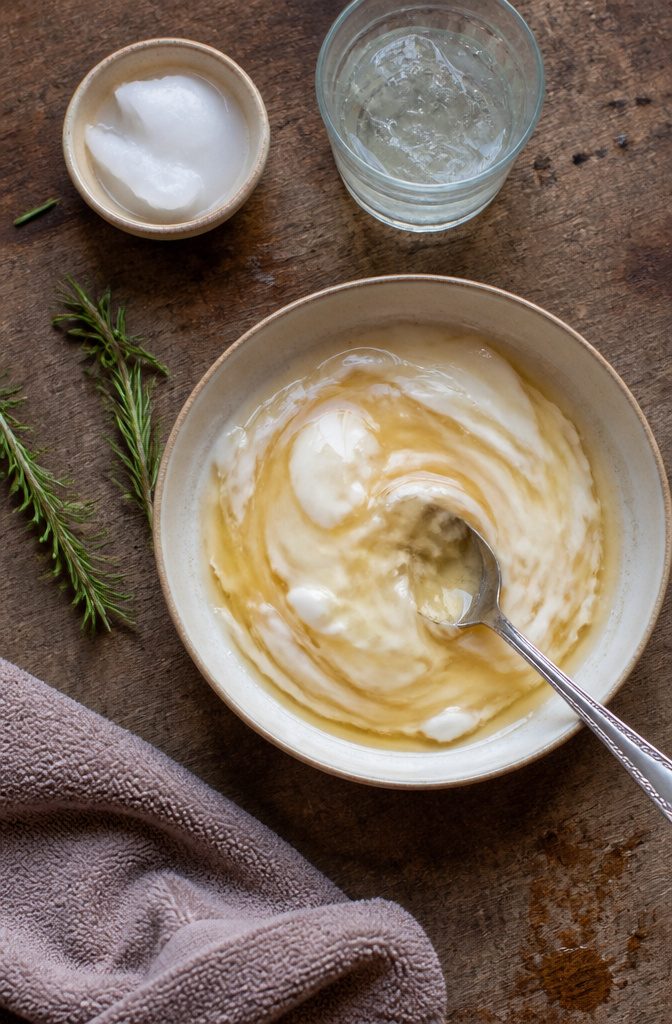
Onion juice pairs well with ingredients that soften the smell, add moisture, or balance its intensity. The combinations below come from sources that test them on real scalps.
- Honey: Mix equal parts onion juice and raw honey, or use 2 tablespoons juice with 1 tablespoon honey. Leave on for 25–30 minutes. The honey locks in moisture and cuts some of the smell.
- Coconut oil: Combine 2 tablespoons of each. The oil dilutes the juice, makes it less sticky, and improves the scent.
- Aloe vera gel: Equal parts onion juice and pure aloe vera gel. Apply and leave for 30 minutes. Aloe cools a sensitive scalp while the juice works on follicles.
- Essential oils: Add 5–6 drops of rosemary or peppermint oil to 3 tablespoons onion juice. Mix with a carrier oil first to avoid irritation.
- Plain yogurt: Combine 3 tablespoons juice with 2 tablespoons yogurt for a thicker mask.
- Cayenne pepper and honey: Simmer 1 chopped onion in 2 cups water for 10 minutes, strain, then stir in 1 tablespoon each of cayenne and honey. The cayenne stimulates blood flow. Leave on for 2 hours under a shower cap.
When You Might See Changes
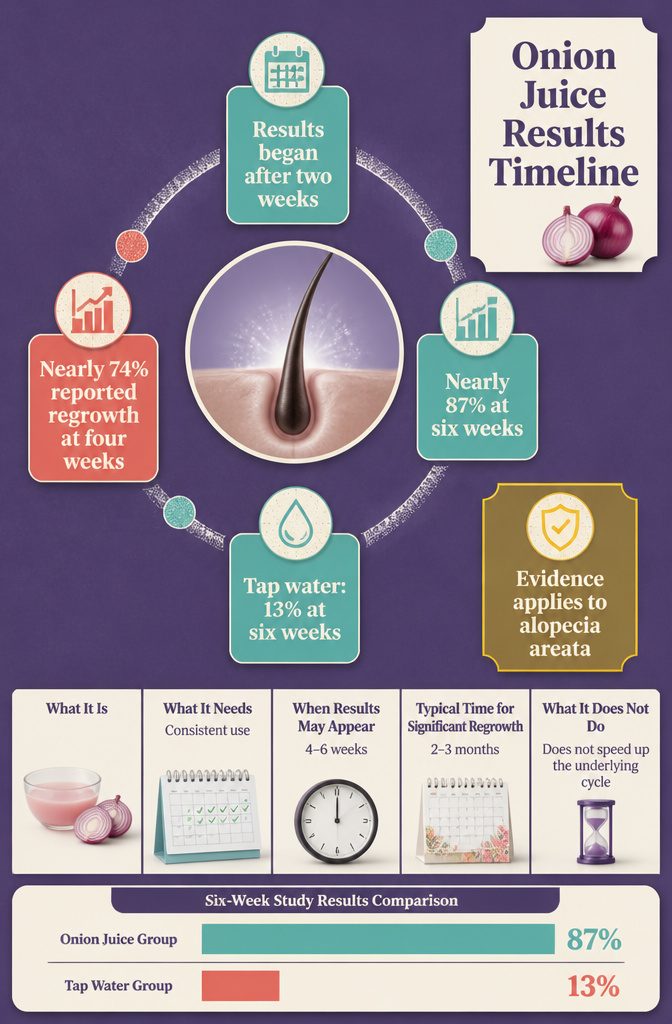
Changes may appear after 4–6 weeks of consistent use, though significant regrowth typically takes 2–3 months. Hair growth is slow by nature, and onion juice does not speed up the underlying cycle.
The timeline comes from a study on alopecia areata, an autoimmune condition that causes patchy bald spots.
Results began after two weeks, nearly 74% of participants reported regrowth after four weeks, and nearly 87% after six weeks. The tap water group saw regrowth in just 13% at the same interval.
That distinction matters.
Alopecia areata is not the same as postpartum shedding, female pattern baldness, or telogen effluvium. The study findings do not apply to those more common causes, and no current evidence supports onion juice for hair loss beyond alopecia areata.
When to See a Dermatologist About Hair Loss
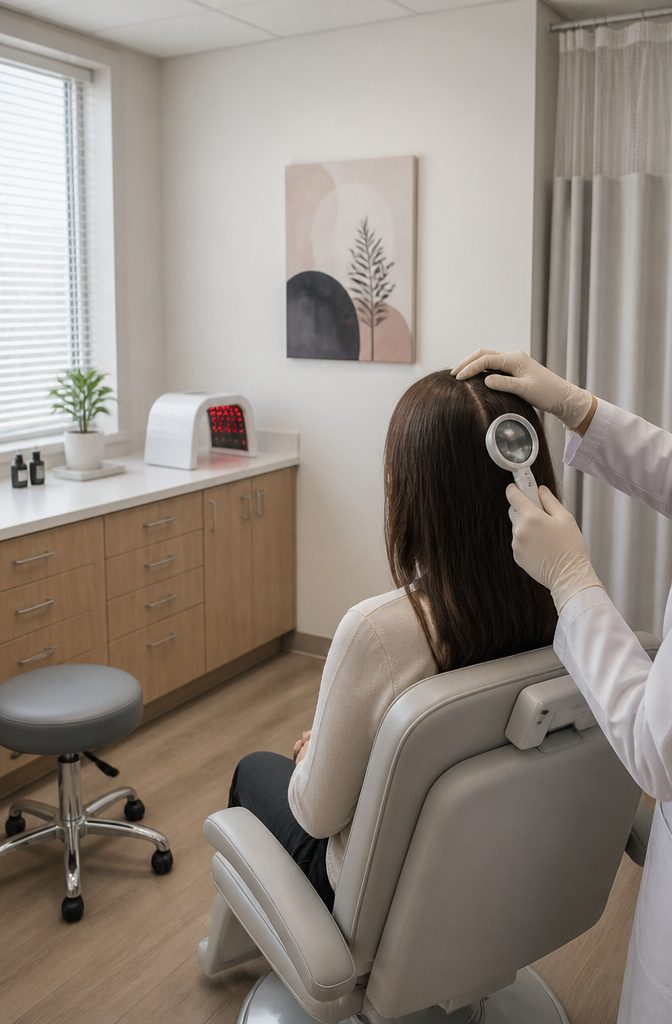
Onion juice is not a substitute for medical advice, and if you are losing more hair than usual or notice thinning that worries you, see a board-certified dermatologist rather than treating it at home.
A dermatologist can investigate what is actually causing the loss, whether it is telogen effluvium, androgenetic alopecia, or something else entirely, and recommend treatments that have stronger clinical backing.
That includes prescription minoxidil, red-light therapy devices, and in-office platelet-rich plasma (PRP) injections. I think of onion juice as something you might try in addition to proven options, not instead of them.
If your scalp is inflamed, if patches of hair are falling out suddenly, or if thinning accelerates quickly, skip the DIY route and book the appointment.
Frequently Asked Questions
How long does it take for onion juice to show results on hair growth?
Changes may appear after 4–6 weeks of consistent use, though significant regrowth typically takes 2–3 months.
Hair growth is slow by nature, and onion juice does not speed up the underlying cycle. The timeline comes from a study on alopecia areata, where nearly 74% of participants reported regrowth after 4 weeks and nearly 87% after 6 weeks.
How often should I apply onion juice to my hair for best results?
Apply onion juice 2–3 times per week.
This schedule balances consistency with scalp tolerance. Daily use can irritate, especially if your skin runs sensitive.
Can I leave onion juice on my hair overnight?
Pure onion juice left on overnight can dry out your scalp or trigger redness if your skin is sensitive.
Shorter contact times of 15–20 minutes reduce the smell and the chance of irritation, though some people wait an hour or two without issue.
Are there any side effects of using onion juice on hair?
The sulfur concentration can irritate your scalp, causing itching, eczema, or a burning sensation.
Some people report inflammation, hives, and rashes on the hands or scalp, especially if they already have sensitivity or an existing allergy to onions. Always do a patch test on your inner elbow 24 hours before application.
What is androgenetic alopecia?
Androgenetic alopecia is a common form of hair loss also called female or male pattern baldness.
It differs from alopecia areata, the autoimmune condition onion juice was tested on. Current evidence only supports onion juice as a potential treatment for alopecia areata, not for other forms of hair loss like androgenetic alopecia.
What are the big 3 for hair regrowth?
The big 3 typically refers to minoxidil, finasteride, and ketoconazole shampoo, the 3 treatments with the strongest clinical backing for hair regrowth. A board-certified dermatologist can recommend treatments with proven evidence, including prescription minoxidil, red-light therapy devices, and platelet-rich plasma (PRP) injections.
How to make onion shampoo?
You can add onion juice to your existing mild or sulfate-free shampoo by mixing a small amount into each application.
For longer storage, simmer 1 chopped onion in 2 cups of water for 10 minutes, strain after it cools, and mix the onion water with your regular shampoo.
Why did my hair fall increase after using onion juice?
Increased shedding after starting onion juice may signal irritation or an allergic reaction causing inflammation that weakens follicles.
If you notice more hair loss, redness, or itching, rinse immediately and stop using it. See a board-certified dermatologist if thinning accelerates quickly or if patches of hair fall out suddenly.