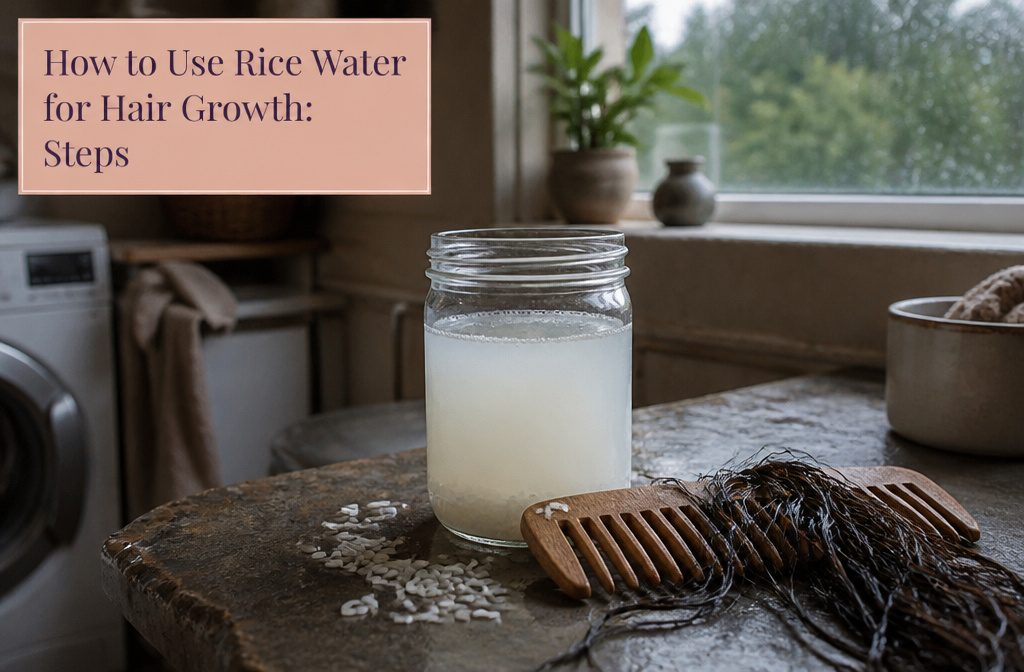
Rice water can smooth cuticles and reduce breakage enough that hair looks longer over a few months, and the liquid itself costs nearly nothing to make.
The problem shows up in how often you use it: more than once weekly and the protein buildup stiffens hair instead of strengthening it.
Fermented batches sit at room temperature for 12 to 24 hours, then go straight into the fridge or the pH swings too far and irritates your scalp.
1. Dampen Hair or Apply After a Quick Rinse
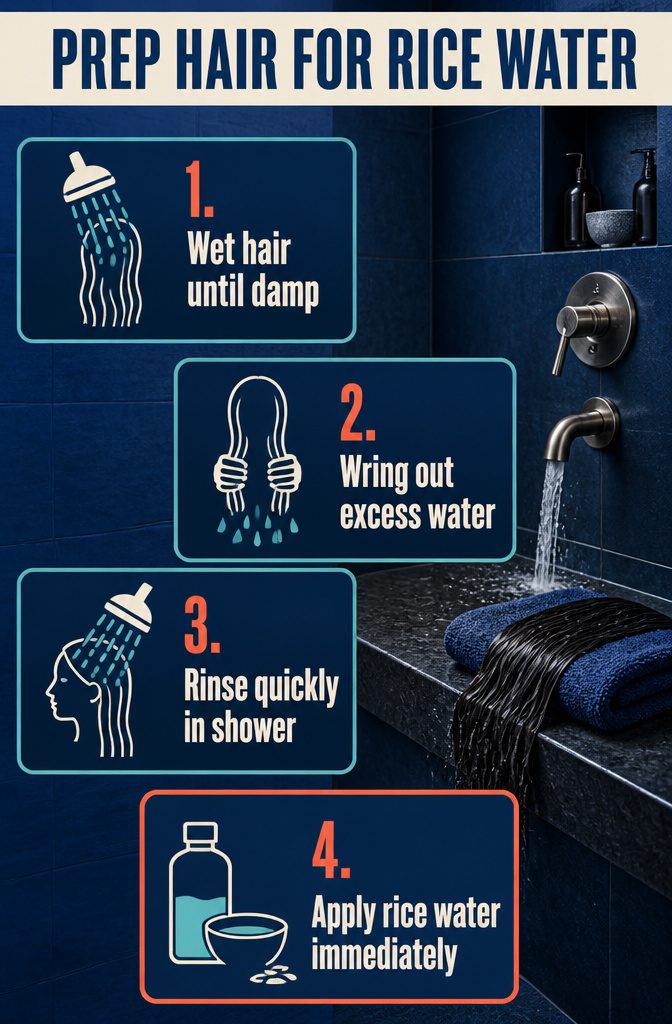
Dampen Hair or Apply After a Quick Rinse
You can start on dry hair, but damp strands give you more even coverage and let the rice water spread without pooling in one spot.
I run the tap until the hair feels wet to the touch, then wring out the excess so it is not dripping. If you are already in the shower, a quick rinse works just as well.
Apply the rice water immediately after, before the hair dries again. This surface prep matters because rice water is thin and slides off bone-dry hair before it has time to sit.
Damp hair works best, not soaking wet. Too much water dilutes the brew you just made, and you lose some of the protein and starch that do the actual work.
2. Apply to Scalp or Mid-Lengths to Ends, Depending on Your Goal
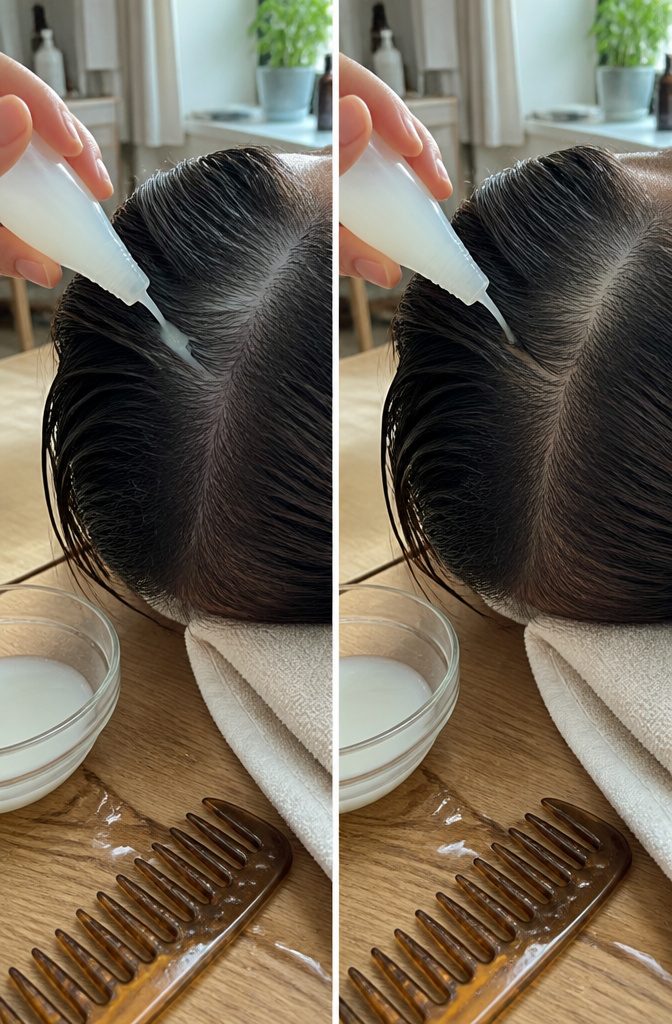
Where you put rice water matters more than the instructions let on. If growth is the goal, apply to the scalp and massage it in.
The inositol and amino acids sit where follicles actually live, and though research on whether they penetrate to roots is still thin, that placement at least gives them a chance.
Start at the hairline and work back in sections so the liquid reaches skin, not just surface hair.
If the real problem is breakage at the ends, skip the scalp and pour from mid-lengths down. Rice water coats the cuticle, adds temporary slip, and can reduce friction enough to keep fragile ends from snapping off during detangling.
That cosmetic benefit matters more for length retention than any follicle claim, and it keeps protein buildup away from roots where it can stiffen hair you don’t want stiff.
3. Leave for 3 to 10 Minutes, Starting Shorter at First
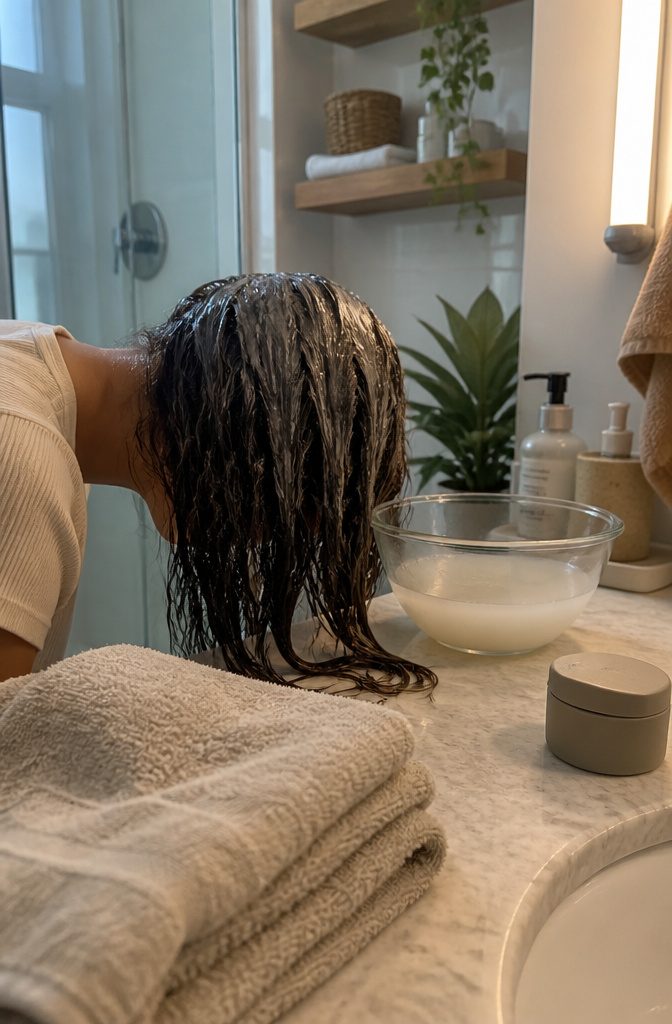
Three minutes is where you start.
The first few applications should sit that short so you can see how your hair responds. If your scalp feels fine and your hair doesn’t look dry or stiff afterward, you can work up to ten minutes.
That longer window gives the proteins more contact time, which may strengthen strands that need it. But rushing to ten minutes on day one risks overdoing it before you know whether your hair tolerates rice water well.
Starting conservative also makes it easier to pin down the cause if you do notice dryness or brittleness later. I’d rather add a minute each round than guess at how to fix damage that could have been avoided.
4. Rinse Thoroughly
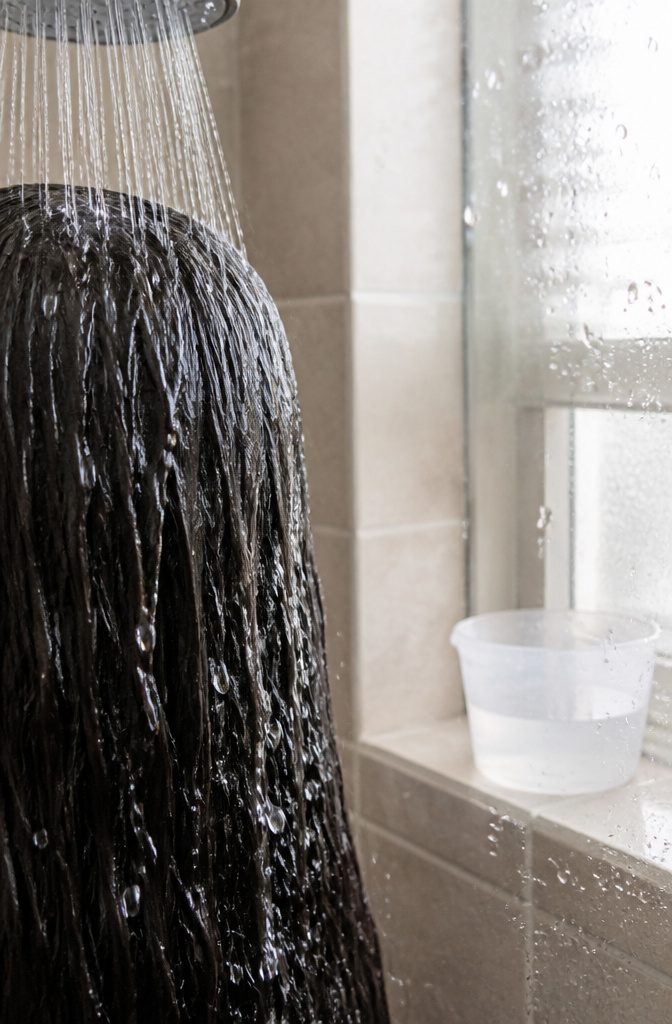
Rinse thoroughly is the step that prevents most problems. Rice starch left on the scalp can dry and flake, and any residue on the lengths makes hair feel stiff or coated.
Running clean water through your hair until it runs clear takes care of both. I pay extra attention to the scalp, where buildup sits closest to the skin and shows up fastest as white flakes.
If your scalp tends toward dryness already, rinsing matters even more. Rice starch has a drying effect when it lingers, and pairing it with a deep conditioner later only helps if you clear the rice water first.
The rinse is also where you reset slip, so hair does not tangle when you move to shampoo. Start at the roots and work down to the ends, and do not stop until the water feels clean between your fingers.
5. Shampoo as Usual
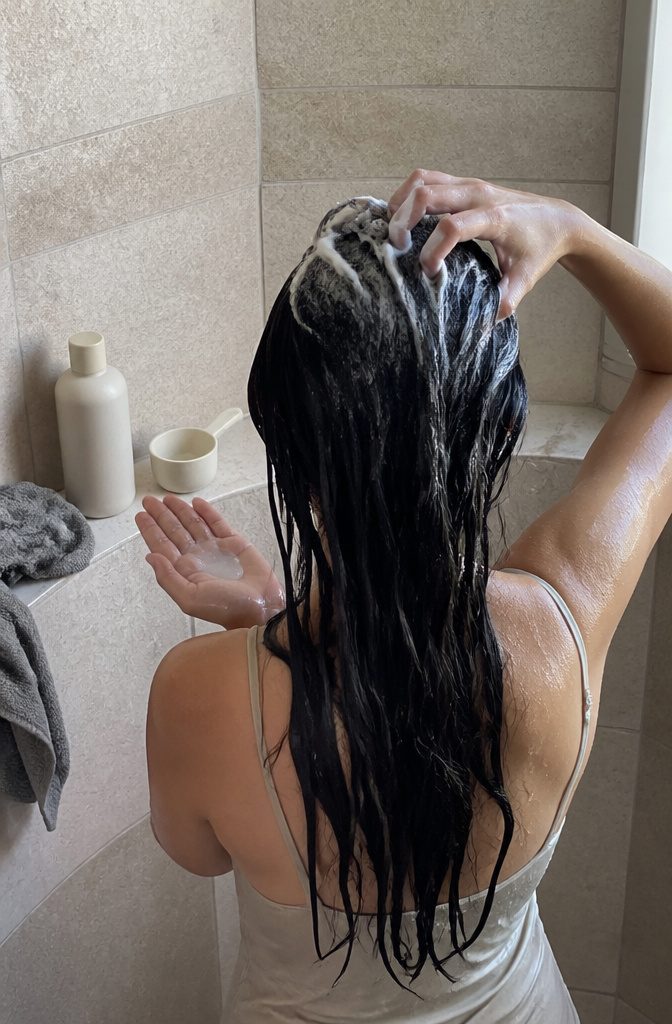
After you rinse out the rice water, shampoo as usual. That step is what separates the pre-shampoo method from every other approach: rice water goes on before cleansing, not after.
Treating it as a rinse that stays in can leave buildup that tangles and stiffens hair over time, especially if you use rice water often.
Shampooing afterward clears that residue while letting the smoothing and strengthening effect stay where it counts.
6. Condition Well, Especially Mid-Lengths to Ends
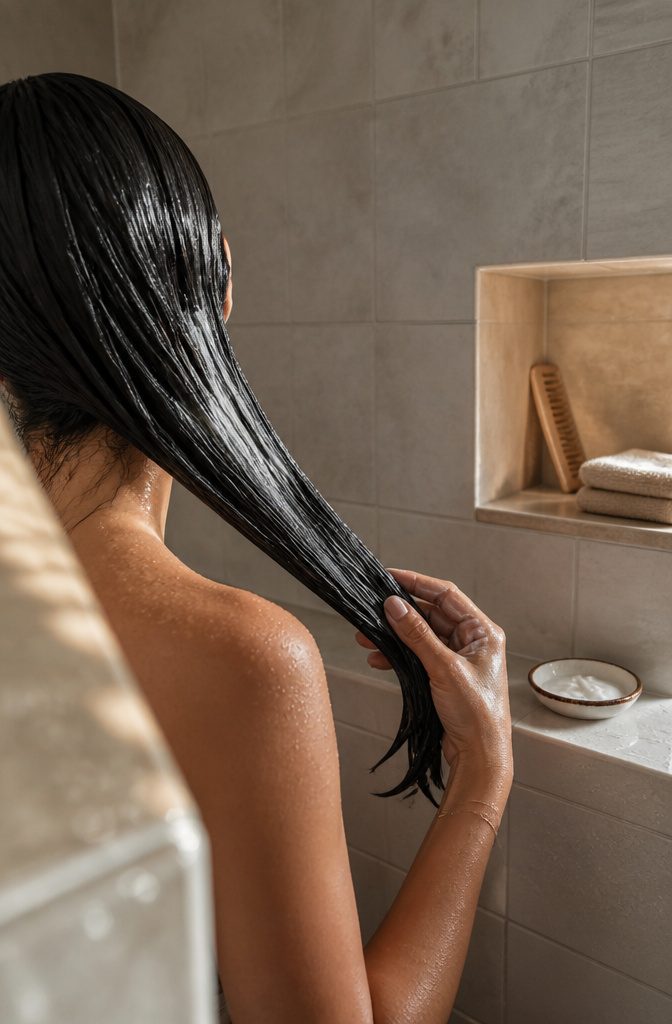
Condition Well, Especially Mid-Lengths to Ends
After you rinse out the rice water and shampoo, conditioning mid-lengths to ends restores slip and reduces friction.
Rice water tightens the cuticle and adds temporary structure, which is helpful for strength but can leave hair feeling stiff if you skip this step. I think of conditioner here as the reset that lets you comb through without snagging.
Skimping on it is where tangles show up even when you did everything else right.
If hair feels rough or squeaky after rinsing, that rough texture is exactly what conditioner is meant to smooth out. Focus the product where length has been sitting in rice water the longest, and work it through before you rinse.
What Rice Water May Do for Your Hair
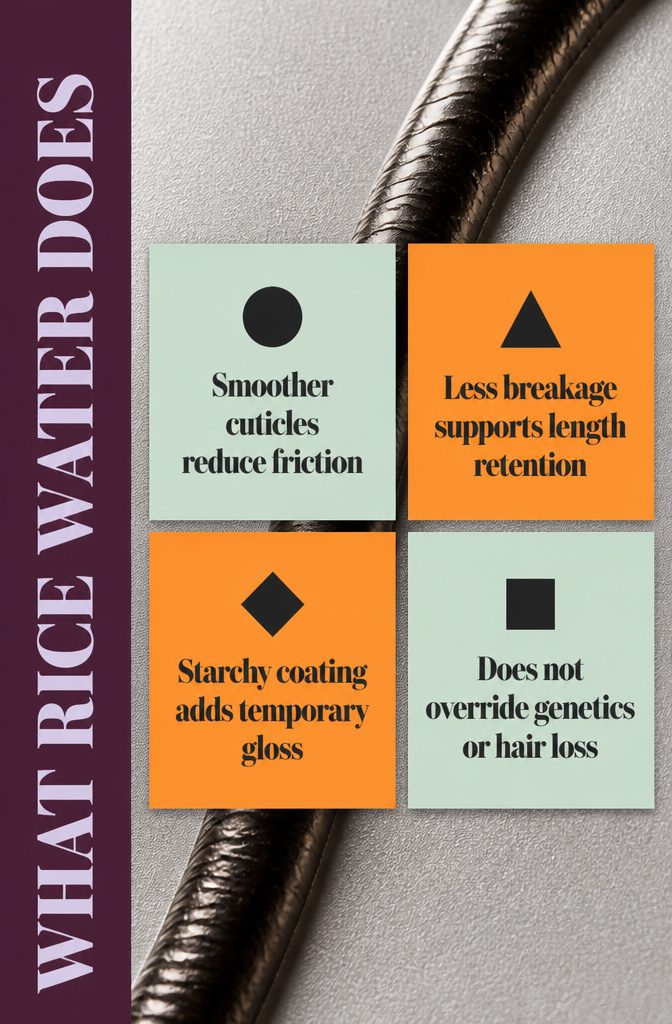
Rice water’s track record rests on what you keep, not what you sprout.
The visible benefit is usually length retention: hair still grows at the root at its usual pace, but smoother cuticles and less friction mean fewer strands snap off mid-length during detangling or styling.
That difference shows up in the mirror as fuller, longer-looking hair over time, even though the follicle itself is doing what it always did.
A study in the International Journal of Cosmetic Science found that rinsing with rice water reduces surface friction and increases elasticity, which can make hair easier to manage and less prone to breakage.
The starchy coating left behind by the rice sits on the hair fiber and adds a temporary gloss and slight cosmetic thickness. Some people also report less scalp dryness or irritation, though that effect varies.
What rice water will not do is override genetics, hormone shifts or medical hair loss. If shedding or thinning is the main concern, I’d consult a dermatologist rather than rely on a DIY rinse.
Potential Downsides and How Often to Use It
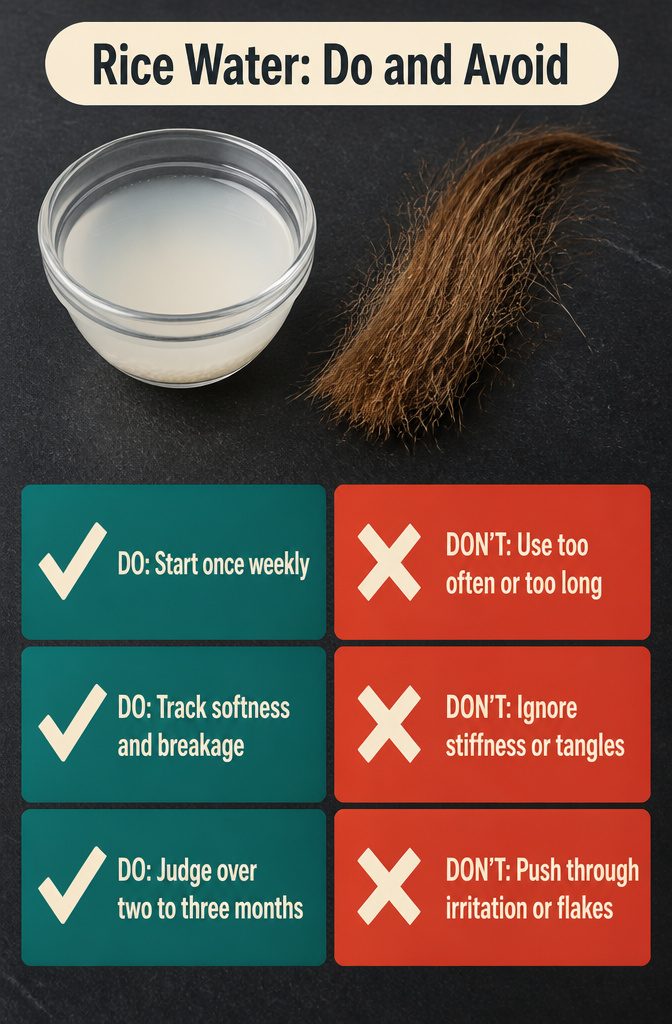
Rice water can make hair feel stiff, dry or coated if you use it too often or leave it on too long. Buildup is real, and so is scalp irritation and flaking for some people.
Start at once weekly for three to four weeks, then watch how your hair behaves. If it feels softer and breaks less, you can try twice weekly.
If it gets stiff or tangly, pull back to every other week or pause entirely. Low-porosity hair is more prone to buildup, and brittle hair or hair you heat-style often may not tolerate the protein load well.
On the other hand, damaged, bleached or high-porosity hair often responds better because it absorbs easily and needs the reinforcement.
If your hair is healthy with little damage, the rinse may be unnecessary. Two to three months is a realistic window to judge whether the routine actually helps with length retention.
How to Prepare Rice Water: Soaking, Boiling and Fermenting
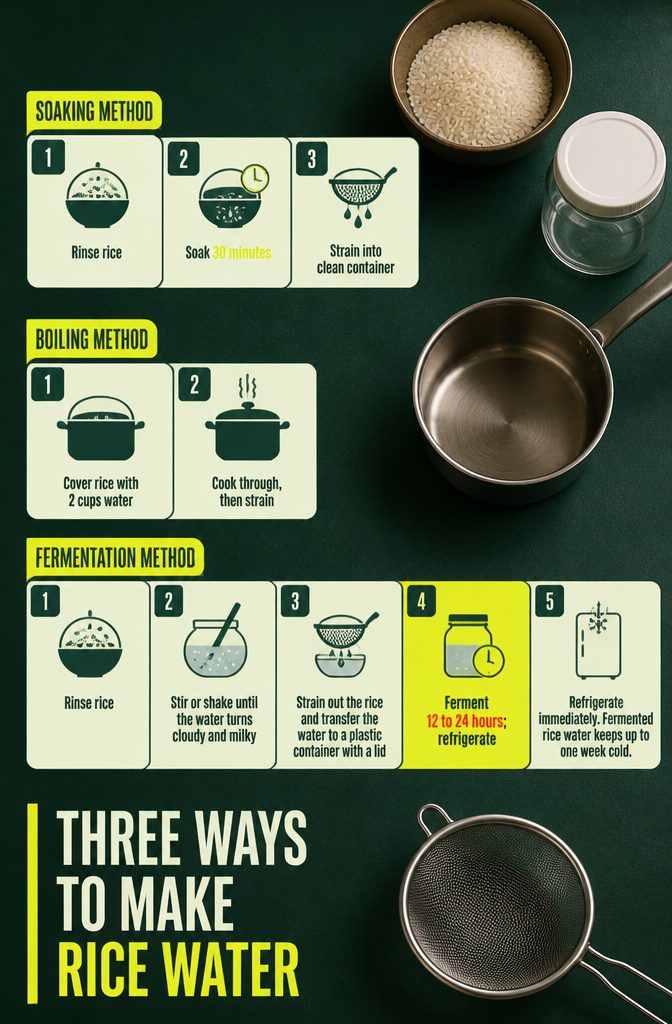
The soaking method is the fastest.
Rinse half a cup of uncooked rice, place it in a bowl with 2 to 3 cups of water, and let it soak for 30 minutes. Strain the water into a clean container.
Boiling takes longer but requires no waiting. Pour uncooked rice into a pot, cover with 2 cups of water, cook through, then strain the rice water into a bowl.
Fermentation offers the most benefit but demands patience and storage discipline:
- Rinse 1 to 1½ cups of uncooked rice until the water runs clear.
- Place the rice in a bowl or jar with an equal portion of water and stir or shake until the water turns cloudy and milky.
- Strain out the rice and transfer the water to a plastic container with a lid.
- Let it ferment at room temperature for 12 to 24 hours. Do not exceed 24 hours or the batch goes off.
- Refrigerate immediately. Fermented rice water keeps up to one week cold.
Fermented batches vary in pH and concentration. Store cold, use small batches, discard anything sharp-smelling, and patch test if your scalp leans sensitive.
Other Ways to Apply Rice Water
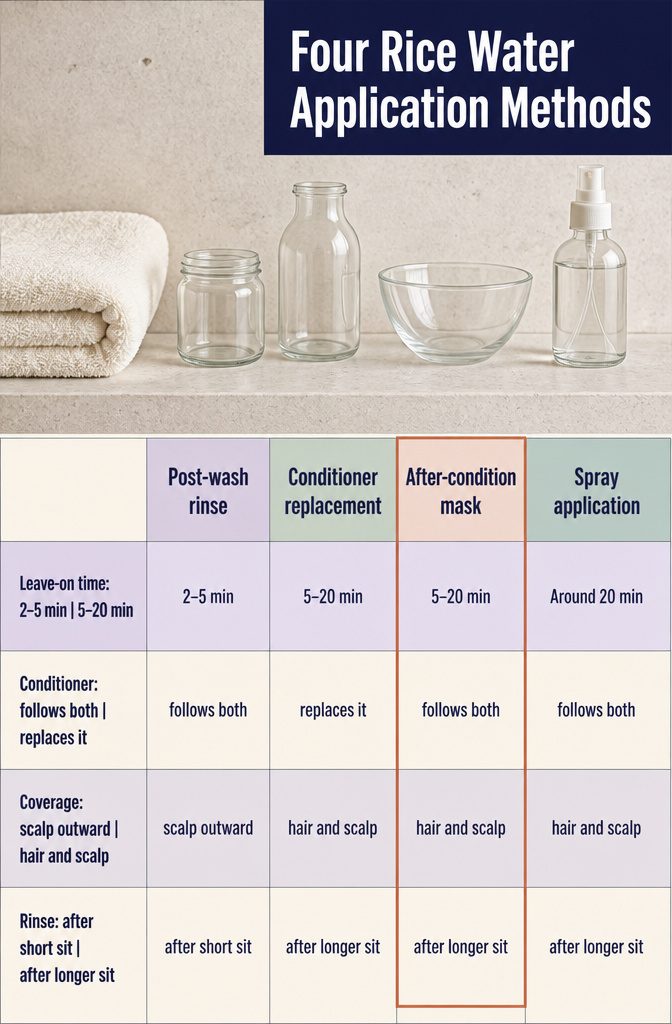
The pre-shampoo soak is not the only route. Several routines give you ways to slot rice water into the wash you already do:
- Apply after shampooing and conditioning, focus on the scalp first and work outward, leave two to five minutes, rinse. Use after each wash, whether that is daily or weekly. Healthline reports changes after one minute, one day, and one week, which works out to about four washes.
After one week (approximately four washes): My hair felt thicker, fuller, and more manageable. I experimented with blow-drying my hair, which I NEVER do because of the instant broken flyaways that usually frame my head immediately afterwards. This time? Little to no noticeable breakage.
That fuller feel after repeated use is what most people chase, and four washes is a faster test than a month-long trial.
- Use in place of conditioner after shampooing. Massage into hair and scalp, leave five to 20 minutes, rinse. Ro recommends trying the rinse twice weekly.
- Apply as a mask after both shampoo and conditioner. Massage into the scalp, leave five to 20 minutes, rinse.
- Spray generously over hair after shampooing, coat the scalp, comb through, leave around 20 minutes, rinse thoroughly. Owners on Reddit mention soaking hair in the rice water for about ten minutes, then rinsing before conditioning.
I prefer the post-condition mask. It keeps the rice water on longer without replacing the slip conditioner already gives, and the extra time on the scalp is where the strengthening shows up.
Ready-Made Rice Water Products Worth Considering
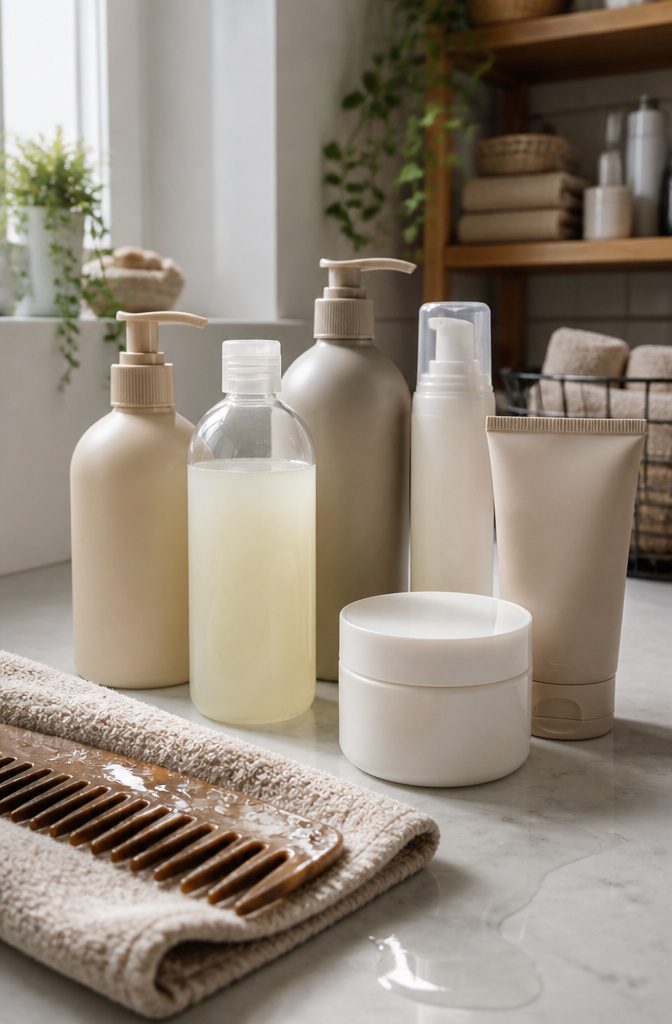
If mixing your own batch feels like too much work, a few bottled products deliver rice water’s protein and shine without the stovetop.
- Briogeo Don’t Despair, Repair! Rice Water Protein + Moisture Strengthening Hair Treatment can sit on hair for 10 minutes or overnight, used weekly to strengthen strands.
- Mielle Rice Water Hydrating Shampoo improves hair strength and adds shine during your regular wash routine.
- Camille Rose Spiked Honey Mousse 4-in-1 Hair Styler lists rice water as the second ingredient, which means it’s concentrated enough to soften, smooth and hydrate all hair types.
- Ecoslay Rice Pudding Leave-in Conditioner and Moisturizer is made with fermented rice water and designed to strengthen, moisturize and detangle.
- mimosu Rice Water Shampoo and Conditioner runs $16 for the pair and comes in 100% recyclable packaging.
I reach for these when I want the benefit without the prep time, and the leave-in is especially helpful on days when my hair needs both moisture and slip.
pH Variation and Concentration Risks in DIY Batches
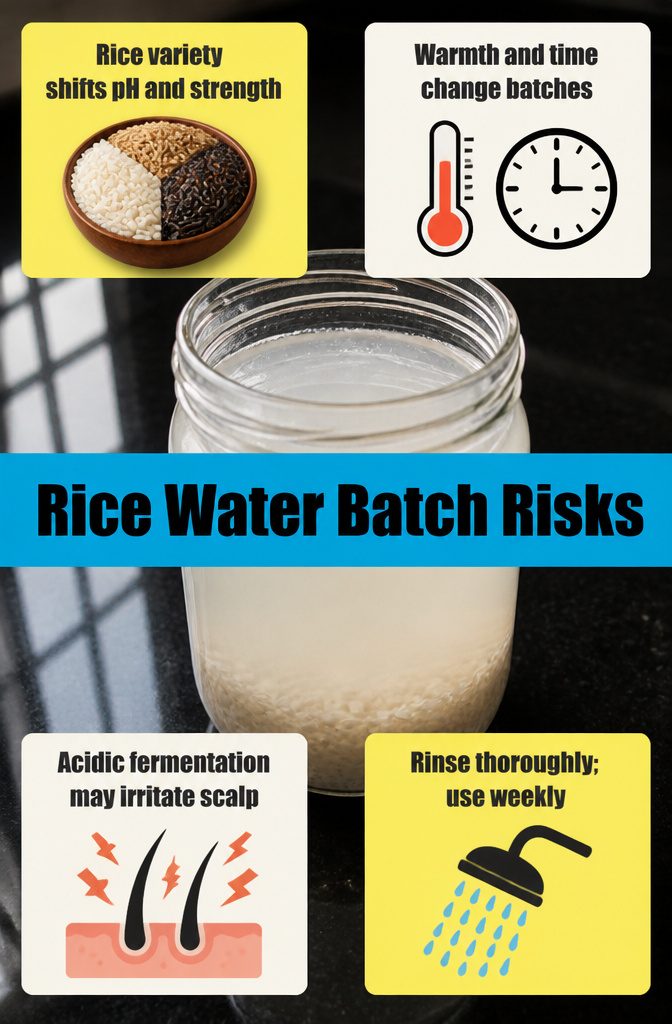
DIY rice water is not a standardized product. The pH and concentration shift with the rice variety you start with, how long you soak or ferment, and how warm the room is while it sits.
Fermented batches can swing acidic enough to irritate your scalp or leave hair feeling rough, and there is no tested pH target to follow at home.
Some people rinse once a week and see smoother strands; others use it daily and end up with stiffness, tangles or flaking.
High concentrations amplify the problem. Too much rice starch dries the scalp if you skip a thorough rinse, and overuse builds residue that makes hair look dull.
I keep the routine to once a week and follow with a deep conditioner on the mid-lengths to avoid friction and breakage. Treating rice water like an active treatment rather than a harmless rinse keeps the benefits without the guesswork.
Frequently Asked Questions
What are the benefits of using rice water for hair?
Rice water may reduce surface friction, increase elasticity, and make hair less prone to breakage.
The visible benefit is usually length retention rather than faster growth: smoother cuticles mean fewer strands snap off during detangling, so hair looks fuller and longer over time.
Some people also report less scalp dryness or irritation, though the effect varies.
Which hair types should try rinsing with rice water?
Damaged, bleached, or high-porosity hair often responds better because it absorbs easily and needs the reinforcement.
If your hair is healthy with little damage, the rinse may be unnecessary. Low-porosity hair is more prone to buildup and stiffness.
How long does it take to see results from rice water?
Cosmetic changes like smoother texture and less breakage may show up after about 4 washes or one week of use.
Judging whether the routine helps with length retention takes 2 to 3 months. Start at once weekly for 3 to 4 weeks, then adjust based on how your hair behaves.
How long does rice water last?
Fermented rice water keeps up to one week in the refrigerator.
Do not let it ferment at room temperature for more than 24 hours, or the batch goes off. Discard anything that smells sharp or sour.
How to apply rice water on scalp?
If growth is the goal, apply rice water to the scalp and massage it in.
Start at the hairline and work back in sections so the liquid reaches skin, not just surface hair. Leave for 3 to 10 minutes, then rinse thoroughly before shampooing as usual.
Can you use brown rice to make rice water for hair?
The preparation methods described use uncooked rice without naming a variety, so either type may work, but no tested comparison exists.





