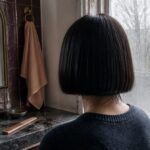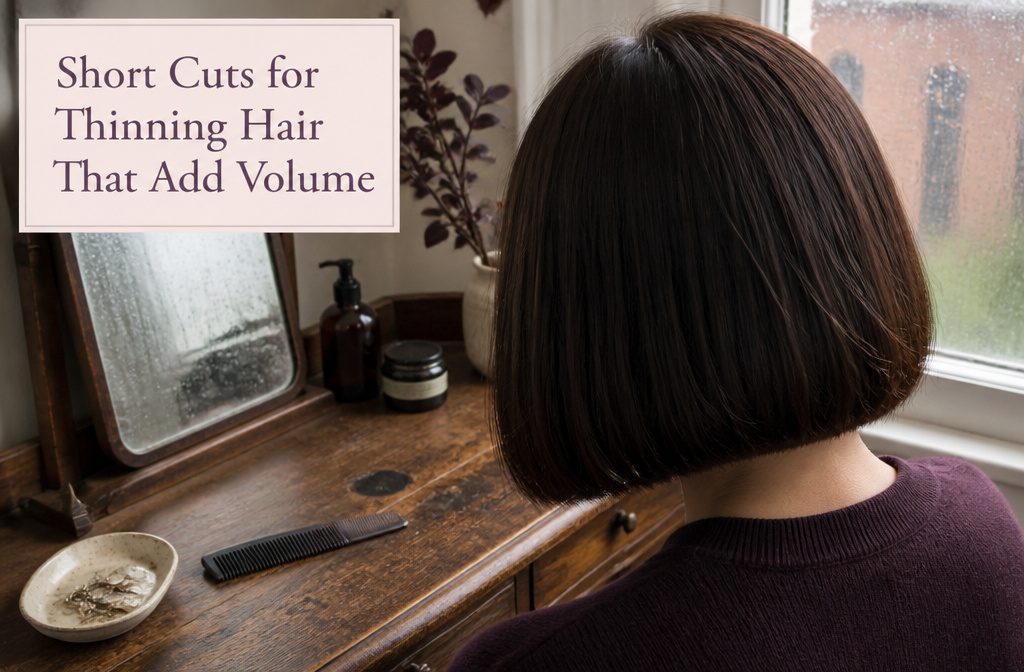
The blunt bob is the top pick for thinning hair: a uniform edge at chin length makes ends look denser than any layered cut does.
That said, if you want to keep some length, a bouncy lob just above the shoulders gives you the same effect with more styling options.
The condition that trips most people up is placement. Cut too long and the weight pulls fine strands flat; cut right and the bottom edge reads as a single solid line instead of separate strands.
1. Blunt Bob
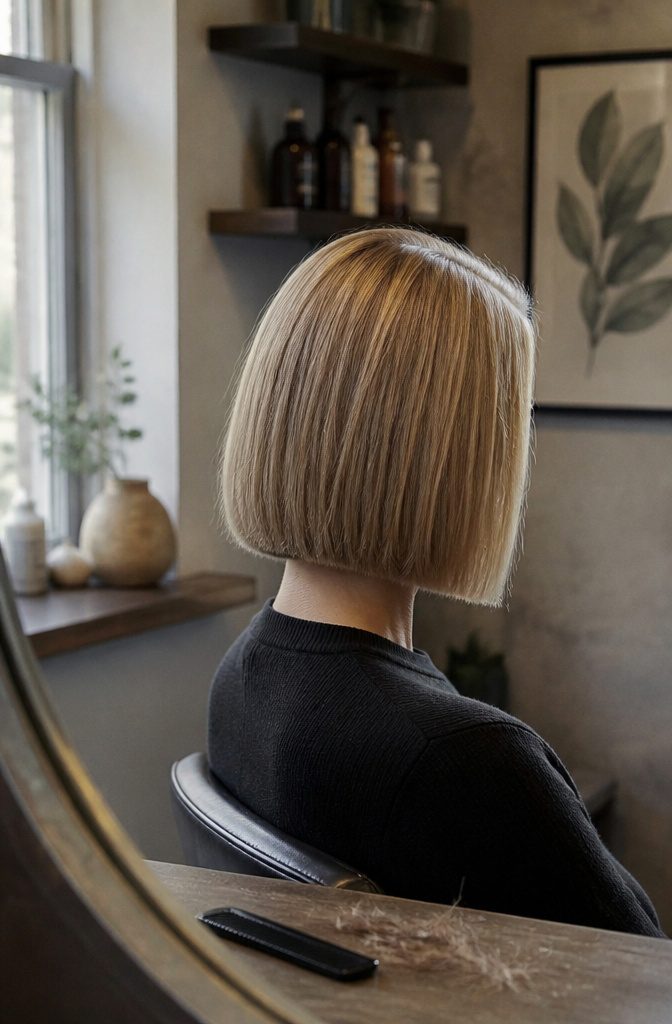
A chin-length blunt bob works well for thinning hair because a uniform, defined edge makes ends look denser and fuller than layered cuts do.
Keeping the length above the shoulders lets the hair hold its natural body rather than pulling flat against the neck.
The French bob, cut above the jawline, reads even sharper and weightier at the ends. That little bit of extra shortness concentrates whatever density you have into a tight, polished line.
Italian or boyfriend bobs sit in the same family, and any of the three styles the bob family offers will outperform a longer cut for fine strands. A side part adds root lift if the ends alone aren’t enough.
2. Lob With Movement
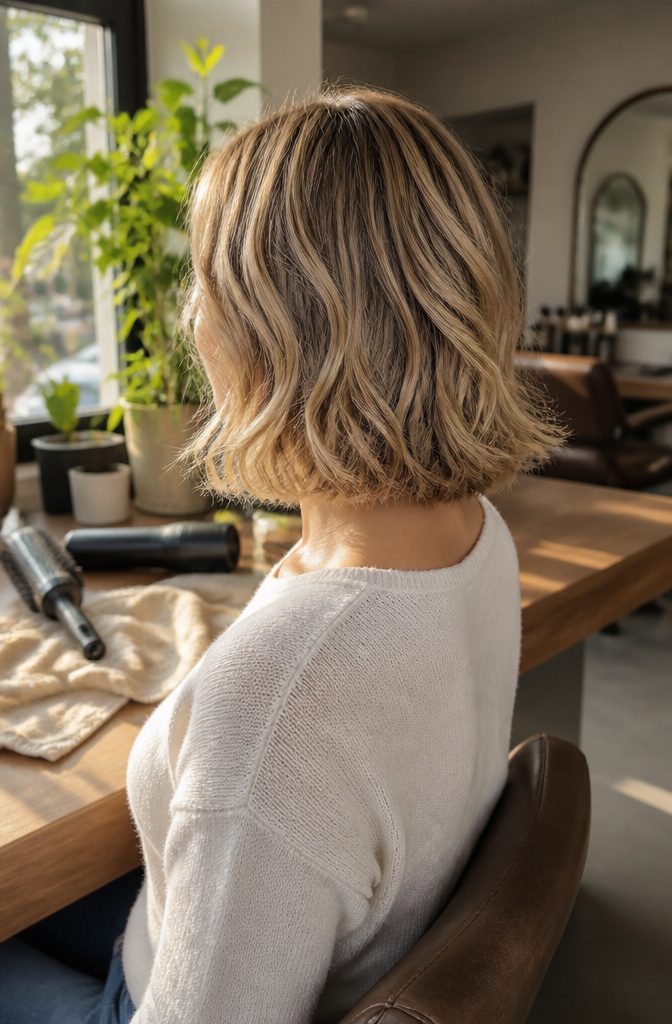
A longer bob holds some length while still giving you the movement and visual density thinning hair needs.
A bouncy lob typically hits just above the shoulders, and that length provides enough weight to avoid flatness while the bounce at the ends creates natural volume.
Layers are what make the difference here. They add texture and body, giving the illusion of thicker, fuller hair, and the cut stays versatile enough to wear sleek or tousled.
An angled lob takes the same idea and adds a slight diagonal, shorter at the back and longer toward the front, so you get the fullness but with a little more length to style with.
Wavy versions lean beachy and relaxed, and the loose waves add texture while framing your face.
To style a bouncy lob, a round brush and blow dryer lift the roots and add movement throughout. Finish with a bit of light hairspray to keep the texture in place.
3. Layered Pixie
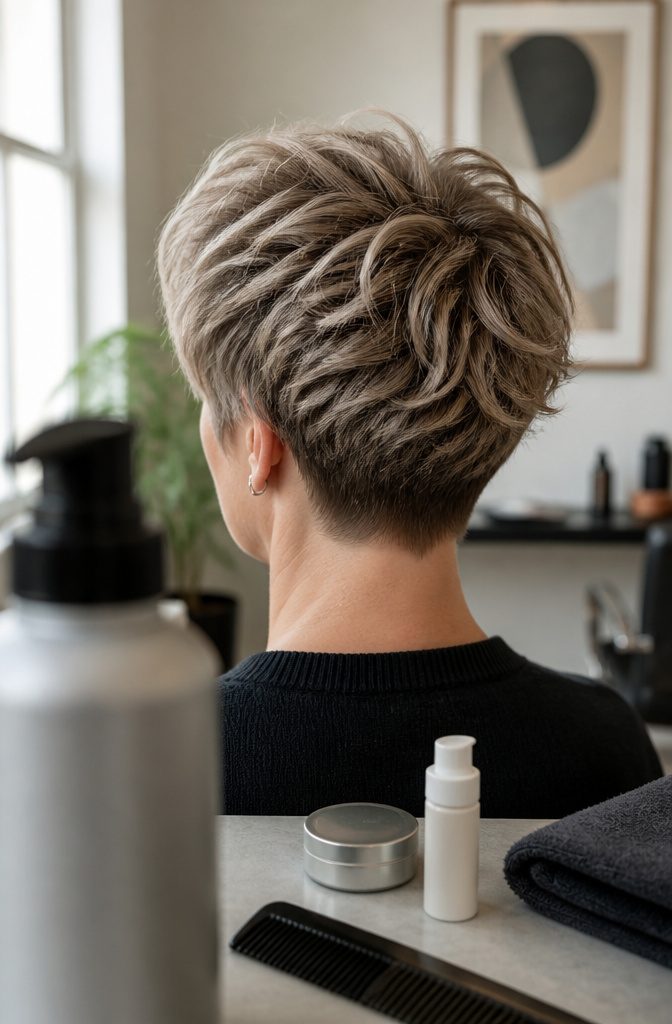
A layered pixie removes weight and lets hair lift naturally at the roots, which is exactly why it works when strands are fine.
The layers create texture throughout the crown, helping hair look thicker and more voluminous. Longer pieces on top can be styled in multiple ways to add height and movement, and the whole thing stays low-maintenance.
The tousled, piecey versions lean into that lived-in look without needing heavy styling. A texturizing spray or mousse boosts volume; a light pomade or wax gives definition and control.
I like that this cut delivers a polished result with minimal effort each morning. The short length itself is doing the work, and the layers just multiply the lift you get from it.
4. Shaggy or Choppy Cut
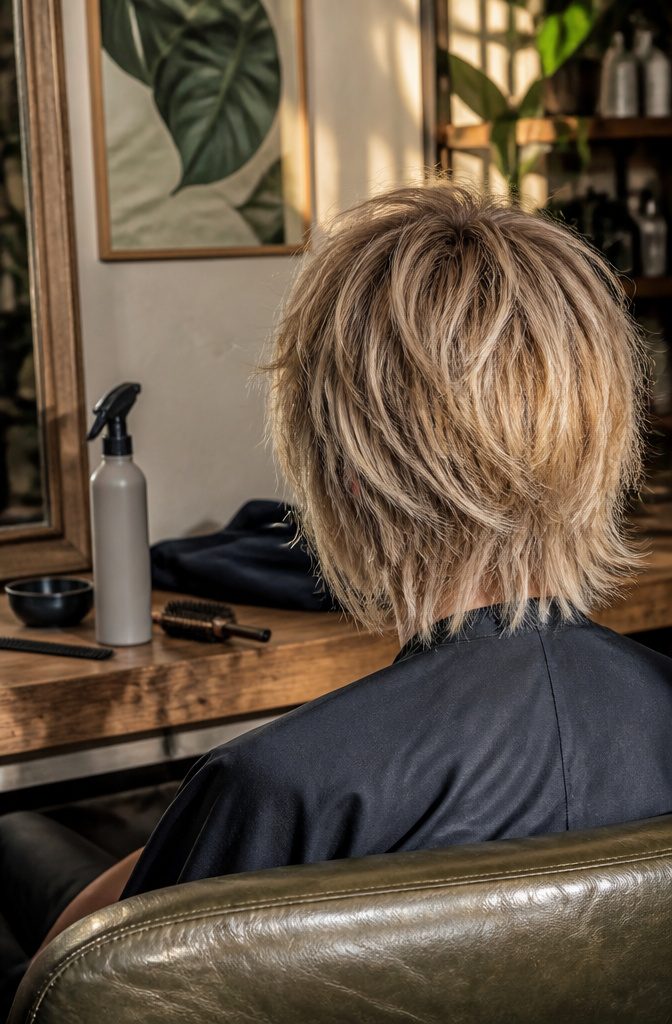
Shaggy or Choppy Cut
A shag or choppy cut works by placing layers strategically through the hair so the ends sit at different heights and create texture where flat hair would otherwise lie flush against the head.
The modern shag relies on movement rather than length, and the piecey, choppy finish gives the appearance of more hair than a uniform cut would.
This style suits fine hair especially well because the varied layers prevent the weight that pulls hair flat.
Short shaggy bobs adapt to curly and straight hair alike, making them one of the more versatile options in this category.
The choppy layers add visible lift without requiring precise styling each morning. A texturizing spray enhances the effect if you want more definition, though the cut does most of the work on its own.
The look reads as relaxed and contemporary rather than structured, and it conceals early thinning by breaking up the scalp line with intentional texture.
5. Bixie
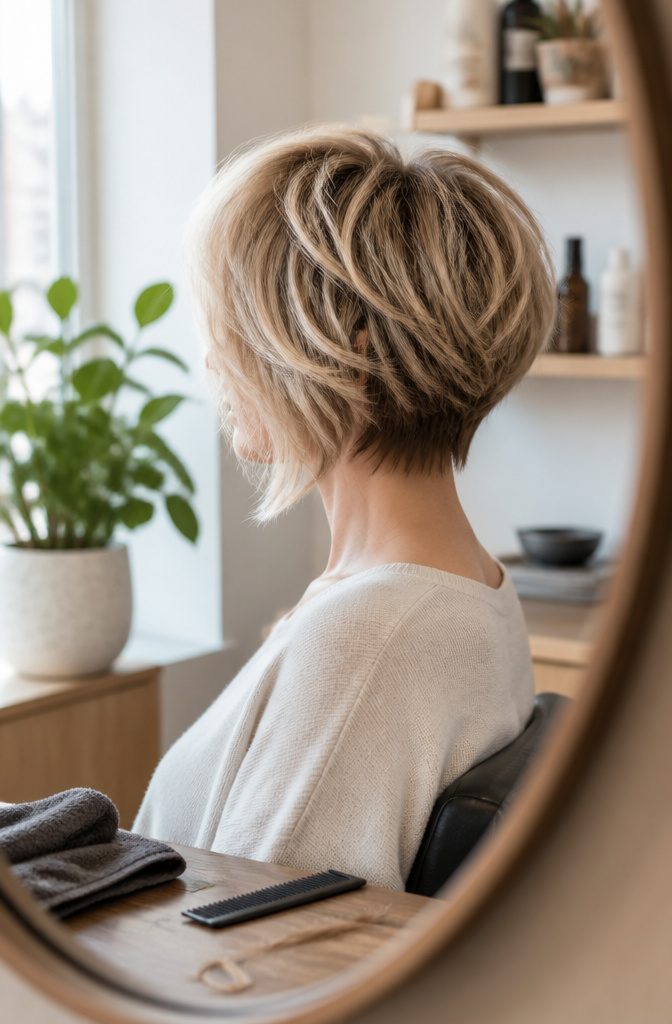
The bixie splits the difference between a bob and a pixie, keeping face-framing length around the front while the back stays shorter and more textured.
The layers give fine hair natural movement instead of hanging flat, and the slightly longer pieces near the face soften the look without weighing it down. You get the body of a pixie cut without committing to cropped-all-over length.
The cut works because it borrows the best mechanics from both styles.
The bob’s length adds dimension around the face. The pixie’s shorter back lifts at the crown and keeps volume where thinning hair loses it first.
Whether you style it tousled for texture or smooth it out, the structure does most of the work. Thin hair reads as fuller because the layers create space between strands instead of letting them stack in one plane.
6. Cropped or Sculpted Cut
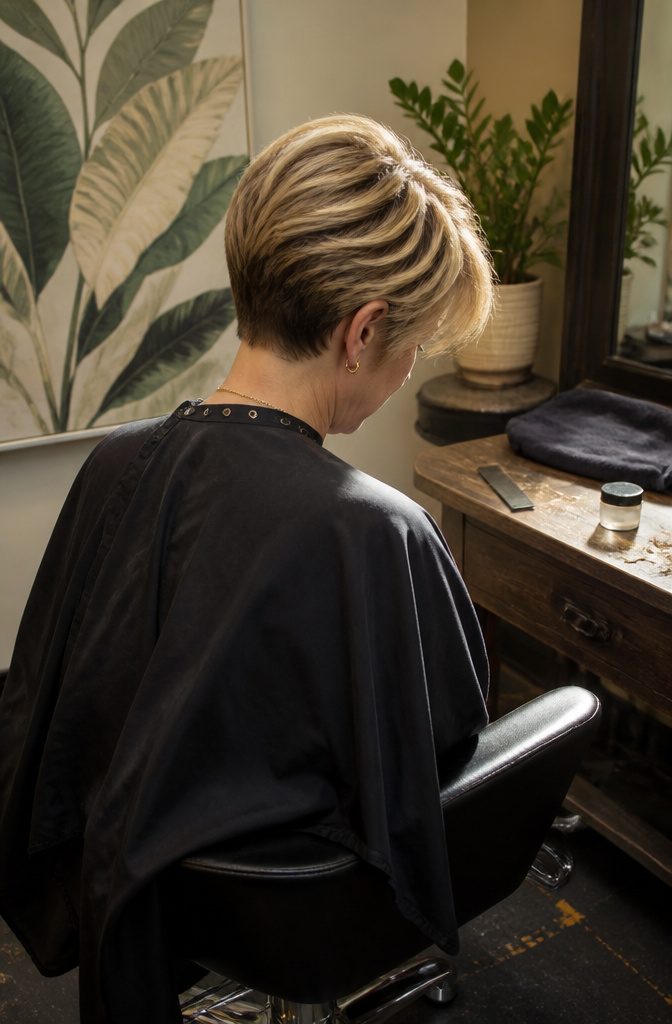
Cropped or Sculpted Cut
A cropped cut with a deep side part builds volume right where thinning shows first.
The asymmetry pulls more hair to one side, lifting at the root and creating the appearance of density. You can wear it with wispy bangs or slicked back, and the side part itself does most of the work.
Sculpted pixies with uneven length add height at the crown without extra product or styling time.
The shorter sides and longer top create a dynamic shape that draws the eye upward, and the layered crown lets hair lift naturally instead of lying flat.
This shape works especially well if thinning is most visible at the part line, because the length variation distracts from sparse areas and adds movement.
Side-swept bangs soften the look and bring polish without weight.
The feathery, razored layers add texture that reads as fullness, and the tapered nape keeps the silhouette clean. I’d choose this over a blunt crop if you want something easy to maintain but still tailored.
7. Stacked Bob
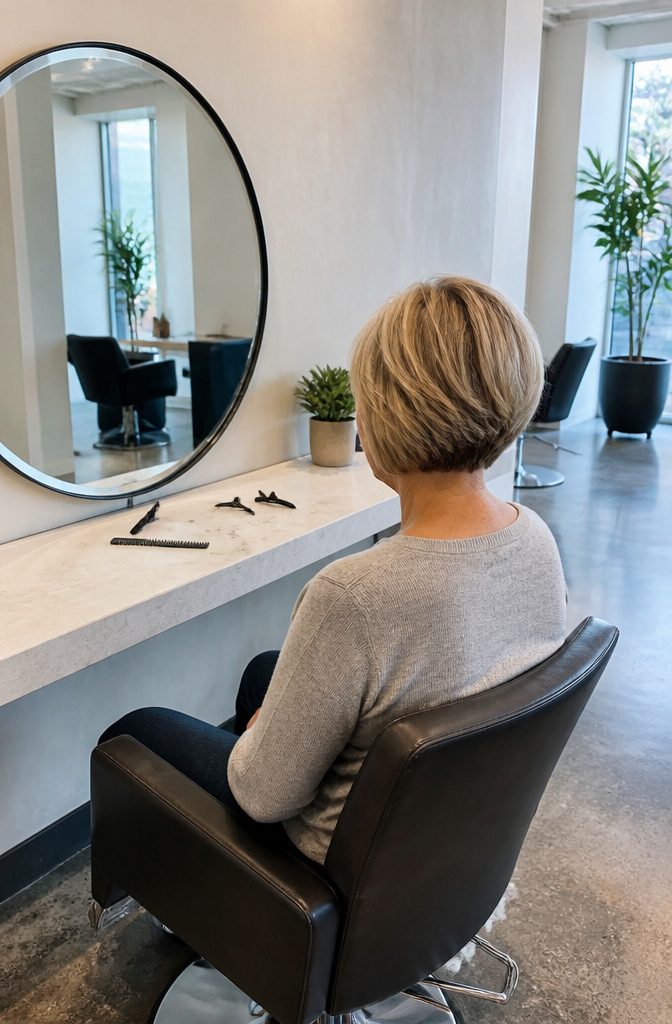
Stacked Bob
Layers concentrated at the back of the head add bulk and volume where thinning hair needs it most.
The stacking technique works by cutting lots of layers into the back, which creates height and makes the hair appear fuller from every angle. The weight sits low at the nape, and the graduated layers build up from there.
If a full stack feels like too much change at once, light layers and texture through the whole head give a subtler version of the same effect.
Curling pieces around your face defines your features and adds lift without committing to a major chop.
The stacked shape also translates well into an angled bob, where graduated layers create a striking silhouette and the chin-length pieces frame your face while the back stays short and full.
8. Side Part for Root Volume
CLASSIFICATION: WRITING TASK
This is a content writing assignment, not a coding task. I’ll complete it directly.
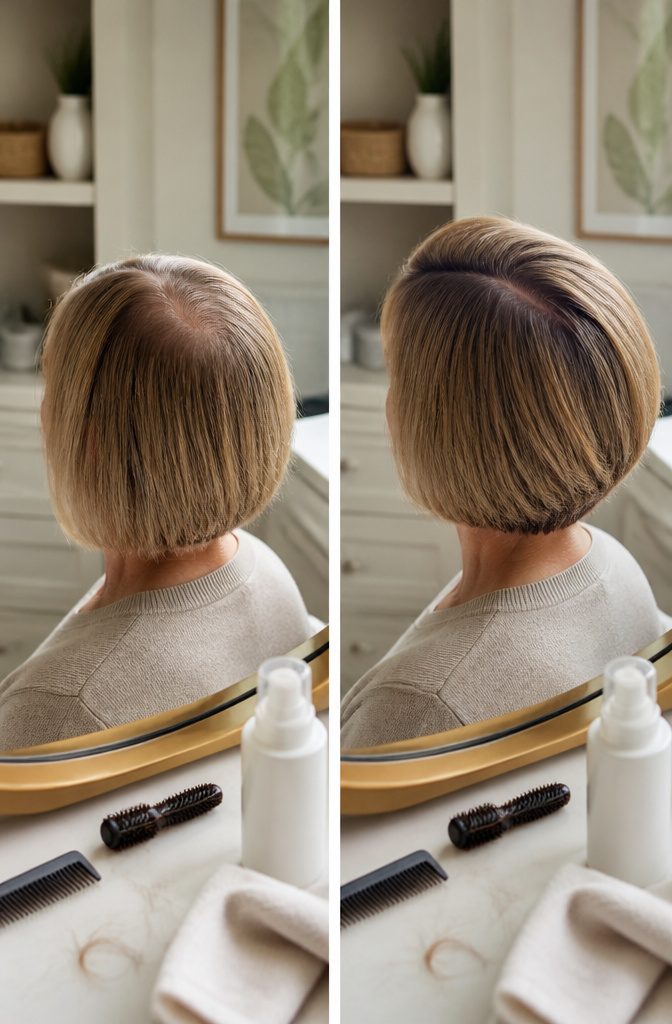
A deep side part adds instant volume where fine hair tends to lie flat. The asymmetry shifts visual weight to one side, lifting hair away from the scalp and creating height at the roots that a center part cannot match.
The deeper you place the part, the more lift you get on the heavier side.
Pair a side part with a cropped cut and the volume sits high and close to the head, making thin spots less visible.
On a blunt bob, the same part directs fullness toward the face and keeps the ends looking dense. Both cuts work, and the part does the same job: it breaks up the flat plane that fine hair naturally falls into.
You can wear it with wispy bangs or slicked back on the lighter side. Either way, the part itself does most of the work before you add product.
9. Curly Short Cut
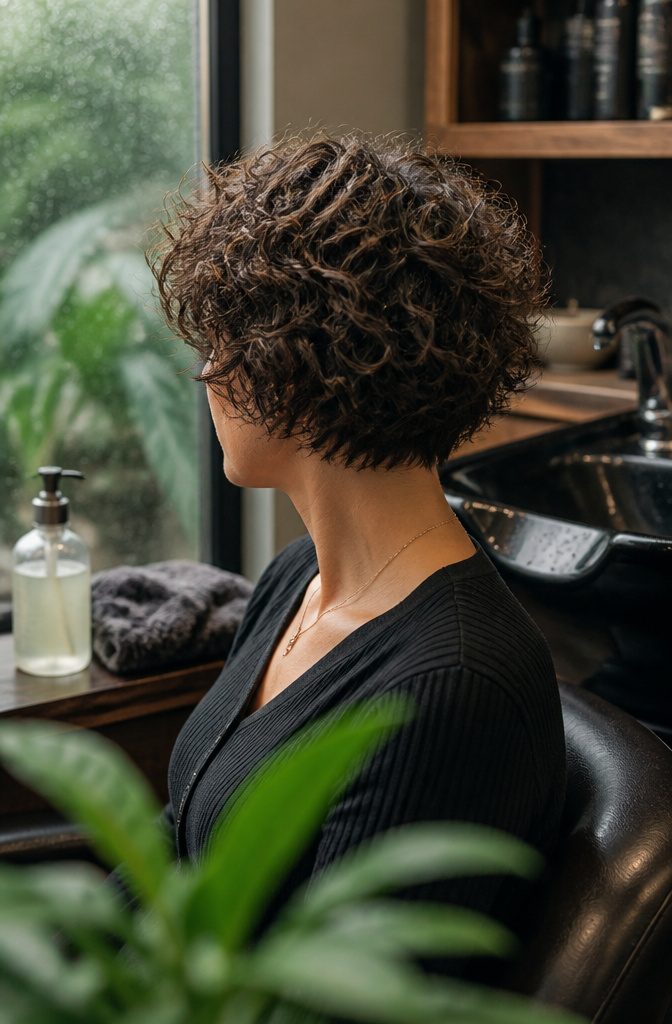
A short curly cut turns natural curl into visible thickness. The texture stacks on itself, and each ringlet or wave catches light differently, so the eye reads fullness where straight fine hair would lie flat.
A curly shag is one cut that never goes out of style, and it defines curls while boosting overall thickness.
Tighter curl patterns—3B and tighter—create the most volume, because the coils stand away from the scalp. Looser waves still add dimension, but you need product to hold the shape.
Apply curl-enhancing gel to damp hair and scrunch to define the curl clumps.
A strong hold formula keeps the shape through day two and three. If your curl is naturally loose, a mousse or curl spray helps add dimension and makes strands appear fuller without weighing them down.
10. Waves Styled Into a Short Cut
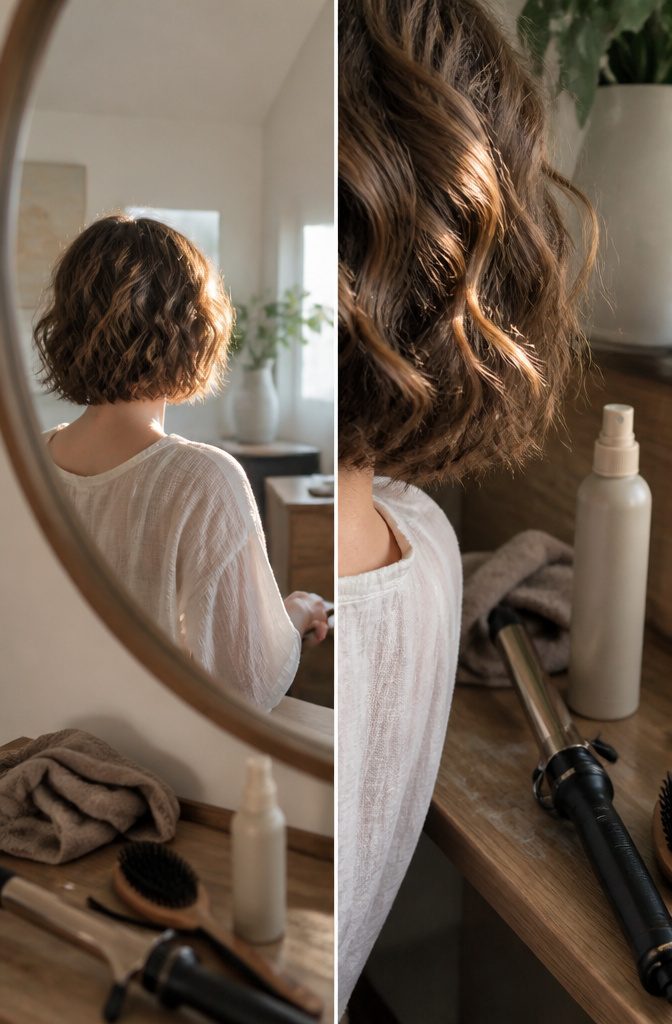
Styling waves into a bob or shorter cut gives thinning hair the lift and texture a flat surface never will. The bends catch light differently, and the movement makes the hair look fuller than the same length worn straight.
A texturizing spray adds grit and hold once the waves are in place, and salt spray works the same way if you want a softer, beachier finish.
You can add the waves with a curling iron or a wand, or use a flat iron if that is what you already own.
The tool matters less than the result: soft, loose waves that break up the line of the cut.
For naturally straight hair, a few passes with heat and a mist of spray afterward deliver the volume a blunt cut flattens out.
11. Buzz or Shaved Cut
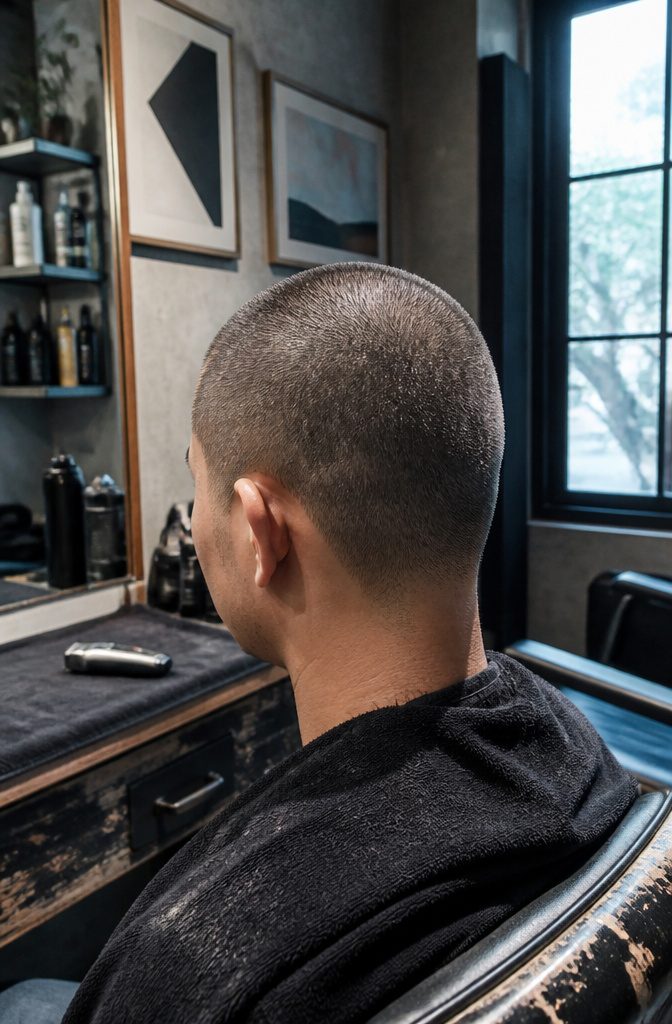
A shaved or buzz cut removes thin hair as a visibility problem entirely.
When the hair is uniform and very short across the scalp, any variation in density reads as texture rather than sparseness. The cut asks nothing of you in the morning and draws attention to facial features instead of hair coverage.
This suits someone with relatively even thickness around the scalp rather than isolated patches of loss.
It reads as intentional, not as giving up. The cut grows out fast, so if you prefer a close buzz you’re back with clippers every two to three weeks.
I find it works best when the decision feels confident rather than reluctant. A shaved head looks distinguished when worn without apology.
12. Slicked Back Style
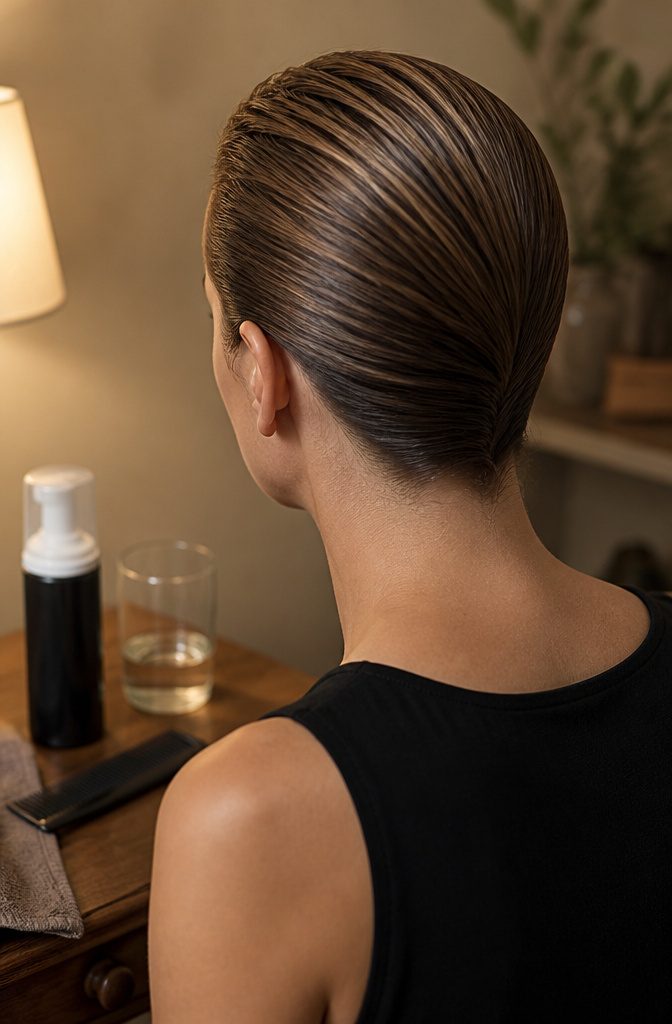
Pulling the hair straight back creates a polished silhouette and makes thinning roots look fuller by concentrating what density you have into a single smooth plane.
The shape works because you’re eliminating volume at the sides and directing attention to the crown, where a lightweight gel or mousse holds the look without collapsing fine strands.
I start with damp hair and work a quarter-sized amount of gel through from roots to ends, then use a fine-tooth comb to smooth everything back toward the nape. The comb is what gives you that clean, close-to-the-scalp finish.
Skip heavy pomades; they weigh thin hair down and turn sleek into flat. A mousse with medium hold keeps the style controlled through the day and still lets you brush it out at night without buildup.
The look reads formal enough for evening but stays simple enough for daytime when you need hair off your face and want it to stay there.
Why Shorter Styles Look Fuller
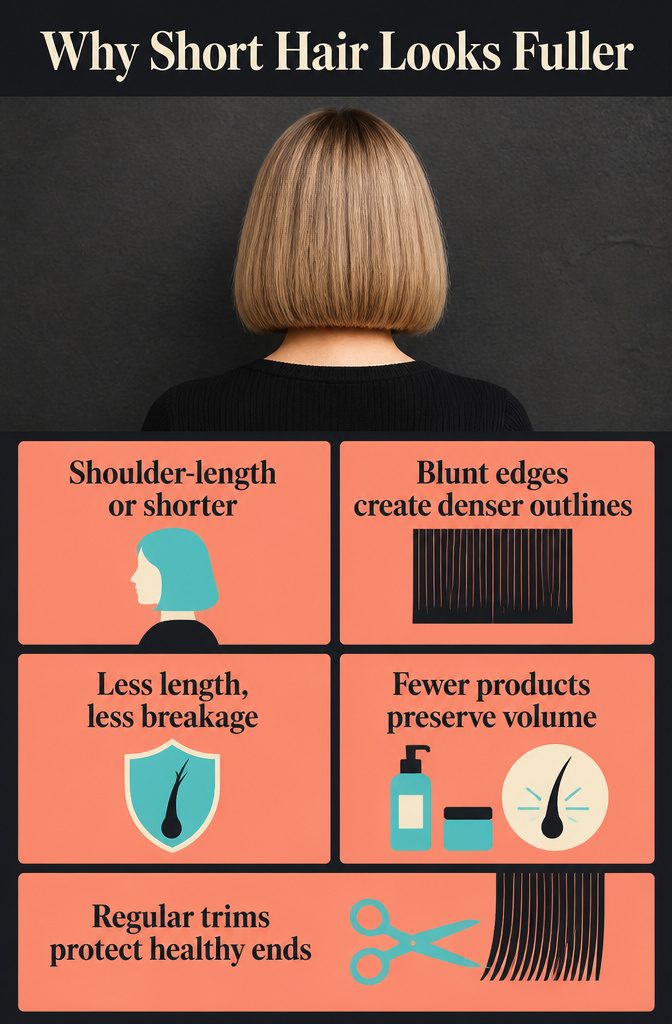
When hair reaches past the shoulders, weight pulls strands down and thins them near the ends.
Cutting to shoulder-length or shorter makes the bottom edge look denser because you remove the tapered, wispy part and keep the thickest portion of each strand.
Shorter hairstyles can work really well on finer hair as they tend to give the illusion that the length and bottom of the hair is fuller.
Blunt edges strengthen fine hair at the outline, which is what you notice first when you look at someone.
The bulk of the hair sits together rather than gapping, so a bob or lob reads as a single shape instead of separate strands.
Shorter lengths also reduce breakage.
Thin hair snaps more easily, and regular trims keep ends healthy instead of letting damage travel upward. Less length means less styling time and fewer products weighing hair down, which keeps natural volume intact.
How to Style for Volume and Texture
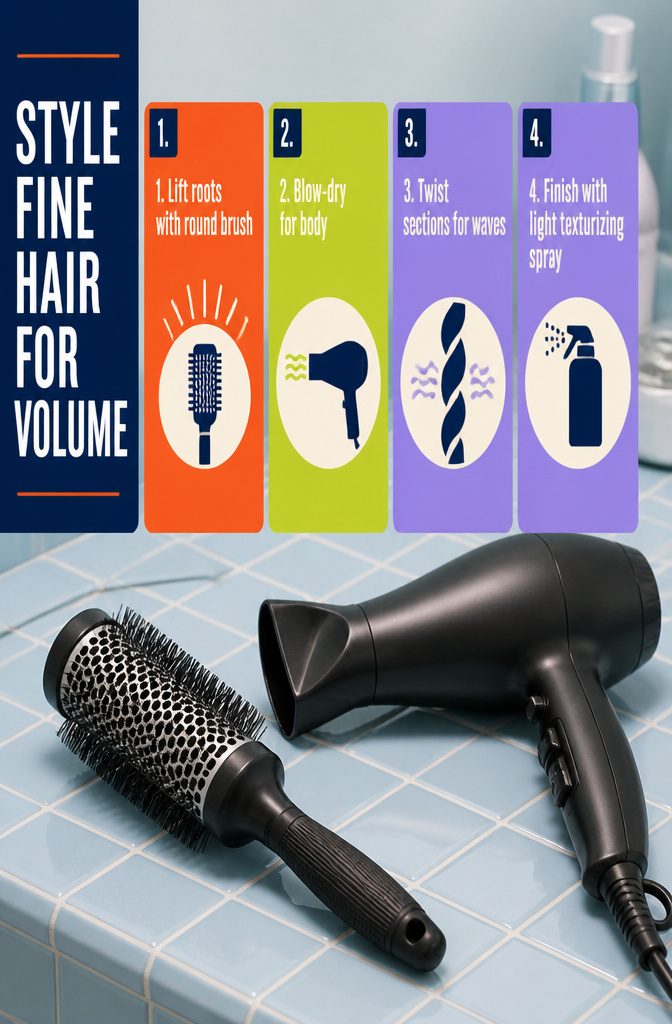
Visible fullness starts with how the ends sit, how much lift you get at the roots, and whether you add movement through texture or waves.
A round brush and blow dryer are the best tools for lifting roots and building body throughout. Finish with a light texturizing spray to hold the shape without weighing hair down.
Keep these points in mind when styling:
- Use lightweight products only. Mousse, texturizing spray, and salt spray add grip and volume. Heavy oils and leave-in moisturizers flatten fine hair.
- Blunt or defined ends create the illusion of density. A clean line at the bottom makes thin hair look thicker.
- Avoid overloading with product. Short cuts for thin hair need only a small amount of gel or mousse.
- For waves, mist conditioning spray into your hands and twist sections rather than spraying directly onto hair. This prevents buildup.
- Regular trims every six to eight weeks keep strands strong and maintain the shape of the cut.
Frequently Asked Questions
Does short hair help with thinning hair?
Yes. Cutting to shoulder-length or shorter keeps the densest portion of each strand, from root to mid-shaft, while removing the wispy, tapered ends that make hair look even finer.
A blunt edge at the bottom creates one solid line instead of separate strands, so the hair reads as fuller. Short lengths also reduce breakage, since thin hair snaps more easily and regular trims stop damage from traveling up.
What is a good haircut for fine, thinning hair?
A blunt bob is the most-recommended starting point: the uniform edge makes ends look denser than any layered cut can.
Styles like a layered pixie, a bixie, or a stacked bob also work well because they build texture and height at the crown, which is where thinning shows first.
The right choice depends on how short you want to go, but any of these beats a long cut for fine strands.
Should thin hair be cut short or kept long?
When hair grows long, the ends thin out and often break on their own, which makes the hair look finer than it actually is.
Shoulder-length is a reasonable middle ground if you want to keep some length, but the shorter you go, the fuller the result.
How should I style short thin hair for volume?
A round brush and blow dryer are the most effective tools: they lift at the roots and add movement through the length.
Use only lightweight products such as mousse, texturizing spray, or salt spray applied at the root while hair is damp. Skip heavy oils and leave-in moisturizers entirely, since they weigh fine hair down and speed up oiliness.
What are some popular short hairstyles for thinning hair in 2026?
Blunt bobs, layered pixies, bixies, shaggy or choppy cuts, and stacked bobs are all strong options right now.
Each one works by a different mechanism: blunt bobs strengthen the outline, layered pixies lift at the crown, and stacked bobs concentrate bulk at the back.
Curly and wavy versions of these cuts add even more texture, which the eye reads as thickness.