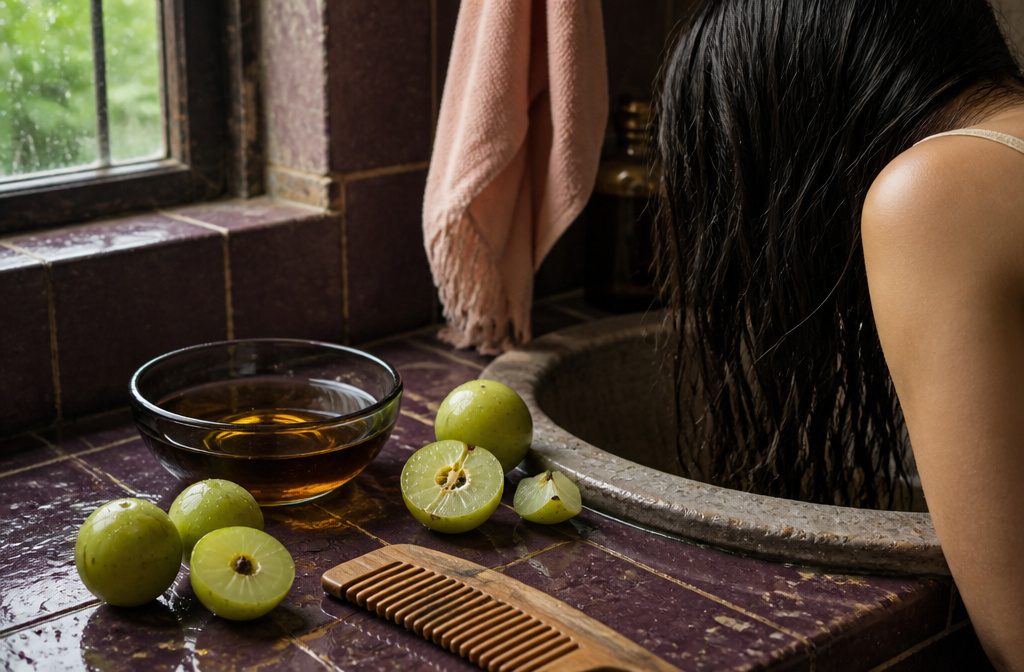
Amla oil is Indian gooseberry fruit infused into a carrier oil like sesame or coconut, used as a conditioning treatment for hair.
The evidence for growth sits mostly in animal studies and enzyme inhibition, not human trials, though a 2012 study found it blocks 5-alpha reductase at a 7.5 percent concentration.
What it does prove is coating the shaft to reduce breakage and delivering vitamin C and antioxidants to the follicle.
What Amla Oil Is and How It Differs From Essential Oil
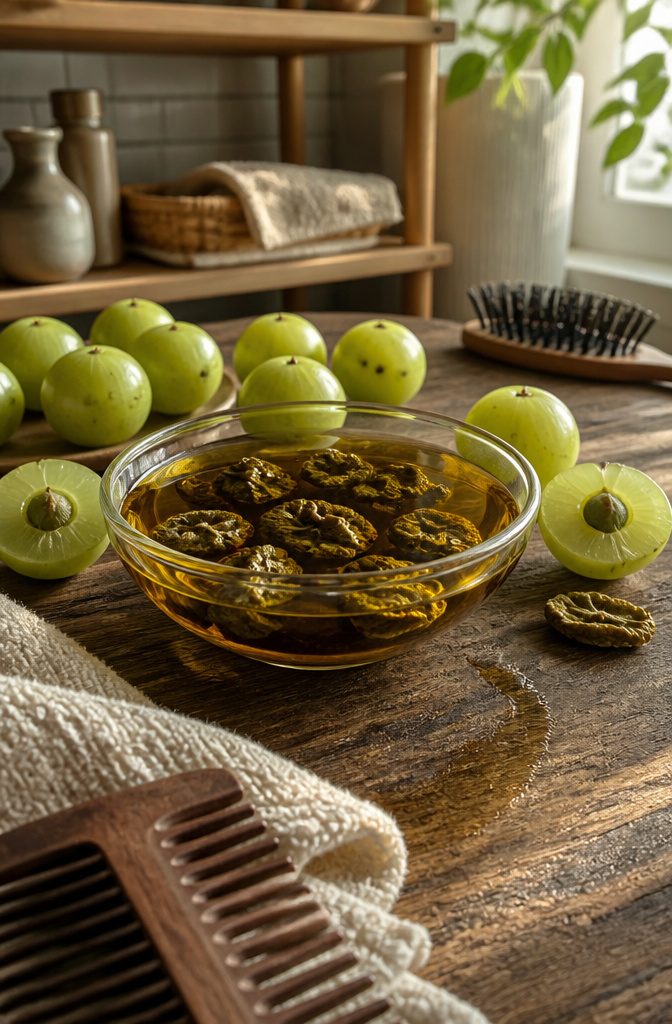
Amla is Indian gooseberry, the small green fruit of Phyllanthus emblica (sometimes listed as Emblica officinalis). The oil used for hair isn’t steam-distilled the way true essential oils are.
It’s an infused oil: dried amla fruit soaked in a carrier oil like sesame, coconut, or mustard until the nutrients transfer into the oil. That difference matters.
Steam-distilled oils are highly concentrated and used by the drop. Infused oils are thicker and hold more of the fruit’s fats, pigments, and antioxidants, which means they work more like a deep conditioning treatment than a fragrance oil.
Many bottles labeled amla essential oil for hair are actually infused oils, so the name can be misleading. What you’re looking for when you shop is the infused version, even if the label says otherwise.
What the Research Says About Hair Growth
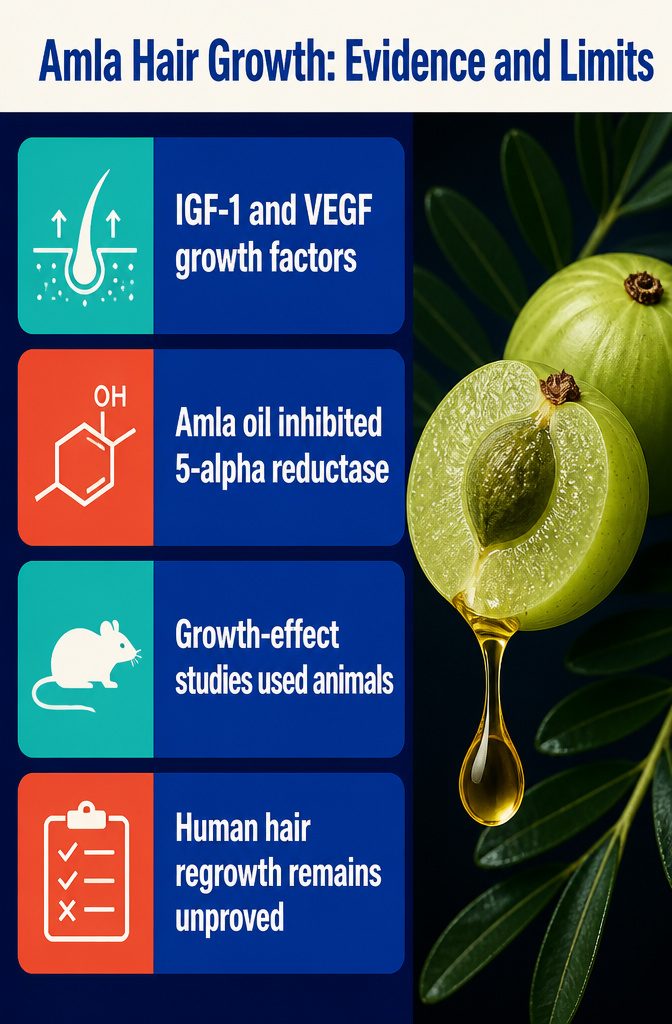
The evidence for hair growth sits mostly in tradition and animal studies, not in human trials. Healthline points out that the studies showing growth effects were conducted on animals.
Medical News Today goes further, noting that the reported benefits are not proved. The gap between what people have used for centuries and what controlled trials confirm is wide here.
Clinical studies show that Amla extract increases the expression of specific growth factors, namely IGF-1 and VEGF. In plain English? It tells your hair follicles to stay in their active growth phase much longer before finally shedding.
That claim about growth factors and extended anagen phase is exactly what the human trials have not tested yet. The Times of India also cites 5-alpha reductase inhibition, the same mechanism finasteride uses to treat male pattern baldness.
A 2012 study did find amla oil inhibited that enzyme. A December 2017 study identified phenolic compounds in amla fruit.
What neither study tells you is whether applying the oil to your scalp prevents thinning or speeds regrowth in people. The difference between a mechanism and a result matters when you are deciding whether to try it.
How Amla Oil May Reduce Shedding and Breakage
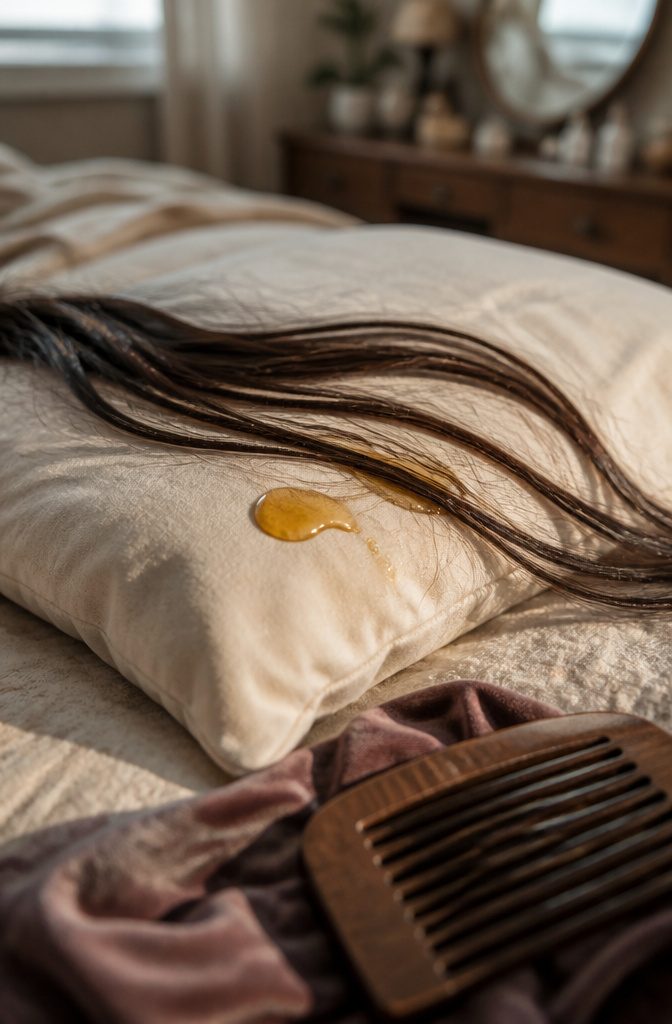
Amla oil addresses breakage and shedding through two separate pathways.
The first is mechanical. Fatty acids in the oil coat the hair shaft, and that coating reduces friction when strands rub against each other or against fabric.
Less friction means fewer snapped ends, especially on hair that tangles easily or sits against a pillowcase all night.
The second pathway involves the follicle itself.
A 2012 study found that amla oil inhibits 5-alpha reductase, the same enzyme targeted by finasteride, a medication prescribed for male pattern baldness. When that enzyme is blocked, follicles may stay in the active growth phase longer and shed less.
Researchers identified a 7.5 percent solution with water as ideal and monitored fur growth in an animal study over 15 days.
That concentration matters because stronger solutions can irritate, and weaker ones may not deliver enough active compounds to make a difference. Most commercial amla oils list concentration on the label, so it’s worth checking before you buy.
What It Does for Scalp Condition and Hair Appearance
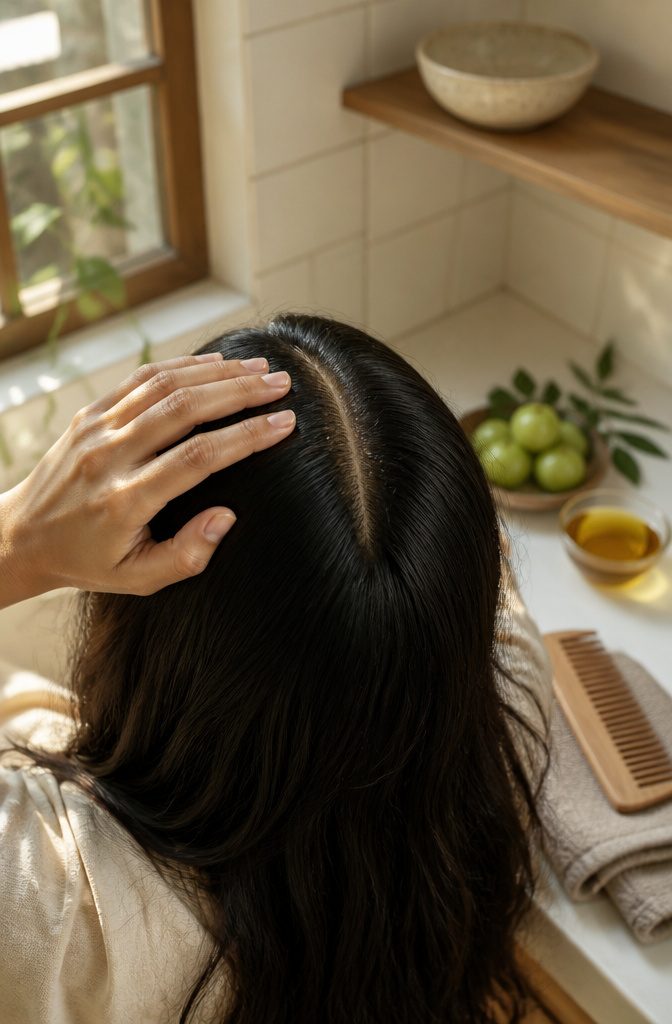
Amla is one of the richest plant sources of vitamin C, and that matters because vitamin C drives collagen production at the follicle level. Collagen keeps the hair shaft strong and the scalp structure intact.
The oil also carries tannins, flavonoids and polyphenols, all of which neutralize free radicals from pollution, UV exposure and daily styling stress. Less oxidative damage around the root usually means less breakage and a scalp that can support healthy growth.
Animal studies found amla oil caused faster, healthier fur growth in rabbits and rats, and one study noted it worked as a strong inhibitor of hair parasites.
Those effects are documented, but most of the claims around texture, shine and dandruff relief rest on traditional Ayurvedic use rather than clinical trials in humans.
Still, the fatty acid content does coat and soften the strands, and users often report calmer, less flaky scalps after regular oiling sessions.
The oil penetrates rather than just sitting on the surface, which helps it deliver nutrients where dryness or buildup has taken hold.
How to Apply Amla Oil to the Scalp
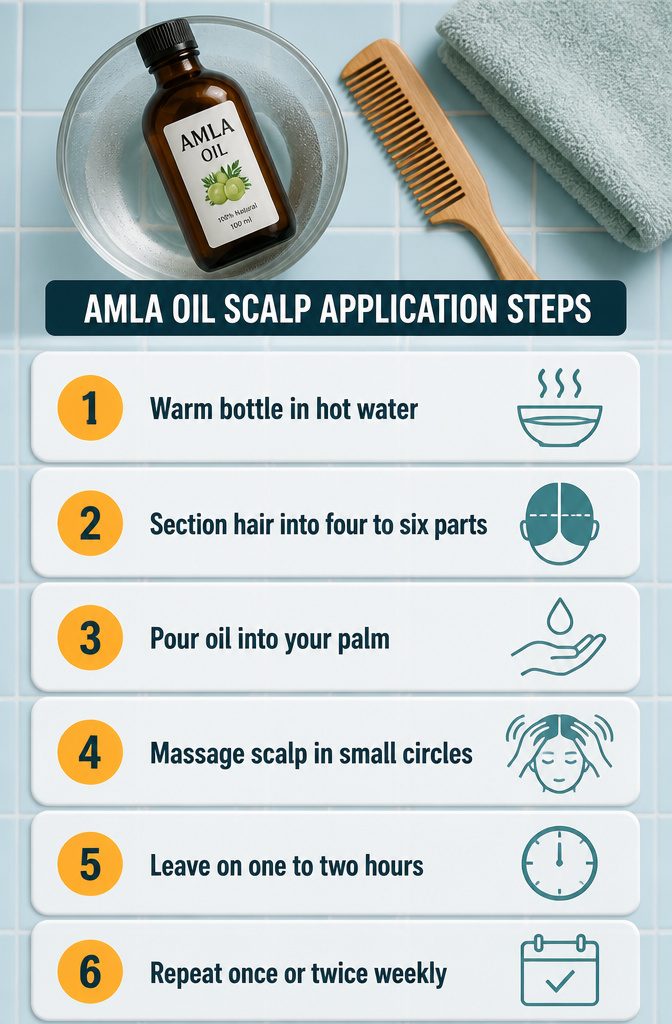
How to Apply Amla Oil to the Scalp
- Warm the oil for one to two minutes by placing the bottle in hot water. This helps it spread more easily and absorb better.
- Section your hair into four to six parts so you can reach every area of the scalp without missing spots.
- Pour one to two teaspoons into your palm for short hair, or a tablespoon if your hair is long.
- Massage the oil into your scalp using your fingertips in small circles for four to five minutes. The pressure helps the oil work in and increases circulation.
- Leave it on for at least one to two hours, or overnight if you can manage sleeping with oiled hair. Longer contact time gives the oil more chance to work.
- Repeat once or twice a week. Daily use is too much for most scalps and can leave hair greasy.
Pre-Wash Masks With Yogurt, Aloe or Honey
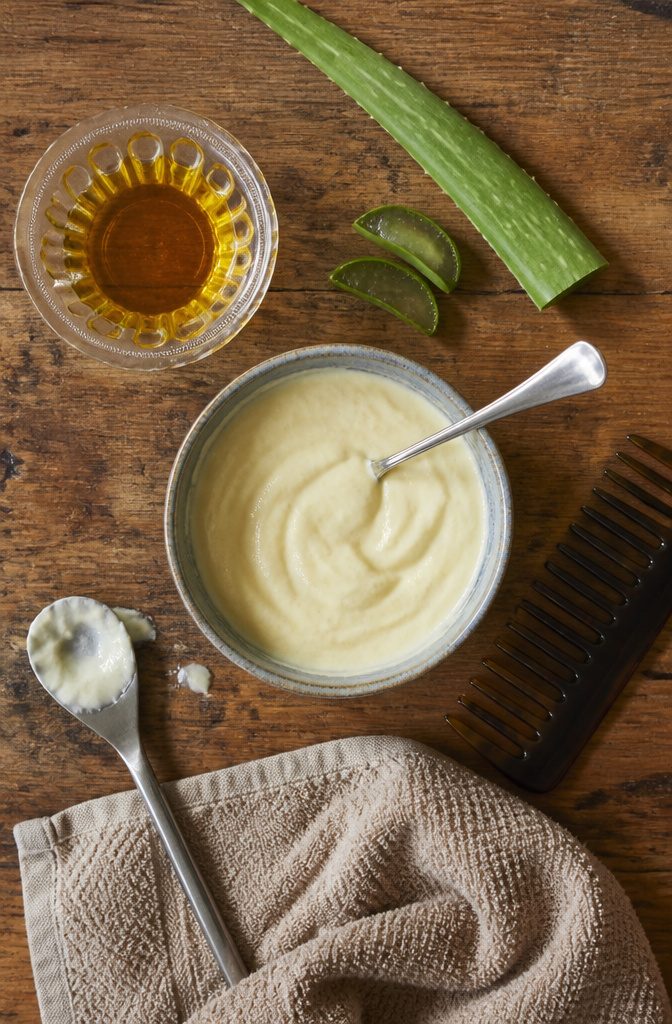
Mixing amla oil with ingredients like yogurt, aloe or honey turns it into a pre-wash treatment that softens hair and makes the oil easier to rinse.
A basic mask combines one tablespoon amla oil with two tablespoons plain yogurt, left on scalp and hair for thirty minutes before shampooing. The yogurt adds protein and helps the oil spread evenly without dripping.
If your scalp runs dry or flaky, swap the yogurt for two tablespoons aloe vera gel and leave the mix on for thirty minutes.
For coarser or damaged hair, add a teaspoon of honey to the yogurt base and stretch the time to forty-five minutes.
The honey holds moisture, and the longer window gives the oil time to coat each strand. All three versions rinse clean with one shampoo, no second lather needed.
Choosing an Amla Oil and Reading the Label
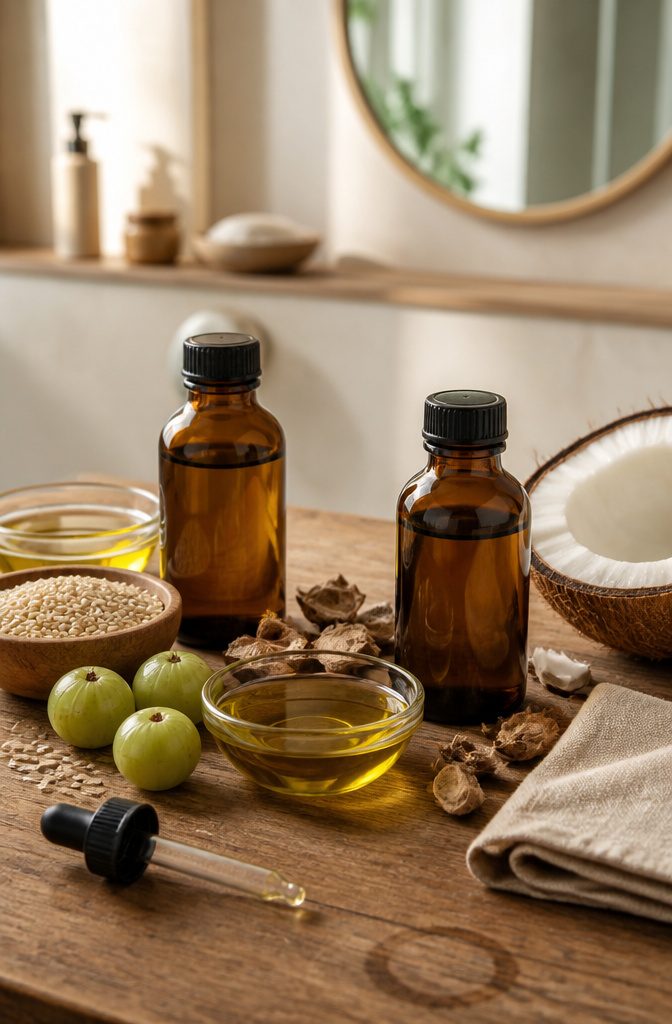
Here’s what to look for before you buy.
- Check the botanical name. The label should list Phyllanthus emblica or Emblica officinalis. That confirms the fruit is actually amla, not something vague or blended beyond recognition.
- Read the full ingredient list. Pure versions are short: sesame oil and amla, or coconut oil and amla. Avoid anything padded with mineral oil, liquid paraffin or synthetic fragrance.
- Expect an infused oil, not an essential oil. Most bottles sold as amla oil are infused, meaning the fruit was soaked in a carrier oil to pull out nutrients. True steam-distilled essential oils are rare and concentrated differently.
- Look for origin details. Amla grows natively in India, and brands that list batch details or sourcing location give you more confidence in what you’re applying.
- Check for certifications if you want organic confirmation. USDA Organic and ECOCERT labels mean stricter rules on ingredients and processing. They narrow the guesswork.
- Skip artificial fragrance. Pure amla oil smells mild and earthy. If it’s sharp or perfumed, something else is in the bottle.
Blending Amla With Rosemary, Castor or Bhringraj Oil
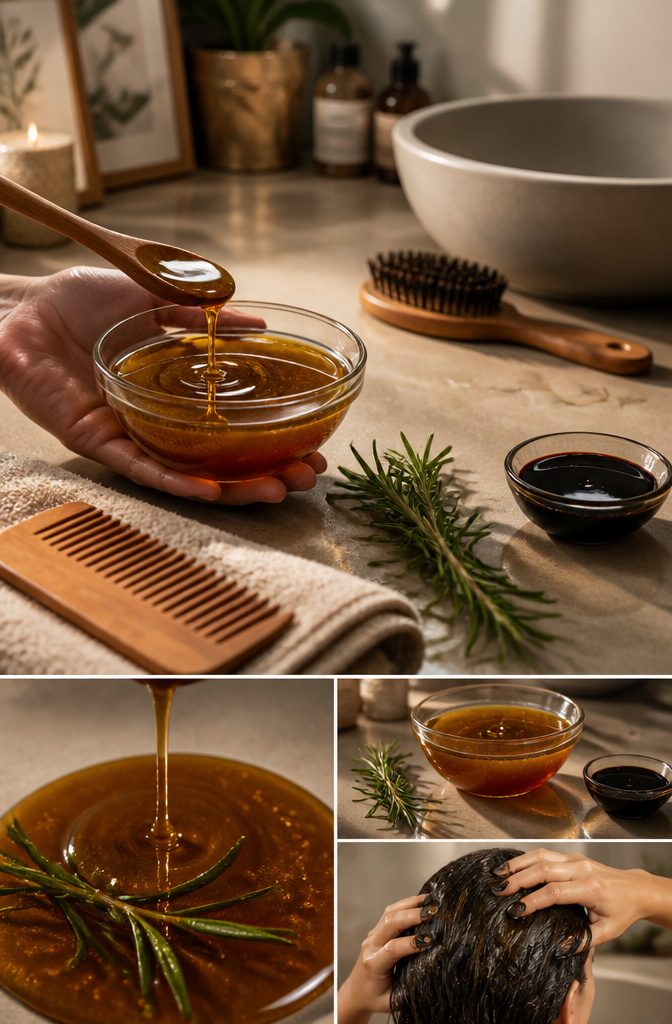
Amla blends well with oils that bring their own scalp or strengthening benefits. Two to three drops of rosemary essential oil per tablespoon of amla oil adds a fresh scent and pairs two ingredients often mentioned together for hair care.
Equal parts amla and bhringraj oil work as a weekly treatment if you want to stay in the Ayurvedic ingredient family.
For a heavier pre-wash mask, mix 2 tablespoons amla oil with 1 tablespoon castor oil and 3 drops rosemary essential oil. The castor thickens the blend and holds moisture in, so it feels best when you have time to wash afterward.
Use it two to three times a week, massage into the scalp for five minutes, pull through the lengths, and leave for thirty to sixty minutes before shampooing.
A lighter scalp-focused blend uses 1 tablespoon amla oil, 1 teaspoon neem oil, and 2 drops tea tree essential oil. This one is for itch or flakes rather than length.
Leave it on for twenty to thirty minutes and rinse well. Tea tree is strong, so two drops is enough.
How Long to Use It Before Seeing Results

You will not see real change overnight. Hair grows about half an inch per month, and that pace is set by genetics and age, not by any oil you apply.
Visible improvement in density and strength typically arrives after twelve weeks of consistent use. Some sources suggest you may notice results closer to eight weeks, but that still requires steady application without skipping.
Patience is part of the bargain.
If you expect dramatic length by next weekend, you will be disappointed. Amla oil works by protecting what is already growing and by keeping follicles in good condition, not by forcing them to grow faster.
Stick with it for the full three months, and the difference in how your hair looks and feels will show up on its own.
Patch Testing and Irritation Cautions
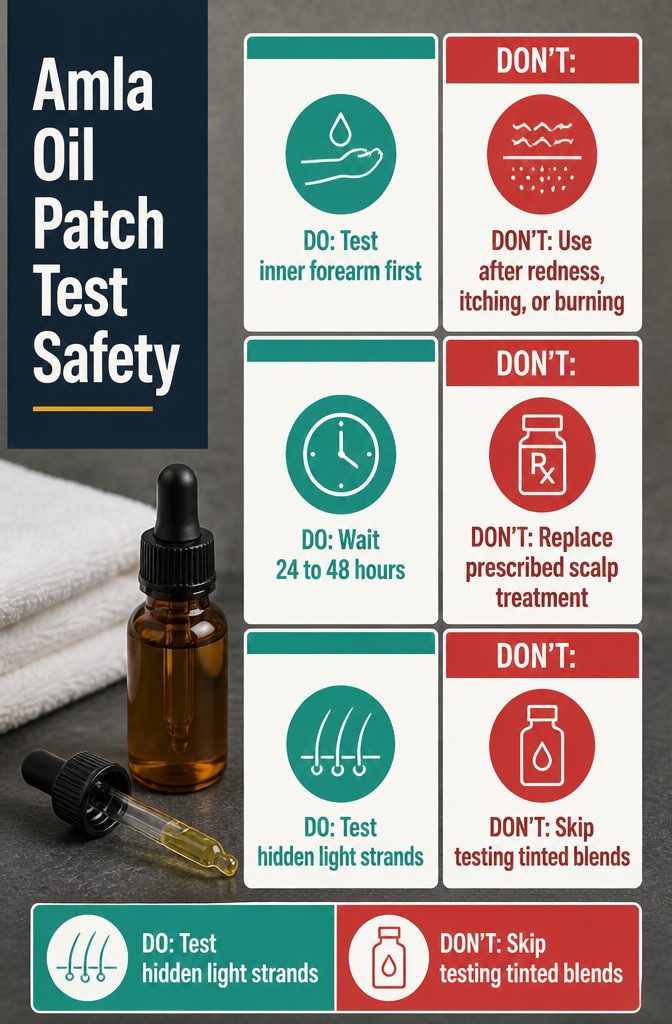
Patch testing matters. Before you use amla oil anywhere near your scalp, apply a drop to your inner forearm and wait 24 hours.
Some sources stretch that window to 48 hours, and if your skin tends toward sensitivity, the longer wait is worth it. Redness, itching or burning means skip it entirely.
Amla oil is generally gentle, but rare cases of lichen planus pigmentosus and irritation have been reported, particularly in people with naturally darker skin and those who spend time in UV light.
If you have an existing scalp condition, amla oil is not a replacement for medical treatment. It may help with general scalp health, but it does not substitute for what a dermatologist would prescribe.
Light-colored hair carries one more risk: some amla blends can leave a slight tint on blonde or silver strands over time.
Run a strand test on a hidden section first, wait a day or two, and check before you commit to a full application.
Adjusting Use for Oily, Dry or Light-Colored Hair
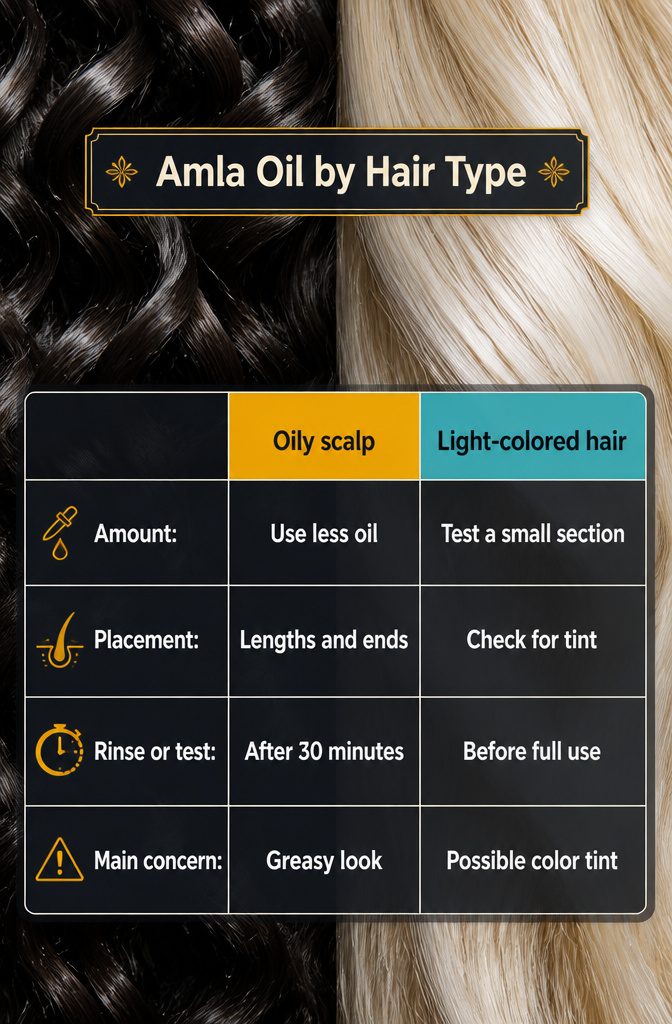
Adjusting Use for Oily, Dry or Light-Colored Hair
Amla oil works across hair types, but how much you use and where you put it shifts with what you’re starting with.
- Oily scalp: Use less oil and apply mostly to the lengths and ends. A pre-shampoo massage rinsed out after 30 minutes keeps things from looking greasy.
- Dry hair: Hot oil treatments or overnight masks work well here, since the hair can absorb more.
- Fine hair: A tiny amount on the ends only. Too much weighs it down.
- Curly or coarse hair: Works as a mask or a leave-in sealant to lock in moisture.
- Blonde, silver or color-treated hair: Some amla oils may tint lighter shades, so patch-test on a small section first.
Making Amla Oil at Home

**1.
Grate or blend 1 cup of dried, fresh, or frozen amla fruit.** Extract the juice by squeezing the pulp through a sieve into a bowl.
2. Mix the amla juice with 1 tablespoon of oil.
Coconut, olive, or sesame are common bases. Whip the mixture until it looks uniform.
**3.
Apply the oil to your scalp for one to two hours, then rinse.** You can also leave it on overnight.
For a longer-lasting batch, combine 1 tablespoon amla powder and 5 tablespoons oil in a pan. Heat on the lowest setting, stirring occasionally, for about 10 minutes until the mixture smells pleasant and lightly bubbles.
Cook 2 to 3 more minutes without letting it boil, then cover and let it seep for at least 24 hours. Strain through a sieve into a glass jar.
Store the oil in a cool, dark place. Natural oils stay fresh for around one year in glass containers.
Frequently Asked Questions
Does amla oil really work for hair growth?
The reported benefits are not yet proved by research, according to Medical News Today.
Most studies showing growth effects were conducted on animals, not humans. The oil may help reduce breakage and keep follicles healthier, but controlled trials confirming actual regrowth in people are still missing.
How do you use amla oil on your hair?
Warm the oil, section your hair, massage 1 to 2 teaspoons into your scalp for 4 to 5 minutes, and leave it on for 1 to 2 hours or overnight.
Rinse with shampoo. Repeat once or twice a week for best results.
How often should I use amla oil for hair growth?
Use it 2 to 3 times a week.
Daily application is too much for most scalps and can leave hair greasy. Consistent use over 12 weeks is when visible improvement in density and strength typically shows up.
Can I leave amla oil on overnight?
Yes, overnight use is fine and gives the oil more time to work. Cover your pillow to avoid stains, and wash the oil out the next morning with shampoo.
Is amla oil suitable for all hair types?
It works across most hair types, but application shifts with what you start with.
Oily scalps need less oil applied mostly to lengths, dry hair handles hot oil treatments or overnight masks, and fine hair does best with a tiny amount on the ends only.
Can I mix amla oil with other oils?
Yes, amla blends well with coconut, sesame, castor, bhringraj, rosemary, and neem oil. A common mix is 2 tablespoons amla oil with 1 tablespoon castor oil and 3 drops rosemary essential oil, used as a pre-wash mask 2 to 3 times a week.
How do I know if my amla oil is pure?
Check the botanical name on the label for Phyllanthus emblica or Emblica officinalis.
The ingredient list should be short, like sesame oil and amla or coconut oil and amla, with no mineral oil, liquid paraffin, or synthetic fragrance. Pure amla oil smells mild and earthy, not sharp or perfumed.
What are the disadvantages of amla hair oil?
Rare cases of lichen planus pigmentosus and irritation have been reported, particularly in people with darker skin and UV exposure.
Some amla blends can tint blonde or silver hair over time, so run a strand test first. Too much oil or daily use can make hair greasy.
Can I use amla oil on my hair every day?
No, daily use is too much for most scalps and leaves hair greasy. Once or twice a week is the range that works without overloading the hair or scalp.