Hair grows about half an inch per month no matter what you do, and nothing on this list changes that figure.
What you can change is how much length you keep before it breaks off, which is where protein intake, heat ceilings below 350°F, and scalp scrubs twice weekly make the difference between shoulder-length hair and hair that reaches your bra strap.
How Fast Hair Actually Grows
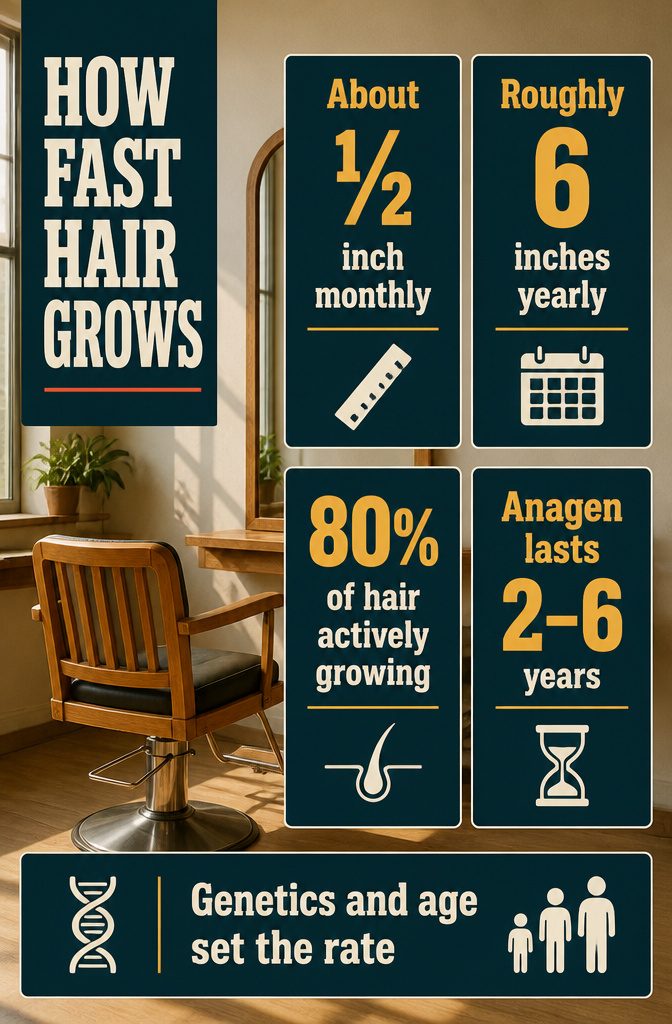
Hair grows about half an inch per month, which adds up to roughly 6 inches in a year.
Some measurements put the range at 0.5–1.7 centimeters monthly, but the American Academy of Dermatology figures are what most people see. The rate itself depends on genetics, age, sex and ethnicity, and none of those are things you can change.
At any time, about 80% of your hair is actively growing.
That active phase is called anagen, and it lasts between 2 and 6 years before the follicle shifts into rest and the strand falls out.
About 85–90% of the follicles on your head are in anagen at any given moment, which is why you keep most of your hair even as individual strands cycle through.
What that means for the strategies below: they protect the hair that does grow rather than speed up the clock.
Products and supplements are unlikely to make a noticeable difference to the growth rate itself. Diet and gentle handling matter because they keep strands from breaking off before they reach the length you want.
1. Protein and Nutrition
Hair is made of keratin, a protein, so getting enough protein in your diet is the foundation.
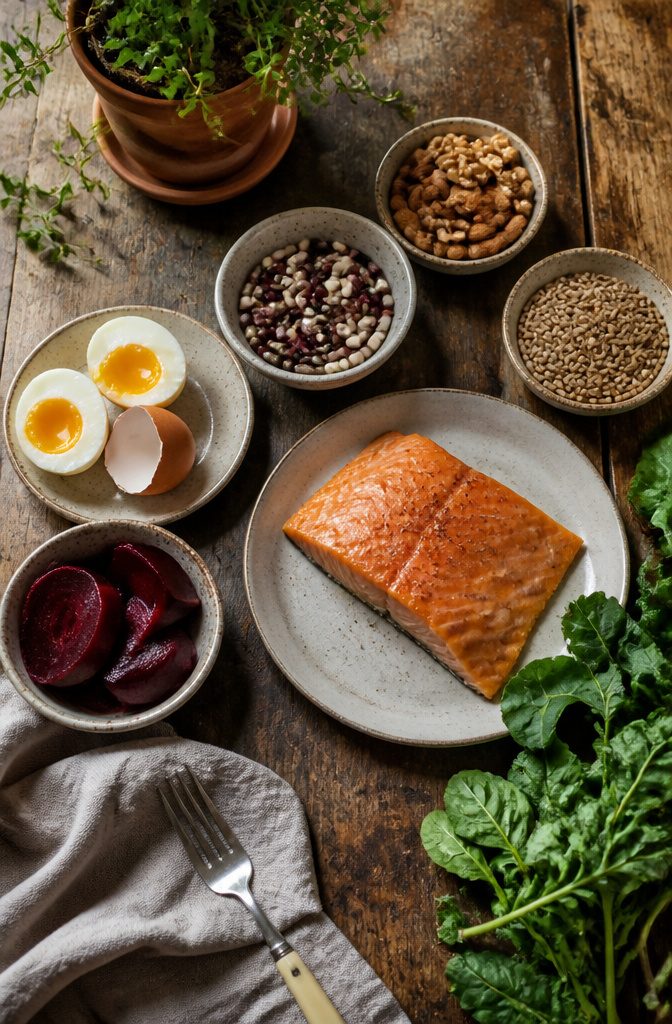
Aim for 50 grams or more of protein daily to support growth. Eggs, fish, nuts, leafy vegetables, dairy, beans, whole grains and lean meats all deliver what each strand needs to form properly.
If your body does not get enough protein, it diverts what it can to more critical functions, and hair growth drops low on the priority list.
Restrictive dieting can slow growth and trigger shedding that continues for months even after you return to normal eating. Sudden weight loss may cause diffuse shedding, sometimes linked to niacin deficiency.
The case for eating enough is stronger than the case for any single supplement. Key nutrients include biotin, folic acid, niacin, and vitamins C, E, A, and D. You can find biotin in eggs, nuts, leafy greens, and salmon.
Iron deficiency often causes hair to fall out before it reaches full length, so consider sources like red meat, dark leafy greens, and beetroot if your levels run low.
2. Supplements and Deficiencies

Supplements fill a gap when a deficiency exists, not when you simply want faster results.
Biotin improves hair growth and helps with inflammation, and the follicle benefits alongside skin and nails. Collagen supplements have been considered as well, though evidence is still developing and more research is needed.
A 2015 study found that taking omega-3 and omega-6 supplements for six months helped protect against hair loss in people with female pattern baldness.
The authors of a 2017 review suggest that deficiencies in vitamins D, E, A, iron, zinc and folic acid can impact both the structure of your hair and its growth.
Hair-growth supplements have the potential to work, provided there is a nutritional need.
If you eat balanced foods, your body will already be filled with what it needs, and doubling up by popping supplements will not make a difference. Your body keeps what it needs and gets rid of the rest.
Named options include Nutrafol Women’s Balance Hair-Growth Supplements ($88) and OLLY Heavenly Hair Gummies ($16).
Test for deficiencies and discuss options with a clinician before starting a supplement routine, and make sure they will not interact with any medications you are currently taking.
3. Trims and Split Ends
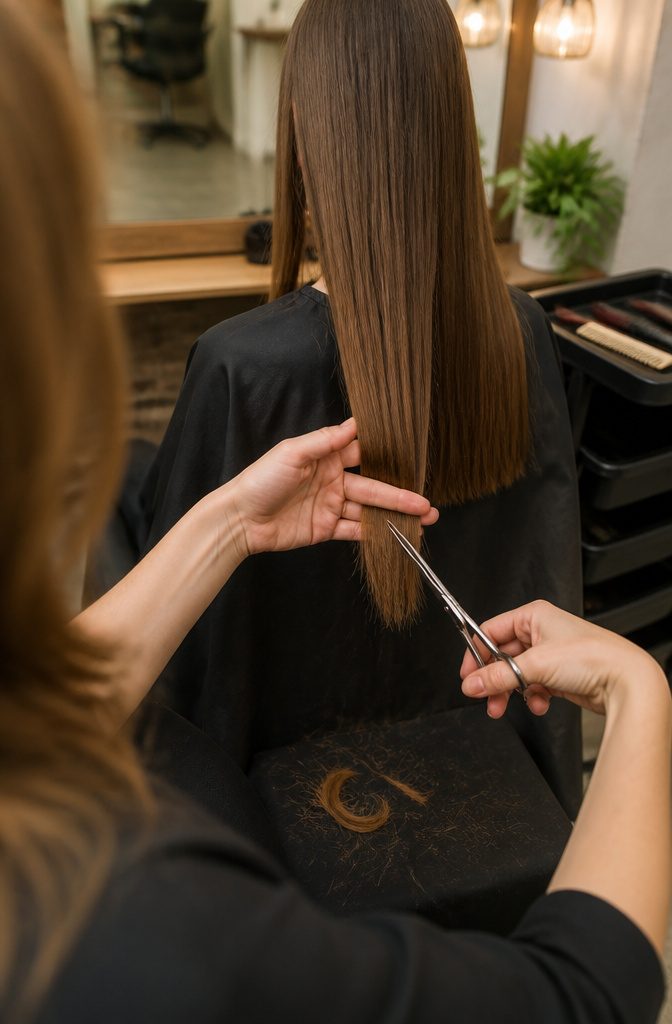
Trims remove damaged ends; they do not accelerate the rate at which your scalp pushes out new growth.
Your hair adds about half an inch every month whether you cut it or not. The case for trimming rests on preventing splits from climbing higher up the shaft and snapping off length that already grew.
Frequency depends on texture and how you style. One approach cuts an eighth of an inch every ten to twelve weeks.
Another takes a quarter inch every three months, or roughly every eight weeks. Coarse hair, frequent heat and color all speed the rate at which ends split, so the right interval is personal.
When you do go in, ask for a dusting if you want minimal loss. Clip off damaged tips before they break and cost you more length than the trim itself would have.
4. Gentle Washing and Shampoo Choices
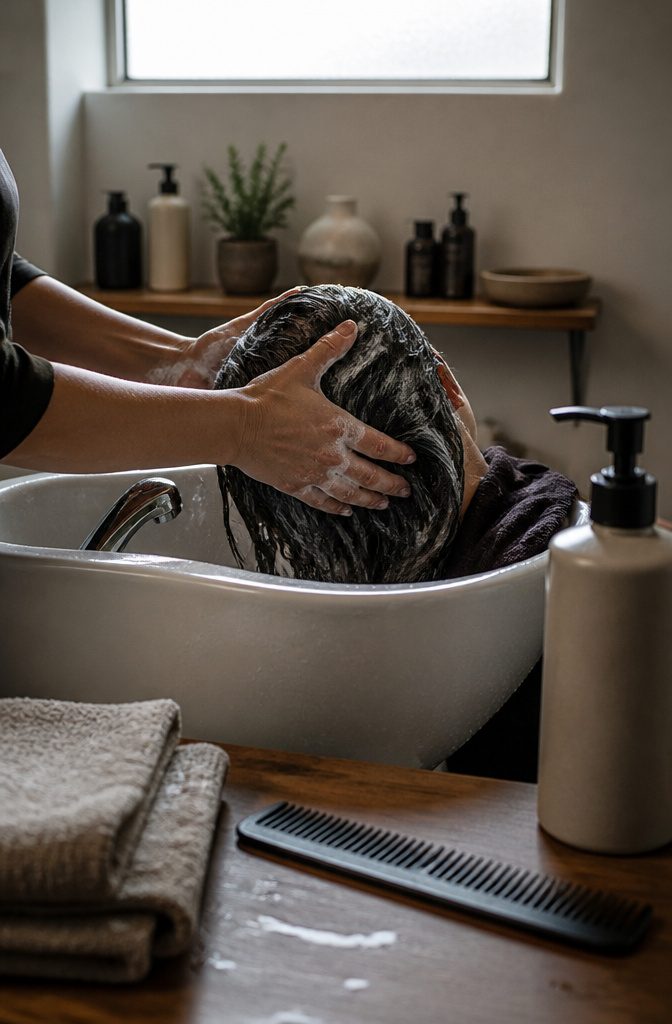
Gentle Washing and Shampoo Choices
Washing frequency should match your hair and scalp, not a fixed schedule.
Two to three times weekly suits many hair types, while Black hair is often washed weekly or every other week. Over-washing strips moisture and can irritate the scalp, which translates to inflammation that turns off hair growth.
Choosing the right shampoo matters because too aggressive a formula can strip hair of its moisture and lead to damage long-term.
The wrong shampoo can also cause buildup or irritation to the scalp, clogging the hair follicles and slowing growth. If you are not sure which shampoo is ideal for you, choose one that is moisturizing and gentle.
Named options from the research include Rahua Classic Shampoo ($38), BREAD Beauty Supply Hair Wash ($20), Dove Density Boost Hydrating Shampoo (listed at $23, shown discounted to $12), and Christophe Robin Advanced Purifying Shampoo ($41).
Scalp shampoos can be applied directly and left for 5 minutes before rinsing.
5. Conditioning and Moisture
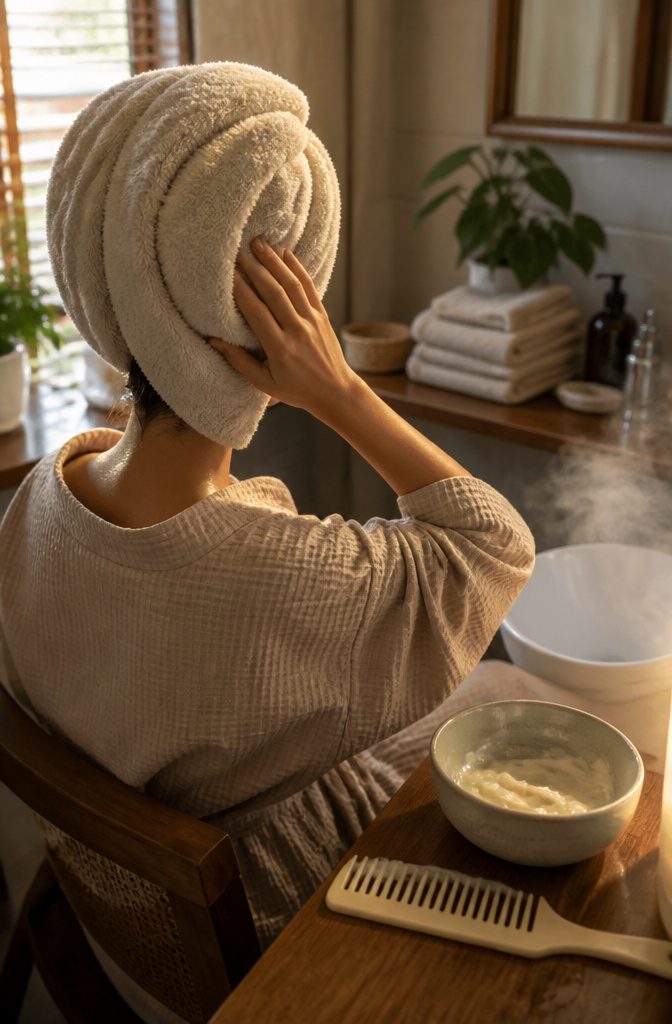
Conditioner plumps the hair shaft and improves elasticity, which translates to less breakage and more length over time. After each shampoo, work conditioner through the ends where strands are oldest and most prone to splitting.
A deep mask once a week adds back moisture faster than daily conditioner alone. Apply to damp hair, wrap in a warm towel for five minutes, and let it penetrate.
Shea Moisture Jamaican Black Castor Oil Strengthen & Restore Treatment Masque runs $10, Sachajuan Leave In Conditioner $40, and Davines Love Smoothing Conditioner $43. For Black hair, hot oil treatments twice monthly improve both moisture and elasticity without the weight of some cream masks.
6. Reduce Heat Styling
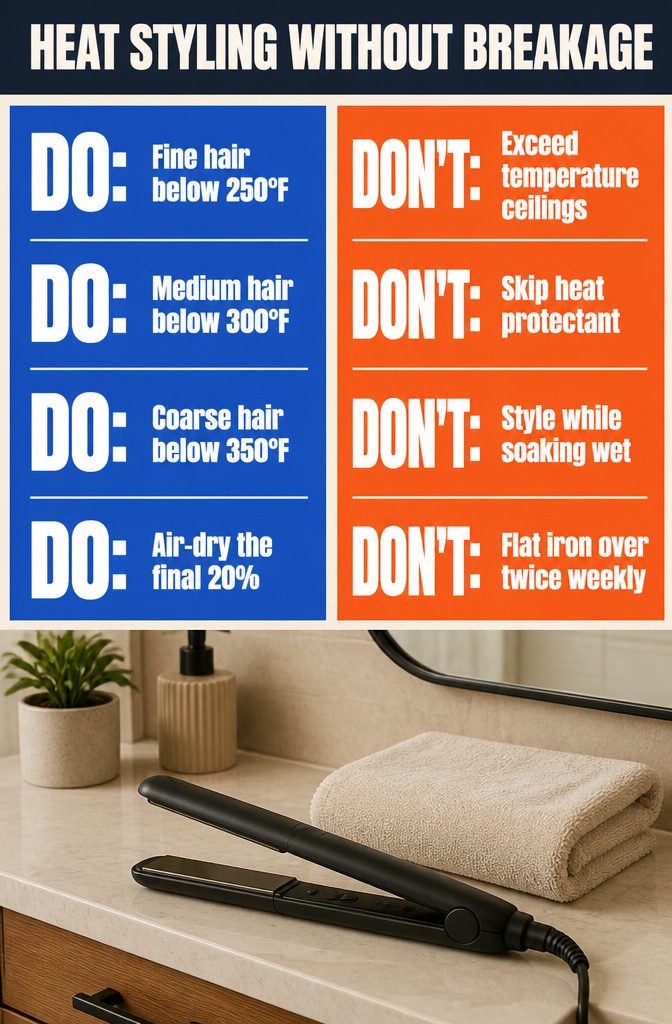
Heat cuts speed. Hair that snaps at the mid-shaft never makes it to your shoulders, and a flat iron at 400°F will weaken the cuticle enough that combing later finishes the job.
Keep your tools below 250°F if your hair is fine, 300°F for medium texture, and 350°F for thick or coarse strands. Those ceilings give you enough heat to smooth or set a curl without turning the shaft brittle.
I stop the blow-dryer when my hair is about 80 percent dry and let the rest happen on its own.
That last damp twenty percent takes the longest to evaporate under heat anyway, and air-drying it costs you nothing. Before any hot tool touches your hair, a heat protectant goes on damp strands.
Mizani 25 Miracle Milk runs $26 and conditions while it shields; Kenra Professional Hot Spray lists at $24 but often sells for $17, with protection rated to 428°F. Twice a week is the most I would reach for a flat iron or curling wand if length is the goal.
7. Bleach, Dye, and Chemical Treatments
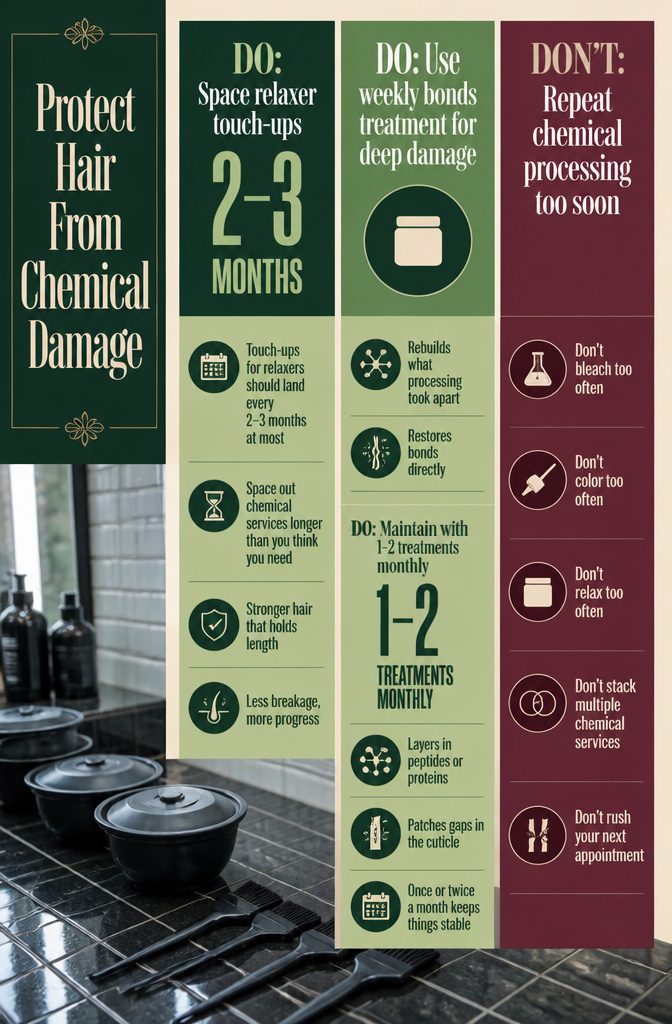
Chemical processing strips the structural bonds that keep hair intact, and the more rounds you put in, the more fragile each strand becomes.
Bleach opens the cuticle every single time, especially hard on darker hair, and color or relaxer work stacks the same kind of damage.
Touch-ups for relaxers should land every 2–3 months at most, and spacing out any chemical service longer than you think you need to buys you stronger hair that holds length instead of snapping off.
Between appointments, bond-building treatments rebuild what processing took apart. When damage runs deep, a weekly treatment makes sense; once the worst is behind you, dropping to once or twice a month keeps things stable.
Some formulas restore bonds directly, others layer in peptides or proteins to patch the gaps in the cuticle where breakage starts. I lean on these between color sessions because they let me keep the look without losing the progress.
8. Handle Wet Hair Gently
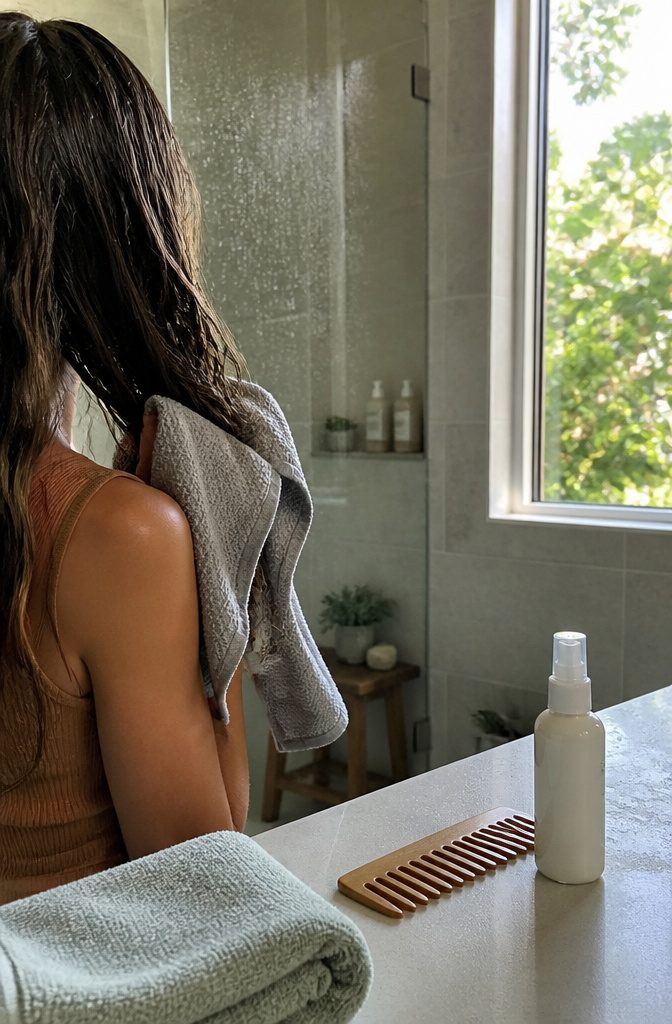
Wet hair stretches more than dry hair, and that makes it easier to break. Blot with a towel rather than rubbing it, which tugs strands and lifts the cuticle.
Microfiber towels cut friction; the Act+Acre Microfiber Hair Towel runs $48, the Volo Beauty Salt White Hero Hair Towel sits at $44 at Nordstrom, and the Aquis Flip Hair Wrap Towel costs $50.
Skip the turban twist if you can; the combination of tension and fabric contact on fragile wet hair works against length.
Do not sleep on wet hair. Laying on damp strands weakens them and invites matting.
Let hair reach at least 80 percent dry before bed, and hold off on brushing until then, too. If you must detangle while damp, work from the ends up with a wide-tooth comb and a leave-in conditioner to reduce the pull.
9. Brush and Detangle Carefully
Brush and Detangle Carefully
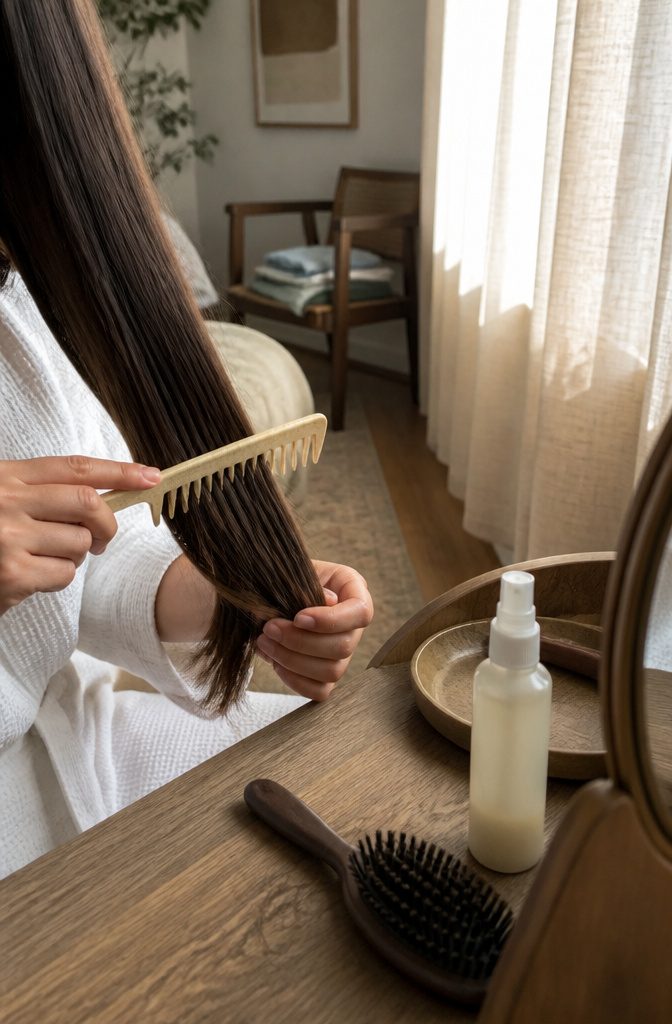
Start at the ends and work upward in small sections.
Pulling a brush from the roots through a knot doesn’t make the job easier; it snaps strands under tension. Wet hair stretches and breaks more easily than dry, so save the bristle brush for after it dries.
A wide-tooth comb handles tangles with less force. The By Vilain XL Comb is built for longer hair and won’t catch the way a dense brush does.
If you must detangle while damp, apply a leave-in conditioner first to reduce friction and work through one section at a time. Stop if the tool catches and separate the tangle with your fingers.
Avoid excessive brushing; hair doesn’t grow faster from hundred-stroke sessions, and the repeated stress adds up. I reach for a wide-tooth comb most mornings and keep the Mason Pearson Bristle and Nylon Brush ($200) for smoothing once everything is dry.
10. Sleep Protection
Sleep Protection
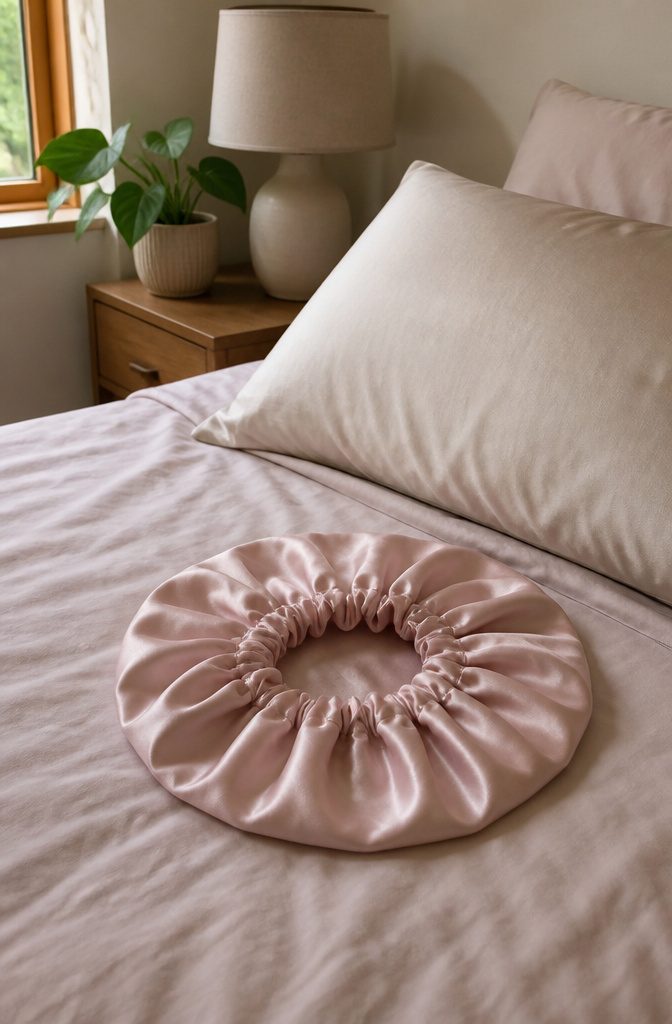
Friction between your hair and a cotton pillowcase causes tangles and breakage every night, and switching to silk or satin cuts that damage while you sleep.
The smoother surface lets hair glide instead of catching, so strands stay intact and length stays on your head.
I like the Slip Pure Silk Pillowcase at $89 from Nordstrom for durability, though the Blissy Silk Pillowcase on Amazon runs $59 and the ZimaSilk 100% Mulberry-Silk Pillowcase starts at $24 if budget matters more.
Satin works nearly as well for less: the Kitsch Satin Pillowcase starts at $16, and Brooklinen’s Mulberry Silk Pillowcase lands at $55.
Hair ties deserve the same attention.
Elastic bands snag and snap strands, while satin scrunchies hold without the damage. The Slip Silk Skinnie Scrunchies come six to a pack for $51.
Sleep itself matters, too.
Getting 7–9 hours each night keeps your body’s melatonin production steady, and that hormone regulates hair growth. Skimp on sleep and the growth cycle stalls.
11. Scalp Care
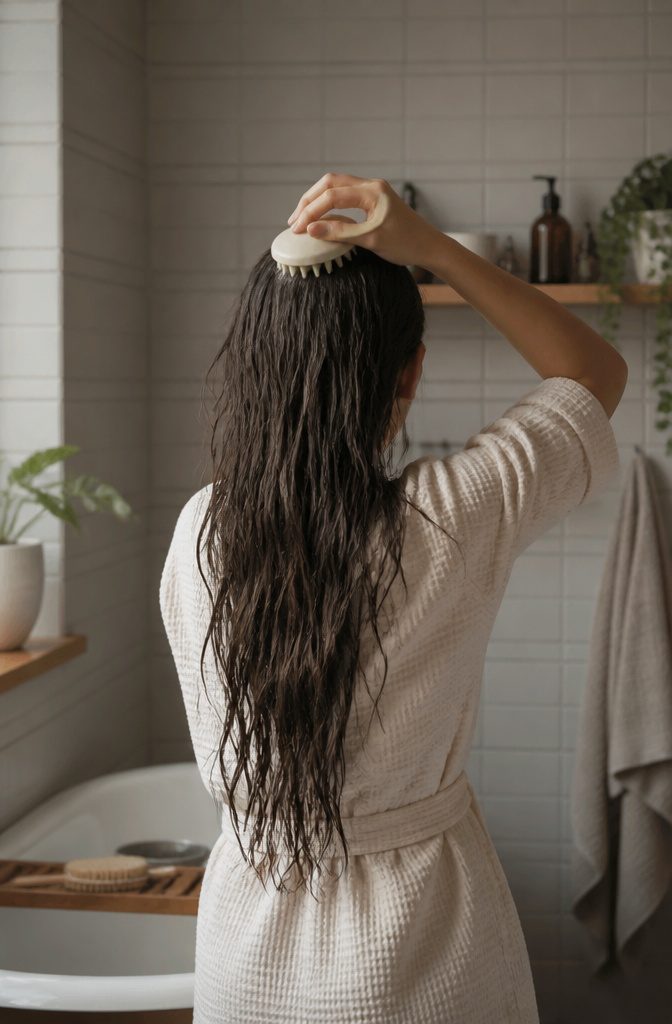
A clean scalp gives follicles room to work. Buildup from styling products, hard water minerals, and even sebum can sit at the root and slow things down.
A scalp scrub once or twice a week lifts what shampoo alone leaves behind. I like the physical act of working the scrub in with fingertips; it gets the blood moving while it cleans.
The NatureLab. Tokyo Perfect Shine Clarifying Scalp Scrub runs about $20 and uses fine granules that rinse clean without leaving residue.
A silicone massager makes the work easier if you scrub weekly. The Briogeo Scalp Revival Stimulating Therapy Massager costs $18 and fits the hand well enough that you can press without cramping.
A survey from 2019 tracked 340 people who massaged their scalps twice daily for four minutes; after 24 weeks, nearly 69% saw hair loss slow or reverse. Consistency matters more than pressure.
Rosemary oil is another route: a few drops massaged in and left for at least 15 minutes before washing. A 2015 study compared it directly with 2% minoxidil and found comparable results.
12. Stress Management

Stress Management
High or prolonged stress can push hair follicles out of the active growth phase early, and the result shows up 6–12 weeks after the stressful event.
That lag makes the cause easy to miss. When stress hormones rise, follicles shift into a resting phase and shed hair instead of producing new strands.
The hair growth cycle normally moves through four stages: anagen (when follicles produce and push out hair, lasting 2–6 years for most people), catagen (a brief transition), telogen (a resting phase), and exogen (when the hair falls out and the follicle prepares to start over).
Stress disrupts that rhythm.
Regular exercise, time outdoors, deep breathing and meditation can help lower cortisol levels. If shedding is heavy or persists, a clinician can check whether stress is the driver or another factor is at work.
13. Protective Styling and Tension
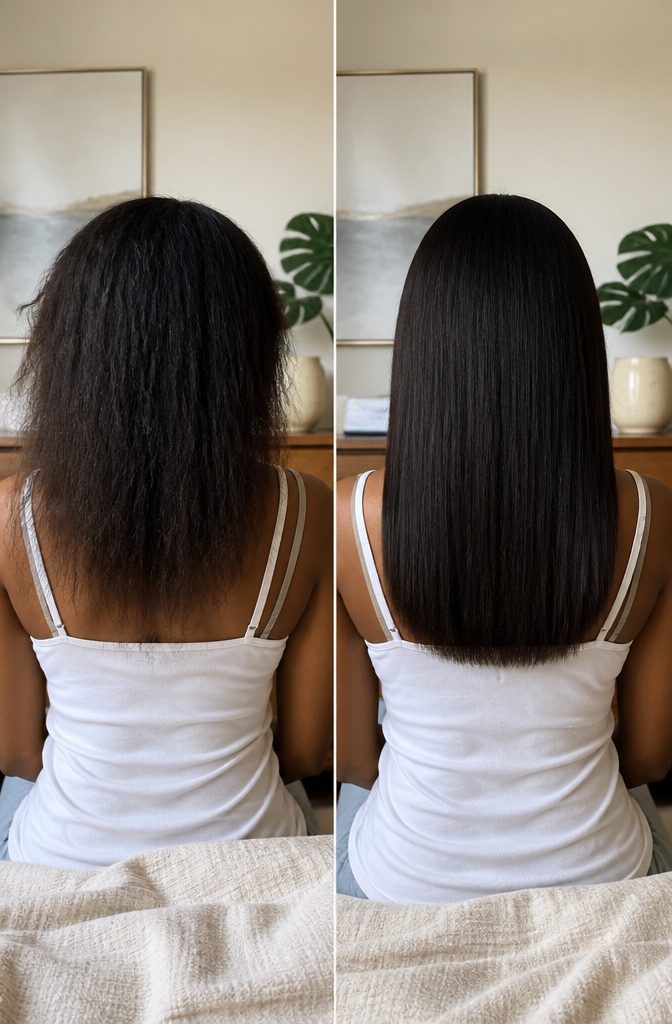
Low-manipulation styles protect length by cutting down how often you handle your hair.
Loose twists, rolls, and braids let you go days between restyling, and that matters when daily combing and heat add up to breakage faster than growth can replace it.
The strategy works across hair types: less friction, fewer tangles, more length retained.
Tight styles do the opposite. Braids, ponytails, cornrows, and weaves that pull at the root can damage follicles over time, a pattern dermatologists call traction alopecia.
If a bun or ponytail hurts, it is too tight. A low ponytail with a gentle band like the Drybar Super Lemon Drop ($20) keeps tension off the hairline without giving up style.
For extensions and weaves, keep the commitment short: no more than 2–3 months at a time, then change the style.
Washing as often as your hair type needs and using water-based gels around the hairline help protect finer strands while the weave is in. Pain during installation is a sign to stop and adjust before the damage sets in.
14. Medical Treatments for Hair Loss
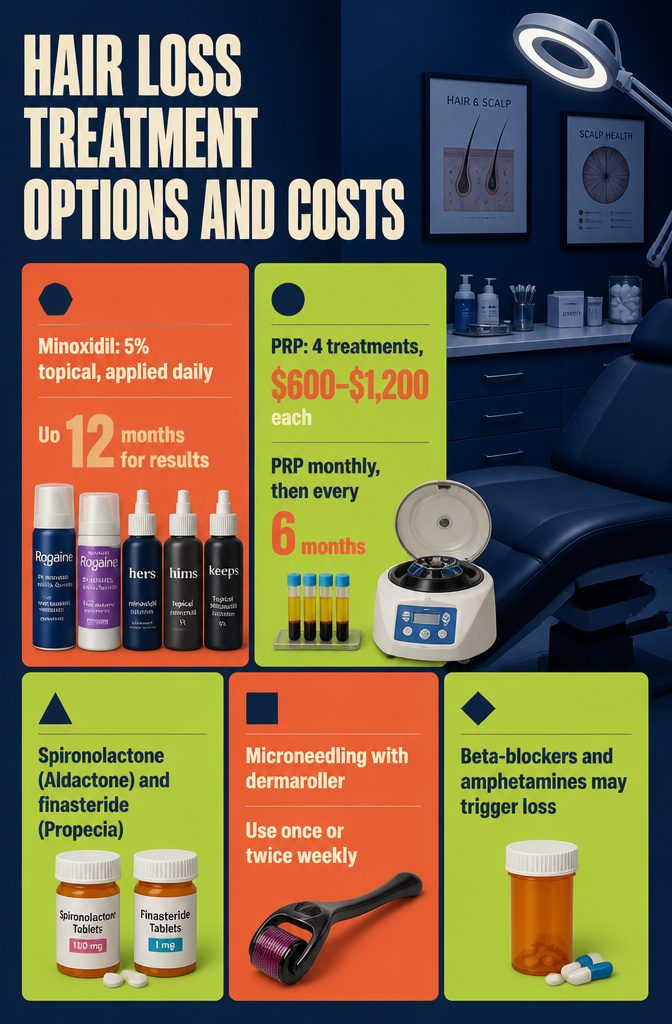
When shedding feels heavier than usual, shows up in patches, or starts without explanation, a dermatologist can identify what is happening and walk through the options.
Minoxidil is the most widely available treatment, usually sold as a 5% topical solution you apply daily. Results take time: up to 12 months in some cases.
Brands include Rogaine, Women’s Rogaine, Hers Minoxidil Solution ($27 on Amazon, $30 on Hers), Hims, and Keeps. Prescription choices include spironolactone (Aldactone) and finasteride (Propecia), though beta-blockers and amphetamines are known to trigger hair loss rather than reverse it.
PRP (platelet-rich plasma) involves injecting your own blood’s growth factors into the scalp. It typically requires 4 treatments at $600–$1,200 each, scheduled monthly for 3 months, then every 6 months for maintenance.
Microneedling uses a roller with hundreds of fine needles to puncture the scalp and help treatments penetrate. Home dermarollers can be used once or twice weekly.
How Long It Takes to Grow Long Hair
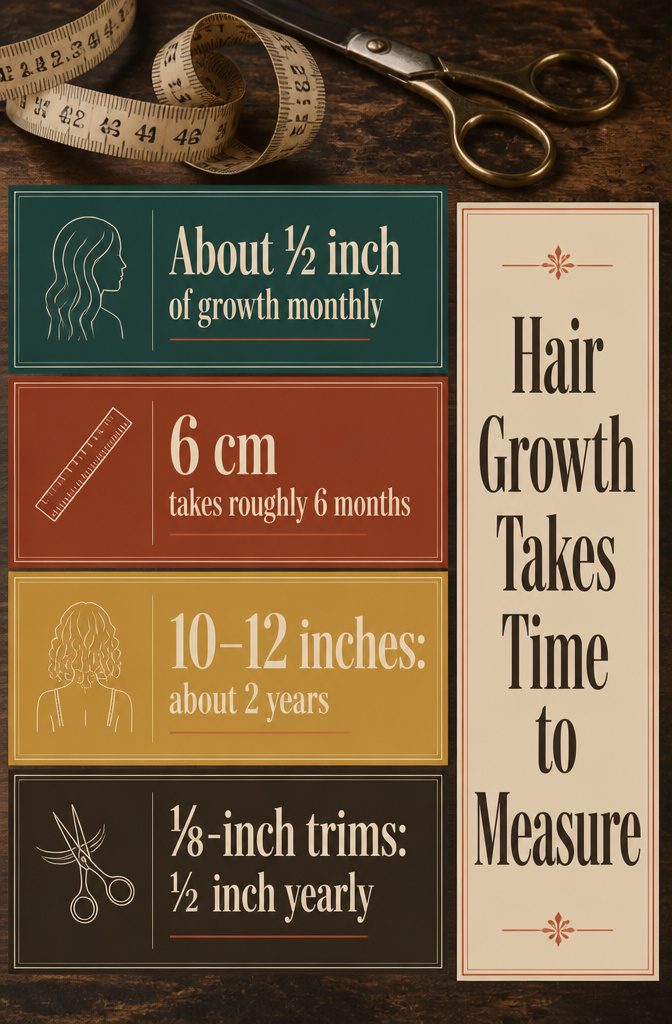
At roughly half an inch per month, reaching a specific target depends on current length and how much is trimmed along the way.
If you need another six centimeters of length, a simple estimate at that rate is around six months before allowing for trims or breakage. That is an illustration of the calculation, not a promised result.
Curl pattern affects visible length because curls contract.
A reader going from a chin-length bob to bra-strap length needs to retain roughly 10–12 inches, which at net growth of five to five and a half inches yearly is a two-year project without accounting for curl shrinkage.
Regular trims eat into monthly gains: a one-eighth-inch trim every ten to twelve weeks costs about half an inch over a year.
Ask your stylist how much extra length the target shape needs, because "long enough for a bun" is not the same measurement for every starting cut.
Frequently Asked Questions
How fast does hair grow?
Hair grows about half an inch per month, which adds up to roughly 6 inches in a year.
Some measurements put the range at 0.5–1.7 centimeters monthly, depending on genetics, age, sex, and ethnicity. At any time, about 80–90% of the follicles on your head are actively growing.
Can you really make your hair grow faster?
Growth rate is largely determined by genetics, hormones, health, and age, and no topical product can change that.
What you can do is protect the hair that does grow by eating enough protein, avoiding damage from heat and chemicals, and keeping your scalp healthy.
Products and supplements are unlikely to make a noticeable difference to the growth rate itself.
How can you grow your hair faster naturally?
Eat a balanced diet with at least 50 grams of protein daily, reduce heat styling and chemical treatments, and handle wet hair gently to prevent breakage.
Sleep 7–9 hours each night to keep melatonin production steady, and massage your scalp to improve circulation. Natural approaches support hair health and help you retain length, but they won’t speed up the biological growth rate.





