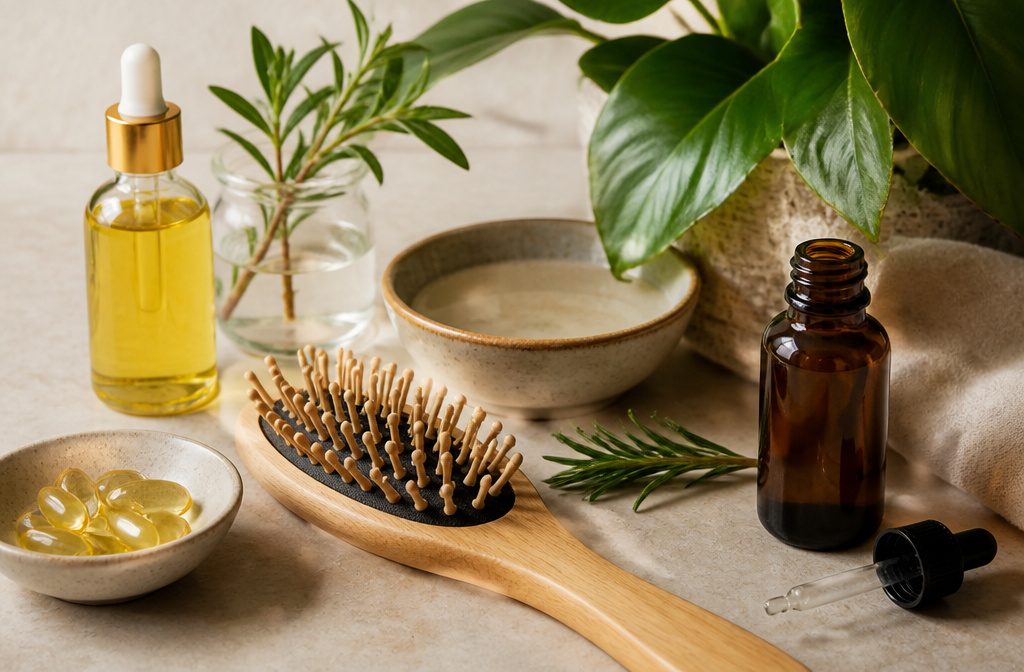
Hair grows about half an inch a month, and nothing you apply will speed that rate. What changes is how much of that growth you keep before it breaks off.
Wet hair stretches like elastic and snaps three times more easily than dry strands, so how you detangle and dry matters as much as what you eat or how often you trim.
1. Eat Enough Protein and Key Nutrients
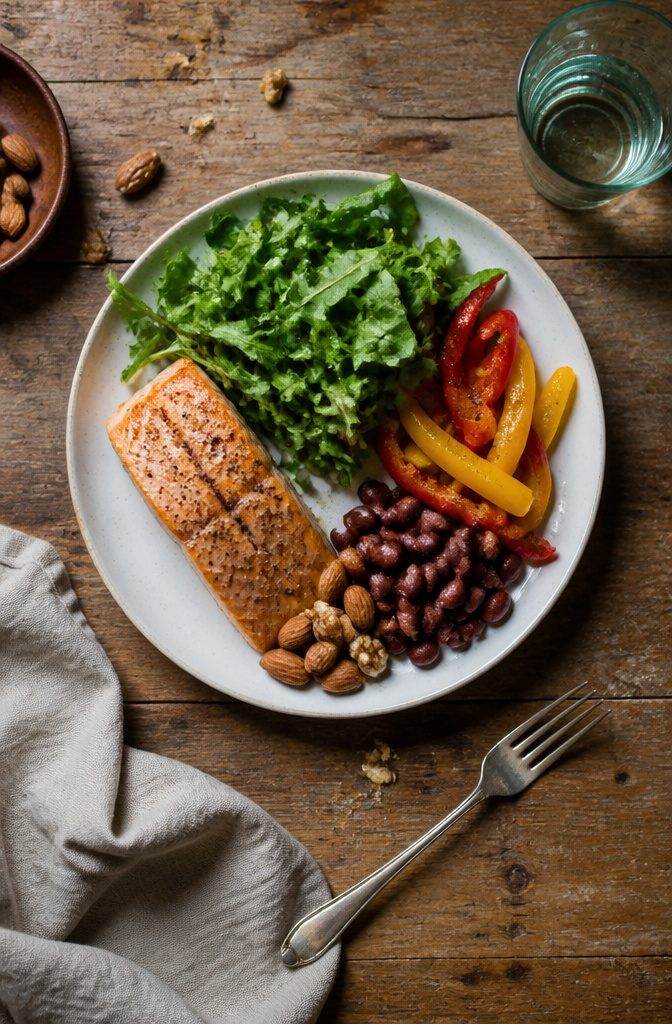
Hair grows from keratin, a protein, and the body needs at least 45 grams of protein daily to supply enough for strong strands.
Falling short can leave hair weak, brittle or losing pigment, and in some cases thinning visibly. A palm-sized portion at breakfast and another at lunch usually covers that minimum, pulled from eggs, lean chicken, fish, beans or tofu.
Beyond protein, the body relies on biotin, iron, zinc, vitamins A, B, C, D and E, and omega-3 fatty acids to keep the scalp functioning and hair resilient.
Omega-3s especially support the follicles and oil glands that keep the scalp in balance, even if they do not speed growth directly.
Most of these nutrients arrive through a varied diet built on whole foods, leafy greens, bell peppers, wild salmon and nuts.
Loading up on supplements when there is no deficiency can backfire, sometimes causing the shedding they were meant to stop.
2. Consider Supplements Only When You Need Them

Supplements fill gaps when your diet falls short or a deficiency shows up, but they are not a default addition if you are eating balanced meals.
Biotin (vitamin B7) shows up often in hair supplements, and it does improve hair growth while helping with inflammation.
The hair follicle, the scalp and the nails all respond to it. You can get biotin from eggs, fish, meat, seeds, nuts, sweet potatoes, broccoli and cauliflower, or take a mega-B vitamin.
Collagen is the other supplement frequently mentioned for strengthening hair, though more research is still needed to confirm how much it helps.
If your diet is already covering iron, zinc and vitamin D, extra supplementation does nothing, and excessive amounts can actually trigger hair loss rather than prevent it. Talk to your healthcare provider before starting any supplement.
3. Keep Your Scalp Clean and Healthy
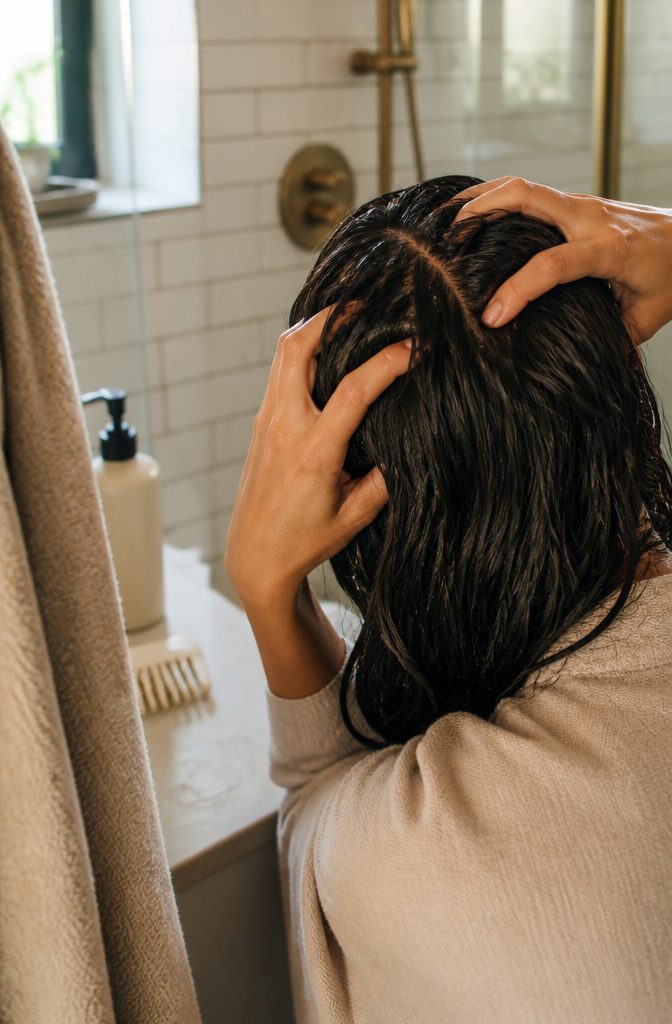
Your scalp houses the follicles that grow every strand, so keeping it clean and balanced matters more than most of us give it credit for.
Wash as often as your hair type needs it: daily if you have straight, oily hair; every 2 to 3 weeks if your hair is dry, textured or curly; and 2 to 3 times a week for most other types.
That frequency keeps the scalp from drying out while preventing buildup that can block follicles.
A clarifying shampoo once a week or every other week cuts through sebum, pollutants and the residue left by dry shampoo and masks.
Without it, that layer can stop treatments from reaching your scalp and leave hair brittle and prone to breakage.
Massaging your scalp a few times a week helps remove stubborn buildup and sloughs off dead skin.
A few small studies suggest regular massage might help hair grow in thicker, but more research is needed. Either way, it feels good and stimulates blood flow, which delivers oxygen and nutrients to the roots.
4. Detangle and Dry Without Force
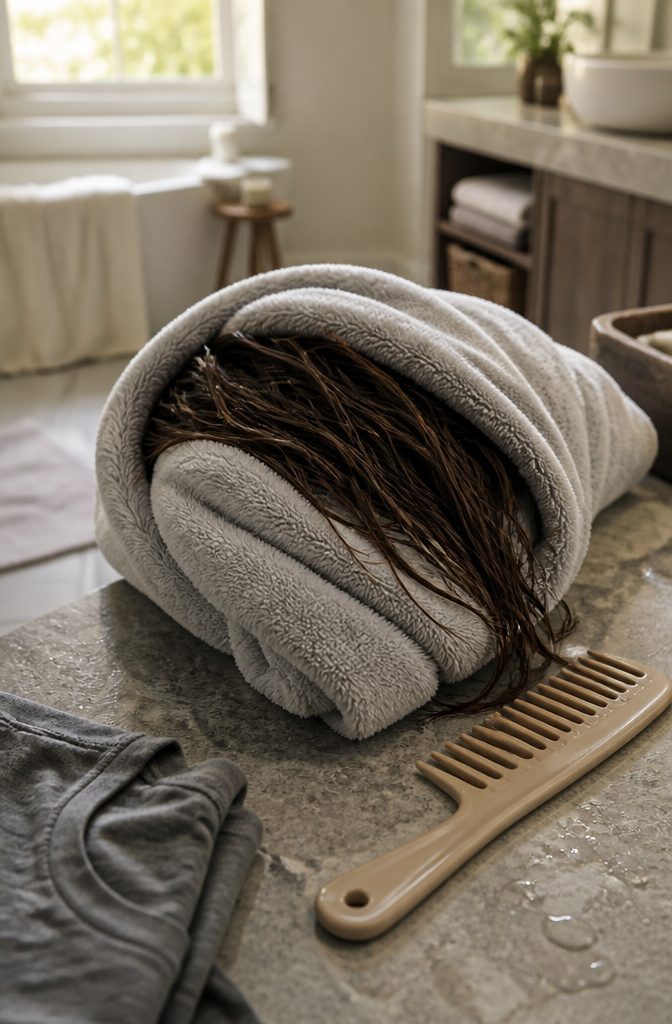
Wet hair stretches like elastic, and that makes it three times more vulnerable to breakage than dry strands.
If you brush or tug at it while it’s dripping, you risk snapping the hair shaft or damaging the cuticle that protects each strand.
I start by wrapping wet hair in a microfiber towel or soft t-shirt to absorb moisture without rubbing, then reach for a wide-tooth comb instead of a brush.
Work from the ends up, not roots down, so you don’t drag knots through the whole length.
For curly or thick hair, detangle in the shower before rinsing conditioner. For straight hair, wait until it’s mostly dry before combing through.
When blow-drying, stop at 80 percent dry and let the rest air-dry. That final push to bone-dry is where the most damage happens, and it’s the easiest part to skip without changing how your hair looks when you leave the house.
5. Use Heat Protection Up to 450°F When Styling
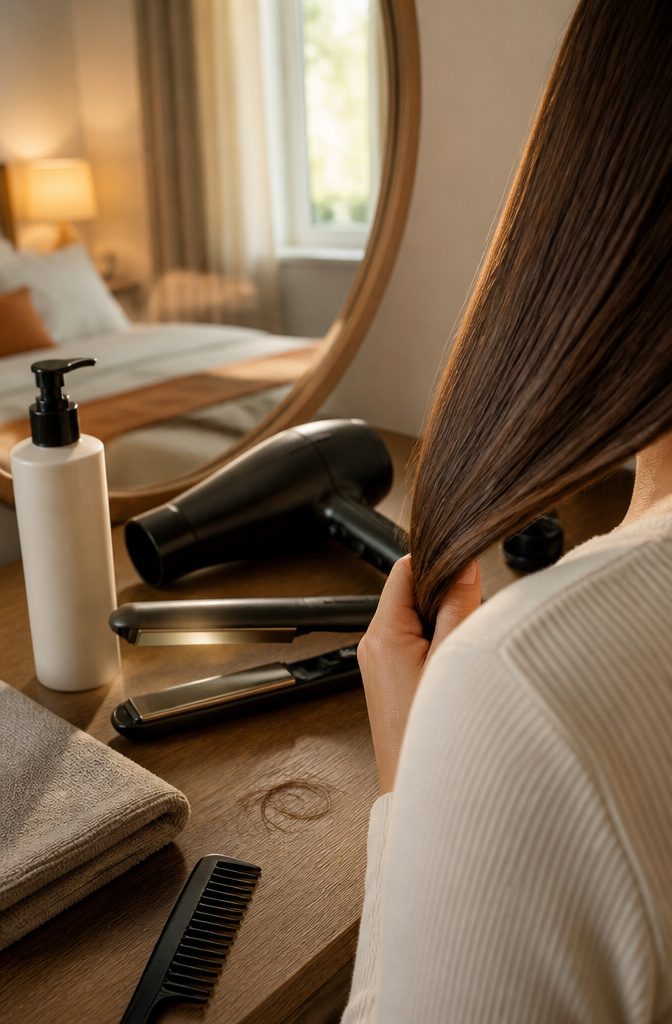
Heat styling breaks hair before it reaches the length you want.
Flat irons, curling wands and blow dryers all cause brittleness and dehydration, and the damage shows up as splits and snaps rather than slow growth. If you use heat tools regularly, breakage outpaces whatever length you gain.
Cut back when you can.
Air-dry a few days a week, or keep the heat setting low and work quickly so the tool touches each section once. Modern tools that run cooler help, and heatless styles buy your hair recovery time between blowouts.
When you do reach for heat, apply protection first. The L’Incroyable Blowdry Lotion offers coverage up to 450°F, which handles the range most flat irons and dryers reach.
A heat protectant forms a barrier that reduces direct contact, and the difference shows up in how much hair stays intact over months of styling. Skip it and the damage compounds faster than you notice it happening.
6. Space Out Chemical Treatments and Coloring
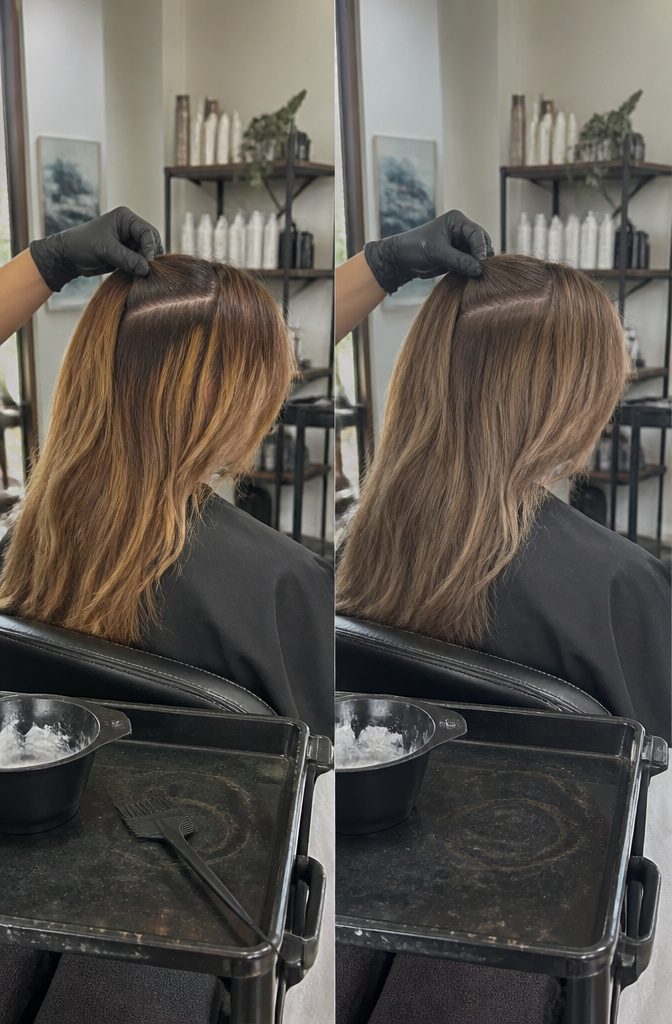
Bleaching and relaxers both work by breaking bonds in the hair shaft, and that means every treatment leaves the strand a little weaker than it was before.
If you relax your hair, touch-ups every 2–3 months let the new growth reach a length where you can apply relaxer only to the root, sparing the already-processed hair.
Closer timing means overlapping product onto hair that has already been treated, which compounds the damage. The same spacing applies to permanent color that lifts more than two shades.
Extensions and weaves add their own stress. The attachment points pull constantly, and the added weight can strain follicles.
I recommend removing them after no more than 2–3 months, giving your scalp a break before reinstalling. Wearing them longer increases the risk of matting at the root and thinning along the perimeter where the tension sits.
7. Trim Every 6–12 Weeks to Manage Split Ends
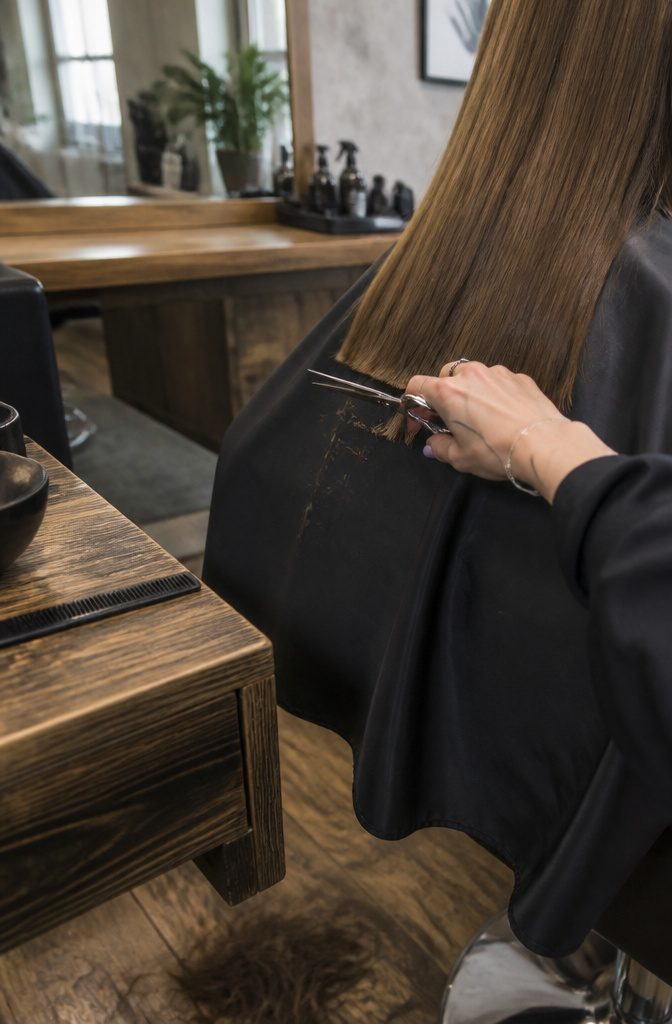
Trim Every 6–12 Weeks to Manage Split Ends
Trimming does not make hair grow faster at the root, but it helps you retain length by cutting off the ends before they split and break their way higher up the shaft.
Left alone, split ends weaken the strand and force you into a bigger cut later.
Recommendations range. Some stylists suggest a quarter-inch every three months, others an eighth of an inch every six to twelve weeks.
That smaller cut is called a dusting, and most pros recommend at least three dustings a year to keep ends strong without sacrificing visible length.
If you wait longer, plan for a trim every ten to twelve weeks or every two to four months, depending on how quickly your ends fray.
I schedule mine closer to the six-week mark because my ends start to look scraggly faster than I’d like, but if your hair holds up well, you can stretch it.
You want to remove just enough length to stop the weakest part of the strand from traveling upward.
8. Skip Tight Styles That Pull on Hair
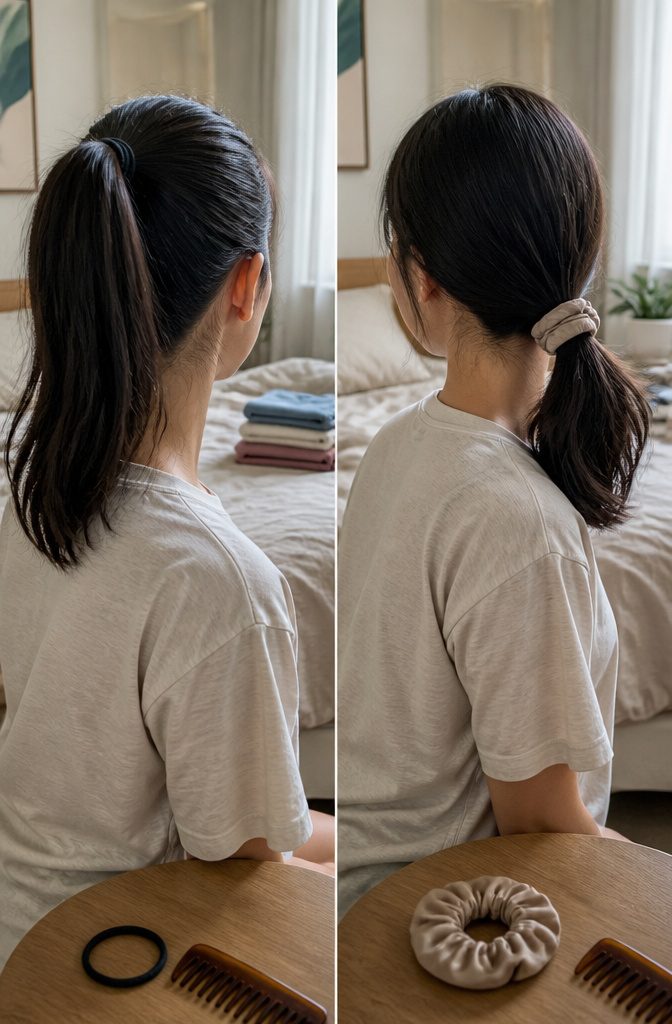
Skip Tight Styles That Pull on Hair
Tight ponytails, buns and braids strain the scalp and pull at the follicle until strands snap or the follicle itself weakens.
Over time, that tension leads to traction alopecia, a type of hair loss that most often shows first along the frontal hairline but can affect any part of the scalp.
I recommend switching to looser versions of the styles you already wear: low ponytails instead of high ones, loose braids that do not pull at the root, and snag-free hair ties that release without dragging.
Satin heatless curlers work better overnight than tight rollers. The change is immediate: less breakage, less scalp soreness, and hair that stays anchored where it grows.
9. Condition or Mask Once or Twice a Week
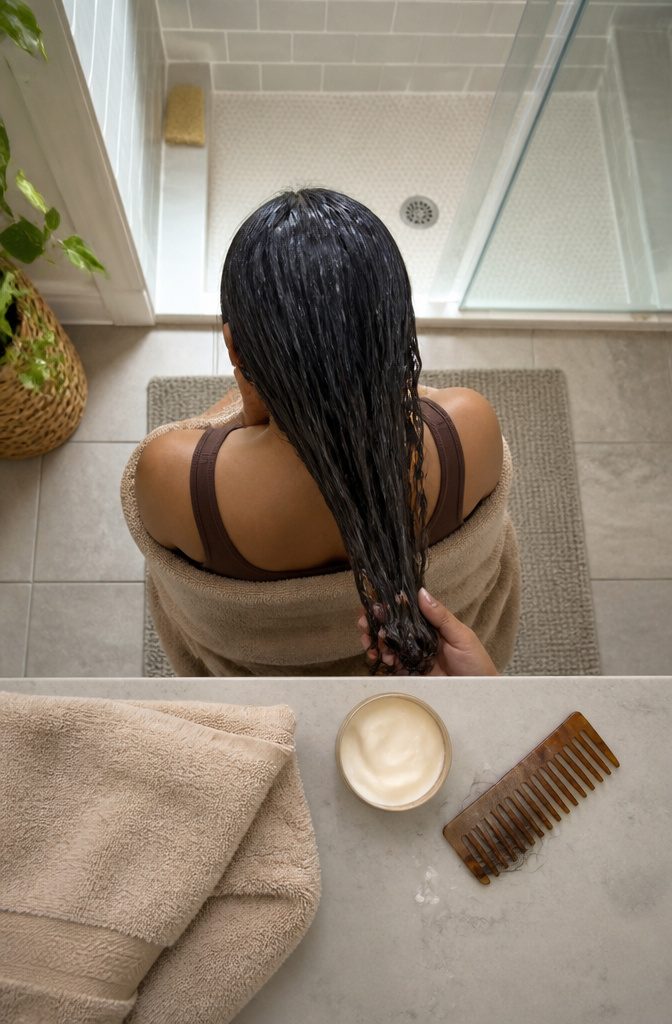
Conditioner keeps hair soft and manageable after every wash, and leaving it in for two to three minutes gives it time to work before you rinse.
I comb it through so every strand gets covered. Not everyone needs to condition every time they shampoo, so I adjust based on how my hair feels.
A deeper mask once or twice a week adds hydration and helps detangle. I apply it to damp hair and wrap a warm towel around for five minutes so the treatment soaks in.
That step makes a difference when hair is fine, curly, or color-treated, since longer lengths go through more environmental stress and lose the natural oils that keep ends smooth.
Pre-wash options work too.
The Briogeo Don’t Despair, Repair! Strengthening Treatment oil and Amika The Closer Instant Split-End Hair Repair Cream target breakage at the tips, which are the oldest and driest part of each strand.
The Ordinary Natural Moisturizing Factors + Hyaluronic Acid Scalp Serum adds moisture at the root. I focus extra product on the ends, where brittleness shows up first.
10. Find Ways to Reduce Stress

Chronic stress shifts more hair follicles into the shedding phase, a condition called telogen effluvium. Instead of the normal cycle where most hair is actively growing, stress pushes a larger percentage into rest and then out.
You might notice more hair coming away in the shower or on your brush a few months after a particularly difficult stretch.
Telogen effluvium tends to reverse itself in four to six months once the stressor is gone.
The hair that shed will regrow as the follicles cycle back into their growth phase. In the meantime, anything that lowers your baseline stress helps: regular movement, enough sleep, time outside, or whatever unwinding method actually works for you.
I find that consistency matters more than the specific practice. Even twenty minutes a day makes a difference when it is something you will stick with rather than abandon after a week.
11. Switch to Silk or Satin at Bedtime
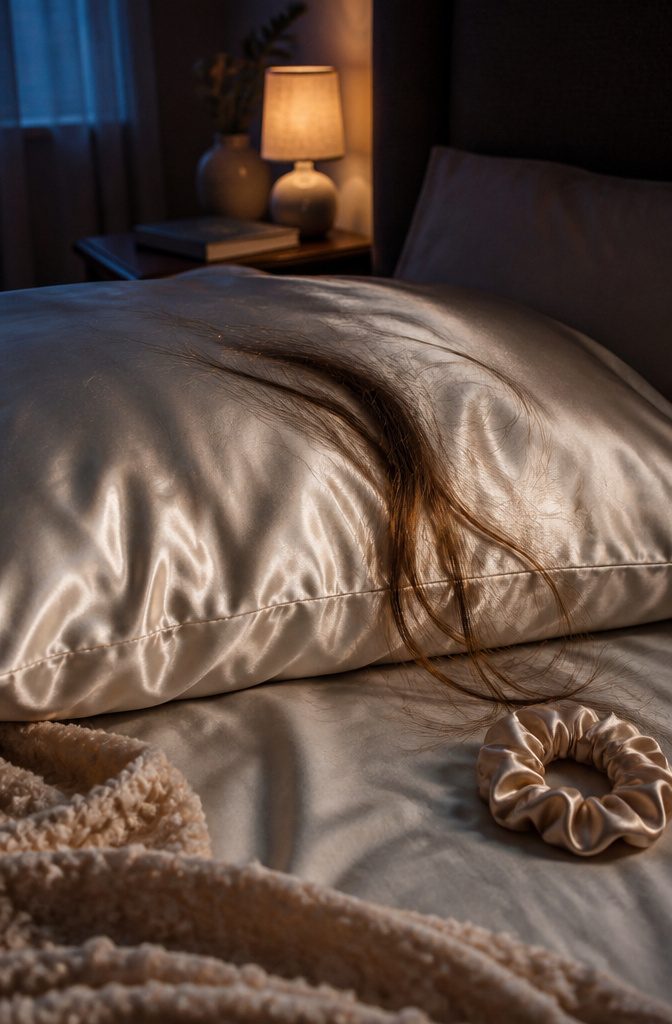
Cotton pillowcases pull moisture out of hair overnight and create friction that snaps strands while you sleep.
Silk or satin pillowcases solve both problems: silk holds moisture in and slides against hair instead of gripping it, which means fewer tangles in the morning and less breakage over time.
I like mulberry silk pillowcases for this reason, and they work for skin just as well.
If you do not want to replace bedding, a silk scarf wrapped around your hair at night does the same work.
Satin scrunchies are another option if you tie hair back before bed, though loose styles cause less tension than tight ones.
The material matters more than the form it takes, and switching to silk or satin in any version cuts down on the kind of mechanical damage that makes hair look thinner than it actually is.
12. Try Hair Oils or Serums for Scalp and Strands
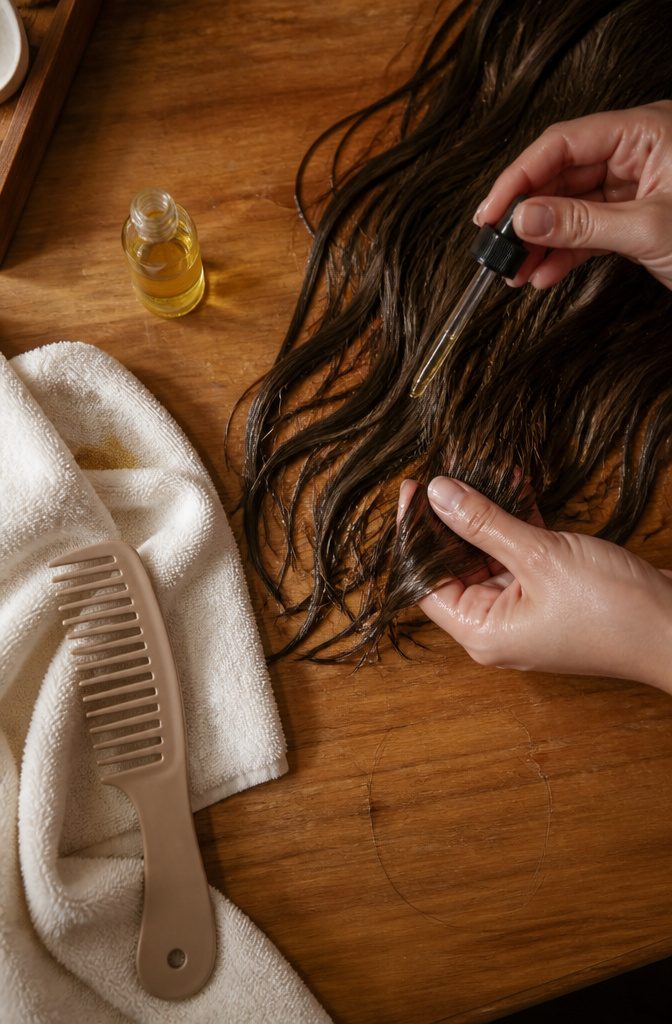
Hair oils bring fatty acids—omega 3, 6, and 9—that nourish the strand and limit frizz as new growth comes in. A few drops on towel-dried mid-lengths and ends work for shine and moisture.
For scalp care, coconut oil makes a good mask if your hair runs dry, while rosemary oil mixed with a carrier oil and massaged into the scalp may help with buildup or inflammation.
The research on rosemary oil is older and needs updating, and rice water has no scientific backing as a growth treatment despite the anecdotal noise around it.
Serums take a different angle.
The PROfiller+ serum showed visible growth improved by 30% within four weeks in a 34-subject study, with visible hair loss reduced by 50% over 12 weeks. Apply it to damp or dry hair at bedtime and let it work overnight.
The No.3 Restorative Hair Serum is another option. Products vary widely in formulation and claims, so I look for ones that publish their trial data and specify what they measured.
13. Protect Hair From Sun, Weather, and Pollution

Environmental damage adds up faster than most people expect.
UV exposure weakens the hair cuticle, making strands more prone to breakage and color fade. Cold, wind, and pollution work the same way, lifting the cuticle and leaving hair rough and tangled.
A hat helps during bright sun or freezing weather. On windy days, tying hair back keeps it from whipping into knots.
Heat protectant products do double duty when they include UV filters. The IGK Good Behavior 4-in-1 Prep Spray shields against both hot tool damage and sun exposure, and it detangles at the same time.
For natural hair, the Briogeo Farewell Frizz Blow Dry Perfection Heat Protectant Cream works better than lighter sprays.
Friction counts, too. Satin or silk pillowcases reduce the overnight rubbing that causes frizz and breakage.
Some people wrap hair in a silk scarf instead. Either option keeps fragile ends intact while you sleep.
14. See a Dermatologist for Hair Loss or Thinning
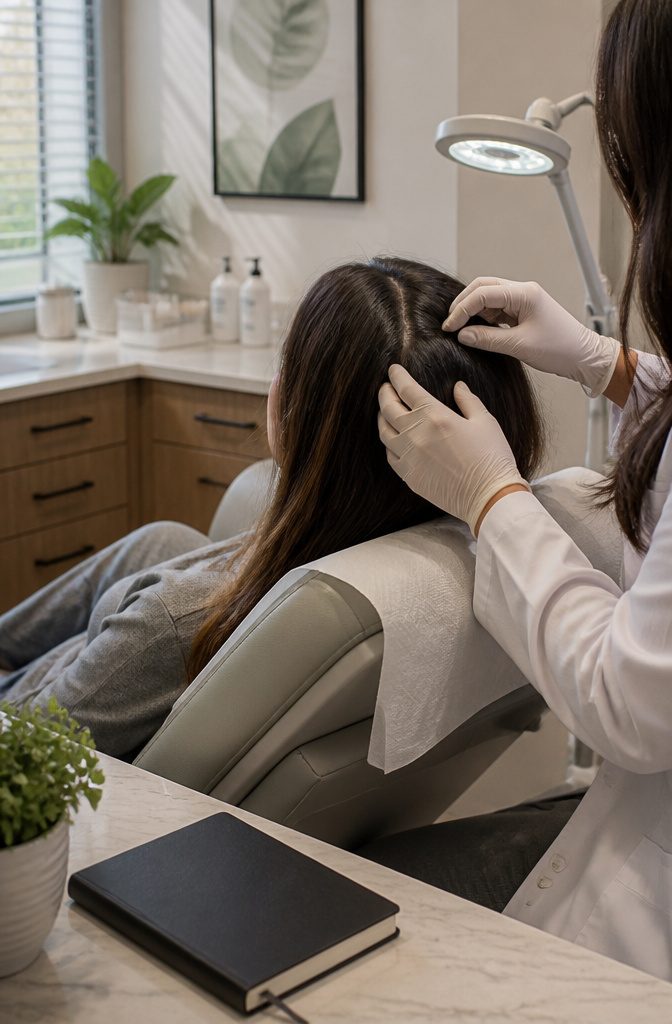
When shedding feels heavier than usual or your part looks wider, seeing a board-certified dermatologist matters more than any product on a shelf.
Hair loss and thinning often trace back to stress, nutritional gaps, hormonal shifts, or conditions like alopecia areata or telogen effluvium.
A dermatologist can name the actual cause and recommend treatment that fits it, whether that means corticosteroid injections for an autoimmune trigger or adjusting hormones for pattern loss.
If over-the-counter options appeal to you first, topical minoxidil has FDA approval for regrowing hair, and densifying scalp serums with Procpail and Redensyl target thinning at the follicle level. Consistency matters with both, and results take months.
When topical treatments have not worked, platelet-rich plasma might. PRP uses platelets drawn from your own blood to stimulate follicles and extend the growth phase, and because it comes from you, allergic reactions stay off the table.
Still, I would discuss any of these with a professional before starting, especially if you suspect an underlying condition driving the loss.
How Hair Grows in Cycles
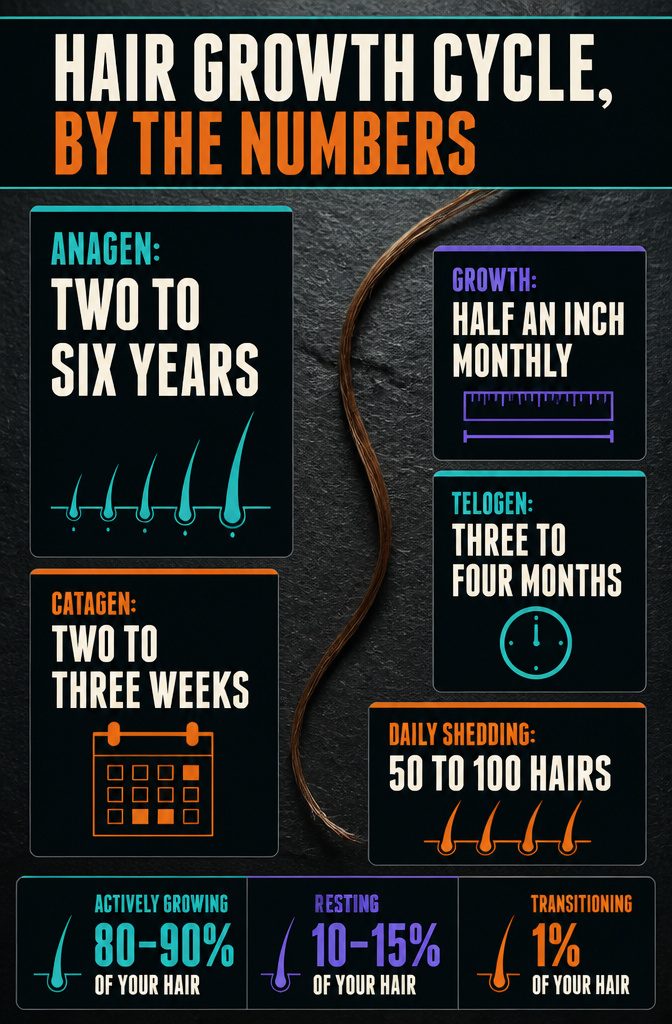
Your hair spends most of its life growing, then briefly transitions before resting and falling out to make room for new growth.
The active phase is called anagen, and it lasts two to six years on your scalp (three to five years on average).
During that time, each strand grows about half an inch a month, which adds up to roughly 6 inches a year. That rate is set by genetics, and it’s not physically possible to speed it up.
"The longer the hair is in the anagen phase, the lengthier it gets."
What you can do is keep the hair you’re growing from breaking off early.
After anagen, strands enter catagen, a transition that lasts two to three weeks (some sources say about ten days). Then comes telogen, the resting phase, which runs about three months or up to four.
At any moment, 80–90% of your hair is actively growing, 10–15% is resting, and just 1% is transitioning. Losing 50 to 100 hairs a day is normal, not a sign that something is wrong.
Match Care to Your Hair Type
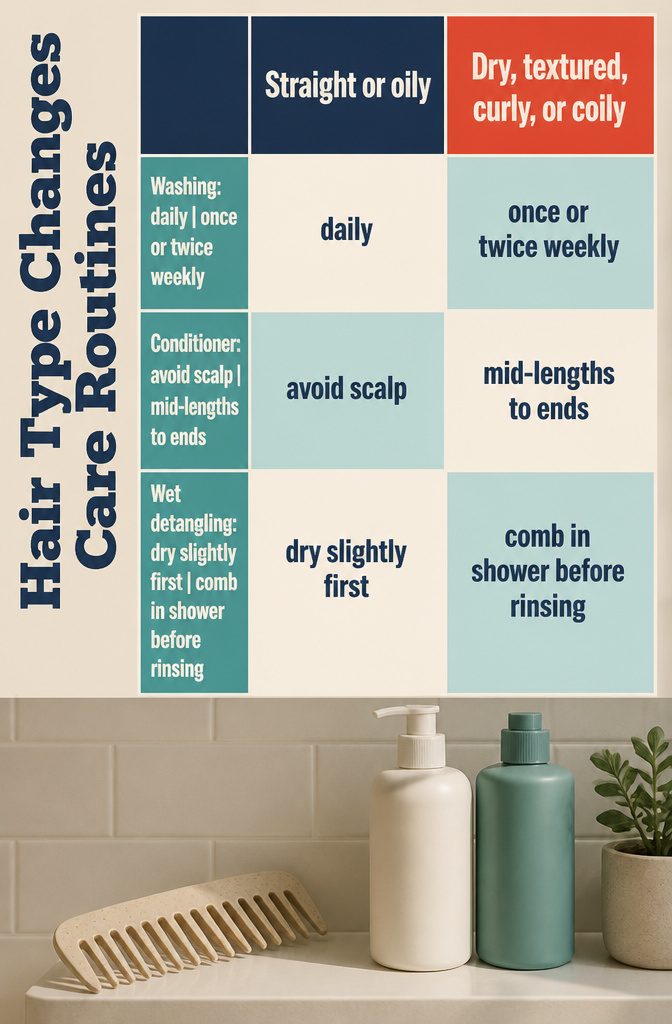
Washing frequency and product placement shift with your hair type. Straight or oily hair often needs daily washing to keep roots fresh, while dry, textured, curly, or coily hair holds up better with far less frequent shampooing.
Washing too often strips natural oils that drier hair types rely on, so spacing it out to once or twice a week can help retain moisture and length.
Fine hair and very curly hair damage easily when wet.
Skip the brush and reach for a wide-tooth comb instead. If your hair is thick and curly, comb through in the shower before you rinse out conditioner.
If it’s straight, let it dry a bit first, then start at the ends and work your way up slowly to avoid snapping strands.
Wrap wet hair in a microfiber towel or soft t-shirt rather than rubbing it dry, which roughens the cuticle and causes breakage.
Dry hair needs heavier conditioner applied mid-length to ends, while oily types can skip the scalp entirely and condition only where the hair actually needs it.
Other Treatments Worth Knowing About
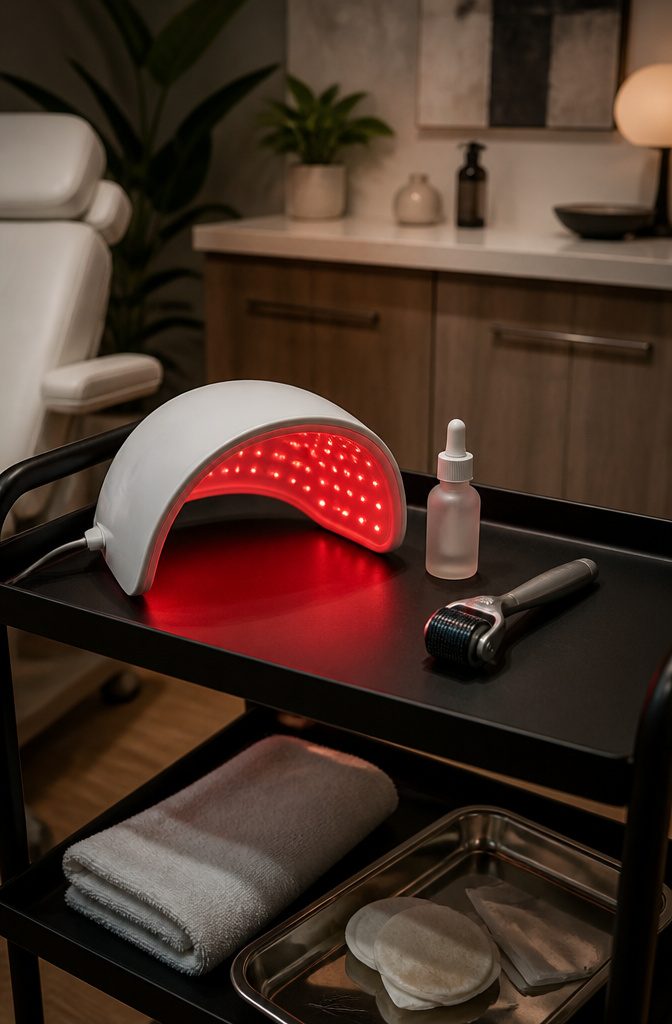
A few sources discuss microneedling (a roller with hundreds of fine needles to make tiny punctures in the scalp), red-light therapy, low-level laser therapy, and PRP as options for hair growth.
Microneedling has shown promise in helping people with hair loss, especially when used with other treatments like minoxidil.
Scientists think it helps medications penetrate the skin. Red-light devices like the HigherDose Red Light Hat and iRestore Advanced Hair Growth Helmet use certain wavelengths of light to stimulate cellular activity in the hair follicle and support the growth phase.
PRP (platelet-rich plasma) uses high-volume platelets derived from your own blood to improve hair follicle function, stimulate cell regeneration, and maintain the hair’s growth phase.
Claims and evidence differ, and more studies are needed.
Microneedling can even make some conditions worse if done wrong. I’d recommend professional guidance before trying any of these.
Frequently Asked Questions
How does hair grow?
Hair grows in cycles: an active growth phase (anagen) lasting 2 to 6 years, a brief transition phase (catagen) of 2 to 3 weeks, and a resting phase (telogen) of about 3 months before the strand sheds.
At any moment, 80 to 90% of your hair is actively growing. Genetics determine how long each strand stays in the growth phase, which is why some people can grow hair past their shoulders while others cannot.
How long does it take for your hair to grow?
Hair grows about half an inch per month, which adds up to roughly 6 inches a year. The actual rate varies from person to person and is set by genetics, so you cannot physically speed it up.
What affects hair growth?
Genetics, age, hormones, nutrition, overall health, stress, medication, and the condition of your scalp and hair all influence growth. Nutritional deficiencies, illness, significant stress, and certain medications can disrupt the hair cycle and lead to increased shedding.
Breakage from heat, chemicals, tight hairstyles, or friction can make hair seem like it is not growing even when the scalp is producing new strands normally.
How do you grow hair faster?
No method can speed up the natural growth rate of half an inch per month, which is set by genetics.
What you can do is keep the hair you are growing from breaking off early by eating enough protein and key nutrients, reducing heat and chemical damage, avoiding tight styles, and keeping your scalp healthy.
Do hair growth supplements work?
Supplements help when your diet falls short or a deficiency shows up, but they do nothing if you are already eating balanced meals.
Biotin improves hair growth and helps with inflammation, while excessive supplementation of iron, zinc, or vitamin D can actually trigger hair loss rather than prevent it. Talk to your healthcare provider before starting any supplement.
Can hair grow 2 inches in a month?
No.
Hair grows about half an inch per month on average, which means 2 inches would take about 4 months. That rate is set by genetics and cannot be sped up.
How do I increase my hair growth naturally?
Focus on eating at least 45 grams of protein daily along with biotin, iron, zinc, vitamins A, B, C, D, and E, and omega-3 fatty acids.
Keep your scalp clean, avoid heat and chemical damage, skip tight styles that pull on hair, and reduce stress.
These steps will not speed growth beyond the natural half inch per month, but they help you retain the length you gain by preventing breakage.
Can hair grow fast in 2 weeks?
No.
In 2 weeks, hair grows about a quarter of an inch, which is barely visible. The natural growth rate of half an inch per month is set by genetics and cannot be changed.