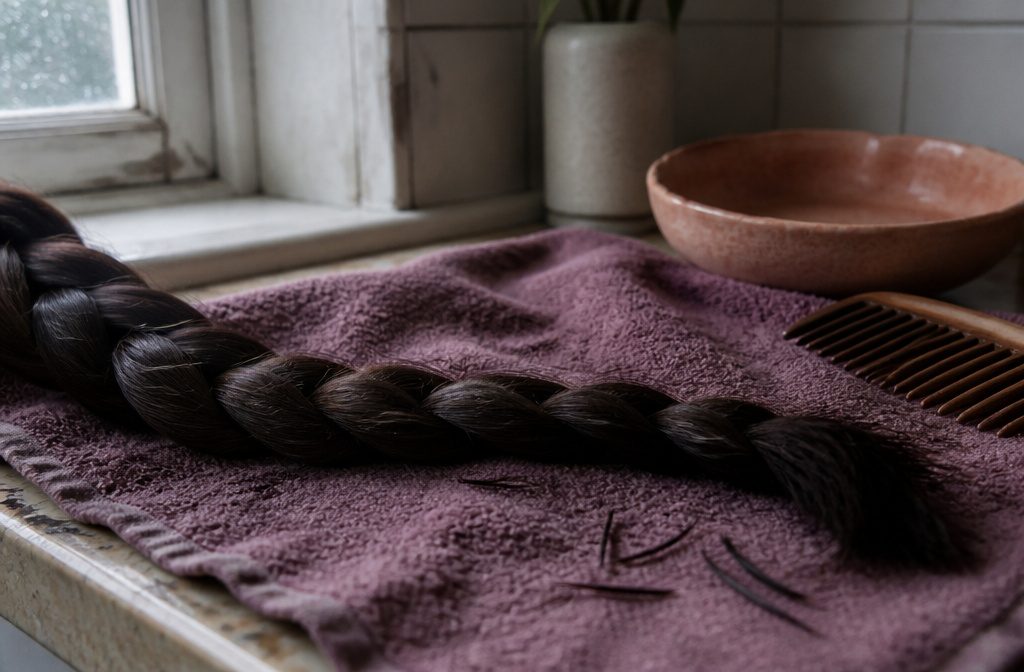
Hair grows about half an inch per month no matter what you do, and most quick-fix promises collapse when you measure retention against actual follicle speed.
The difference comes from stopping breakage before it cancels out new length. Heat tools above 300°F weaken protein bonds faster than the scalp replaces them, and a 2% minoxidil routine can take 12 months to show visible results.
1. Protect Hair From Heat and Chemical Damage
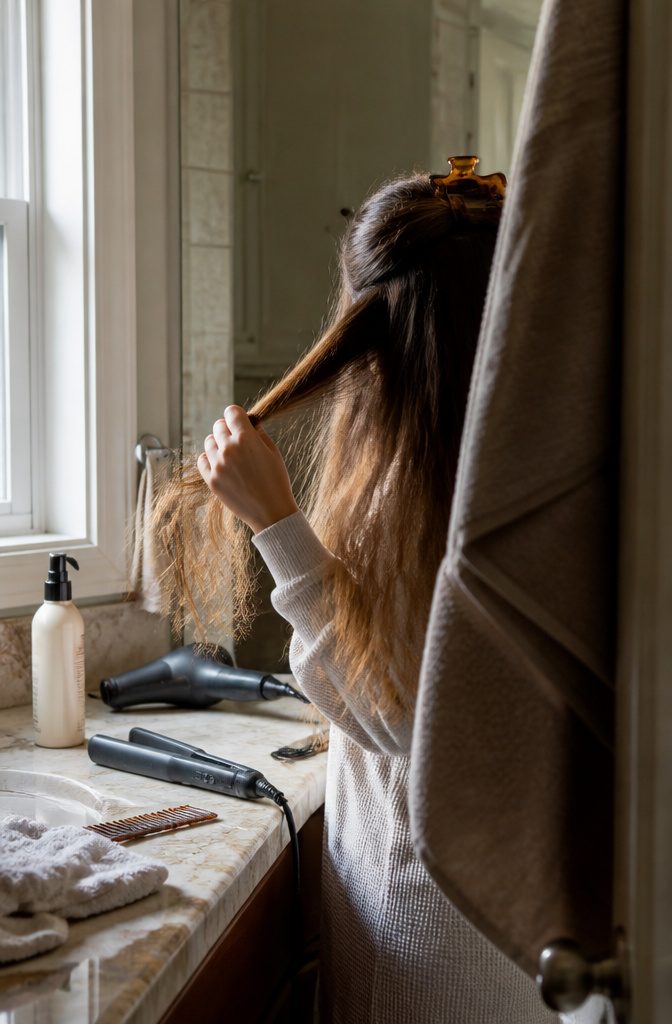
Heat cuts length faster than you realize.
Every pass with a flat iron at full temperature weakens the protein bonds that hold the cuticle together, and a weakened cuticle cracks under the same combing and styling that used to leave it intact.
The breakage shows up as frizz first, then as split ends, then as hair that refuses to grow past a certain point because the oldest inches snap off faster than new growth can replace them.
A heat protectant that offers thermo-protection up to 450°F forms a barrier that slows moisture loss when you style, and stopping the blow dryer when hair reaches about 80 percent dry leaves the last bit of drying to air instead of heat.
Turn tools down to the lowest setting that still does the job, work quickly, and skip them altogether on days when you can.
Chemical treatments follow the same logic. Bleach and relaxers strip the protective outer layer, leaving strands brittle and prone to breakage before they reach the length you want.
If you use a relaxer, spacing touch-ups about every two to three months gives new growth time to strengthen before the next application.
Choosing a color closer to your natural shade reduces the peroxide load, and that alone can mean the difference between hair that holds its length and hair that breaks at the crown.
2. Eat Enough Protein and a Varied Diet

Hair is made of keratin, a protein your body assembles from amino acids. If your diet does not supply enough protein, your body redirects what it has to more critical tissue, and your hair can thin or shed.
A general daily target is 50 grams of protein or more, from foods like eggs, lean meats, fish, beans, nuts and tofu.
A varied diet also matters.
Vitamin A keeps the scalp moisturized, iron delivers oxygen to the roots, and omega-3s support follicle elasticity. Spinach, avocados, salmon and whole grains cover a lot of that ground.
But fixing a deficiency is different from speeding growth when your baseline is already adequate. Supplements like biotin and vitamin D help when levels are genuinely low, not when they are normal.
If you suspect a gap, talk to a healthcare provider before buying bottles. Oversupplementing carries risks, and no pill accelerates hair past the rate your genetics allow.
3. Supplements, Serums and Products That May Help
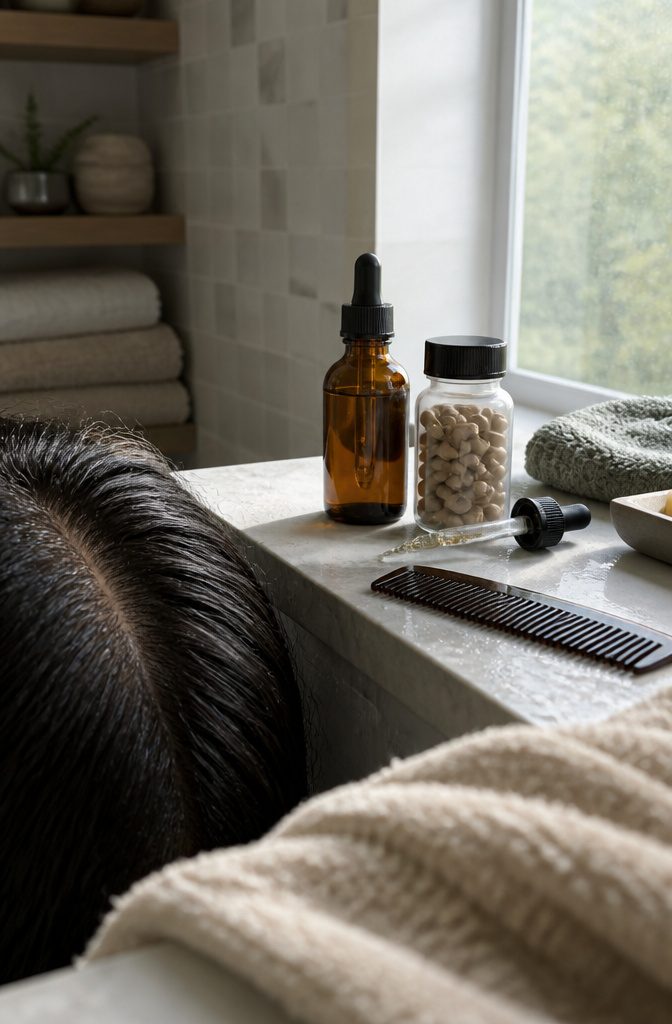
Supplements, Serums and Products That May Help
Evidence on supplements is thin unless you’re actually deficient. Biotin and vitamin D may help if your baseline levels are low, but taking more than you need won’t push hair to grow faster.
Oversupplementing can range from mild side effects to worse, so I’d talk to a professional before adding anything.
Minoxidil, sold as Rogaine, is the only over-the-counter option the FDA has approved for hair loss. It comes in 2% and 5% strengths, applied to the scalp daily.
Results can take up to 12 months, and if you stop, the hair loss resumes. It won’t fix a receding hairline, but it can thicken what’s there and slow shedding.
The John Frieda PROfiller+ serum claims 30% visible growth improvement in four weeks and 50% hair-loss reduction over 12 weeks, based on a 34-subject study. I’d apply it before bed on damp or dry hair, focusing on the areas that need it most.
4. Trim Split Ends Every Few Months
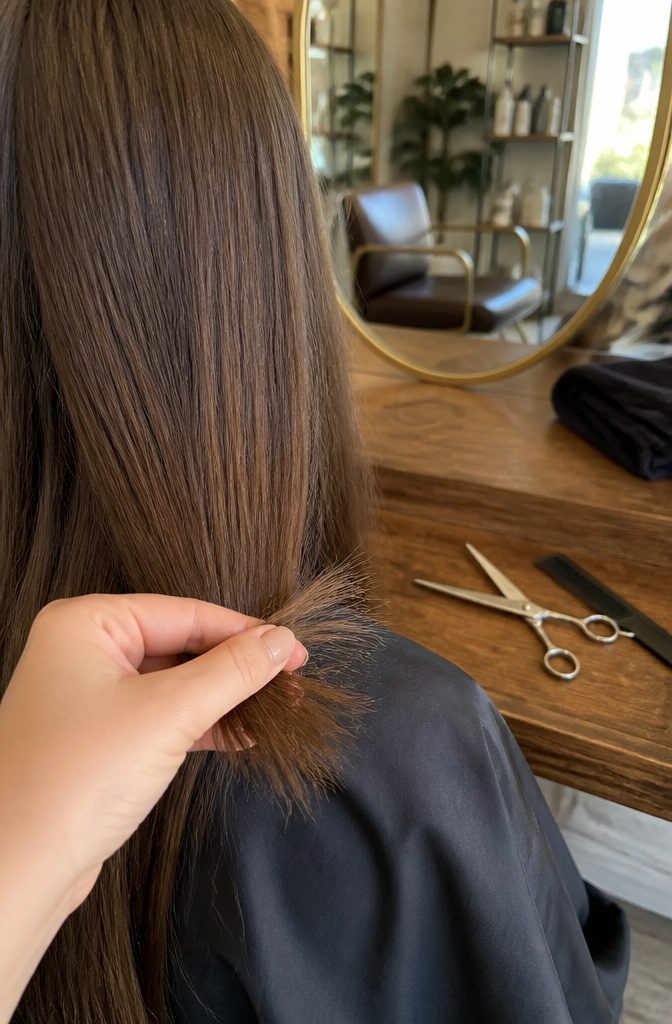
Trim Split Ends Every Few Months
Trims keep hair looking fuller and help you retain length, though they do nothing for growth at the scalp itself.
When ends split or fray, the damage travels up the shaft and makes breakage worse. Cutting off the weakest part of each strand stops that climb before it costs you inches.
How much and how often depends on whose advice you follow.
Some recommend a quarter-inch trim every three months, others suggest dusting off an eighth of an inch at least three times a year, and a general window of every two to three months comes up often.
One outlier suggests cutting 0.8 to 1 inch every ten to twelve days, which would erase growth faster than most scalps replace it.
I lean toward the lighter, more frequent approach: the less you take off, the more length you keep while still clearing damage.
5. Massage the Scalp and Keep It Clean
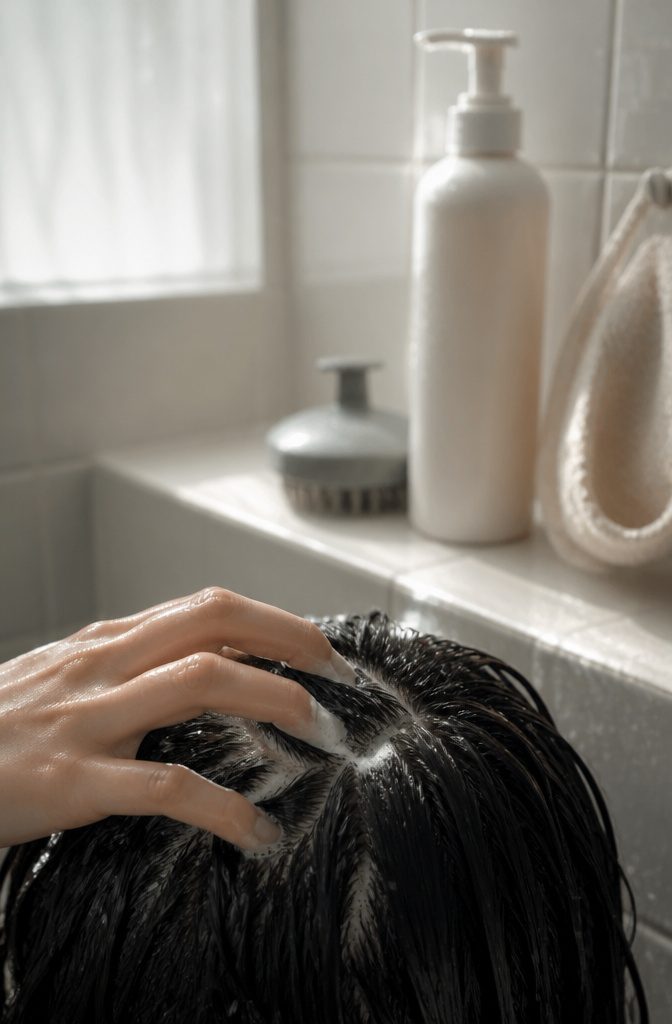
Scalp massage shows up in almost every list of home remedies, and two small studies offer some backing.
In the larger one, about 330 people massaged their scalps for 11 to 20 minutes daily over six months, and nearly 70% reported less loss or thicker growth.
A second study followed nine participants through 24 weeks of 4-minute daily massages; their hair came out thicker, though not measurably longer. Both trials were too small to prove mechanism, but massage costs nothing and the risk is nil.
Cleaning matters as much as stimulation. A weekly scalp scrub clears the buildup that inflames follicles, and a clarifying shampoo once a week or every other week strips product residue without overdrying.
I find the routine manageable if I pair the scrub with washday and save clarifying for the weeks my hair feels coated.
6. Handle Hair Gently, Especially When Wet
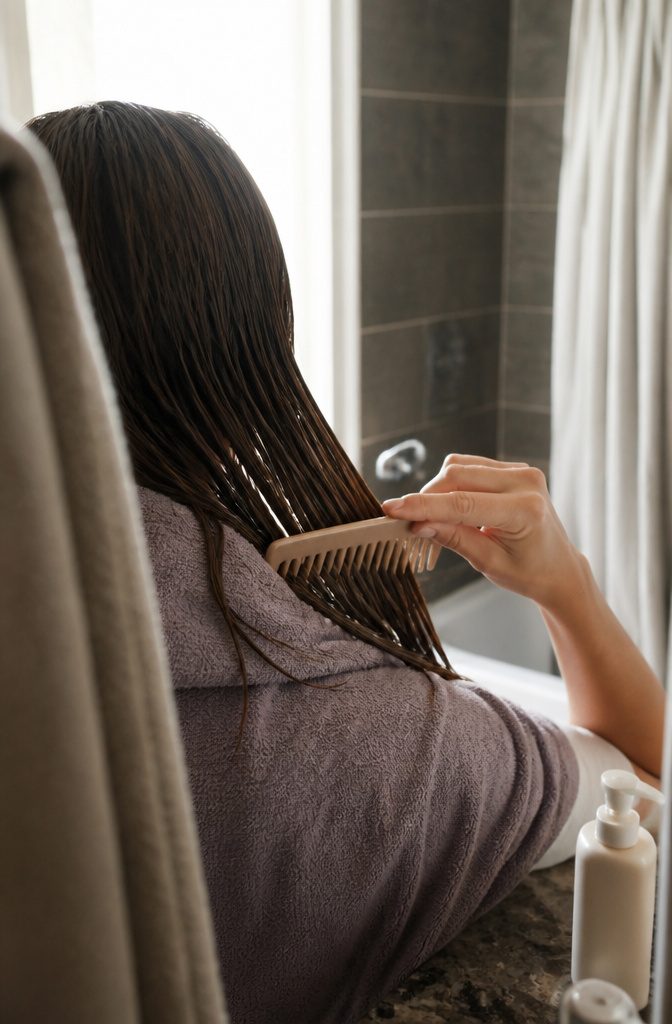
Wet hair stretches more than dry, and brushing it dripping can snap strands or damage the cuticle, the overlapping cells that protect each shaft.
I blot with a microfiber towel instead of rubbing, then detangle gently with a wide-tooth comb starting at the ends and working up.
A blast of cold water after you rinse conditioner helps seal the cuticle, which keeps the surface smoother and shinier.
When blow-drying, stop at 80% and let the rest finish naturally. Heat on soaking-wet hair creates bubbles inside the shaft that weaken it later, and going to completely dry leaves no margin before you start damaging what you just grew.
The last damp section air-dries in a few minutes, and you skip the brittleness that comes from overdoing it.
7. Use Conditioner and Deep Masks
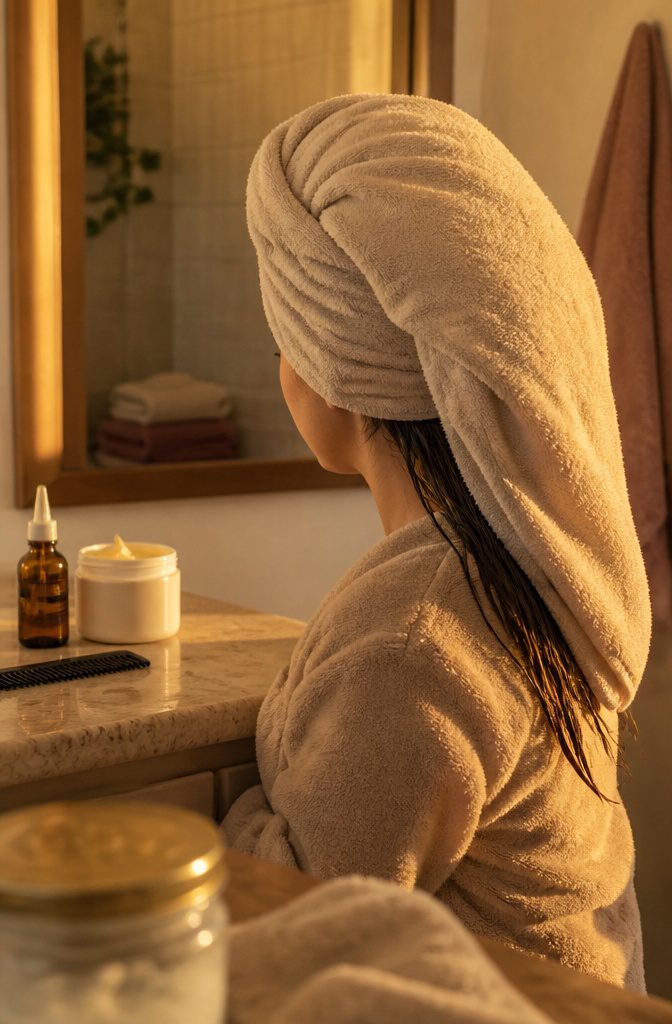
Conditioner softens and detangles as hair gets longer, and the ends need more attention than the roots.
The tips are older, drier, and more brittle than anything closer to the scalp, so a weekly deep conditioning mask is the best way to keep them from snapping off.
I apply it to damp hair and wrap the whole thing in a warm towel for 5 minutes so the treatment actually soaks in rather than sitting on the surface.
For hair that breaks mid-shaft, a peptide bonder works differently.
It repairs structure at a molecular level using 5 amino acids, and the result is measurable: hair is up to 82 percent stronger after treatment. That kind of rebuild matters more than surface smoothing when breakage is the problem holding length back.
Before shampooing, a pre-wash tonic soak for 10 minutes leaves a protective film so the cleanser does not strip moisture. I use it when my hair feels dry going into wash day, and it changes how the whole routine plays out.
8. Reduce Stress Where You Can

Stress can short-circuit the normal hair cycle and trigger telogen effluvium, a condition that pushes follicles into a resting phase too early.
As many as 70% of scalp hairs may shed within about two months. You might notice clumps coming out in the shower or when you run your hands through your hair.
Telogen effluvium usually resolves on its own once you address the underlying stressor. Shedding tends to decrease over around six to eight months.
In the meantime, finding ways to lower stress helps: regular movement, enough sleep, time spent doing something you actually enjoy. I find that even small shifts make a difference when they happen consistently.
Your hair might grow back once stress levels drop, but the timeline varies depending on what triggered the shedding in the first place.
9. Sleep on Silk or Satin
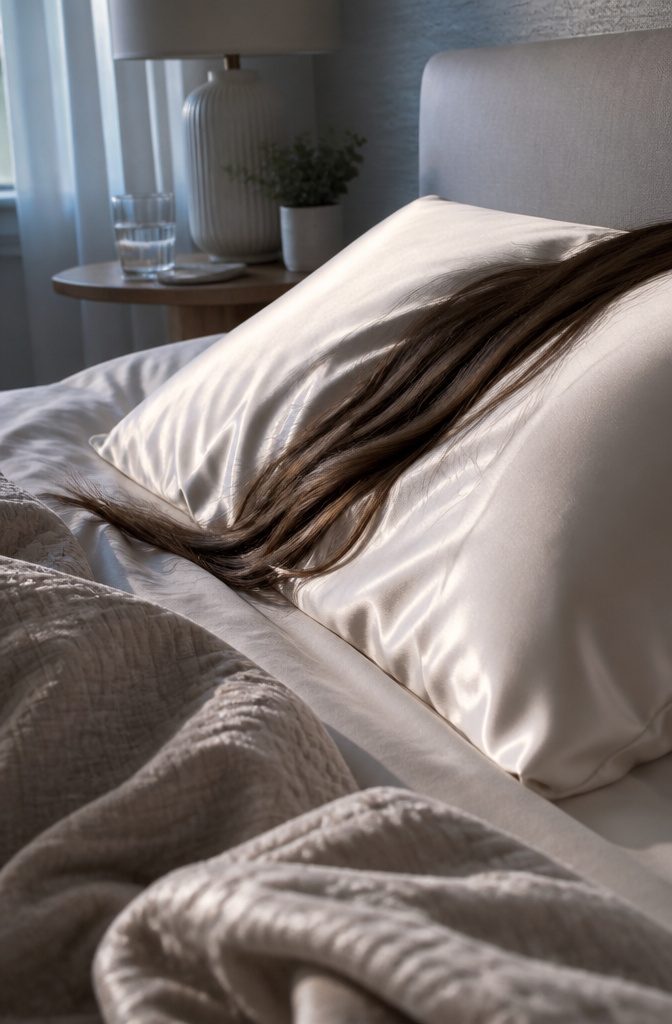
Friction matters when you sleep.
Cotton pillowcases tug at strands all night, creating tangles and breaking hair mid-length before it can reach the length you want. Silk or satin pillowcases let hair slide instead of catch, reducing breakage without changing anything else about your routine.
Sleep itself plays a role. Getting between 7 and 9 hours nightly keeps your body producing melatonin, a hormone that regulates hair growth.
Shorter nights drop that production, and growth slows. A silk pillowcase paired with enough sleep gives your hair the friction-free window it needs to recover and hang on to the length your follicles are building.
10. Try Oils, But Know the Evidence Varies
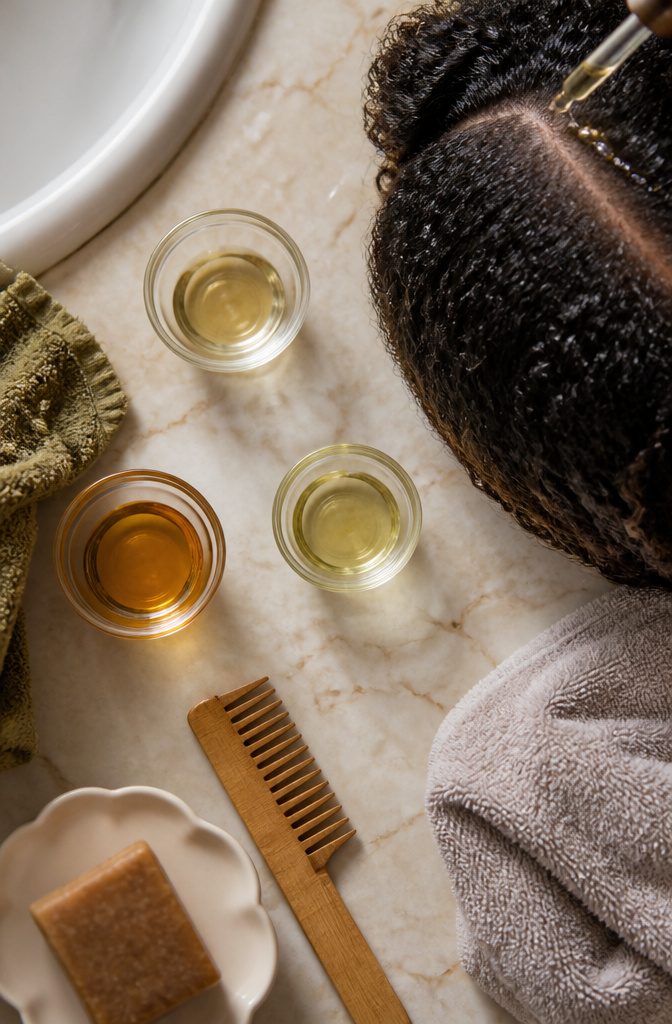
Try Oils, But Know the Evidence Varies
Castor oil and olive oil are the oldest standbys. Apply either one evenly to scalp and hair, leave it for 30 to 60 minutes once or twice a week, then wash it out.
Castor oil is rich in vitamin E; olive oil brings omega-3 fatty acids and shine. You can mix them with coconut or almond oil if you want.
Rosemary oil has better evidence behind it: one study found it worked as well as minoxidil after six months of use. Pumpkin seed oil showed some benefit in another trial, but less than minoxidil.
Peppermint oil has promising animal studies but nothing in humans yet. Castor oil has no direct growth evidence at all, though it may lower inflammation and keep the scalp healthier.
Essential oils are safe when diluted, though they can irritate skin in some people. The claims run ahead of what the research supports, but the risk is low enough that trying one makes sense.
11. See a Doctor if Hair Loss Persists

SECTION BODY
When hair thinning or loss continues beyond a few weeks, a health screening can identify reversible causes.
Thyroid issues, for instance, can interfere with growth and thickness, and a clinician can check vitamin and mineral levels that affect the follicle cycle.
Hair thinning may be reversible, especially when addressed early, so a change that persists is worth a doctor’s visit rather than waiting it out.
Prevention and management matter once you know what you’re working with, and a screening provides that baseline.
12. Adjust Washing Habits for Your Scalp
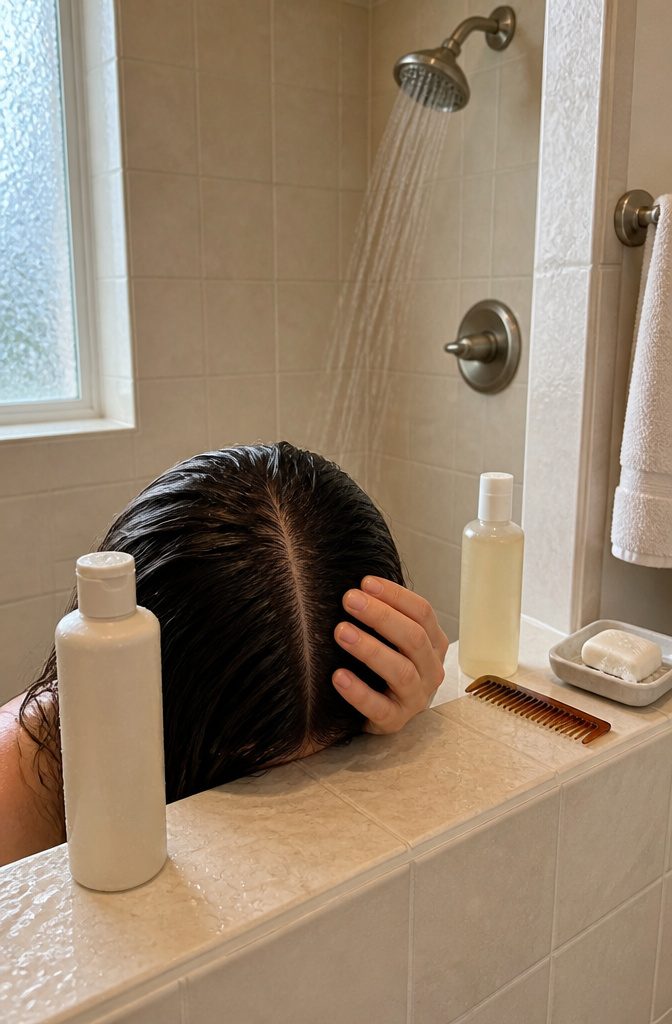
Shampooing every day strips oil from the scalp faster than it can replace it, and that same dryness can slow hair’s ability to grow at its best.
Washing two to three times a week keeps the scalp clean without overdoing it.
On the days between, I rinse with water or skip washing altogether. That schedule gives the scalp time to regulate its own oil production, and hair stays healthier without the constant friction.
Clarifying shampoo goes deeper than regular formulas, pulling out buildup from styling products, hard water minerals and silicones that coat the strand.
I use one about once a week if my scalp runs oily, or stretch it to every other week when dryness shows up. The frequency depends on what the scalp is doing.
Too much clarifying leaves hair dry and brittle; too little lets buildup sit and block the follicle. Both outcomes slow growth down.
13. Protect Hair From Sun, Cold and Friction

Environmental stressors accumulate quietly, and the damage shows up months later when length stalls.
Sunlight degrades the protein structure in hair over time, while cold air pulls moisture out and leaves strands brittle. Pollution deposits a film that weighs down the cuticle and makes breakage easier.
Friction works faster: cotton pillowcases, rough towels and tight ponytails all create enough tension to snap hair at the weakest point, usually a few inches from the scalp.
If you wear extensions or weaves, take them out after two to three months. The added weight and the tension from anchor points stress the follicle, and leaving them in longer raises the chance of permanent thinning.
Cornrows, tight braids and buns pull in the same way. A style that tugs when you blink or gives you a headache by evening is tight enough to slow growth or cause breakage along the hairline.
14. Red-Light Therapy and Professional Treatments
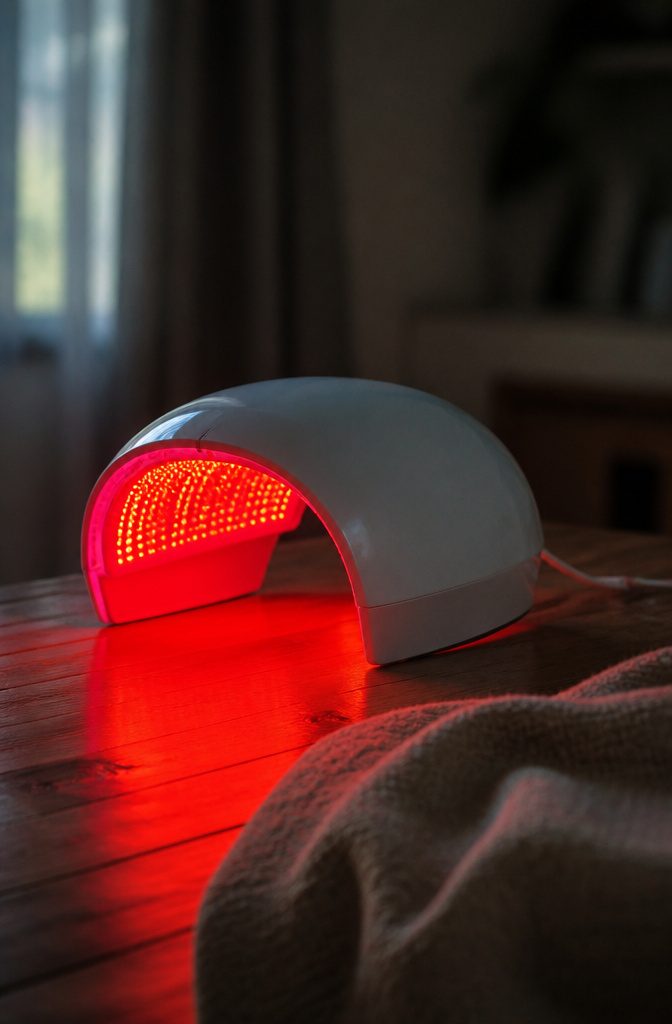
Red-light therapy runs 630–800 nanometers and sits in the middle ground between supplements and clinical procedures. The devices look like caps or panels, and sessions take 10 to 25 minutes two or three times a week.
Results show up slowly, usually after four to six months of consistent use, which puts them on the same timeline as topical minoxidil.
Minoxidil 5% goes on twice daily and may need up to 12 months before you see visible improvement.
Laser caps are worn for 30 minutes a day. Both ask for patience and routine, and neither will reverse pattern hair loss on its own if that is the root cause.
PRP injections and other professional restoration procedures move faster but cost more and require a provider. If hair loss is the real concern rather than just wanting quicker growth, medical advice becomes the better first step.
These treatments address thinning and regrowth differently than home methods do, and matching the tool to the problem matters more than picking the most aggressive option.
Growth Has Real Limits
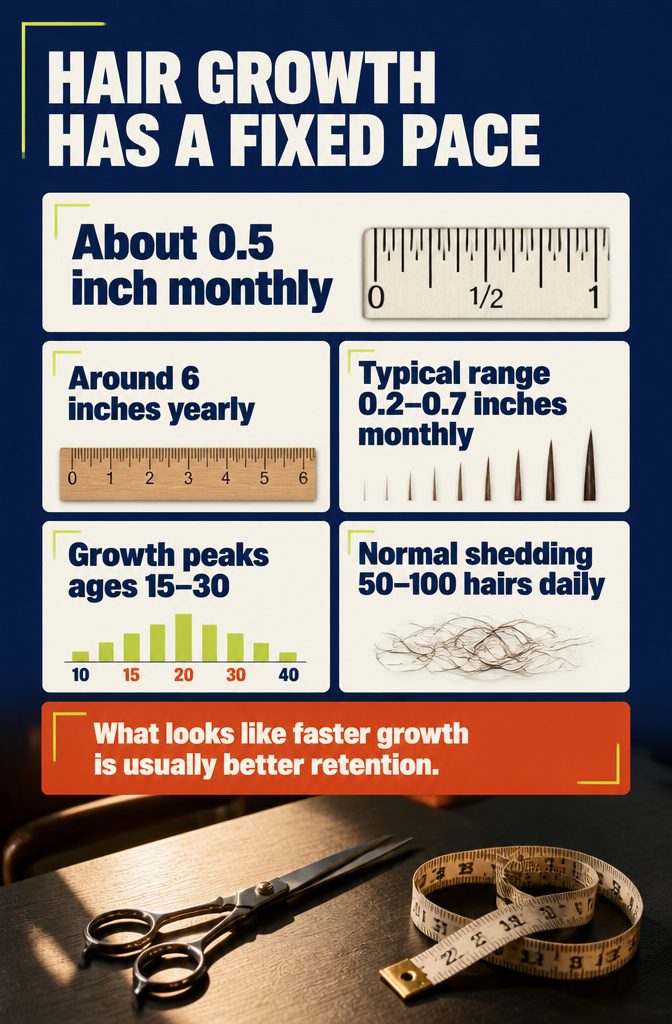
Hair grows about half an inch per month, or around 6 inches per year. That rate does not speed up if you want it to.
Between 0.2 and 0.7 inches per month covers the typical variation, and growth peaks between ages 15 and 30 before it slows. The follicles you have work at the pace they work, and no product changes the timeline at the root.
What looks like faster growth is usually better retention. Hair that breaks less reaches more length over the same stretch of months.
You are not speeding the follicle, you are keeping what it already produced. That difference matters, because it shifts the focus to protecting length rather than chasing a number the scalp will not deliver.
Losing 50 to 100 hairs a day is normal and does not mean something is wrong.
Those strands finished their cycle and made room for new growth. I mention it because the drain catches more than you expect, and panic over shedding that is actually ordinary sends people toward treatments they do not need.
Why Hair Grows and Why It Stops
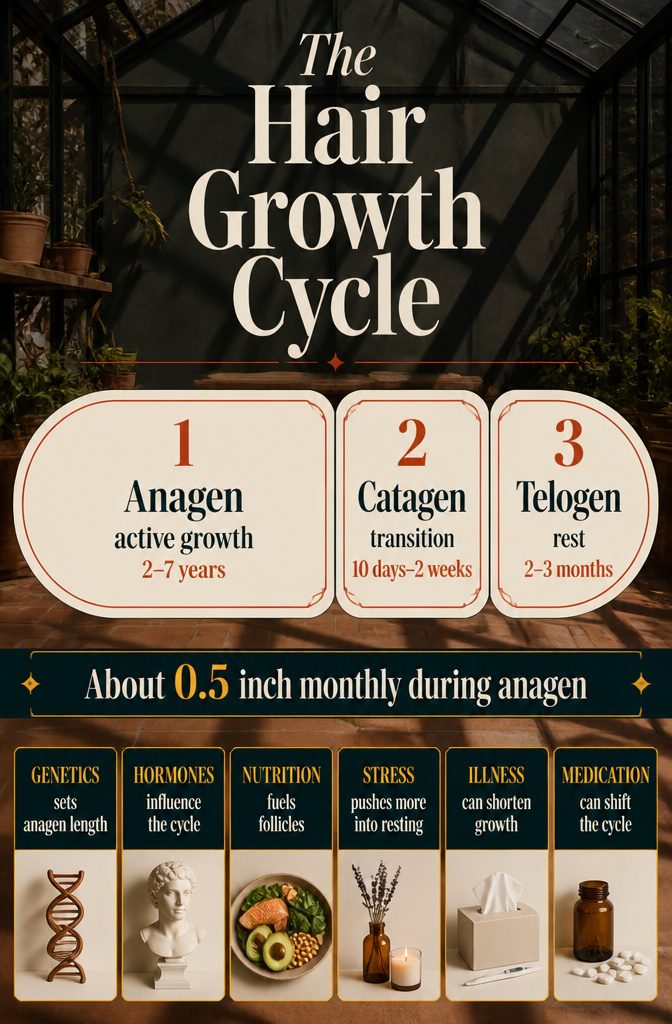
Hair grows when the follicle is in anagen, the active growth phase that lasts anywhere from two to seven years.
During that window, hair adds roughly half an inch each month. The phase then shifts into catagen, a short transition lasting ten days to two weeks, where growth stops and the follicle shrinks.
After that comes telogen, the resting stage, which runs about two to three months though some sources put it closer to one to four.
Old hair sheds at the end of telogen, making room for new strands to start the cycle again.
Genetics decides how long your hair stays in anagen, but hormones, nutrition, stress, illness and medication can all shorten that window or push more follicles into the resting phase at once.
When shedding picks up or breakage snaps off length faster than the scalp can replace it, growth looks stalled even when follicles are working normally.
Curly and coily hair shrinks visually, which can make the same half-inch gain look smaller than it does on straight hair.
Frequently Asked Questions
How fast does hair grow naturally?
Hair grows about half an inch per month, or roughly 6 inches per year. That rate varies slightly between people, typically falling between 0.2 and 0.7 inches monthly, and growth peaks between ages 15 and 30 before slowing down.
Can hair grow faster with supplements?
Supplements like biotin, vitamin D, zinc, and iron can support follicle health when you’re actually deficient, but they won’t push hair past the rate your genetics allow if your levels are already normal.
Oversupplementing carries risks, so talk to a healthcare provider before adding anything.
Is hair thinning permanent?
Not always.
Hair thinning may be reversible, especially when you address it early. A health screening can identify causes like thyroid issues or vitamin deficiencies that interfere with the follicle cycle.
What is the most effective hair regrowth treatment?
Minoxidil is the only over-the-counter option the FDA has approved for hair loss, and results can take up to 12 months. Professional options like PRP injections, low-level laser therapy, and hair transplants address thinning differently and require a provider.
How can I increase my hair growth naturally?
Eat enough protein (50 grams daily or more), handle hair gently when wet, massage your scalp for 11 to 20 minutes daily, and protect strands from heat and chemical damage.
Little research supports natural treatments, but these habits help you retain the length your follicles produce.
Which hairstyles promote healthy hair growth?
No hairstyle directly promotes growth, but low-maintenance natural styles reduce damage.
Avoid ponytails, tight buns, and cornrows that pull at the hairline, and if you wear extensions or weaves, take them out after two to three months to prevent permanent thinning.
What exercise makes your hair grow faster?
Cardio exercises like jogging and yoga poses boost blood circulation to the scalp, which may support growth.
Scalp massage works the same way, and about 70% of people in one study reported less loss or thicker growth after 11 to 20 minutes of daily massage over six months.
Do hair growth serums work for growth?
Consistent use may strengthen follicles and boost new growth. The John Frieda PROfiller+ serum claims 30% visible growth improvement in 4 weeks and 50% hair-loss reduction over 12 weeks, based on a 34-subject study.
Which oil is best for hair growth?
Rosemary oil has the best evidence, working as well as minoxidil after 6 months in one study.
Castor oil and olive oil are older standbys with less direct proof, though castor oil may lower inflammation and olive oil brings omega-3s and shine.
Can hair grow 2 inches in 2 weeks?
No.
Hair grows about half an inch per month on average, so 2 inches would take roughly 4 months. No product or treatment speeds the follicle past the pace your genetics set.
What triggers hair growth?
Hair grows when the follicle enters anagen, the active growth phase that lasts 2 to 7 years.
Genetics decides how long that phase runs, but hormones, nutrition, stress, illness, and medication can all shorten it or push more follicles into the resting phase at once.