
Rosemary water is rosemary leaves steeped in hot water, not the steam-distilled essential oil tested in clinical trials.
That distinction decides most of what you can reasonably expect from it: a 2015 study showing increased hair counts used rosemary oil against 2% minoxidil, and no published research has tested the homemade infusion at all.
What Rosemary Water Is

Rosemary water is rosemary leaves or sprigs steeped in water, sometimes called rosemary tea.
The typical method brings fresh or dried rosemary to a boil in distilled water, then lets the mixture steep for anywhere from 15 minutes to a few hours before straining out the solids.
Recipes vary: some call for one sprig per cup of water, others use four sprigs in three cups. A few add mint, ginger or lavender.
A different approach mixes 10 to 15 drops of rosemary essential oil into two or three cups of boiling water. That version is faster but delivers a diluted oil rather than an infusion, and the two are not interchangeable.
There is no single standard formula, so the strength of what you end up with depends entirely on the ratio and steep time you choose.
What the Research Actually Shows
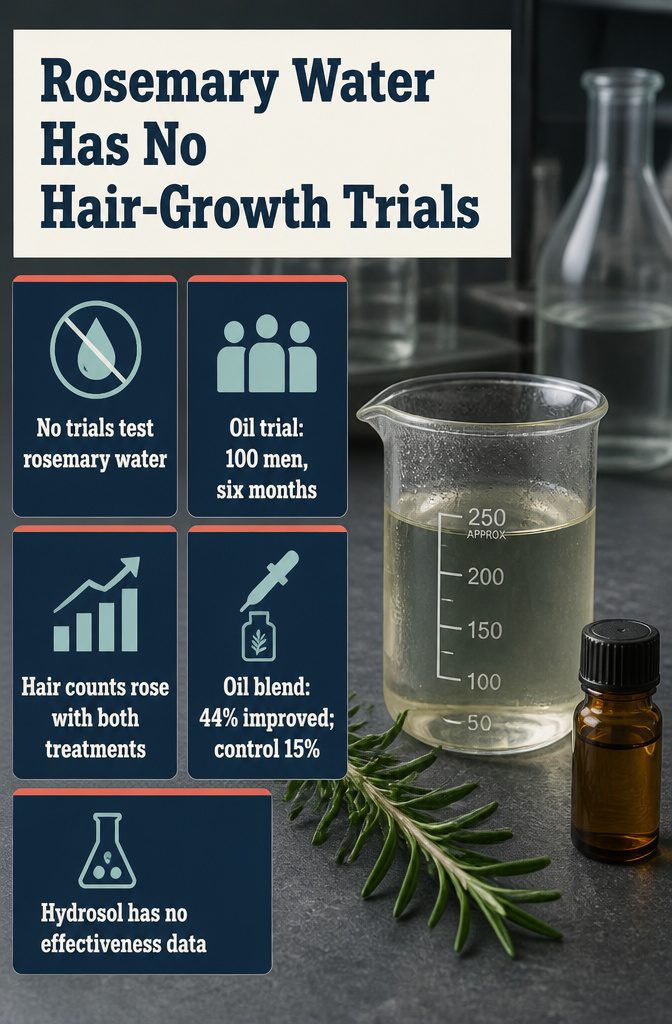
No published study has looked at whether rosemary water helps hair grow.
The research that does exist tested rosemary oil or leaf extract, which are far more concentrated. One 2015 trial compared rosemary oil to 2 percent minoxidil in 100 men with androgenetic alopecia.
After six months, both groups showed increased hair counts. An earlier study in people with alopecia areata found 44 percent of those using a blend of essential oils, including rosemary, showed improvement compared to 15 percent of the control group.
The problem is that boiling rosemary at home produces a water-based infusion with nutrients cooked out at high heat, not the steam-distilled oil used in trials.
Even the hydrosol left over from professional distillation is less concentrated than the oil itself, and there’s no data showing whether it works.
How to Make It

The steps vary enough that it helps to think of them as methods, not measurements you got wrong.
One TikTok recipe calls for five cups water and five sprigs of rosemary, brought to a boil, simmered for 15 minutes, then left to rest for 25 minutes until the liquid turns pinkish-red.
Another goes heavier on the rosemary: 25 grams fresh to four cups distilled water, simmered 20 minutes, then rested for two hours until it darkens to amber.
A third uses four sprigs to three cups water, 15 minutes of simmering, 20 minutes to cool. The color shifts from light golden to opaque red or brown depending on strength and steeping time.
If you prefer a spray with essential oil instead, combine 10 drops rosemary oil with half a teaspoon Solubol or carrier oil, then top the bottle with four ounces distilled water.
Some recipes fold in ginger, mint or peppermint oil. I pick the method that fits the concentration I want, not the one that sounds official.
How to Use It and How Often
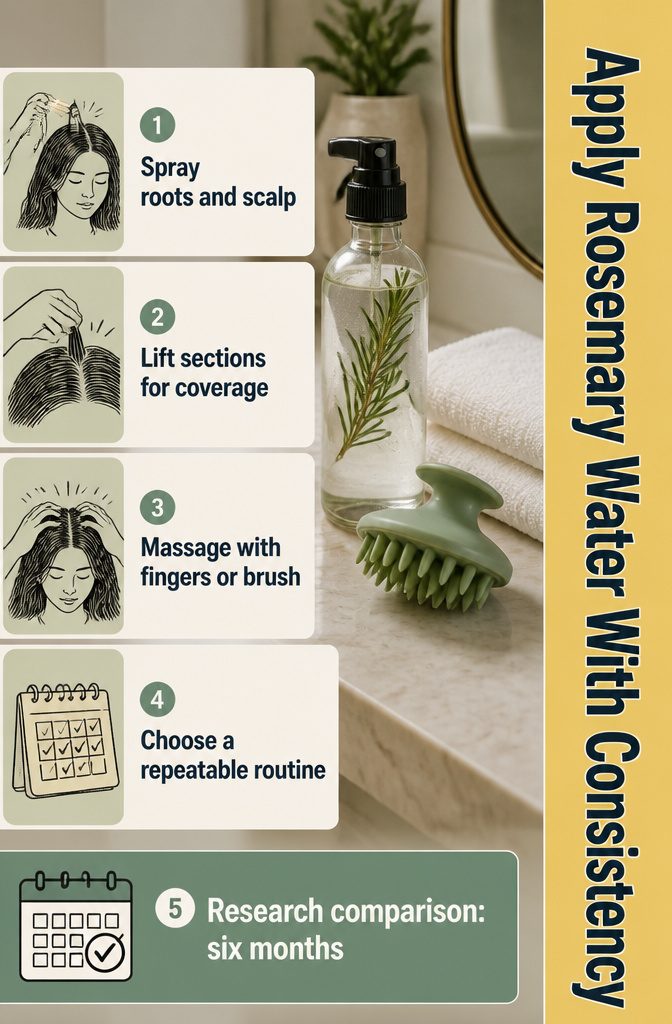
The most flexible approach is to spray rosemary water onto your roots, lift your hair in sections to reach your scalp, and massage it in with your fingers or a scalp brush.
That gets good coverage and increases blood flow to the follicles. You can also pour it through your hair as a rinse after shampooing, then leave it in or let it sit for ten to fifteen minutes before rinsing.
A third option is mixing a small amount into your shampoo, though the direct application gives you more control.
Frequency recommendations split.
Some use it twice daily, morning and night, treating it like a leave-in tonic. Others apply it after every shower but limit rinses to once or twice a week.
If you are pairing it with rosemary oil, use the oil once or twice weekly and the water on the off days, waiting at least an hour or two before washing your hair.
Results from the comparison study became more visible at six months than at three, so sticking with it matters more than front-loading frequency.
One source reports changes after four weeks of consistent use, but that timeline is shorter than the research window.
Scalp and Hair Condition Claims
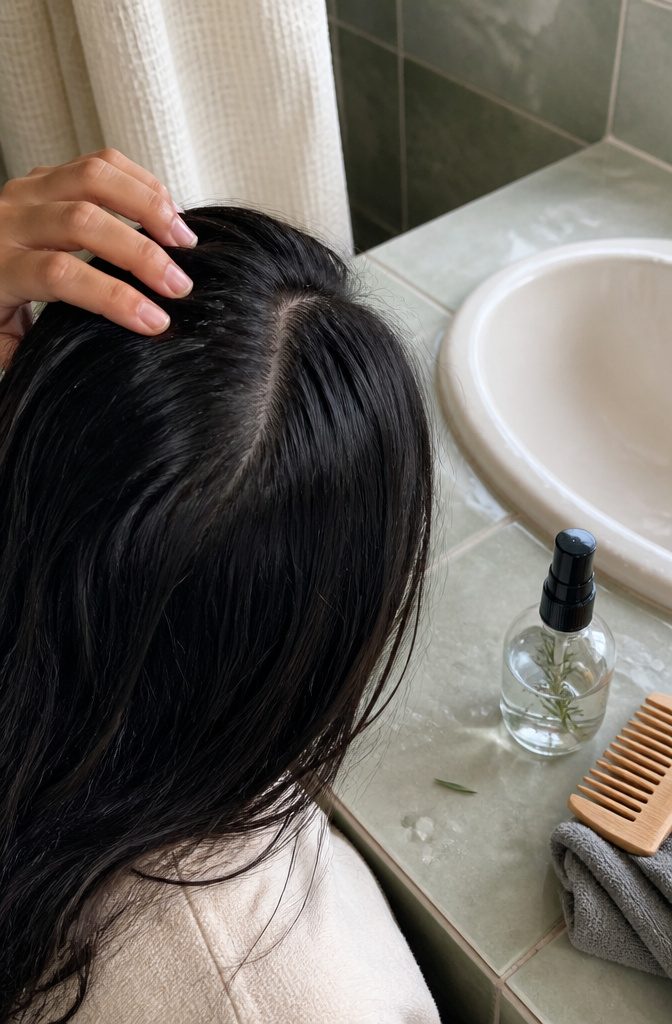
Beyond growth itself, rosemary water draws attention for what it might do to scalp condition and the strand. The most common claims center on balancing oil production and calming inflammation, which in turn may help with dandruff and irritation.
Some people report less breakage, better shine, and a reduction in flakiness after regular use. A smaller number say gray hairs darkened over time, though that is not why most reach for it.
The enthusiasm runs ahead of the evidence. While rosemary essential oil has been studied more thoroughly, rosemary water itself has little direct research backing the hydration or shine claims.
One study did find that rosemary extract combined with citrus provided up to 70 percent protection against UV damage, but replicating that effect with homemade rosemary water remains unproven.
The gap between what people say they see and what studies confirm is wide enough to matter.
Patch Testing and Who Should Ask a Provider First
Patch Testing and Who Should Ask a Provider First
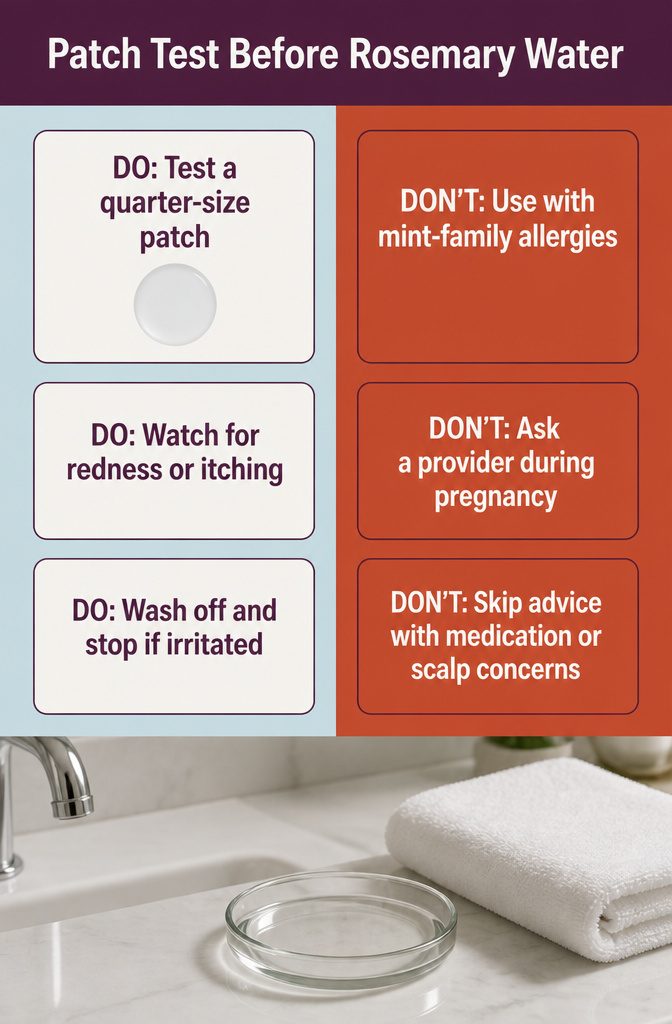
Run a patch test before putting rosemary water anywhere near your full scalp.
Apply a quarter-size amount to a small patch of skin, leave it on for the same length of time you plan to use it (a minute or two if rinsing, longer if leaving it in), then watch for redness or itching.
If irritation shows up, wash it off and stop.
People with allergies to plants in the mint family should skip rosemary water entirely.
It can trigger scalp inflammation or an allergic reaction. Pregnant women and anyone taking hair-loss medication need to check with their healthcare provider first.
The same goes if you have existing scalp or hair concerns. A dermatologist or integrative doctor can tell you whether rosemary water is safe given what else is going on with your scalp or what prescriptions you’re already on.
How Long It Keeps
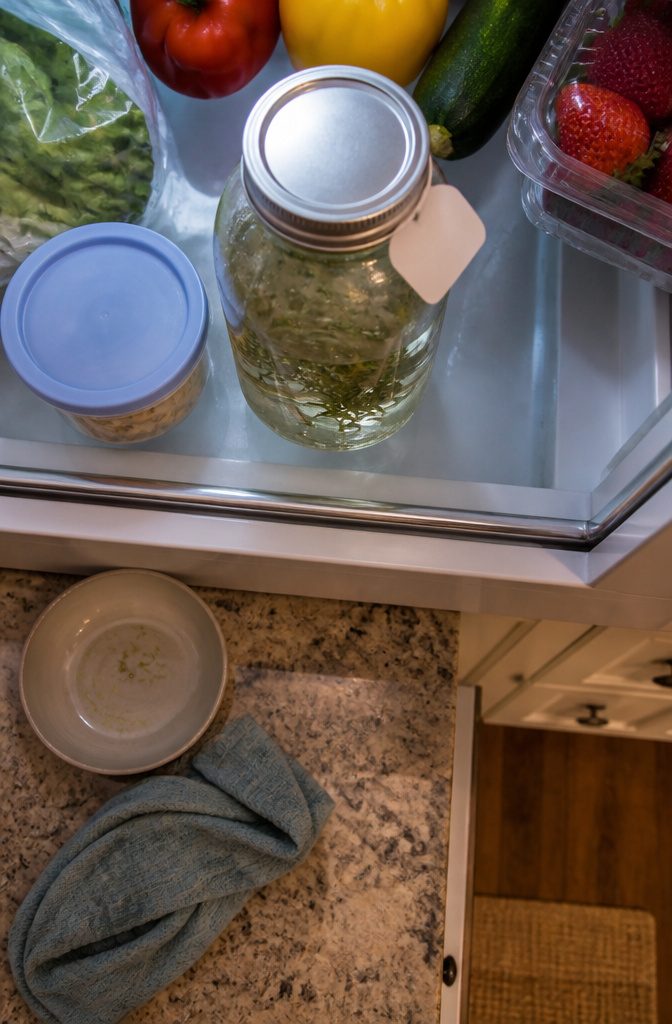
Refrigerated rosemary water stays usable for up to two weeks. After that, bacterial growth becomes a real risk, so anything left after fourteen days gets tossed.
The cold slows breakdown, but it doesn’t stop it, and rosemary water has no preservatives to buy you more time. I date the jar the day I brew it so I know when it crosses the line.
Room-temperature storage cuts that window down to a day or two at most, which makes refrigeration the only practical choice if you want more than a single use out of a batch.
Rosemary Water Compared With Rosemary Oil
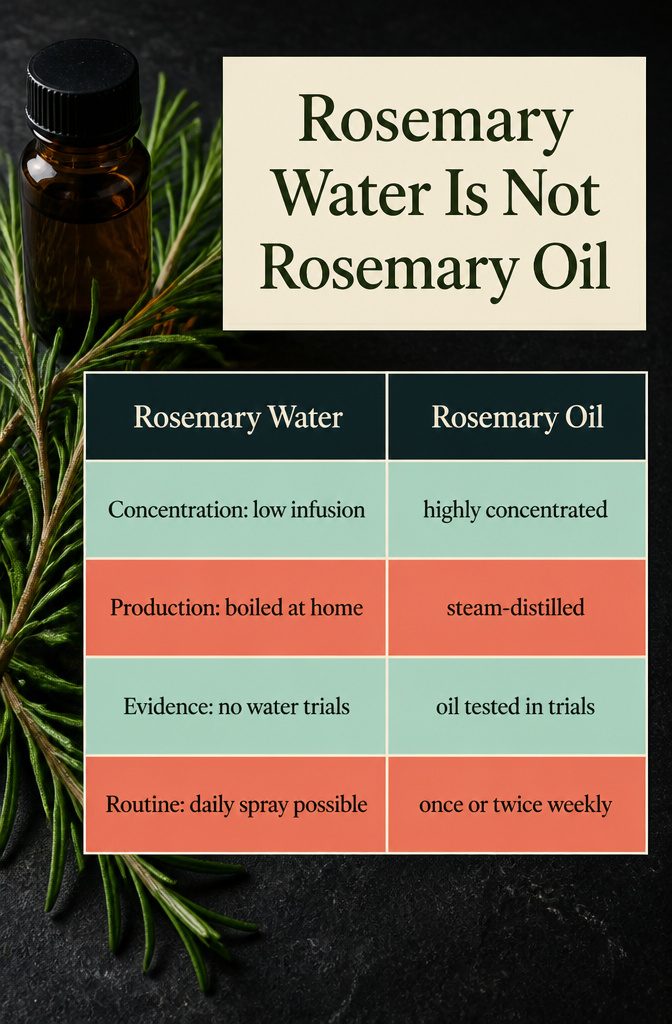
The rosemary oil tested in the six-month trial against minoxidil was an essential oil extracted through steam distillation, not water steeped at home. The leaf extract that improved androgenetic alopecia in the other study was similarly concentrated.
A rosemary essential oil is produced in sterile equipment at controlled temperatures, and the process concentrates active compounds far beyond what you can pull from fresh or dried leaves boiled on a stove.
The hydrosol left over from distilling essential oil is water-based and less concentrated than the oil itself, but still closer in strength to what the research measured than a DIY infusion is.
I mention this because the difference matters.
The studies do not prove that homemade rosemary water works for hair growth. What they do show is that concentrated extracts can perform, and the gap between those and a kitchen steep is wide.
If you make rosemary water at home, you can use it daily as a spray. Save rosemary oil for once or twice a week.