The schedule runs from once a week for healthy 4C hair to twice a week when the strands are brittle or damaged.
Watch how your hair behaves after each treatment, then adjust: dryness or stiffness means you can move closer, while limp strands mean you need more time between sessions.
A hooded dryer or thermal heat cap warms the hair steadily so conditioner can work its way into each coil, and a cool rinse at the end locks that moisture down instead of letting it slip out.
1. Hooded Dryer
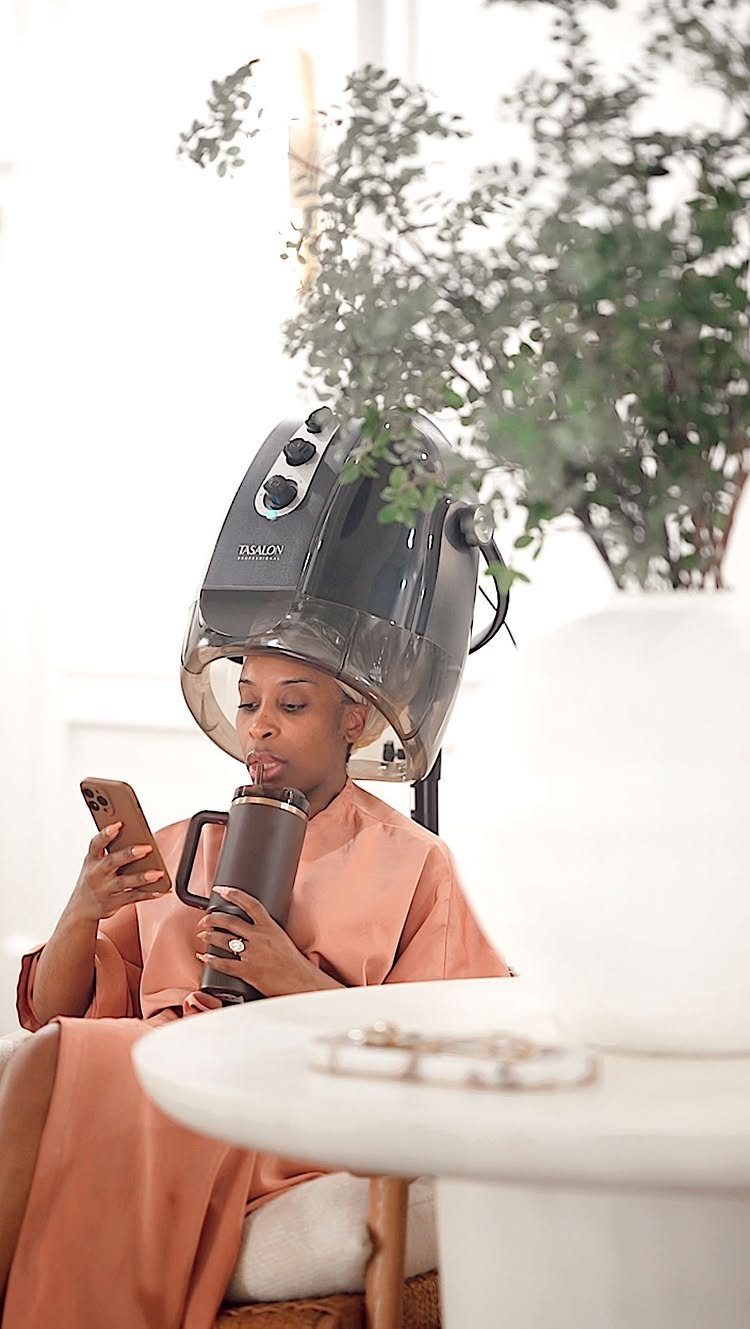
Sitting under a hooded dryer adds heat that opens the cuticle and pushes moisture deeper into the strand. For 4C hair, that extra penetration makes a real difference in how soft and pliable the hair feels once it cools.
Set the dryer to medium heat and sit with the conditioner on until the hair is thoroughly warm.
If you don’t own a hooded dryer, a thermal heat cap works the same way. The steady, even warmth beats a handheld dryer pointed at your head, and you can scroll or sip something while you wait.
2. Rinse with Cool Water
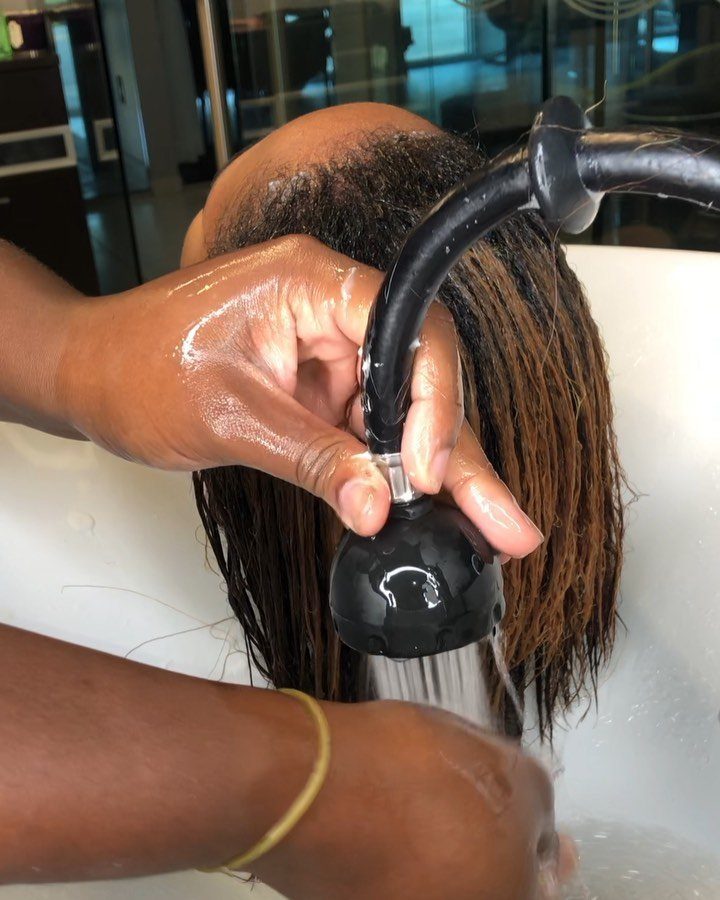
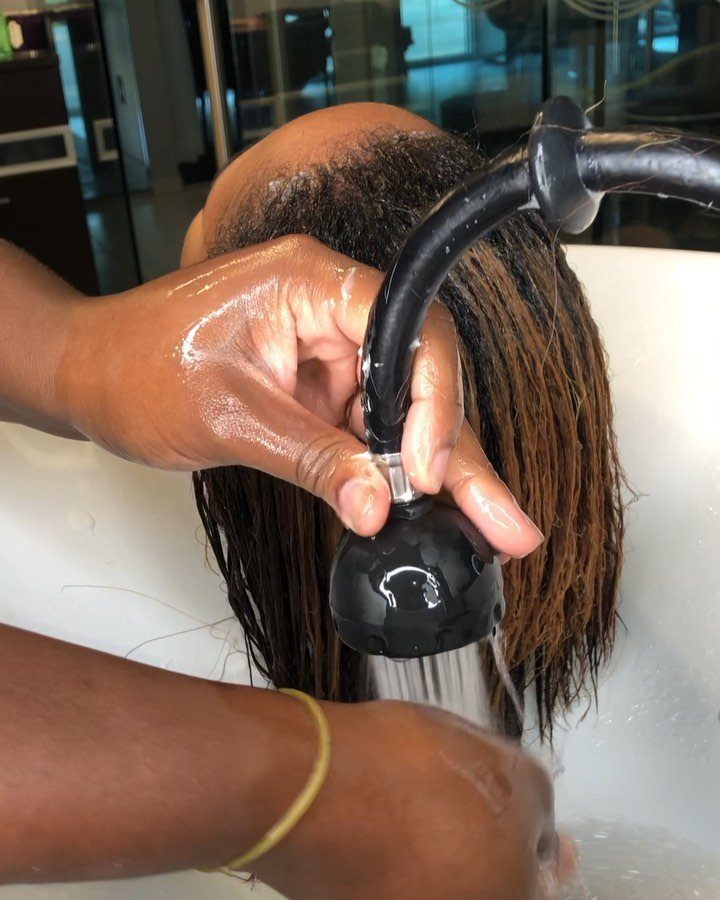
Cool water seals the cuticle after the treatment lifts it open, locking in the moisture you just put there. Hot water during the rinse undoes some of that work.
I rinse with the coldest water I can stand.
It takes a moment of discomfort, but the hair feels smoother immediately and holds moisture longer between washes. If cold is too much, lukewarm still works better than hot.
3. Applying Conditioner to Hair Sections
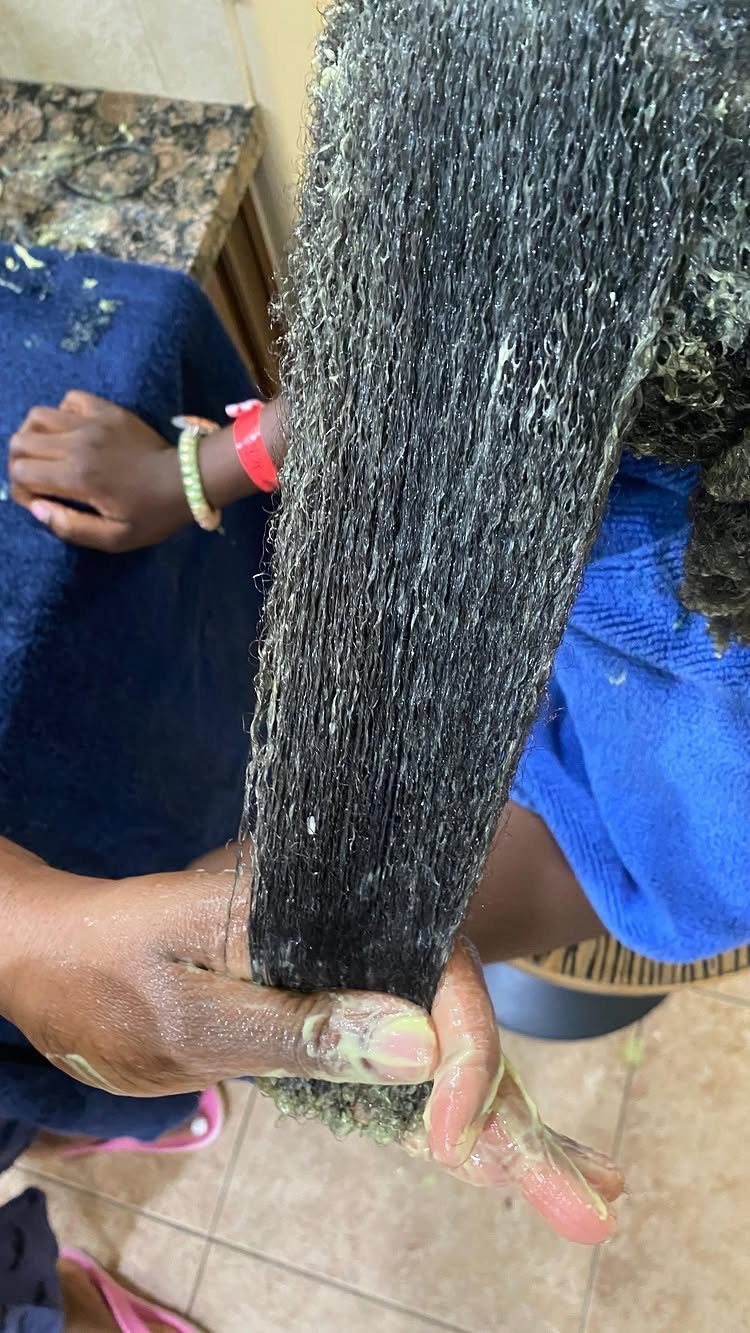
Splitting the hair into small sections before you apply conditioner gives every strand contact with the product. On 4C hair, thick application on each section coats the coils completely instead of sitting on top.
Part the hair into manageable sections, then work through one at a time. Smooth the conditioner from root to tip with your fingers, making sure the product reaches the ends.
Clip each section up and move to the next. Full coverage means better hydration and less product wasted.
4. Finger Detangling with Product

Fingers detangle more gently than a comb and let you feel knots before you pull through them. On fragile 4C hair, that control cuts breakage during the conditioning step.
Start at the ends and work up toward the root, using the conditioner as slip. Pull apart small tangles with your fingertips instead of dragging through them.
If you hit resistance, add more product and separate the strands bit by bit. I prefer this method when my hair is especially dry or has shrunk tight between washes.
How 4C Hair Responds
The tight zigzag coils of 4C hair pack close together and shrink when wet, which makes the pattern look less defined than looser curl types.
Each strand tends to run thinner than hair with a wider curl, and the coils tangle and mat faster because of how tightly they wind.
Moisture moves up the shaft slowly on any coiled hair, and 4C loses what it holds faster than types with larger curls.
That combination leaves the hair dry more often and raises the chance of breakage when you comb or style.
Hair typing gives a useful shorthand, but most heads carry 2 or 3 patterns at once. If your crown behaves differently than your nape, treat each area according to what it does rather than forcing one routine across all of it.
Adjust Schedule to Hair
I deep condition my 4C hair once a week, right after I wash it, and that schedule works for most people with this texture.
If the hair feels dry or rough between sessions, move the schedule closer together. If it starts to feel limp or weak instead of soft, you may be conditioning too often and the hair needs a break.
Hair exposed to heat tools or chemical treatments usually benefits from more frequent conditioning, but watch how the strands respond rather than locking into a fixed number of days.
If your hair feels brittle or shows real damage, you might need to treat it twice a week until it softens up.
Frequently Asked Questions
What is deep conditioning?
Deep conditioning is an intensive treatment that delivers moisture and conditioning agents deeper into the hair shaft than a regular conditioner.
Heat from a hooded dryer or thermal cap opens the cuticle and pushes the product in, making the hair softer and stronger over time.
What is the difference between a deep conditioner and a regular conditioner?
A regular conditioner smooths the cuticle and improves manageability after shampooing.
A deep conditioner goes into the strand with heat and time, usually 20–30 minutes, to rebuild or hydrate from the inside; a regular conditioner sits on the surface and rinses fast.
What ingredients should a deep conditioner have?
Look for humectants like glycerin, honey, or aloe vera to pull moisture into the hair and hold it there.
Emollients such as shea butter, olive oil, or coconut oil give slip and smooth the strands, and hydrolyzed proteins like wheat or silk protein fill in gaps to strengthen hair that breaks easily.
How long does it take for a deep conditioner to work?
One session under a cap for 20–30 minutes makes the difference: softer, easier to handle, noticeably hydrated. Chronic breakage and cracking dryness need weeks of regular treatments, not one, before the texture starts to hold moisture on its own.
Can I deep condition my hair overnight?
Some masks are made for overnight use, but leaving conditioner on too long too often can oversaturate the hair and leave it weak or limp.
An overnight treatment once in a while helps parched hair, but my usual routine is 20–30 minutes with heat and a cap.