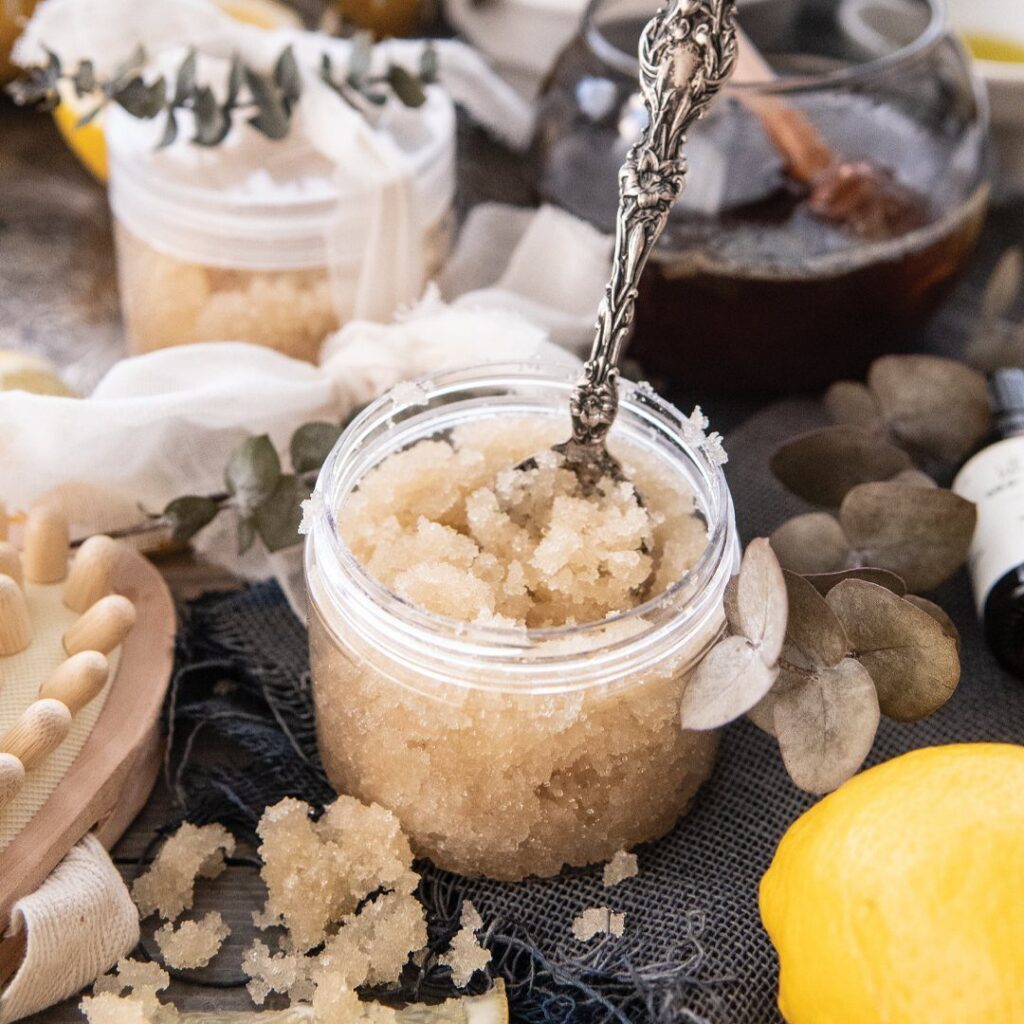
Salt scrubs range from a jar of paste-textured product you scoop and massage in sections to a homemade mix of coarse salt and lemon juice.
Most people see results scrubbing once weekly, though twice monthly works when buildup is light and twice weekly brings faster improvement if the scalp looks dull.
1. Christophe Robin Purifying Salt Scrub
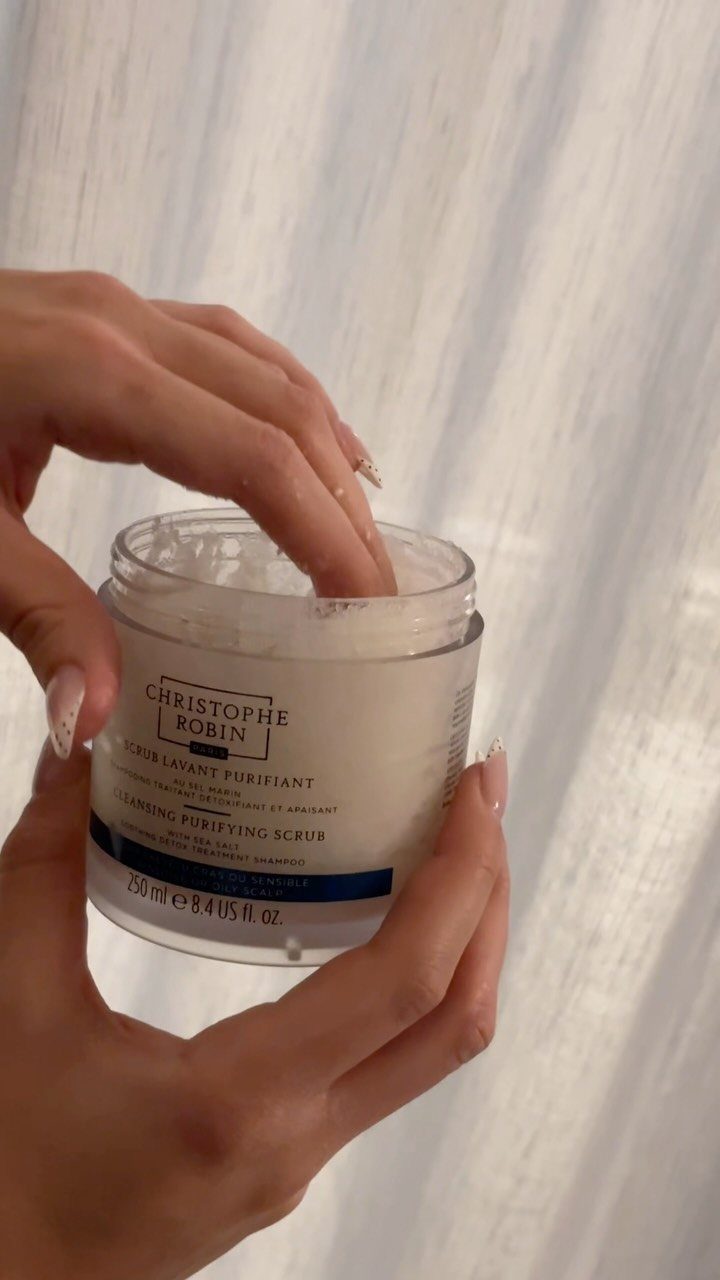
This jar holds a paste-textured scrub made with sea salt, and the texture is dense enough to stay on your fingertip without sliding off.
You scoop a small amount and work it directly onto a wet scalp in sections, massaging as you go. The salt grains are fine and dissolve partially as you scrub, so they exfoliate without feeling sharp.
Rinse thoroughly after a few minutes. If you have color-treated hair, check how often your color can tolerate a cleansing scrub like this one, since it strips more than a regular shampoo.
2. Direct Scalp Scrub Application
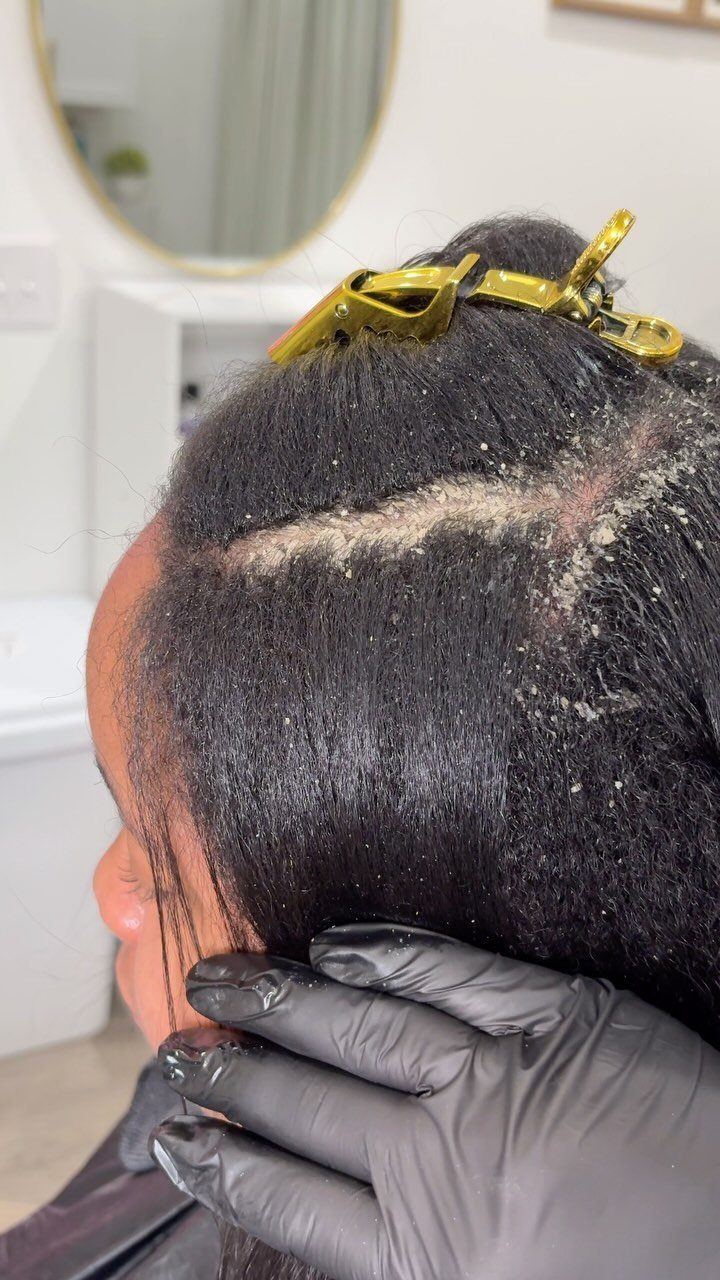
Applying scrub in sections lets you cover the whole scalp without missing patches or using too much product. Part the hair, place a small amount of scrub on the exposed scalp, then move to the next section.
This method works best on wet hair, and wearing gloves keeps your hands from drying out if the scrub contains salt or acids.
Massage each section for a few seconds, then rinse. Sectioning takes a few extra minutes but gives even coverage, especially if you have thick or curly hair.
Dr. Mislankar recommends using a scalp scrub if you’re “dealing with buildup, whether from dry shampoo/styling products, or just natural oil production.”
3. Homemade Lemon Eucalyptus Salt Scrub
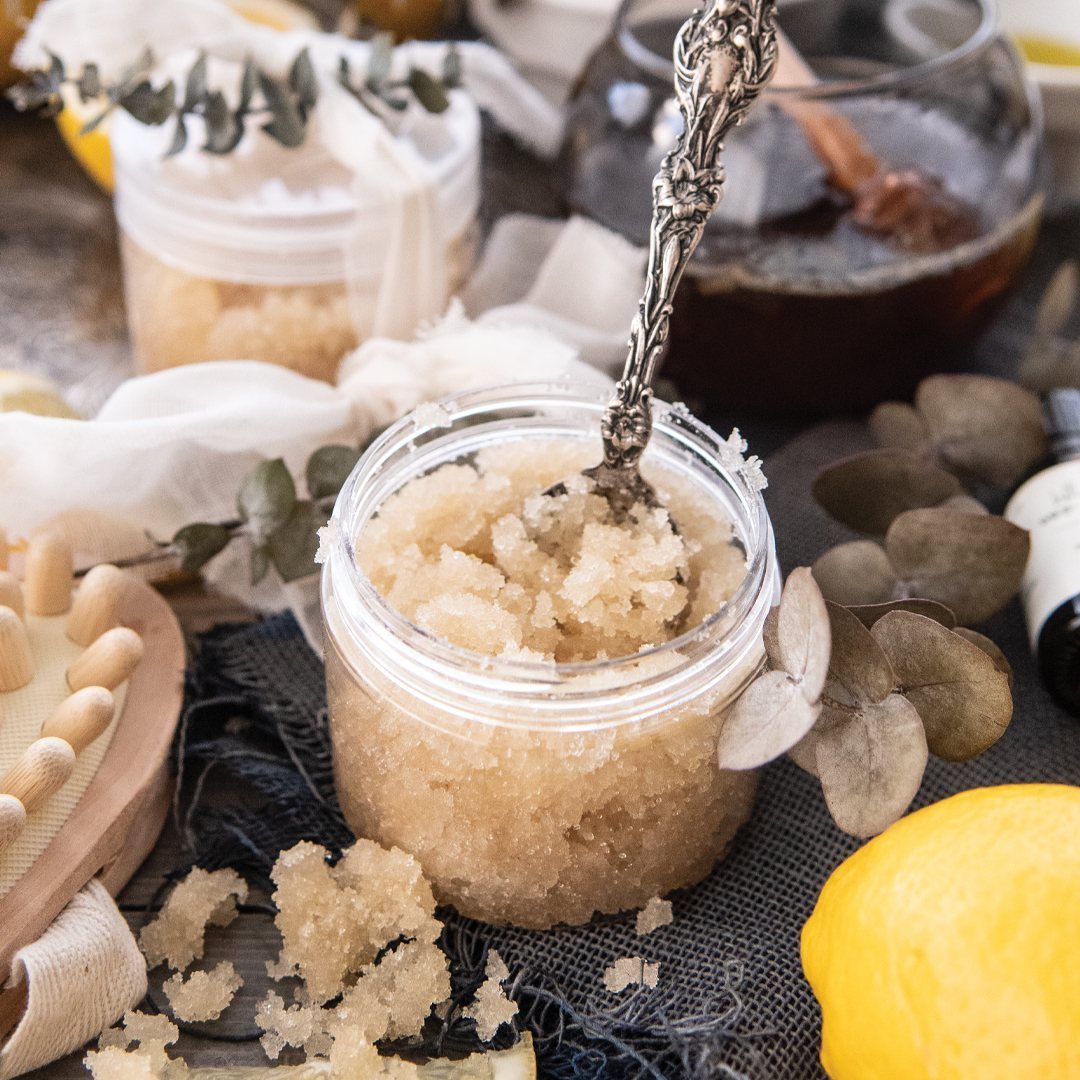
Mixing coarse salt with lemon juice and a few drops of eucalyptus oil gives you a scrub that smells bright and feels cooling.
The lemon adds acidity that cuts through oil, and eucalyptus gives a tingle without irritation for most people.
Use a ratio of about 3 parts salt to 1 part lemon juice, adding just enough to bind the mixture. Apply it to a damp scalp, scrub gently, and rinse.
4. Tea Tree and Peppermint Scrub
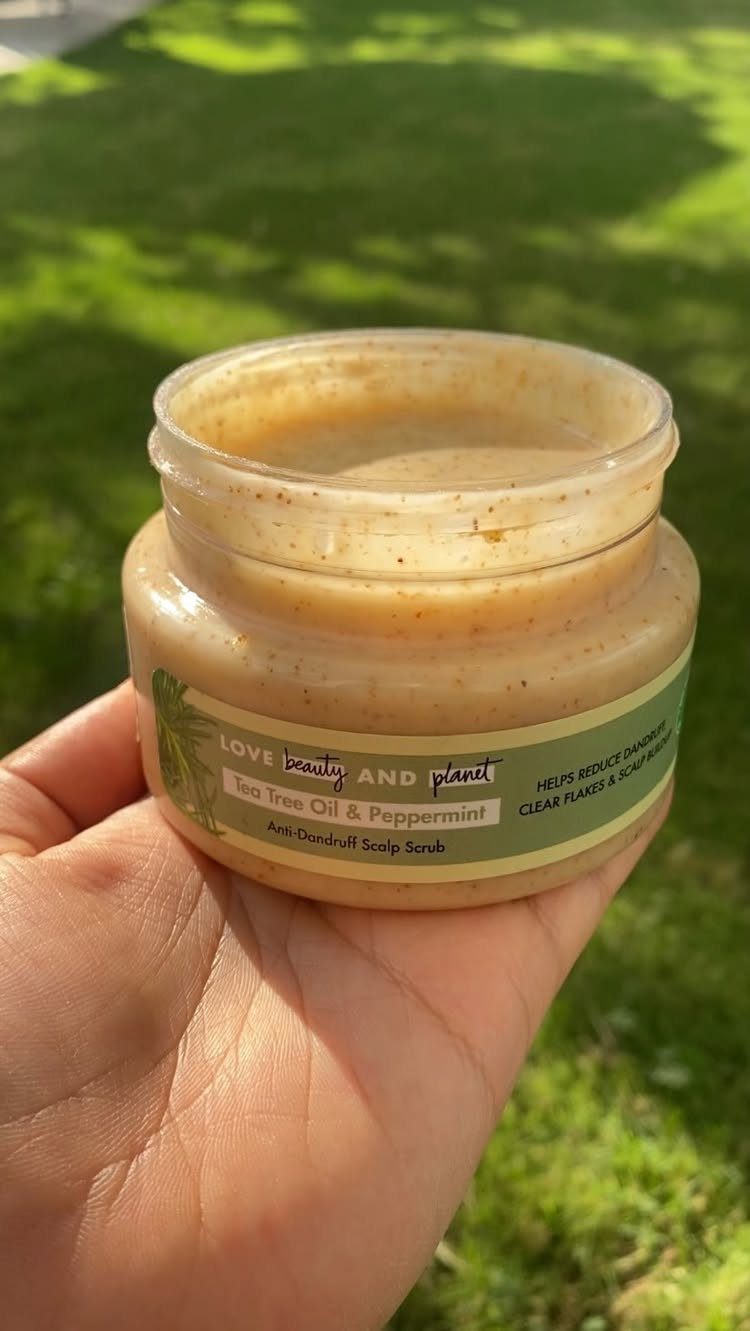
Tea tree oil and peppermint both reduce oiliness and leave a cooling sensation that lasts after you rinse.
This scrub has a beige, granular texture that spreads easily on wet hair. The tea tree addresses flakes and buildup, while peppermint wakes up circulation.
If your scalp runs sensitive, test a small amount first, since peppermint can feel strong. Use it once or twice a week, massaging for about a minute before rinsing completely.
5. Pink Himalayan Salt Scalp Scrub
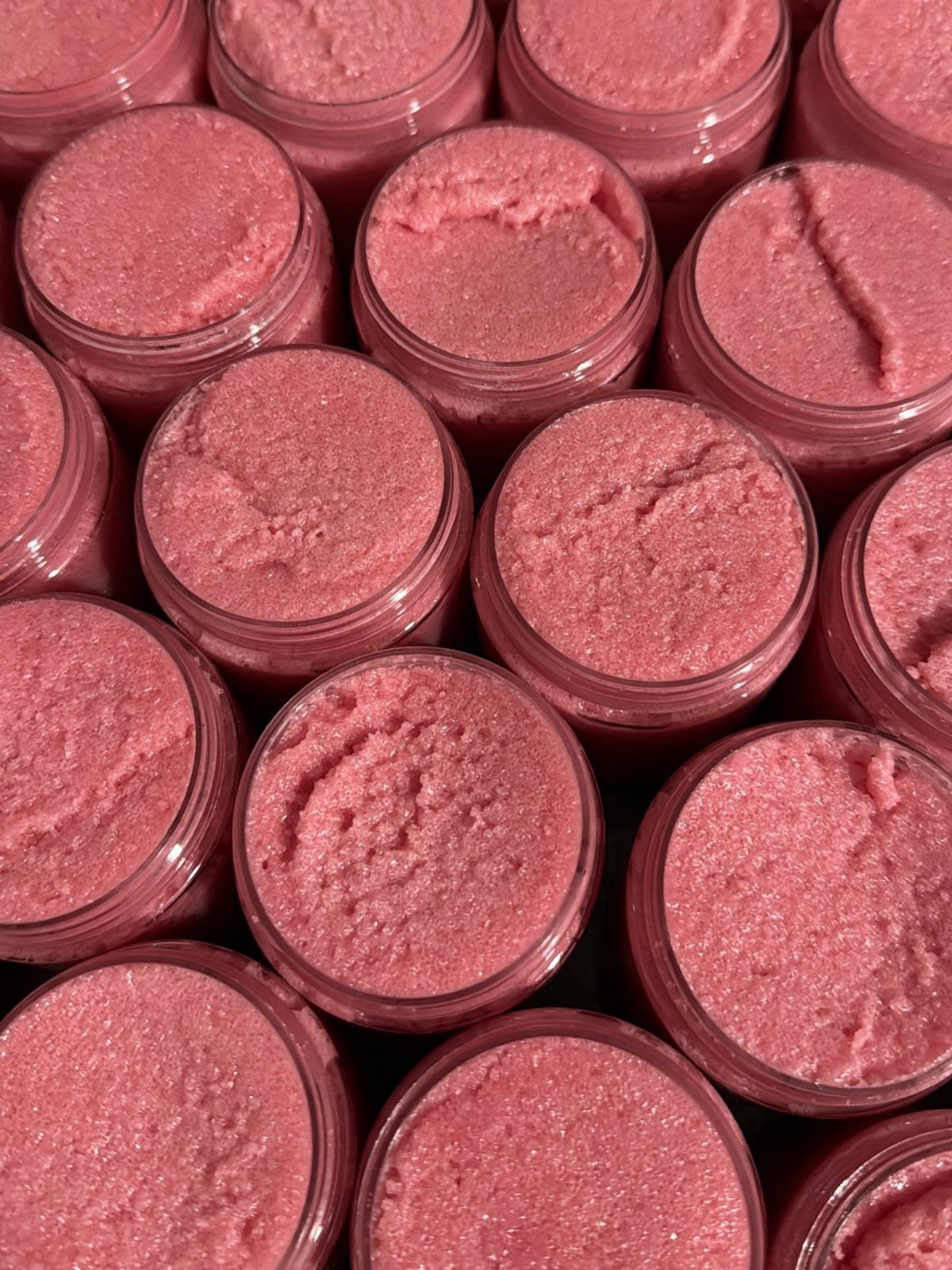
Pink Himalayan salt has a slightly coarser grain than white sea salt, so it exfoliates more aggressively. The pink color comes from trace minerals, which add no functional benefit but look nice in a clear jar.
Mix the salt with a carrier oil like jojoba or coconut to form a scrub that stays moist and spreads without scratching.
Apply to a wet scalp, massage for a minute, then rinse and follow with shampoo. This version suits someone who wants a stronger scrub for heavy buildup.
6. Scalp Massager Brush Application
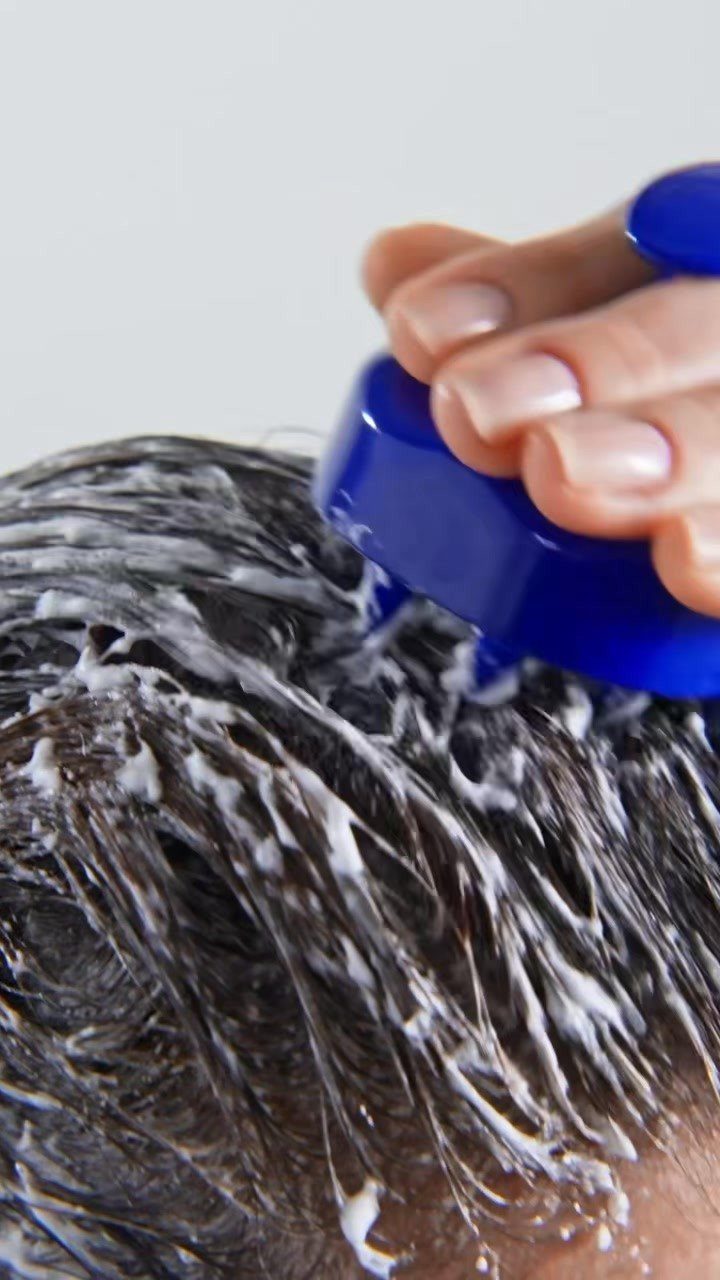
A silicone scalp brush spreads the scrub evenly and massages at the same time, so you get better coverage without pressing hard with your fingers.
Wet your hair first, apply the scrub, then work the brush in small circles across your scalp. The bristles lift buildup and distribute the product through the roots.
Rinse the brush after each use to keep it clean. This method takes less effort and reaches more of the scalp than fingertips alone.
How Often to Exfoliate
Most scalps respond well to a scrub once weekly.
If buildup is light or your hair is coarse and thick, twice monthly can be enough. When buildup feels heavy or the scalp looks dull, moving to twice weekly brings faster improvement.
The exfoliation that clears oil and flakes also removes some of the scalp’s protective layer, and scrubbing too often doesn’t give that barrier time to rebuild.
Most formulas leave enough slip and moisture that I skip conditioner at the roots.
Sensitive Scalp Cautions
If you have psoriasis, eczema, or dermatitis, choose a scrub formulated for sensitive scalps.
Fragrance-free and hypoallergenic options reduce the chance of a flare. Run a patch test on the inside of your wrist or behind your ear before applying the scrub to your whole scalp.
Scrubs with artificial chemicals are more likely to irritate than all-natural versions.
Parabens, sulfates, and silicones can worsen dryness or set off redness. If your scalp reacts to fragrance, avoid added scent entirely.
People with sensitive skin should consider asking a dermatologist which scrub ingredients are safe for their specific condition. A patch test catches most reactions, but a professional can flag ingredients that take longer to show up.
Application and Aftercare
Work in small circles with your fingertips, not your nails, to avoid scratching.
Some scrubs are clarifying enough to replace shampoo on their own. Check the label to see whether yours needs a second cleanse.
Limit heat styling when you can, since high heat dries the scalp and can make flaking worse.
Frequently Asked Questions
Can a scalp scrub help with dry scalp?
A scrub clears flakes and buildup that can make a dry scalp look worse, but the exfoliation also strips the protective layer.
If dryness is the main concern, limit use to once or twice monthly and choose a formula with added moisture or oils so the scrub does not pull more hydration from the skin.
Can Epsom salt be used in a scalp scrub?
Epsom salt dissolves faster than sea salt, which makes it gentler but less effective at physical exfoliation.
If you use it, mix it with a carrier oil like olive or jojoba to help it cling and apply enough pressure to scrub rather than rinse away. Coarse sea salt gives better scrubbing power for heavy buildup.
What removes buildup from the scalp?
A salt scrub lifts product residue, oil, and dead skin through direct exfoliation, unclogging follicles and clearing anything a regular shampoo leaves behind.
The physical scrubbing action loosens buildup that has settled on the scalp or at the roots, and rinsing carries it away.
Who should use a scalp scrub in their haircare routine?
Anyone dealing with oil, flakes, or product residue benefits from a scrub.
If styling products or natural oil production leaves buildup, a weekly scrub clears it and makes roots look less greasy. People with oily scalps, mild dandruff, or hair that feels heavy between washes get the most from regular exfoliation.
Are there any potential downsides or risks to using a scalp scrub?
Scrubbing too hard or too often irritates the skin, causing tenderness, dryness, or more flaking.
Active scalp conditions like psoriasis, eczema, or open wounds can worsen with exfoliation, so hold off until those are under control. Sensitive scalps may react to fragrance, sulfates, or other additives in the formula.
Can you over-exfoliate your scalp? If so, what are the signs that someone is exfoliating too often?
An over-exfoliated scalp feels tender, tight, or more sensitive than usual, and flaking or shedding may increase instead of improving.
Using a scrub more than twice weekly can cause these symptoms. If they show up, skip the scrub for a week or two and let the scalp rebuild its protective layer.
What ailments does a salt scrub help?
A salt scrub addresses itchy scalp, flakes, and excess oil by removing dead skin and buildup that worsen those symptoms.
The exfoliation does not cure the underlying condition, but it clears the surface and gives other treatments a better chance to work.
Is this okay for sensitive skin?
Before trying a full application, test a small amount behind your ear if your scalp reacts to fragrance or common irritants.
If you manage psoriasis, eczema or dermatitis, check with a dermatologist before scrubbing, since some reactions show up days later.
Can I use table salt?
Table salt is too fine to exfoliate effectively and dissolves almost immediately when wet. Coarse sea salt or pink Himalayan salt holds its shape long enough to scrub, and the larger grains lift buildup better than powder-fine crystals.
Do I use this before or after shampooing?
Scrub first, then shampoo so you can rinse out any grains left on the hair itself.





