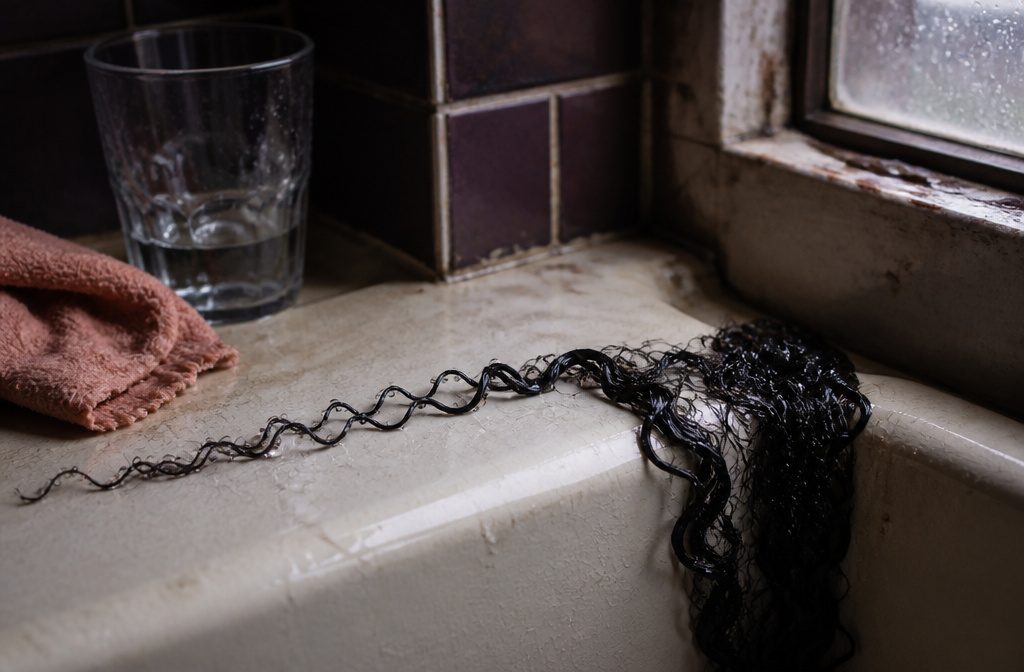
Low porosity hair resists moisture because its cuticle layer lies flat and tightly closed, which means water and product bead on the surface instead of soaking in.
But that same sealed structure also traps buildup faster, so clarifying weekly and applying products to soaking-wet hair in the right order makes the difference between hydration that actually reaches the strand and conditioner that rinses away untouched.
What Low Porosity Hair Means
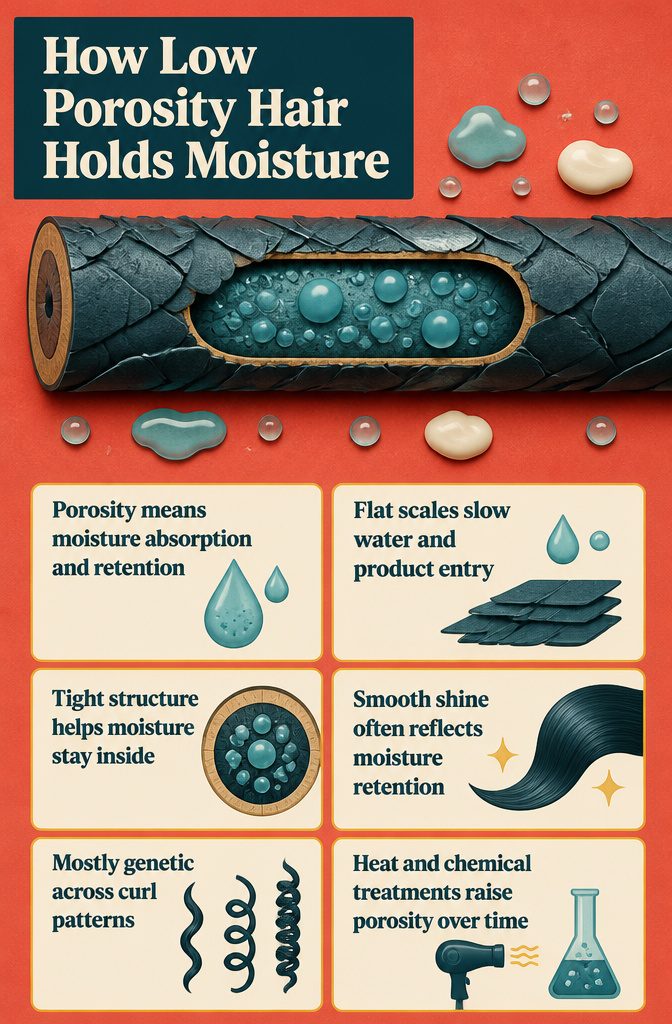
Porosity is how your hair absorbs and holds moisture. The cuticle — the outermost layer of each strand — is made of overlapping scales, and in low porosity hair those scales lie flat and tightly packed together.
That structure makes it hard for water and product to get in. The cuticles sit close, with few gaps, so moisture has to work its way through slowly.
Once moisture does get inside, though, the hair tends to retain it well.
The same tight structure that slows absorption also keeps moisture from escaping easily. Low porosity hair often looks smooth and shiny for that reason.
This is mostly genetic.
Heat and chemical treatments typically raise porosity over time rather than lower it, so if your hair resists water now, it likely always has. Low porosity can show up in any curl pattern, from waves to tight coils.
1. Water Beads and Products Sit on the Surface
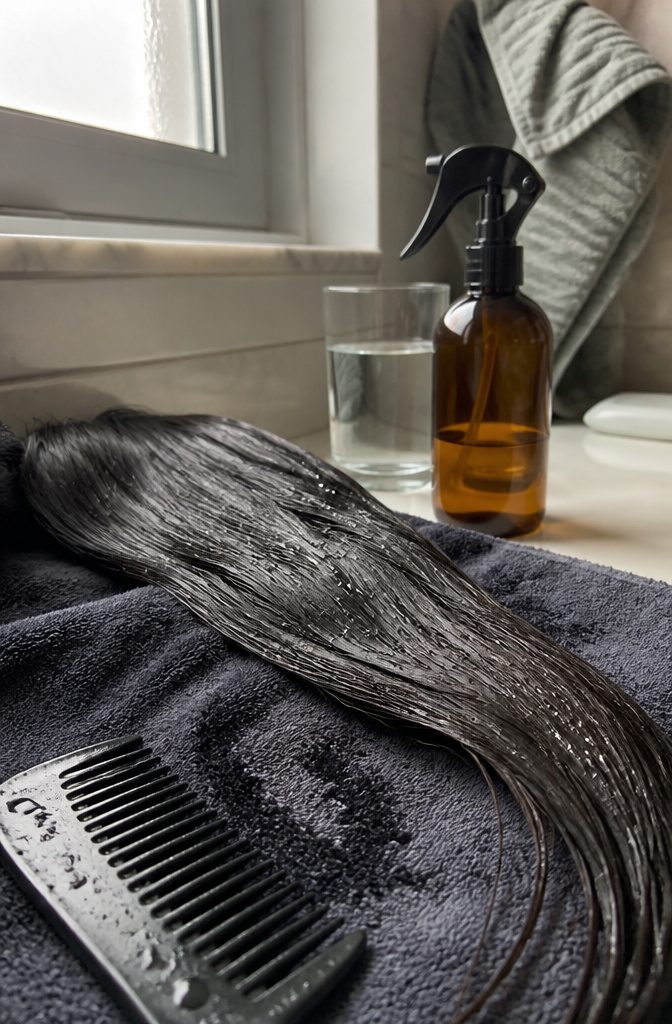
The most visible sign shows up as soon as water hits your hair. Water beads on the surface instead of soaking in, and the strand takes a long time to feel fully wet.
You can watch the same thing happen with product. Apply an oil or leave-in to your ends, and half an hour later it still sits on top, coming off on your fingers when you touch it.
While low-porosity hair can often look shiny, it may still feel dry because moisture isn’t easily getting inside the strand.
— Allure
That explains why your hair can look good but feel parched even right after conditioning.
Drying takes forever, too. The water that struggled to get in now struggles to leave, so air drying drags on for hours.
The spray test captures this in real time. Spritz a section of clean, dry hair with room temperature water and watch what happens.
Beads sitting on the surface or rolling off point to low porosity. Hair that darkens and saturates almost immediately is high porosity.
The float test is less reliable. Drop a clean strand into a glass of room temperature water and floating suggests low porosity, fast sinking suggests high.
But product residue, natural oils and water temperature all skew the result, so Healthline, Naturally Love Hue and Holistic Enchilada all warn against trusting it.
How your hair behaves on wash day tells you more than a strand in a glass.
2. Buildup Happens Faster
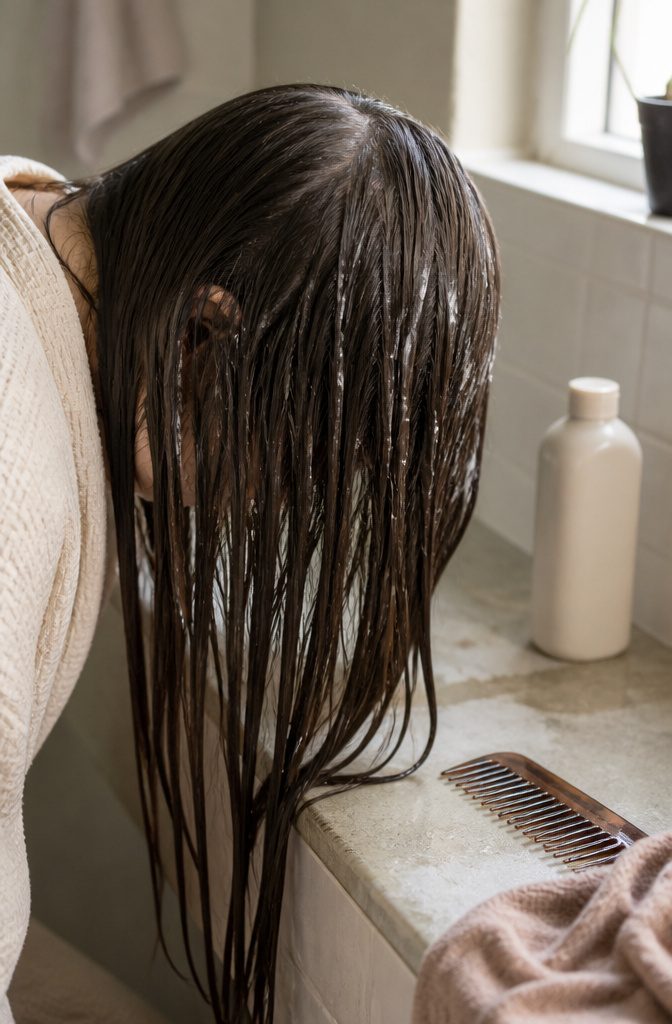
Products layer on top because the cuticle won’t let them in. That sealed outer layer blocks moisture and leave-ins from penetrating the hair shaft, so everything you apply sits on the surface instead.
Over a few wash cycles, that accumulation becomes obvious: hair feels heavy, greasy, or coated even when it’s clean.
I rotate in a clarifying shampoo weekly for exactly this reason. Some people need it only once or twice a month, but fine low porosity hair shows buildup faster.
If your products stopped working or your hair feels limp, buildup is usually blocking everything you apply afterward. A clarifying wash clears the path so moisture can actually reach the strand.
3. Stiffness After Protein or Difficulty Taking Color
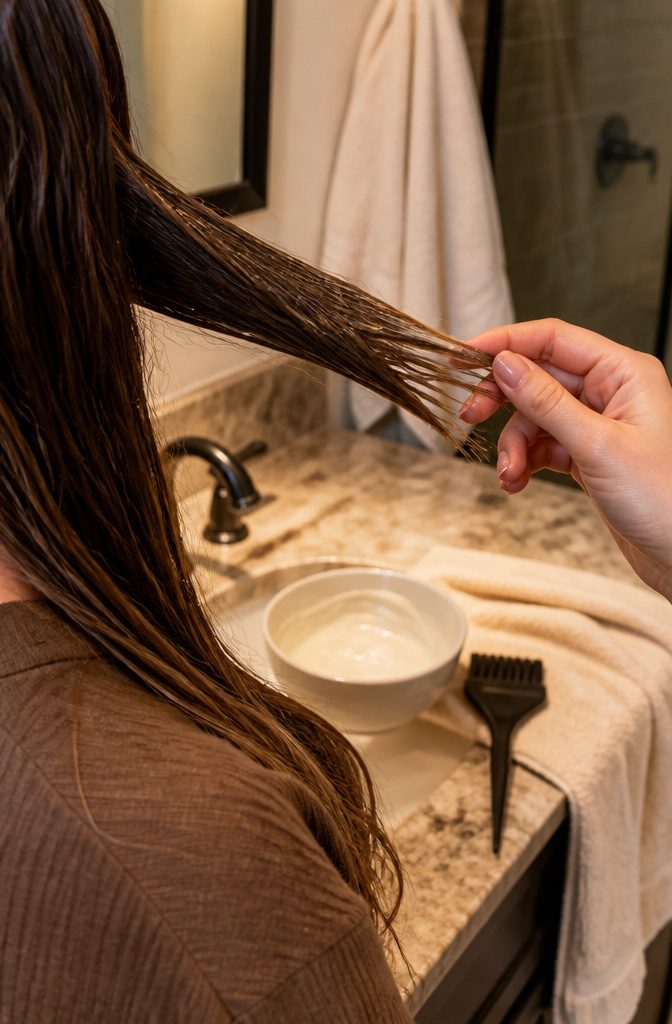
Some hair goes stiff or hard after a protein treatment, or color slides off without taking well.
Protein-heavy products and dye resistance both show up as clues for low porosity, though not everyone with this hair type runs into either one.
The cuticle layer lies flat and tightly packed, which makes the strand smooth and strong on its own.
Adding more protein on top of that structure can push it past flexible into brittle. Hair that felt soft before a mask suddenly feels straw-like, and breakage goes up instead of down.
If that sounds familiar after using a reconstructor or anything labeled strengthening, back off protein for a few weeks and let moisture do the work.
Color behaves the same way water does: it has to get past the cuticle to stick, and a closed cuticle makes that harder.
Dye may take longer to process or fade faster than expected, especially with semi-permanent formulas that rely on quick penetration.
Why It Happens and Whether It Changes
Why It Happens and Whether It Changes
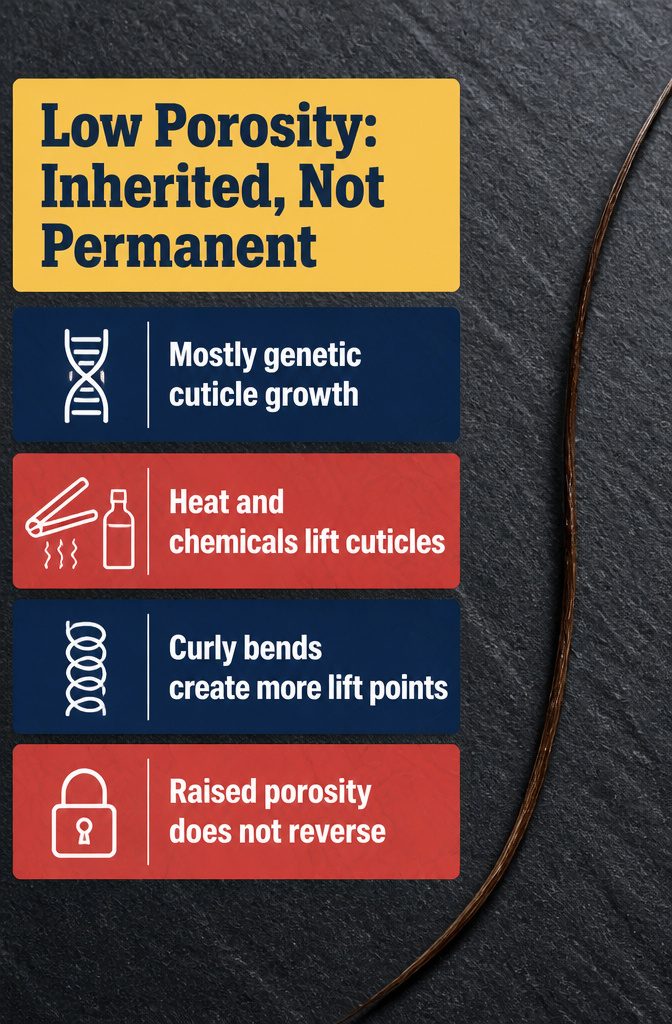
Low porosity is largely genetic.
It reflects how your cuticle grows, not something that happened to your hair over time. You inherit it along with curl pattern, thickness, and other traits.
That said, damage and aging can raise porosity. Heat styling, bleaching, chemical treatments, and rough handling gradually lift the cuticle and create gaps.
Once those gaps exist, they don’t close back down. Straight hair tends to stay less porous than curly hair, since the bends along a curly strand create more places for the cuticle to lift.
Sources differ on how much hair-care practices actually shift porosity. Some describe the change as significant with frequent chemical processing or heat.
Others note that while damage can increase porosity, your baseline type generally stays the same. Protecting your hair from damage helps it stay the way it is, but you can’t reverse low porosity once it climbs higher.
4. Clear Buildup With a Clarifying Shampoo
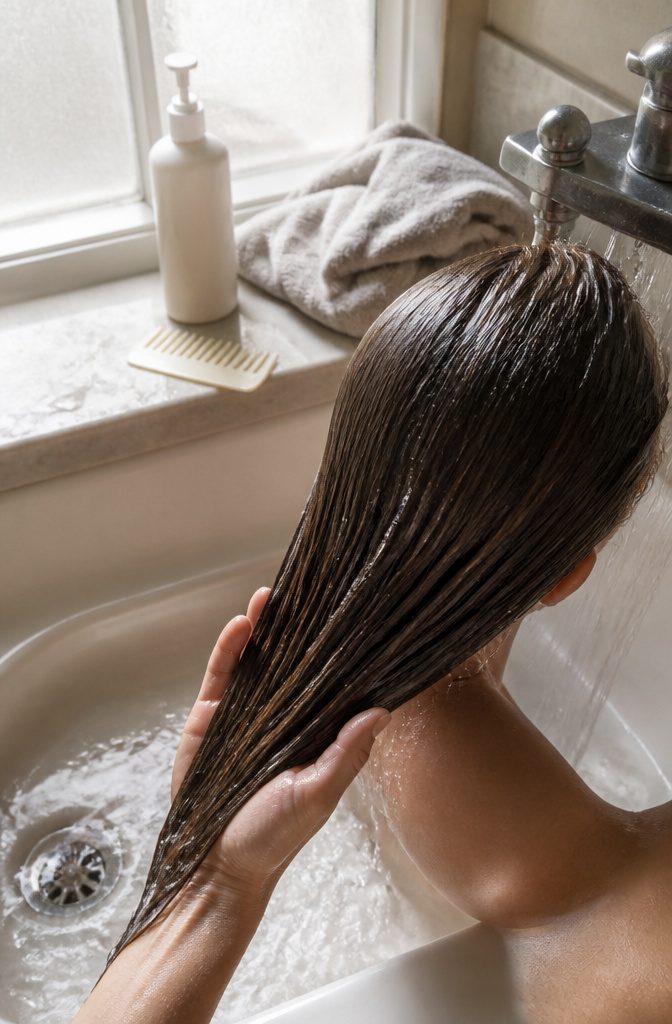
Product, hard water minerals, and your own scalp oils build up on the surface of low porosity hair, and that layer blocks everything you apply afterward.
A clarifying shampoo weekly is what I need on my own fine low porosity hair, though once or twice a month is enough for a lot of people.
If you use a lot of stylers, every few weeks keeps the path clear.
Kinky-Curly Come Clean Natural Moisturizing Shampoo is gentle enough for daily use and leaves no residue.
Garnier Fructis Curl Nourish Sulfate-Free and Silicone-Free Shampoo contains glycerin to help add moisture without sulfates or silicones that can rob hair of what it needs.
Neutrogena Anti-Residue Shampoo, Davines SOLU Shampoo and Scrub Cleanser used once a week, and AVEDA Rosemary Mint Purifying Shampoo all remove the layer that blocks absorption.
5. Use Warmth or Steam to Help Moisture Enter
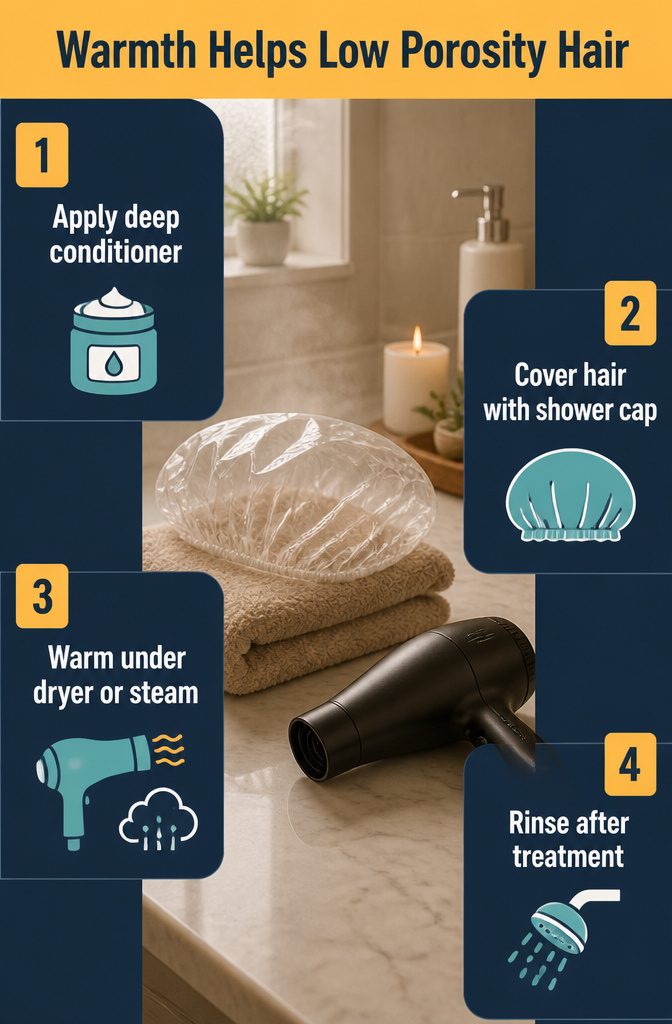
Heat opens the door that low porosity hair keeps locked. When you deep condition, warmth lifts the cuticle temporarily so moisture can actually get in rather than sitting on the surface until you rinse it away.
The simplest version uses what you already own.
After you apply your deep conditioner, cover your hair with a shower cap and aim a blow dryer on the warm setting at your head for a few minutes. The trapped heat does the work.
If you have a hooded dryer, sit under it with a plastic cap on for 15–20 minutes. A warm towel wrapped over the cap works the same way.
Steam takes it further. Cover your conditioned hair with a shower cap and let it steam for about 15 minutes before rinsing.
The water vapor moves faster than liquid water and slips past the cuticle more easily. If you own a handheld or hooded steamer, use it.
If not, the steam already in your bathroom after a hot shower preps your hair for product without any extra equipment. Some people diffuse for a few minutes at the start of the treatment wait time instead.
6. Choose Lightweight Products
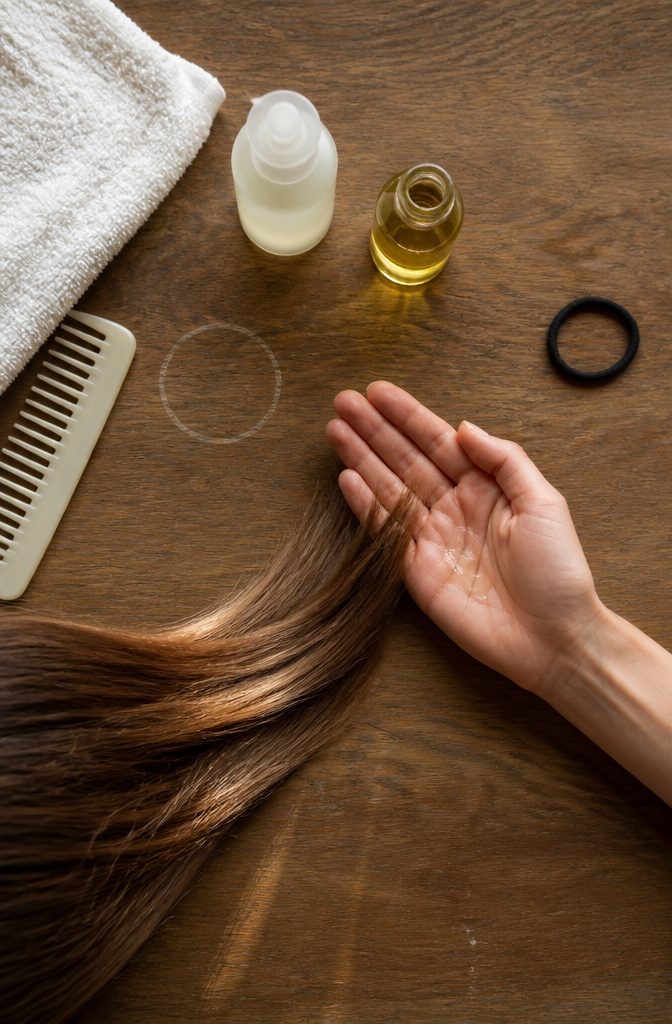
Heavy oils and butters sit on top of low porosity hair instead of sinking in.
Shea butter, castor oil, mineral oil, and petrolatum can coat the strand and cause buildup before you ever feel moisture. The cuticle is already closed tight, so anything thick just weighs hair down or makes it stiff.
Humectants pull water into the strand, which is exactly what you need when the cuticle won’t let much through on its own.
Glycerin, hyaluronic acid, and honey all work that way. The Mielle Pomegranate & Honey Moisturizing Shampoo and Pomegranate & Honey Leave-In Conditioner both lean on honey to draw moisture in without residue.
L’Oréal’s Elvive Hyaluron + Plump Moisture Plump Serum and Elvive Hyaluron + Pure Oil Erasing Serum bring hyaluronic acid into the mix for hair that holds hydration longer.
Lighter oils absorb more easily. Almond, argan, grapeseed, sunflower, rose, and coconut all penetrate the cuticle instead of sitting on top.
Start small with oil: a dime-sized amount of coconut oil from ends to mid-length is enough, and Wella oil takes just one to two pumps.
The Cécred Nourishing Hair Oil skips silicones entirely and blends thirteen oils including baobab, moringa, and sea buckthorn with keratin ferment for strength without weight.
For conditioning, the Jessicurl Deep Conditioning Treatment Citrus Lavender, Curlsmith Hydro Creme Soothing Mask, and Curlsmith Weightless Air Dry Cream all hydrate without heavy residue. The RŌZ Foundation Hydrating Shampoo and Conditioner Set runs $72.
Mielle’s Honey & Ginger Styling Gel and Curlsmith Hydro Style Flexi-Jelly both define without stiffness. The AVEDA Weightless Conditioner and Kérastase Resistance Ciment Thermique Blow Dry Primer work for finer strands that need moisture but no drag.
7. Apply Moisture the Way the Hair Absorbs It
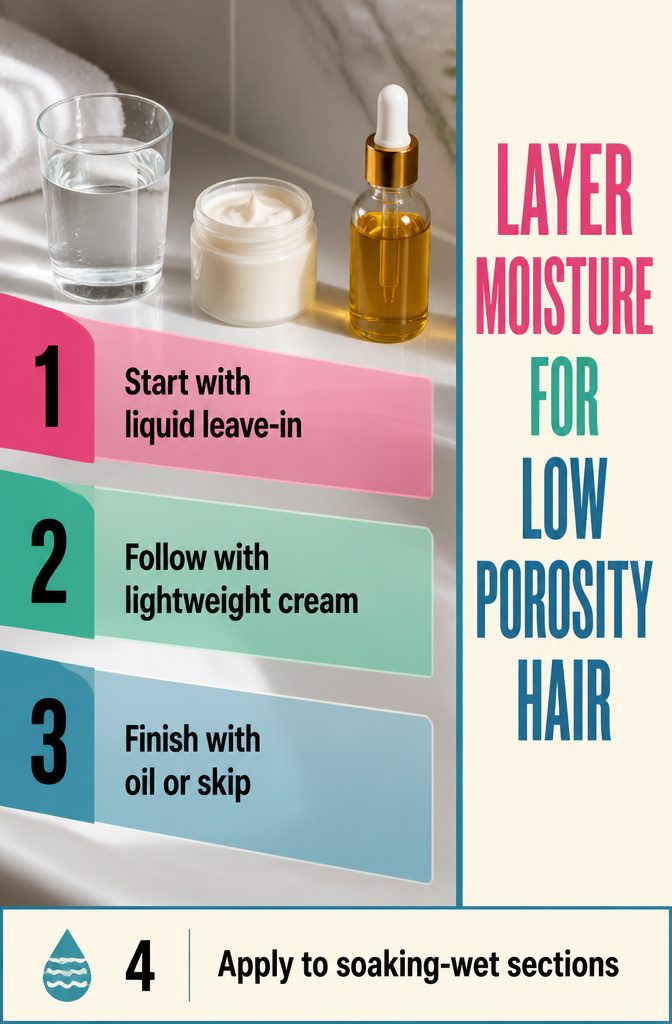
Low porosity hair absorbs better when you work from lightest to heaviest.
L’Oréal recommends the LCO method: liquid, cream, oil. Start with a liquid leave-in like the L’Oreal Paris Elvive Hyaluron + Plump Moisture Plump Serum, follow with a lightweight cream, then finish with oil to seal everything in.
That order keeps the heavier products from blocking absorption before moisture can enter.
Naturally Love Hue notes that many people with this hair type prefer LCO or liquid plus cream alone, skipping oil entirely or saving it for last.
Applying oil before cream may form a barrier that blocks hydration rather than locking it in.
Timing matters as much as order.
Apply products to soaking-wet hair, section by section, right after washing. Holistic Enchilada recommends layering two light products rather than one heavy one, which reduces the chance of buildup sitting on the surface.
What to Know About Protein
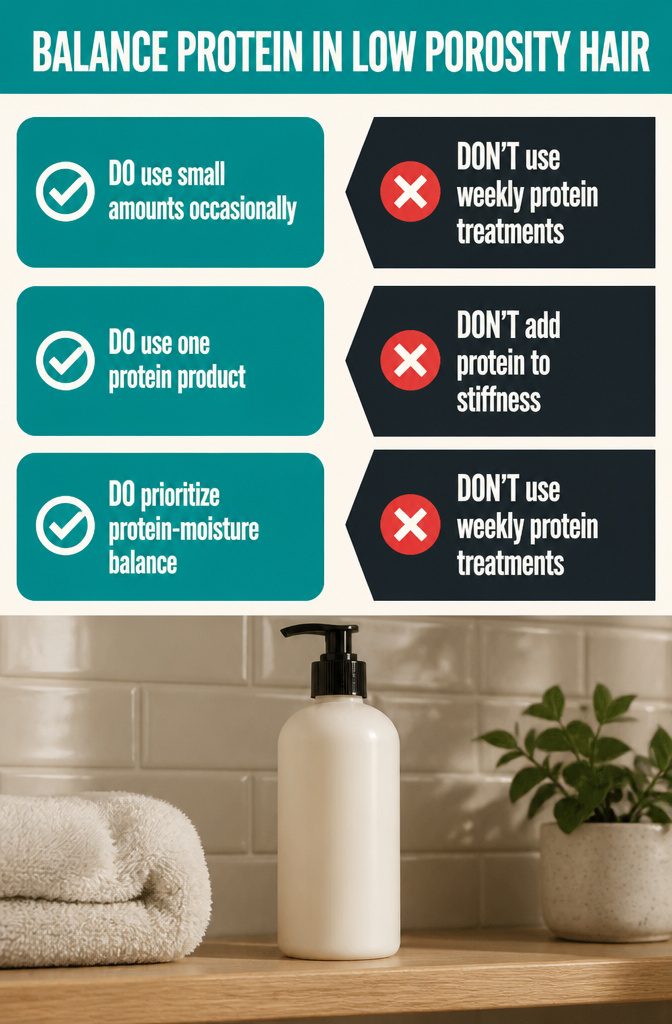
Protein advice splits. Mielle, Healthline, Medical News Today, and RevAir suggest avoiding or limiting protein because low porosity hair already has tightly packed cuticles.
Adding more protein can make hair stiff or prone to breakage rather than stronger. Curlsmith recommends using just one protein-rich product at a time to avoid overload, which leaves hair snapping easily.
Holistic Enchilada takes a middle route: skip protein entirely and hair can go soft and mushy, a state called hygral fatigue. Small amounts occasionally keep hair balanced, but weekly protein treatments will leave it stiff.
Mielle Mongongo Oil Protein-Free Conditioner offers one formula built for this. The protein-moisture balance matters more than total elimination, but erring on the side of less protein keeps the hair from turning brittle.
How Often to Wash
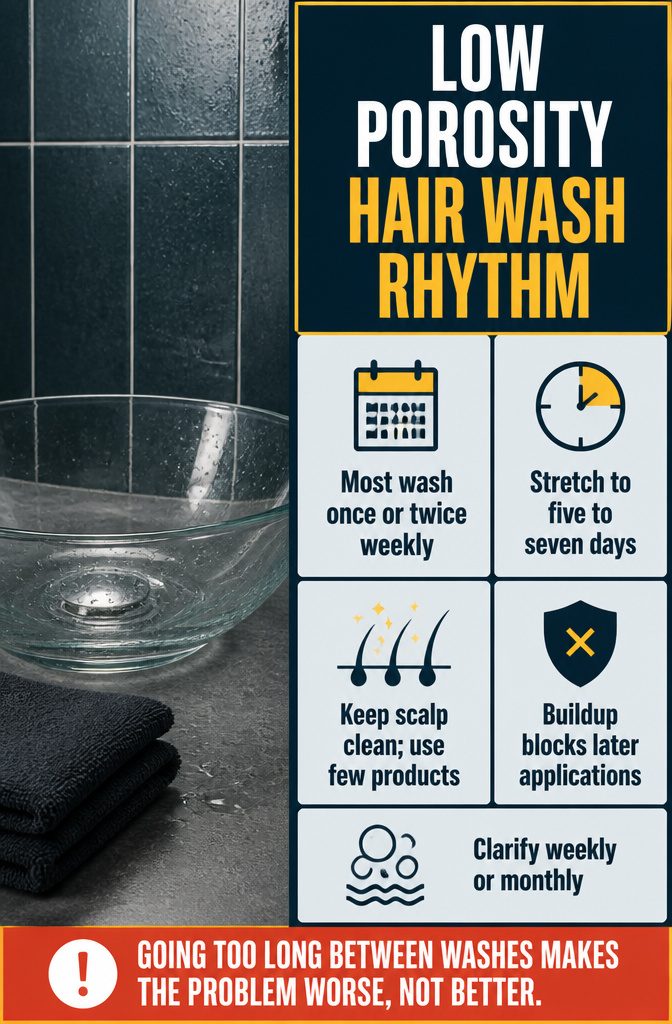
Once or twice a week works for most people with low porosity hair, though you can stretch to every five to seven days if your scalp stays clean and you go light on products. The real variable is buildup.
Low porosity hair accumulates product, hard water minerals and sebum on the surface faster than other types, and that layer blocks everything you try to apply afterward. Going too long between washes makes the problem worse, not better.
I rotate in a clarifying shampoo regularly to cut through that film. How often depends on what you use and what your water brings.
Weekly clarifying keeps my own hair responsive, but plenty of people only need it once or twice a month. If products suddenly stop working or your hair feels coated and limp, buildup is usually the answer.
8. Apple Cider Vinegar Rinse for Buildup
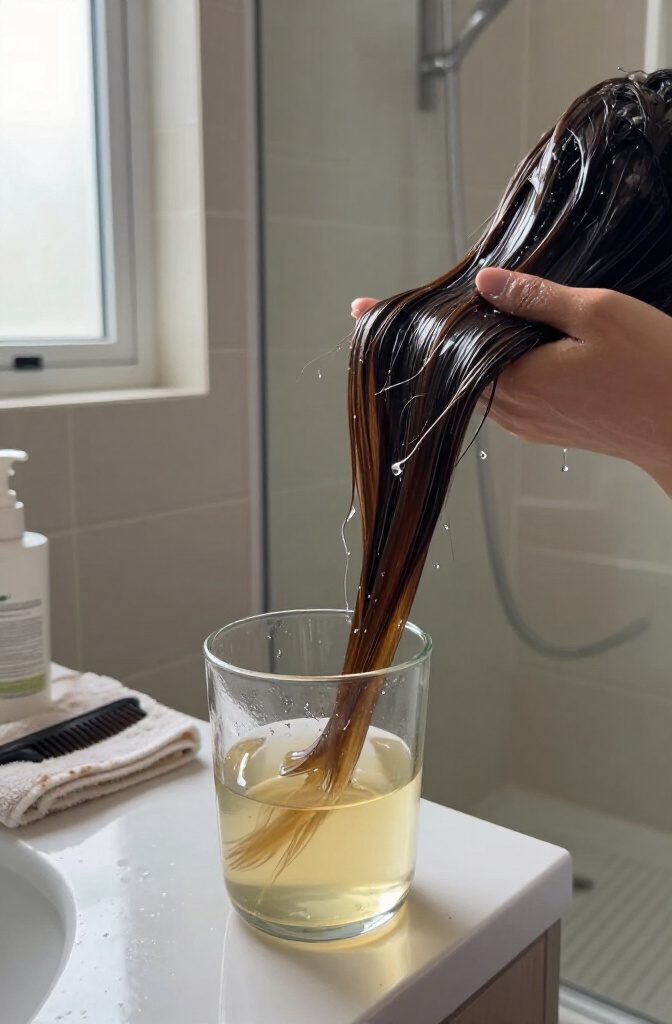
Buildup sits on low porosity hair longer than it would on more porous types, because the tightly closed cuticles that block moisture from entering also block oils and product residue from washing away.
An apple cider vinegar rinse cuts through that layer without stripping the hair.
Mielle recommends diluting 1 tablespoon of apple cider vinegar with 1 cup of water, massaging the mixture through your hair for a few minutes, then rinsing it out after shampooing and before conditioning.
Frequency depends on how much product you use and how quickly buildup returns. RevAir suggests once or twice a week for most people, while Allure’s pick, the DpHue ACV Hair Rinse, can be used two to three times a week.
That formula combines apple cider vinegar with aloe vera and chamomile to clarify without drying, and it balances scalp pH while removing residue. The rinse leaves hair lighter and more receptive to whatever you apply next.
9. Deep Condition Weekly
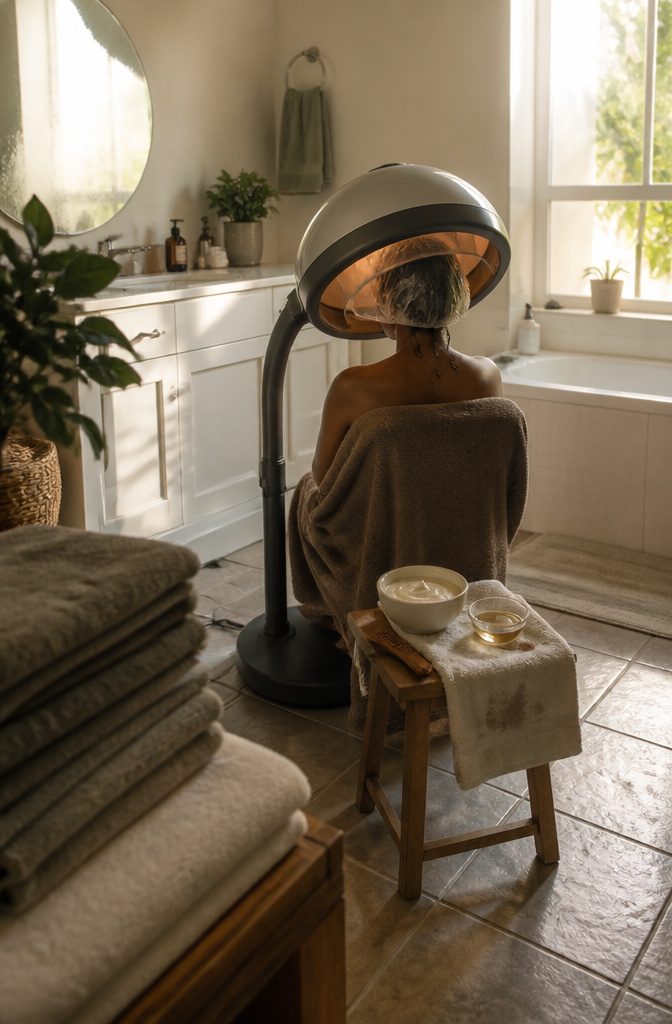
Healthline recommends a weekly deep-conditioning treatment when your hair needs extra moisture, and the method matters as much as the product itself.
Heat helps open those resistant cuticles: a steamer, heat cap, or hooded dryer all work, or you can apply the conditioner, cover your hair with a shower cap, and run a blow dryer on warm for a few minutes.
That warmth gives the conditioner a better shot at getting in.
Skip protein treatments. Protein formulas pull moisture out rather than adding it, which increases the risk of breakage.
A 2003 study published in Medical News Today found that coconut oil penetrated hair better than mineral or sunflower oil, making it a smarter choice for masks and pre-shampoo treatments.
Allure highlights the Amika Soulfood Nourishing Mask for weekly use because it adds softness and shine without the heaviness that weighs low porosity hair down.
Jojoba oil is one of the lighter oils in the formula, and you get shinier, more elastic strands with less breakage.
10. Protective Styles and Sleep
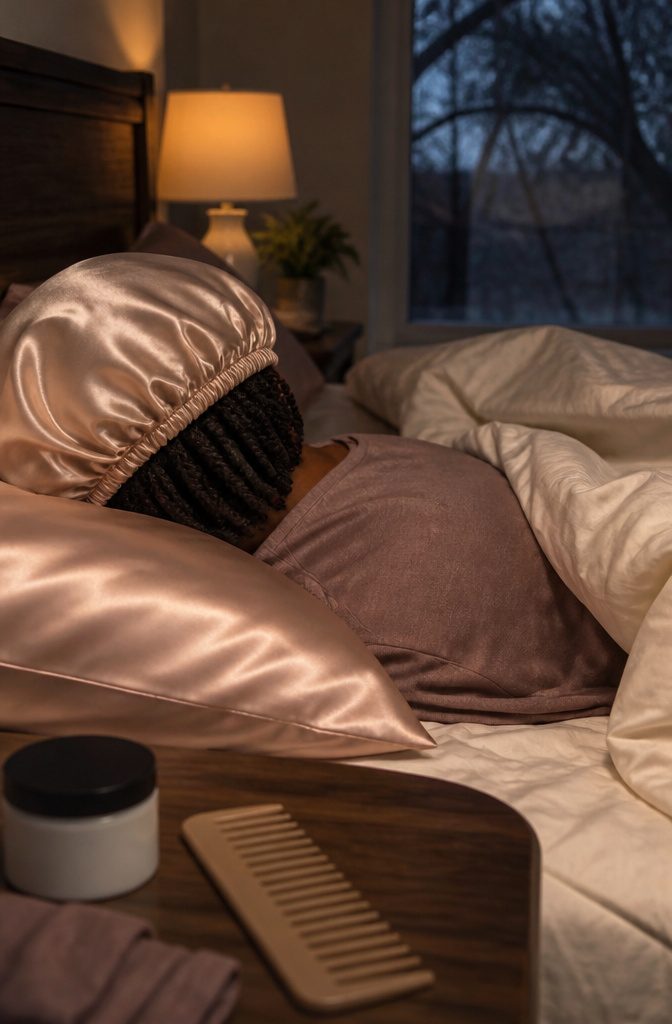
Locs, braids and twists give low porosity hair a chance to hold moisture without constant manipulation. Protective styles keep the cuticle layer from lifting under heat tools or friction, and growth continues underneath while the style sits undisturbed for weeks.
RevAir calls out these three as reliable options when your hair needs a break from daily styling.
Sleep is where moisture walks out the door if you let it.
Cotton pillowcases pull water from strands while you toss, and the friction tangles hair that already resists hydration. Switching to a satin or silk pillowcase or wearing a hair cap to bed keeps what you worked to get in.
A cap also traps warmth, so any leave-in you applied before bed keeps soaking in overnight instead of evaporating into the fabric.
Frequently Asked Questions
What is low porosity hair?
Low porosity hair has cuticles that lie flat and tightly packed, making it harder for water and products to penetrate the strand.
Once moisture does get inside, the same closed structure helps retain it. This type is mostly genetic and shows up across all curl patterns.
What are the signs of low porosity hair?
Water beads on the surface instead of soaking in right away, and hair takes a long time to feel fully wet and then hours to dry.
Products sit on top rather than absorbing, and buildup happens faster because oils and styling products layer up on the closed cuticle.
How often should I wash low porosity hair?
Once or twice a week works for most people, though you can stretch to every 5 to 7 days if your scalp stays clean and you use light products.
Buildup accumulates faster on low porosity hair, so washing too infrequently blocks moisture and makes products stop working.
Can low porosity hair change?
It is largely genetic, so your baseline type generally stays the same. Heat styling, bleaching, chemical treatments, and damage can raise porosity over time by lifting the cuticle and creating gaps, but those changes do not reverse.
Is protein bad for low porosity hair?
Too much protein can make hair stiff or brittle because the cuticles are already tightly packed and strong. If your hair feels hard or straw-like after a protein treatment, back off for a few weeks and focus on moisture instead.
Should I use the LOC or LCO method?
LCO (liquid, cream, oil) works better for low porosity hair because it keeps heavier products from blocking absorption before moisture can enter.
Many people skip oil entirely or save it for last, since applying oil before cream may form a barrier that blocks hydration.
What ingredients are good for low porosity hair?
Humectants like glycerin, hyaluronic acid, and honey pull water into the strand, which helps when the cuticle resists absorption. Lightweight oils such as almond, argan, grapeseed, and coconut penetrate more easily than heavy butters or mineral oil.
Is low porosity hair healthy?
It is neither healthier nor less healthy than other porosity types. The tight cuticle structure makes hair smooth and shiny, but it also makes moisture harder to absorb, so you need the right products and methods to keep it hydrated.
Can low porosity hair be curly?
Yes. Porosity and curl pattern are separate traits, so you can have low porosity hair with any curl type from waves to tight coils.
Curly and coily hair does tend toward higher porosity because of the bends along each strand, but plenty of curly people have low porosity.