Herbal hair treatments range from rosemary sprays you make in 20 minutes to infused oils that steep for weeks in a glass jar.
If you’re dealing with hereditary thinning or medical hair loss, herbs cannot reverse it, and you need to see a doctor before starting a topical routine.
For temporary shedding, stress-related loss, or scalp health, consistency matters more than the recipe: improvements in texture and scalp condition show up around 4 to 6 weeks, but most people see a real difference between 2 and 3 months, which lines up with how long follicles need to move through their growth phase.
1. Straining Herbal Hair Oil
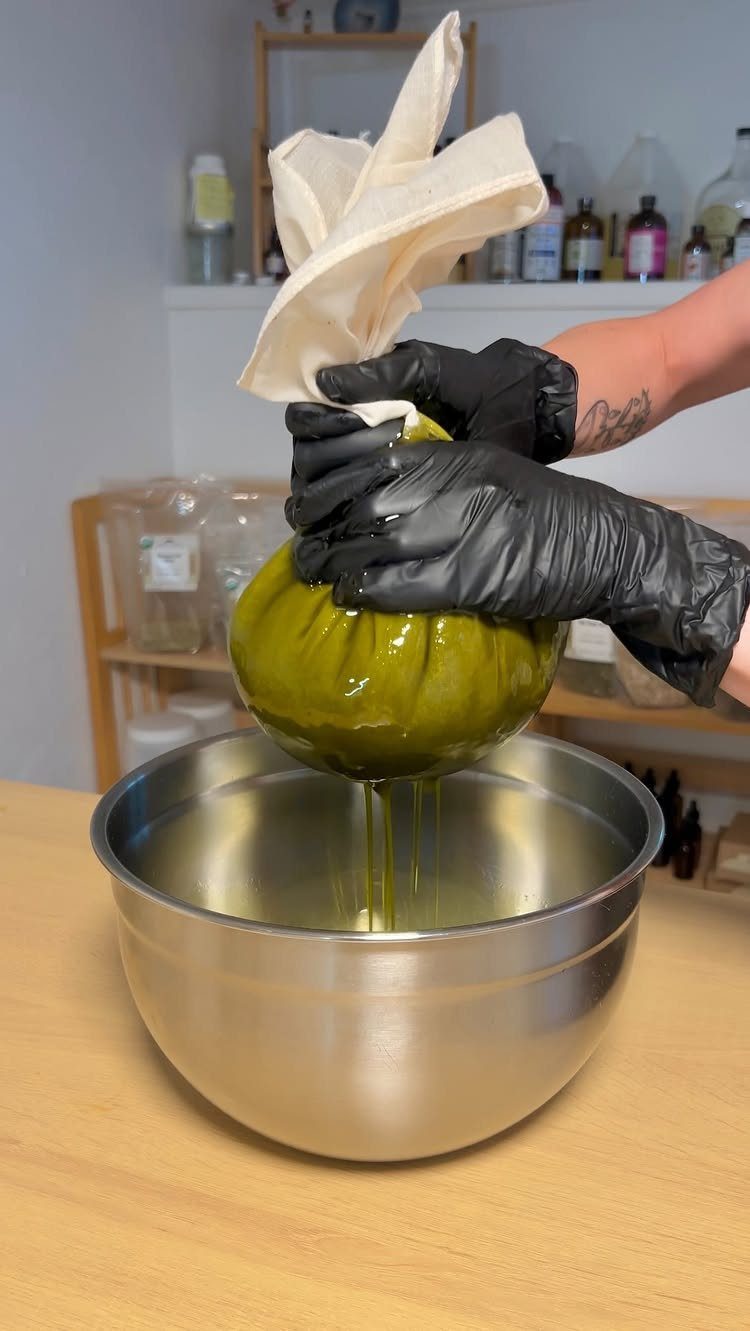
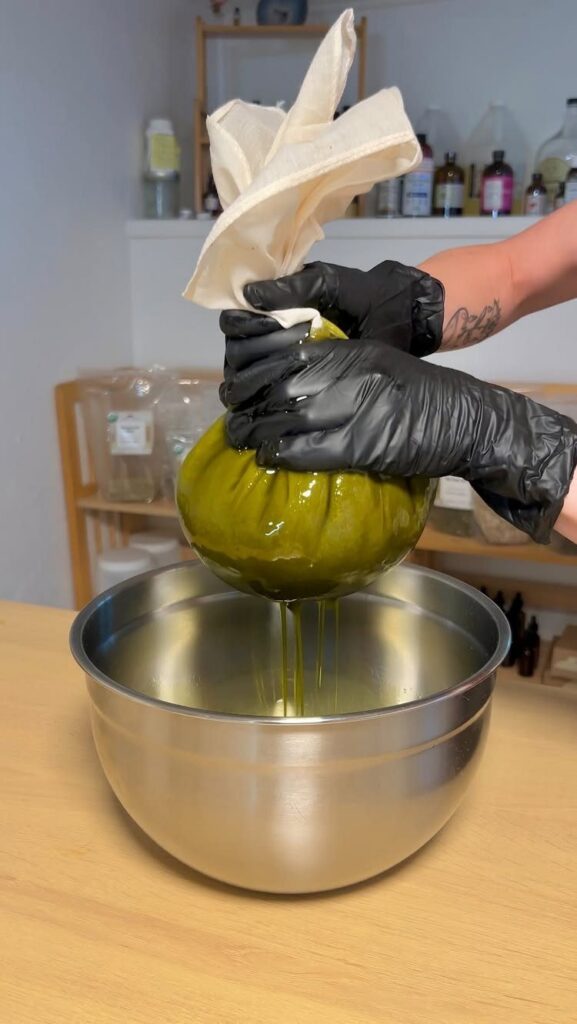
Straining infused oil through cloth removes the plant material after the herbs have steeped in the oil for several weeks. The cloth bag or cheesecloth catches the solids while letting the finished oil drip through into a clean bowl.
I squeeze the bag to get the last of the oil out, since a lot of it stays trapped in the herbs. Gloves keep your hands clean and give you better grip when the fabric gets slippery.
Once strained, the oil goes into a dropper bottle or jar for storage.
2. Applying Herbal Scalp Oil
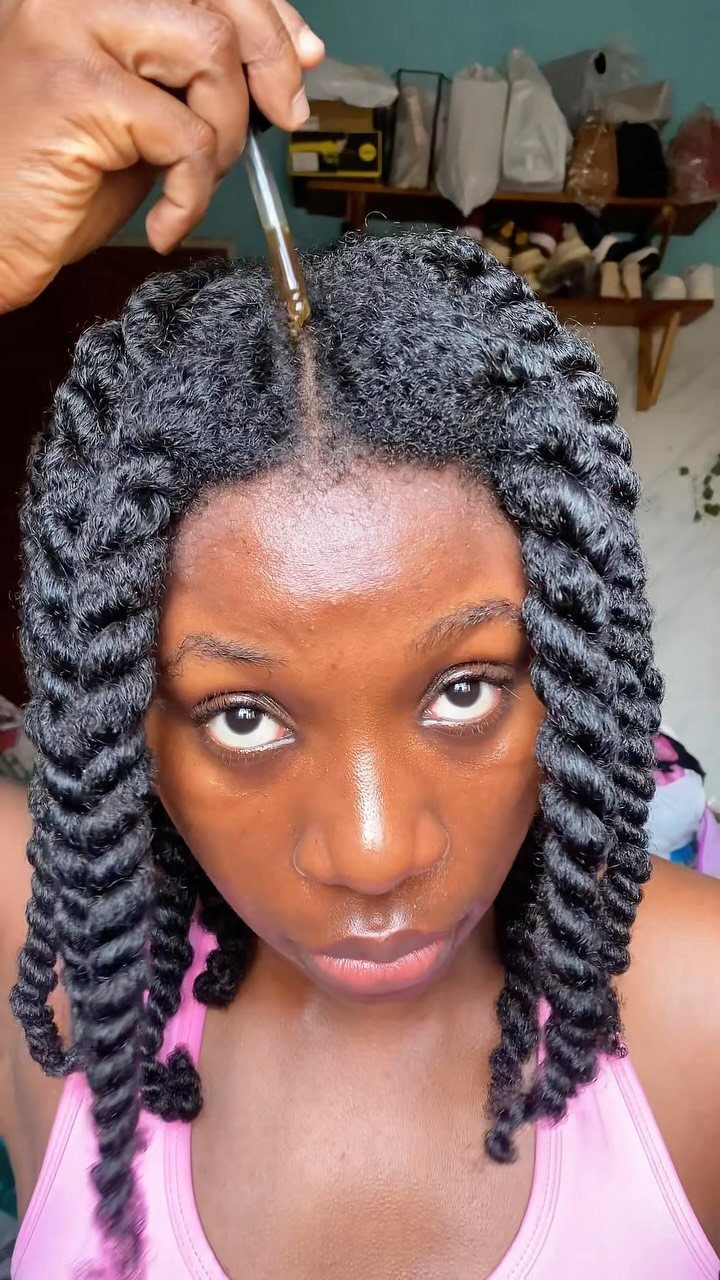
A dropper lets you apply oil directly to your scalp without oversaturating your hair or wasting product.
I part my hair in sections and squeeze a few drops onto the scalp at each part, then massage it in with my fingertips.
This method works well for rosemary oil, peppermint oil, or any herbal blend you’ve infused yourself. The precision matters when you’re using something strong like peppermint, which can irritate if you use too much.
Apply at night and wash it out the next morning.
The study that got everyone excited compared rosemary oil to 2% Minoxidil over a six-month period and found comparable results in hair count increase.
3. Herbal Hair Oil Dropper Bottles
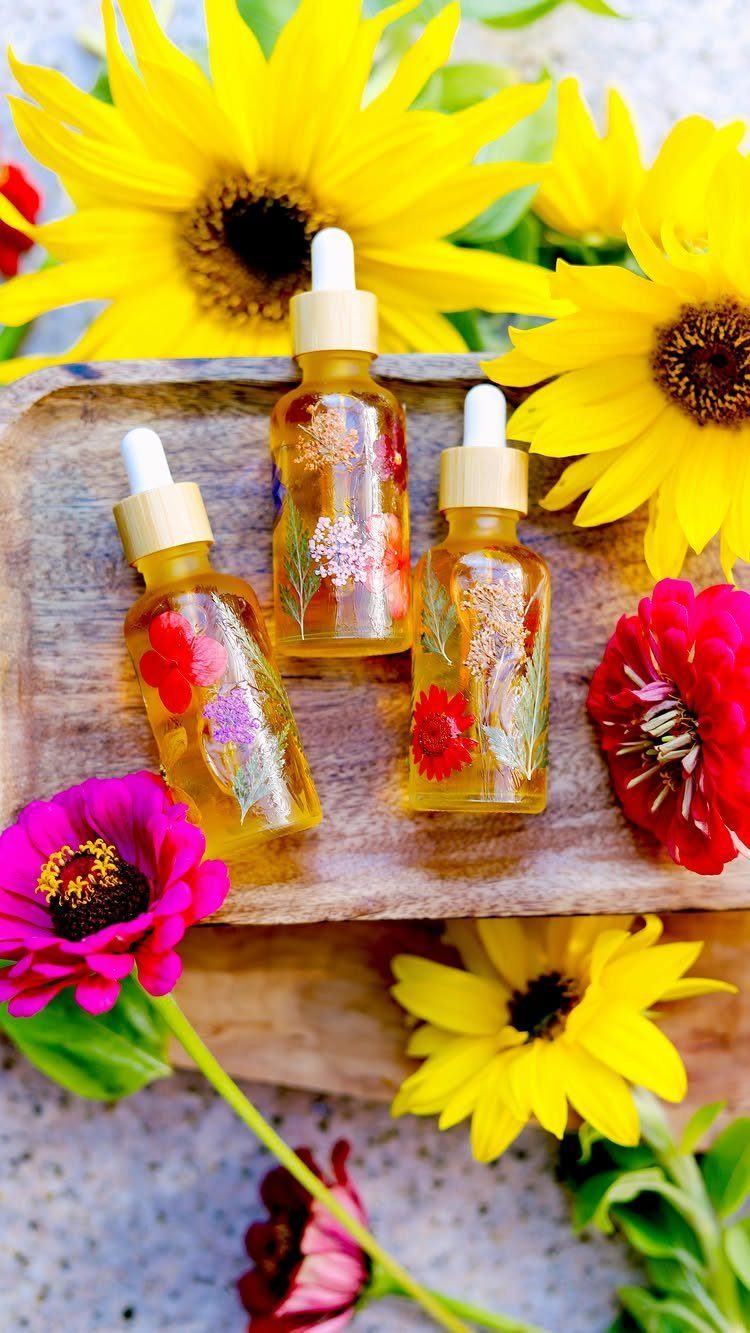
Glass dropper bottles make it easy to control how much oil you use and keep the product fresh between applications.
The creator leaves hers on overnight in a bun, then washes it out 8 hours later, and she does this 1 to 2 times per week.
I like storing different herb blends in separate bottles so I can rotate them depending on what my scalp needs. Label each one with the herbs inside and the date you made it, since infused oils lose potency over time.
4. Infusing Dried Herbs in Oil
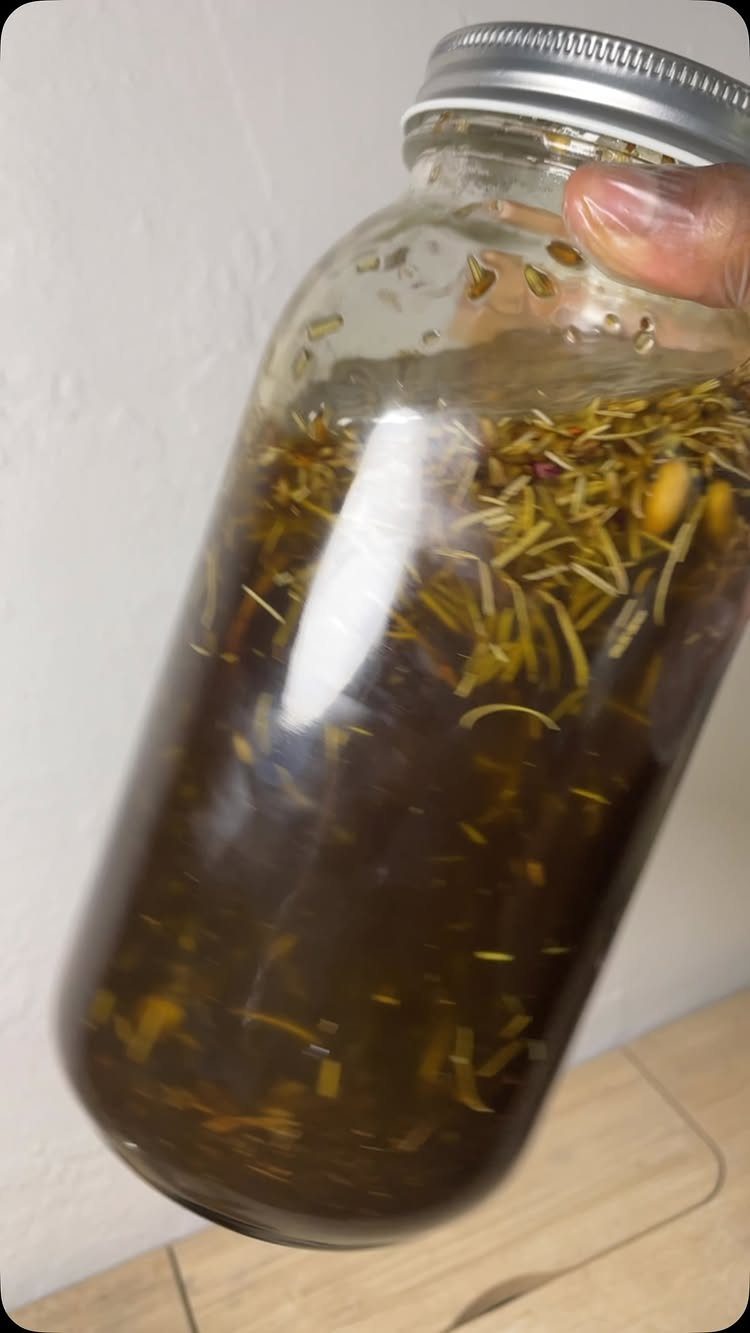
Dried herbs steep in a carrier oil inside a glass jar, releasing their compounds into the oil. Rosemary, nettle, horsetail, and hibiscus are the herbs I see used most often for hair growth blends.
Keep the jar in a cool, dark place and shake it every few days.
The oil turns darker as the herbs infuse. Once the steeping time is up, strain out the solids and bottle the finished oil.
5. DIY Rosemary Hair Spray
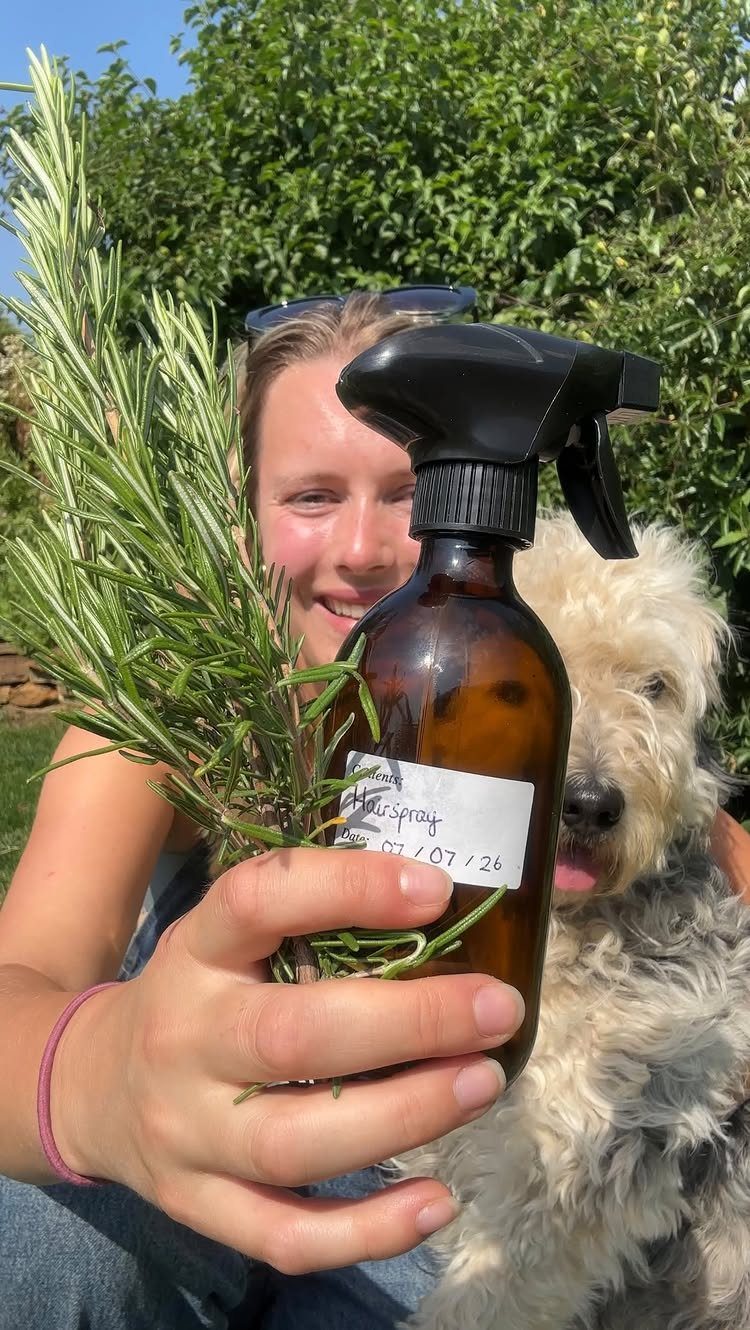
A rosemary spray is lighter than an oil and easier to apply on wash days or between styling.
Boil fresh or dried rosemary in water, let it cool, then strain the liquid into a spray bottle and store it in the fridge.
I spray it directly onto my scalp after washing or mist it over dry hair as a refresh.
The shelf life is about 1 week refrigerated, so make small batches. You can add a few drops of rosemary oil to extend the strength.
Hair Loss Causes and Limits
Genetics account for most permanent hair loss, the kind that runs in families and progresses over time.
Hormonal imbalances, including polycystic ovary syndrome, can trigger shedding. So can thyroid disease, autoimmune conditions like alopecia areata, some medications, chemotherapy, radiation, and chronic stress.
Herbs cannot reverse hereditary thinning or medical hair loss. If you’re losing hair in patches or clumps, see a doctor before you start any topical routine.
Gut health affects hair growth through nutrient absorption, vitamin synthesis, and immune regulation. A dysbiotic microbiome can disrupt the hair cycle.
Avoid processed food, limit antibiotics when possible, and manage stress. A spore-based probiotic may help.
Prescription drugs for hair loss come with documented side effects that include hormone changes, reduced sexual function and problems that persist after stopping the medication.
Herbal options work with the body rather than against it, though they take longer to show results.
Consistency and Time to Results
These treatments ask for patience: the scalp and texture shift in the first 4 to 6 weeks, but real length takes longer.
Improvements in scalp health and hair texture can show up around 4 to 6 weeks with consistent use. Most people see a difference somewhere between 2 and 3 months, which lines up with how long follicles need to move through their growth phase.
For supplements, allow 3 to 6 months before deciding whether they’re working. Some people report changes at 3 to 4 months.
Skip a day and you lose momentum.
These treatments work gradually, but the results hold longer than a quick cosmetic fix. Plan for months, not weeks.
DIY Topical-use Cautions
Peppermint oil burns if you put it straight on your skin; cut it with jojoba, sweet almond or another carrier oil before it touches your scalp. Undiluted, it can irritate or burn.
The diluted oil pulls more blood toward the follicles, and that is what causes the cooling tingle. That sensation tells you the capillaries opened; it is a circulatory response, not a surface reaction.
Peppermint also has anti-fungal and anti-inflammatory properties that help clear buildup and bacteria from hair roots, which reduces the risk of dandruff, dermatitis, and scalp acne.
If you’re taking horsetail supplements and you’re on other medications, check with your doctor before you start. Avoid long-term use without breaks.
Frequently Asked Questions
What vitamin am I lacking if my hair is thinning and falling out?
Hair loss ties to multiple nutrient deficiencies, not just one vitamin.
Iron, biotin, vitamin D, zinc, and B vitamins all play roles in follicle function and hair growth. A blood test can identify what you’re missing, since supplementing the wrong nutrient won’t fix the problem.
What are the big 3 for hair regrowth?
In Ayurvedic practice, bhringraj is considered the most powerful herb for hair, used specifically to support follicle function and slow thinning.
Rosemary and nettle also rank high for circulation, scalp nourishment, and reducing shedding. All 3 work gradually and need months of consistent use.
What is the Chinese secret for hair growth?
He Shou Wu, also called Fo-Ti, is the traditional Chinese herb known for preventing premature graying and promoting hair growth.
You can take it as a capsule or work it into hair masks and rinses that feed the scalp and build follicle strength.
What are some natural home remedies for regrowing hair?
Rosemary infused in oil or boiled into a spray stimulates circulation and strengthens follicles.
Nettle, hibiscus, and horsetail steeped in carrier oil provide minerals and reduce shedding. Massage the oil into your scalp before bed and rinse it out when you wake up.
What Ayurvedic herbs are good for hair growth?
Bhringraj, Brahmi, Amla, Ashwagandha, and Hibiscus all appear in Ayurvedic hair treatments.
Bhringraj prevents follicle miniaturization and reduces inflammation, while Ashwagandha helps manage stress that disrupts the hair cycle. Each herb addresses a different part of scalp health, from circulation to hormone balance.
How long does it take to see results with Ayurvedic herbs for hair care?
The scalp feels healthier and the texture of your hair shifts in the first month to 6 weeks if you stick with it.
Growth and density take longer, usually 8 to 12 weeks, because that’s how long the follicle cycle runs. If you’re taking a supplement, give it at least 3 months before you judge whether it’s doing anything.
Are there any side effects of using Ayurvedic herbs for hair?
Ayurvedic herbs are generally safe, but peppermint oil can burn if applied undiluted, and horsetail may interact with medications if taken long-term.
Do a patch test before using any new herb on your scalp. If you have allergies or existing scalp conditions, check with a doctor first.
How do herbal remedies work for hair loss?
They bring more blood to the follicles, calm inflammation on the scalp, and supply minerals the growth cycle depends on.
Peppermint opens capillaries, nettle delivers iron and silica, and bhringraj prevents follicle miniaturization. They work gradually by addressing the conditions follicles need to function.
Can I use herbs topically for hair growth?
You can steep dried herbs in a carrier oil and apply that mixture straight to your scalp.
A dropper lets you place the oil at each part, massage it into the roots, and leave it on overnight before washing it out. The ones I see people reach for most are rosemary, nettle, horsetail, and hibiscus.
Are natural remedies safer than conventional hair loss treatments?
Prescription treatments for hair loss bring documented risks that include hormone disruption and sexual side effects, and some of those effects don’t stop when you quit the drug.
Herbs cause fewer problems because they don’t force a single pathway, but they need more time and won’t stop genetic pattern thinning on their own.





