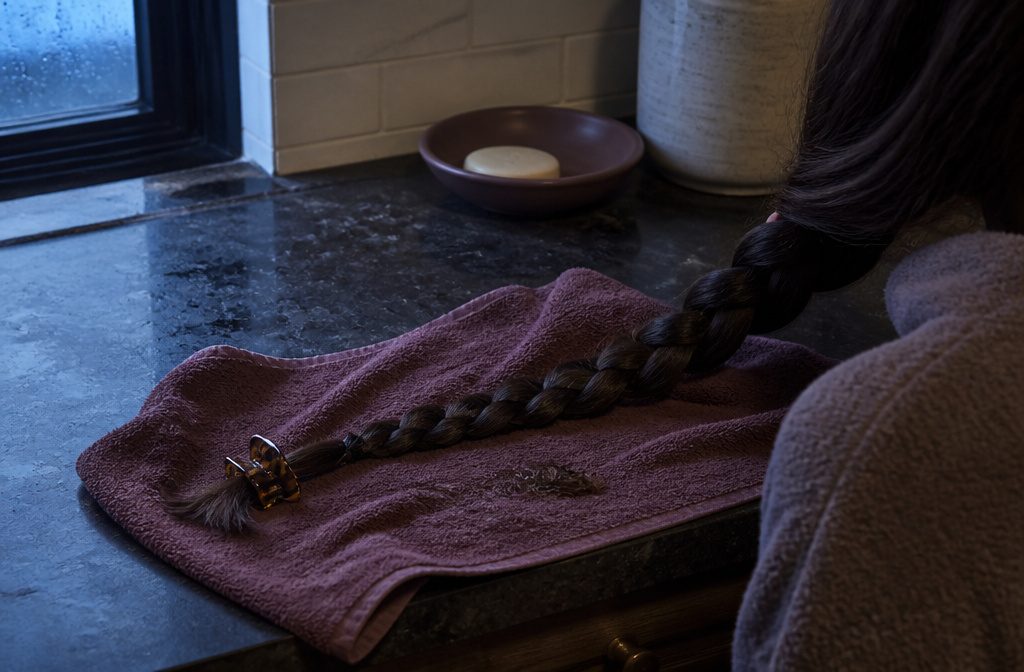
Most people learn how to grow hair faster and land on the same advice: scalp care, gentle handling, the right products.
The part they miss is that growth rate is fixed at roughly half an inch a month no matter what, and the actual problem is breakage eating the length before it accumulates.
Wet strands are 3 times more vulnerable than dry ones, split ends unravel upward if you leave them, and cotton pillowcases snag the cuticle across eight hours of sleep.
1. Care for Your Scalp
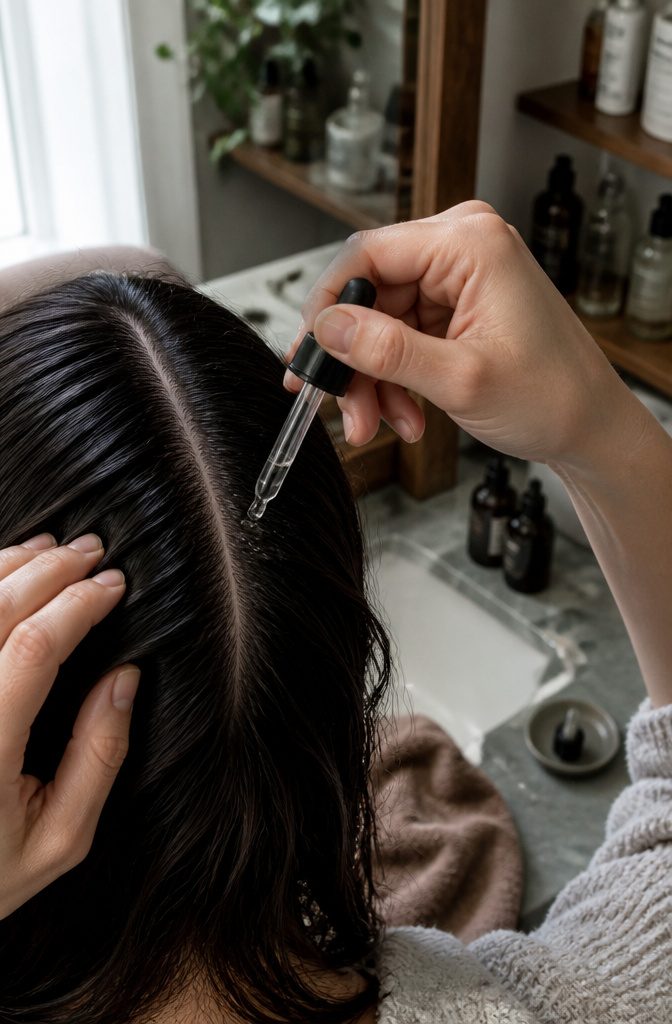
A healthy scalp gives you the conditions for growth and length retention.
When buildup from products, oil or dead skin sits on the scalp, it can clog follicles and slow things down. Exfoliating once or twice per week clears that layer and lets the scalp breathe.
The L’Oréal Paris Elvive Hyaluron + Pure Oil-Erasing Serum uses hyaluronic acid and salicylic acid to remove up to 100 percent of residue without stripping.
The formula claims to keep the scalp purified and refreshed for up to 72 hours, which means you can space out treatments. Section dry hair, apply the serum directly to your scalp, then massage it in for about five minutes.
Wait an additional 15 minutes before rinsing. After that, you can shampoo and condition as usual.
2. Trim Every 8 to 12 Weeks to Limit Split Ends
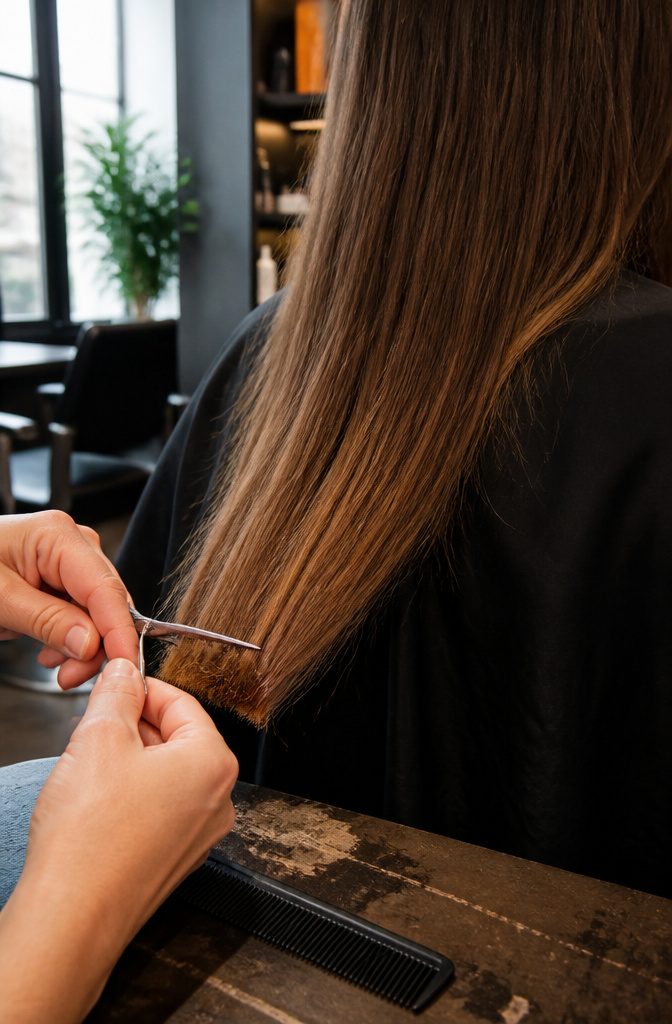
Trims do not speed up hair growth, but they keep the length you are gaining.
Split ends break off if you leave them, and the split travels higher on the strand. A trim cuts away the damage before it moves up and costs you inches you already grew.
The timing depends on how quickly your ends dry out.
I aim for every 8 to 12 weeks, though some people can stretch closer to 12 if their hair holds up well. If you heat-style often or have coarse texture, lean toward 8.
If your ends begin to dry out or split, they will unravel and break off, making it very difficult to gain length. Stay ahead of the breakage by receiving a light dusting every 8 to 12 weeks.
— CNET
That "dusting" matters.
You want the smallest trim that clears the split ends, not a full restyle. Ask for a dusting when you book, and the stylist will take off what needs to go without resetting your progress.
3. Wash With Suitable, Gentle Products
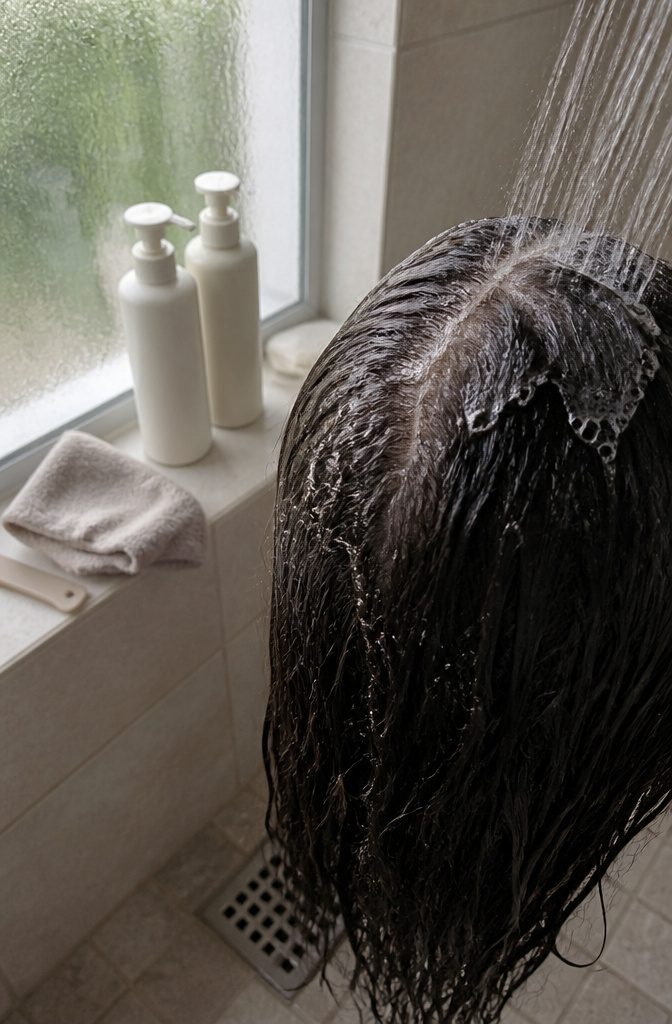
Choosing shampoo is a scalp decision first, then a hair one. Ingredients that clean aggressively can pile up on the scalp, clog follicles and slow the whole process down.
I avoid sodium lauryl sulfate, sodium laureth sulfate, parabens and dimethicone—all of them strip or build up where you need clean, open follicles instead.
Look for something that matches your hair type (oily, normal or dry) and addresses what you’re dealing with, whether that’s dandruff or dryness. Cost tells you nothing about whether it works.
How often you shampoo matters as much as what you use.
Washing daily pulls out the natural oils that keep hair from snapping off at the ends. Shampooing two to three times a week gives hair time to hydrate itself between washes, and that makes length possible.
4. Condition and Strengthen Hair
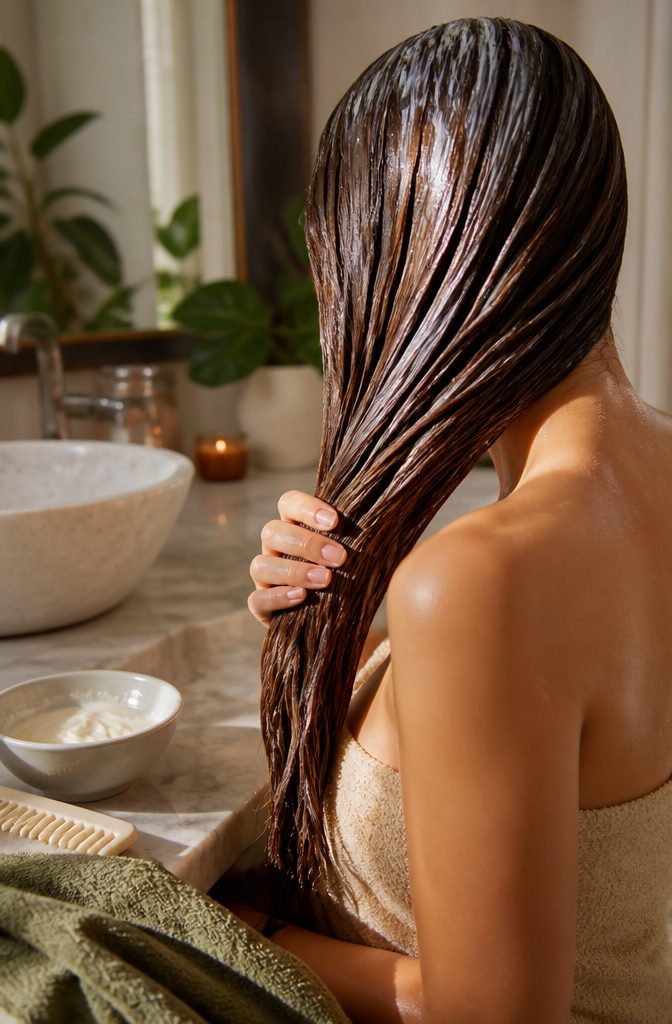
Conditioner brings more than surface slip. It plumps the hair shaft with moisture, which improves elasticity and strength over time.
That means fewer strands snap mid-length, and more of what you grow stays on your head. A leave-in treatment or a richer mask delivers the same benefit at a higher concentration.
If you are working with brittle or damaged hair, a strengthening system can rebuild from the inside.
The L’Oréal Paris EverPure Bond Repair System includes four pieces and claims hair can be up to seven times stronger when used together.
For targeted resilience, Kérastase Résistance formulas lean on Creatine R, an active complex that supports elasticity and bounce.
One intensive treatment weekly, left on for around 20 minutes, is enough. Treatments stop working after that window, so five hours buys you nothing but wasted time.
5. Limit Heat and Chemical Damage
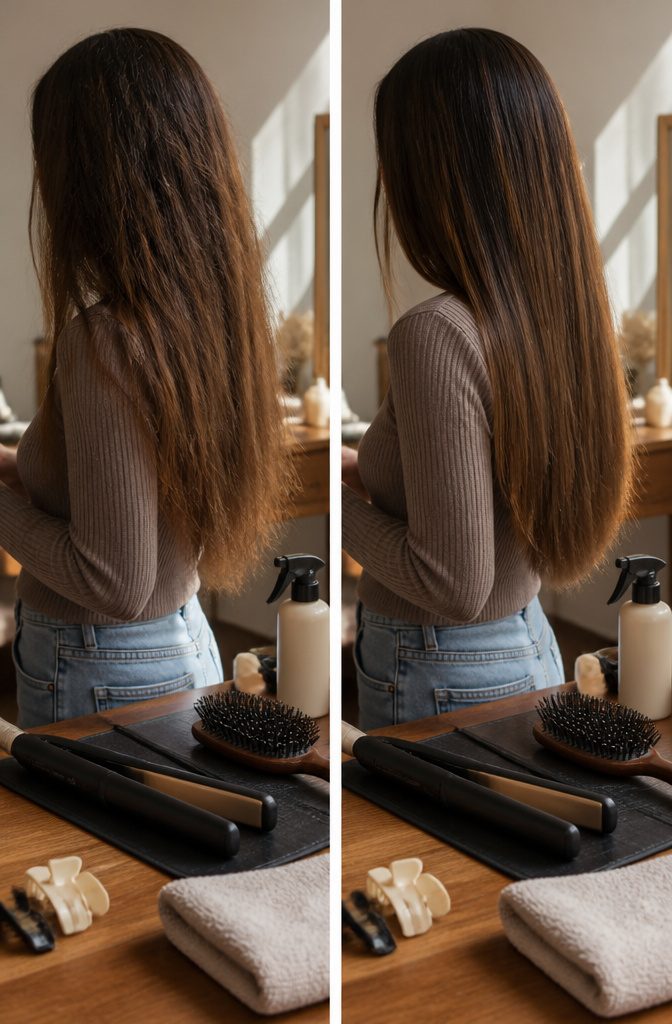
Heat styling and chemical treatments do more damage than any other part of your routine, and the damage shows up as breakage before the hair reaches the length you want.
The fix is not to quit styling completely, but to scale back how often you use hot tools.
One approach is to follow a 5:2 ratio: five days off from heat, two days on. That gives your strands time to recover between blowouts or flat-iron sessions.
When you do style with heat, a protectant is not optional. I use one that guards against temperatures up to 450°F, and it makes a real difference in how my hair feels after styling.
If you bleach or color your hair, staying closer to your natural tone causes less damage over time than lifting your hair several levels lighter. Depth and dimension do not require bleach, and skipping it keeps the strand intact.
6. Handle Wet Hair Gently
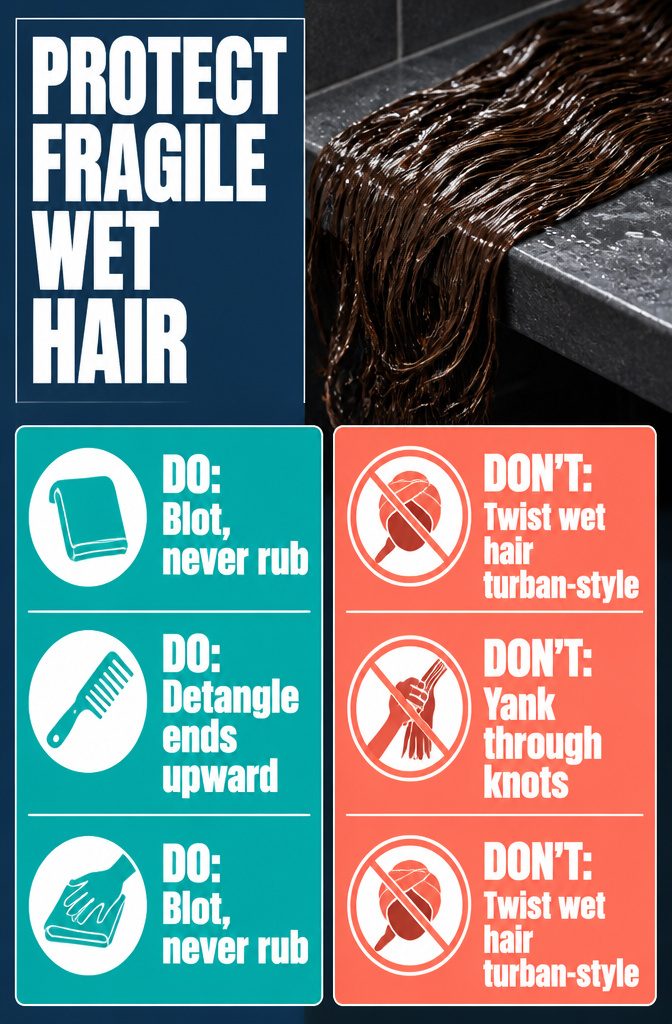
Wet hair stretches and snaps far more easily than dry hair.
Wet strands are three times more vulnerable to breakage, so what happens in the first minutes after a shower decides whether you keep the length you grew or lose it to damage.
Blot water out instead of rubbing.
Press a towel against your hair to soak up moisture rather than scrubbing it back and forth. The friction from rough toweling frays the cuticle and creates the kind of mechanical damage that looks like frizz now and breakage later.
If you twist wet hair into a turban, the combination of tension and fabric against fragile strands works against length retention.
Detangle carefully with a wide-tooth comb, starting at the ends and working up. Wet hair offers less resistance when you yank through a knot, but that give is the strand stretching past its limit before it breaks.
7. Brush and Detangle Gently
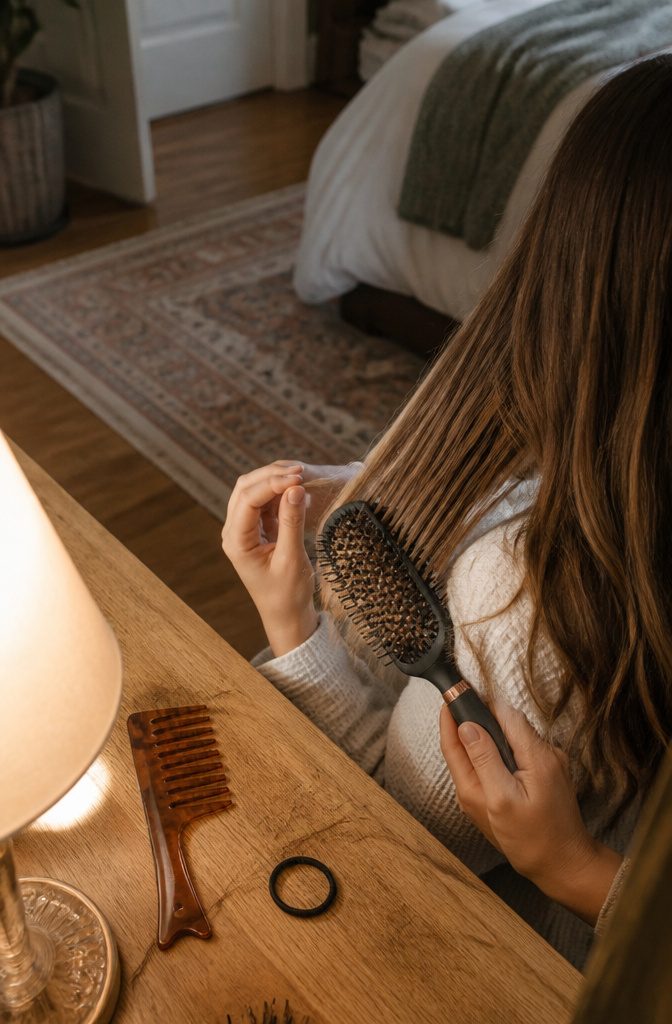
Brush and Detangle Gently
Excessive brushing causes breakage, so only brush when you truly need to. Choose a brush with rounded, plastic prongs and a vented, cushioned base to reduce stress on strands.
When you do brush, comb, or detangle, start from the ends and work your way up rather than dragging from the roots down. That approach keeps you from ripping through tangles and snapping off length you worked to keep.
Wet hair is three times more vulnerable to breakage than dry hair, so use a wide-tooth comb to detangle and avoid combing too much.
Do not brush wet hair at all. Skip the Marcia Brady 100-stroke ritual; gentle handling when necessary beats frequent brushing every time.
8. Choose Low-Tension Hairstyles
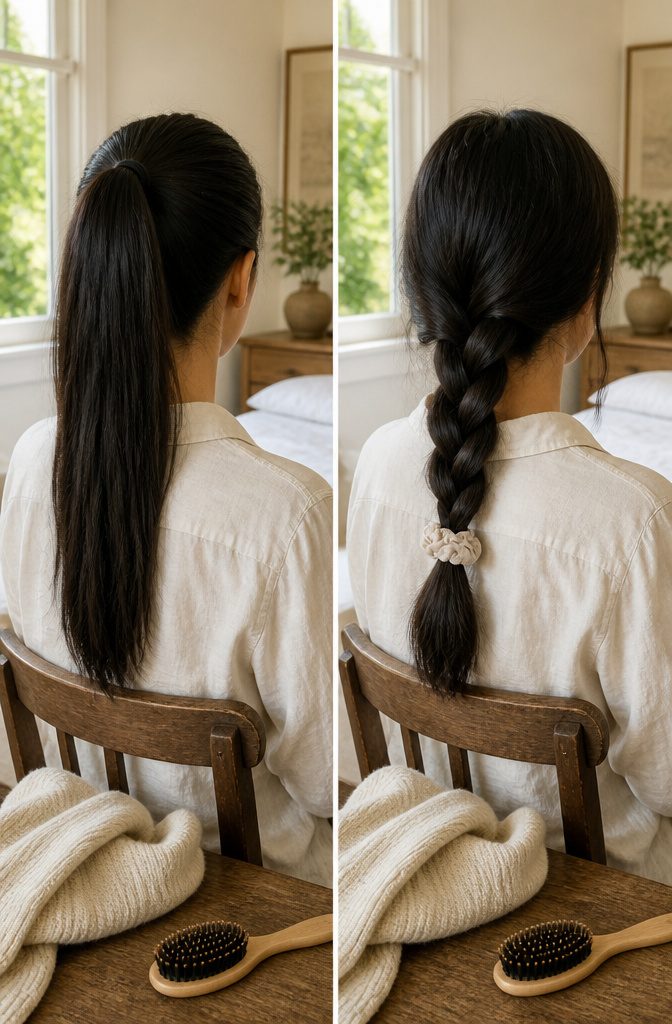
Choose Low-Tension Hairstyles
Tight styles stress the hair follicle and can lead to breakage or even hair loss over time.
High ponytails, slicked-back buns and anything that pulls hard at the roots create constant tension on the same strands, and hair under that kind of strain does not grow long because it snaps before it gets there.
I keep my hair down more often than not for exactly this reason, and when I do pull it back, I stick to a low ponytail or a loose plait that sits gently rather than tugging.
For natural hair, two-strand twists and box braids offer protection without the high tension that tighter styles impose. The looser the better: protective styles should shield your strands from constant manipulation, not add strain of their own.
9. Reduce Friction During Sleep
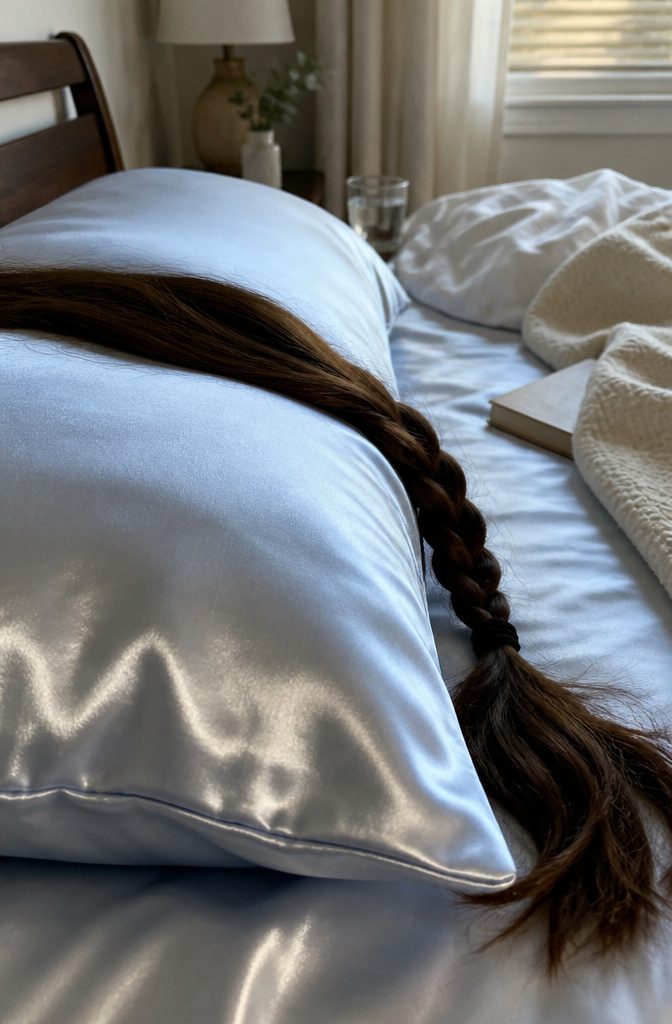
Cotton pillowcases snag hair strands and create friction all night.
The weave catches on cuticles, tugs at tangles, and pulls hair as you roll over. That slow mechanical stress adds up over eight hours and leads to breakage you would not see from a single brush stroke.
Silk or satin pillowcases let hair glide instead. The surface is smooth enough that strands slide when you move, so tension drops and fewer hairs snap at weak points.
You wake up with less knotting and no need to work through a matted section before you leave the house.
Satin costs less and launders easily.
Silk feels cooler and works well if your face also benefits from a gentler fabric. Both reduce the friction that shortens length over time, and either one beats cotton if keeping hair intact matters more than matching your sheets.
10. Eat a Balanced Diet and Address Nutrient Needs
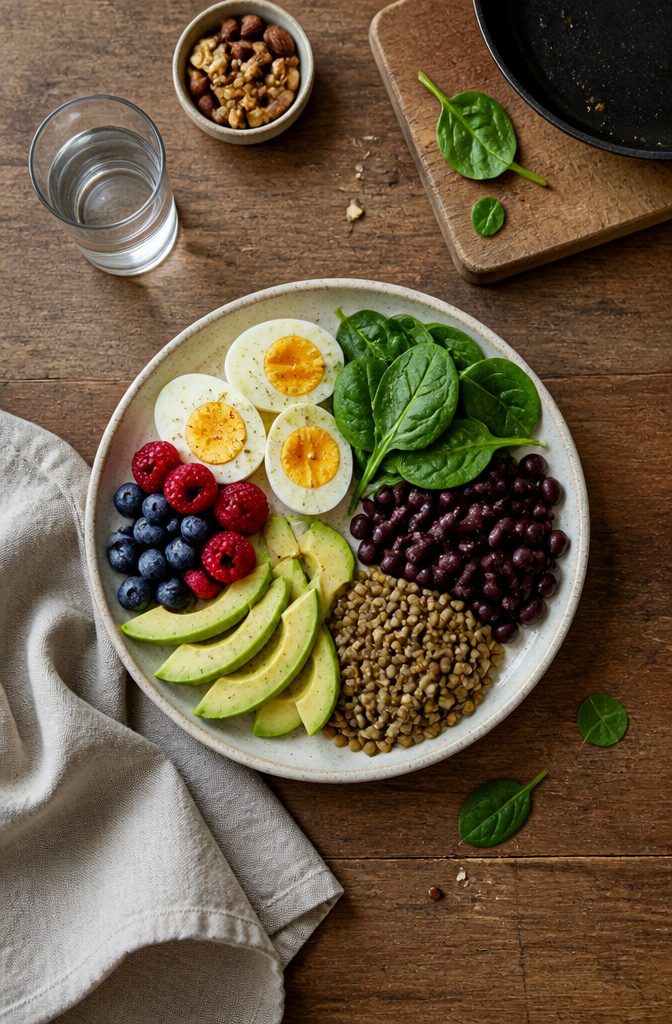
Hair is primarily protein, and feeding it enough protein matters. Aim for at least 45 grams of protein daily.
Eggs, spinach, beans, and avocados all contribute to hair health. Diets that fall short on protein can leave hair weak, brittle, and prone to color loss or shedding.
Iron and vitamin D deficiencies commonly link to hair loss. When you lack iron, your body cannot produce enough hemoglobin to carry oxygen to the cells that fuel growth and repair.
Dark leafy greens, lentils, red meat, and cashews help maintain iron levels. Zinc deficiency can cause shedding too, so nuts like Brazil nuts, walnuts, and almonds belong in the rotation.
Vitamin E protects the scalp from oxidative stress. Berries supply antioxidants and vitamin C, which helps produce collagen to strengthen strands.
Omega-3 fatty acids round out the picture, supporting follicle health. If your diet falls short, a multivitamin with zinc and iron can help fill the gaps.
11. Consider Supplements Cautiously
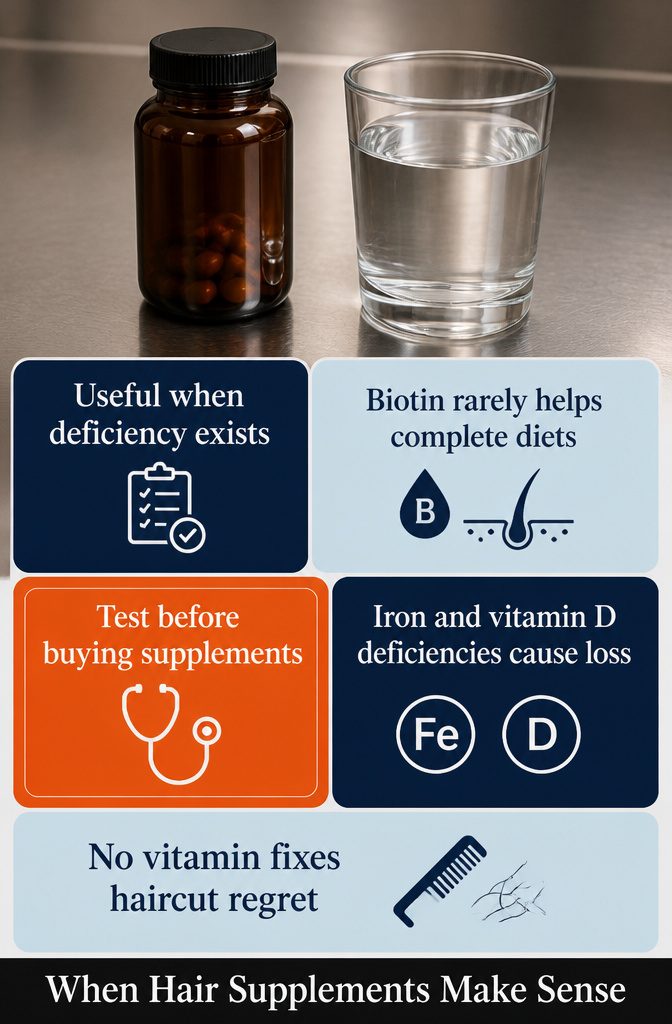
Supplements may help when a nutritional need exists, but they are no shortcut for healthy adults eating enough.
Hair-growth gummies and vitamins marketed for length often contain biotin and other B vitamins, yet there is little evidence they make a noticeable difference if your diet is already complete.
The exception is when you are dealing with a deficiency or a restrictive diet that cuts out whole food groups.
Iron and vitamin D deficiencies can both lead to hair loss, and in those cases, supplementing under medical guidance makes sense.
If your hair seems to be growing more slowly than it used to, or you are noticing more shedding than normal, see a doctor before buying supplements.
They can test for deficiencies and recommend treatment if a health concern is driving the change.
Supplements rich in zinc and iron may be worth trying if your diet lacks variety, but waiting out a bad haircut is a different problem entirely, and no vitamin speeds that recovery.
12. Consider Health, Stress, and Hair-Loss Causes
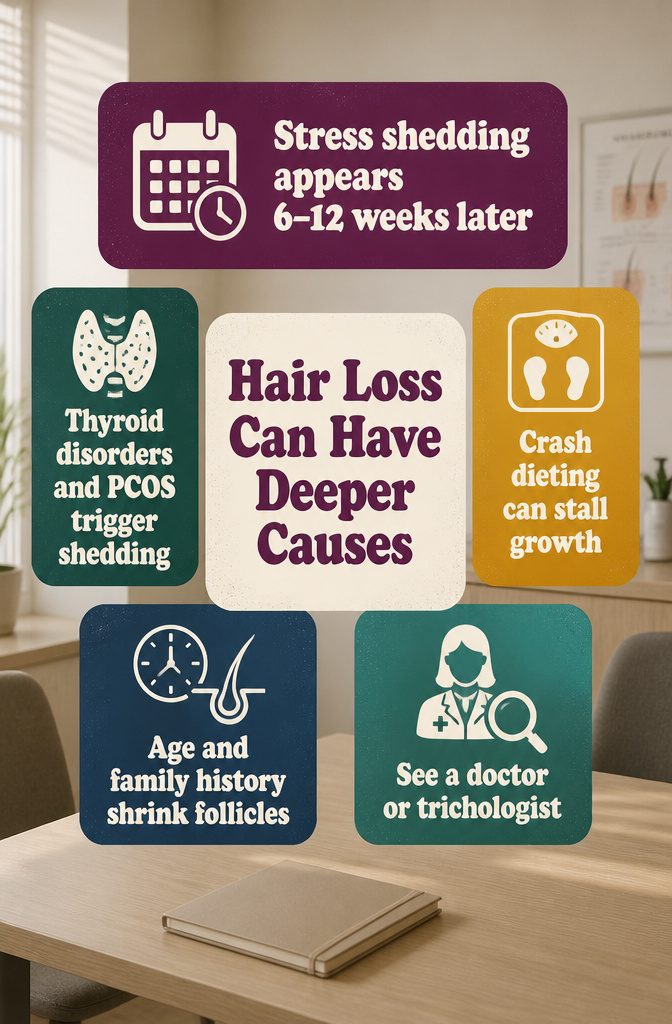
Sometimes your hair growth stalls before you get to the problem, and the fix is not a product.
Stress, hormones, illness, and age all affect how much hair you actually keep. A thyroid disorder or polycystic ovary syndrome can trigger shedding that looks like nothing is growing.
Physical or emotional stress pushes the follicle into a resting phase and hair loss usually shows up 6 to 12 weeks after the event that caused it, so think back a few months if your brush or ponytail suddenly looks different.
Crash dieting does the same.
As you age, follicles shrink naturally, and if hair miniaturization runs in your family, it happens faster. In any of these cases, better shampoo will not solve the underlying cause.
If your part is wider, your pony thinner, or your brush fuller than it used to be, talk to a doctor or trichologist before you buy another treatment.
How Fast Hair Actually Grows
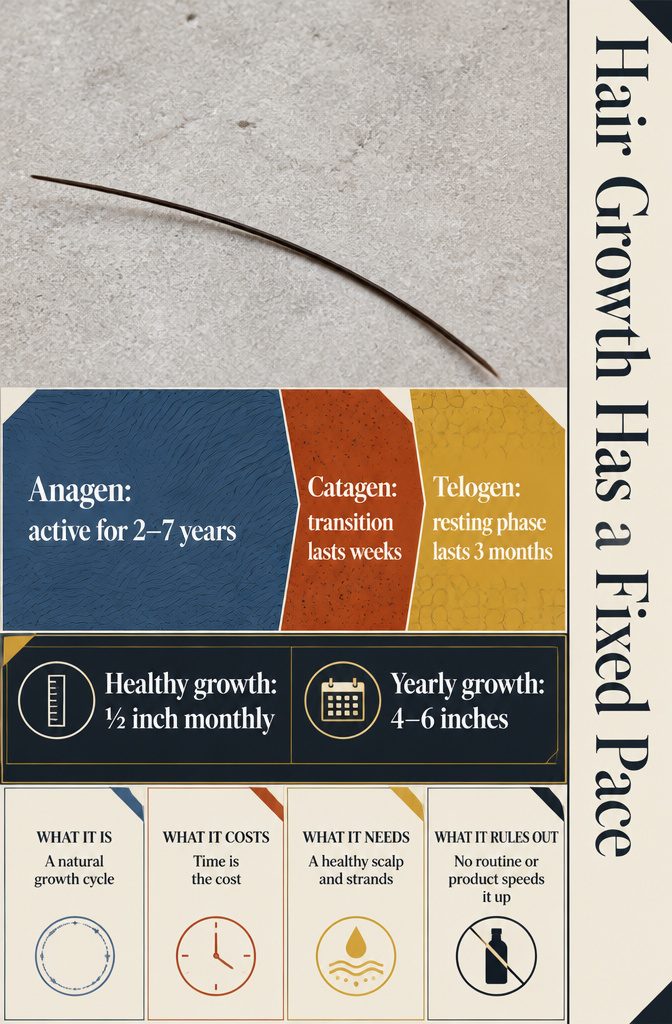
Hair grows through a cycle of three phases: anagen, the active phase that lasts two to seven years, catagen, a brief transitional period of a few weeks, and telogen, a three-month resting phase before the strand sheds and a new one starts.
Most of the growth happens during anagen, when follicles are working steadily. The rate itself is set genetically, and healthy adults can expect roughly half an inch per month, which works out to four to six inches over a year.
That rate is fixed.
No routine or product speeds it up. What care does is preserve the length already on the head by cutting down breakage, so strands survive long enough to reach their full potential instead of snapping off early.
For many people, hair is not growing as well as it could, falling out before it hits the length it is capable of reaching.
Keeping the scalp and strands in good condition creates the environment for that full cycle to play out.
Scalp Massage and Cool Rinses
Scalp Massage and Cool Rinses
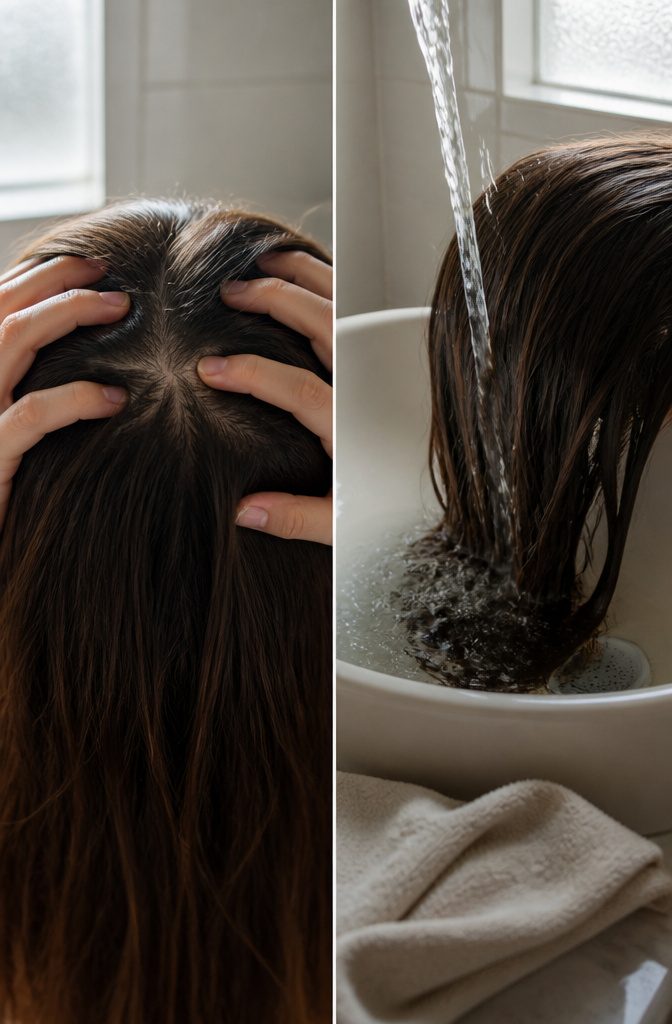
Massaging your scalp once a week does two things at once. The exfoliating motion clears away dead skin cells and product buildup that can clog follicles, and it stimulates blood flow to the scalp.
The two standard techniques are effleurage, which uses circular stroking movements, and petrissage, which lifts and kneads the tissue.
Start at your hairline and work back with firm, steady pressure. The ritual itself matters, too: lowering stress keeps your hair in the active growth phase longer.
At the end of your shower, drop the water temperature and give your hair a cool rinse for the last few seconds.
The cold seals the cuticle, which strengthens each strand before you style it. Stronger hair breaks less, and less breakage means you keep more of the length you grow.
Frequently Asked Questions
Can you grow your hair faster?
Growth rate is genetically determined at around half an inch per month, and no product or routine can speed that up.
What you can control is how much length you keep by reducing breakage, which allows strands to reach their full potential instead of snapping off early. Better care preserves what you grow rather than accelerating the process itself.
Do hair growth vitamins work?
There is little evidence that biotin or hair-growth supplements make a difference for healthy adults eating a complete diet.
They may help if you have a deficiency in iron or vitamin D, both of which can cause hair loss, but see a doctor for testing before buying supplements.
Waiting out a bad haircut is a different problem, and vitamins will not speed that recovery.
How can I make my hair stronger?
Conditioner and strengthening treatments plump the hair shaft with moisture, improving elasticity so fewer strands snap mid-length.
Use a leave-in treatment or a rich mask once a week, left on for around 20 minutes. Limiting heat styling and chemical treatments also prevents the damage that weakens hair over time.
Can I reverse hair thinning?
Thinning caused by stress, hormonal changes, thyroid disorders, or nutritional deficiencies can sometimes improve once the underlying cause is treated.
Hair loss from these triggers usually shows up 6 to 12 weeks after the event, so think back a few months if shedding increases.
If your part is wider or your ponytail thinner than it used to be, see a doctor or trichologist before buying treatments.
How do I prevent hair breakage?
Handle wet hair gently by blotting instead of rubbing, and detangle with a wide-tooth comb starting at the ends. Skip tight hairstyles that pull at the roots, and reduce heat styling to a 5:2 ratio (5 days off, 2 days on).
Switch to a silk or satin pillowcase to cut friction while you sleep, and trim every 8 to 12 weeks to stop split ends from traveling up the strand.
What shampoos promote hair growth?
No shampoo speeds up growth, but choosing one that keeps the scalp clean without stripping or clogging follicles supports the conditions hair needs to reach its full length.
Avoid sodium lauryl sulfate, sodium laureth sulfate, parabens, and dimethicone, and wash 2 to 3 times a week to let natural oils protect the strand. Scalp health matters more than the brand or price tag.





