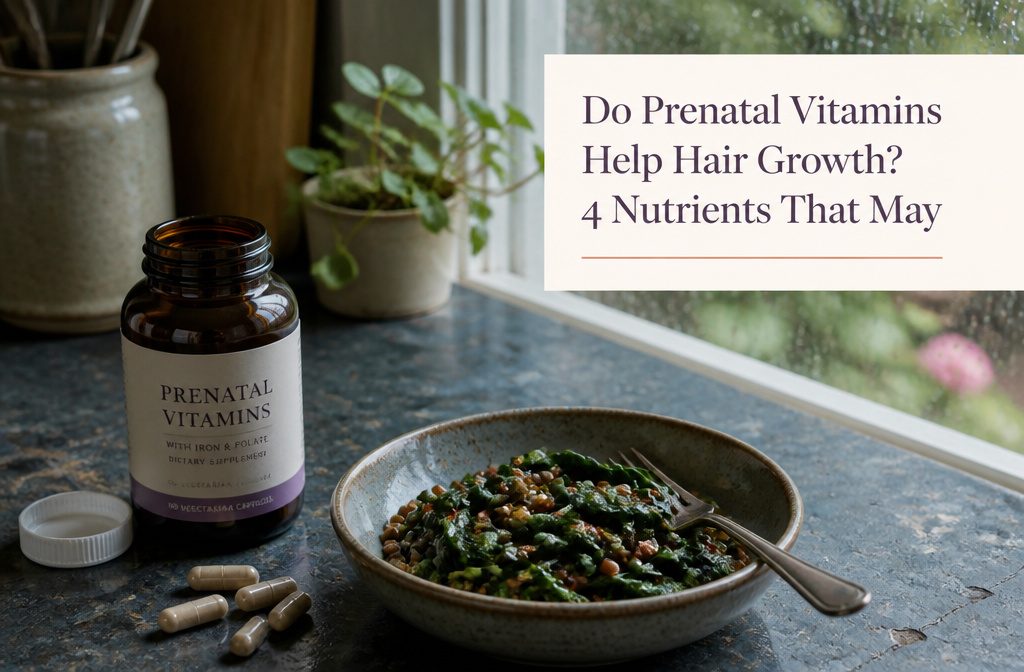
Prenatal vitamins may support hair growth if they correct a nutrient deficiency, but they will not make hair grow faster when your levels are already adequate.
The benefit depends entirely on filling a gap. If your iron stores are low, the 27 milligrams in most prenatal formulas can help restore what follicles need, but extra iron does nothing for growth when deficiency is not present.
Prenatal Vitamins May Help Hair Growth When a Deficiency Is Present
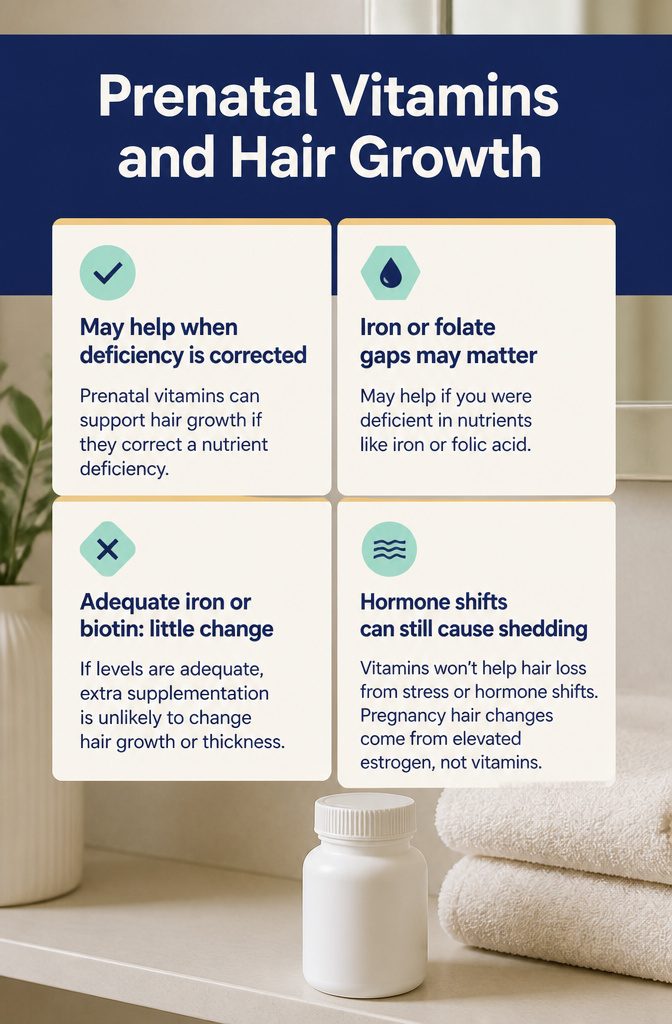
Prenatal vitamins can support hair growth if they correct a nutrient deficiency, but they do not directly make hair grow faster or prevent shedding caused by hormones.
The benefit depends entirely on filling a gap. If your iron or biotin levels are already adequate, extra supplementation is unlikely to produce noticeable changes in hair thickness or growth rate.
There’s no strong evidence that prenatal vitamins directly make your hair grow, though they may help if you were deficient in certain nutrients like iron or folic acid.
If your hair loss stems from stress or hormone shifts, prenatal vitamins will not make a significant difference. The fuller hair many pregnant women experience comes from elevated estrogen levels, not from the vitamins themselves.
Iron Deficiency Contributes to Shedding and Weak Hair

Iron deficiency is the most frequently named nutritional cause of hair loss in women.
When iron stores run low, oxygen transport to follicles slows and the hair growth cycle stalls. The result shows up as excessive shedding, hair that breaks easily when wet, and slower regrowth after a cut.
Prenatals typically contain around 27 milligrams of iron, a dose designed to meet the increased blood volume demands of pregnancy. For women with documented low iron, that amount may help restore what the follicles need.
I’ve seen sources note improvements within three to four months when a genuine deficiency is corrected. Women with heavy periods, plant-based diets, or frequent pregnancies face higher risk of iron depletion affecting hair.
Correcting low iron helps when a deficiency is present. Adding iron to already adequate levels does nothing for growth.
Folate Supports Hair Follicle Cell Division

Folate enables the rapid cell division that hair follicles depend on. Follicles are among the most metabolically active tissues in the body, and they require 400–800 micrograms of folate daily to function at full capacity.
Major health organizations recommend prenatal vitamins contain at least 400 micrograms of folic acid, the synthetic form, to support fetal neural tube development and red blood cell production.
Around 40 percent of women carry MTHFR gene variations that make it harder for the body to convert synthetic folic acid into methylfolate, the active form cells actually use.
For those women, a prenatal containing methylfolate instead of folic acid bypasses that conversion step entirely.
Deficiency shows up in hair before it appears in bloodwork: increased shedding, slower regrowth, brittle texture. By the time a lab confirms low folate, the hair has already been losing ground for weeks.
Biotin, Vitamin D, Zinc and Other Nutrients Named by Sources
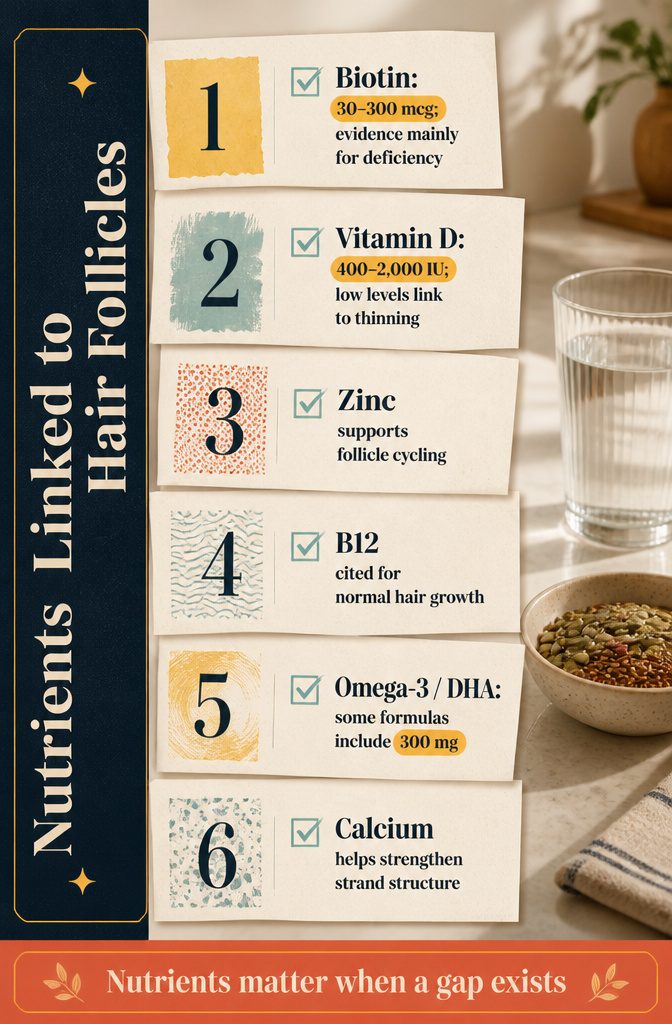
Most prenatals include a wider group of nutrients sources link to hair follicle health and regrowth, though the claims and emphasis vary:
- Biotin (30–300 mcg in most formulas): studies show supplementation helps people with confirmed biotin deficiency, but little evidence it does anything for those with adequate intake.
- Vitamin D (400–2,000 IU): deficiency is associated with hair thinning and alopecia areata, and correcting low levels often reduces shedding.
- Zinc: supports follicle cycling, and deficiency contributes to increased hair loss.
- B12: sources cite it alongside biotin for maintaining normal hair growth.
- Omega-3 / DHA (some formulas include 300 mg algae-derived): tied to scalp hydration and reduced inflammation.
- Calcium: contributes to the structural protein matrix that gives strands strength.
The pattern holds: these nutrients matter when a gap exists, not as boosters beyond normal levels.
Why Pregnancy Hair Looks Fuller

The reason pregnancy hair looks fuller has nothing to do with prenatal vitamins. Elevated estrogen levels prolong the anagen phase and reduce shedding, which means hair that would normally fall out stays in place.
The typical anagen phase runs 2–7 years, but pregnancy hormones extend it even longer while fewer follicles move into the resting stage. The result is thicker, more abundant hair by the second trimester.
After delivery, estrogen drops suddenly and the hair that had been holding on enters telogen effluvium.
Shedding usually peaks around 3–4 months postpartum, and the hair simply returns to how it looked before pregnancy. Women who continue taking prenatal vitamins still lose that temporary fullness, because the vitamins were never the cause.
Excess Iron and Digestive Effects
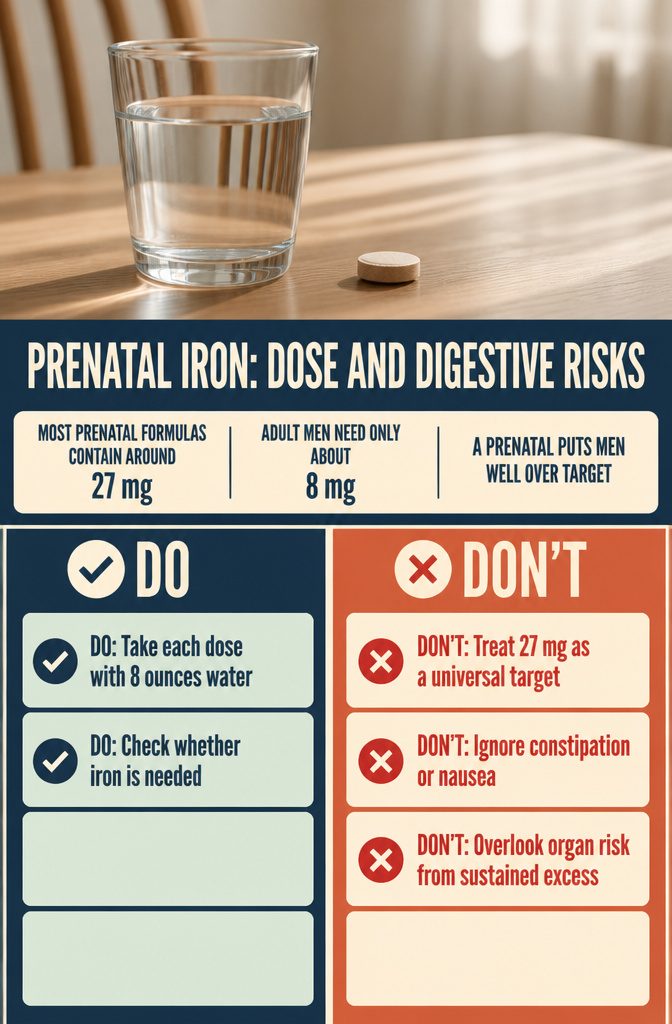
Most prenatal formulas contain around 27 mg of iron, a dose designed for pregnancy when blood volume doubles and anemia risk climbs. Adult men need only about 8 mg daily, so a prenatal puts them well over target.
Too much iron causes constipation and nausea in the short term, and sustained excess can damage the stomach lining or organs. Women who aren’t pregnant face the same digestive issues, though men carry higher risk from the overshoot.
Taking each dose with at least 8 ounces of water helps, but it doesn’t erase the mismatch between what the pill delivers and what a body outside pregnancy actually requires.
If you’re not deficient, the iron becomes a burden rather than a benefit.
Excess Folate, Vitamin A and Biotin-Related Lab Interference
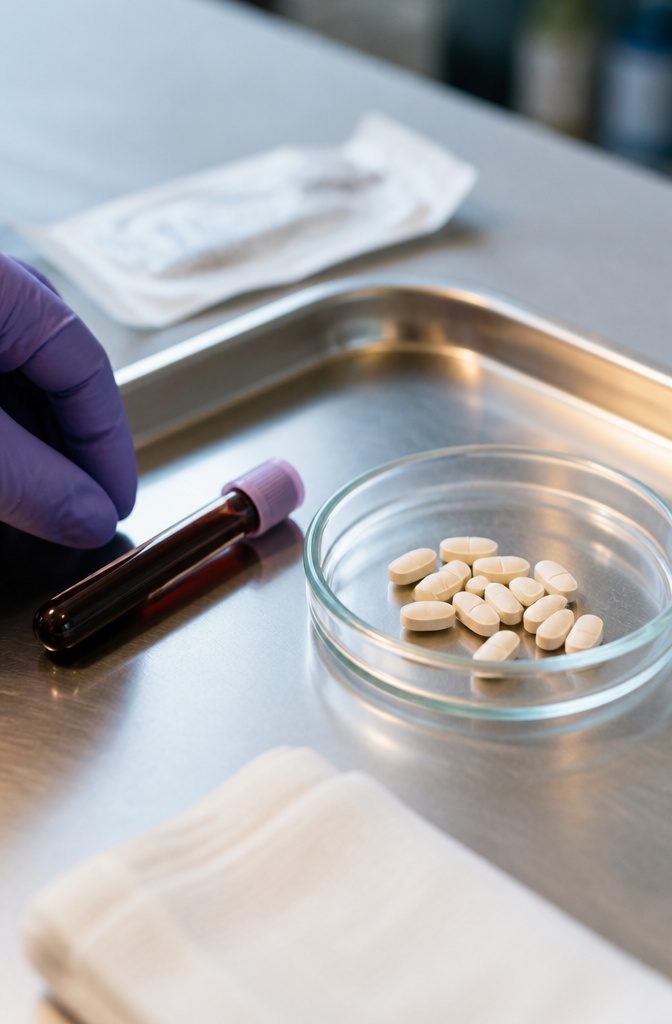
Folate in prenatal doses can mask a B12 deficiency, so if you take prenatal vitamins without being pregnant, your doctor may miss low B12 until symptoms appear.
Vitamin A in retinol form has upper limits during pregnancy, and some formulas stay under those thresholds by using beta-carotene instead. Biotin above 1 mg interferes with hormone and thyroid lab tests, producing false results that can delay diagnosis.
If you are pursuing fertility treatment, keep biotin intake below that threshold so baseline bloodwork reads accurately. The interference clears once you stop the supplement, but timing matters when test results guide next steps.
Identify the Cause With a Health Professional

I recommend getting bloodwork done before you start any supplement.
A dermatologist or another healthcare professional can check your nutrient levels and figure out whether your hair loss actually stems from a deficiency, or whether the cause is genetic, hormonal, stress-related, tied to a medical condition, linked to medication, or the result of how you’ve been treating your hair.
Supplementation helps when a confirmed deficiency exists, not as a blanket fix. If your iron or biotin levels are low, filling that gap can make a difference.
But if the issue is androgenetic alopecia or postpartum hormone shifts, a prenatal vitamin won’t address the underlying cause. That distinction matters, because throwing nutrients at a problem that isn’t nutritional wastes time and money while the real issue continues.
Frequently Asked Questions
Do prenatal vitamins help hair growth?
Prenatal vitamins can support hair growth if they correct a nutrient deficiency, but they don’t directly make hair grow faster.
The benefit comes from filling gaps in iron, folate, or other nutrients that your body actually needs. If your levels are already adequate, adding more won’t produce noticeable changes in thickness or growth rate.
What vitamins are good for hair growth?
Iron, folate, biotin, vitamin D, zinc, and B12 are the nutrients most often linked to hair health.
Iron deficiency is the most common nutritional cause of hair loss in women, and folate supports the rapid cell division that follicles depend on. Each of these nutrients matters when a deficiency exists, not as boosters beyond normal levels.
How long before results appear?
Reduced shedding may appear after 2 or 3 months, while visible changes in thickness usually show up after 3 to 6 months.
Hair grows slowly, so patience and consistency matter. Improvements only occur when the vitamins correct a genuine deficiency.
What are the side effects of taking prenatal vitamins when not pregnant?
The high iron dose in most prenatal formulas causes constipation and nausea, especially if you’re not deficient. Excess folate can mask a B12 deficiency, and biotin above 1 mg interferes with hormone and thyroid lab tests, producing false results.
Taking each dose with at least 8 ounces of water helps with digestion, but it doesn’t fix the mismatch between what the pill delivers and what your body needs.
Why is pregnancy hair fuller?
Elevated estrogen during pregnancy prolongs the growth phase and reduces shedding, so hair that would normally fall out stays in place.
The vitamins aren’t responsible for the fullness. After delivery, estrogen drops and shedding peaks around 3 to 4 months postpartum, returning hair to how it looked before pregnancy even if you continue taking prenatal vitamins.





