
Growing hair past the shoulders takes one to two years and costs nothing but consistency, and most people lose months to a single misstep: treating trims as progress killers and skipping them until split ends travel up the shaft and force a bigger cut.
A half-inch every three to four months protects the length you already have without stalling the grow-out.
The variable that decides your timeline is breakage, not growth rate. Hair grows 0.5 to 1.7 centimeters a month regardless of what you do; what you control is how much of that length survives to the next milestone.
1. Set Your Target Length and Plan the Stages
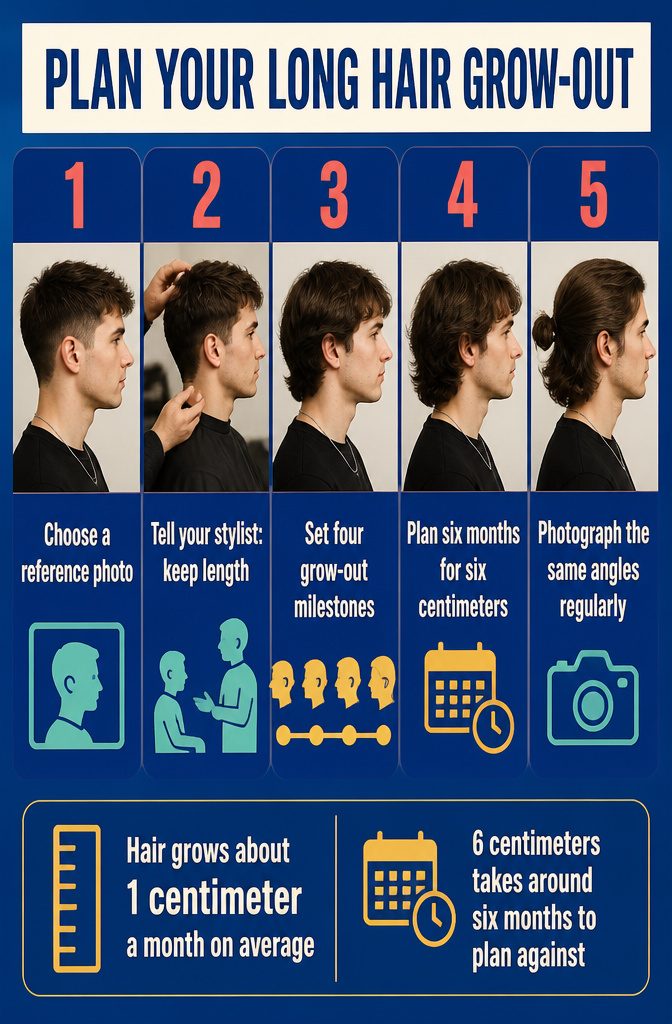
Picking a reference photo before anything else is the move that keeps every trim on track.
Bring it to your stylist and say plainly that you are keeping length, then talk through which areas need to catch up and which edges can be tidied without restarting your progress.
Four rough milestones mark the grow-out: long top with short sides, fringe reaching the eyes, hair around the ears and neck, and enough length to gather into a tie.
Hair grows about 1 centimeter a month on average, so 6 centimeters takes around six months to plan against.
Take photos from the same angles every few weeks. Small changes read clearly across photos in a way the mirror rarely shows.
2. Keep the Scalp Clean and Condition the Lengths
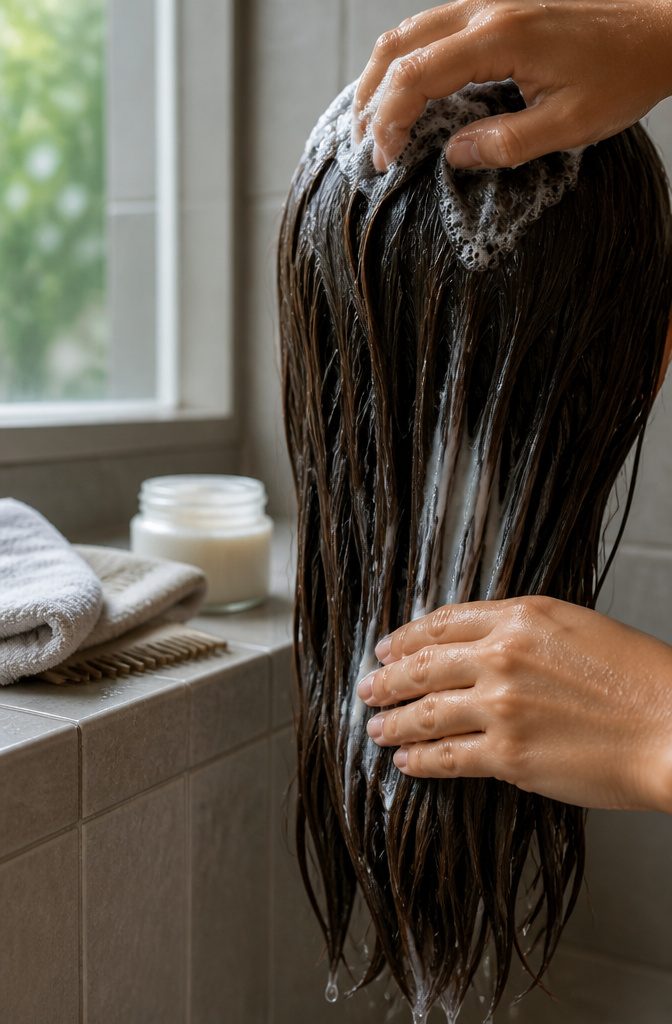
Shampooing two to three times a week lets natural oils move down the strand and hydrate where the hair needs it. When you do wash, adjust the frequency to how much oil, sweat and product sits on your scalp.
Focus shampoo on the scalp itself rather than scrubbing the lengths together, then rinse thoroughly. The ends rarely need direct cleansing, and working lather through them repeatedly dries them out faster than growth can replace the length.
After washing, condition the lengths.
As hair gets longer, the ends tangle more easily and feel rougher to the touch. Apply conditioner from mid-length down, distribute it well, and give it time before rinsing.
A weekly hair mask adds another layer of moisture, and I recommend deep conditioning at least monthly. For color-treated hair, weekly deep conditioning keeps the strand strong enough to reach the length you are after.
3. Detangle Gently From the Ends Up
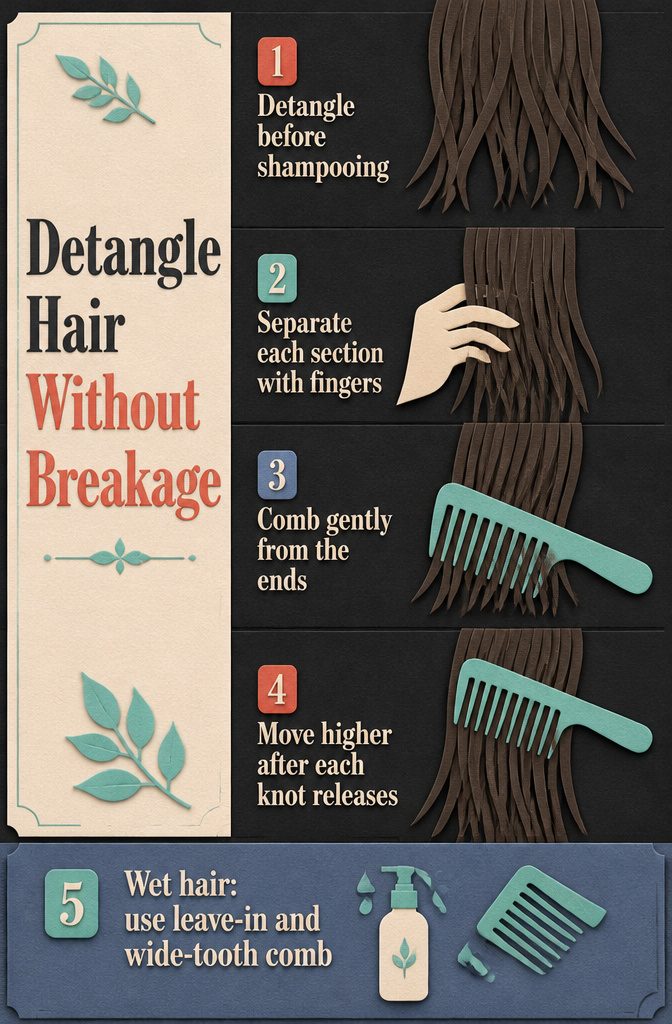
Detangle Gently From the Ends Up
Hair stretches and swells when wet, lifting the outer layer in a way that makes it snap easily under tension.
I detangle before shampooing to avoid that window of vulnerability entirely. Starting at the roots and dragging a comb through a tangle does not save time.
It forces the knot to slide down the shaft, picking up more hair as it goes, and the tool either breaks through the tangle or breaks the hair.
I start near the ends and work upward in small sections, releasing each knot gently and stopping if the comb catches. Separate the section with your fingers first, then move the comb higher.
If you must detangle wet hair, apply a leave-in conditioner from roots to ends and use a wide-tooth comb to reduce friction, working the same way from the ends up.
4. Reduce Heat and Chemical Damage
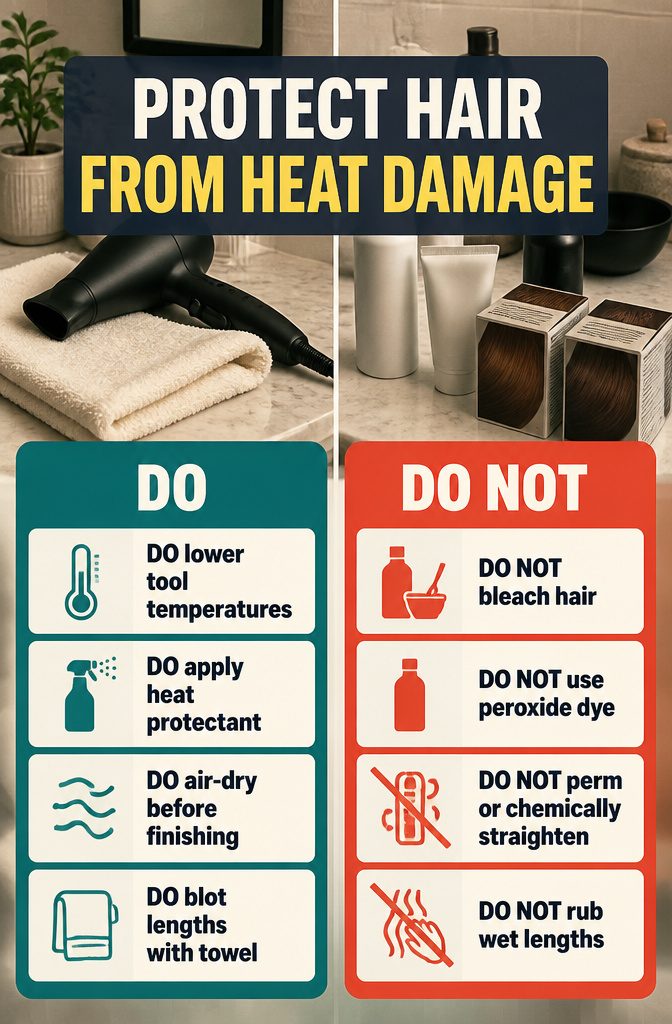
Damage from heat and chemicals adds up with every pass, and once the cuticle is lifted or the fatty acids stripped out, no conditioner puts them back.
Lower the temperature on your flat iron or dryer, and use a heat protectant before you apply any tool; the protectant forms a barrier that holds moisture in while the iron works.
Better still, let your hair air dry as long as you can and use the dryer only to finish the last damp sections. When you towel off, blot instead of rubbing the lengths.
Bleach and peroxide dyes do the most damage because they open the cuticle and remove the natural oils that keep hair strong. If you color, skip the bleach and choose a non-peroxide dye like Loving Care or Clairol Natural Instincts.
Henna is another option that skips the peroxide entirely and adds body to fine hair, though it can dry out hair that is already very dry.
Avoid perms and chemical straighteners altogether; every treatment weakens the shaft a little more, and the effect stacks.
5. Trim to Control Damaged Ends, Not to Speed Growth
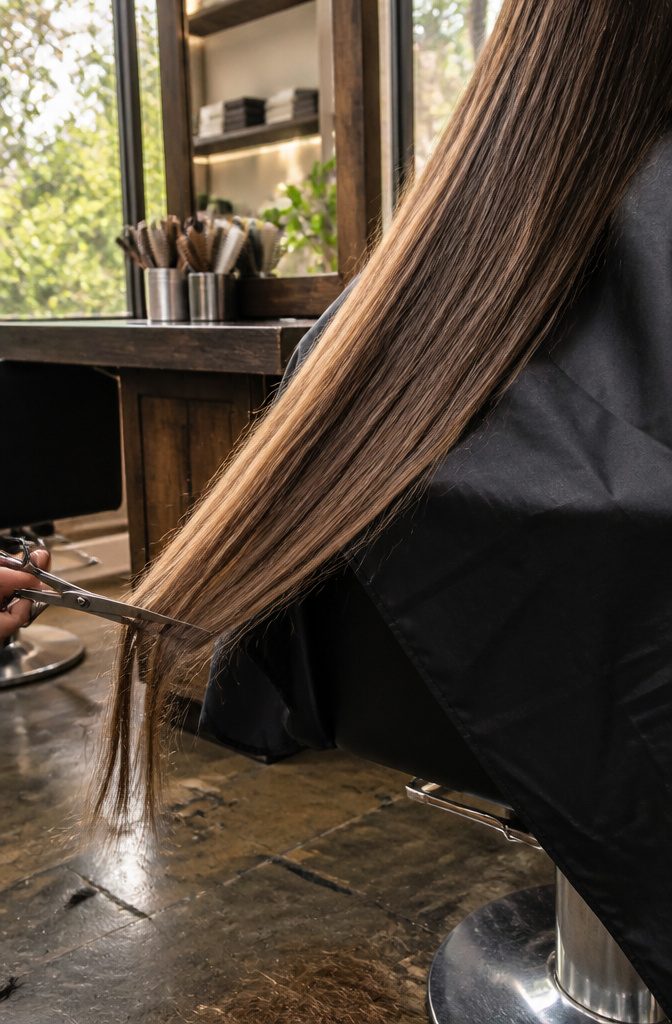
Trims do not make hair grow faster, but they do protect the length you already have by removing split ends before they travel up the strand and force a bigger cut later.
Hair grows from the scalp, so what you remove at the ends changes nothing about the rate.
The schedule depends on whether you are maintaining or actively growing. If you want to hold your current length, trim a half-inch every month to match the average rate of growth and keep the ends level.
If you are pushing for longer hair, trim a half-inch every three or four months, or sooner if you see frizzy ends or flyaways shorter than the rest.
Those are signs of breakage, and damaged hair does not grow longer because it breaks off before it can.
Do not follow a fixed four-week rule through a grow-out.
The condition of your ends decides the timing, not the calendar. Once your hair reaches waist length, the ends may be more than six years old, and those older strands need more attention than fresh growth closer to the scalp.
I discuss how much to remove before each appointment and adjust based on what the ends look like, not on how many weeks have passed.
6. Eat Well and Get Enough Protein
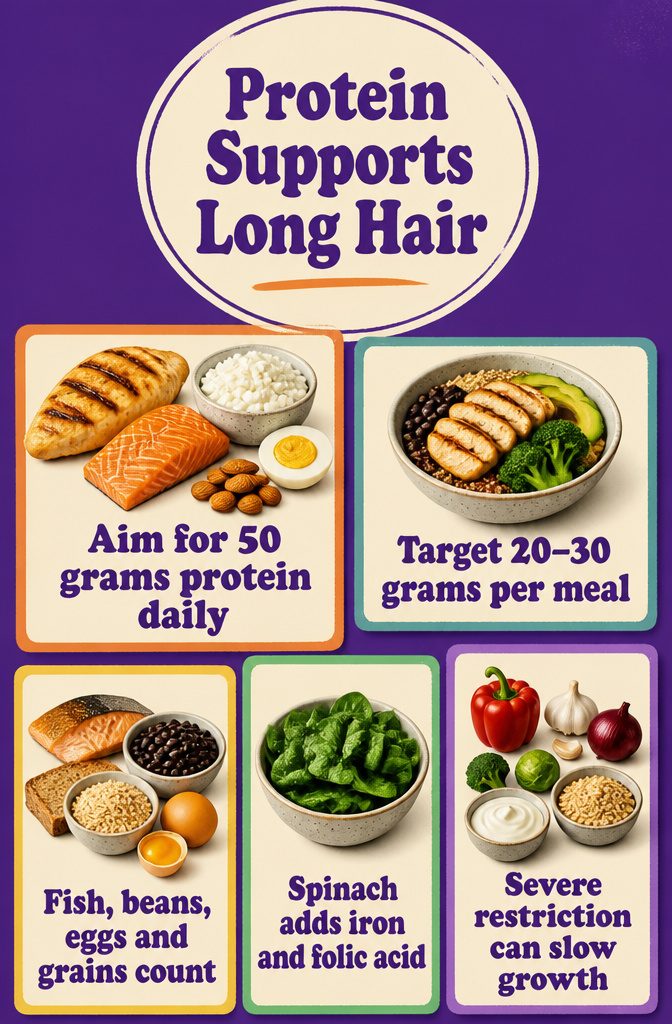
Hair is mostly protein, and a restrictive diet cuts the fuel it needs to grow. When calories drop too low or whole groups disappear, growth stalls and shedding picks up.
The body treats hair as optional and shuts production down fast when it thinks resources are scarce. Even after normal eating resumes, shedding can continue for months.
Aim for 50 grams of protein or more each day, or 20 to 30 grams per meal. Fish, beans, nuts, poultry, eggs and whole grains all count.
Leafy greens bring iron, folic acid and some B vitamins along with protein, so spinach earns a spot. Foods high in cysteine help too: red peppers, garlic, onions, brussels sprouts, yogurt, oatmeal and broccoli.
Calcium, biotin and vitamin E also support growth, and you can get biotin from almonds, peanuts, egg yolks, soybeans and fish without turning to a supplement.
Skip the trendy cleanses. A week of severe restriction slows growth and leaves hair looking dull.
7. Consider Supplements or Treatments When a Deficiency Is Identified
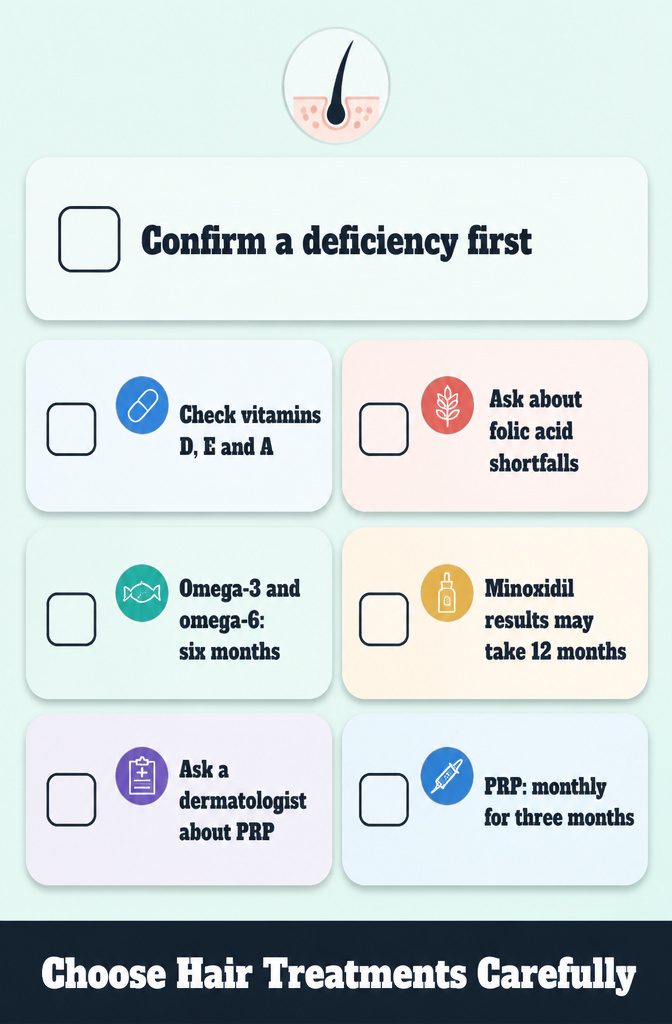
Supplements and treatments are worth considering when a deficiency is actually identified, not as a default for everyone trying to grow hair longer.
A 2017 review found that shortfalls in vitamins D, E, and A, along with folic acid, can affect both structure and growth.
Omega-3 and omega-6 supplements taken for six months helped protect against hair loss in a 2015 study of people with female pattern baldness. Biotin and Biosil also show up in hair-focused supplements, though evidence for several natural approaches is limited.
Minoxidil products like Women’s Rogaine and Hers 2% Minoxidil Topical Solution are FDA-approved options. The active ingredient is proven to stop hair loss and promote regrowth with continued use, but it could take up to 12 months to see results.
For more intensive intervention, platelet-rich plasma involves scalp injections of your own blood’s growth factors, given once a month for three months, then every six months for maintenance. A dermatologist can determine if PRP is right for your situation.
How Fast Hair Actually Grows
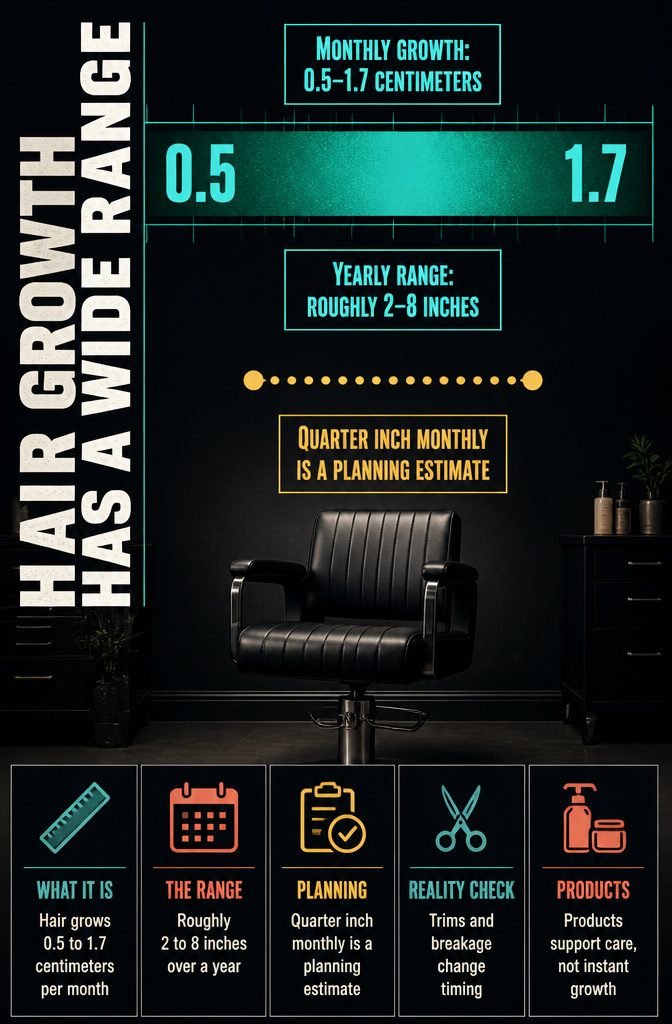
Hair grows 0.5 to 1.7 centimeters per month, which works out to roughly two to eight inches over a year.
A quarter of an inch per month is one common estimate you can use for planning, but it is not a personal deadline.
Your starting length, the frequency of trims, how much breakage you have and the way your curl pattern sits all affect when you actually reach the look you want.
For example, if you need another six centimeters of length and you calculate six months at that average rate, you still need to account for trims and any breakage along the way.
That is an illustration of the math, not a promised result.
Shampoo, conditioner and styling products can help with care and appearance. They are not shortcuts to instant growth.
Normal Shedding and When to Seek Help
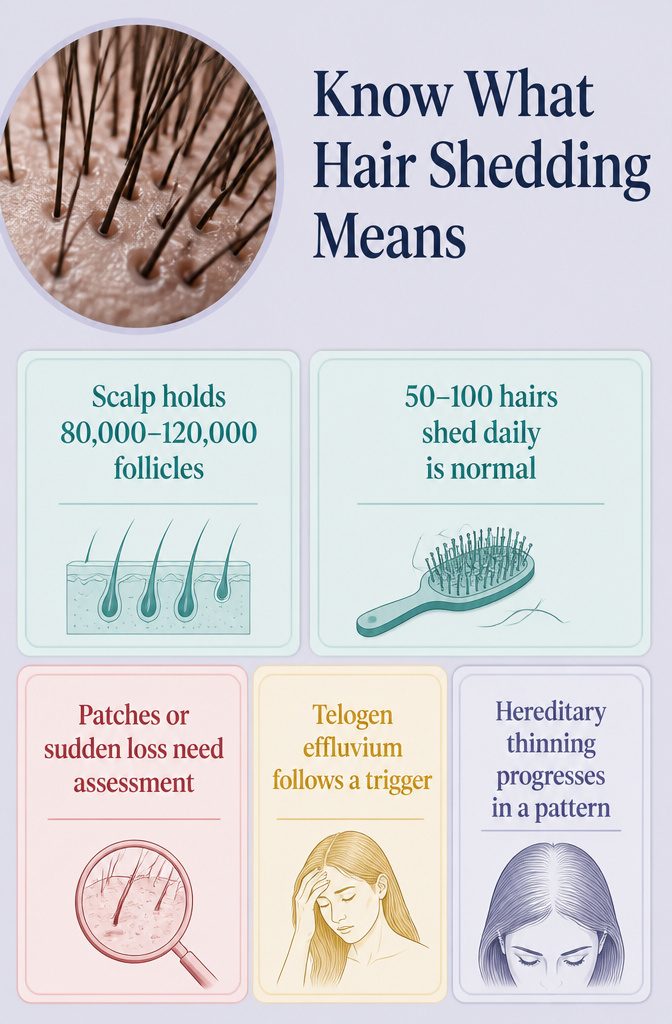
Your scalp holds around 80,000 to 120,000 follicles, and losing between 50 and 100 hairs a day is part of the normal cycle.
You see it in the shower drain and on the brush, and that amount is expected. The hair moves through phases, and shedding at the end of telogen is what makes room for new growth.
If you notice patches of thinning, a sudden increase in loss, or scalp redness and flaking that does not resolve, that calls for professional assessment.
Telogen effluvium shows up as diffuse shedding a few months after stress, illness or a major change, and it usually recovers once the trigger passes.
Hereditary thinning follows a pattern, often starting at the crown or temples, and progresses gradually over time. The two look different, and a dermatologist can distinguish them and recommend treatment when one is needed.
Scalp Massage for Thickness
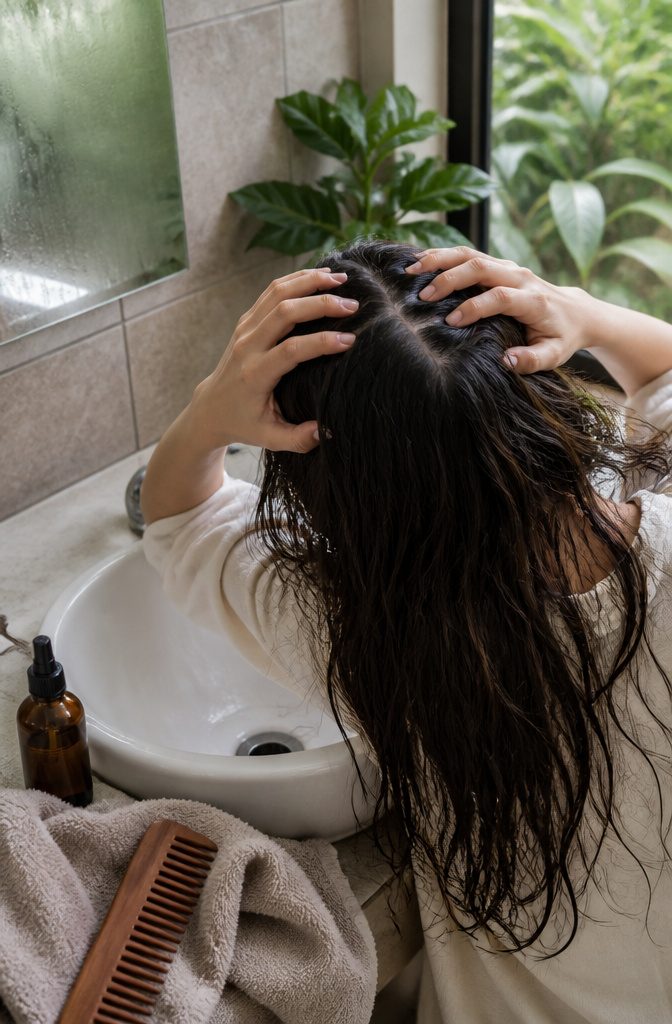
Scalp massage feels good, and it may support scalp health by helping blood flow reach the follicles.
A small 2016 study tracked nine participants who gave themselves four minutes of scalp massage daily for 24 weeks and found their hair grew thicker, though not measurably faster.
That thicker diameter matters when length is the goal, because fine hair snaps more easily before it gets past the shoulders.
A separate 24-week study tested an antioxidant scalp treatment containing piroctone olamine and saw increased hair amounts in participants who used it compared to those who received placebo formulations.
The antioxidant appears to improve the scalp barrier and reduce thinning. You can massage your scalp with your fingertips while shampooing or apply a leave-in treatment formulated with antioxidants.
I would not expect massage alone to speed growth, but protecting what is already there and keeping follicles fed puts you ahead when the target is twelve more inches over two years.
Sleep and Protective Styles That Do Not Pull

The body needs between 7 and 9 hours of sleep each night to keep melatonin at levels that support hair growth. Less than that and the hormone drops, which can slow the cycle.
A silk or satin pillowcase cuts down on friction while you sleep, so strands tangle less and break less often.
Silk is easier on hair — it helps avoid tangles and breakage. The less breakage your hair experiences, the longer your hair will be.
That single swap makes a difference you can measure in retained length over months.
No hairstyle directly promotes growth, but low-maintenance natural styles prevent damage at the follicle that tighter looks can cause.
Ponytails, buns and cornrows all put stress on the roots when pulled tight. If it hurts, loosen it.
Once hair is long enough to gather, I leave the shortest pieces out rather than yanking everything back to capture them. A looser style from the start beats tension that builds up over weeks.
Products Worth Naming
Products Worth Naming
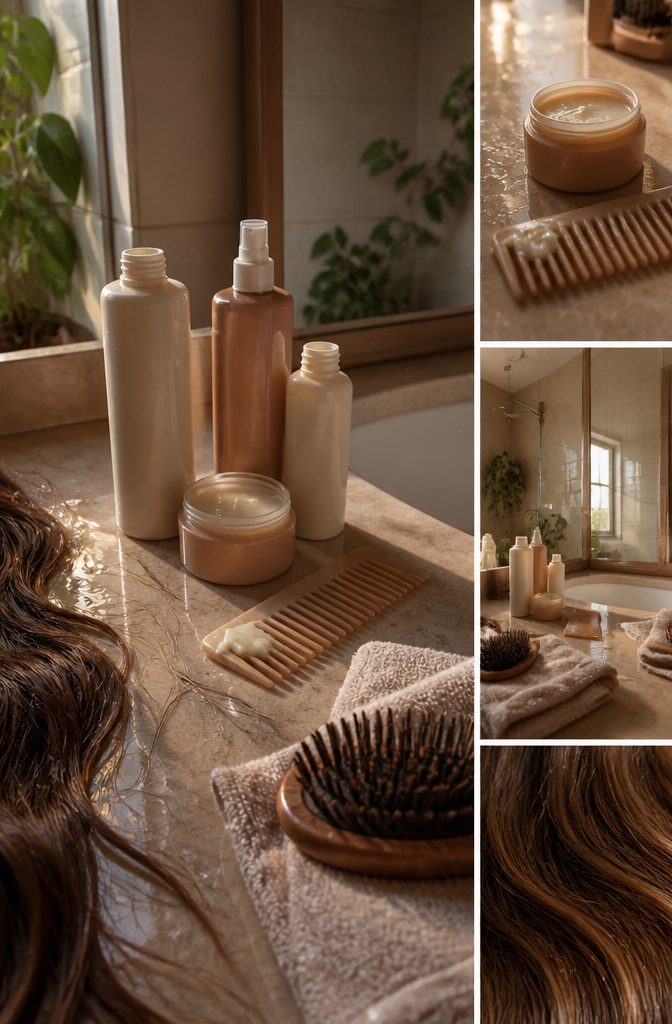
The products mentioned most often by those growing out their hair fall into three groups: washing and conditioning, heat protection before styling, and hold once the hair is dry.
By Vilain Rush Shampoo and Rush Conditioner come up regularly in routines for men managing the grow-out stages, and the brand’s XL Comb handles detangling without snagging.
By Vilain Sidekick offers pre-styling heat protection if you dry with a dryer or flat iron, and Flow Pomade (the reformulated version of what used to be called Powermade) gives hold without stiffness once the style is set.
For leave-in care, HSI Professional Argan Oil Leave In Conditioner is a frequent choice.
Color-treated hair has more options worth naming: Straight Sexy Hair, Matrix Biolage Colorcaretherapie, Tressa WaterColors, Davines Alchemic, and Fekkai Technician Color Care all appear in routines designed to protect tone and prevent fading.
Most are available at Amazon, which makes restocking easier than hunting down salon-only lines.
Frequently Asked Questions
How long does it take to grow long hair?
Hair grows about 1 centimeter a month on average, so reaching a specific length is a matter of months, not weeks.
If you need 6 more centimeters, count on roughly 6 months before accounting for trims and breakage. Starting length, curl pattern, and how much the ends break off all shift that number in practice.
Can you speed up how fast hair grows?
No product or grooming routine makes the follicle produce hair faster than its natural rate.
What you can do is hold onto the length you already have by reducing breakage, detangling carefully, and protecting ends from heat and chemical damage. Less breakage means more of each month’s growth stays on your head.
What foods help hair grow?
Protein is the most direct input: aim for 50 grams or more per day, spread across meals at 20–30 grams each, from fish, eggs, beans, nuts, poultry, and whole grains.
Iron, folic acid, biotin, calcium, and vitamin E also support growth, and you can get biotin from almonds, peanuts, egg yolks, and fish without a supplement.
Severe calorie restriction or a cleanse stalls growth and increases shedding, sometimes for months after normal eating resumes.
Does stress affect hair growth?
Yes. Telogen effluvium, a form of diffuse shedding, can show up 2–3 months after a stressful event, illness, or major physical change.
It usually resolves once the trigger passes, but the shed can continue well after the stressful period ends. If shedding is sudden, patchy, or accompanied by scalp changes, a dermatologist can distinguish stress-related loss from hereditary thinning.
Which hairstyles are best for growing hair long?
No style directly makes hair grow, but loose, low-maintenance styles prevent the follicle stress that tight ones cause.
Ponytails, buns, and cornrows all pull at the roots when worn tight, and that tension adds up over weeks. If a style hurts at the roots, it is already too tight.