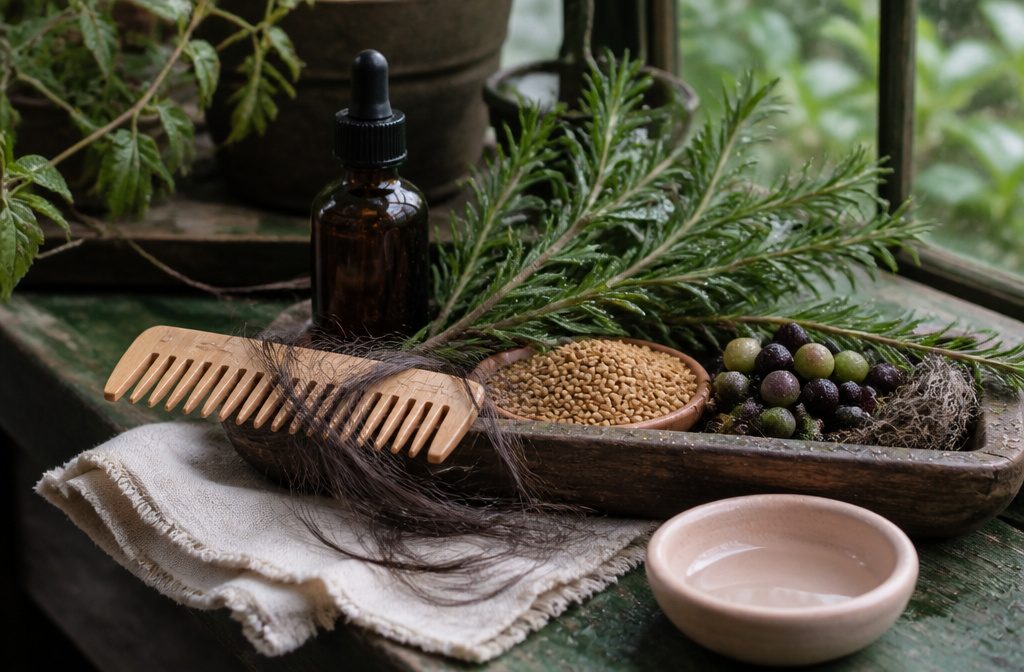
Herbal hair growth uses plant extracts, oils, and powders to support thicker hair and reduce shedding, but results depend on the cause of thinning and which herb you choose.
Rosemary oil improves blood flow to the scalp, saw palmetto blocks DHT production by inhibiting the enzyme that shrinks follicles, and fenugreek delivers protein and nicotinic acid that strengthen strands from the root.
1. Amla for Scalp Health and Follicle Support
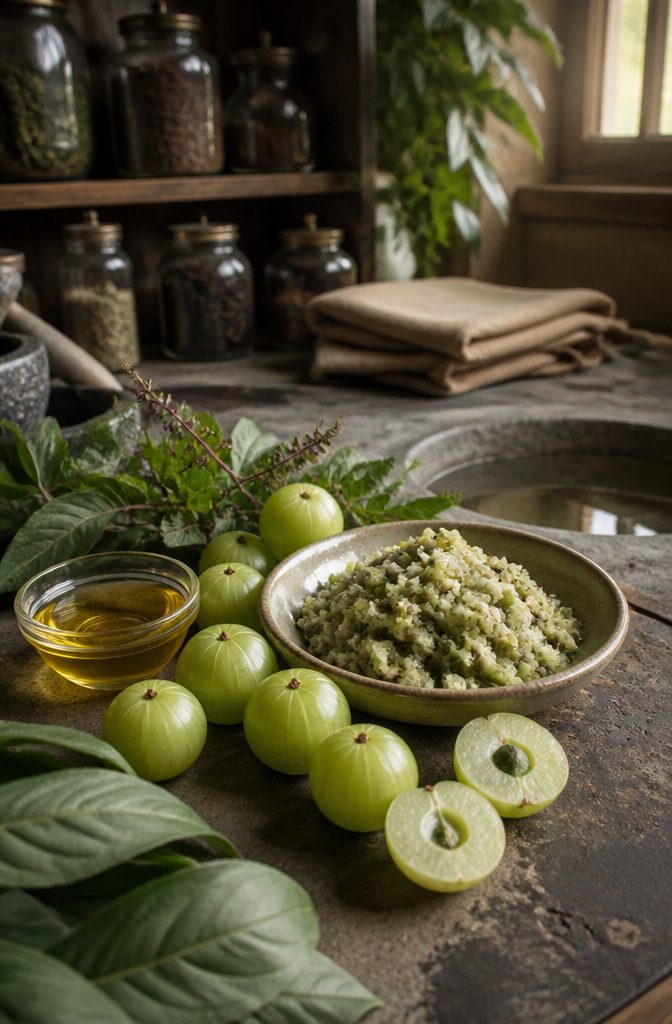
Amla, or Indian gooseberry, ranks high in vitamin C and antioxidants, which makes it useful for scalp health and follicle support.
It removes dandruff effectively, and you can add it to a hair rinse or mix it with tulsi leaves for a scalp mask. In Ayurvedic formulations, amla appears alongside other herbs because it boosts follicle health and delays premature greying.
The vitamin C content supports circulation to the roots, which is why it pairs well with oils or other herbal extracts in treatments meant for thinning or stressed hair.
If your scalp tends toward flaking or buildup, amla mixed into a rinse clears it without stripping the hair itself.
2. Brahmi for Stronger Roots and Reduced Hair Fall
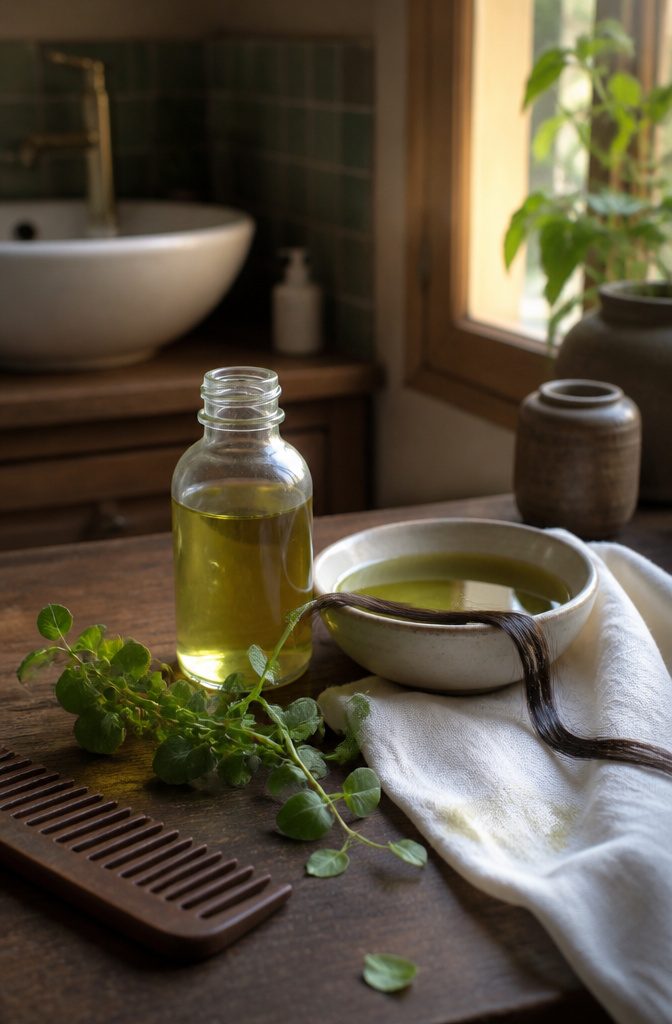
Brahmi is an Ayurvedic herb tied to stronger roots and less hair fall.
When you apply it topically, it creates a protective layer around the hair cuticle that cuts down on split ends and makes strands look thicker. The follicle and root get stronger, which helps reduce shedding over time.
Brahmi oil keeps the scalp clean and calm. It locks in moisture without irritation, which matters if you deal with dandruff or dryness.
The herb also has a reputation for easing stress-related hair loss, though the mechanism seems to tie back to its calming effects on the nervous system rather than a direct follicle action.
That makes it useful if you suspect tension or cortisol spikes are behind your shedding.
I like that it does double duty: scalp nourishment and breakage prevention in one bottle.
3. Hibiscus in Masks and Rinses for Shine and Thickness
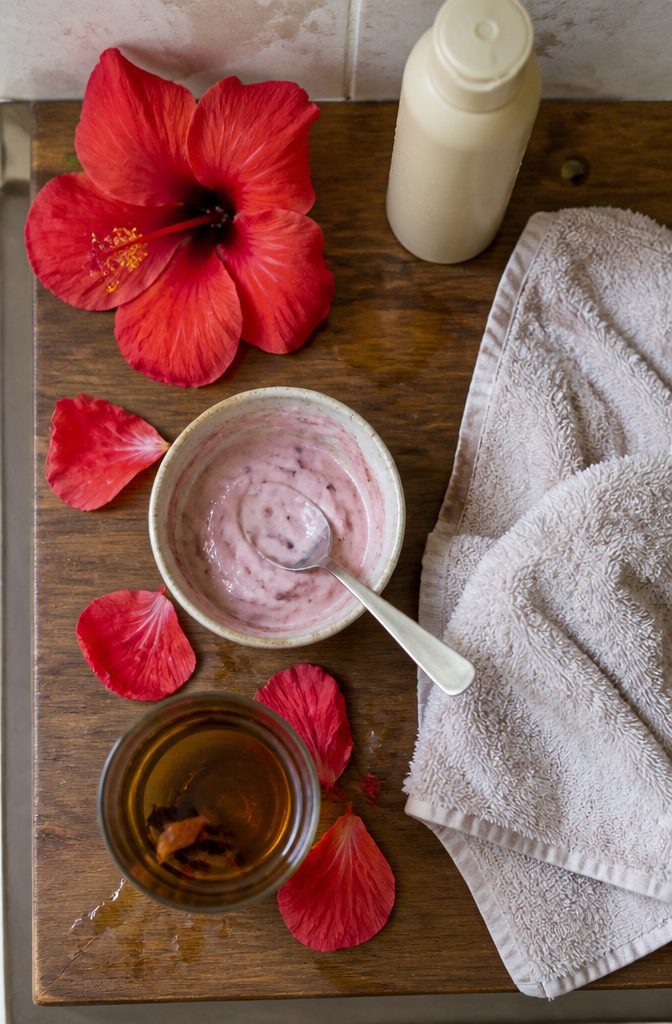
Hibiscus rosa sinensis shows up in masks and rinses for anyone chasing thicker, shinier hair.
The flower removes buildup from the scalp and may support growth, a pattern that showed positive results in the same rat study that tested green tea.
You can work with it dried or powdered, mixed into a mask or blended into shampoo.
For a deep conditioning mask, I combine hibiscus powder with yogurt and leave it on for twenty minutes.
If you’re after antioxidant protection and softness, boil green tea and hibiscus together, let it cool, and use it as a finishing rinse after shampooing.
The rinse method is lighter, the mask heavier, so the choice depends on whether your hair needs moisture or just a shine boost without extra weight.
4. Rosemary Oil for Circulation and Growth Support
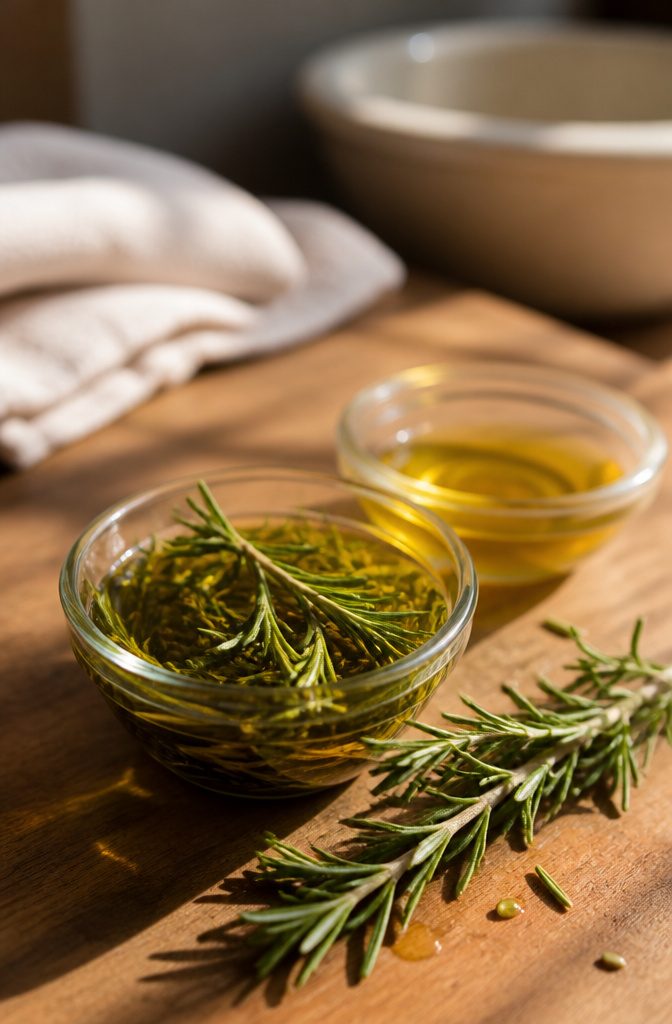
Rosemary shows up in oils, rinses, and lotions as a circulation booster that may support growth.
When applied to the scalp, it improves blood flow, which is why people dealing with thinning hair have reached for it for hundreds of years.
The oil also carries antibacterial and antioxidant properties that help keep the scalp healthy, and a 2021 study in mice found that 1% herbal hair lotion helped increase hair growth.
Still, more work is needed to confirm how well it translates to human scalp and hair.
You can use rosemary oil straight or diluted in olive or coconut oil. Apply a few drops directly to the scalp and massage gently for 5 to 10 minutes, then shampoo the oil out and rinse with lukewarm water.
Some people soak rosemary in olive oil ahead of time for scalp nourishment, or boil it with chamomile for a shine-enhancing rinse.
5. Neem for Dandruff and Scalp Irritation
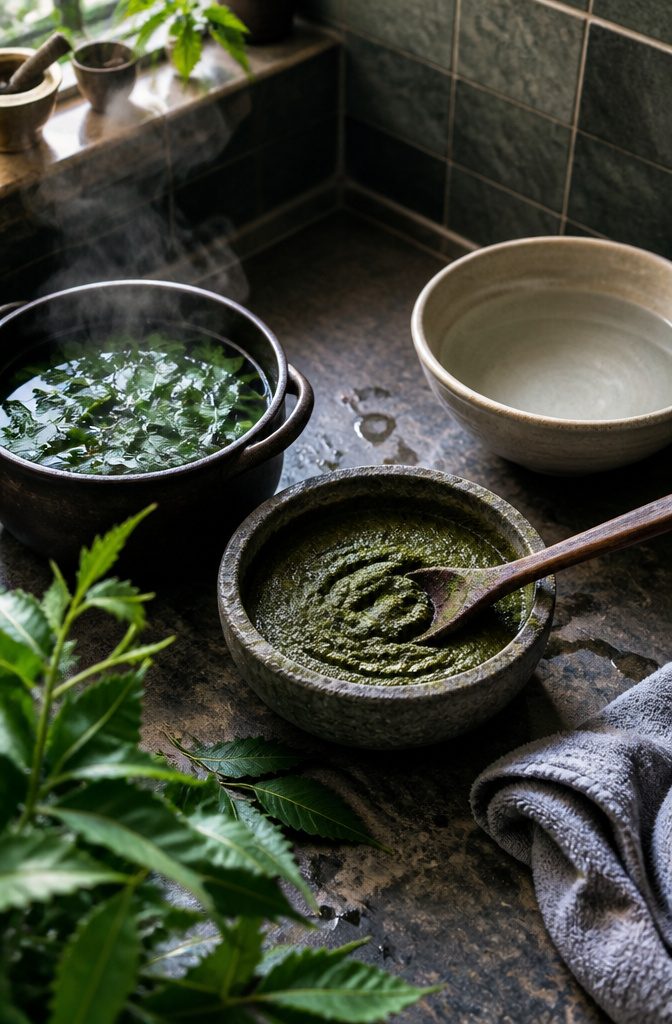
Neem treats dandruff, itching, and inflammation without the buildup some commercial treatments leave behind. The leaf and powder both work, and the method matters less than consistency.
Fresh neem leaves can be steeped in hot water to make a rinse you pour over your scalp after shampooing, or you can mix neem powder with tap water into a paste thick enough to stay put on the scalp for ten to fifteen minutes before rinsing.
The paste gets closer to irritated patches, and I’d reach for it first if flaking or redness is concentrated rather than scattered.
The antimicrobial and antibacterial activity is what makes neem stick around in Ayurvedic scalp care, and the cooling effect helps when your scalp feels tight or hot after styling or product overload.
Mix neem with tea tree oil if dandruff is stubborn, or use it alone if your scalp is just reactive. It smells medicinal, but that fades once you rinse.
6. Saw Palmetto as a DHT Blocker
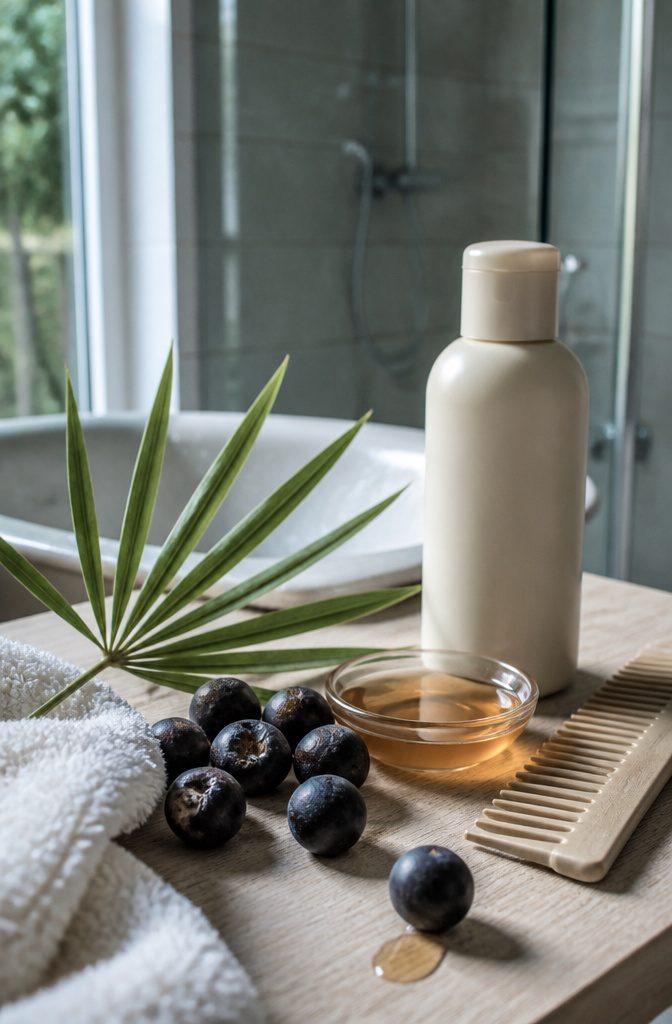
Saw palmetto, also known as Serenoa repens, blocks DHT production by inhibiting 5-alpha-reductase, the enzyme that converts testosterone into the hormone responsible for shrinking hair follicles.
That makes it one of the few herbal options working on the same pathway as prescription treatments, though with a gentler track record.
You can take it as a capsule or supplement for internal DHT suppression, or apply it topically in a serum, shampoo, or conditioner.
Both routes show up in studies as effective, so the choice comes down to whether you want a daily pill or a product that sits on your scalp while you shower.
Regular use encourages follicle growth and tamps down the inflammatory response that can interfere with regrowth, so consistency matters more than the form you pick.
7. Moringa for Nutrients and Scalp Circulation
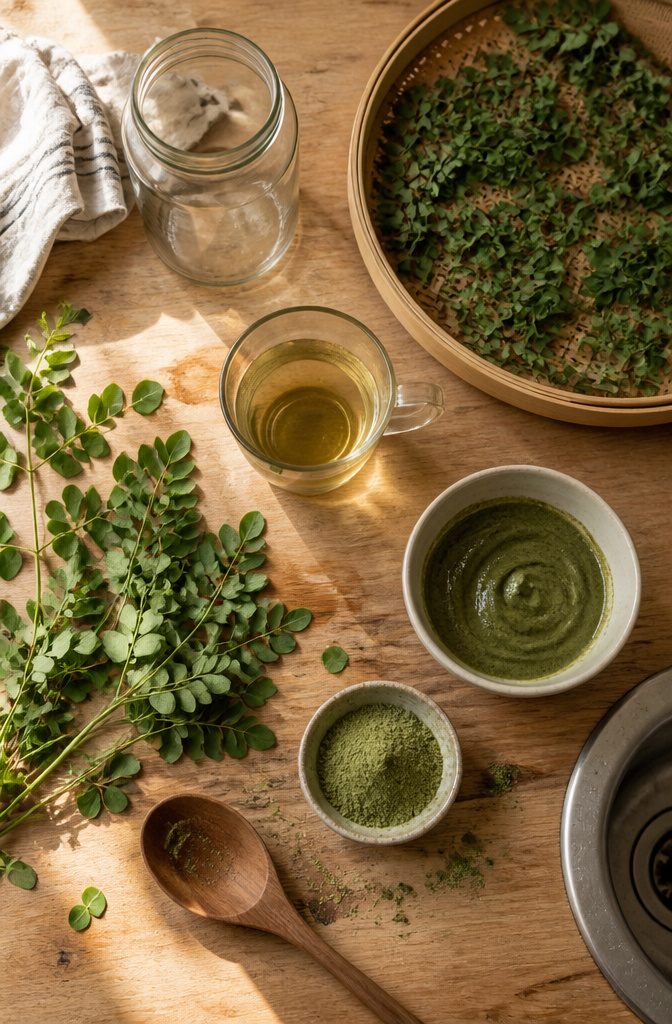
Moringa shows up as a supplement, tea, or powder you take internally, and as an extract mixed into hair masks or scalp treatments.
The appeal sits in its nutrient load: vitamin A, zinc, amino acids, and minerals that reach the follicle through improved circulation.
That improved circulation helps nourish the capillaries feeding each hair root, which in turn supports stronger growth and keeps sebaceous glands from clogging.
The antioxidants in moringa work on the immune side, preventing strands from drying out and helping the scalp stay balanced.
If you’re already rotating supplements or drinking herbal teas, moringa fits easily into that routine. For topical use, look for moringa leaf extract in ready-made products or add the powder to a deep conditioning mask.
The flexibility matters: you can take it orally for systemic support or apply it directly where you want the circulation boost, and both approaches have traditional backing.
8. Green Tea Rinses and Antioxidant Effects
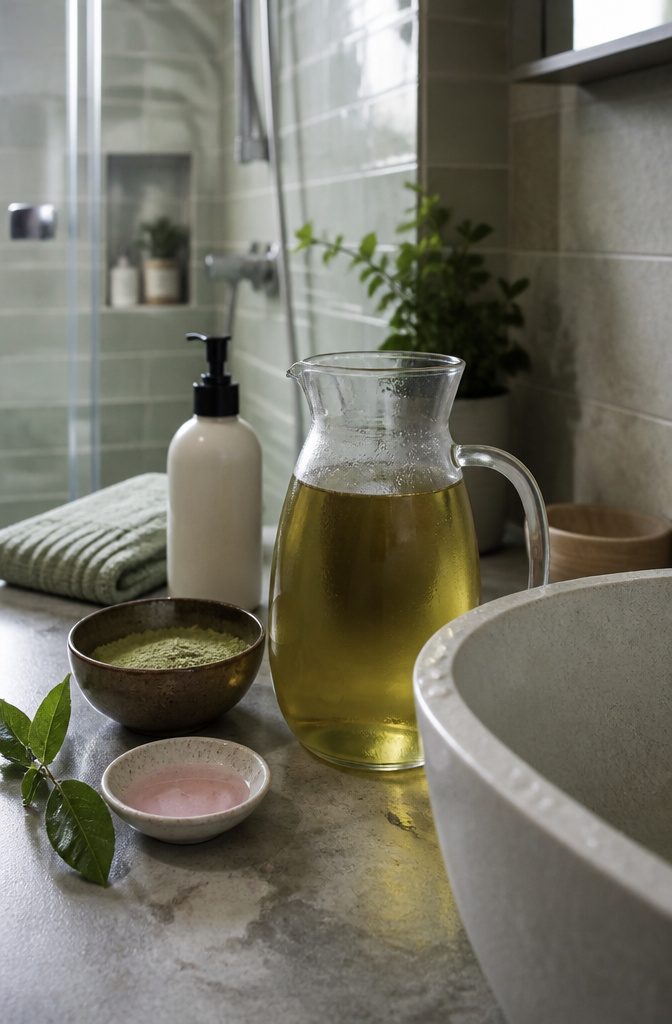
Green tea works two ways for hair: as an antioxidant rinse and possibly by blocking DHT pathways that slow growth.
The polyphenols in Camellia sinensis protect follicles from oxidative stress, and warm green tea makes a light rinse for shine and bounce.
You can also mix green tea powder with rose water to make a scalp mask that smells better than plain tea.
The DHT connection is promising but still early. Research suggests green tea may interfere with the hormone that miniaturizes follicles, but the hair-growth study frequently cited was conducted on rats, not humans.
I’d use it for the antioxidant benefit and the fact that it rinses clean, and treat any growth effect as a bonus until we see controlled trials on people.
9. Fenugreek in Masks for Stronger Hair
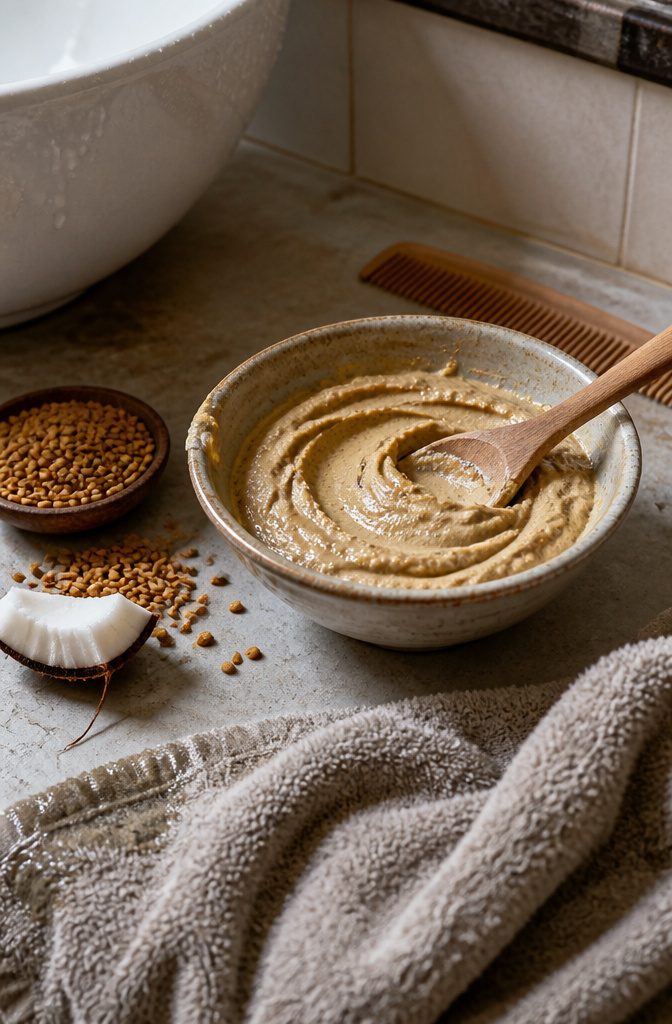
Fenugreek shows up in growth recipes for good reason: it’s rich in protein and nicotinic acid, both of which support thicker, shinier strands and help reduce shedding.
The seeds contain compounds that appear to strengthen hair from the root, making it less prone to breakage as it grows.
The simplest way to use it is ground into a mask. Mix fenugreek powder with coconut milk until you have a spreadable paste, then work it through dry or damp hair, root to tip.
The coconut milk adds moisture, so the combination works well for hair that’s been heat-styled or chemically treated.
Leave it on for 20 to 30 minutes, then rinse and shampoo as usual. The texture is thick, not runny, so it stays put while it sits.
10. Ginseng for Follicle Stimulation
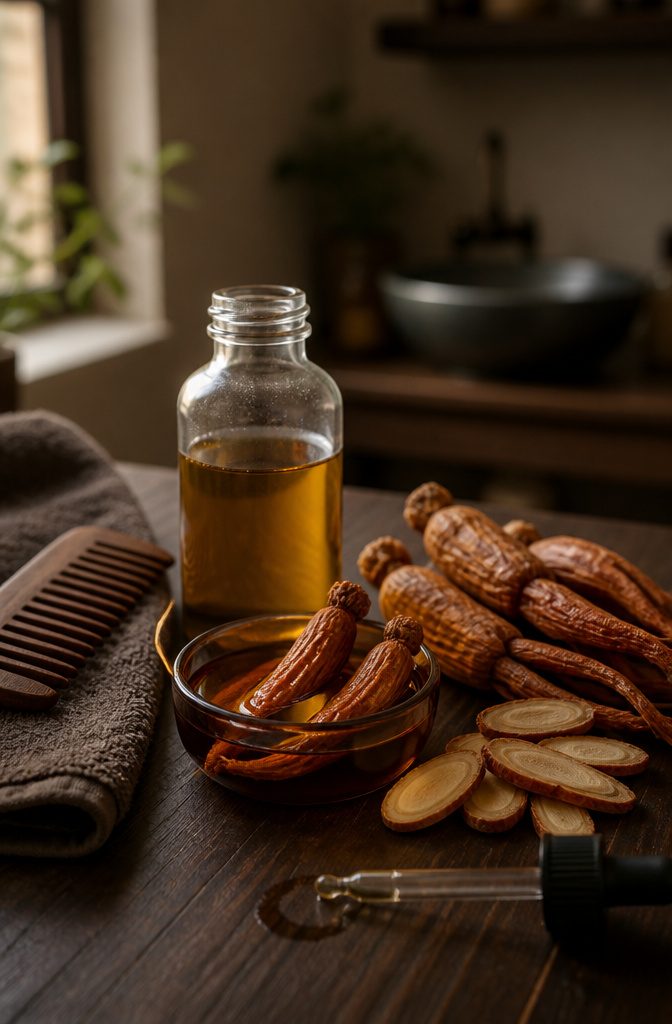
Ginseng, particularly red ginseng (Panax ginseng), shows up in both supplements and topical oils as a way to wake up sluggish follicles.
A 2021 study found it can stimulate hair growth, though researchers aren’t entirely sure why. The working theory points to indirect stimulation of the follicles rather than a single pathway you can trace cleanly.
When ginseng appears in herbal hair oils, it brings saponins to the table.
These compounds are thought to inhibit 5-alpha reductase, an enzyme tied to male pattern hair loss. That mechanism suggests ginseng may work best for androgenic shedding, though evidence remains preliminary.
Before adding a ginseng supplement to your routine, check with a doctor about interactions with any medication you’re already taking.
Topical oils carry less risk of systemic interference, though they absorb more slowly and it’s harder to know how much reaches the follicle.
11. Nettle Extract for Circulation and DHT Pathways
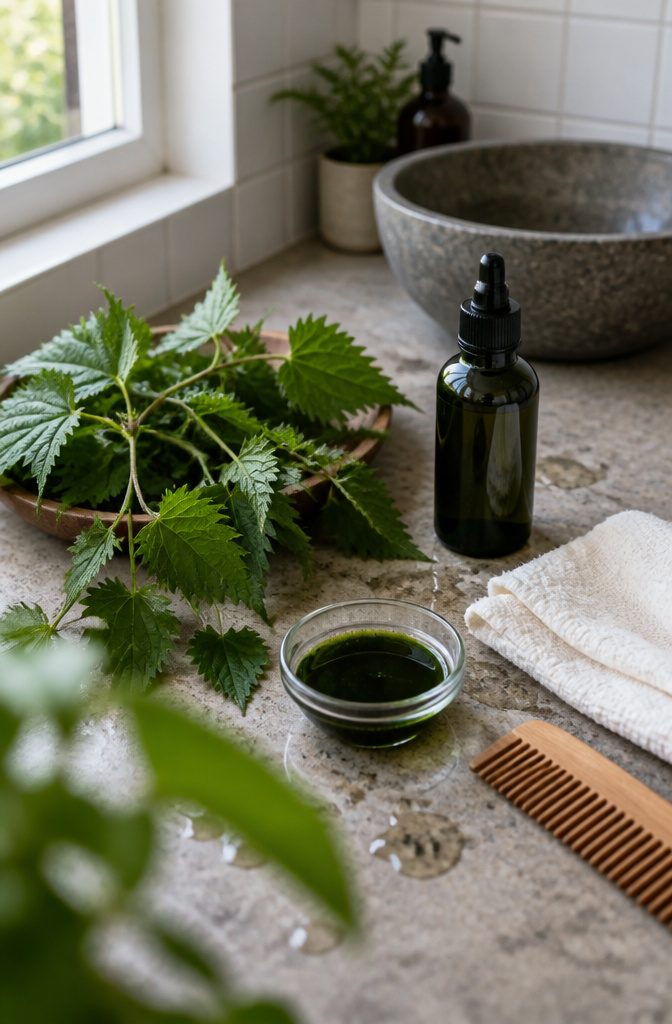
Nettle extract helps on two fronts: it improves blood flow to the scalp and steps into the DHT pathway that can shrink follicles when testosterone converts too aggressively.
Packed with antioxidants, flavonoids and vitamin C, nettle protects against free radicals while calming inflammation and dandruff at the scalp surface.
The circulation boost matters because follicles need steady nutrient delivery to maintain their growth phase. On the hormonal side, nettle reduces production of 5-alpha-reductase, the enzyme that turns testosterone into DHT.
When DHT climbs too high, the hair growth cycle shortens and follicles miniaturize. Nettle won’t reverse advanced pattern loss, but it addresses two mechanisms that feed into thinning before the damage becomes permanent.
12. Horsetail for Silica and Reduced Breakage
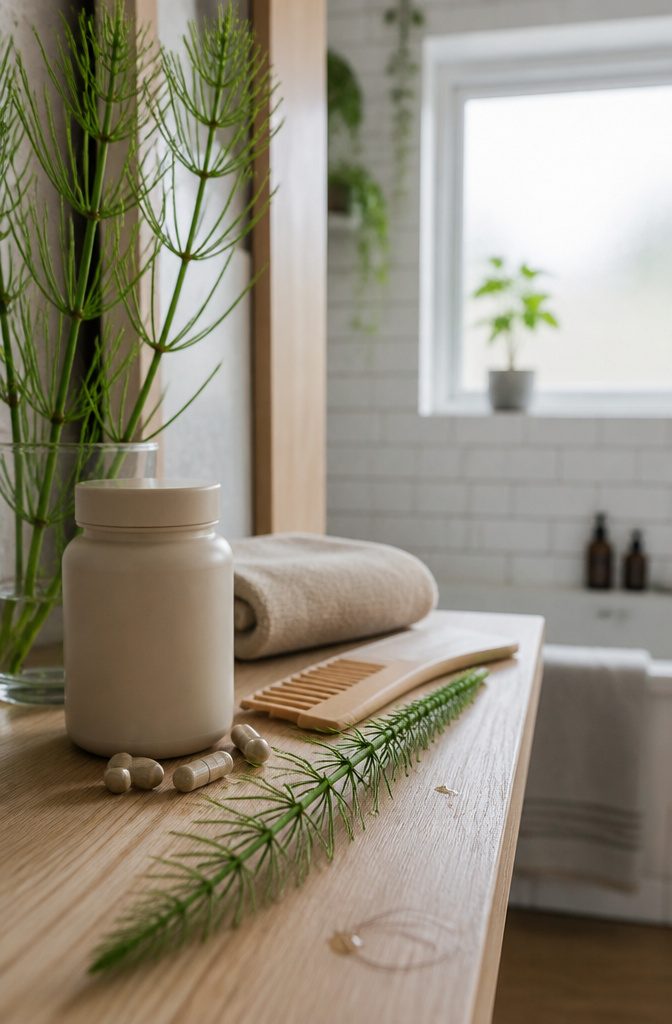
Horsetail strengthens hair fibers because of the silica it naturally contains. That silica is thought to speed up growth and potentially reduce dandruff, though the breakage angle is where it shows up most clearly.
The plant is rich in minerals that support fiber development, and stronger fibers mean fewer snaps and less breakage overall.
That strengthening also improves elasticity, which translates to better texture and shine. Hair that bends without breaking holds style longer and looks healthier through the day.
The most traditional way to use horsetail is through oral supplements in capsule or tablet form, so you’re working from the inside rather than coating strands topically.
If breakage is your main problem and you’re already managing moisture, horsetail addresses the structural side.
13. Ginkgo Biloba for Improved Circulation
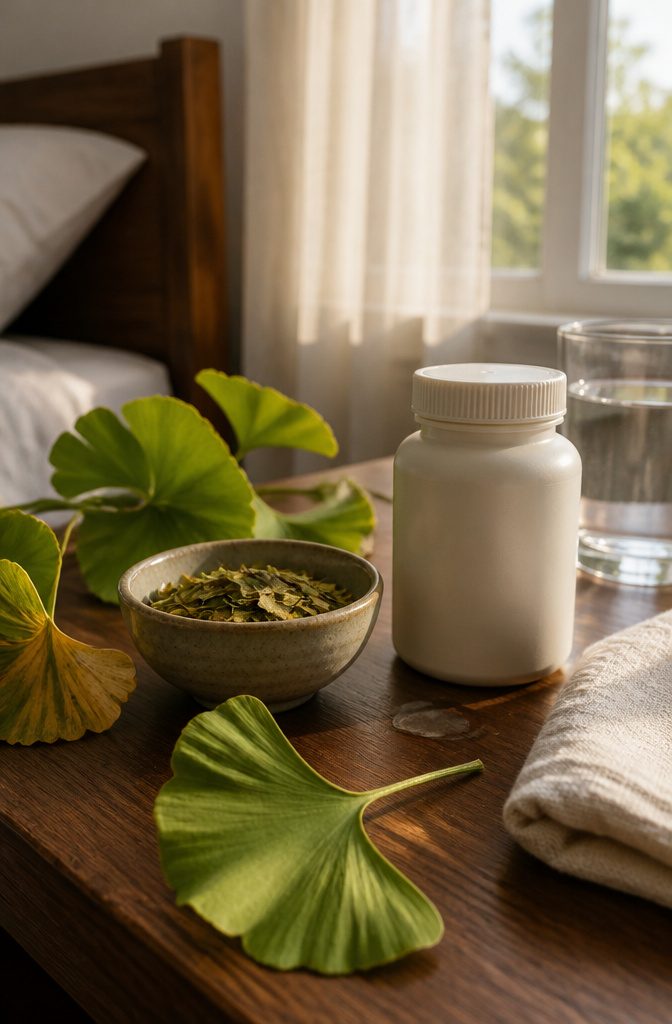
Ginkgo biloba works by improving circulation to the hair follicles, which helps them receive the oxygen and nutrients they need to keep growing.
As a dietary supplement, it may strengthen hair and discourage hair loss, though how much of that shows up in actual growth depends on whether poor circulation was part of the problem to begin with.
If follicles aren’t getting enough blood flow, ginkgo has a shot at making a difference. If the shedding comes from something else, like hormones or stress, better circulation alone won’t reverse it.
I think of it as a supporting player rather than the lead, best used alongside topical treatments or other herbs that address different pathways.
14. Fo-ti for Growth Phase Transition
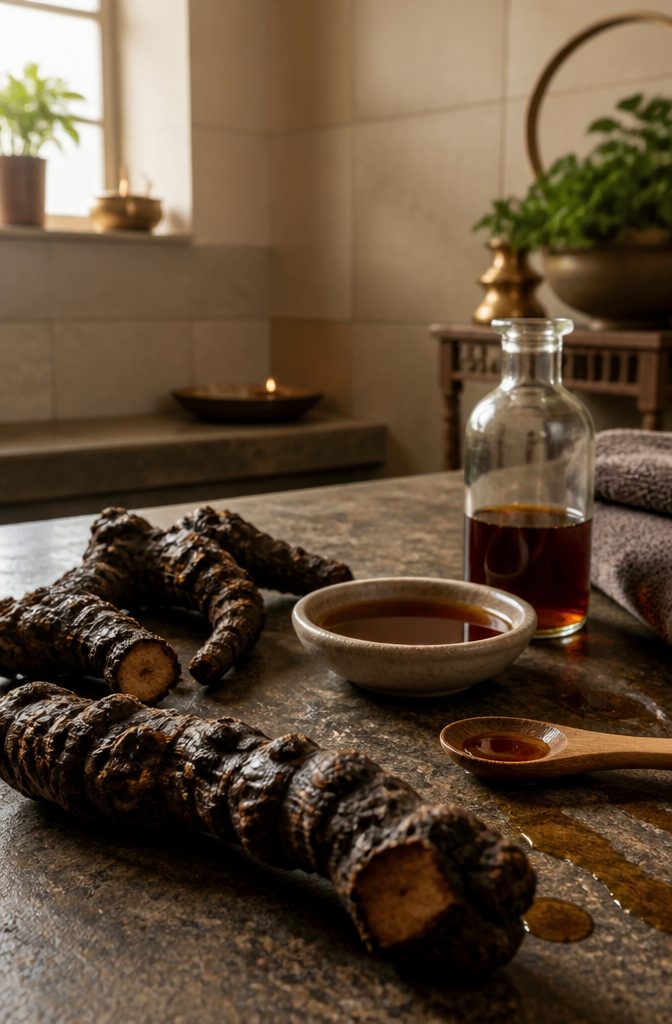
Fo-ti, also called he shou wu, has built its reputation around speeding the shift from dormant follicles to active growth.
The herb is thought to improve blood circulation at the scalp and stimulate melanin production inside the hair follicle itself. Studies point to fo-ti working on the FGF0-7 gene, which encodes proteins tied specifically to epithelial cell growth.
That gene activity appears to move hair follicles out of the telogen phase, the resting stage where thinning becomes visible, and into anagen, the active growth phase where length happens.
If your hair feels stuck in a pattern of slow regrowth or persistent thinning, that transition is exactly the bottleneck fo-ti is thought to address.
15. Gotu Kola for Circulation and Hair Density
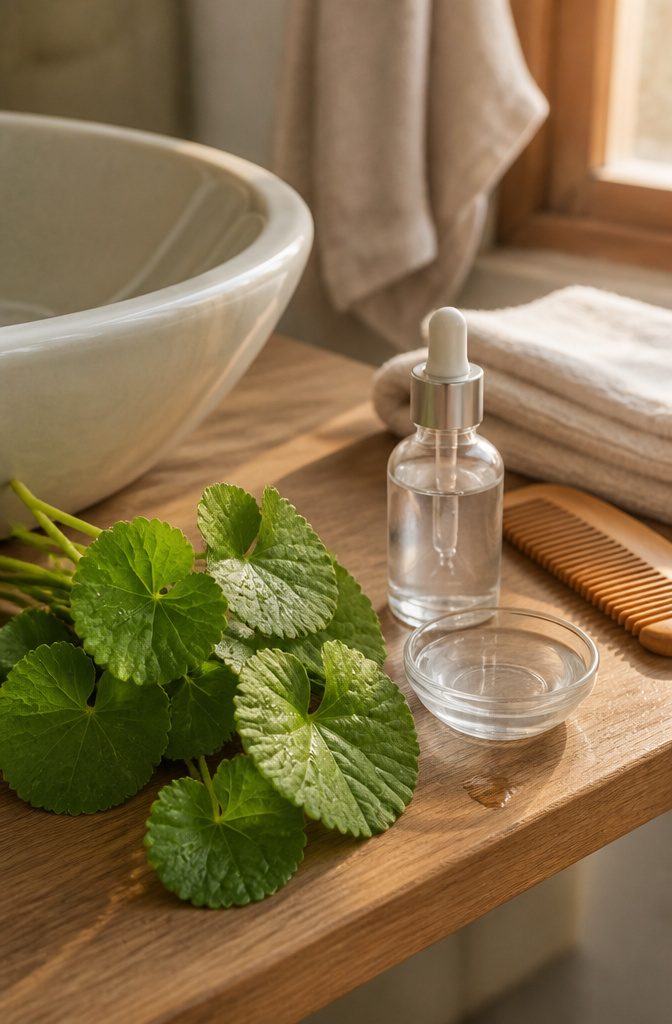
Gotu kola works by improving blood circulation to the scalp, which means more oxygen and nutrients reach the follicles.
Better circulation supports denser hair over time, though the change is gradual. I like this herb for anyone dealing with thinning hair who wants to support growth from the root level without jumping straight to prescription options.
You’ll find gotu kola in tinctures, capsules, and powders. Some scalp serums include it alongside other circulation-boosting herbs like rosemary or ginkgo.
If you’re using it topically, massage it in well so the active compounds actually reach the scalp rather than sitting on the surface. Internal use takes consistency, at least a few months before you’d notice thicker regrowth.
16. Ashwagandha for Stress-Related Shedding
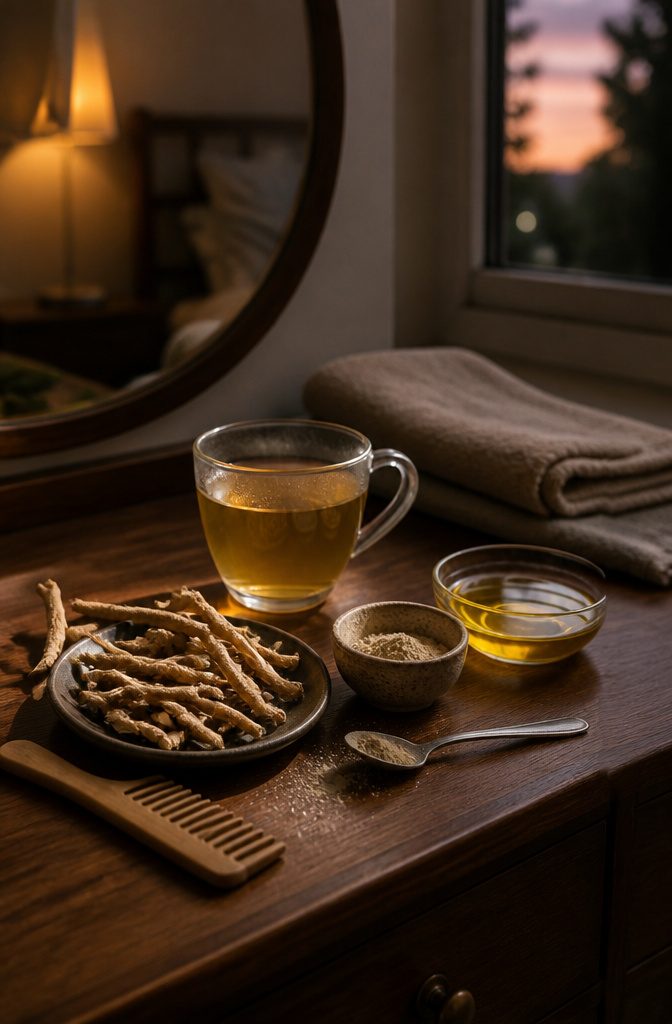
Ashwagandha works as an adaptogen that lowers cortisol levels, which makes it useful when stress is driving the shedding.
If you’ve noticed more hair coming out during a high-pressure stretch at work or after a big life change, this is the herb worth adding to your routine.
It doesn’t target the follicle directly. Instead, it addresses the upstream problem: chronic stress keeps cortisol elevated, and elevated cortisol pushes more hairs into the shedding phase earlier than they would go on their own.
I like ashwagandha for long-term use rather than as a quick fix.
You can take it as a capsule or powder, and most people add it to their wellness routine alongside other adaptogens. It pairs well with scalp oils like amla or bhringraj if you’re already using those topically for hair fall.
17. Aloe Vera for Scalp Hydration and Irritation
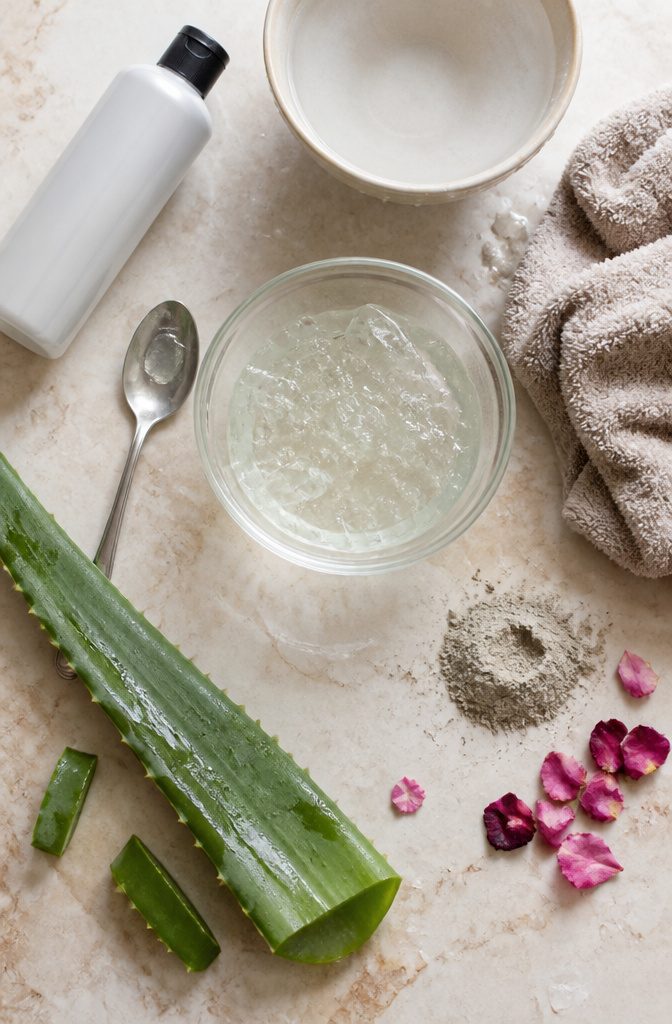
Aloe vera works well for scalp hydration and calming irritation, and it also clears out excess sebum that can clog follicles and contribute to dandruff or shedding.
The gel sinks in easily and leaves hair looking shinier without weighing it down.
Pure aloe vera gel mixes straight into shampoo, conditioner, or a hair mask to deliver nutrients where they matter.
For a dry or itchy scalp, aloe on its own or combined with light clay and rose helps soothe the surface. If your scalp runs oily, pairing aloe with lemon or neem in a mask balances sebum production.
Apply the mask to clean, damp hair, rinse it out with a light shampoo before it dries completely, and skip the blow dryer afterward for the best result.
18. Tea Tree Oil for Dandruff and Inflammation
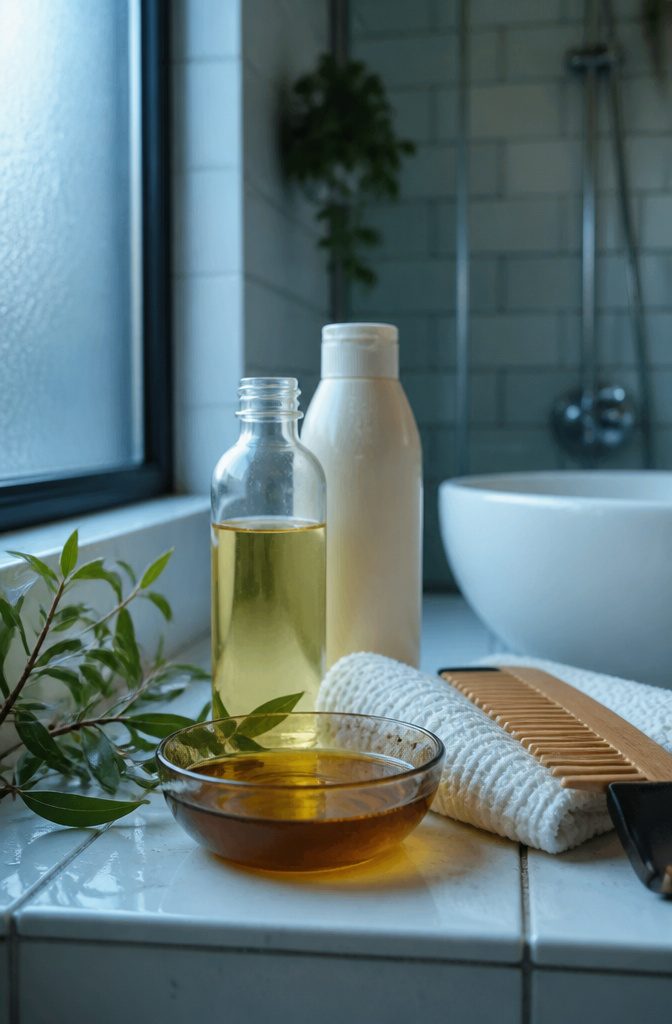
Tea tree oil handles dandruff and scalp inflammation without the synthetic actives most medicated shampoos rely on. The oil has antimicrobial and anti-inflammatory properties that calm irritation and reduce the flaking that can clog follicles and slow growth.
I find it works best diluted in a carrier oil or mixed into a plain shampoo at around 5%, since full-strength tea tree can sting on broken or sensitive skin.
You massage it into the scalp, leave it for a few minutes, then rinse thoroughly.
The smell is sharp and medicinal, which some people love and others can’t stand. If dandruff is persistent or paired with heavy shedding, tea tree can settle the scalp enough that other treatments have a chance to work.
19. Peppermint Oil for Scalp Buildup
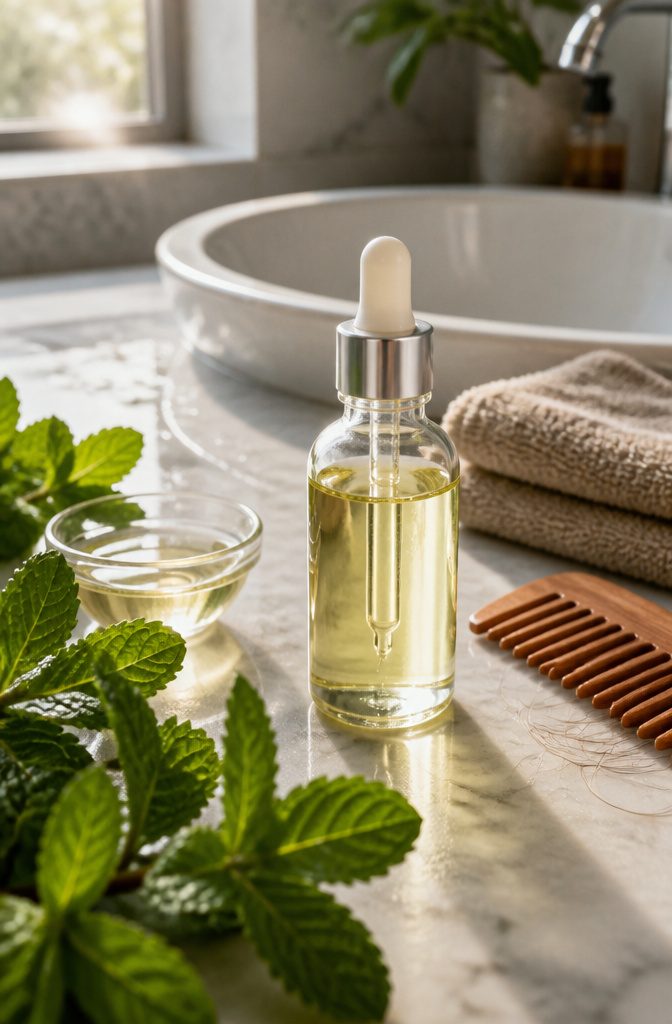
Peppermint oil clears pore-clogging bacteria and buildup that can sit on the scalp and lead to dermatitis, dandruff, or irritation.
The menthol in the oil has anti-fungal and anti-inflammatory properties that work best when applied directly to the scalp, not just through a shampoo rinse.
A healthy scalp gives hair the foundation it needs to grow longer and stronger, so if your roots feel clogged or itchy, peppermint offers a straightforward way to reset things.
The oil also stimulates the hair follicles, which can support growth over time. I like to massage a few drops mixed with a carrier oil into my scalp before washing, letting it sit for about fifteen minutes.
It tingles, but that sensation tells me the oil is working. If you have a sensitive scalp, start with a lighter dilution and watch how your skin responds.
20. Jatamansi for Speeding Growth
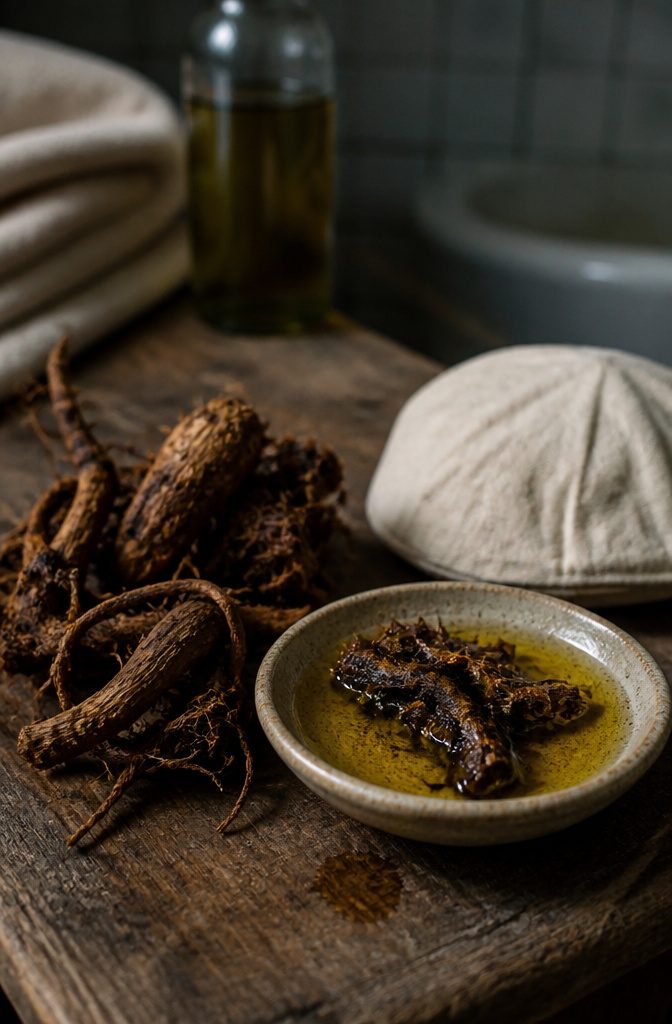
Jatamansi for Speeding Growth
Jatamansi, known botanically as Nardostachys jatamansi, shows up in traditional Ayurvedic practice as a scalp treatment, and recent interest has turned to its potential for speeding hair growth, including in people who have lost hair during chemotherapy.
The plant grows in high-altitude regions of the Himalayas, and its root oil contains compounds thought to work on follicle activity.
The connection to chemotherapy-related alopecia is what sets jatamansi apart from gentler scalp tonics. Hair loss from treatment can be stubborn to reverse, and options that move the timeline forward matter.
Application usually involves massaging the oil into the scalp and leaving it for at least twenty minutes before washing, though some people prefer an overnight treatment under a cap.
The scent is earthy and slightly woody, closer to vetiver than to florals, so it reads medicinal rather than spa-like.
If you are sensitive to strong botanicals, start with a diluted version mixed into a carrier oil and test a small area first.
21. Coat Buttons for Antioxidant Activity
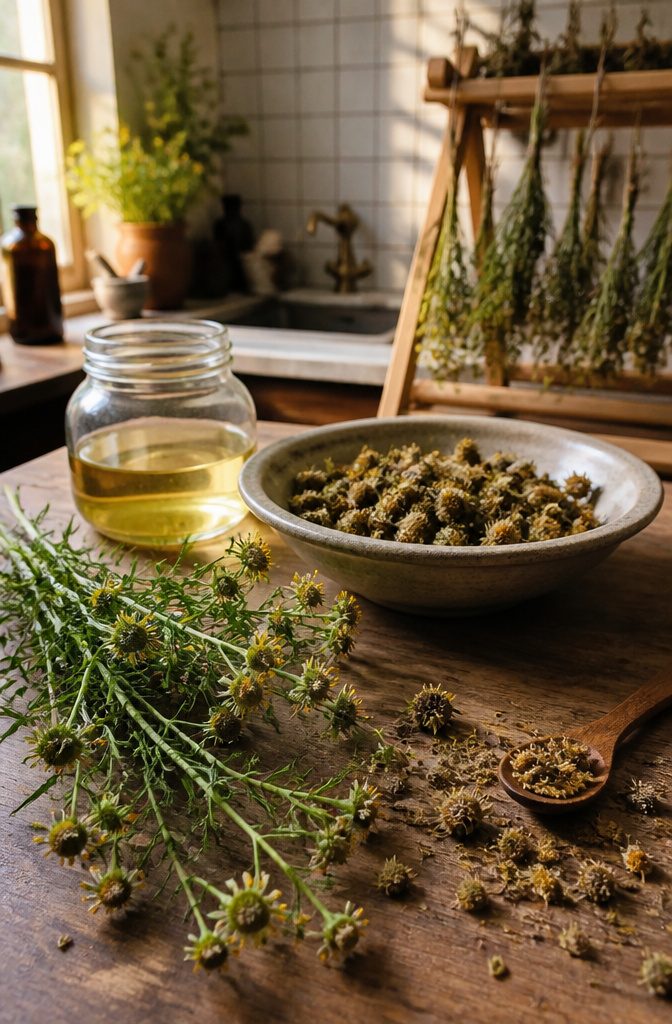
Coat buttons, an Ayurvedic herb also called Tridax procumbens, brings antioxidant activity that may help protect follicles from oxidative stress.
The plant grows wild in tropical regions and has been used traditionally in hair oil blends and scalp preparations. Antioxidants help neutralize free radicals that damage hair cells, and that protective action can support the conditions needed for healthy growth.
You’ll sometimes see it listed in formulas alongside other Ayurvedic herbs, though it’s far less common than amla or brahmi in commercially available treatments.
If you’re blending your own hair oil at home, dried coat buttons can be infused into a carrier oil, but sourcing can be tricky outside specialty herb suppliers.
How to Apply Herbal Oils and Masks
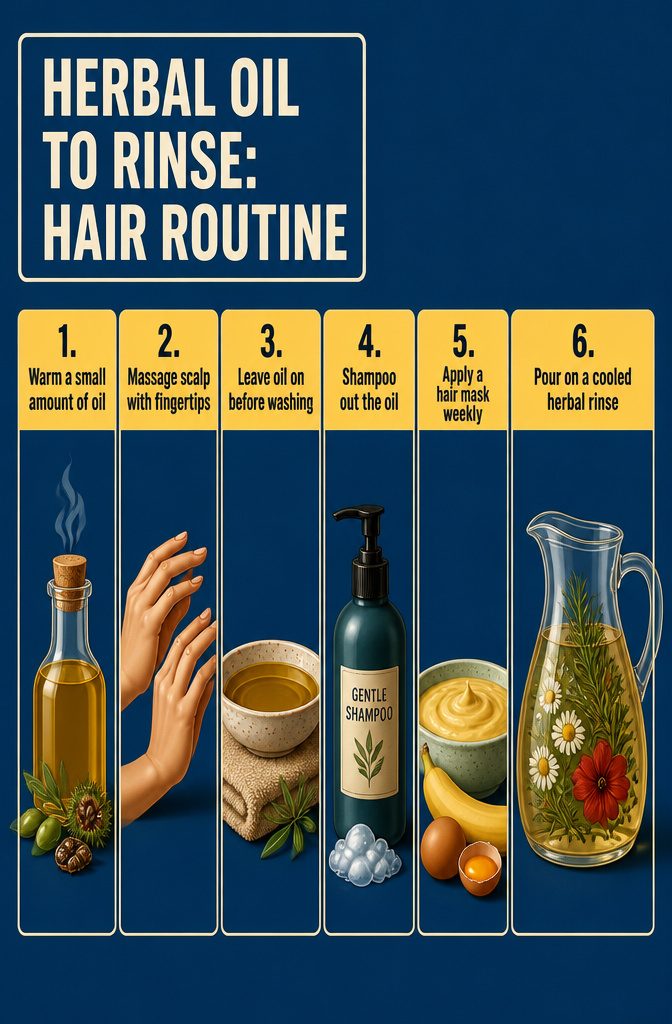
- Warm the oil. Heat a small amount of castor, olive, or herbal-infused oil until it’s comfortably warm to the touch. Castor oil contains vitamin E that thickens hair, while olive oil delivers omega-3 fatty acids for shine and growth.
- Massage into the scalp. Apply the warmed oil to your scalp and work it through with your fingertips for 5–10 minutes. A 2016 study found that 4 minutes of daily scalp massage for 24 weeks increased hair growth in Japanese men.
Gentle scalp massages with herbal oil can do wonders for hair growth and general conditioning.
Pressure improves circulation at the follicle, and the oil itself nourishes the scalp.
- Let it rest. Leave the oil on for 20 to 60 minutes before washing. Some sources recommend 20 minutes for a light treatment, others suggest 30–60 minutes for deeper conditioning. Twice weekly works for most people.
- Shampoo out. Wash with a gentle shampoo to remove the oil. Oiling twice weekly, followed by shampooing, keeps the scalp conditioned without stripping natural oils.
- Add a mask once weekly. Beat one or two eggs and apply to damp hair for 30 minutes, or mash a ripe banana with 2 tablespoons of olive oil and leave on for 20–30 minutes. Both deliver protein and minerals that strengthen strands. Rinse with shampoo.
- Follow with an herbal rinse. Steep rosemary, chamomile, or hibiscus in boiling water for 15–20 minutes, strain, and pour the cooled liquid over your hair after shampooing. It adds shine and soothes the scalp.
Making a DIY Herbal Rinse
Making a DIY Herbal Rinse
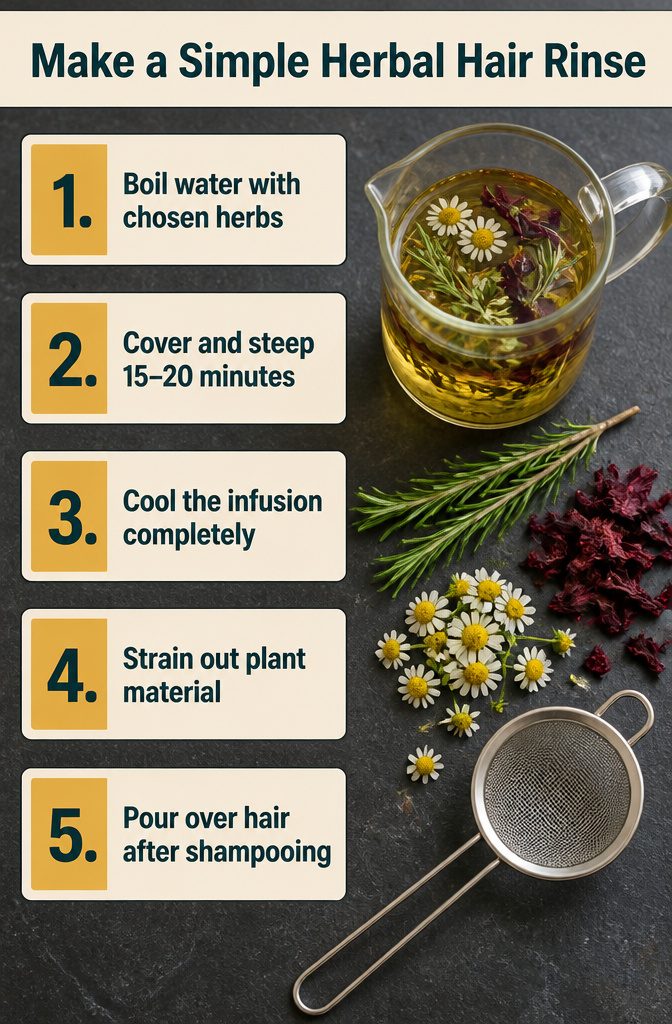
- Boil water and add your chosen herbs. Rosemary, chamomile, and hibiscus all work well, or combine them. Rosemary and chamomile make a shine-enhancing rinse, while hibiscus adds antioxidant protection and softness.
- Steep for 15–20 minutes, covered, so the water extracts the active compounds.
- Let the infusion cool completely. Hot liquid on your scalp is not pleasant.
- Strain out the plant material. A fine-mesh strainer or cheesecloth catches the bits.
- Pour the rinse slowly over your hair after shampooing, working it through from roots to ends. No need to rinse it out afterward.
The result is added shine, a soothed scalp, and support for overall hair health. For a scalp-soothing option, steep neem and mint instead.
Green tea and hibiscus together deliver antioxidant benefits. I prefer rosemary for its circulation boost, but chamomile wins if your scalp runs sensitive.
What Causes Hair Loss and When Herbs May Help
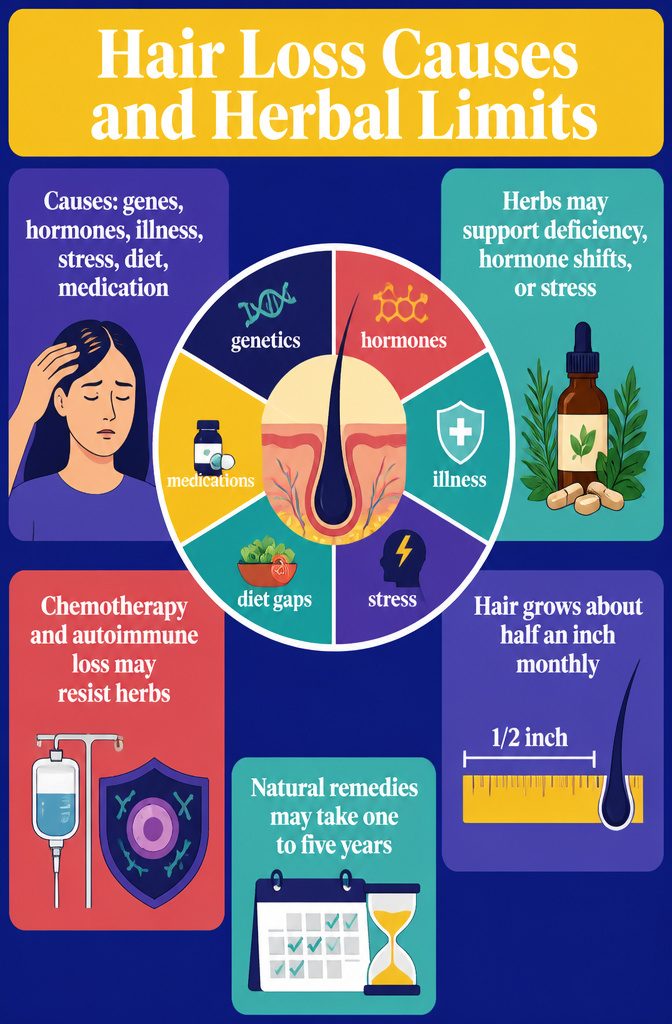
Hair loss starts at the root: genetics, hormones, illness, stress, diet gaps, or medications all push follicles off their growth cycle. When chemotherapy or autoimmune flare-ups stop hair production outright, herbs may do little.
But if the cause sits with nutrient deficiency, hormone shifts like hypothyroidism, or chronic stress, herbal oils and supplements are presented as tools that might support growth or slow shedding.
They don’t perform like prescription blockers, and they don’t reliably regrow hair once it’s gone.
Timelines matter more than the search results admit.
Hair grows half an inch a month. Natural remedies typically take one to five years to show results, and even after supplements, a new strand would need five to six years to reach shoulder length from the scalp.
What changes sooner is texture: oil glands on the scalp reactivate, hair looks shinier and less brittle, and breakage drops. That’s a win, but it isn’t length.
Evidence Limits and What Research Actually Shows
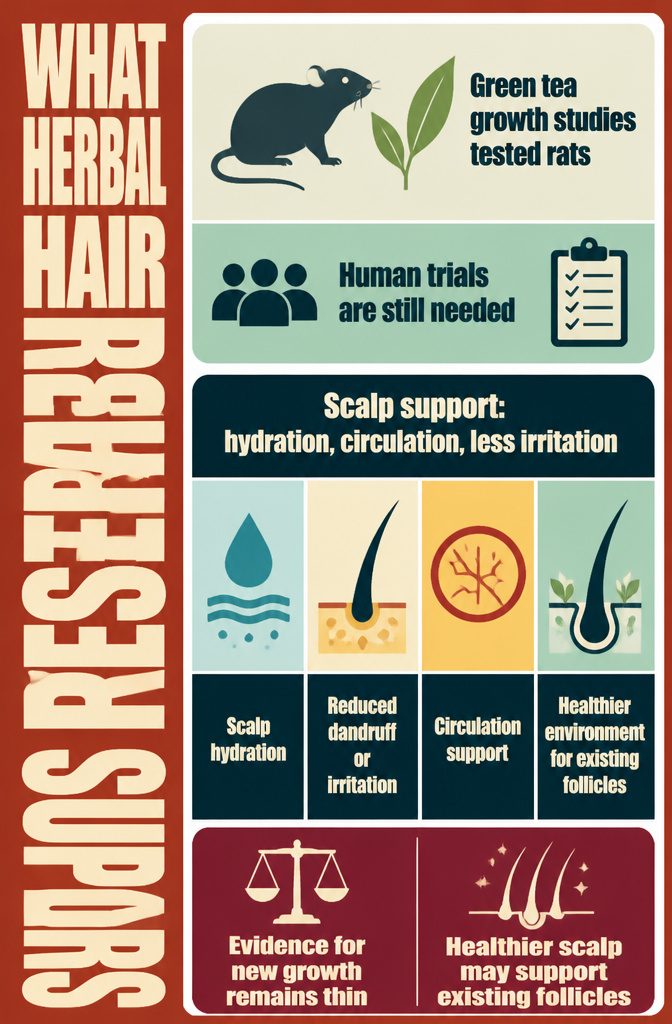
Much of the published work on herbal hair remedies was conducted on animals, and more human trials are needed to confirm whether the same effects translate.
The green tea studies that suggest growth stimulation, for instance, tested the effects on rats rather than people.
That does not mean these herbs are useless, but it does mean the evidence for new hair sprouting from dormant follicles remains thin.
Where herbal treatments appear to help, the mechanism often sits a step earlier: improving scalp health, reducing dandruff or irritation, supporting circulation, and keeping the scalp hydrated.
A clean, well-nourished scalp gives existing follicles a better environment to do their work. That may mean less shedding, stronger strands, and a healthier appearance overall, even if the herb is not directly triggering new growth.
Safety, Interactions and Patch Testing
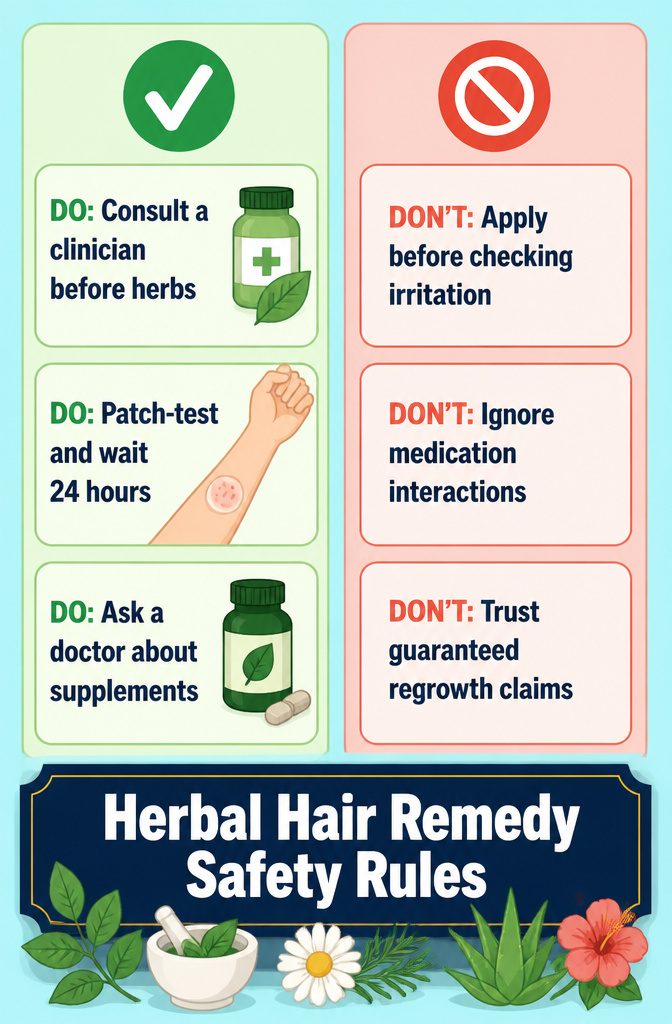
Before you add any herb to your routine, talk to a doctor or dermatologist, especially if you take medication or have a health condition.
Some herbs interact with prescriptions, and others may not be safe during pregnancy or with certain treatments.
A few practical steps:
- Patch-test topical remedies before applying them to your whole scalp. Mix the herb or oil as you plan to use it, apply a small amount to your inner arm, and wait 24 hours to check for redness or irritation.
- Ask your doctor before taking supplements. Deficiencies may benefit from targeted supplementation, but excessive amounts of certain vitamins can actually contribute to hair loss rather than prevent it.
- Watch out for miracle claims. If a product promises dramatic regrowth with no caveats, that is a red flag. Real herbal remedies work within limits, and results depend on the cause of your hair loss in the first place.
Frequently Asked Questions
What are the best natural herbs for promoting hair growth?
Bhringraj, amla, rosemary, and fenugreek rank among the most effective.
They stimulate blood circulation to the scalp, strengthen follicles, and encourage thicker strands over time. Saw palmetto and nettle also work on DHT pathways that can shrink follicles when hormones convert too aggressively.
How do I make a DIY herbal hair rinse at home?
Boil water and add your chosen herbs, then steep for 15 to 20 minutes with the pot covered.
Let the infusion cool completely, strain out the plant material, and pour the liquid slowly over your hair after shampooing. Rosemary, chamomile, and hibiscus all work well alone or combined.
Can I use herbal treatments if I have dandruff or an irritated scalp?
Yes.
Neem treats dandruff, itching, and inflammation without buildup, while tea tree oil handles flaking and scalp inflammation with antimicrobial properties. Peppermint clears pore-clogging bacteria and buildup that can lead to dermatitis or irritation.
How often should I use herbal oils or masks for best results?
Use herbal oils 2 times per week and apply a mask once weekly. Oiling twice weekly followed by shampooing keeps the scalp conditioned without stripping natural oils, and masks deliver protein and minerals that strengthen strands.
Are herbal hair products safe for all hair types?
Most natural herbs are gentle and suit all hair types, but choose herbs and carrier oils for your specific needs.
Lighter oils like argan or jojoba work well for fine hair, while heavier oils like coconut or castor suit thicker textures.
Which extract is good for hair growth?
Amla ranks high in vitamin C and antioxidants for scalp health and follicle support.
Moringa brings nutrients that reach the follicle through improved circulation, aloe vera hydrates the scalp and clears excess sebum, and hibiscus adds antioxidant protection while supporting thickness and shine.
How can I make my hair grow naturally?
Apply herbal oils like rosemary or amla to the scalp 2 times per week to improve circulation and nourish follicles.
Use a weekly mask with eggs or fenugreek for protein, follow with an herbal rinse for shine, and reduce stress with adaptogens like ashwagandha if cortisol is driving shedding.
Is burdock root good for hair?
For circulation and follicle support, rosemary, ginkgo biloba, and nettle extract appear in the research reviewed here, while moringa and gotu kola improve blood flow to the scalp for denser hair over time.
Does biotin thicken hair?
Fenugreek provides protein and nicotinic acid that support thicker strands and reduce shedding, while horsetail supplies silica that strengthens fibers and improves elasticity for better texture.
What herbs grow hair fast?
Fo-ti speeds the shift from dormant follicles to active growth by working on the FGF0-7 gene, which moves hair out of the resting phase where thinning becomes visible.
Jatamansi has drawn recent interest for speeding growth, including in people who lost hair during chemotherapy, though more work is needed to confirm the effect in humans.